
Key Takeaways
- Obsessive-compulsive disorder affects 2.3% of U.S. adults, causing intrusive thoughts and compulsive behaviors.
- Acupuncture enhances OCD management by addressing physical and nervous system patterns, alongside standard treatments.
- Research links chronic inflammation to OCD severity, making it crucial to manage inflammation for symptom improvement.
- Integrated care combining therapy, medication, acupuncture, and lifestyle changes offers the best support for OCD patients.
- Acupuncture does not replace mental health care; it complements existing treatments while addressing underlying issues.

Obsessive-compulsive disorder affects roughly 2.3 percent of adults in the United States. That number represents millions of people dealing with intrusive unwanted thoughts, compulsive rituals that consume hours of the day, and the exhausting cycle of trying to manage symptoms while maintaining work, relationships, and daily life. Standard Western care with exposure and response prevention therapy and SSRIs helps many patients, but often leaves others still dealing with significant symptoms that affect nearly every aspect of their reality.
Acupuncture and Traditional Chinese Medicine offer meaningful support for OCD. The treatment does not replace therapy, medications, or the mental health care that OCD requires. What acupuncture does is address the physical and nervous system patterns that make OCD so exhausting, which supports the person doing the therapeutic work of managing the condition.
There is one clinical observation worth flagging up front. Many OCD patients seen at Above and Beyond Acupuncture present with elevated levels of inflammation. The connection between chronic inflammation and OCD symptom severity has become increasingly recognized in modern research, and addressing the inflammatory markers and patterns often produces meaningful improvement in symptoms alongside standard Western care.
Here is what OCD actually involves, how acupuncture and inflammation management support the condition, and how to think about integrated care.
What is OCD?

OCD involves two primary components. Obsessions are intrusive, unwanted thoughts, images, or urges that produce significant anxiety. Compulsions are repetitive behaviors or mental acts performed to reduce the anxiety or prevent a feared outcome. The person recognizes the behaviors as excessive but cannot stop them without significant support.
- Common obsessions include fear of contamination or germs, fear of harming self or others, need for symmetry or exactness, unwanted sexual or religious thoughts, and fear of losing control.
- Common compulsions include excessive cleaning or hand washing, checking behaviors (locks, appliances, safety), arranging or ordering items, counting or repeating actions, mental rituals like praying or reviewing, and seeking reassurance.
- Common OCD subtypes include contamination OCD, checking OCD, symmetry and ordering OCD, harm-related OCD, sexual and religious OCD, and Pure O (obsessions without visible compulsions, though mental compulsions are usually present).
- Distinction from general anxiety. OCD involves specific obsessive-compulsive patterns rather than generalized worry. The intrusive thoughts and the compulsive behaviors are the defining features.
- Distinction from perfectionism. OCD produces significant functional impairment and distress. Perfectionism is a personality trait that may cause difficulty but does not meet the diagnostic threshold for OCD.
The Mayo Clinic overview of OCD and the National Institute of Mental Health information provide the medical picture of the condition.
What is the Inflammation-OCD Connection?
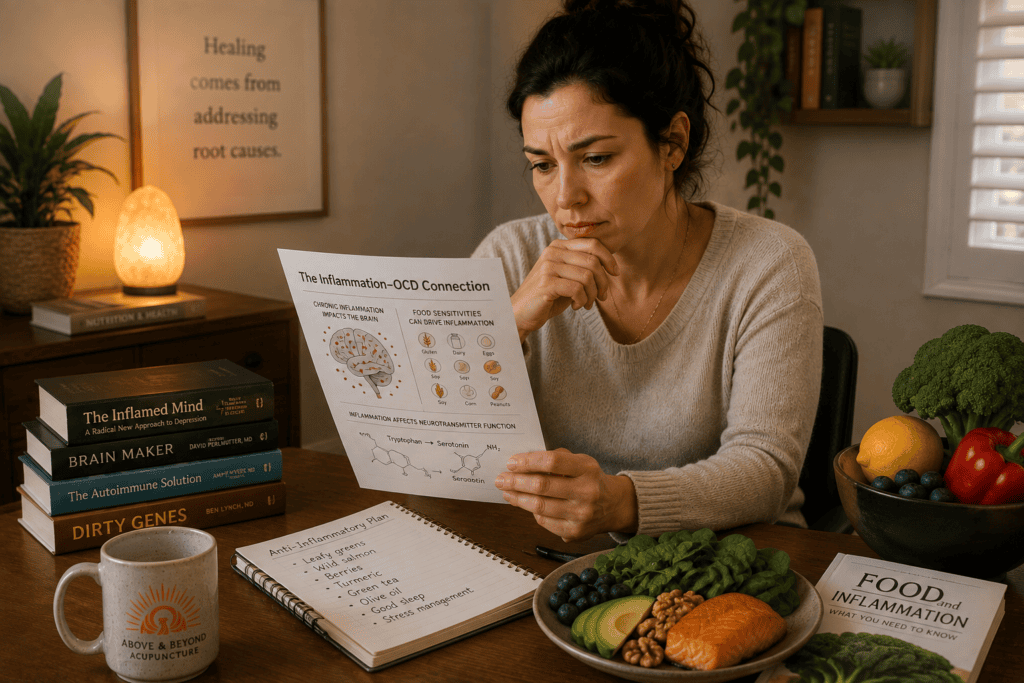
Research over the past decade has increasingly linked chronic inflammation to OCD symptom severity. This is one of the most important developments in OCD understanding and has clinical implications that most standard OCD content does not address.
The mechanisms are becoming clearer:
- Chronic inflammation affects neurotransmitter function including serotonin, which is central to OCD.
- Neuroinflammation specifically affects the brain circuits involved in OCD including the orbitofrontal cortex and basal ganglia.
- Elevated inflammatory markers correlate with symptom severity in many OCD patients.
Food sensitivities are one of the most common sources of chronic low-grade inflammation. Unlike acute food allergies which produce immediate reactions, IgG-mediated food sensitivities produce delayed inflammatory responses that patients often do not connect to specific foods. The inflammation continues day after day, driving the neuroinflammatory patterns that maintain OCD symptoms.
At Above and Beyond Acupuncture, many OCD patients have benefited substantially from IgG food sensitivity testing and the elimination of identified trigger foods. Reducing the inflammatory load often produces meaningful improvement in OCD symptoms alongside standard therapy and medication.
The chronic inflammation that underlies many mental health conditions is not just a peripheral factor. It is a central driver of the neurological patterns that produce symptoms.
How Does OCD Affect the Body?

The physical toll of OCD is often underestimated. The nervous system stays in a sustained stress response from the constant anxiety, which affects nearly every body system over time.
- Sleep effects. Difficulty falling asleep from mental rumination. Waking during the night with intrusive thoughts. Non-restorative sleep from chronic nervous system activation.
- Digestive effects. IBS-type symptoms are common with chronic OCD. The gut-brain connection means the digestive system carries the physical toll of chronic mental anxiety.
- Cardiovascular effects. Elevated resting heart rate. Blood pressure changes. The chronic activation of fight-or-flight responses.
- Musculoskeletal effects. Chronic tension particularly in the shoulders, jaw, and face. Tension headaches. The physical guarding that develops from chronic vigilance.
- Cognitive effects. Difficulty concentrating outside of the OCD content. Mental exhaustion from managing symptoms. Impaired working memory from the cognitive load of obsessions and compulsions.
- Immune effects. Chronic stress affects immune function. Patients with severe OCD often experience frequent illness.
- Emotional exhaustion. The cumulative weight of managing OCD symptoms produces exhaustion that goes beyond typical fatigue.
The chronic cortisol spike from excessive anxiety drive many of these physical patterns.
How Does Traditional Chinese Medicine View OCD?
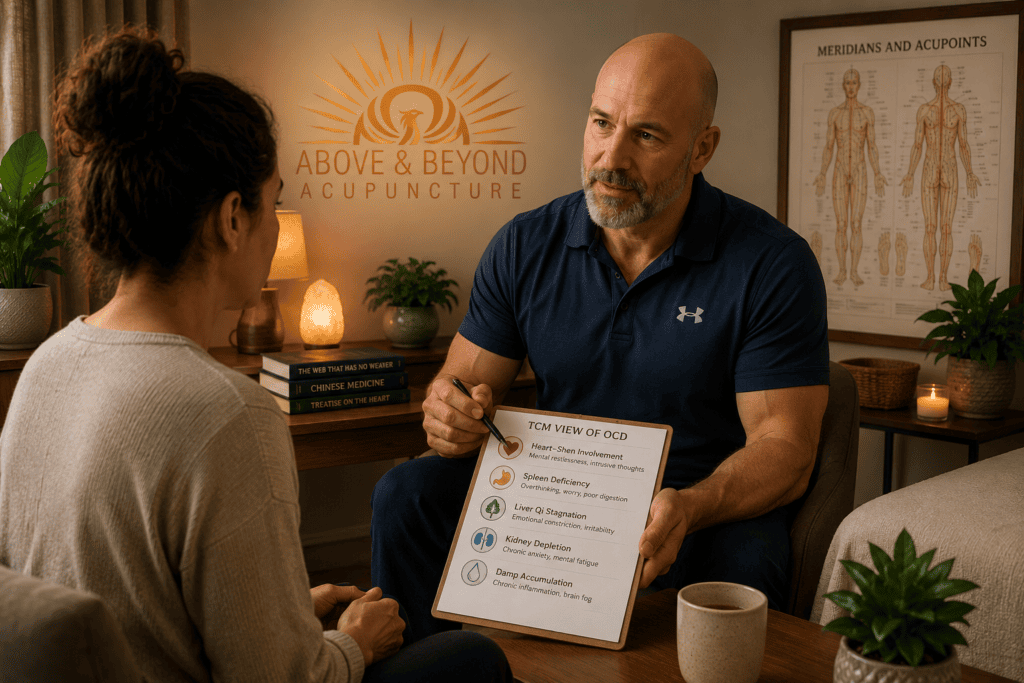
Traditional Chinese Medicine has understood the patterns underlying obsessive thinking and compulsive behaviors for thousands of years, and the view offers something Western psychiatric categories do not.
- Heart-Shen involvement. The Heart in Chinese medicine houses the Shen, which refers to the mind and spirit. OCD reflects severe Shen disturbance producing the intrusive thoughts, mental restlessness, and inability to settle the mind.
- Spleen deficiency. The Spleen governs thinking and rumination. Chronic obsessive thinking depletes the Spleen. The gut-brain connection that modern research is now documenting was recognized in Chinese medicine for millennia through the Spleen-Heart relationship.
- Liver Qi Stagnation. The chronic emotional constriction and frustration of managing OCD creates Liver Qi Stagnation. This contributes to muscular tension, irritability, and the emotional patterns of the condition.
- Kidney depletion. In long-standing OCD, Kidney depletion develops from the constitutional demands of chronic anxiety. The Kidneys govern deep reserves and constitutional support.
- Damp accumulation. Chronic inflammation from food sensitivities and other sources produces the Dampness pattern that Chinese medicine has recognized for centuries. Damp affecting the Heart-Shen contributes to mental cloudiness and the difficulty settling that OCD produces.
A licensed acupuncturist identifies which patterns are dominant in the individual patient and treats accordingly.
How Does Acupuncture Support Patients Experiencing OCD?
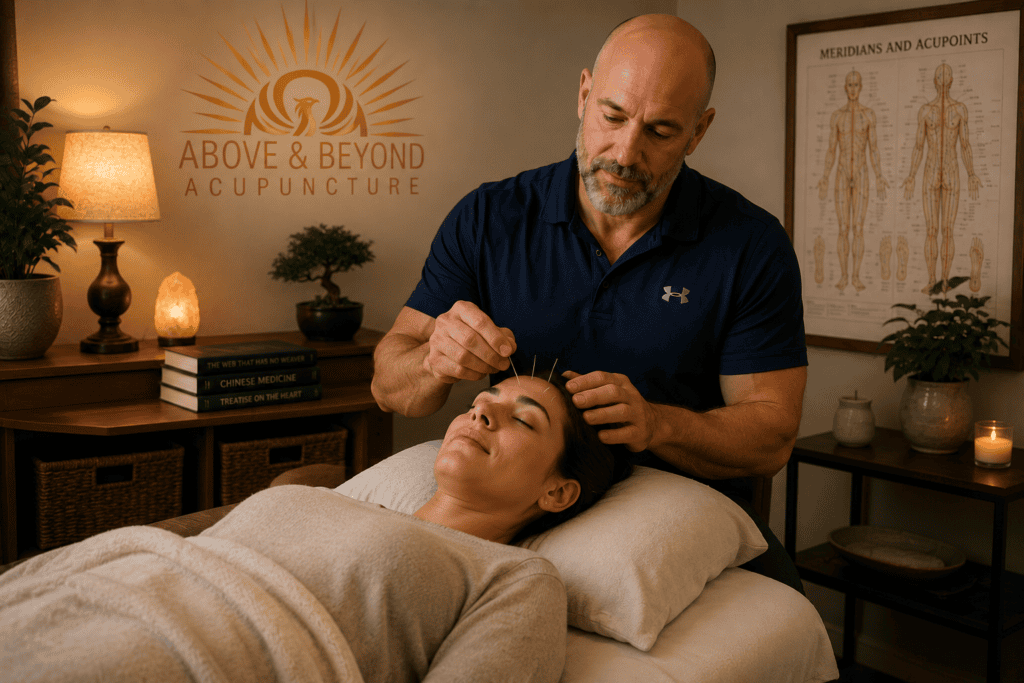
Acupuncture addresses OCD through several effects that support the person while they do the therapeutic work.
- Nervous system regulation. OCD keeps the nervous system in sustained stress response. Acupuncture activates the parasympathetic nervous system and reduces the chronic sympathetic activation that OCD produces.
- Heart-Shen calming. The Heart calming effect addresses the mental restlessness and intrusive thought patterns directly. Points that specifically calm the Shen work well for the anxiety patterns underlying OCD.
- Anti-inflammatory effects. Given the inflammation connection to OCD, the documented anti-inflammatory effects of acupuncture are directly relevant. Reducing the inflammatory load supports the neuroinflammatory patterns underlying symptoms.
- Cortisol regulation. Sustained cortisol elevation drives many of the physical patterns of chronic OCD. Acupuncture has documented effects on cortisol regulation and HPA axis function.
- Sleep support. Sleep disruption is common in OCD. Acupuncture supports the sleep patterns that anxiety and rumination disrupt.
- Gut-brain support. The Spleen-Stomach pattern in Chinese medicine corresponds to the gut-brain axis in modern understanding. Acupuncture supports both directly.
- Constitutional support. For long-standing OCD with constitutional depletion, acupuncture supports the Kidney essence and Heart function that chronic anxiety depletes.
- Pattern differentiation. The individualized approach treats the specific patterns present in each patient. Heart calming for Shen disturbance. Kidney tonification for constitutional depletion. Liver Qi regulation for stagnation patterns. Spleen support for rumination and gut patterns. Damp clearing for inflammatory patterns.
Acupuncture does not eliminate OCD or replace mental health care. What it does is address the physical, inflammatory, and nervous system patterns that make OCD so difficult, which supports the person’s capacity to do the therapeutic and psychological work of managing the condition.
The Research Base

Research on acupuncture for anxiety and mood conditions has been growing. Studies specifically on OCD are still limited but suggest acupuncture may support symptom management alongside standard care.
The research base for the inflammation connection to OCD is more substantial. Multiple studies have documented elevated inflammatory markers in OCD patients and correlations between inflammation and symptom severity. This research supports the clinical observation that addressing inflammation produces meaningful improvement in many OCD patients.
The NCCIH summary on acupuncture examines the scientific and clinical evidence for acupuncture across a wide range of mental and physical health conditions.
The Holistic Integrated Approach

OCD responds best to a coordinated approach that combines mental health care with complementary support.
- Exposure and response prevention therapy. ERP has the strongest research support for OCD and is considered the gold standard therapy. Working with a therapist specifically trained in ERP is essential for most OCD patients.
- Medications when appropriate. SSRIs are the first-line medication for OCD. Some patients benefit from higher doses than are typical for depression. Working with a prescribing physician or psychiatrist trained in OCD supports many patients.
- IgG food sensitivity testing. Given the inflammation connection to OCD, identifying and eliminating food sensitivities is one of the most substantial interventions many OCD patients can add to their care. Reducing the inflammatory load often produces meaningful improvement in symptoms.
- Regular acupuncture treatment. Weekly or biweekly acupuncture during the initial course supports the nervous system, inflammatory, and physical patterns. Frequency can adjust based on individual response.
- Anti-inflammatory nutrition. Beyond IgG testing, general anti-inflammatory eating patterns support recovery. Reducing processed foods, refined sugars, and industrial seed oils. Adequate omega-3 fats. Colorful vegetables and quality proteins.
- Sleep support. Quality sleep is essential for OCD management. Sleep hygiene practices, consistent schedules, and addressing sleep issues actively supports recovery.
- Regular movement. Aerobic exercise has strong research support for anxiety and OCD symptom management. Even modest daily movement produces meaningful improvement.
- Direct nervous system practices. Meditation, breath work, prayer, or other contemplative practices support parasympathetic activation. For OCD specifically, mindfulness-based approaches that teach observing thoughts without engagement can be particularly useful alongside ERP.
- Reduced stimulants. Caffeine worsens anxiety for many OCD patients. Reduced or eliminated caffeine often produces meaningful improvement.
- Community and support. Isolation worsens OCD. Community connection and OCD-specific support groups produce meaningful benefit for many patients.
When Should I Seek Professional Medical/Mental Support?

Certain patterns warrant additional mental health evaluation and support beyond what acupuncture provides.
- Severe OCD that limits daily functioning.
- Suicidal thoughts.
- OCD symptoms that involve harming self or others.
- Complete inability to manage symptoms with current approaches.
- Depression alongside OCD.
If you are experiencing suicidal thoughts, please contact the 988 Suicide and Crisis Lifeline (call or text 988) or reach out to a mental health professional immediately.
Many patients addressing OCD also experience anxiety, stress, and depression that require additional attention and consideration.
Above and Beyond Acupuncture offers acupuncture, cupping, and lifestyle coaching at the North Frank Lloyd Wright Boulevard location in Scottsdale.
Schedule an appointment online or call us today to start your healing journey.

About the Publisher
Paul Kerzner, L.Ac., is a licensed acupuncturist and board-certified herbalist, as well as the founder of Above and Beyond Acupuncture in Scottsdale. His own journey from chronic patient to practicing acupuncturist shapes his commitment to providing honest, clinically grounded information about acupuncture and Traditional Chinese Medicine. Learn more about Paul and his clinical approach on the About Us page.