Key Takeaways
- Postherpetic neuralgia causes persistent nerve pain after shingles, with symptoms like burning and sensitivity.
- Acupressure can alleviate this pain by targeting specific points without touching sensitive skin.
- Nine key acupressure points help move Qi, clear heat, promote Blood flow, and nourish deficiencies.
- Proper technique in acupressure is crucial; applying steady pressure for one to two minutes can offer relief.
- Consult a doctor for pain management and consider acupressure as a complementary treatment option.

Is your shingles rash gone, but the pain persists months later?
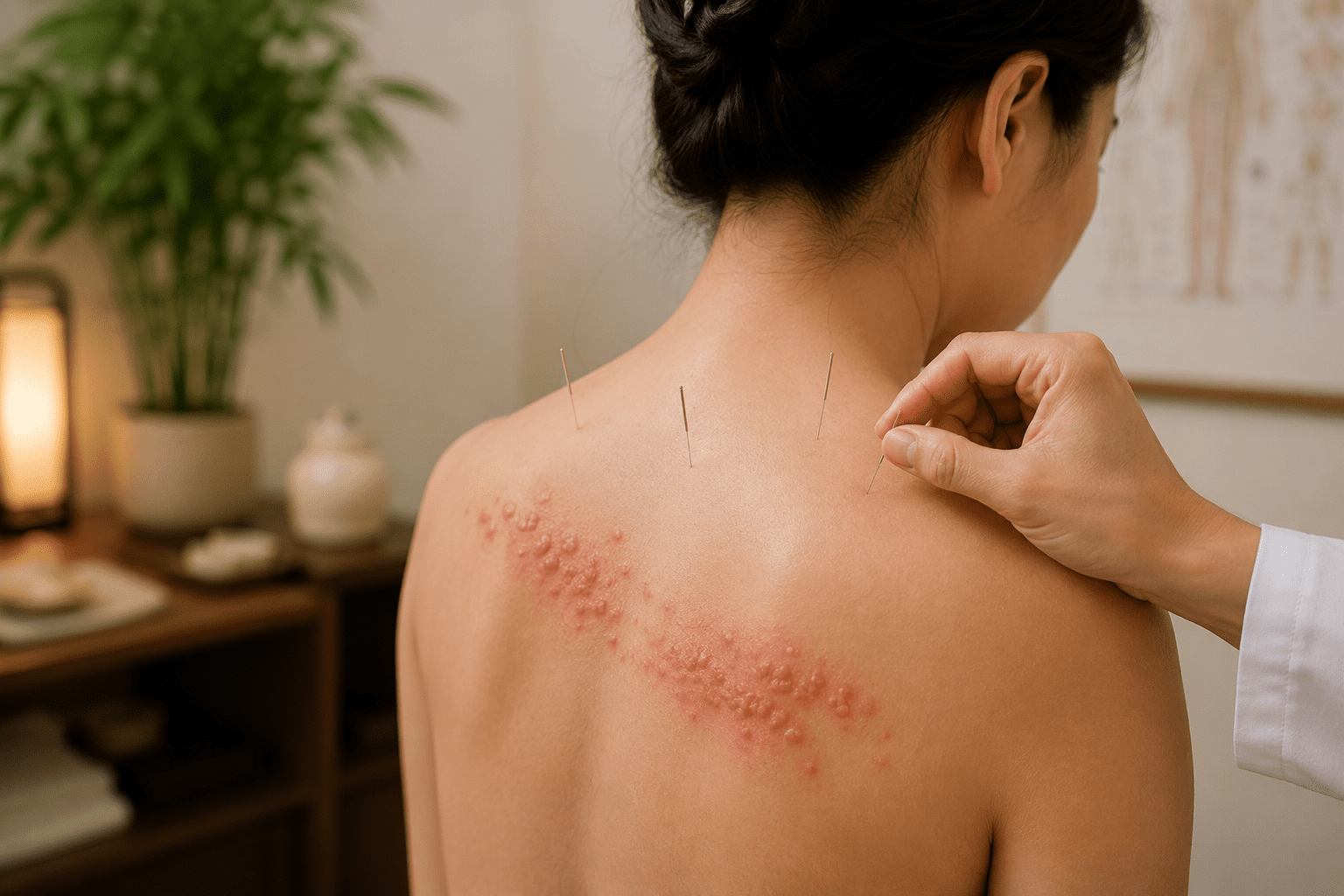
Postherpetic neuralgia is the persistent nerve pain that lasts three months or longer after a shingles outbreak. Shingles occurs when the dormant chickenpox virus reactivates and affects the skin, damaging the nerves in the process. This nerve damage can lead to misfiring even after the blisters heal. The pain typically appears as a band on one side of the body, often around the chest, back, or waist, and sometimes on the forehead or near the eye. Symptoms include burning, stabbing, aching, or electric sensations, and the affected area may become so sensitive that light touch causes pain. It can also cause itching or numbness. This condition is more common with age and can be exhausting. Acupressure can soothe the nerve and nervous system without touching the painful skin.
A key rule for this routine is to avoid pressing directly on the painful skin. In cases of postherpetic neuralgia, the affected area is often highly sensitive, and even light touch can intensify the pain. Instead, the recommended points are on the arms, legs, and hands. These points align with the same channels as the affected area but avoid touching the sore skin.
In Traditional Chinese Medicine, shingles is called “snake cinnabar” or “snake-like fire” because of the red blister band that encircles part of the body. It is viewed as damp-heat and toxic fire affecting the Liver and Gallbladder channels, which run along the sides where shingles often appears. After the outbreak, postherpetic neuralgia remains: Qi and Blood become stuck and stagnant in these channels, with lingering heat. In older individuals, Qi and Yin may be too depleted for full healing. The burning, stabbing pain indicates stagnation and residual heat, while heightened sensitivity reflects nerve and nervous system irritation.
Here are nine acupressure points that help move Qi and Blood, clear heat, nourish deficiencies, and soothe the nervous system.
What Acupressure Points to Press and Why
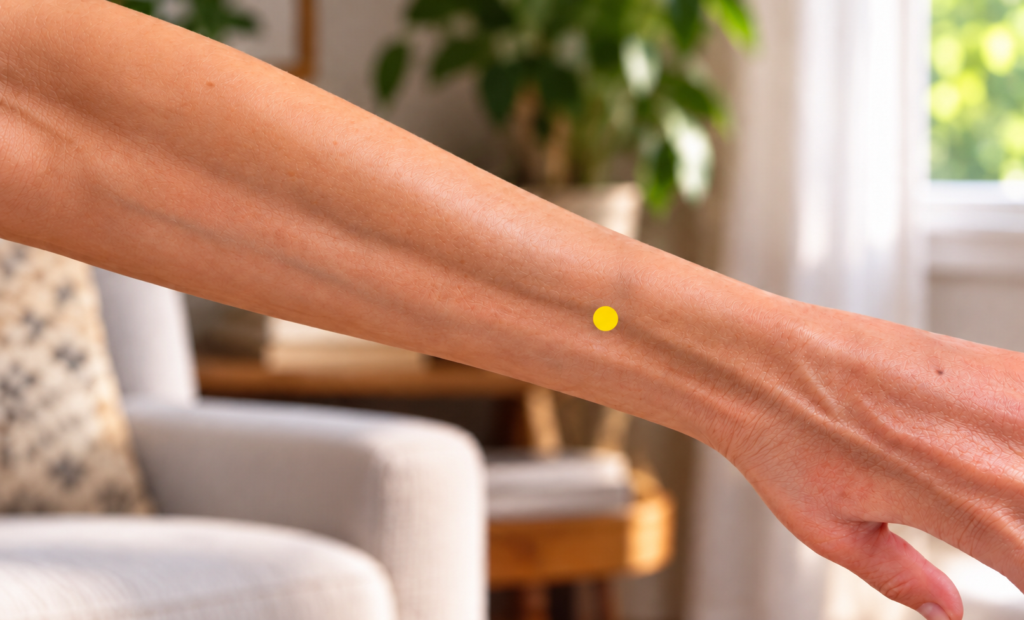
1. Press on SJ6 on the back of the forearm for pain along the side of the body. SJ6 sits on the back of the forearm, about four finger-widths above the wrist crease, in the hollow between the two forearm bones. Press firmly with your thumb for one to two minutes on each arm. SJ6 is called “Zhigou,” the “Branch Ditch.”
SJ6 is a recognized point for relieving pain along the ribs and sides, commonly affected by postherpetic neuralgia. It promotes the flow of stuck Qi in the sides of the body and clears heat, all from the forearm without touching sensitive skin. Use this point first if your pain surrounds your chest, back, or waist.
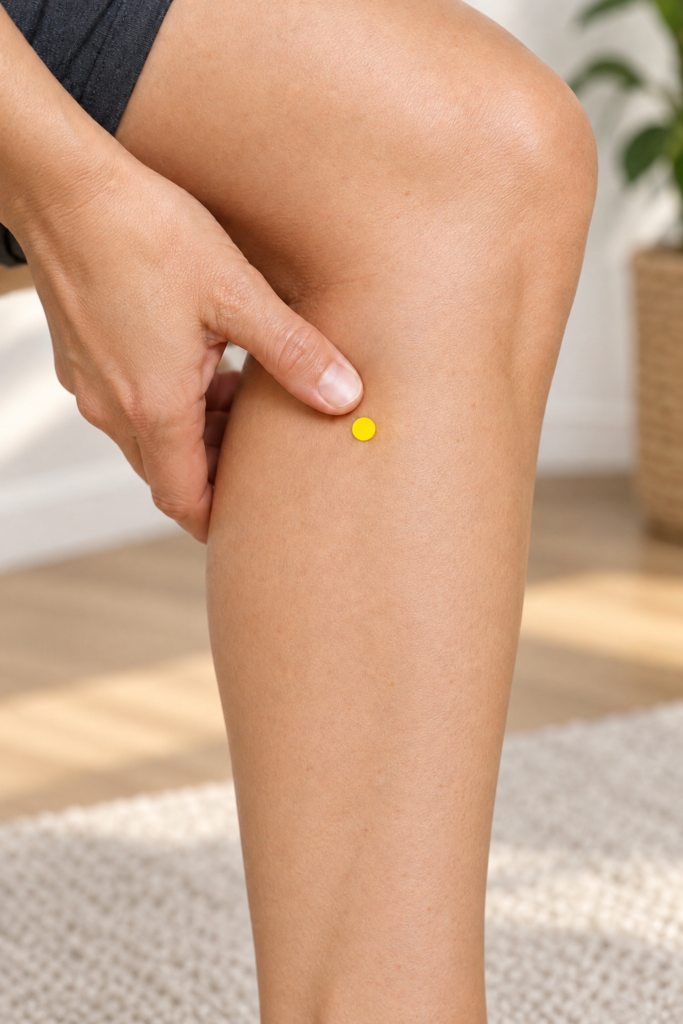
2. Press on GB34 below the outer knee to move the Gallbladder channel. GB34 sits on the outer lower leg, in the hollow just below and in front of the head of the fibula, the bony knob below the outer side of the knee. Press firmly with your thumb for one to two minutes on each leg. GB34 is called “Yanglingquan.”
The Gallbladder channel runs along the side of the body through the ribs and flank, areas where shingles frequently occur. GB34 is among the most potent points on this channel. When combined with SJ6, they form a well-known pair for alleviating pain along the sides of the torso. These points help disperse residual stagnation after shingles and eliminate any remaining damp-heat.
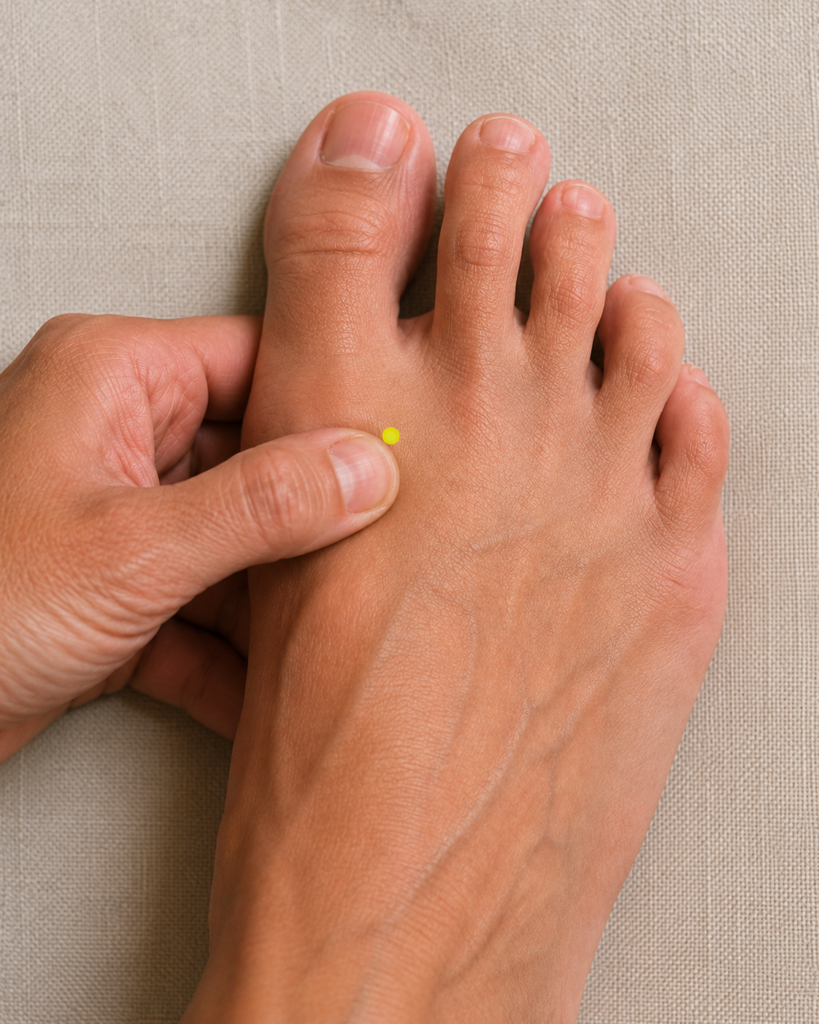
3. Press on LR3 on the top of the foot to move the Qi and clear residual heat. LR3 sits on the top of the foot, in the webbing between the big toe and second toe, about two finger-widths back where the bones meet in a small hollow. Press firmly with your thumb for one to two minutes on each foot. LR3 is called “Taichong.”
In Traditional Chinese Medicine, the Liver channel interacts closely with the Gallbladder and plays a key role in shingles. LR3 helps move stagnant Liver Qi, eliminate residual heat that causes burning pain, and reduce irritability and tension associated with chronic pain. It is effective when combined with LI4.
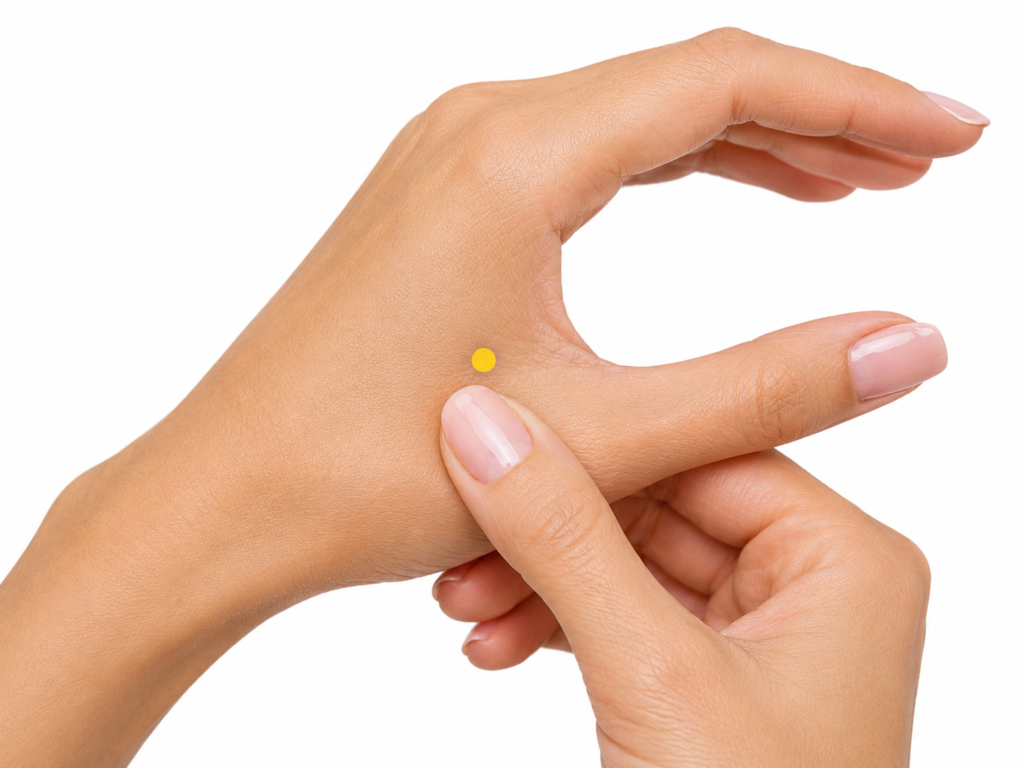
4. Press on LI4 in the hand to relieve pain throughout the body. LI4 sits in the webbing between the thumb and index finger, at the highest point of the muscle when you bring them together. Press firmly with the thumb of your other hand for one to two minutes on each hand. LI4 is called “Hegu.” LI4 is contraindicated during pregnancy.
LI4 is a highly effective point for alleviating body pain. When combined with LR3, they form the Four Gates, a well-known duo that promotes Qi flow and relieves pain throughout the body. For postherpetic neuralgia on the forehead or near the eye, LI4 serves as the primary facial point and can address the area remotely.
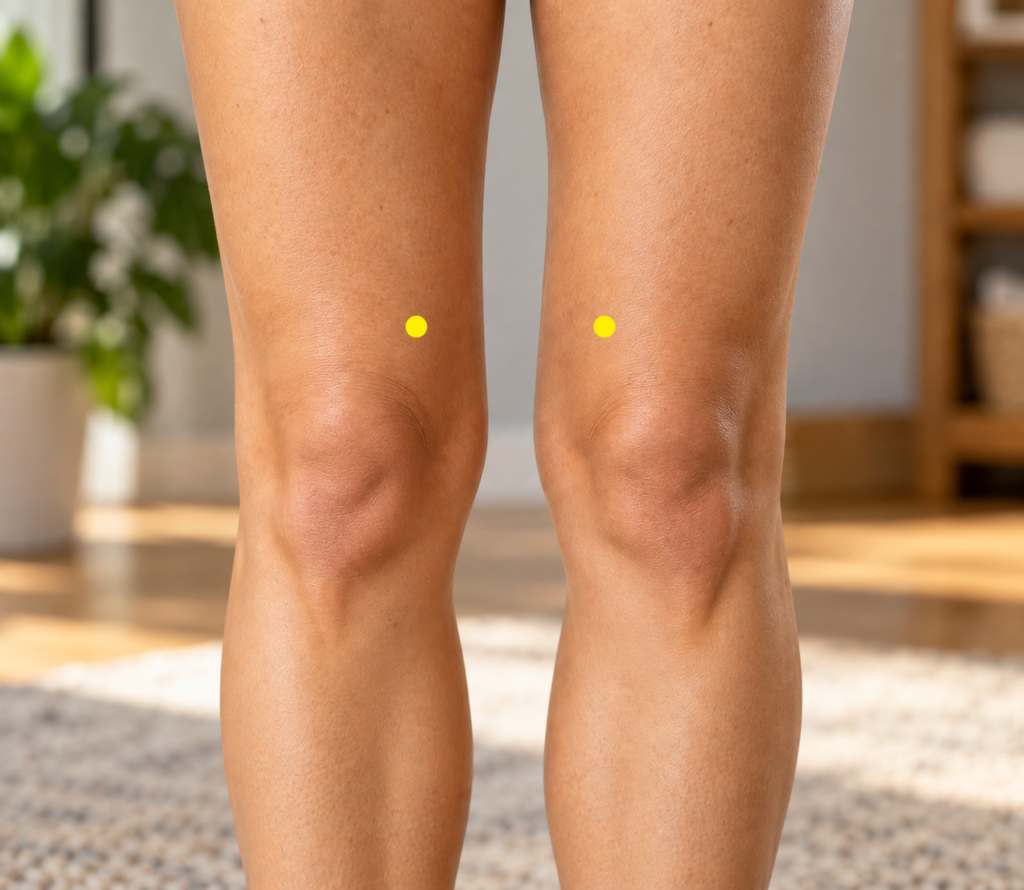
5. Press on SP10 above the knee to move stagnant Blood. SP10 sits on the inner thigh, about three finger-widths above the inner upper corner of the kneecap, on the muscle bulge there. Press firmly with your thumb for one to two minutes on each leg. SP10 is called “Xuehai,” the “Sea of Blood.”
The sharp, persistent pain of postherpetic neuralgia indicates Blood stagnation, and SP10 is a key point for promoting its movement. Additionally, SP10 helps cool heat in the Blood and is often used for skin issues, aligning with the burning and itching sensations that may persist in the affected area.
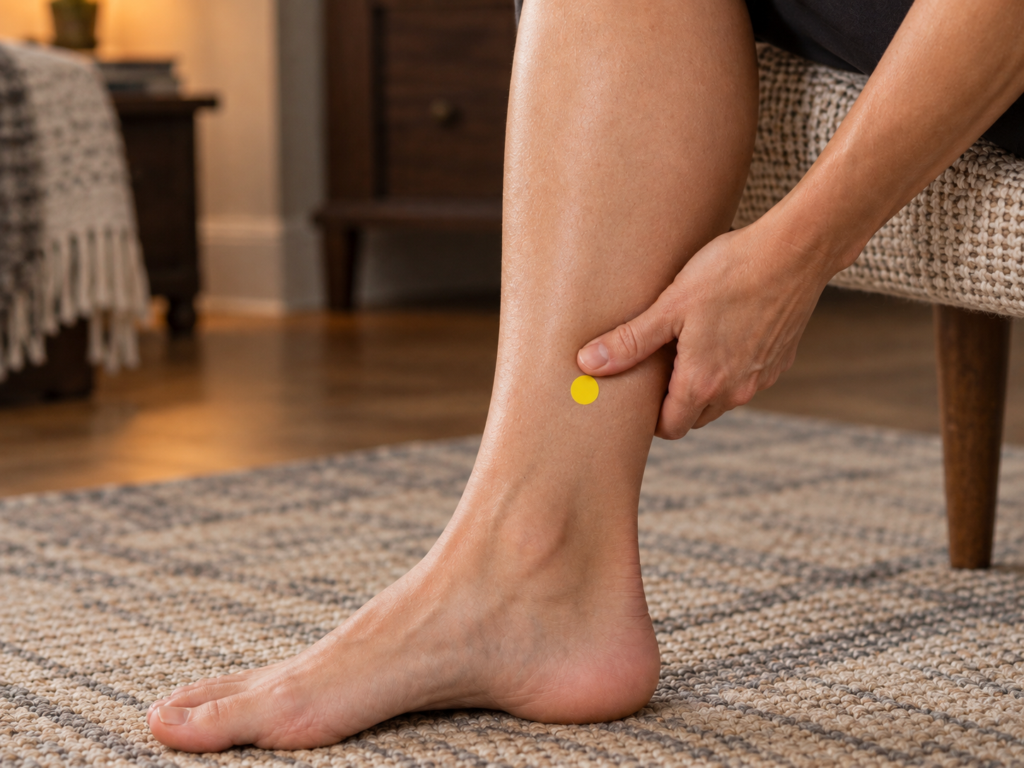
6. Press on SP6 above the inner ankle to nourish the Blood and Yin. SP6 sits four finger-widths up from the tip of the inner ankle bone, just behind the back edge of the shinbone. Press firmly for one to two minutes on each leg. SP6 is called “Sanyinjiao,” the “Three Yin Intersection.” SP6 is contraindicated during pregnancy.
Postherpetic neuralgia frequently occurs in older adults, who often have lower Blood and Yin. Insufficient nourishment impairs nerve healing. SP6 enhances the nourishment and movement of Blood and Yin and promotes better sleep, which nerve pain often disrupts.
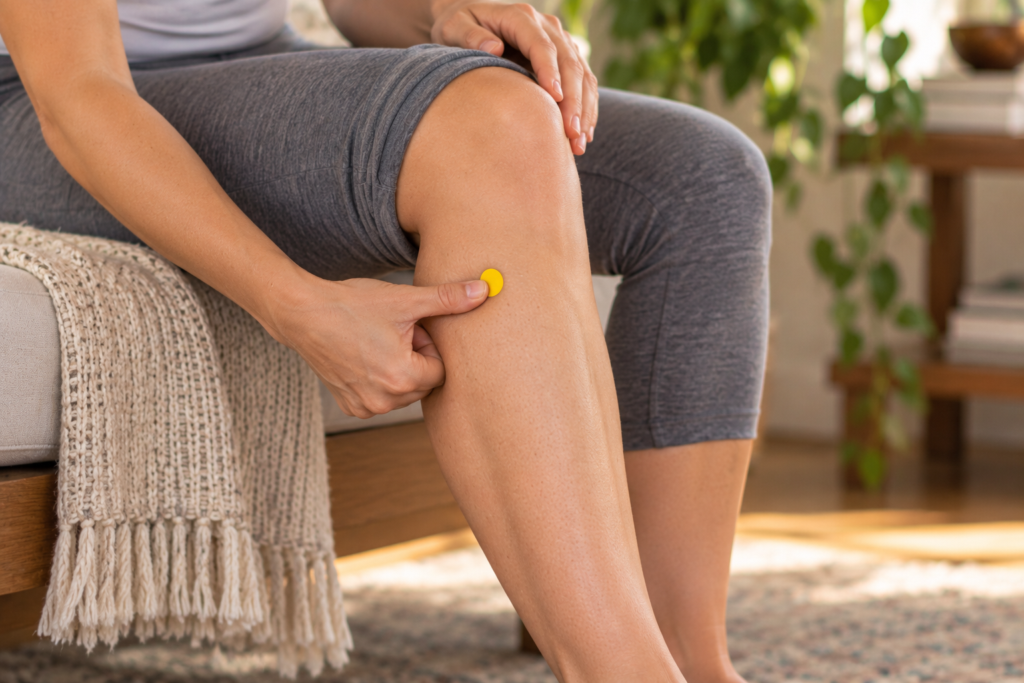
7. Press on ST36 below the knee to rebuild the strength to heal. ST36 sits four finger-widths below the lower edge of the kneecap and one finger-width to the outside of the shinbone, on the muscle that rises when you flex your foot. Press firmly with your thumb for one to two minutes on each leg. ST36 is called “Zusanli,” the “Leg Three Miles.”
Shingles usually occur when the body’s defenses are weakened, and persistent nerve pain can further drain your energy. ST36 helps restore Qi and Blood, boosts your immune system, and provides the strength needed for nerve repair. This point is beneficial to use daily.
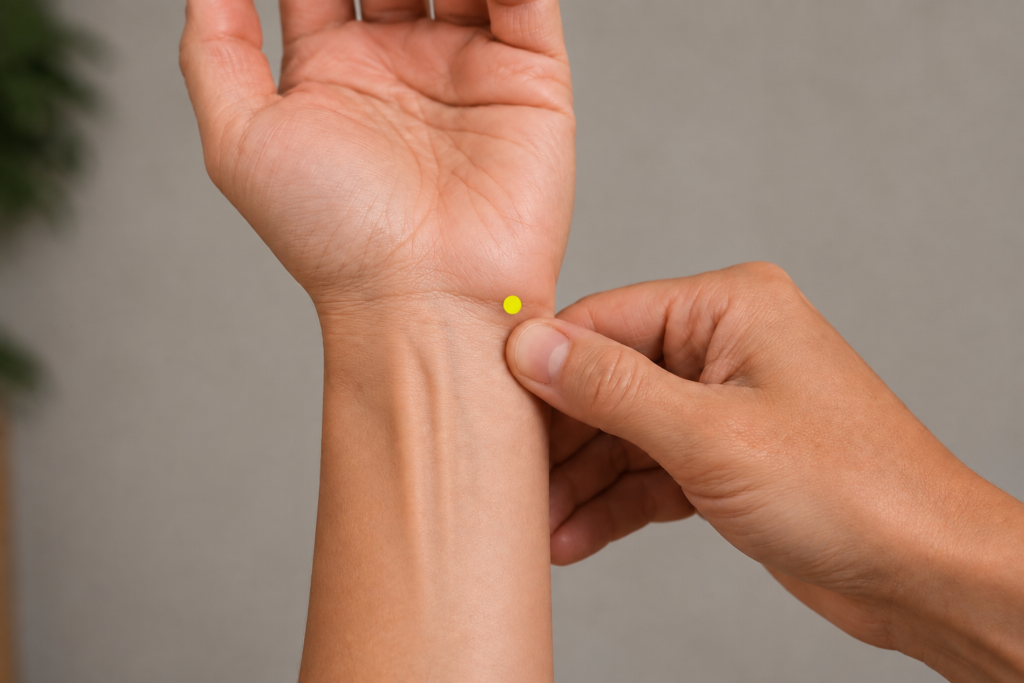
8. Press on HT7 at the wrist to calm a raw, reactive nervous system. HT7 sits on the inner wrist crease, on the pinky side, in the small hollow just inside the tendon. Press firmly with your thumb for one to two minutes on each wrist. HT7 is called “Shenmen,” the “Spirit Gate.”
In postherpetic neuralgia, the nervous system becomes hypersensitive, intensifying pain and causing normal touch to feel uncomfortable. Insomnia and anxiety can worsen these symptoms. HT7 calms the Heart and soothes the Shen, relieving anxiety, restlessness, and sleep difficulties. It is especially beneficial at bedtime.
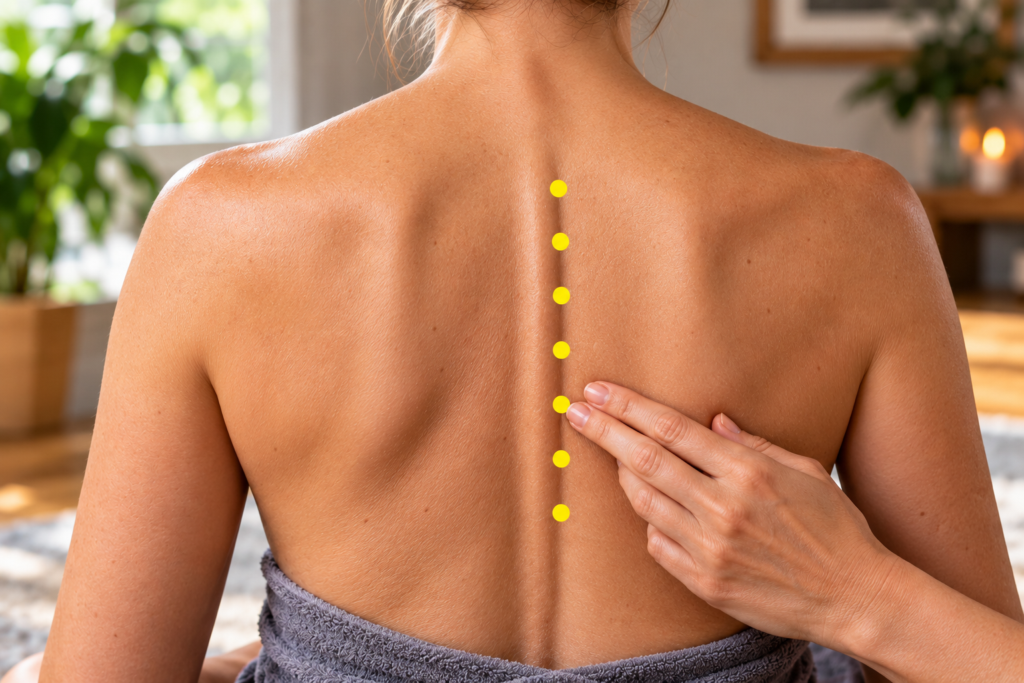
9. Press on the Jiaji points beside the spine, only if the area is not tender. The Jiaji points run along both sides of the spine, about half a thumb-width out from the bony bumps of the vertebrae. For postherpetic neuralgia on the chest, back, or waist, the relevant points sit beside the spine at the same level as the painful band, on the affected side. If that area of the back is not sensitive, press gently with your fingertips for about a minute, or have someone do it for you. If it is tender or part of the painful area, skip this point.
The shingles virus persists in the nerve root near the spine, causing a painful band on the trunk that runs along that nerve from its origin. The Jiaji points at this level target the nerve at its origin, which is why acupuncturists often use them to treat postherpetic neuralgia. For many individuals, the skin next to the spine is less sensitive than the painful band, but always prioritize what feels comfortable for you.
Why These Acupressure Points Work
In Traditional Chinese Medicine, postherpetic neuralgia is considered a state of stagnation, residual heat, and depletion resulting from shingles, trapped within the channels along the body’s sides. The nine points listed above effectively target these issues without disturbing the painful skin.
- The side-channel points (SJ6, GB34, LR3) help move stuck Qi along the ribs and flanks, eliminating residual heat.
- The pain and Blood points (LI4, SP10) help alleviate pain throughout the body and promote the movement of stagnant Blood, with LI4 and LR3 forming the Four Gates.
- The nourishing points (SP6, ST36) help rebuild the body’s Qi, Blood, and Yin, supporting nerve repair.
- The calming point (HT7) helps calm the overstimulated nervous system.
- The Jiaji points work on the nerve root where the painful band begins, when the area allows.
Some small clinical studies suggest that acupuncture may help reduce postherpetic neuralgia pain, though research is still limited. Acupressure lets you work on similar points at home every day.
How to Properly Use These Acupressure Points
- Avoid pressing on or around the painful spot, the healed rash, or any skin that feels sensitive to touch.
- Start with SJ6 and GB34, then proceed to the Four Gates, LI4, and LR3. Next, focus on SP10, SP6, and ST36 on the legs, and conclude with HT7.
- Add the Jiaji points along the spine at the level of the pain only if that area of the back is not tender.
- Apply steady pressure to each point for one to two minutes, and repeat the routine once or twice daily.
- Keep taking your prescribed medications and using any patches or creams your doctor recommended. Acupressure complements these treatments.
Managing sensitive skin daily requires wearing soft, loose, breathable clothing to prevent irritation. Covering the affected area with a smooth, thin layer, such as a soft dressing or undershirt, can reduce friction and discomfort. Using a cool, damp cloth may soothe burning sensations, but direct contact with ice should be avoided. Additionally, maintaining a consistent sleep routine, engaging in gentle activity, and managing stress are vital, as fatigue and tension can worsen nerve pain.
When to Get Professional Help
Consult your doctor to manage postherpetic neuralgia, as medications and patches can be very effective, and unrelieved pain requires medical attention. If a new shingles rash appears, see a doctor within three days of the first signs; early antiviral treatment can shorten the outbreak and lower the risk of prolonged nerve pain. Seek urgent care if shingles occurs on your forehead, around your eye, or on the tip of your nose, as this could threaten your vision. Additionally, get help for a rash that spreads widely with fever, confusion, severe headache, weakness, or signs of infection like spreading redness, warmth, or pus. Contact your doctor if your pain changes, spreads, or remains uncontrolled.
Chronic nerve pain can be emotionally draining, so inform your doctor if you’re struggling. If you’re considering self-harm, contact the 988 Suicide and Crisis Lifeline immediately.
Acupressure provides a gentle and supportive option to enhance your medical treatment.
Above and Beyond Acupuncture offers acupuncture, cupping, and lifestyle coaching at the North Frank Lloyd Wright Boulevard location in Scottsdale.
Schedule an appointment online to start your healing journey.
The points above are only as effective as the technique used to apply them. Where to press, how firmly, and for how long all affect the result. For a full breakdown of how to perform acupressure properly at home, read Performing Acupressure in 3 Easy Steps.

About the Publisher
Paul Kerzner, L.Ac., is a licensed acupuncturist and board-certified herbalist, as well as the founder of Above and Beyond Acupuncture in Scottsdale. His own journey from chronic patient to practicing acupuncturist shapes his commitment to providing honest, clinically grounded information about acupuncture and Traditional Chinese Medicine. Learn more about Paul and his clinical approach on the About Us page.