
Key Takeaways
- Neuropathy disrupts daily life, causing pain, tingling, and numbness; it affects about 20 million Americans.
- Acupressure offers a supportive technique to improve circulation and nerve function for neuropathy patients.
- Ten specific acupressure points provide relief for hand and foot neuropathy and can be used daily for symptom management.
- Consistency in practicing the acupressure protocol enhances results, typically showing improvement in two to four weeks.
- Seek professional help for severe symptoms or complications related to neuropathy; acupressure complements traditional care but does not replace it.
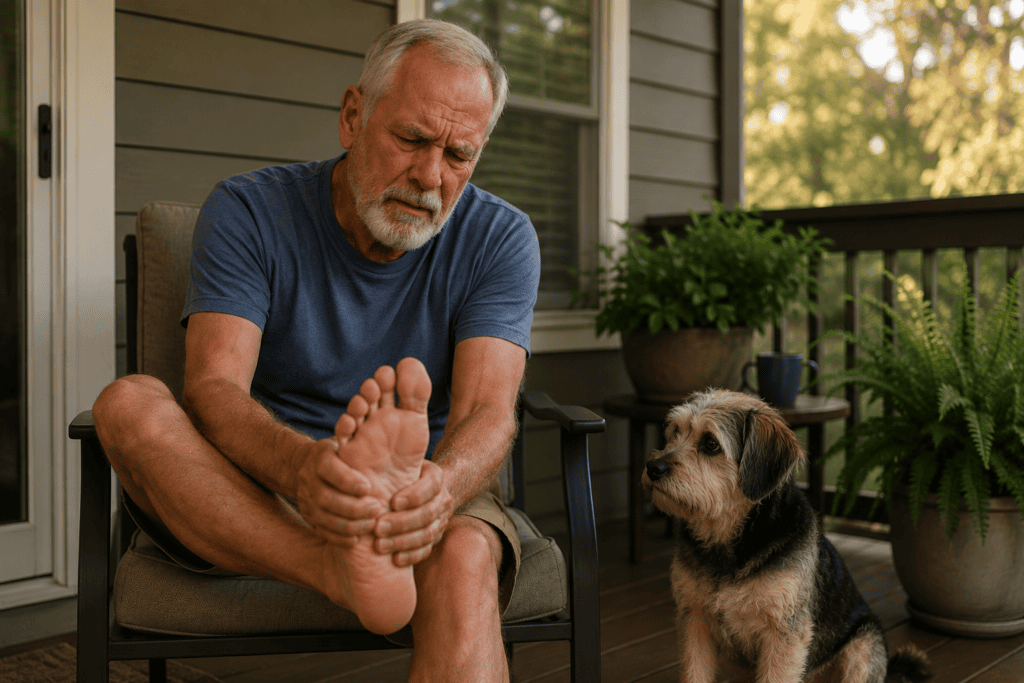
If you have neuropathy you already know how disruptive it becomes to daily life. The burning pain that intensifies at night. The tingling and pins-and-needles sensations in your hands and feet. The numbness that makes walking feel unstable. The loss of sensation that makes it difficult to notice injuries.
Neuropathy affects roughly 20 million Americans, and standard Western care with gabapentin, pregabalin, and other nerve pain medications often helps manage symptoms but rarely addresses the underlying nerve dysfunction.
Acupressure offers a supportive therapy you can use daily at home to address the circulation, nerve function, and symptom patterns that neuropathy produces. This technique will not replace medical care for the underlying cause of your neuropathy. What it can do is support the nerve function and circulation that standard Western care alone often cannot fully address.
An important note before starting. Patients with peripheral neuropathy who have significant loss of sensation should apply acupressure carefully. Pressing points on affected regions where you cannot fully feel the pressure requires visual attention to avoid pressing too hard. Work with lighter pressure than you might use elsewhere and check the skin regularly for any signs of irritation.
For patients wanting to include acupuncture in their healing regimen, Can Acupuncture Treat Neuropathy? covers the Traditional Chinese Medicine perspective on this condition and how to treat it naturally.
Here are ten acupressure points that help:
What Acupressure Points to Press and Why
Each point addresses a different aspect of the neuropathy pattern. You can use them individually during symptom flares or work through the full protocol daily as maintenance.
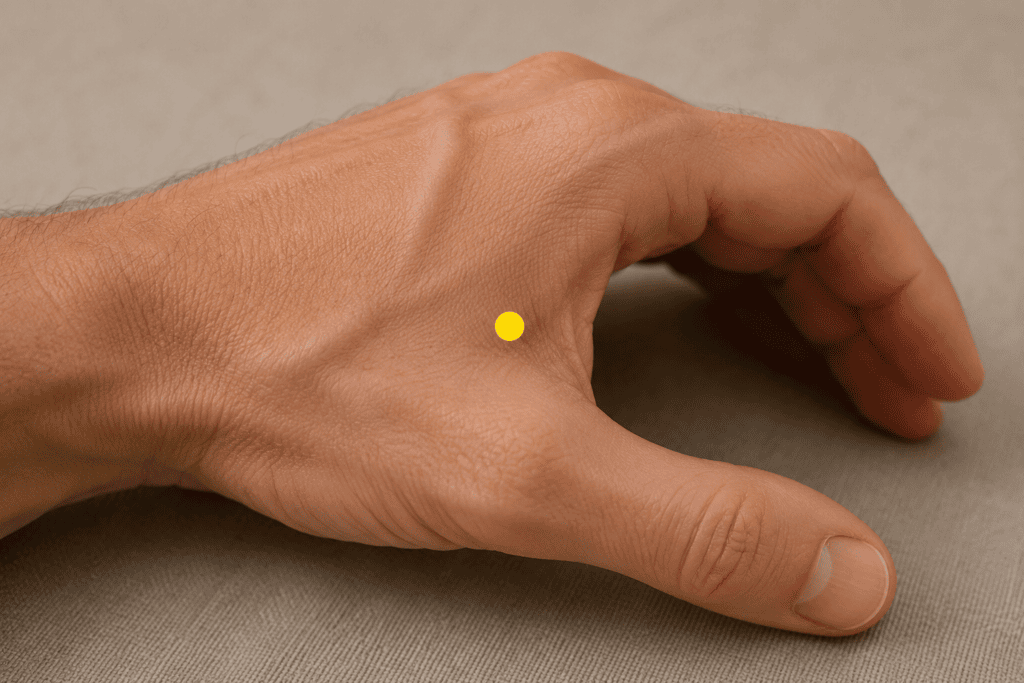
1. Press on LI4 in the webbing between your thumb and index finger for the hand command point. LI4 sits in the soft tissue webbing between the thumb and index finger, in the muscle that bulges when the thumb is pressed against the side of the index finger. Press firmly with the thumb of the opposite hand for one to two minutes on each hand. LI4 is the classical command point for the face and head and one of the primary points for hand circulation.
The point supports circulation to the hands and provides general pain modulation. For patients with neuropathy affecting the hands, LI4 is one of the most important points to include in daily practice. LI4 is contraindicated during pregnancy.
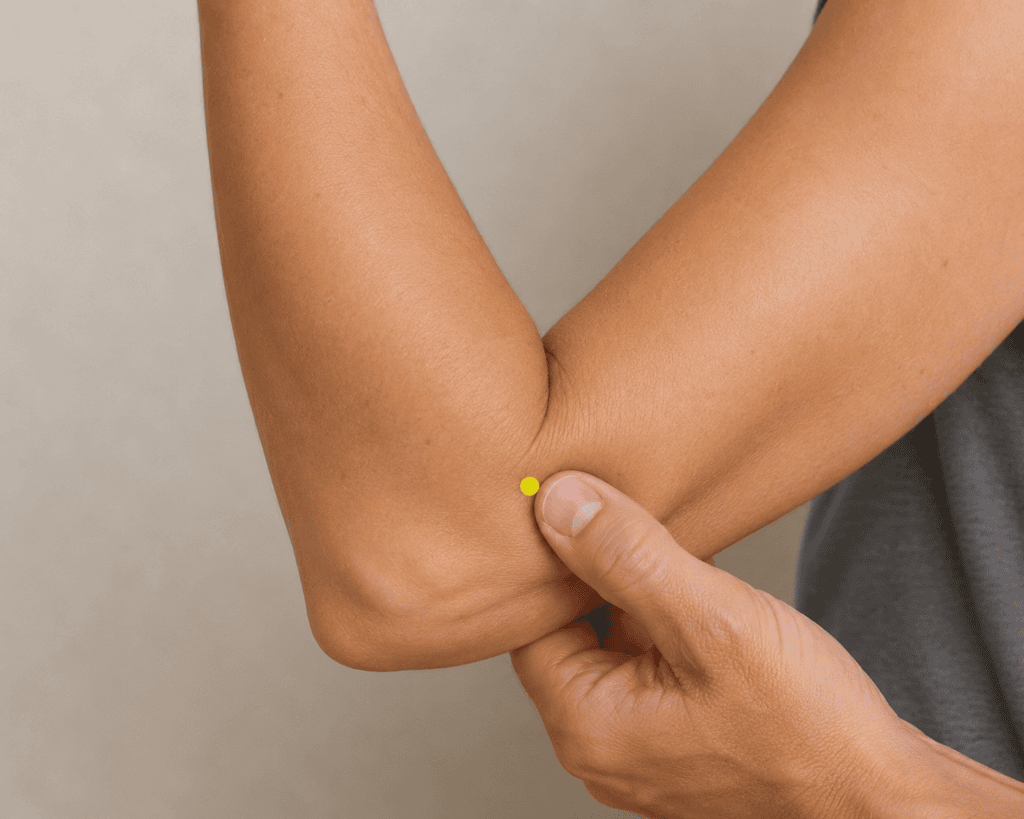
2. Press on LI11 at the elbow crease for arm circulation and Blood movement. LI11 sits at the outer end of the elbow crease when the arm is bent, in the depression between the end of the crease and the outer edge of the elbow. Press firmly with the thumb of the opposite hand for one to two minutes on each arm. LI11 is called “Quchi” and is one of the primary points for moving Blood and supporting circulation through the arms.
The point works particularly well for neuropathy affecting the hands and arms. LI11 clears Heat and moves Blood, which addresses the Blood Stagnation pattern that Chinese medicine identifies as underlying most neuropathy.
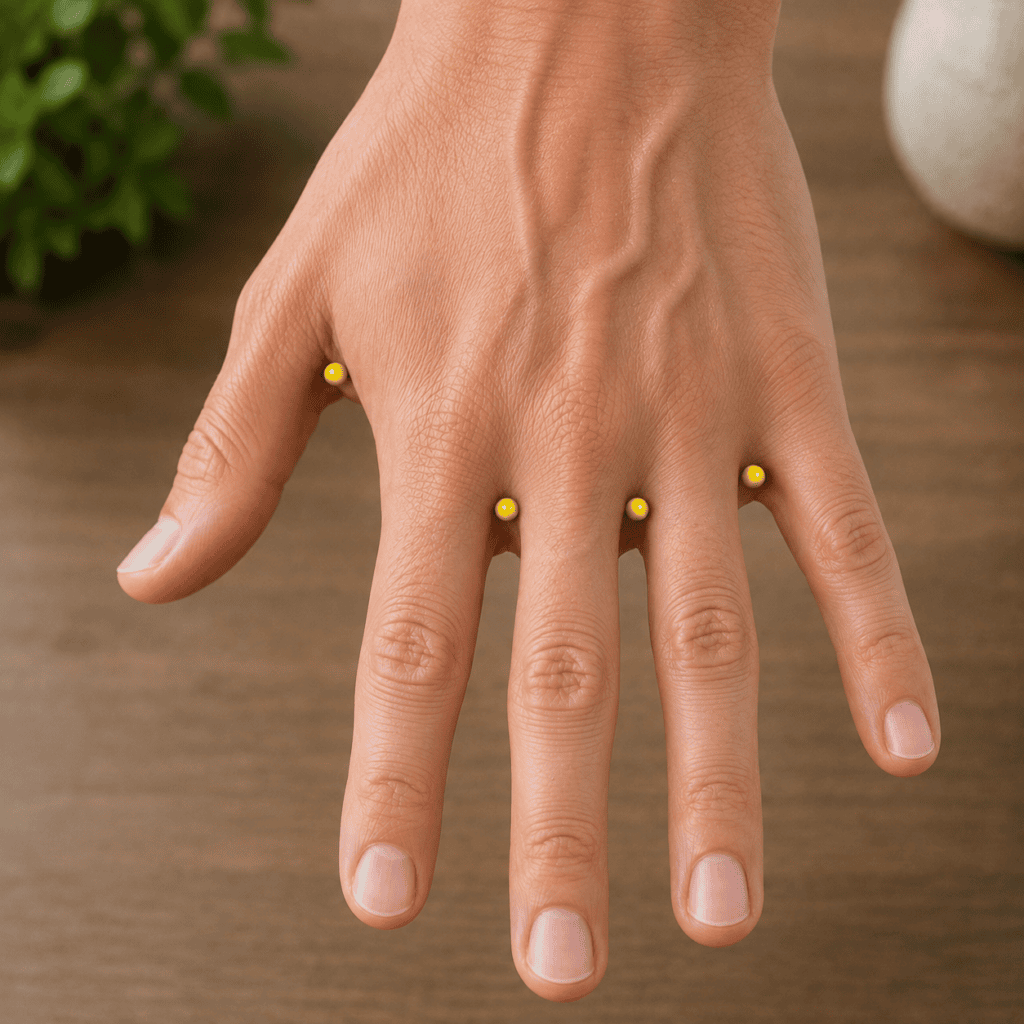
3. Press on Ba Xie in the webbings between your fingers for hand neuropathy. Ba Xie are extra points located in the webbings between the fingers, at the junction where the fingers meet the hand. There are four Ba Xie points on each hand, sitting between the first and second fingers, second and third, third and fourth, and fourth and fifth. Press firmly with the thumb and index finger of the opposite hand into each webbing for thirty seconds to one minute per point.
Ba Xie translates to “Eight Pathogens” and is one of the classical point groups specifically indicated for hand neuropathy. The numbness, tingling, and burning sensations that define diabetic and chemotherapy-induced peripheral neuropathy in the hands respond directly to Ba Xie stimulation. The name reflects the Chinese medicine understanding that pathogenic factors affect the extremities and produce the symptoms of neuropathy.
4. Press on ST36 below your knee for Qi and Blood tonification. ST36 sits about four finger-widths below the kneecap, one finger-width to the outside of the shinbone in the muscular depression there. Press firmly with your thumb for one to two minutes on each leg. ST36 tonifies Qi and Blood and supports circulation to the legs and feet.
The point is one of the most important for peripheral neuropathy affecting the feet. Regular use of ST36 addresses the Qi and Blood deficiency pattern that produces the numbness and weakness in long-standing neuropathy.
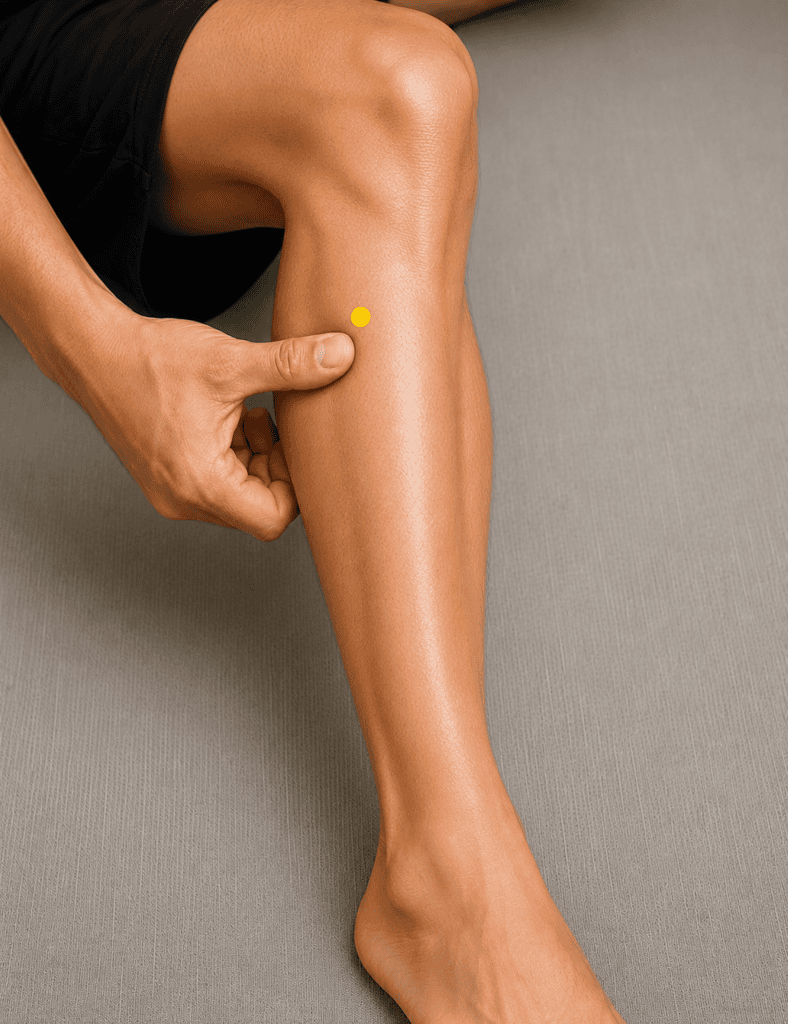
5. Press on GB34 below your outer knee for tendon and circulation support. GB34 sits in the depression on the outer side of the leg just below the knee, in front of and below the head of the fibula. Press firmly with your thumb for one to two minutes on each leg. GB34 is the influential point for tendons and ligaments and supports circulation through the leg.
The point addresses the muscular tension and circulatory patterns that develop in the legs of neuropathy patients. GB34 works particularly well combined with ST36 for comprehensive leg support.
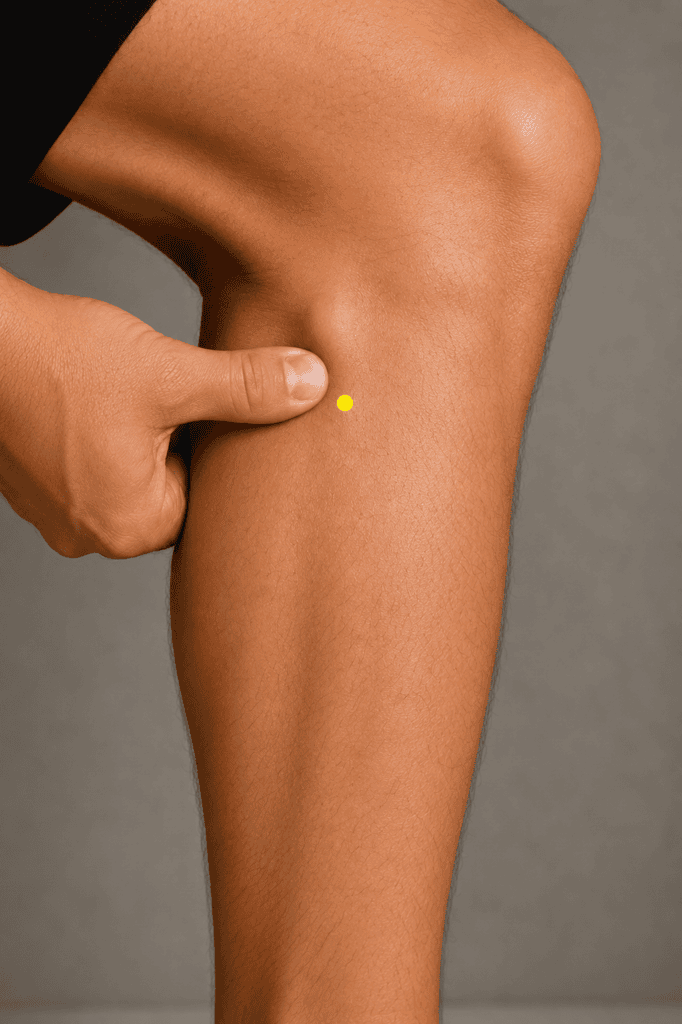
6. Press on SP6 above your inner ankle for the three Yin meeting point. SP6 sits about four finger-widths above the inner ankle bone, just behind the shinbone. Press firmly with your thumb for one to two minutes on each leg. SP6 is called “Three Yin Intersection” and is where the Spleen, Liver, and Kidney meridians meet.
The point supports all three of these systems that connect to the feet in neuropathy. The Spleen produces Qi and Blood that reach the extremities. The Liver moves Blood and stores Blood for the feet. The Kidney governs the constitutional support that long-standing neuropathy depletes. SP6 supports all three at once. SP6 is contraindicated during pregnancy.
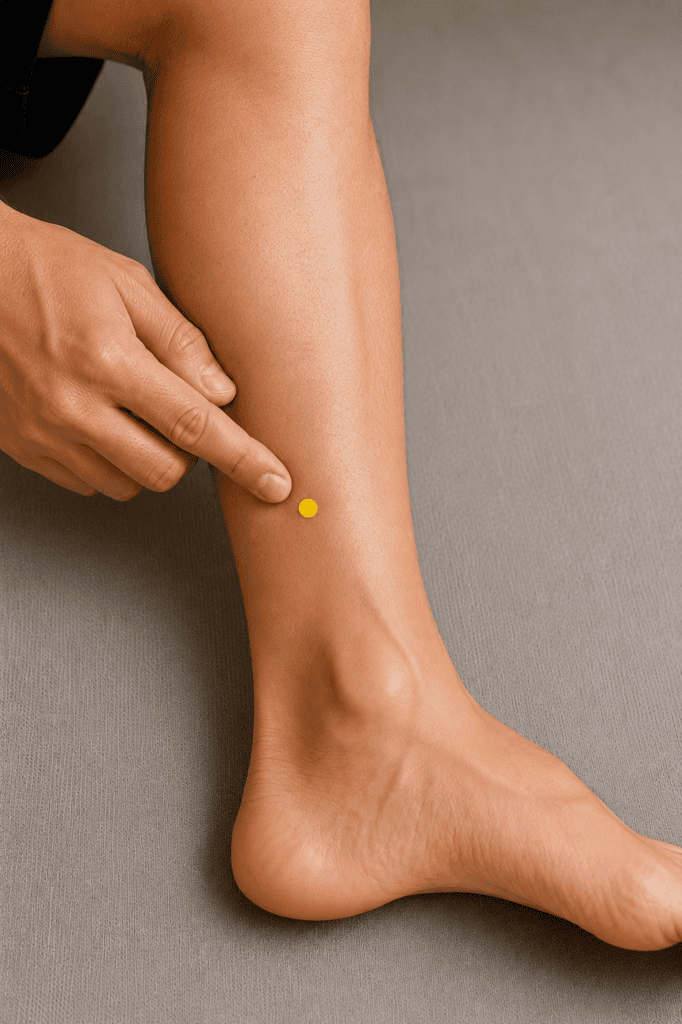
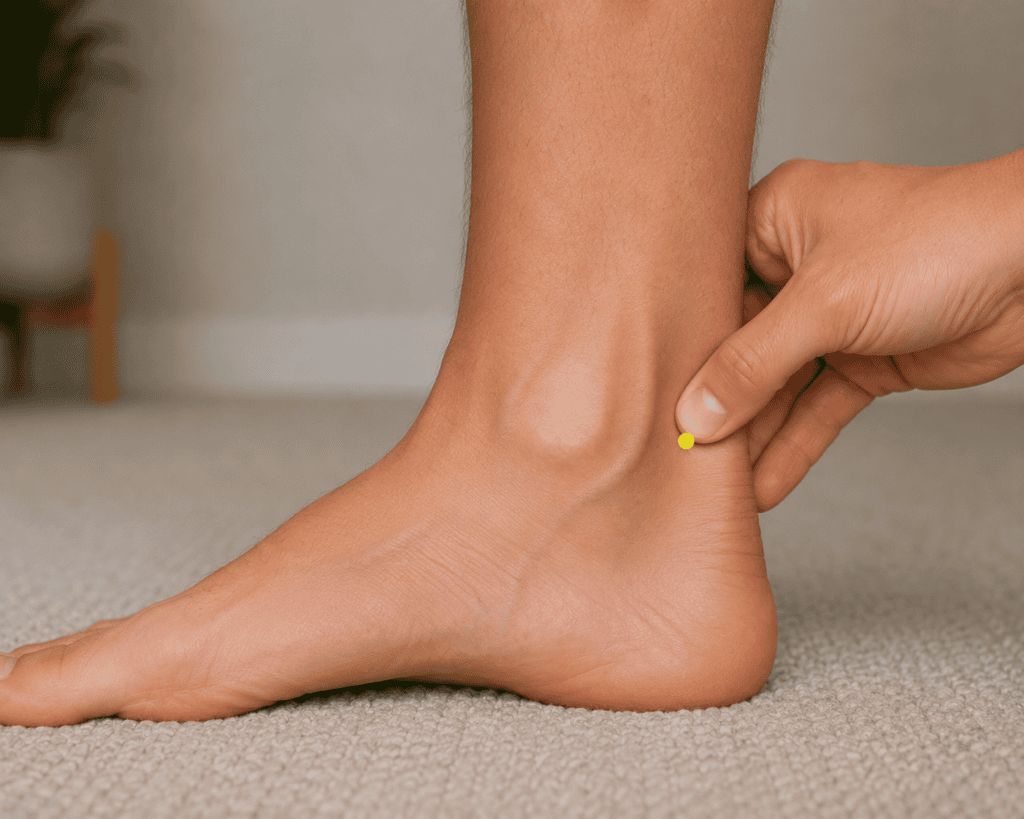
7. Press on KI3 behind your inner ankle for Kidney essence support. KI3 sits in the depression behind the inner ankle bone, between the ankle bone and the Achilles tendon. Press firmly with your thumb for one to two minutes on each leg. KI3 tonifies Kidney essence.
In Chinese medicine, long-standing neuropathy depletes the Kidney essence that supports the deep function of the extremities. KI3 addresses this constitutional pattern that separates patients with recent neuropathy from those who have been managing the condition for years. Regular use of KI3 supports the deep reserves that chronic neuropathy depletes.
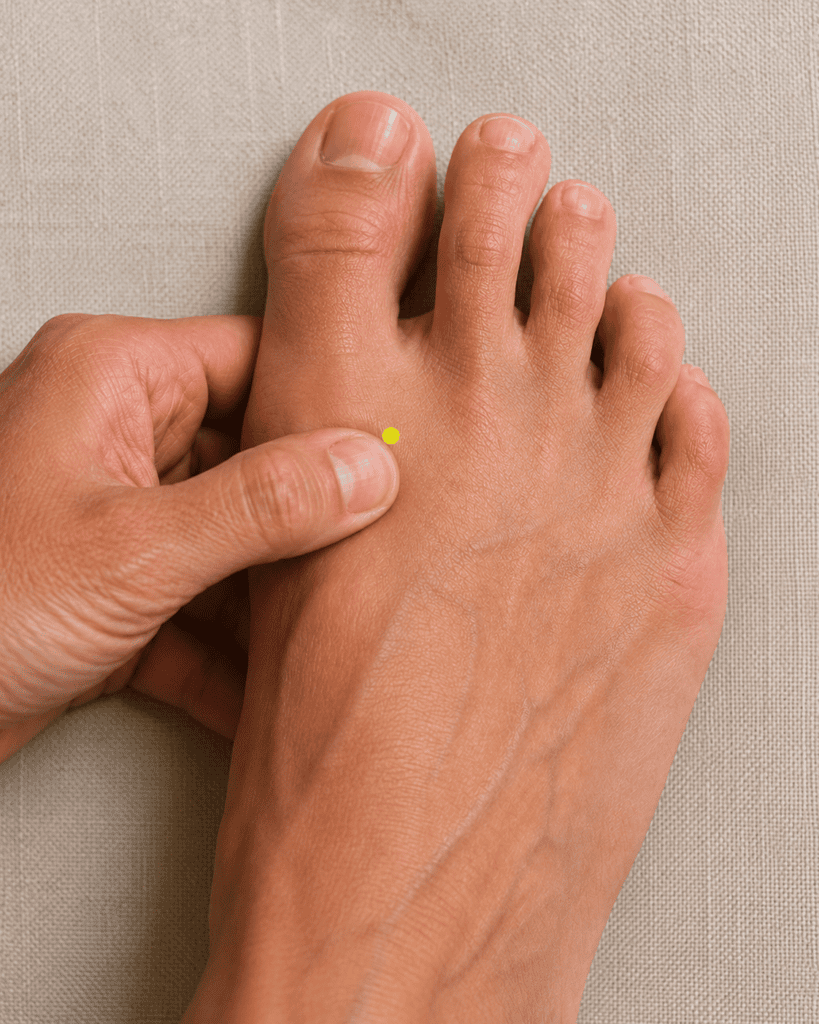
8. Press on LR3 on top of your foot for Liver Qi and Blood movement. LR3 sits on the top of the foot in the webbing between the first and second toes, about two finger-widths back from the web. Press firmly with your thumb for one to two minutes on each foot. LR3 is called “Great Rushing” and moves Liver Qi and Blood.
The point directly addresses the Blood Stagnation pattern in the feet that produces the burning pain and altered sensation of peripheral neuropathy. LR3 combined with LI4 (called the Four Gates in Chinese medicine) is one of the strongest combinations for moving Qi and Blood throughout the body.
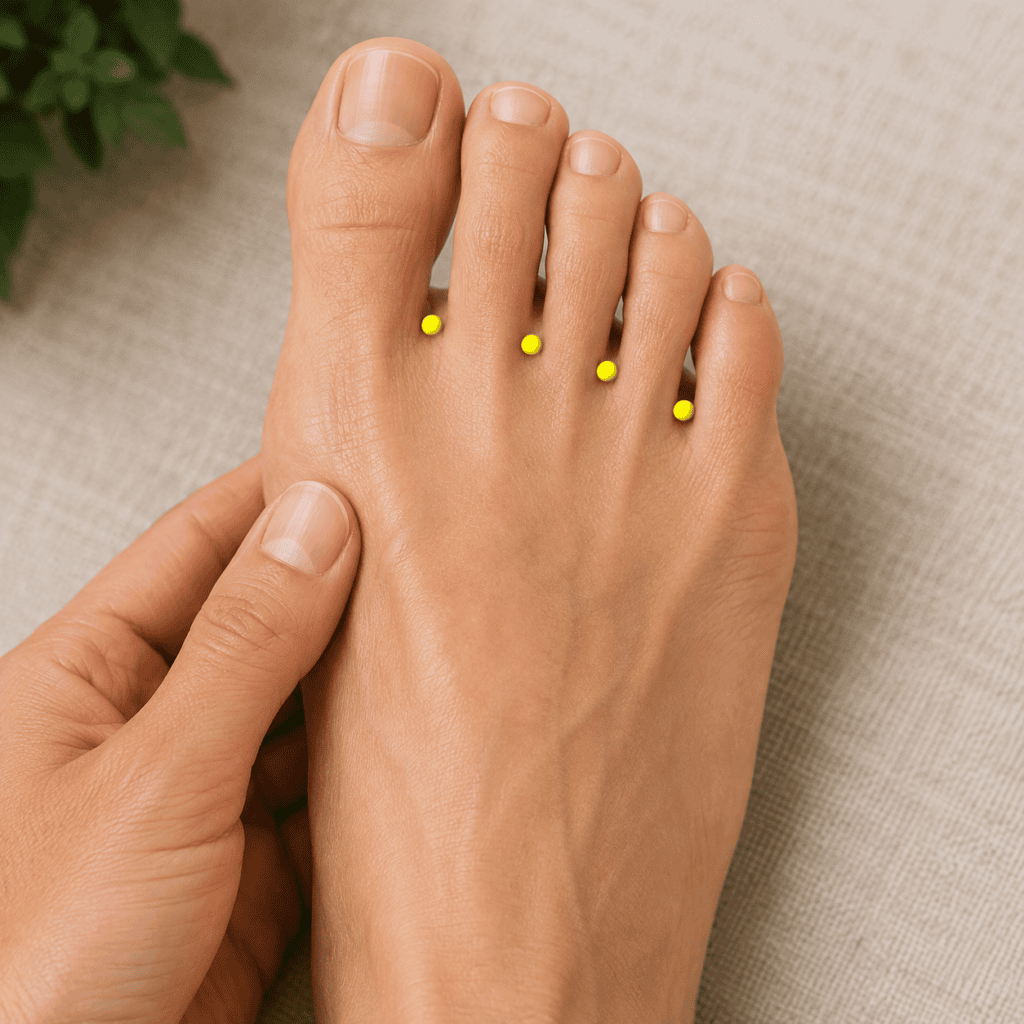
9. Press on Ba Feng in the webbings between your toes for foot neuropathy. Ba Feng are extra points located on the top of the foot in the webbings between the toes, at the junction where the toes meet the foot. There are four Ba Feng points on each foot, sitting between the first and second toes, second and third, third and fourth, and fourth and fifth. Press firmly with your thumb into each webbing for thirty seconds to one minute per point.
Ba Feng translates to “Eight Winds” and is one of the classical point groups specifically indicated for peripheral neuropathy in the feet. The numbness, tingling, burning pain, and pins-and-needles sensations that define diabetic and chemotherapy-induced peripheral neuropathy respond directly to Ba Feng stimulation. The name reflects the Chinese medicine understanding that Wind invasion affects the extremities and produces the moving, unpredictable symptoms of neuropathy.
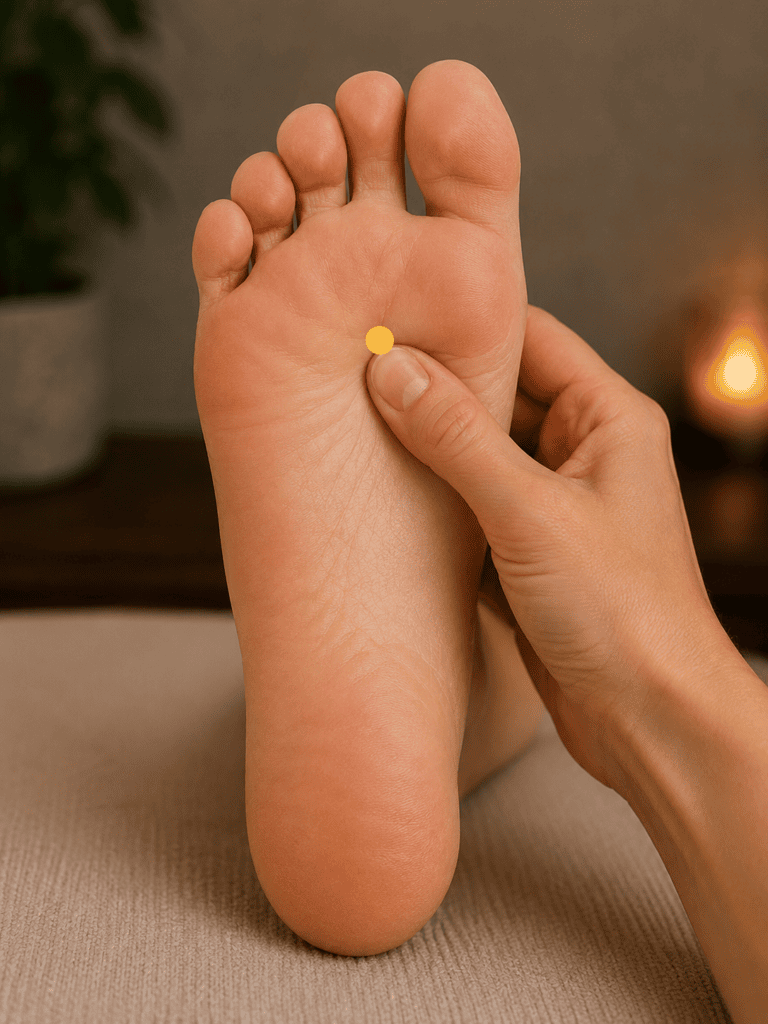
10. Press on KI1 on the sole of your foot for grounding and Kidney meridian activation. KI1 sits on the sole of the foot in the depression that appears when you curl your toes downward, about one-third of the way from the base of the toes to the heel. Press firmly with your thumb for one to two minutes on each foot. KI1 is called “Yongquan” or “Bubbling Spring” and is the first point on the Kidney meridian.
The point directly activates the Kidney meridian at its root and pulls Qi and Blood downward into the feet. For neuropathy patients, KI1 provides substantial support because the point sits directly in the affected region and connects to the constitutional foundation that long-standing neuropathy depletes. Ending the acupressure protocol with KI1 provides a natural anchoring effect that reinforces all the circulation and constitutional work of the previous points.
Why These Acupressure Points Work
Neuropathy involves several overlapping patterns. The nerves cannot receive adequate circulation to function properly. The Qi and Blood do not reach the extremities in sufficient quantity. The Blood becomes stagnant in the affected regions. The constitutional foundation becomes depleted in long-standing cases. Chronic inflammation contributes to the nerve dysfunction. Pathogenic factors including Wind affect the extremities and produce the shifting quality of symptoms.
Acupressure works on several of these patterns at once.
- The hand and arm points (LI4, LI11) support circulation and Blood movement in the upper extremities where hand neuropathy occurs.
- The hand webbing points (Ba Xie) directly address the pathogenic patterns underlying hand neuropathy through classical extra points specifically indicated for the condition.
- The leg support points (ST36, GB34) tonify Qi and Blood and support circulation to the legs.
- The three Yin meeting point (SP6) supports the Spleen, Liver, and Kidney systems that all connect to the feet.
- The constitutional support point (KI3) addresses the deep Kidney depletion that separates long-standing neuropathy from more recent onset.
- The Blood moving point in the feet (LR3) addresses the Blood Stagnation pattern that produces the burning pain of peripheral neuropathy.
- The foot webbing points (Ba Feng) directly address the Wind pattern underlying foot neuropathy through classical extra points specifically indicated for the condition.
- The Kidney meridian activation point (KI1) grounds the treatment and connects to the constitutional foundation.
The chronic inflammation that underlies many neuropathy patterns responds well to acupressure.
How to Use These Acupressure Points
For daily maintenance, working through the full ten-point protocol once or twice a day supports the circulation and nerve function patterns over time. Consistency matters. Two to four weeks of daily practice typically produces measurable improvement in symptom burden.
- For hand neuropathy specifically, LI4, LI11, and Ba Xie pressed together produce the strongest response. This combination directly addresses the local, distal, and classical extra point patterns for hand involvement. Press these points multiple times a day if symptoms are severe.
- For foot neuropathy specifically, ST36, SP6, KI3, LR3, Ba Feng, and KI1 pressed together produce the strongest response. This six-point protocol addresses all the major patterns in the feet at once, including the classical extra points and the constitutional foundation.
- For burning pain that intensifies at night, LR3, KI3, and Ba Feng pressed before bed help move the Blood and support the constitutional patterns that contribute to nighttime symptoms.
- For numbness and pins-and-needles, ST36, SP6, Ba Feng (for feet), and Ba Xie (for hands) pressed together tonify the Qi and Blood needed to restore sensation in the affected regions.
- For diabetic or chemotherapy-induced peripheral neuropathy specifically, Ba Feng and Ba Xie are the most important points to include. These classical extra points have been used for centuries specifically for peripheral neuropathy patterns and address the extremities directly where the nerve damage lives.
- Firm sustained pressure works well for all points. Adjust pressure downward if the affected region has significant loss of sensation to avoid pressing too hard.
Pairing acupressure with basic neuropathy management amplifies the results. Regular gentle movement including walking, swimming, or tai chi to support circulation. Anti-inflammatory nutrition to reduce systemic inflammation. B vitamin support particularly B12 for nerve function. Adequate hydration. Foot care including regular inspection for patients with reduced foot sensation. Blood sugar control for diabetic neuropathy patients.
When to Get Professional Help
The tools above support the daily patterns of neuropathy. They are not the answer for serious warning signs.
Seek medical evaluation for sudden severe neuropathy symptoms, neuropathy accompanied by weakness that affects walking or function, symptoms of autonomic neuropathy including significant blood pressure changes on standing or severe digestive issues, signs of infection in feet or hands with reduced sensation, and rapidly progressive symptoms.
For patients whose neuropathy needs additional support, Can Acupuncture Treat Neuropathy? covers the Traditional Chinese Medicine perspective on this condition and how to treat it naturally.
For patients wanting a more complete picture on nerve pain including shingles, Bell’s palsy, and other neurological conditions, Understanding Nerve Pain: How Acupuncture Offers Relief covers the range of nerve pain conditions.
Many patients dealing with chronic neuropathy also experience anxiety, stress, and depression that overlap with the demands of managing a chronic pain condition.
Above and Beyond Acupuncture offers acupuncture, cupping, and lifestyle coaching at the North Frank Lloyd Wright Boulevard location in Scottsdale.
Schedule an appointment online or call us today to start your healing journey.
The points above are only as effective as the technique used to apply them. Where to press, how firmly, and for how long all affect the result. For a full breakdown of how to perform acupressure properly at home, read Performing Acupressure in 3 Easy Steps.
About the Publisher
Paul Kerzner, L.Ac., is a licensed acupuncturist and board-certified herbalist, as well as the founder of Above and Beyond Acupuncture in Scottsdale. His own journey from chronic patient to practicing acupuncturist shapes his commitment to providing honest, clinically grounded information about acupuncture and Traditional Chinese Medicine. Learn more about Paul and his clinical approach on the About Us page.