
Key Takeaways
- In Traditional Chinese Medicine, loneliness is heavy and pervasive, affecting both the Heart and the spirit.
- Acupressure offers relief by alleviating emotional turmoil, supporting the heart, and stabilizing feelings of fear and insecurity.
- Nine key acupressure points effectively address loneliness: HT7, CV17, PC6, Yintang, GV20, CV6, KI3, SP6, and Ear Shenmen.
- Although acupressure can be beneficial, it cannot substitute for human connection; gradually taking small steps to reconnect with others is essential.
- If loneliness becomes too overwhelming or lasts for a long time, consider seeking professional support.

Loneliness has a physical weight to it. There is the hollow, empty feeling in the chest, the heaviness that settles over everything, the restlessness with nowhere to go, and the ache for connection that is not there. And increasingly, loneliness is not just a private struggle. It has become so widespread that it is often described as a loneliness epidemic, affecting people of all ages and walks of life. It can arrive in a quiet house at the end of the day, in the middle of a crowd, or during a long stretch of life when the people are simply not around. While acupressure cannot replace the human connection a person is missing, it can genuinely ease the ache, steady and nourish the heart, and quiet the restless, lonely mind so that reaching back toward others feels a little more possible.
Traditional Chinese Medicine views loneliness as connected to the Heart. The Heart contains the Shen, representing the mind and spirit, and it is the center of warmth, happiness, and connection. When someone lacks meaningful connection, their Heart becomes unfulfilled, and the Shen loses its warmth, leading to the hollow, restless sensation of loneliness. Unlike heartbreak, which is a sudden wound, loneliness often feels like a state of emptiness and depletion. In this state, the Heart Blood and body warmth diminish, the spirit feels withdrawn, and deep insecurity linked to the Kidney is triggered.
Loneliness is a natural part of being human, not a medical illness, and acupressure offers comfort during it rather than curing it. It is most effective for grounding yourself and helping you reconnect with others, rather than replacing that connection. Since loss and disconnection are closely linked, “How to Use Acupressure for Grief” is a valuable companion to read alongside this piece.
Here are nine acupressure points to help calm and nourish the Heart, uplift the spirit, and alleviate fears rooted in isolation.
What Acupressure Points to Press and Why
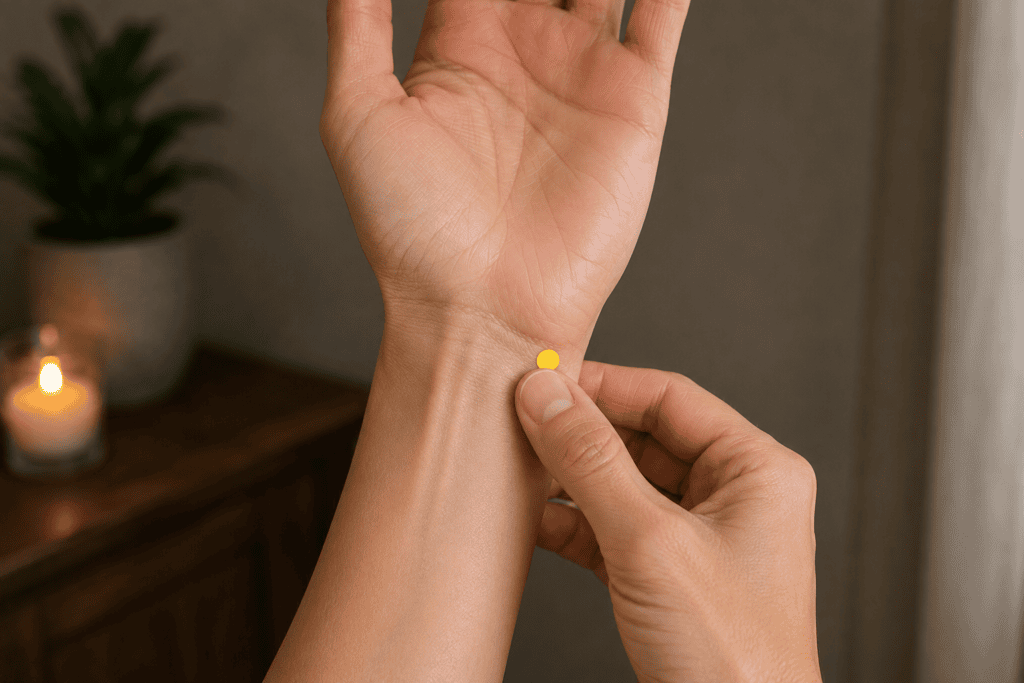
1. Press on HT7 at the wrist to calm and nourish the heart. HT7 sits on the inner wrist crease, on the pinky side, in the small hollow just inside the tendon. Press firmly with your thumb for one to two minutes on each wrist. HT7 is called “Shenmen,” the “Spirit Gate,” and it is the source point of the Heart and the single most important point for the Shen.
HT7 both soothes and nourishes the Heart, which is precisely what loneliness needs, as it calms restless and anxious feelings while supporting a Heart that has been left uncomforted due to lack of connection. As a foundational point, it reinforces the Heart at its core rather than merely calming surface symptoms, alleviating sorrow, insomnia, and the hollow ache simultaneously. This makes it an ideal starting point and a reliable go-to whenever loneliness resurfaces, and it is subtle enough to be pressed quietly anywhere.
2. Press on CV17 at the center of the chest to ease the hollow feeling. CV17 sits on the midline of the breastbone, level with the space between the nipples, in the center of the chest. Press gently but steadily with your fingertip for one to two minutes, breathing slowly into the pressure. CV17 is called “Shanzhong,” and it is the meeting point of Qi in the chest and the emotional center of the body.
CV17 is located at the spot where loneliness is most intense – the deep, heavy emptiness in the center of the chest. It serves as the main point for releasing the emotional Qi that accumulates there. By opening the chest and alleviating the tight, sunken sensation of an unmet heart, this point directly addresses the feeling of loneliness as a physical weight or emptiness behind the breastbone. Gentle pressure on CV17, combined with a few deep breaths, provides a calming and soothing effect.

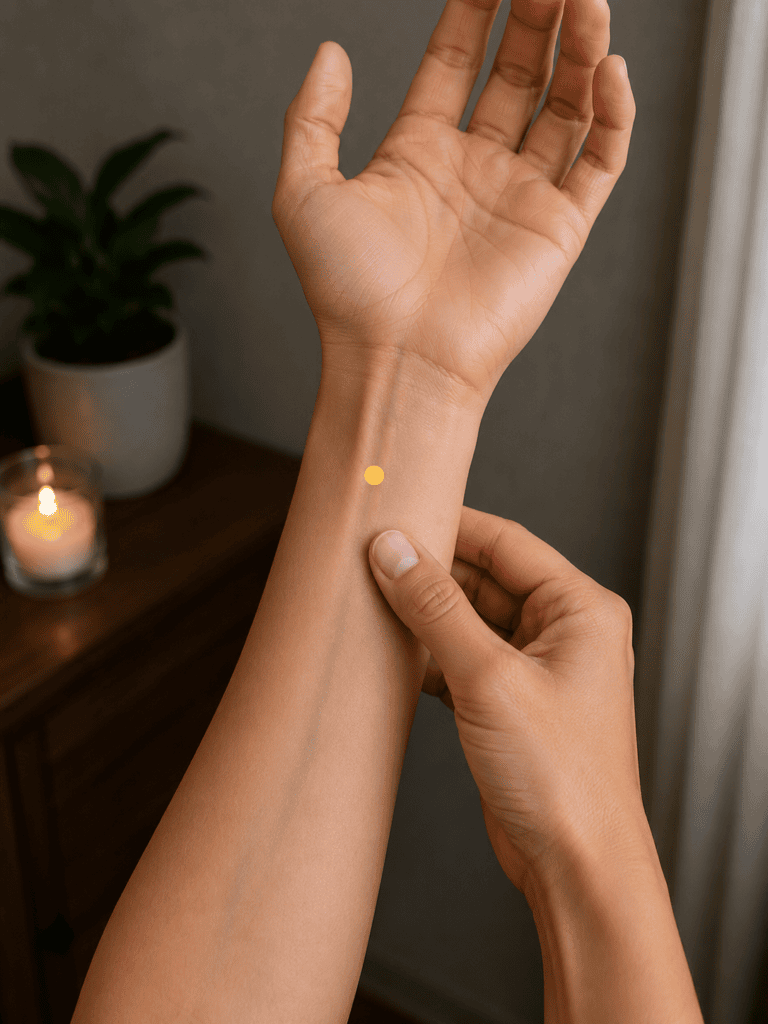
3. Press on PC6 on the inner forearm to open the chest and settle the mind. PC6 sits three finger-widths above the inner wrist crease, in the center of the forearm between the two tendons. Press firmly with your thumb for one to two minutes on each arm. PC6 is called “Neiguan,” the “Inner Pass,” and it opens the chest and calms the spirit.
PC6 helps release the tightness in the chest and calms a restless mind. Working together with HT7 and CV17, it alleviates both physical constriction and emotional loneliness. As a key point for the chest and emotional health, it relaxes the tension caused by isolation and eases the anxiety often linked to feeling alone. This point is a dependable, calming aid to use whenever the chest feels restricted and the mind is unsettled.
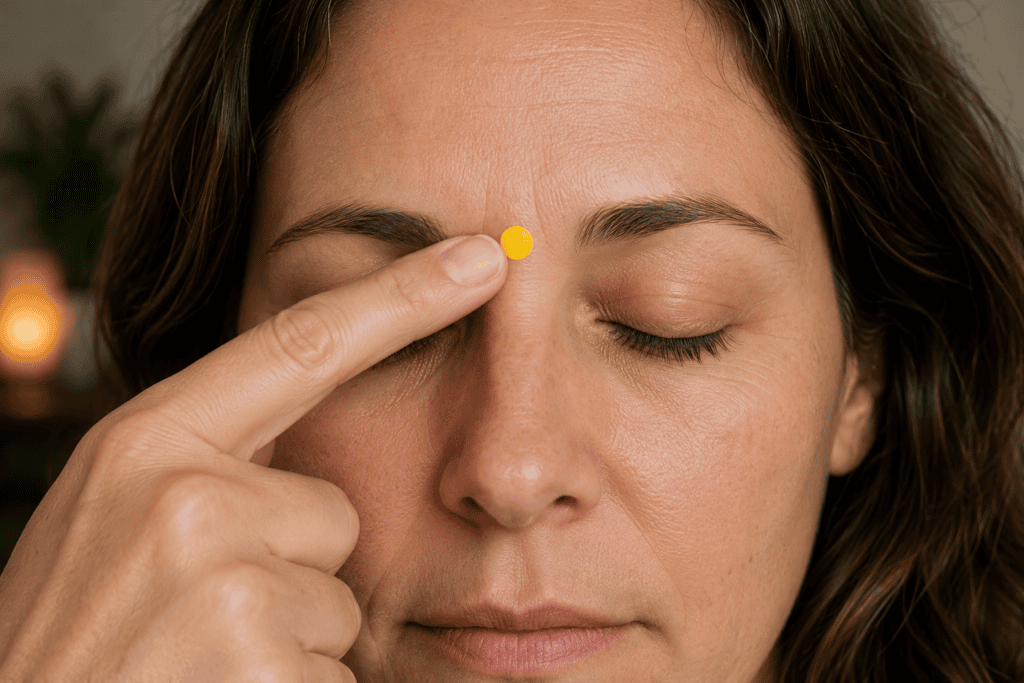
4. Press on Yintang between the eyebrows to quiet the lonely mind. Yintang sits in the small hollow directly between the two eyebrows. Press steadily and hold, or make small slow circles, with your fingertip for one to two minutes. Yintang is an extra point, and it is one of the most calming points in the body.
Yintang helps ground the Shen and calms the mind, reducing self-critical thoughts fueled by loneliness – the feelings of being unwanted, replayed memories, and the increasing ache in silent moments. It soothes the entire nervous system and alleviates anxiety and mental restlessness that overlay the emptiness. For those whose loneliness causes heavy, repetitive thoughts, especially at night, this point helps center the mind and gently calm the spiraling thoughts.
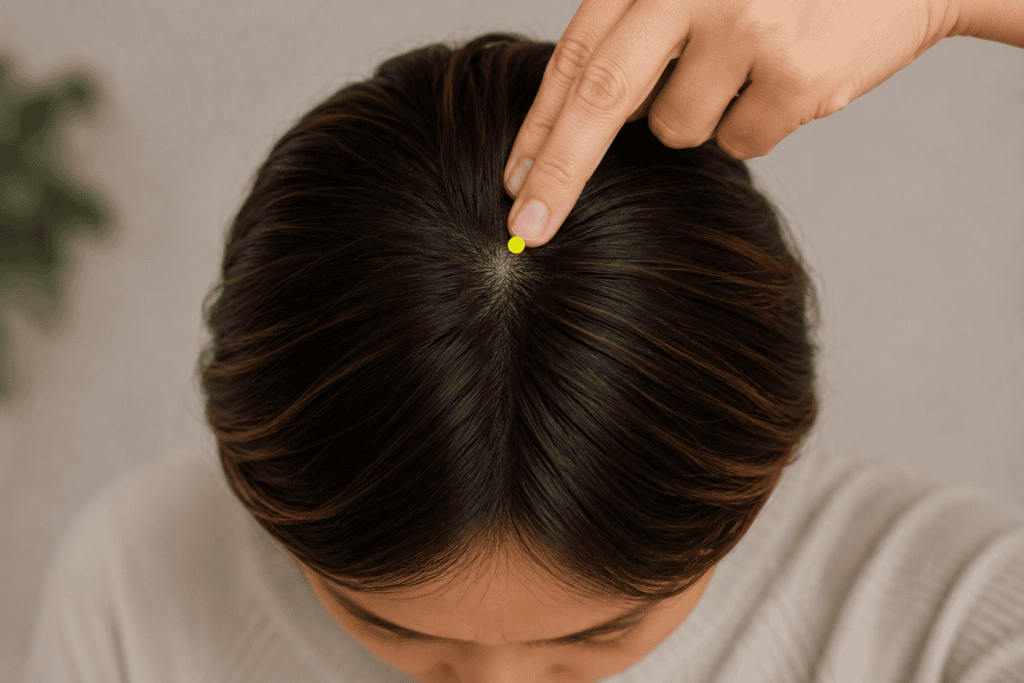
5. Press on GV20 at the top of the head to lift the sunken spirit. GV20 sits at the very top of the head, on the midline, on a line drawn up from the tops of both ears. Press straight down, or make small circles, with your fingertip for one to two minutes. GV20 is called “Baihui,” the “Hundred Meetings,” where many channels converge at the crown.
GV20 uplifts the spirit and counters the heaviness caused by loneliness, which can make one feel sunken, withdrawn, and heavy. It helps lift what has collapsed inward and clears the mind. Unlike other points that calm and nourish, this one elevates, making it especially effective for the heavy, pulled-under sensation from prolonged isolation. For those burdened by loneliness and turned inward, this point gently elevates the mood and, fittingly with its name, reinforces feelings of connection and meeting.
6. Press on CV6 below the navel to warm and rebuild your reserves. CV6 sits on the midline of the lower abdomen, about two finger-widths below the navel. Rest your fingertips or palm there and press gently, warmly, for one to two minutes. CV6 is called “Qihai,” the “Sea of Qi,” the gathering point for the body’s Qi in the lower abdomen.
Loneliness gradually drains a person’s energy, leaving them feeling empty and depleted. CV6 acts as a warming, nourishing point that restores Qi and vitality worn down by isolation. When held with a warm hand, it grounds and renews, unlike calming points that mainly induce relaxation. This point offers a sense of being filled and supported from the body’s center. For those who feel not just sad but also drained by loneliness, CV6 warms and stabilizes them from within. It is especially comforting when held with slow breathing or a warm compress.

7. Press on KI3 above the inner ankle to ground fear and insecurity. KI3 sits in the hollow between the inner ankle bone and the Achilles tendon, level with the tip of the ankle bone. Press firmly with your thumb for one to two minutes on each ankle. KI3 is called “Taixi,” and it is the source point of the Kidney.
In Chinese medicine, the Kidney is associated with fear. Loneliness can trigger feelings of insecurity, self-doubt, and the fear of being unwanted or invisible. KI3 helps calm these feelings by nourishing and grounding the Kidney. As the source point, it enhances the body’s reserves and helps stabilize anxiety originating from a depleted, insecure state. Additionally, it links the Kidney below to the Heart above, part of the water-fire axis that loneliness can disrupt, thus helping re-establish a balanced connection between the mind and the body’s deep grounding.
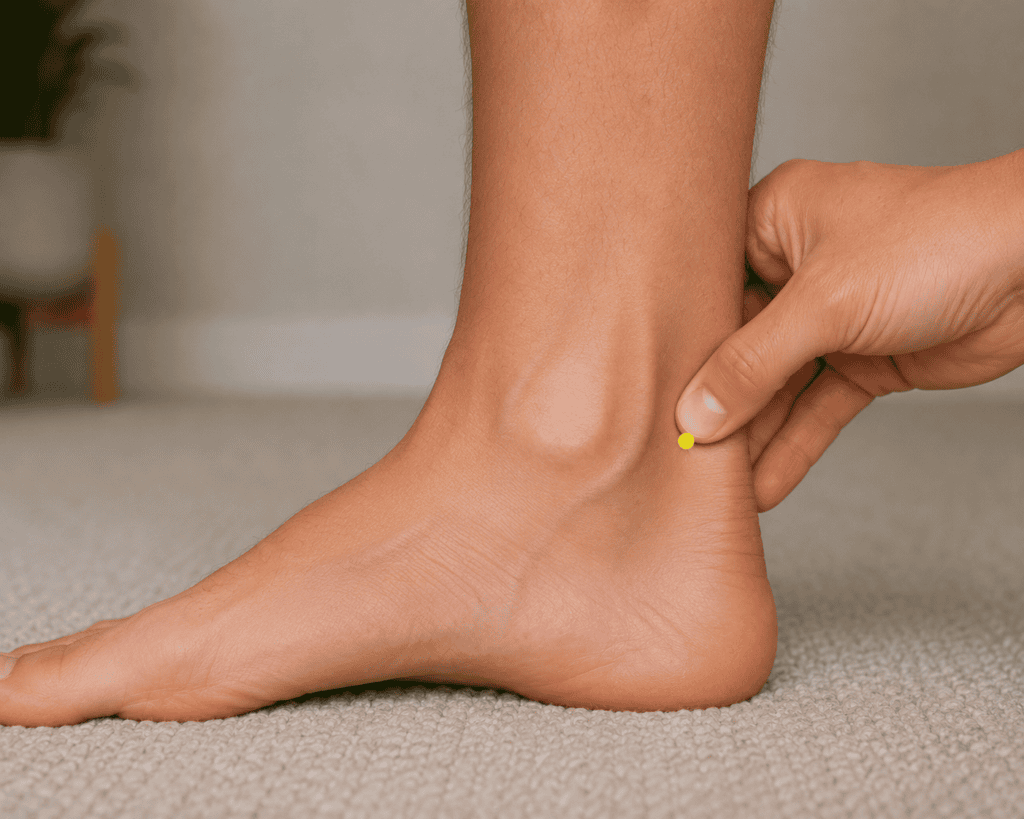
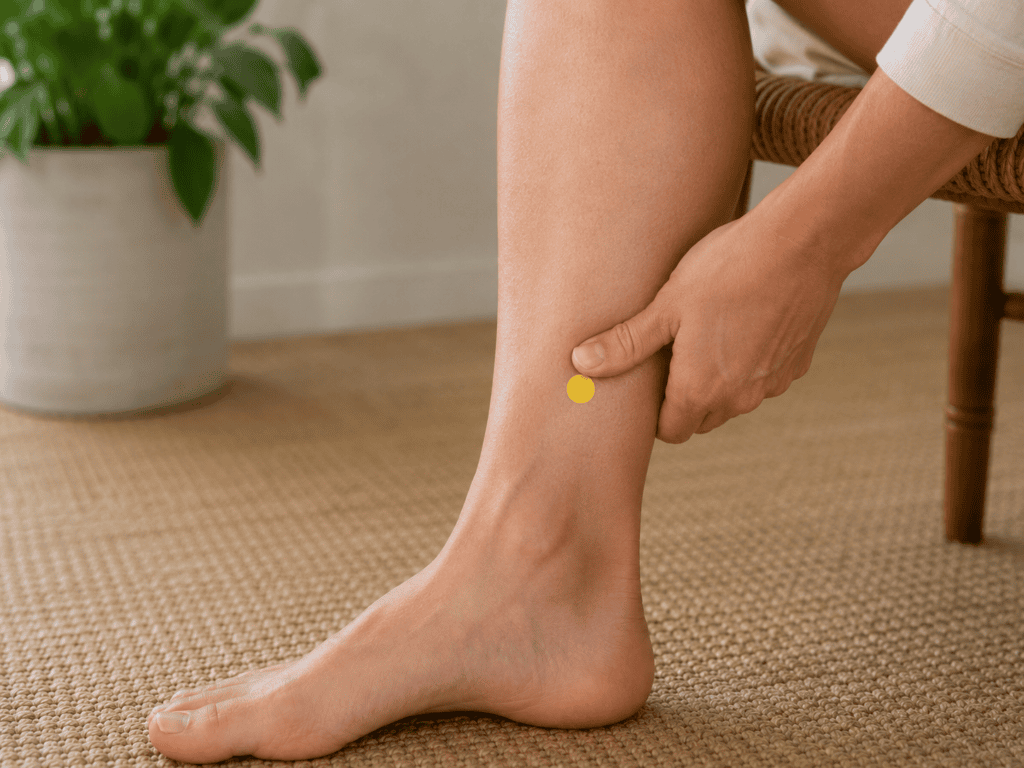
8. Press on SP6 above the inner ankle to nourish and restore sleep. SP6 sits four finger-widths up from the tip of the inner ankle bone, just behind the back edge of the shinbone. Press firmly for one to two minutes on each leg. SP6 is called “Sanyinjiao,” the “Three Yin Intersection,” where the Spleen, Liver, and Kidney channels meet. SP6 is avoided during pregnancy.
Loneliness weakens the body and disrupts sleep. SP6 nourishes the Blood and Yin affected by emotional drain, while calming the mind to facilitate rest. By influencing three channels simultaneously, it is among the most nourishing and soothing points in the body. It is especially beneficial during the restless, rumination-filled nights caused by loneliness. When sleep eludes you late at night, this point helps the body settle, and its related therapies for difficulty falling asleep or staying asleep are more effective during those challenging sleepless hours.
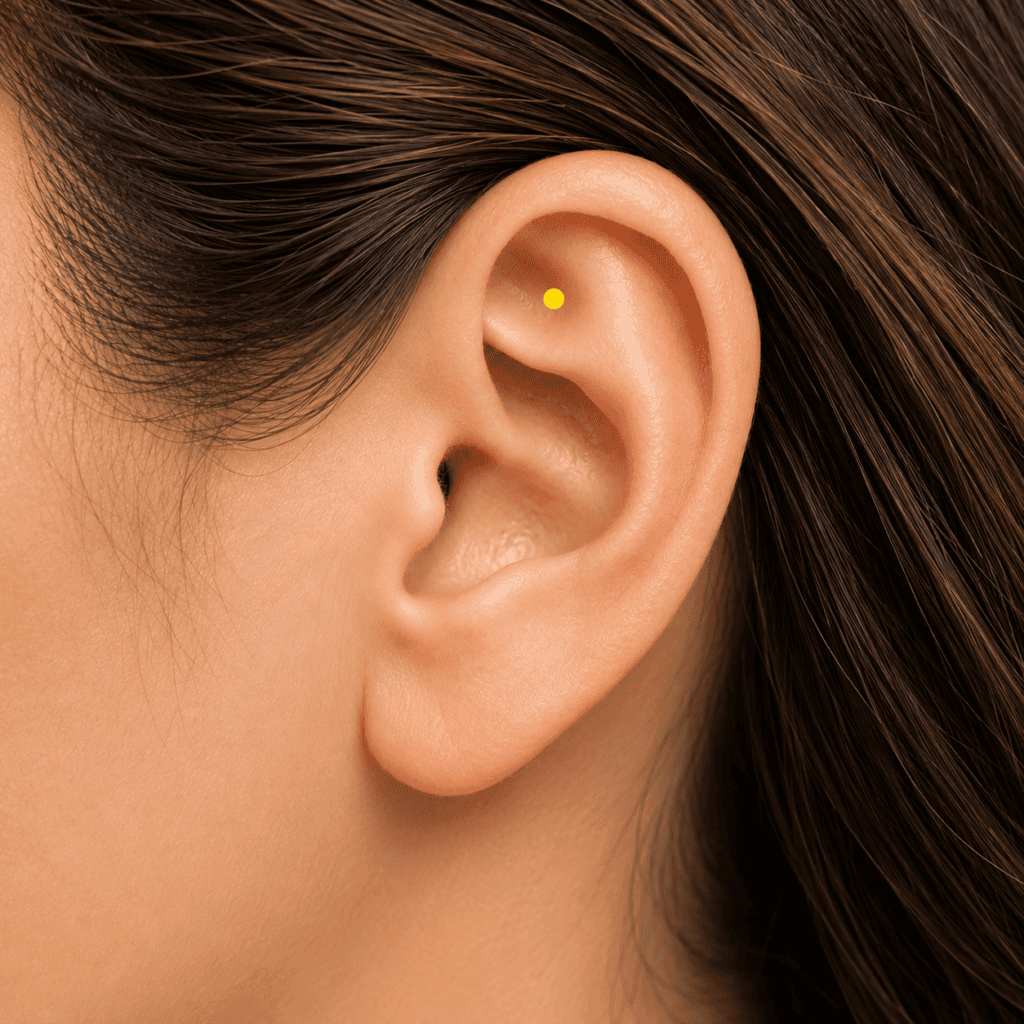
9. Press on Ear Shenmen for deep emotional calm. Ear Shenmen sits in the upper part of the ear, in the triangular hollow near the top, at the apex of that hollow. Press gently with your fingertip or squeeze between finger and thumb for about a minute on each ear. Ear Shenmen is one of the most calming points on the ear and shares its name, “Spirit Gate,” with the Heart point HT7.
Ear Shenmen is a highly reliable point for calming the mind, commonly used to relieve emotional distress, anxiety, and the heaviness of a tough mood, making it particularly suitable for feelings of loneliness. It quickly and profoundly quiets the Shen, is discreet, and easily accessible when these feelings emerge during the day. When loneliness peaks and immediate reassurance is needed, this point stabilizes the entire system and complements the Spirit-Gate calming technique initiated at HT7 on the wrist.
Why These Acupressure Points Work
In Traditional Chinese Medicine, loneliness leaves the Heart unfulfilled and the Shen lacking warmth. It empties and cools the body’s reserves, causes the spirit to sink inward, and triggers deep insecurity within the Kidney. The nine points address this entire pattern.
- The Heart-and-Shen points (HT7, PC6, Yintang, Ear Shenmen) calm and nourish the Heart and quiet the restless, heavy, ruminating mind.
- The chest point (CV17) eases the hollow, empty weight felt in the center of the chest.
- The lifting point (GV20) raises the sunken, withdrawn spirit.
- The warming point (CV6) rebuilds the Qi and vitality that loneliness depletes.
- The grounding and nourishing points (KI3, SP6) settle the fear and insecurity underneath and restore the Blood, Yin, and sleep that isolation wears down.
Alongside everything else, the anxiety, stress, and depression that frequently stem from prolonged loneliness also respond well to the same calming techniques and treatment.
How to Properly Use These Acupressure Points
Whenever loneliness feels especially heavy throughout the day, remember to activate these points whenever you need them. They’re here to support you and make you feel a little more connected, grounded, and peaceful.
- Begin with HT7 at the wrist and CV17 at the chest, the two that most directly calm and warm the heart, and return to them whenever the ache rises.
- Add PC6, Yintang, and Ear Shenmen to settle a restless, circling mind, GV20 to lift a sunken spirit, and CV6, KI3, and SP6 to warm, rebuild, and ground what loneliness depletes.
- Hold CV6 with a warm hand or a warm compress when you feel especially drained and empty, and work SP6 in the evening to help sleep come on the hard nights.
- Hold each point for one to two minutes with firm, steady pressure, breathing slowly, and let the practice be a warm, caring thing you do for yourself.
Acupressure can bring you comfort and help steady you, but it is not a substitute for human connection. It works best when it makes you feel calm enough to reconnect with others rather than retreating further inward. Use it to ease tension, then take a small step toward connecting—whether that’s sending a message, going for a walk with others, joining a group or class, or calling a friend or family member. Small steps matter. Showing kindness and empathy to your body during lonely times matters, and so does gently reaching out to others.
When to Reach Out for Support
Loneliness is a common human experience, and encountering a lonely period is normal and not an indication that something is wrong with you. However, sometimes loneliness can become more intense. If it turns into a persistent low mood, if you isolate yourself for weeks, lose interest in activities you once enjoyed, or if it begins to feel more overwhelming than simple loneliness, it’s important to seek help from a doctor or therapist.
The anxiety, stress, and depression that can stem from isolation can improve with proper care and attention.
If you’re having suicidal thoughts, please contact the 988 Suicide and Crisis Lifeline immediately by calling or texting anytime. Asking loved ones or professionals for support is a sign of strength. Remember, you don’t have to face this alone.
Above and Beyond Acupuncture offers acupuncture, cupping, and lifestyle coaching at the North Frank Lloyd Wright Boulevard location in Scottsdale.
Schedule an appointment online or call us today to start your healing journey.
The points above are only as effective as the technique used to apply them. Where to press, how firmly, and for how long all affect the result. For a full breakdown of how to perform acupressure properly at home, read Performing Acupressure in 3 Easy Steps.

About the Publisher
Paul Kerzner, L.Ac., is a licensed acupuncturist and board-certified herbalist, as well as the founder of Above and Beyond Acupuncture in Scottsdale. His own journey from chronic patient to practicing acupuncturist shapes his commitment to providing honest, clinically grounded information about acupuncture and Traditional Chinese Medicine. Learn more about Paul and his clinical approach on the About Us page.