Key Takeaways
- A typical cold results in various symptoms and usually clears up within approximately a week.
- Acupressure has the potential to mitigate cold symptoms and facilitate recovery by targeting specific pressure points.
- Key acupressure points are LU7 for releasing wind, LI4 for clearing the head, and ST36 for strengthening immunity.
- Applying acupressure promptly at the onset of cold symptoms enhances its effectiveness and supports recovery.
- Consult a healthcare professional if you experience severe symptoms or if the cold persists beyond ten days, as it could signal a more serious issue.
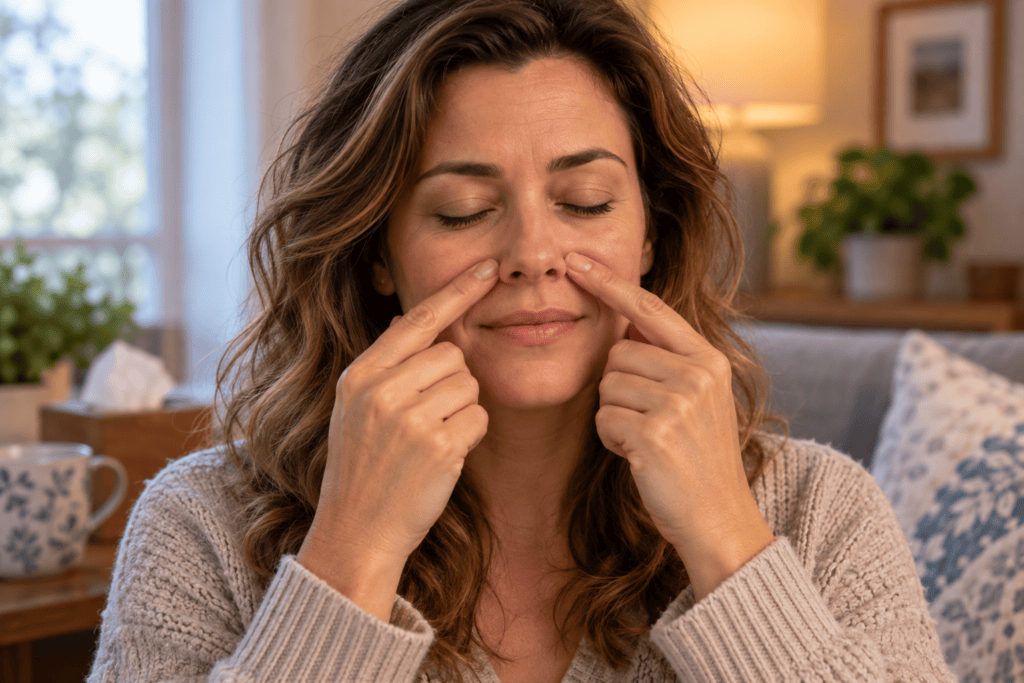
A common cold can significantly disrupt your day, with symptoms like a stuffy or runny nose, sneezing, a sore throat, a cough, a headache, and that tired, achy feeling that makes you want to stay under a blanket. Caused by viruses, colds usually resolve on their own within a week to ten days. Although there’s no quick fix, acupressure can alleviate your symptoms, help open a blocked nose, clear your mind, and support your body’s recovery.
Traditional Chinese Medicine has long regarded the common cold as an external wind invasion that bypasses the body’s Wei Qi and affects the Lung. When the cold presents with chills, clear mucus, and body aches, it is termed wind-cold; if it involves a sore throat, fever, and yellow mucus, it is called wind-heat. Treatment aims to dispel the wind, open the Lung and nose, and bolster the body’s defenses. The Lung plays a central role in this process, which is why many effective points are located on the Lung channel and around the neck and upper back. The selected points below are designed to release the wind, relieve cold symptoms, open the nasal passages, clear the head, soothe the cough and throat, and support the immune response.
“Acupuncture for Colds and the Flu” describes how to address colds and the flu in the treatment room. When a specific symptom is particularly prominent, the following articles describe acupressure protocols for cough, sore throat, and sinus congestion.
Here are nine acupressure points to help you feel better and recover.
What Acupressure Points to Press and Why
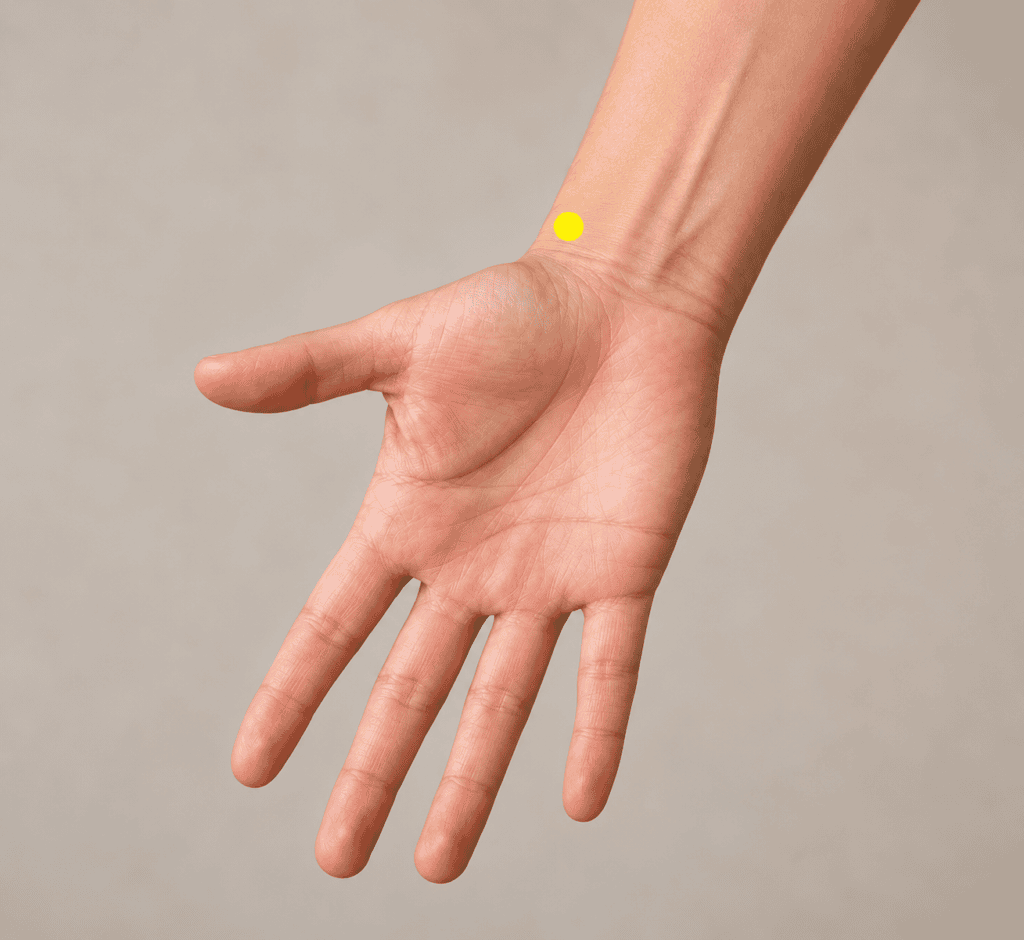
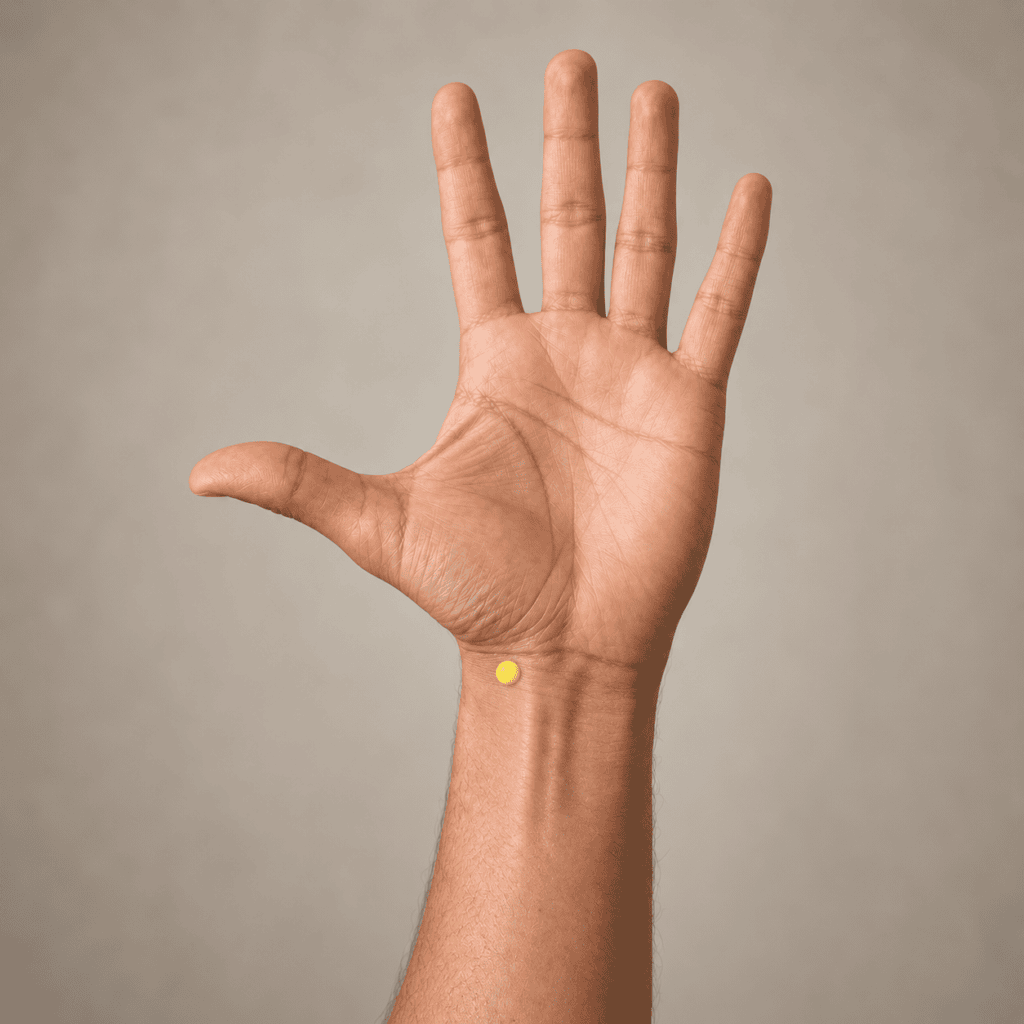
1. Press on LU7 above the wrist, the classic point for a cold. LU7 sits on the thumb side of the inner forearm, about two finger-widths above the wrist crease, just above the bony bump of the wrist in a small hollow. Press firmly with your thumb for one to two minutes on each arm. LU7 is called “Lieque,” and it is the single most important point for the common cold.
No point is more closely linked to the common cold than LU7. As the command point for the head and neck and a key Lung point, LU7 helps release the external wind, which is central to treating a cold in Chinese medicine. It opens the Lung and nose, and eases congestion, sneezing, and that early feeling of getting sick. LU7 is especially helpful at the first signs of a cold, but it can be used throughout the illness.
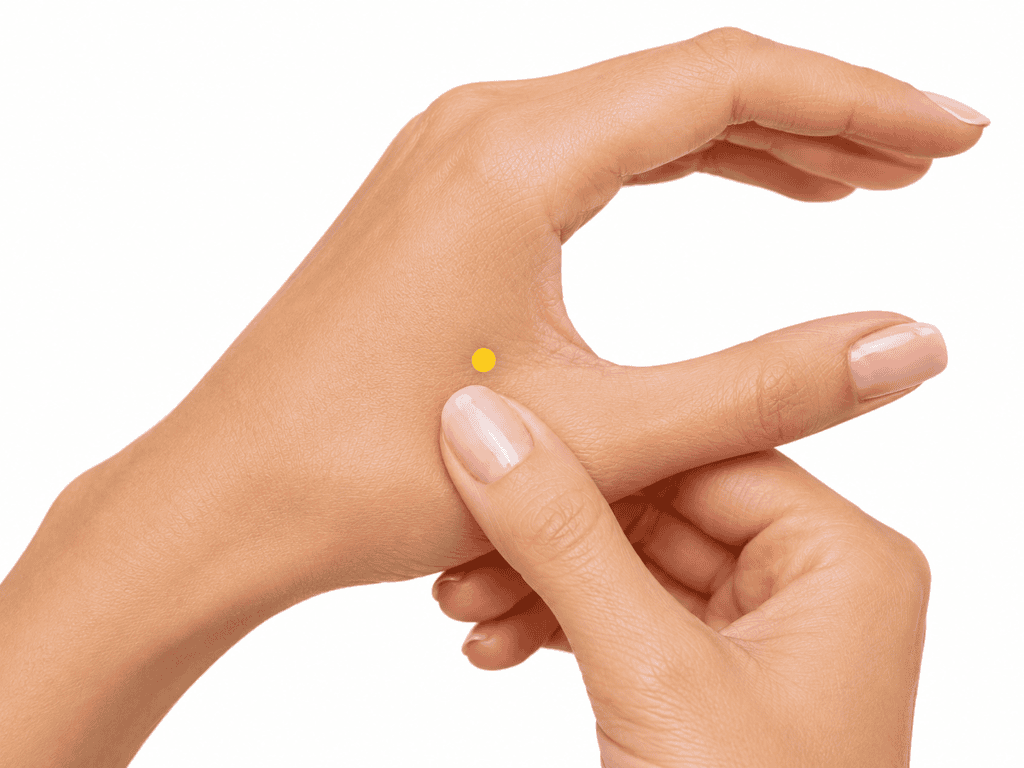
2. Press on LI4 in the hand to clear the head and support the defenses. LI4 sits in the webbing between the thumb and index finger, at the highest point of the muscle when you bring them together. Press firmly with the thumb of your other hand for one to two minutes on each hand. LI4 is called “Hegu,” the command point for the face and head. LI4 is avoided during pregnancy.
LI4 is a key point for the head and face, helping move stagnant Qi and relieve congestion, sinus pressure, and cold-related headaches. Located on the Large Intestine channel, paired with the Lung channel, it also helps release the exterior and bolster immune function. Combining LI4 with LU7 is a traditional remedy for colds. Since LI4 is on your hand, you can press it often for relief from the stuffy, achy sensations of a cold.
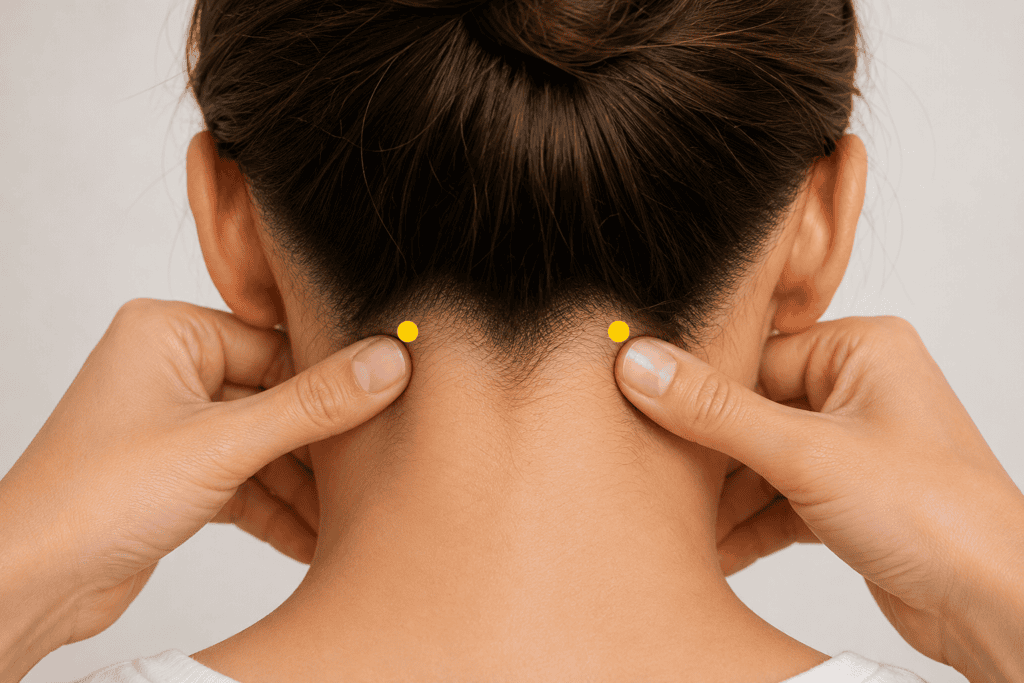
3. Press on GB20 at the base of the skull to release the wind and ease the head. GB20 sits in the two hollows at the base of the skull, between the two large vertical neck muscles and the outer edge, roughly level with the tops of the ears. Tip your head back slightly and press firmly up and inward with your thumbs for one to two minutes. GB20 is called “Fengchi,” the “Wind Pool,” and it is a major point for releasing wind.
GB20 sits at the base of the skull, traditionally known in Traditional Chinese Medicine as the point where wind enters the body. Named Wind Pool, it plays a key role in releasing wind during a cold. Stimulating this point can relieve headaches, stiff or sore necks, and feelings of heaviness or congestion in the head. Pressing this point at the first sign of a cold and keeping the neck warm is a traditional method to help prevent symptoms from worsening.
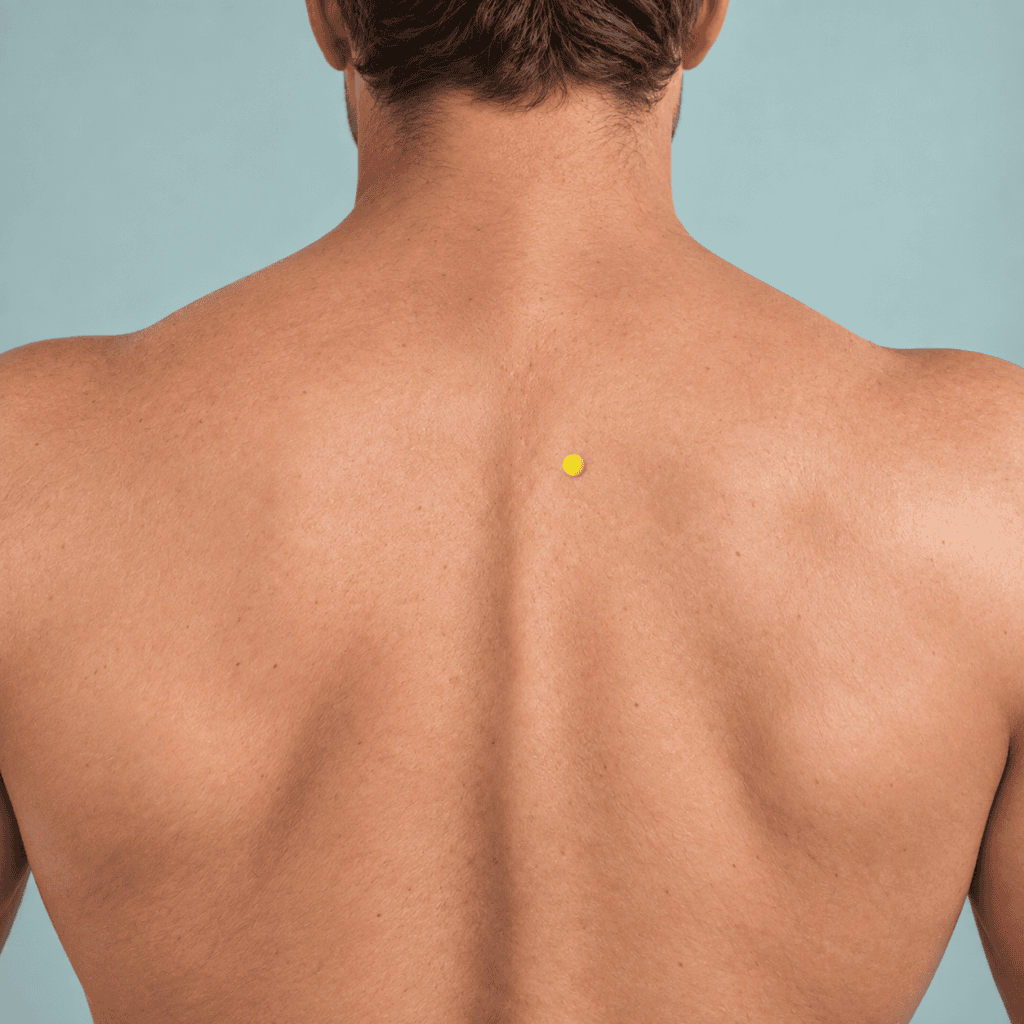
4. Press on BL12 on the upper back to expel the wind at the gate. BL12 sits on the upper back, about one and a half thumb-widths out to each side of the spine, near the upper back between the shoulder blades, roughly where a shirt collar sits. Because it is hard to reach yourself, use a massage ball against a wall, have someone press it, or simply warm the area for one to two minutes. BL12 is called “Fengmen,” the “Wind Gate,” and it is a classic point for the common cold.
BL12, known as Wind Gate, is a traditional point used to prevent and treat colds. It is located where wind is believed to enter the body through the upper back. BL12 helps expel invading wind and bolster the Lung and immune defenses, making it especially effective at the first sign of a cold. Keeping this area warm with a heat pack or a warm shower can also be comforting when a cold begins.
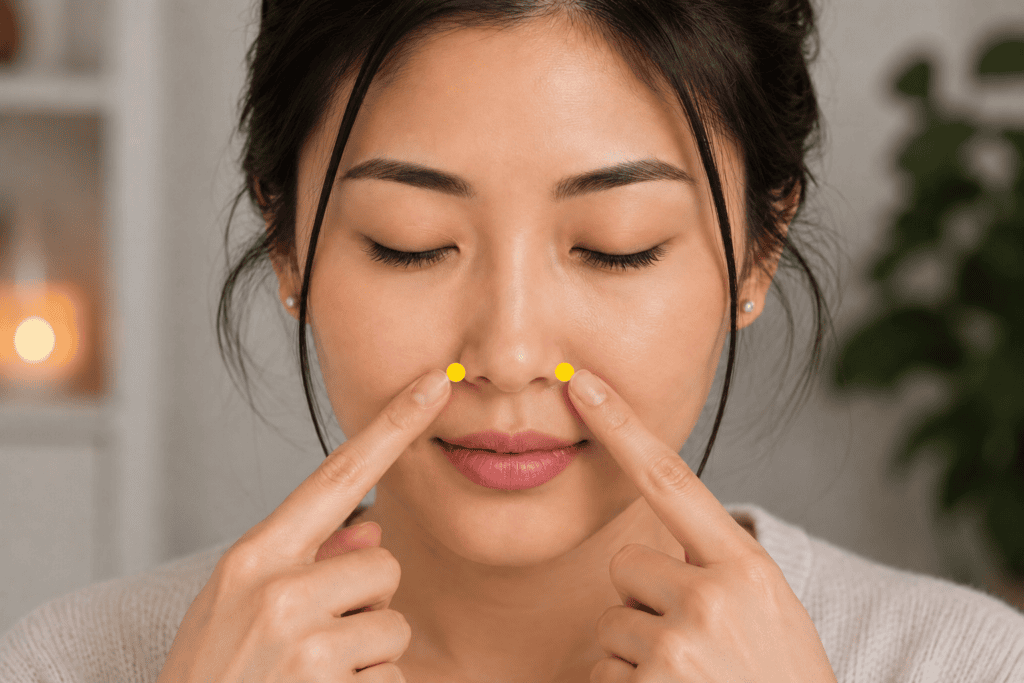
5. Press on LI20 beside the nostrils to open a stuffy, runny nose. LI20 sits in the groove beside each nostril, at the outer edge where the nostril meets the cheek. Press firmly inward and slightly upward with your fingertips for one to two minutes on both sides. LI20 is called “Yingxiang,” which means “Welcome Fragrance,” and it is the main point for the nose.
A stuffy or runny nose is among the most uncomfortable cold symptoms, and LI20, located beside the nostrils, is a primary point for relief. LI20 helps relieve both congestion and a runny nose, and its name reflects its long history of restoring the sense of smell. For nasal congestion, this point provides quick relief and is effective when combined with LI4 and Yintang to clear the entire nose and face.
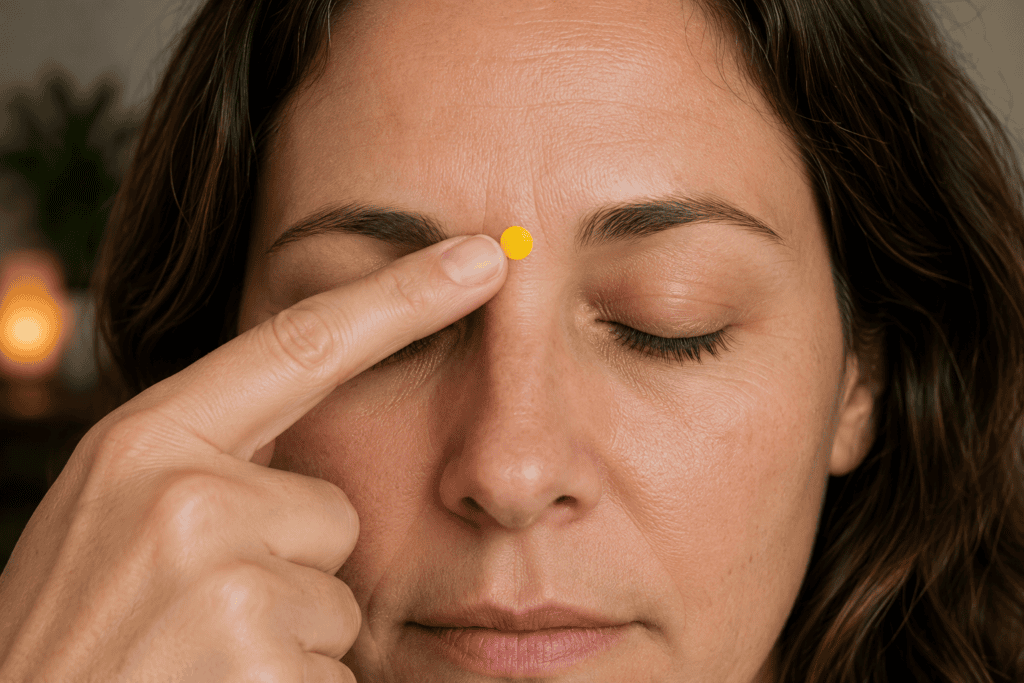
6. Press on Yintang between the eyebrows for sinus pressure and rest. Yintang sits in the small hollow directly between the two eyebrows. Press steadily and hold, or make small, slow circles with your fingertip for one to two minutes. Yintang is an extra point and one of the most calming and clearing points for the front of the face.
Yintang relieves sinus pressure and congestion that build up along the bridge of your nose and forehead during a cold, reducing the heavy, blocked sensation at the front of your head. It also helps calm your overall system, which is beneficial when you’re feeling exhausted and need rest. For sinus pressure and heaviness in the head, this point can relieve discomfort, and gentle pressing can promote relaxation and recovery.
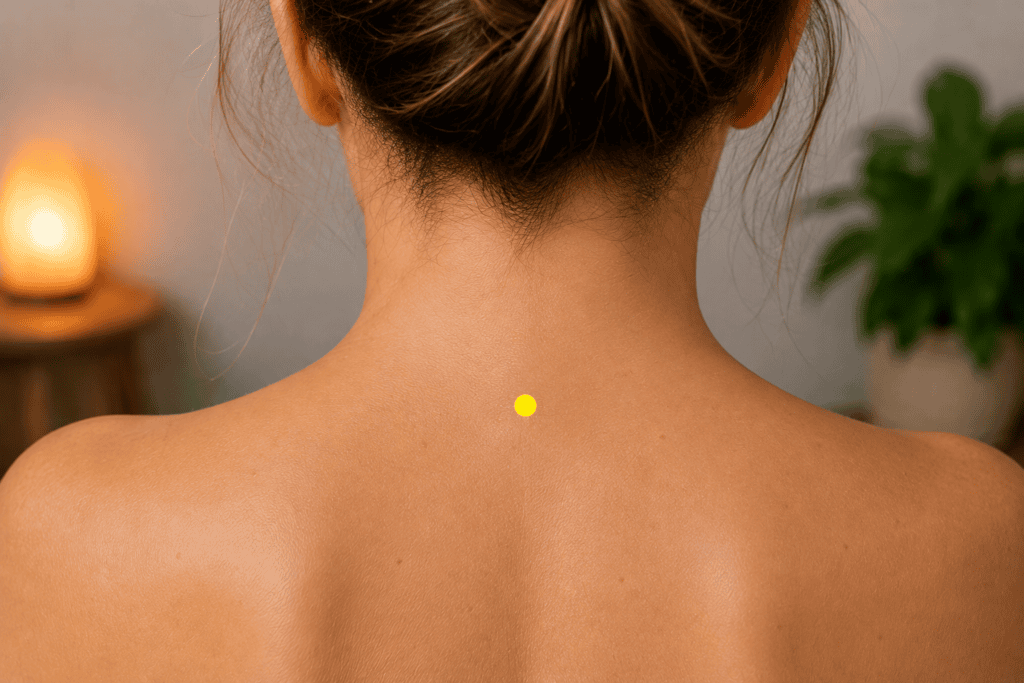
7. Press on GV14 at the base of the neck to release the exterior and ease aches. GV14 sits on the midline at the base of the neck, in the hollow just below the large bump of the seventh cervical vertebra, the one that sticks out most when you bow your head. Press firmly with your fingertip for one to two minutes. GV14 is called “Dazhui,” the “Great Vertebra,” and it is a major point for releasing the exterior and clearing heat.
GV14 is a key point for releasing external pathogens and clearing heat, especially useful for colds with fever, chills, and body aches. Located where the neck meets the upper back, it helps dispel wind and reduce heat, easing fever and fatigue. This point is highly effective for whole-body aches and chills, and keeping this area warm at the onset of a cold can provide additional relief.
8. Press on LU9 at the wrist to support the Lung and ease the cough. LU9 sits on the inner wrist crease, on the thumb side, in the hollow where you can feel the pulse. Press firmly with your thumb for one to two minutes on each wrist. LU9 is called “Taiyuan,” the “Great Abyss,” and it is the Lung’s source point.
Since a cold often affects the Lung and causes coughing, LU9, the Lung’s source point, helps strengthen and support it. This point can relieve cough and chest symptoms, particularly at the end of a cold when a lingering cough or weakness persists. LU9 is especially effective for coughs and Lung-related issues.
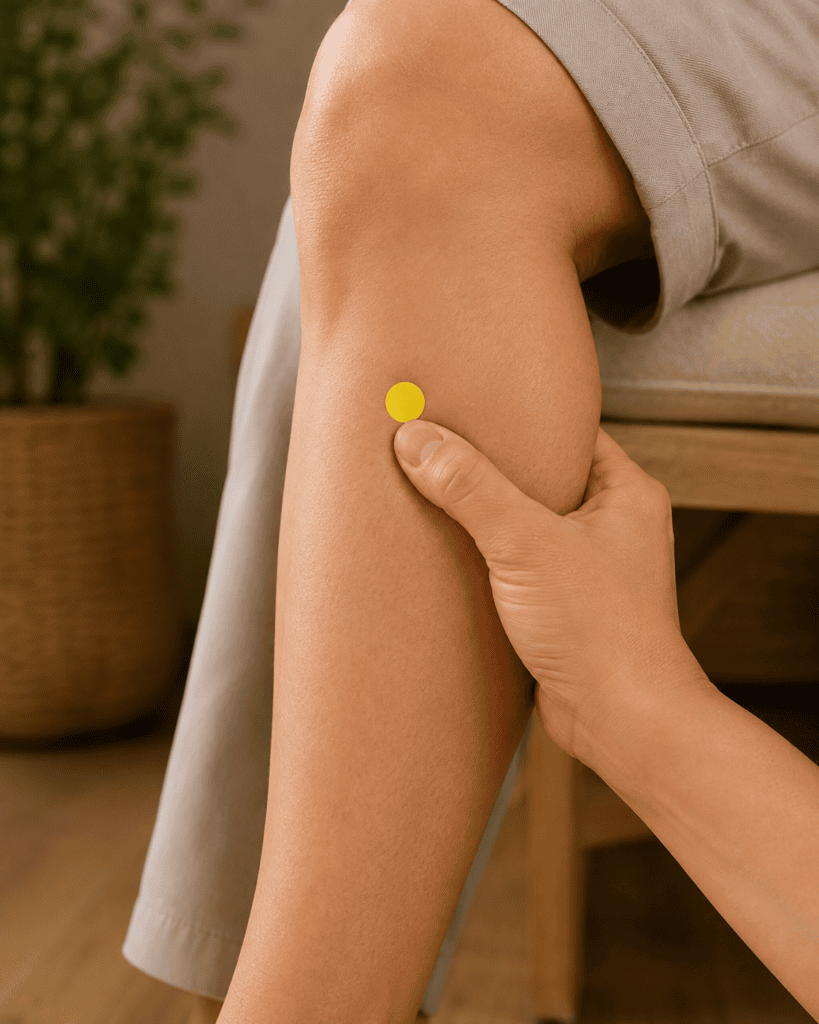
9. Press on ST36 below the knee to support your body and recovery. ST36 sits four finger-widths below the lower edge of the kneecap and one finger-width to the outside of the shinbone, on the muscle that rises when you flex your foot. Press firmly with your thumb for one to two minutes on each leg. ST36 is called “Zusanli,” the “Leg Three Miles,” and it is the master point for energy and the immune system.
While other points focus on symptoms, ST36 enhances overall strength and immunity during a cold. It aids in restoring energy and alleviating fatigue and exhaustion related to sickness. Regular stimulation of ST36 can increase your energy levels and immune response, supporting you throughout illness and recovery. Consistent use helps keep your defenses strong.
Why These Acupressure Points Work
In Traditional Chinese Medicine, a common cold is regarded as an external wind invasion that breaches the body’s Wei Qi and impacts the Lung. Treatment aims to dispel the wind, clear the Lung and nasal passages, and bolster your defenses. The nine points listed above assist with all these aspects.
- The wind-releasing points (LU7, GB20, BL12, GV14) release invading wind at the wrist, base of the skull, upper back, and neck; they are central to treating cold and easing headaches, aches, and chills.
- The nose-and-face points (LI4, LI20, Yintang) open a stuffy, runny nose and relieve the sinus pressure and heavy head.
- The Lung point (LU9) supports the Lung and eases the cough.
- The immune-and-energy point (ST36) supports your body’s strength and defenses through the illness and recovery.
The common theme is releasing the cold and aiding the body as it fights the virus.
How to Properly Use These Acupressure Points
Use these points at the onset of a cold and address them promptly, as Traditional Chinese Medicine emphasizes treating colds at their earliest signs.
- At the first sign of chills or a scratchy throat, work LU7, GB20, BL12, and GV14 to release the wind, and keep the back of your neck and upper back warm and covered.
- Once the cold sets in, add LI4, LI20, and Yintang for congestion and headache, LU9 for cough, and ST36 to support your energy and defenses.
- If one symptom dominates, use the dedicated points for cough, sore throat, or sinus congestion, which the linked pieces cover in full.
- Hold each point for one to two minutes, use the ball-against-a-wall trick for the hard-to-reach BL12, and work the points several times a day while you are sick.
Acupressure can alleviate your symptoms, but basic self-care is equally vital. Rest is crucial because your body recovers from a cold best when you relax. Stay well-hydrated with water and warm drinks to soothe your throat and help thin mucus. Consume easy-to-digest, warm foods like broth to avoid stressing your system. Inhaling steam from a hot shower can help loosen congestion, and staying warm supports your immune response. Honey soothes coughs and sore throats in anyone over a year old. Typically, colds resolve within one week to ten days with these simple measures.
When to Get Professional Help
Most colds are mild and resolve on their own with rest and time, and acupressure can ease discomfort as you recover. However, some illnesses that begin like a cold require medical attention. See a doctor if you have a high or persistent fever, severe symptoms, symptoms lasting over ten days, or if your cold improves and then suddenly worsens; these could indicate a secondary infection such as a sinus, ear, or chest infection. Seek immediate medical help if you have trouble breathing, chest pain, a severe headache with a stiff neck, or if you cough up blood, as these signs may indicate a more serious condition. Be especially cautious with infants, older adults, and anyone with a chronic illness or weakened immune system.
A cold accompanied by a high fever, body aches, and a sudden, intense onset might indicate the flu. If you are at higher risk, see a doctor.
Acupressure and self-care can assist with common colds, but they should not replace professional medical treatment when necessary.
Above and Beyond Acupuncture offers acupuncture, cupping, and lifestyle coaching at the North Frank Lloyd Wright Boulevard location in Scottsdale.
Schedule an appointment online to start your healing journey.
The points above are only as effective as the technique used to apply them. Where to press, how firmly, and for how long all affect the result. For a full breakdown of how to perform acupressure properly at home, read Performing Acupressure in 3 Easy Steps.

About the Publisher
Paul Kerzner, L.Ac., is a licensed acupuncturist and board-certified herbalist, as well as the founder of Above and Beyond Acupuncture in Scottsdale. His own journey from chronic patient to practicing acupuncturist shapes his commitment to providing honest, clinically grounded information about acupuncture and Traditional Chinese Medicine. Learn more about Paul and his clinical approach on the About Us page.