Key Takeaways
- Seasonal affective disorder (SAD) is a recurring depression linked to winter, causing low mood, fatigue, and withdrawal from activities.
- Acupuncture can help treat SAD by promoting serotonin release, stabilizing circadian rhythms, and restoring Yang energy.
- Starting acupuncture in early fall can stabilize mood and energy levels before symptoms worsen during winter.
- Acupuncture complements other treatments for SAD, such as light therapy and outdoor daylight exposure.
- If low mood persists or affects your daily life, consider consulting a doctor or therapist for support.
As the days get shorter, some people find themselves feeling more than just a slight case of the winter blues.
Seasonal affective disorder is a genuine, recurring low mood that comes with the darker months, bringing heaviness, fatigue, oversleeping, cravings, and a mood that sinks as the light does, yet lifts again in spring. If you’re someone who dreads winter for these reasons, know that acupuncture can help. It works on the very systems affected by the dark season, your mood chemistry and your body’s internal rhythms and can provide steady, natural support through the toughest part of the year.
What is Seasonal Affective Disorder?
Seasonal affective disorder (SAD) is a type of depression linked to the seasons, commonly appearing in fall and winter and improving as days grow longer. It affects many adults, especially in regions with long, dark winters, and involves more than just disliking cold weather.
Symptoms mirror typical depression but with seasonal patterns:
- Feelings of heaviness and low mood
- Fatigue
- Increased sleep but poor rest
- Carbohydrate cravings
- Weight gain
- Difficulty concentrating
- Withdrawal from enjoyable activities and social events
The primary reason is less daylight, which disrupts the body’s internal clock, impacts melatonin production, and lowers serotonin levels – the brain chemical linked to mood. This helps explain why symptoms tend to follow a seasonal pattern and improve when sunlight returns.
How Does Traditional Chinese Medicine View Seasonal Affective Disorder?
Traditional Chinese Medicine views winter depression through the lens of the Water element and the Kidney, which stores the body’s deepest warmth and vitality. Winter naturally invites us to draw inward and slow down. Intense cold and darkness can weaken Kidney warmth and suppress Yang, the active, warming energy, leading to coldness, exhaustion, heaviness, and low mood, similar to SAD. When Yang declines, Qi can stagnate, mood can sink, and the Heart’s Shen, or spirit, can dim as daylight fades. Acupuncture treatments aim to restore Yang warmth, free stuck Qi, and brighten Shen, revitalizing inner warmth and light during the dark season.
How Can Acupuncture Help?
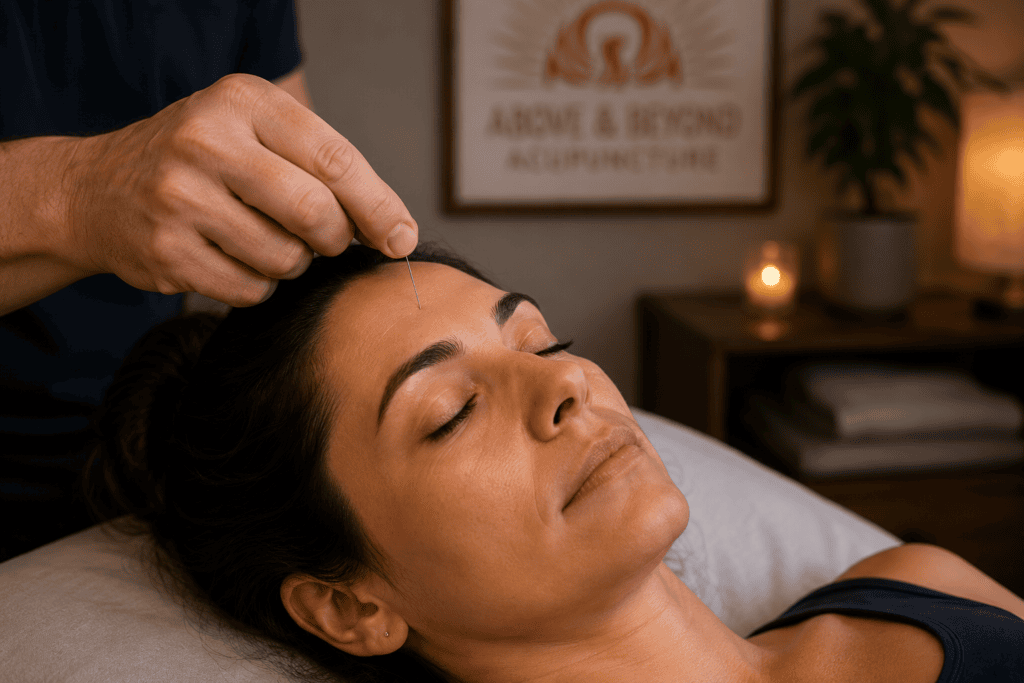
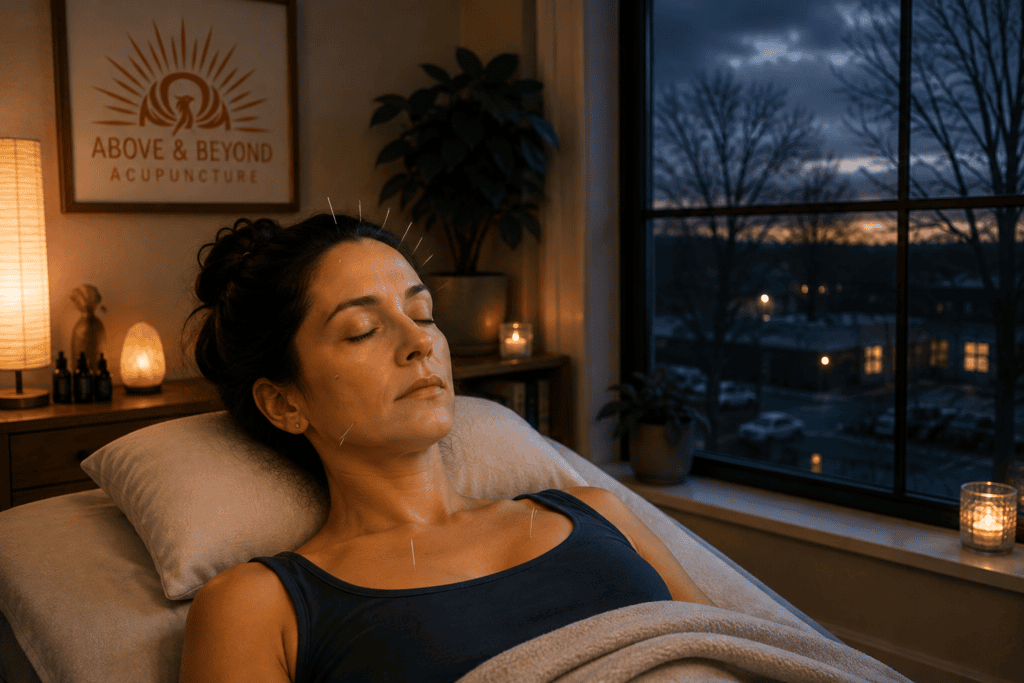
Acupuncture affects SAD through the same pathways disrupted by seasonal changes. It is well-known for boosting mood by promoting the release of serotonin and other feel-good chemicals, counteracting the serotonin decline linked to seasonal depression. Additionally, it helps regulate the body’s stress response and internal clock. A commonly used point for calming the mind is Yintang, located between the eyebrows. By stabilizing melatonin levels and circadian rhythms disturbed during darker months, acupuncture can improve sleep and maintain more consistent energy levels. Beyond mood enhancement, it calms the nervous system and restores the Yang energy that Chinese medicine attributes to this condition, leading many to feel lighter, warmer, and more like themselves after treatment. Supporting the circadian rhythm and reducing cortisol and stress responses are key components of this approach.
What to Expect From Treatment
For people using acupuncture as part of their SAD treatment plan, care can be timed around the seasons. Since the condition is rather predictable, it’s often best to start in early fall, before symptoms fully emerge, to stabilize mood as daylight decreases. It can also be effective once symptoms appear. The typical treatment protocol involves regular, often weekly, sessions during the darker months, focusing on boosting Yang, unblocking Qi, brightening Shen, and stabilizing body rhythms, with adjustments based on season and mood shifts. Many notice increased energy and a more stable, lighter mood within the first few sessions, with benefits growing over time. Acupuncture complements other SAD treatments well, especially light therapy, the daily use of a bright lightbox, which remains a key approach. It also pairs with outdoor daylight exposure, staying active, and self-administered acupressure points to lift your mood between visits.
When to Reach Out

Seasonal affective disorder is a type of depression that is highly treatable, so there’s reason to be hopeful about managing it. If your low mood is persistent or severe, affects your work, sleep, or relationships, or recurs annually, consider consulting a doctor or therapist. They can discuss various support options, including light therapy and complementary treatments like acupuncture. The anxiety, stress, and depression linked to seasonal changes often respond well to proper care. If you ever experience thoughts of harming yourself, immediately contact or text the 988 Suicide and Crisis Lifeline, available 24/7. Asking for help is a sign of strength, and support during the darker months is genuinely accessible.
Above and Beyond Acupuncture offers acupuncture, cupping, and lifestyle coaching at the North Frank Lloyd Wright Boulevard location in Scottsdale.
Schedule an appointment online or call us today to start your healing journey.

About the Publisher
Paul Kerzner, L.Ac., is a licensed acupuncturist and board-certified herbalist, as well as the founder of Above and Beyond Acupuncture in Scottsdale. His own journey from chronic patient to practicing acupuncturist shapes his commitment to providing honest, clinically grounded information about acupuncture and Traditional Chinese Medicine. Learn more about Paul and his clinical approach on the About Us page.