Key Takeaways
- Test anxiety can disrupt focus and memory; acupressure offers a natural method to alleviate these issues.
- Traditional Chinese Medicine links test anxiety to a disruption between the Heart and Kidney, affecting recall and causing physical symptoms.
- Nine acupressure points, including Buddha’s Triangle and Yintang, help calm nerves and enhance concentration during exams.
- It’s important to practice these points before and during tests for optimal effectiveness in managing test anxiety.
- Seek professional help if test anxiety significantly impacts your health, sleep, or performance despite using techniques like acupressure.

Test anxiety can cause everything you’ve studied to vanish the moment you begin your exam. Your heart races, your palms sweat, your stomach feels uneasy, and questions you answered yesterday suddenly feel impossible. For some students, this anxiety starts days ahead of the test, disrupting sleep, focus, and study time. Acupressure offers a simple, natural method to calm your nervous system before and during exams.
Traditional Chinese Medicine describes test anxiety as stemming from a disruption between the Heart and Kidneys. The Heart houses the Shen, the mind and spirit, while the Kidneys govern fear and store the essence nourishing the brain and memory. When fear dominates, it scatters the Shen and disconnects the Heart from the Kidneys, impairing memory since the Kidney essence is vital for recall. Worry and overthinking can also affect the Spleen, leading to a churning stomach. Together, these form the complete picture of test anxiety. The acupressure points below calm the Shen, stabilize the Kidney’s fear response to preserve memory, and relax the stomach knotted by nerves.
Feeling nervous before a test is normal, and it can even enhance your performance. Using acupressure is a helpful method to keep anxiety from becoming too much to handle.
Here are nine acupressure points that can help slow a racing heartbeat, soothe an upset stomach, and quiet your mind so you can concentrate. You can also use many of these points discreetly while sitting at your desk.
What Acupressure Points to Press and Why
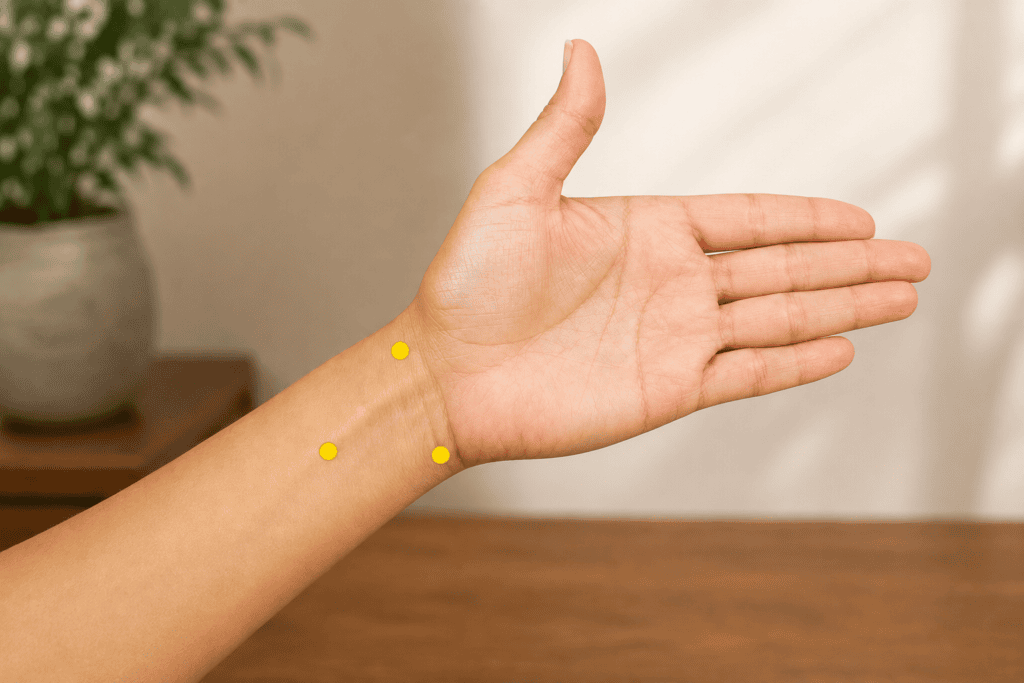
1. Press Buddha’s Triangle at the wrist to discreetly calm a racing heart. Buddha’s Triangle is a grouping of three points on the inner wrist and forearm, HT7, PC6, and LU9, that together form one of the most calming combinations in all of acupressure. Because it sits on the wrist, it is perfect for pressing quietly at your desk before or during a test. Locate each one in turn. HT7 sits on the inner wrist crease on the pinky side, in the hollow just inside the tendon. PC6 sits three finger-widths up from the wrist crease, in the center of the inner forearm between the two tendons. LU9 sits on the inner wrist crease on the thumb side, in the hollow where you can feel the pulse. Since the three sit close together, work across them in one pass, pressing each firmly with the thumb for about a minute before moving to the next, then repeat on the other arm.
Each point serves its purpose, collectively addressing test anxiety. HT7, known as the Spirit Gate, is the primary point for calming the Shen, reducing a racing heart, and settling an anxious mind. PC6, called the Inner Pass, opens the chest, calms the spirit, and relieves tightness in the chest along with queasy, fluttering nerves. LU9, the Lung’s source point, stabilizes the breath, which often becomes rapid and shallow during anxiety. Used together, these points slow the heartbeat, open the breath, and quiet the mind. You can apply them discreetly under a desk with one hand, making them ideal for quick relief when nerves strike.
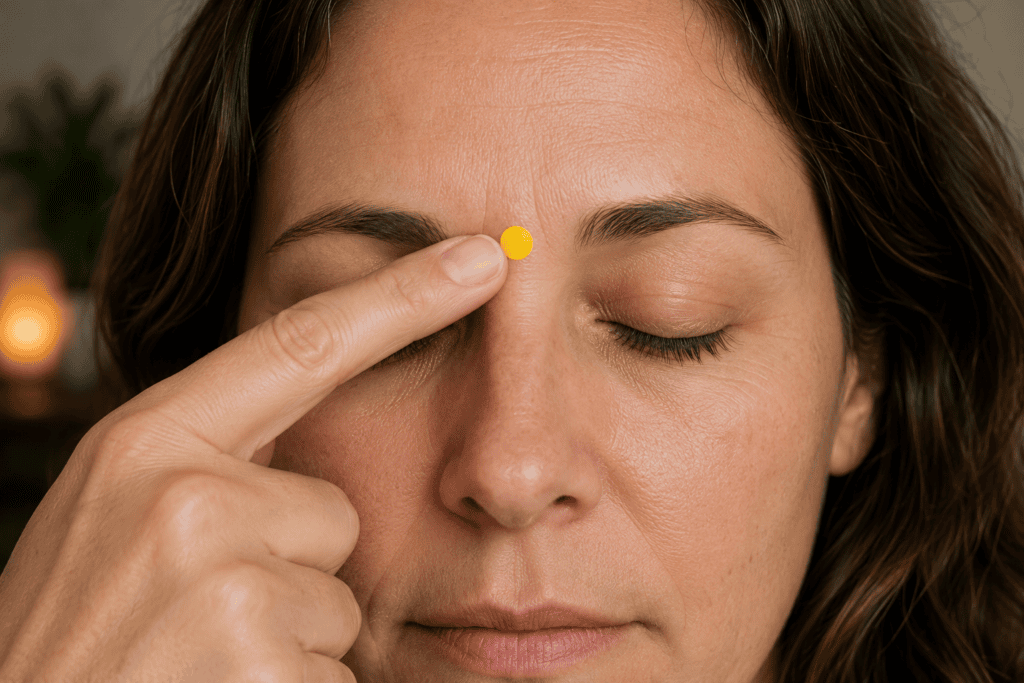
2. Press on Yintang between the eyebrows to clear a blank, frozen mind. Yintang sits in the small hollow directly between the two eyebrows. Press steadily and hold, or make small, slow circles with your fingertip for one to two minutes. Yintang is an extra point, and it is one of the most calming and clearing points in the body.
Yintang calms the Shen and clears the head, making it ideal for relieving the frozen, blank, or panicked feeling when your mind goes blank and you can’t recall what you know. It helps relax the nervous system and cut through the mental fog caused by fear, allowing the mind to steady and memories to return. For students who blank out when facing an exam, this point helps calm the mind and makes it easier for learned information to surface. Press it before the test to settle your nerves, and again whenever your mind goes blank during the exam.
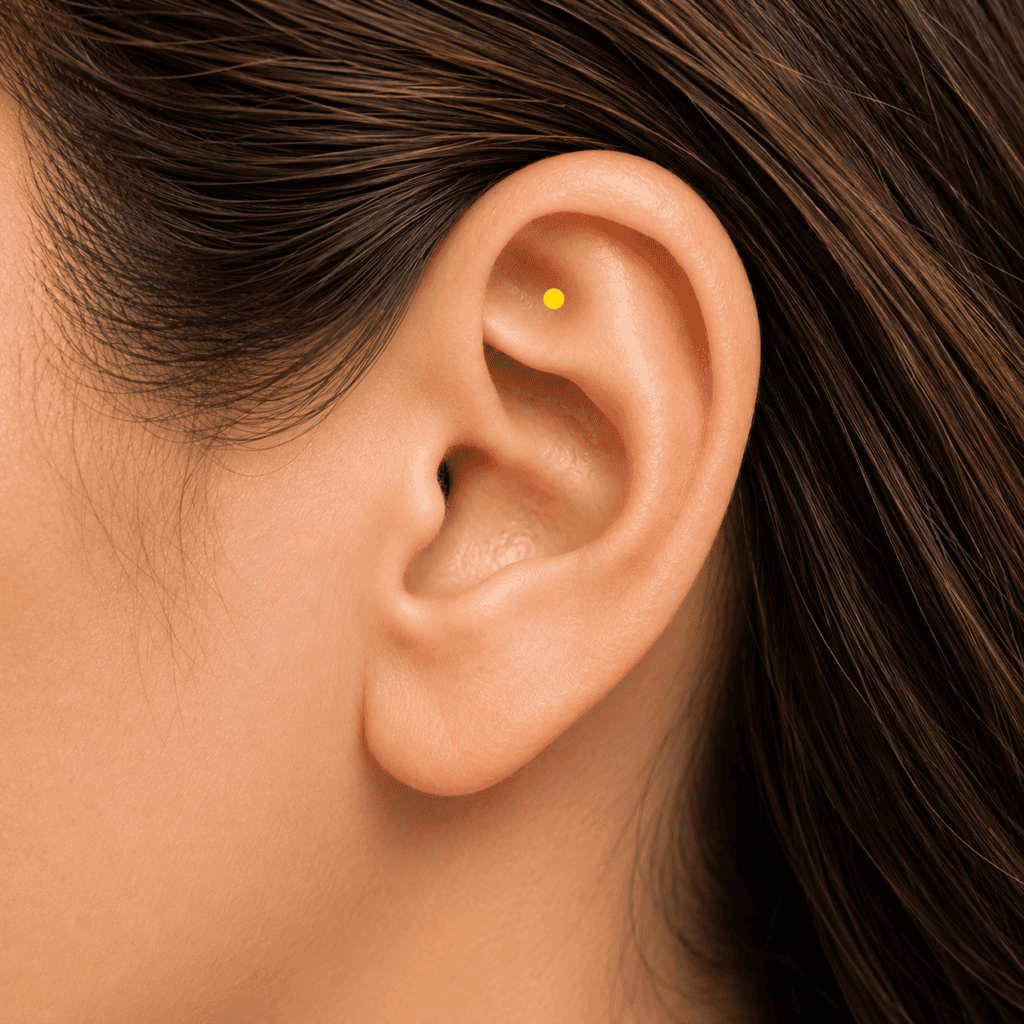
3. Press on Ear Shenmen for deep, discreet calm. Ear Shenmen sits in the upper part of the ear, in the triangular hollow near the top, at its apex. Press gently with your fingertip, or squeeze between your finger and thumb, for about a minute on each ear. Ear Shenmen is one of the most calming points on the ear and shares its name, “Spirit Gate,” with the Heart point HT7.
Ear Shenmen is a highly dependable calming point on the body, frequently used to relieve anxiety and nerves. It remains discreet because resting a hand near your ear appears ordinary in an exam setting. It quickly soothes the Shen, softening sudden panic moments. For immediate fear spikes before or during a test, this point rapidly calms your entire system and works well with wrist points for a swift, subtle reset at your desk.
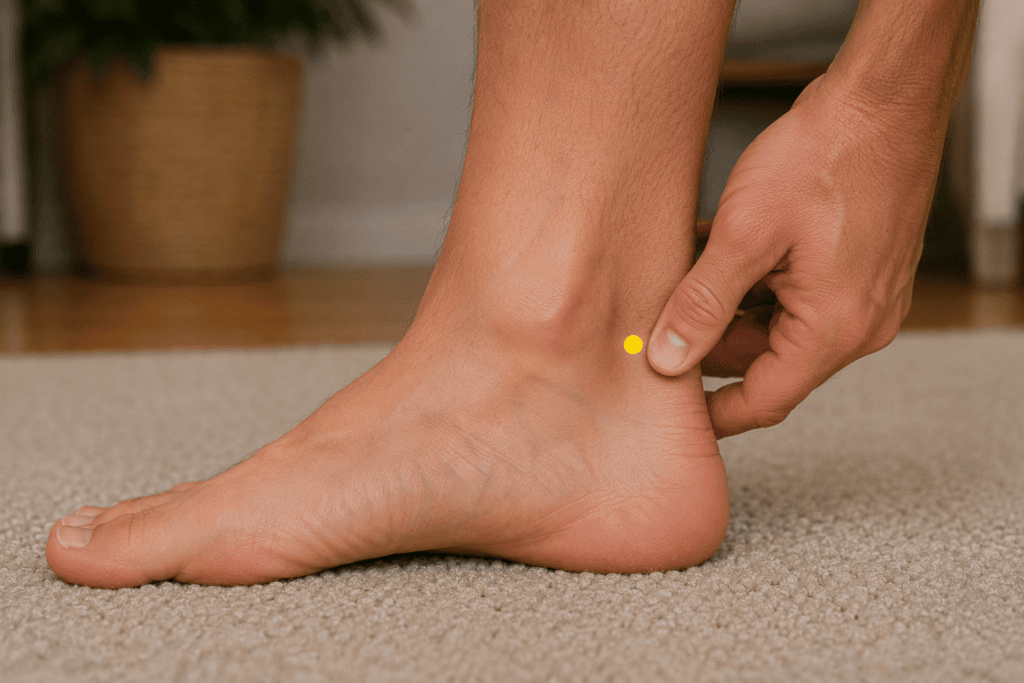
4. Press on KI3 located above the inner ankle to help anchor fear and aid recall. KI3 is situated in the hollow between the inner ankle bone and the Achilles tendon, aligned with the tip of the ankle bone. Hold firm pressure with your thumb for one to two minutes on each ankle. KI3 is also known as “Taixi,” the Kidney’s source point.
Since the Kidney governs fear and stores the essence that fuels memory, KI3, as its central point, anchors the fear that scatters your mind and supports the recall that fear drains away. It replenishes and stabilizes deep reserves, calms the underlying fear and insecurity tied to test anxiety, and reconnects the Heart and Kidney so the mind can access its knowledge. For students whose fear causes memory loss, this point addresses the core issue effectively and is best applied in the days leading up to a test and again while settling in beforehand.
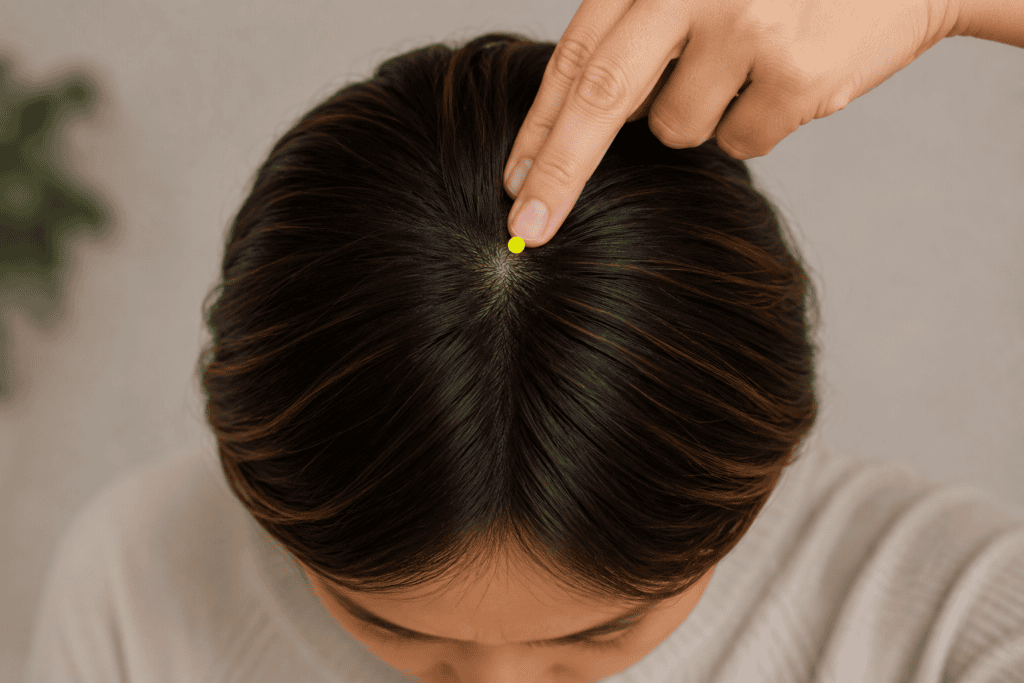
5. Press on GV20 at the top of the head to sharpen a clear, focused mind. GV20 sits at the very top of the head, on the midline, on a line drawn up from the tops of both ears. Press straight down, or make small circles, with your fingertip for one to two minutes. GV20 is called “Baihui,” the “Hundred Meetings,” where many channels converge at the crown.
GV20 clears the head and elevates the mind, enhancing focus and mental clarity – precisely what test anxiety obscures. It soothes while clarifying, calming nerves without dulling awareness and keeping the mind alert and present instead of foggy or frozen. For students needing clear thinking under pressure, this point boosts concentration and recall. Pressing it before starting helps you approach the test with a calm, steady mind.
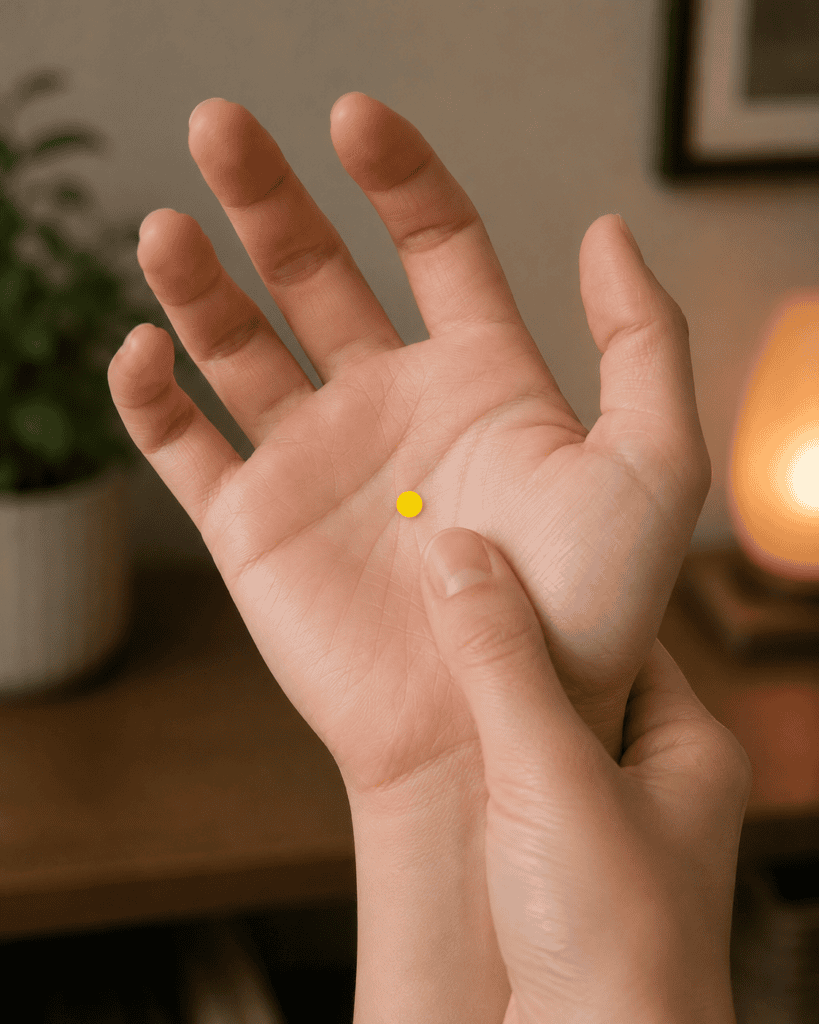
6. Press on PC8 in the palm to cool a pounding, panicky heart. PC8 sits in the center of the palm, where the tip of the middle finger touches when you make a loose fist. Press firmly with the thumb of your other hand for about a minute on each hand. PC8 is called “Laogong,” and it clears heat from the Heart and calms an agitated spirit.
PC8 alleviates the intense, racing sensation of acute exam anxiety – like a flushed face, pounding heart, and sweaty palms – by releasing the Heart heat caused by anxiety. It quickly restores a cool, calm feeling to an overstimulated system. The technique is discreet, simply looking like resting one hand in the other. For the sudden physical rush of exam panic, this point quickly reduces the sensation, and it works effectively when pressed along with the wrist points during nerve surges.
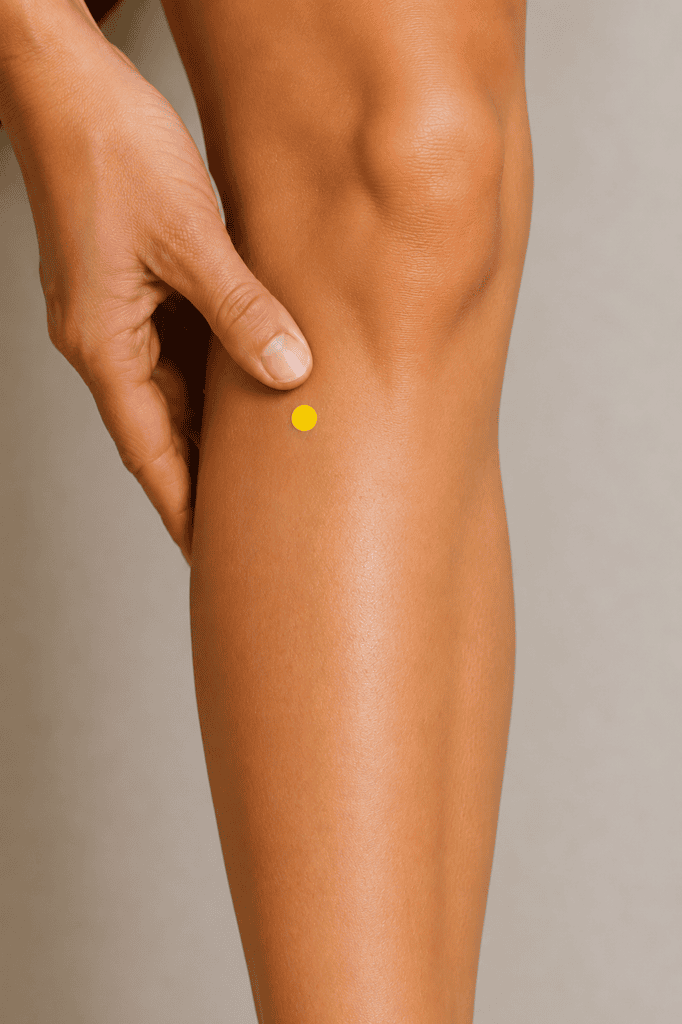
7. Press on ST36 below the knee to settle a churning stomach. ST36 sits four finger-widths below the lower edge of the kneecap and one finger-width to the outside of the shinbone, on the muscle that rises when you flex your foot. Press firmly with your thumb for one to two minutes on each leg. ST36 is called “Zusanli,” the “Leg Three Miles,” and it is the master point for the stomach and for grounding.
Test anxiety often manifests as stomach issues, including butterflies, nausea, and the churning knot before an exam. ST36 addresses this by harmonizing the Stomach and stabilizing digestion disrupted by nerves. It also grounds the body, drawing anxious, head-focused energy down and stabilizing the whole system. For students whose nerves mainly reside in their gut, this point helps calm the stomach and system when pressed in the days leading up to and on the morning of a test.
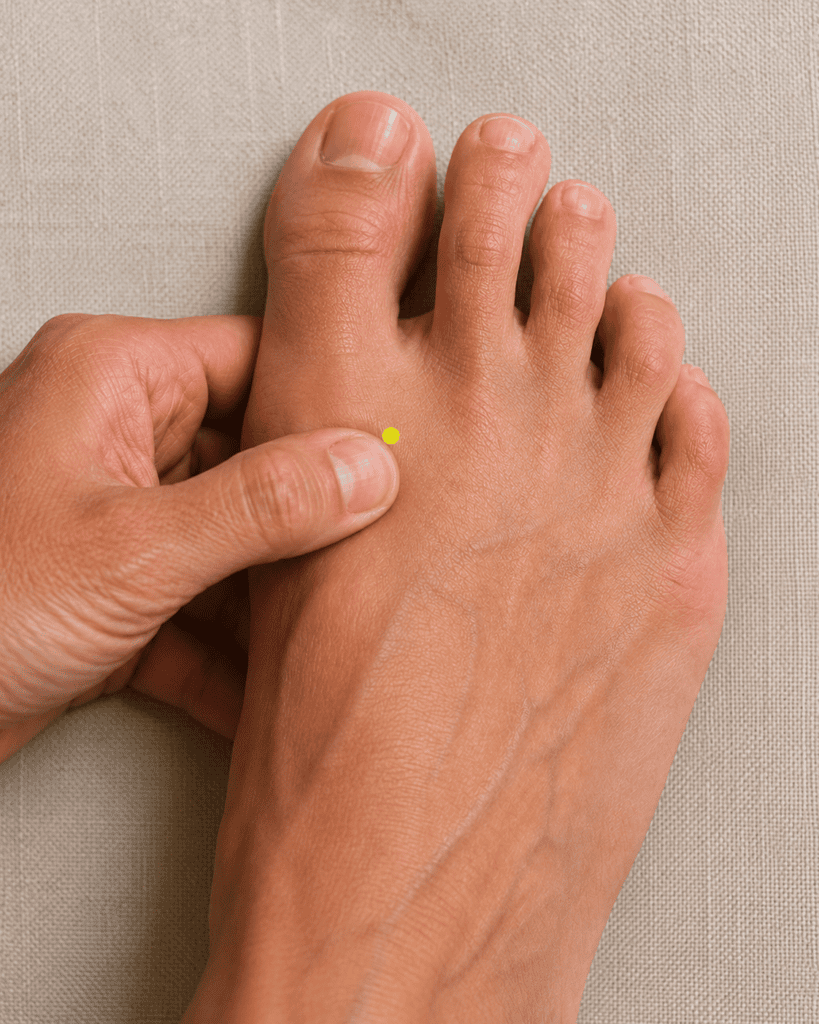
8. Press on LR3 on the top of the foot to release the tension of stress. LR3 sits on the top of the foot, in the webbing between the big toe and second toe, about two finger-widths back where the bones meet in a small hollow. Press firmly with the thumb for one to two minutes on each foot. LR3 is called “Taichong,” the primary point for smoothing Qi flow.
Stress buildup before a test traps Qi, causing tension, irritability, and tightness. LR3 releases this stagnation and eases the tension. It enhances Qi flow disrupted by studying stress and dread, grounding the system by channeling energy downward to the feet. For exam-related tension, tight shoulders, and irritability, this point relieves the symptoms. It works best when used beforehand to calm overall pressure.
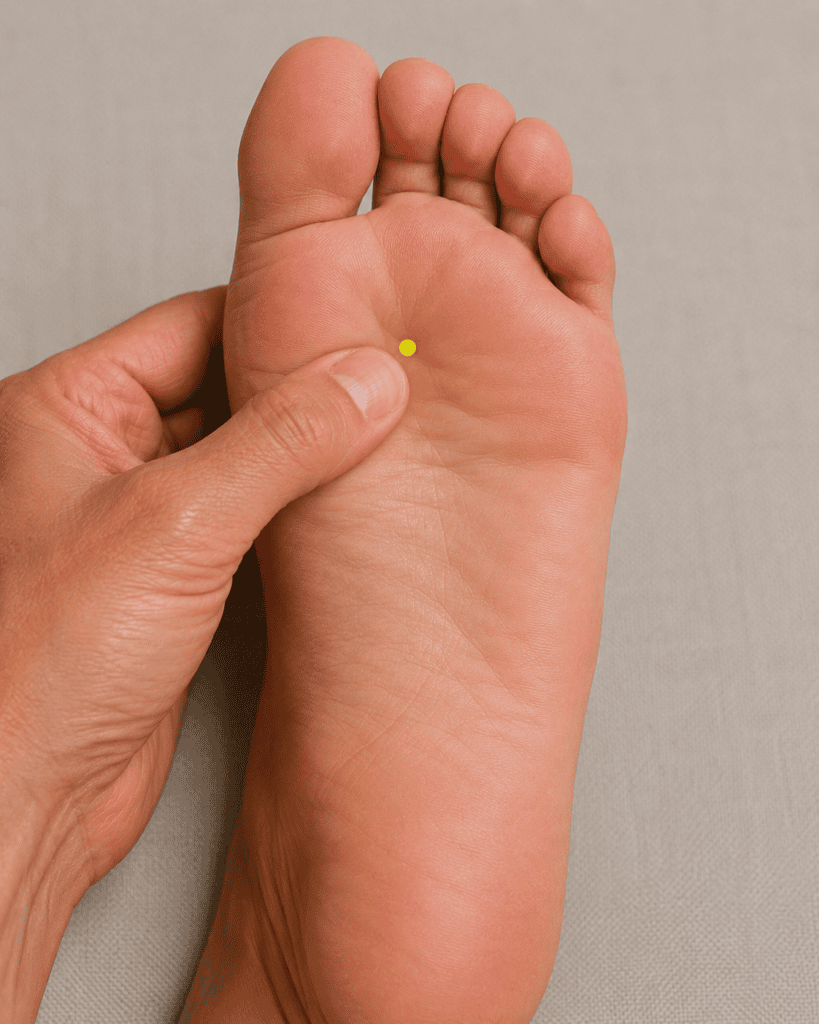
9. Press on KI1 on the sole of the foot to ground the panic. KI1 sits on the sole of the foot, in the hollow that forms in the center of the ball of the foot when you curl the toes, about a third of the way down from the toes to the heel. Press firmly with your thumb for one to two minutes on each foot. KI1 is called “Yongquan,” the “Bubbling Spring,” and it is the lowest point on the body.
KI1 redirects anxious, panicky energy from the head and chest, grounding it into the earth and providing a stabilizing force when test nerves make you feel like you’re spinning or disconnecting from your body. As the lowest point, it stabilizes a scattered, frantic system, and since the Kidney is associated with fear, this point helps resolve that fear on a deep level. For students feeling unstable and panicky before an exam, KI1 helps ground them and serves as a calming conclusion to a pre-test routine, whether at night or in the morning.
Why These Acupressure Points Work
In Traditional Chinese Medicine, test anxiety involves fear dispersing the Shen and severing the Heart from the Kidney, which supplies the essence for memory. This explains why nerves race alongside the heart and the mind becomes blank, while worry constricts the Spleen and causes stomach discomfort. The nine points address this entire pattern.
- The Heart-and-Shen calming points (Buddha’s Triangle of HT7, PC6, and LU9, plus Ear Shenmen and PC8) settle the racing heart and the acute panic, and several are discreet enough to use during the test.
- The mind-clearing points (Yintang, GV20) cut through the frozen, blank fog and keep the mind clear and focused under pressure.
- The Kidney points (KI3, KI1) anchor the fear that scatters recall and ground the panicky energy, working at the root of test anxiety.
- The grounding-and-settling points (ST36, LR3) calm the churning stomach and release the tension that studying stress builds.
How to Properly Use These Acupressure Points
Test anxiety shows up in two stages: the anticipatory phase before the exam and the peak during the test.
- In the days before a test, work the deeper calming and grounding points, KI3, KI1, ST36, and LR3, along with Yintang, once or twice a day to lower the overall dread, settle the stomach, protect your sleep, and steady your recall.
- The night before and the morning of, run through the whole set to go in calm, and get a good night’s sleep, which matters more for recall than one more hour of cramming.
- During the test, use the discreet points right at your desk: Buddha’s Triangle at the wrist, PC8 in the palm, and Ear Shenmen, pressed with one hand while you breathe slowly, the moment your heart races or your mind blanks.
- Hold each point for a minute or so with firm, steady pressure, and slow your breathing while you press, since slow breathing is itself one of the fastest ways to calm test nerves.
Combining acupressure with calming techniques is effective. Slow, deep breaths quickly calm the body, so practice them beforehand. Prepare and get good sleep instead of cramming, since exhaustion worsens anxiety and memory. Limit caffeine before tests, as it may cause jitters and a racing heart, and eat something calming beforehand. If your mind goes blank during the exam, pause, press a point, breathe slowly, and begin with a familiar question to restore confidence.
When to Get Professional Help
It’s normal to feel nervous before a test, and these tips can help keep that anxiety manageable. If test anxiety becomes severe – interfering with your sleep, health, or performance despite preparation – or if it triggers panic attacks or general anxiety beyond exams, seeking support is important. A school counselor, doctor, or therapist can offer significant help, and many schools have dedicated resources for test anxiety because it is very common among students.
Acupressure is an effective method for managing test anxiety and can complement other tools when anxiety peaks.
Above and Beyond Acupuncture offers acupuncture, cupping, and lifestyle coaching at the North Frank Lloyd Wright Boulevard location in Scottsdale.
Schedule an appointment online or call us today to start your healing journey.
The points above are only as effective as the technique used to apply them. Where to press, how firmly, and for how long all affect the result. For a full breakdown of how to perform acupressure properly at home, read Performing Acupressure in 3 Easy Steps.

About the Publisher
Paul Kerzner, L.Ac., is a licensed acupuncturist and board-certified herbalist, as well as the founder of Above and Beyond Acupuncture in Scottsdale. His own journey from chronic patient to practicing acupuncturist shapes his commitment to providing honest, clinically grounded information about acupuncture and Traditional Chinese Medicine. Learn more about Paul and his clinical approach on the About Us page.