Key Takeaways
- Acupressure offers a natural way to relieve a stomach ache by pressing key points on the body.
- Nine specific acupressure points address various stomach issues like pain, nausea, cramping, gas, and stress-related discomfort.
- For effective treatment, match the acupressure points to your symptoms and maintain gentle pressure for one to two minutes.
- Use additional remedies like hydration and warmth for further relief, especially in conjunction with acupressure techniques.
- Seek professional help for severe or persistent stomach pain, especially with concerning symptoms like high fever or blood.
When you have a stomach ache, it’s normal to want quick, simple relief.
Acupressure provides a natural, holistic approach you can perform with just your hands. By applying firm, steady pressure to designated pressure points, you can relieve discomfort and calm an upset stomach. Different acupressure points target specific issues such as cramping, bloating, nausea, feeling overly full, or general stomach pain. Whether the pain happens after eating, during stressful moments, or unexpectedly, acupressure can help settle your stomach naturally and holistically.
In Traditional Chinese Medicine, a stomach ache can have multiple causes. Qi might become stagnant in the digestive system, the Stomach’s normal downward movement could be disrupted, or factors like stress, overeating, cold, heat, or a weak Spleen and Stomach may affect digestion. Activating the right acupressure points helps regulate Qi flow, relax the Stomach, and restore a comfortable digestive rhythm. These points can relieve cramping, bloating, nausea, fullness, and general abdominal discomfort. While you don’t need extensive knowledge of Traditional Chinese Medicine to use them, understanding each point’s function can help you select the most appropriate one for your symptoms.
Here are nine acupressure points that can help when you have a stomach ache:
What Acupressure Points to Press and Why
1. Press on CV12 above your belly button for general stomach pain. This point sits on the midline of your belly, about halfway between your belly button and the bottom of your breastbone, roughly four finger-widths above the navel. Rest your fingertips or the flat of your palm there and press gently but steadily for a minute or two. Its old name, “Zhongwan,” simply marks it as the stomach’s central point.
If you press only one point for a stomach ache, make it this one. It sits directly over your stomach and is the most direct point there is for calming ordinary stomach pain – that heavy, full, achy feeling in the upper belly. Because it is right over a tender area, keep the pressure comfortable and let your breathing slow as you hold it. This is the natural place to start, and for a lot of everyday stomach aches, it does much of the work on its own.

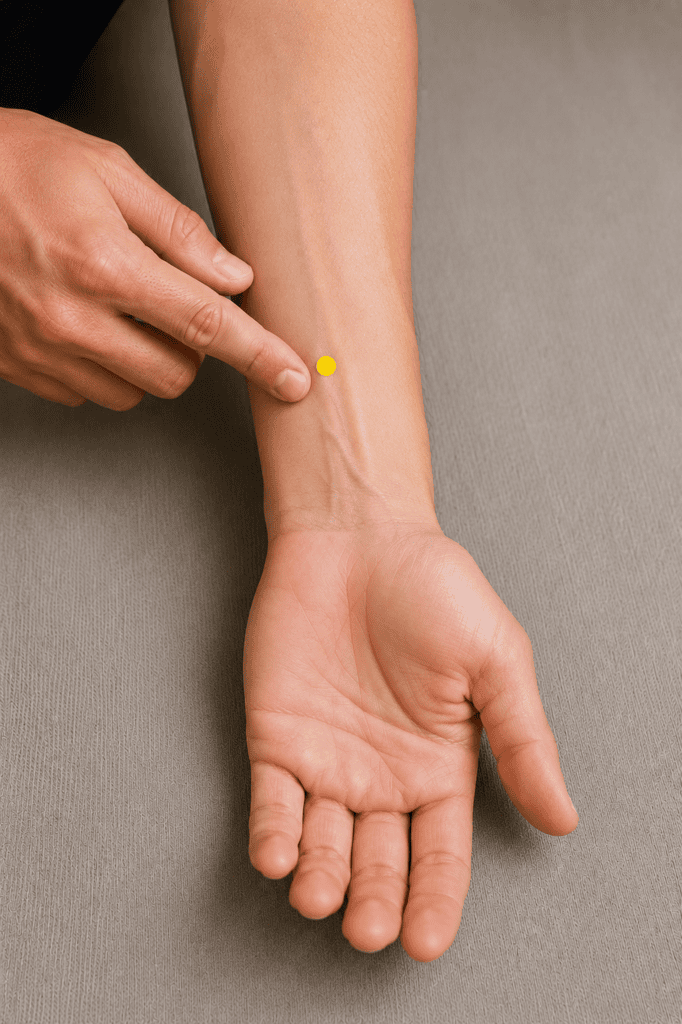
2. Press on PC6 on your inner wrist for nausea and a sick feeling. Find this point on the inside of your forearm, about three finger-widths up from the wrist crease, right in the middle between the two tendons you can feel there. Press firmly with your thumb for a minute or two on each arm. Its name, “Neiguan,” means the Inner Pass, and it is the famous point for feeling sick.
When your stomach ache comes with nausea, queasiness, or that unsettled, might-be-sick feeling, this is the point to reach for. It is the best-known point in the body for calming nausea of nearly any kind, which is why travel bands sit right over it. It is easy to press discreetly wherever you are, and it pairs naturally with the point over your stomach when your belly is both achy and queasy at once.
3. Press on ST36 below your knee to settle and strengthen the stomach. This point is four finger-widths below the bottom of your kneecap and one finger-width toward the outside of your shinbone, on the muscle that flexes when you pull your foot up. Press firmly with your thumb for a minute or two on each leg. “Zusanli” is one of the most useful points in the whole body for digestion.
This is the great all-purpose digestive point, and it earns its place in any stomach ache. It calms an upset stomach while also strengthening the digestion behind it, so it helps both the ache of the moment and the sluggish, off feeling that can linger. It has a steadying, restoring quality, which makes it a good one to include no matter what kind of stomach ache you have, and it also lifts the tired, drained feeling that a bad stomach can leave behind.

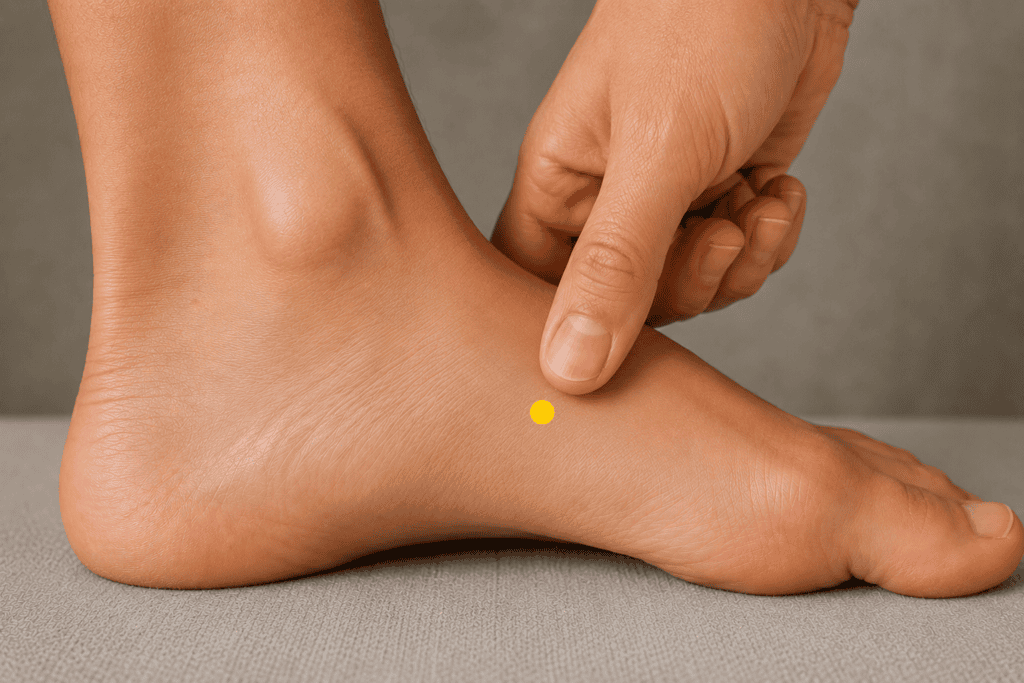
4. Press on SP4 on the arch of your foot for cramping pain. Look along the inside arch of your foot, in the dip just below and ahead of the bony bump behind your big-toe joint. Press firmly with your thumb on each foot for a minute or two. It’s called “Gongsun,” and it is a strong point for the middle of the body.
When the ache is more of a cramp, a griping, clenching pain rather than a dull fullness, this is the point that helps. It relaxes the knotted, spasming feeling in the belly and calms a stomach that has seized up. It works especially well pressed together with the wrist point from earlier, a pairing long trusted for a distressed, cramping stomach, so reach for the two of them when your belly is tight and painful.
5. Press on ST25 beside your belly button for a lower, bloated belly. This point sits about three finger-widths out to each side of your belly button, level with its center. Press gently but firmly with your fingertips for a minute or two on both sides. “Tianshu,” the Heavenly Pivot, sits right over your intestines.
When the trouble is lower down, a bloated, gassy, crampy belly or an ache tied to your bowels, this point reaches it where the stomach points above cannot. It settles the intestines and helps relieve the distended, full-of-air feeling that makes the whole lower belly uncomfortable. For the stomach ache that is really more of a bowel ache, with bloating and pressure below the navel, this is the one that helps most.
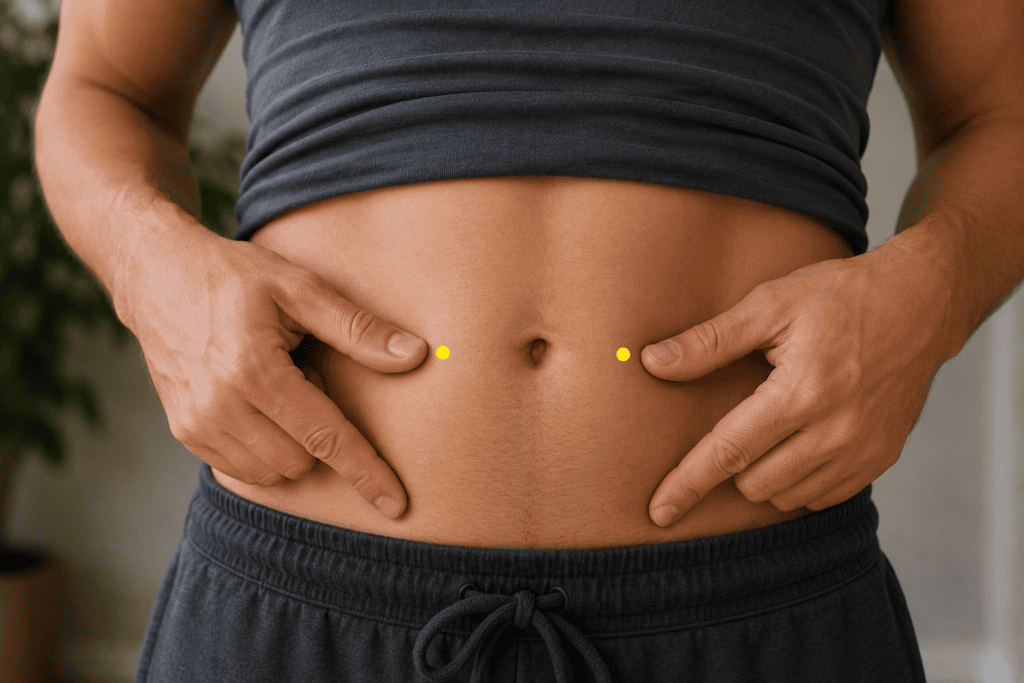
6. Press on CV6 below your belly button for gas and trapped wind. Find this point on the midline, about two finger-widths below your belly button. Rest your fingertips there and press gently for a minute or two. “Qihai” means the Sea of Qi, a gathering place for the body’s energy low in the belly.
For the specific misery of trapped gas, that tight, bloated, achy pressure sitting low in the abdomen, this point helps free and move it. It gets the stalled energy in the lower belly flowing again, which is what eases the bloated, wind-bound feeling. It works nicely alongside the point beside your navel when your lower belly is full of gas and pressure, and it feels especially good held with a warm hand.

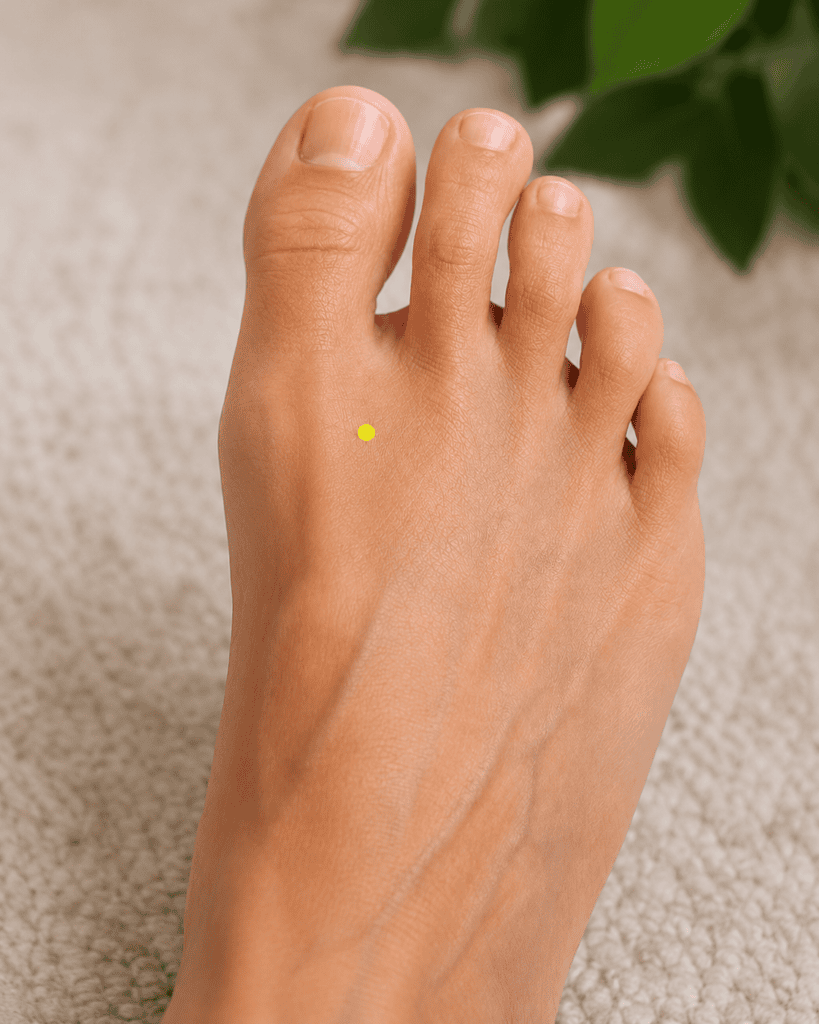
7. Press on LR3 on the top of your foot for a nervous, stress stomach. On the top of your foot, slide back from the web between your big toe and second toe about two finger-widths, into the dip where the bones meet. Press firmly with your thumb for a minute or two on each foot. “Taichong” is the main point for easing tension in the body.
So many stomach aches are really stress in disguise, the belly that knots up before something stressful, or churns the moment you get anxious. If your stomach ache tends to track with your nerves, this is the point that reaches the cause. It releases the tension that ties the stomach in knots and calms a gut that reacts to stress, and it has a grounding, settling effect on the whole body along with it. Reach for it whenever a worried mind and an unhappy stomach show up together.
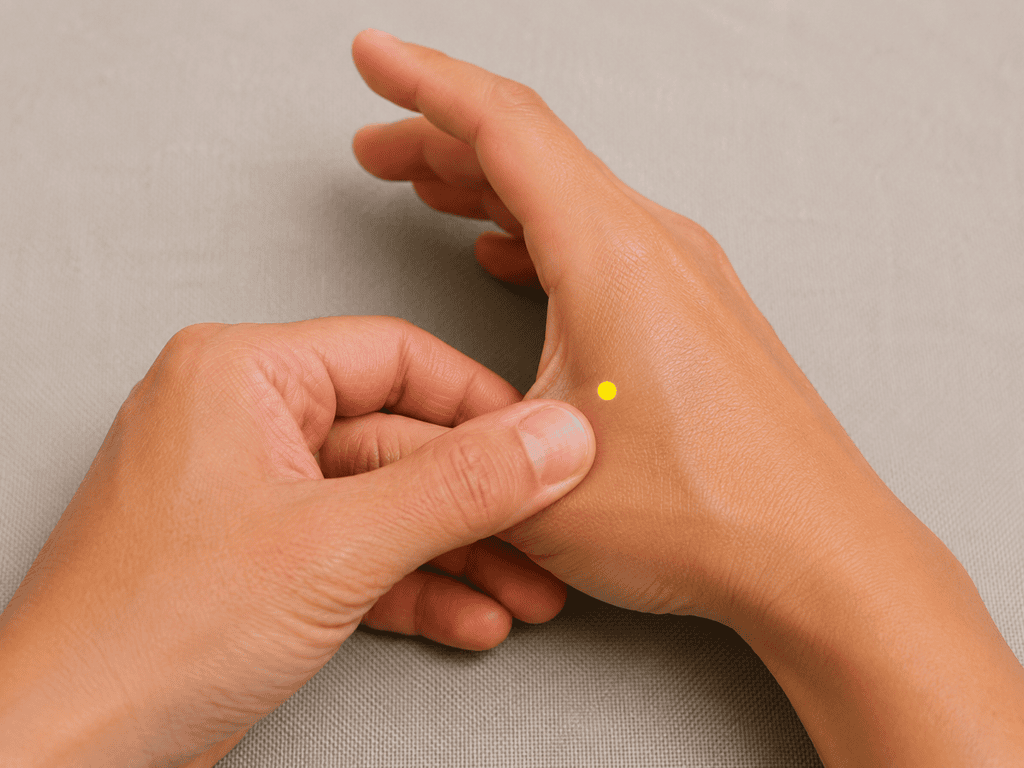
8. Press on LI4 in your hand to take the edge off the pain. This point is in the webbing between your thumb and index finger, at the highest spot of the muscle when you bring them together. Press firmly with the thumb of your other hand for a minute or two on each hand. “Hegu” is one of the body’s great points for pain of all kinds. Skip this point if you are pregnant.
This one is not specific to the stomach, but it is a powerful general pain reliever, so it helps take the edge off a stomach ache the way it eases aches elsewhere. It is a good one to add to any of the points above when the pain is strong and you want extra relief, and because it is right there on your hand, you can press it quietly anywhere, under a table or in a waiting room, without anyone noticing.
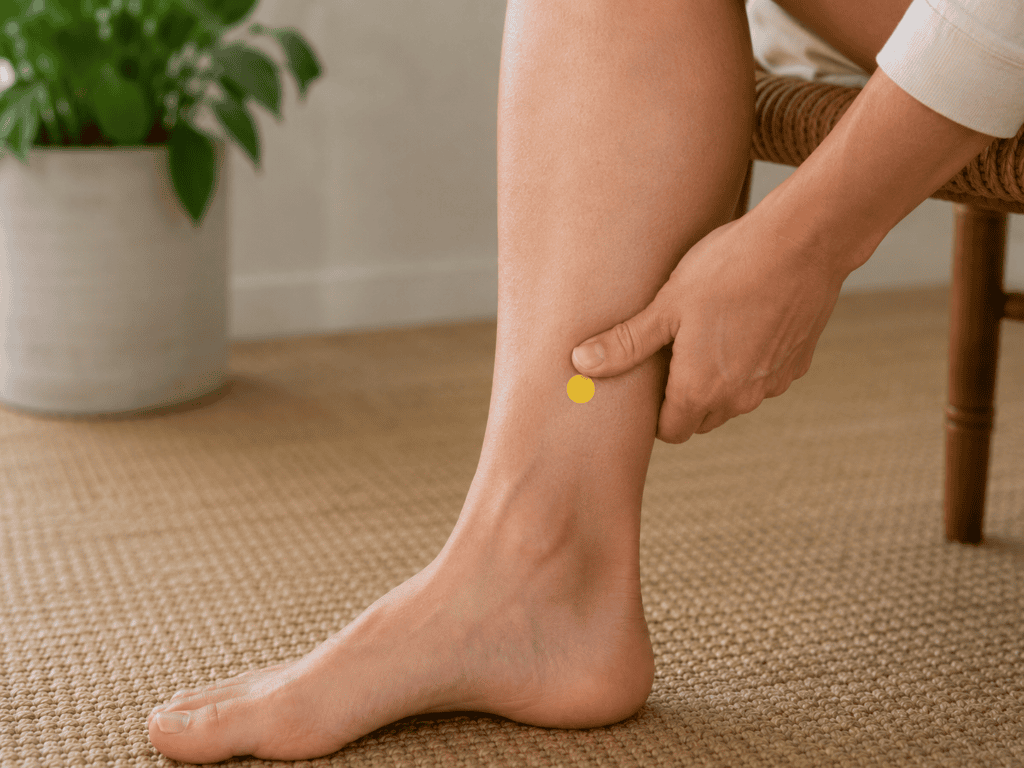
9. Press on SP6 above your inner ankle for a stomach that keeps acting up. Measure four finger-widths up from the top of your inner ankle bone, then press just behind the back edge of your shinbone, firmly, for a minute or two on each leg. “Sanyinjiao” is one of the most nourishing points on the body. Skip this point if you are pregnant.
If your stomach is not just aching today but tends to be easily upset in general, this point supports and steadies digestion at a deeper level over time. It is less about halting a sharp pain in the moment and more about strengthening a stomach that gets unsettled often, so it rewards regular pressing rather than one-off use. For anyone whose stomach is a frequent source of trouble, this is a good one to keep coming back to.
Why These Acupressure Points Work
A stomach ache, in Chinese medicine, means the smooth flow through the middle of your body has become stuck or unsettled, whether from something you ate, trapped gas, tension, or a stomach that is simply weak and easily upset. These nine points settle and restore that flow in the different places it goes wrong.
- The stomach points (CV12, ST36) calm ordinary stomach pain and strengthen the digestion behind it.
- The nausea point (PC6) quiets a queasy, sick-feeling stomach.
- The cramp point (SP4) relaxes a clenched, griping belly.
- The lower-belly points (ST25, CV6) relieve bloating, gas, and trapped wind below the navel.
- The stress point (LR3) releases the tension that knots up a nervous stomach.
- The pain point (LI4) takes the edge off the ache, and the support point (SP6) steadies a stomach that acts up often.
You don’t need to use all of them. Just choose two or three that match what your stomach is actually experiencing, and that will be enough.
How to Properly Use These Acupressure Points
Match the acupressure points to your stomach ache, apply gentle pressure to your abdomen, and spend a short time on each.
- For a plain, general stomach ache, start with CV12 over your stomach and ST36 below your knee.
- Add PC6 at the wrist if you feel queasy, SP4 for cramping, ST25 and CV6 for a bloated, gassy lower belly, and LR3 if stress is behind it. Add LI4 whenever you want extra pain relief.
- Press each point for a minute or two with steady, comfortable pressure, breathing slowly, and repeat through the day as you need to. Keep the pressure over your belly gentle, and go easy there right after eating.
These points work just as well for children, with one important adjustment: press much more gently and only briefly, since a child needs far lighter pressure than an adult. A soft, reassuring touch on the point over the stomach or wrists is plenty for nausea.
Besides activating acupressure points, simple remedies still help most people: drink water, rest, apply a warm compress or hot water bottle to the belly, and eat lightly until the stomach settles, focusing on plain, simple foods when your appetite returns.
When to Get Professional Help
Most stomach aches are minor and pass on their own, these points are for common digestive discomfort. More severe, persistent belly pain needs a doctor, and it helps to know the difference.
For an adult, see a doctor for stomach pain that keeps getting worse, or that does not go away, and get prompt care for pain along with a high fever, repeated vomiting, blood in your vomit or stool, black tarry stools, or a hard, swollen, rigid belly. Pain that settles low on the right side of the abdomen deserves urgent attention, since it can be appendicitis. One more thing to know: pain or pressure high in the belly that comes with chest pressure, shortness of breath, sweating, or pain spreading to the arm, neck, or jaw can be a heart problem rather than a stomach one, so treat it as an emergency.
For a child, the same warning signs apply, and a few matter even more. Because young children dehydrate quickly, watch for fewer wet diapers or less urine, no tears when crying, drowsiness, or unusual floppiness, and seek care if you see these signs. Take a child promptly to a doctor for severe or worsening belly pain, pain that moves to or settles in the lower right side, a hard or swollen belly, repeated vomiting, blood in the stool or vomit, a high fever, or belly pain after a fall or injury, and always have any belly pain in a baby checked. When in doubt with a child, it is always right to call your doctor.
Acupressure and simple home care can handle the ordinary stomach ache well, but they are not a substitute for the care these situations require.
Above and Beyond Acupuncture offers acupuncture, cupping, and lifestyle coaching at the North Frank Lloyd Wright Boulevard location in Scottsdale.
Schedule an appointment online or call us today to start your healing journey.
The points above are only as effective as the technique used to apply them. Where to press, how firmly, and for how long all affect the result. For a full breakdown of how to perform acupressure properly at home, read Performing Acupressure in 3 Easy Steps.

About the Publisher
Paul Kerzner, L.Ac., is a licensed acupuncturist and board-certified herbalist, as well as the founder of Above and Beyond Acupuncture in Scottsdale. His own journey from chronic patient to practicing acupuncturist shapes his commitment to providing honest, clinically grounded information about acupuncture and Traditional Chinese Medicine. Learn more about Paul and his clinical approach on the About Us page.