
Key Takeaways
- Vertigo causes a spinning sensation and is often accompanied by nausea and unsteadiness, making it distinct from regular dizziness.
- Acupressure can relieve vertigo symptoms by calming the head and stabilizing balance through specific pressure points.
- Key acupressure points include GB20 for spinning, GV20 for clearing the head, and PC6 for nausea, among others.
- While acupressure helps manage symptoms, it’s essential to seek professional help for persistent or severe vertigo.
- Perform acupressure while seated or lying down, pressing each point for one to two minutes to ease the discomfort.
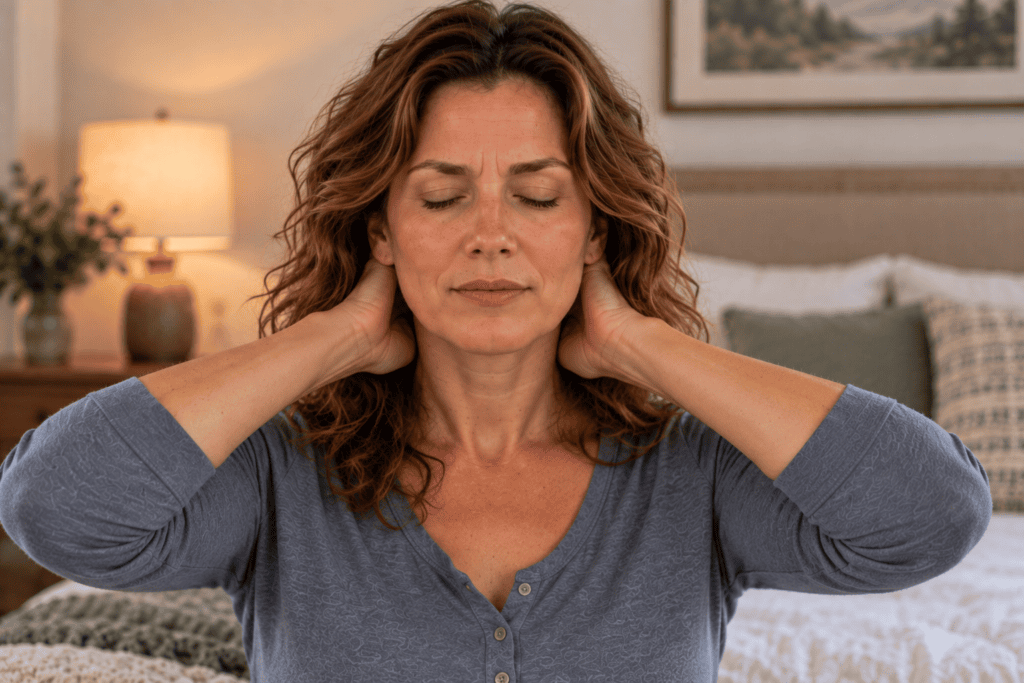
Vertigo is a highly unsettling experience that differs from typical dizziness or lightheadedness. It involves a distinct sensation of you or your surroundings spinning or moving when you’re actually stationary. This is often paired with nausea, unsteadiness, and a strong urge to sit or lie down until it passes. Vertigo can occur in brief, intense episodes triggered by head movements or as a persistent, swimming-like sensation that makes even simple daily tasks seem risky. While acupressure doesn’t address the underlying cause of vertigo, it can effectively relieve symptoms, soothe the spinning feeling, lessen nausea, and help stabilize a dizzy head.
It’s important to note, especially with vertigo: since vertigo affects your balance and can strike unexpectedly, you should press these points while seated or lying down. This helps prevent falling and gives you time to recover before standing.
Traditional Chinese Medicine has long viewed vertigo as a disturbance affecting the head, with various underlying patterns. Rising Liver yang, triggered by stress, anger, or high blood pressure, causes a spinning vertigo that worsens under tension. Phlegm and dampness, linked to slow digestion, cause heavy, cloudy vertigo with nausea and a full-headed sensation. Qi and Blood deficiency lead to vertigo that worsens with fatigue and exertion. Age-related Kidney decline causes chronic vertigo often with ringing in the ears. In all cases, the head is undernourished or destabilized, either due to rising disturbances or insufficient nourishment. The points listed below help calm and clear the head, suppress disturbances, resolve phlegm, relieve nausea, and support the inner ear and deeper reserves.
For the clinical side of this, acupuncture for vertigo covers how it is approached in the treatment room.
Here are nine acupressure points that can help. They can provide relief and support a holistic approach to managing vertigo.
What Acupressure Points to Press and Why
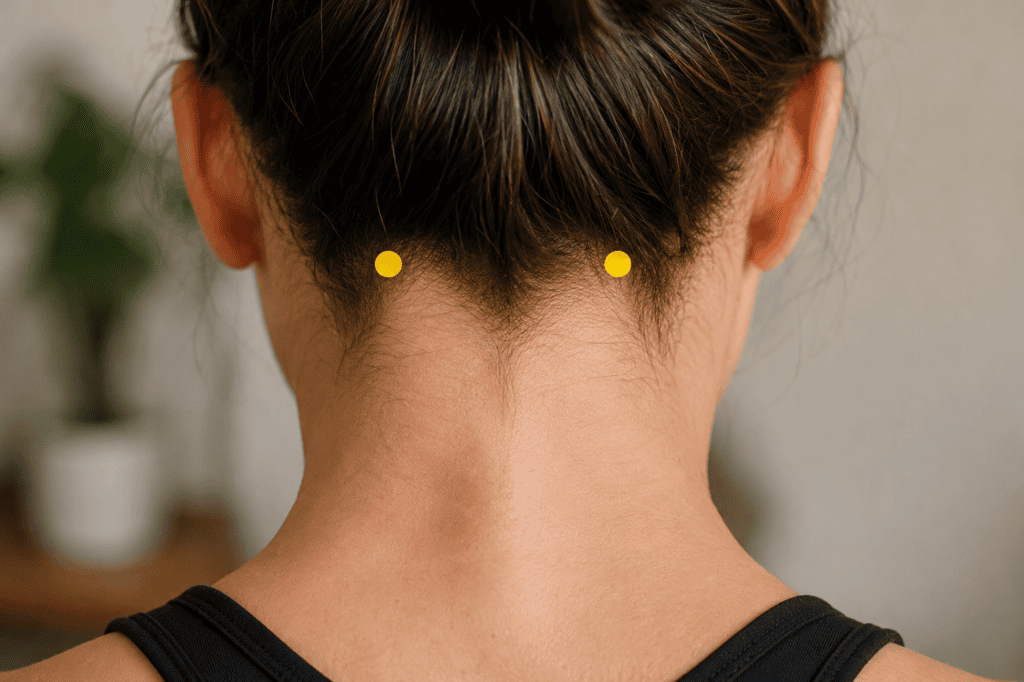
1. Press on GB20 at the base of the skull to steady a spinning head. GB20 sits in the two hollows at the base of the skull, between the two large vertical neck muscles and the outer edge, roughly level with the tops of the ears. Sitting or lying down, tilt your head back slightly and press firmly up and inward with your thumbs for 1 to 2 minutes. GB20 is called “Fengchi,” and it is the single most important point for vertigo and dizziness.
None of the points is more important than this one because it calms and clears the head, suppresses the rising yang that causes the disorder, and is believed to enhance blood flow to both the head and the inner ear. For this reason, it is always the first point treated in cases of vertigo and dizziness. Because it is situated exactly where the neck joins the head, it has a soothing effect on the entire area that vertigo disrupts. When it comes to the spinning and unsteady feeling at the core of vertigo, this should be the point at which treatment begins, and it is worth spending a full couple of minutes on it.
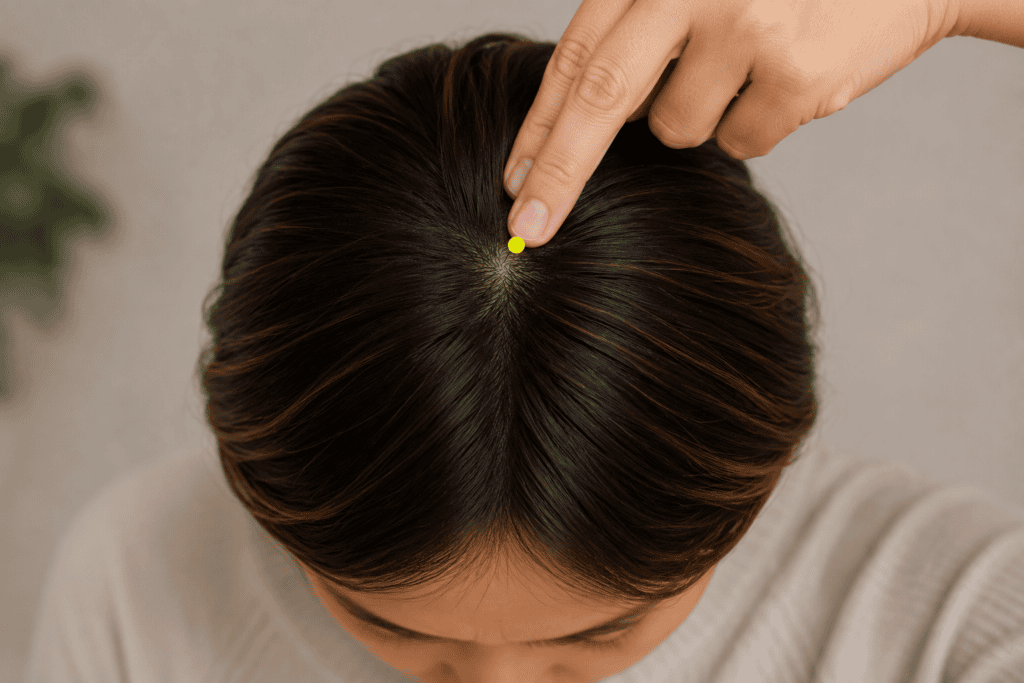
2. Press on GV20 at the top of the head to clear the head. GV20 sits at the very top of the head, on the midline, on a line drawn up from the tops of both ears. Press straight down, or make small circles, with your fingertip for one to two minutes. GV20 is called “Baihui,” the “Hundred Meetings,” where many channels converge at the crown.
GV20 promotes clearance and raises the head, making it a common choice for treating almost all types of vertigo and dizziness. In Chinese medicine, it works by elevating clear Qi to nourish the head and eliminating obstructions that cause imbalance. This helps stabilize sensations of spinning and unsteadiness and relieves the foggy heaviness often linked to vertigo. It is suitable for both deficient vertigo accompanied by fatigue, by directing energy upward to the head, and for the general clouded feeling during vertigo attacks. Positioned at the crown, it naturally pairs with GB20 at the base of the skull to support head stability from top to bottom.
3. Press on Yintang between the eyebrows to calm and settle. Yintang sits in the small hollow directly between the two eyebrows. Press steadily and hold, or make small, slow circles with your fingertip for one to two minutes. Yintang is an extra point and one of the most calming points in the body.
Pressing on Yintang calms the Shen and stabilizes the entire system, which helps with vertigo in two ways: it relieves the anxiety and panic often caused by a spinning spell, and it reduces nervous system agitation that can intensify the sensation. Since a vertigo attack is frightening and fear can cause muscles to tense, worsening the condition, calming the mind also relaxes the body. This technique offers a steadying calm for the disturbing and disorienting aspects of vertigo, and pressing slowly while breathing helps you get through the spell.

4. Press on SJ17 behind the earlobe for the inner ear. SJ17 sits in the hollow just behind the earlobe, between the jaw and the bony bump behind the ear, where you feel a natural depression when you open your mouth slightly. Press gently with your fingertip for one to two minutes on both sides. SJ17 is called “Yifeng,” a key point for the ears.
Since most vertigo originates in the inner ear, SJ17, a key ear acupressure point, is well-suited because it targets the area where the balance organs are located. Traditionally, this point has been used to treat ear issues like dizziness and ringing because it sits near the inner ear and is directly connected to the vestibular system responsible for balance. When vertigo occurs alongside symptoms like ringing, fullness, or ear pressure, this acupressure point can help address the underlying cause and can be gently stimulated while the person sits or lies down.

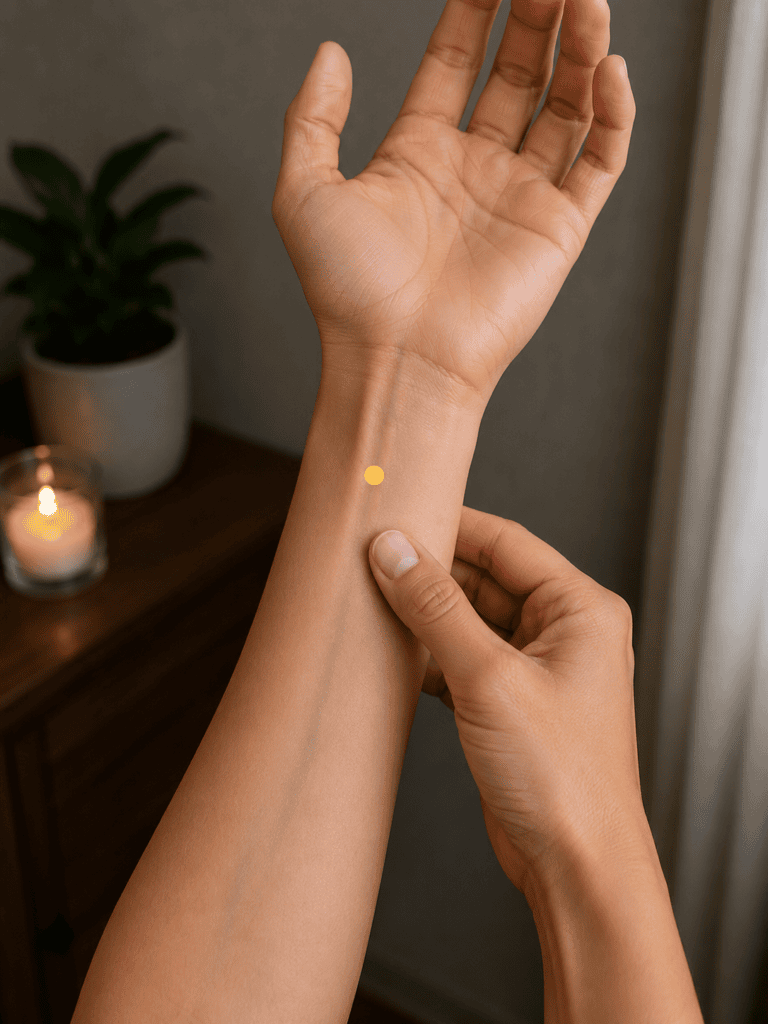
5. Press on PC6 on the inner forearm for nausea. PC6 sits three finger-widths above the inner wrist crease, in the center of the forearm between the two tendons. Press firmly with your thumb for one to two minutes on each arm. PC6 is called “Neiguan,” the “Inner Pass,” and it is the best-known point for nausea.
Dizziness often accompanies nausea because both stem from the same disruption in the body’s balance system. This disturbance not only makes the room feel like it’s spinning but also affects the stomach. PC6 is considered the most effective point for alleviating nausea, as it can quickly diminish queasiness, an upset stomach, and the strong urge to vomit caused by severe vertigo—similar to how motion sickness wristbands work. Stimulating this acupressure point can genuinely relieve vertigo-induced nausea and help calm the nervous system. It is discreet and easy to press during a spell, providing a simple, effective remedy.
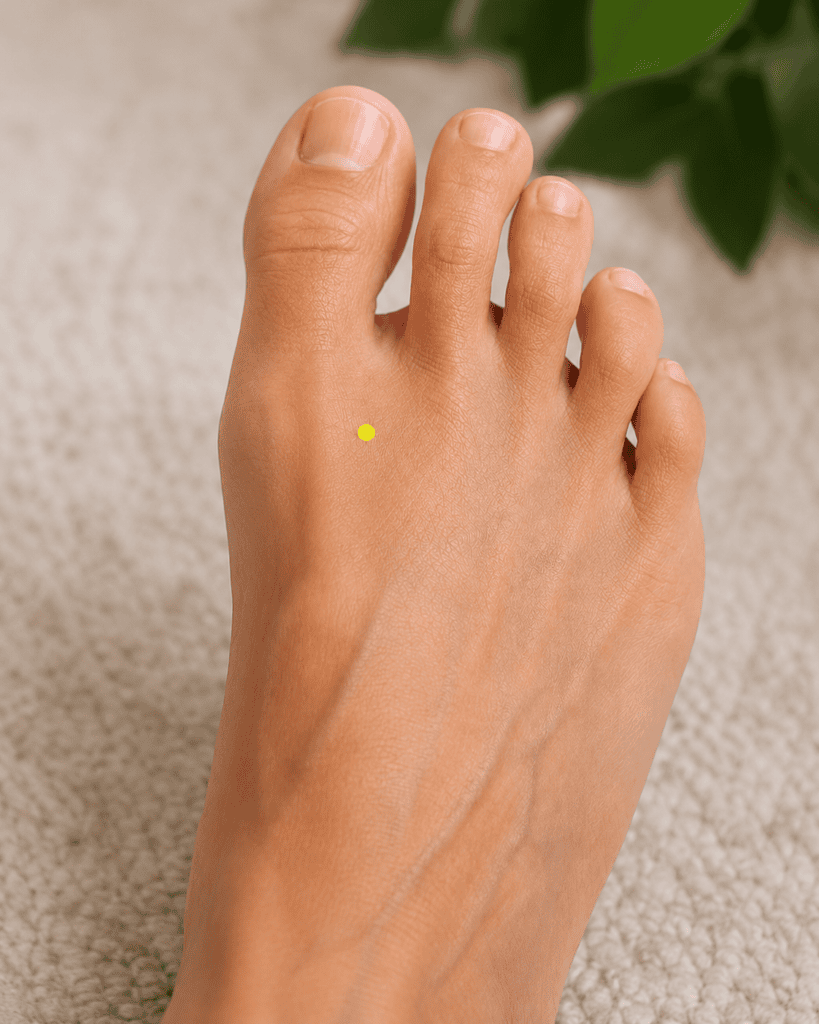
6. Press on LR3 on the top of the foot to subdue rising yang. LR3 sits on the top of the foot, in the webbing between the big toe and second toe, about two finger-widths back where the bones meet in a small hollow. Press firmly with the thumb for one to two minutes on each foot. LR3 is called “Taichong,” the primary point for the Liver.
When vertigo occurs alongside stress, tension, headaches, or a sensation of flushing and excitement, Traditional Chinese Medicine typically sees it as Liver yang rising and affecting the head. The acupressure point LR3 helps counteract this by calming the Liver and suppressing the rising yang. It eases vertigo that worsens with stress or anger, stabilizing the system by directing energy downward towards the feet instead of the head, which feels like it’s spinning. For those whose vertigo is worsened by stress or linked to high blood pressure, this point specifically addresses that pattern and helps steady a troubled head.
7. Press on ST40 on the lower leg to clear phlegm. ST40 sits on the outer lower leg, midway between the knee and the outer ankle bone, about two finger-widths outside the shinbone, on the muscle. Press firmly with your thumb for one to two minutes on each leg. ST40 is called “Fenglong,” the body’s main point for clearing phlegm.
In Chinese medicine, vertigo often results from phlegm and dampness affecting the head, producing a heavy, cloudy, foggy sensation along with nausea and a thick-headed feeling. ST40 is the primary acupressure point for eliminating these factors. It helps clear the phlegm and dampness that cloud the head and disturb balance, relieving a heavy, waterlogged vertigo rather than a spinning or sharp type. For vertigo characterized by muddiness, nausea, and foggy-headedness, this acupressure point specifically targets the underlying cause and works well when combined with GB20 and GV20 to help clear the head.
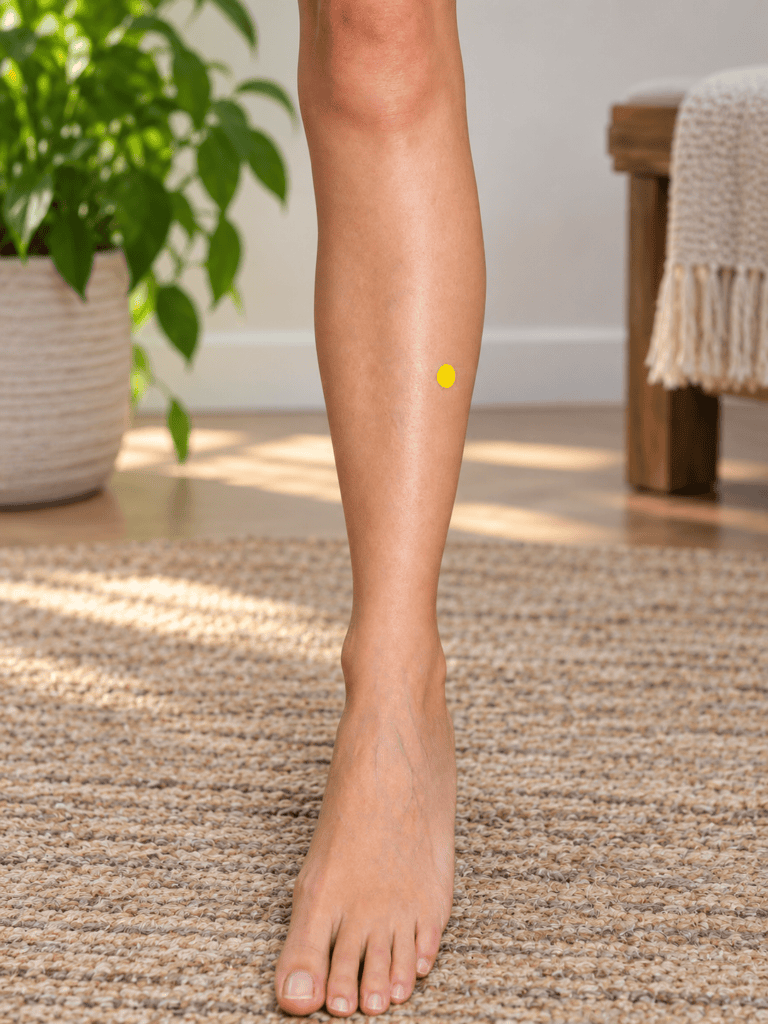
8. Press on ST36 below the knee for vertigo from depletion. ST36 sits four finger-widths below the lower edge of the kneecap and one finger-width to the outside of the shinbone, on the muscle that rises when you flex your foot. Press firmly with your thumb for one to two minutes on each leg. ST36 is called “Zusanli,” the “Leg Three Miles,” and it is the master point for energy and digestion.
When vertigo occurs alongside fatigue and worsens with tiredness or exertion, accompanied by a pale, worn-out sensation, Chinese medicine attributes this to insufficient Qi and Blood reaching and nourishing the head. Acupressure at ST36 addresses this by strengthening the Spleen and Stomach, which produce Qi and Blood, and tackling the root deficiency behind this type of vertigo. Additionally, it calms the stomach. For vertigo linked to exhaustion and depletion, ST36 helps rebuild fundamental energy and resolve dampness that contributes to phlegm, making it effective for both patterns.

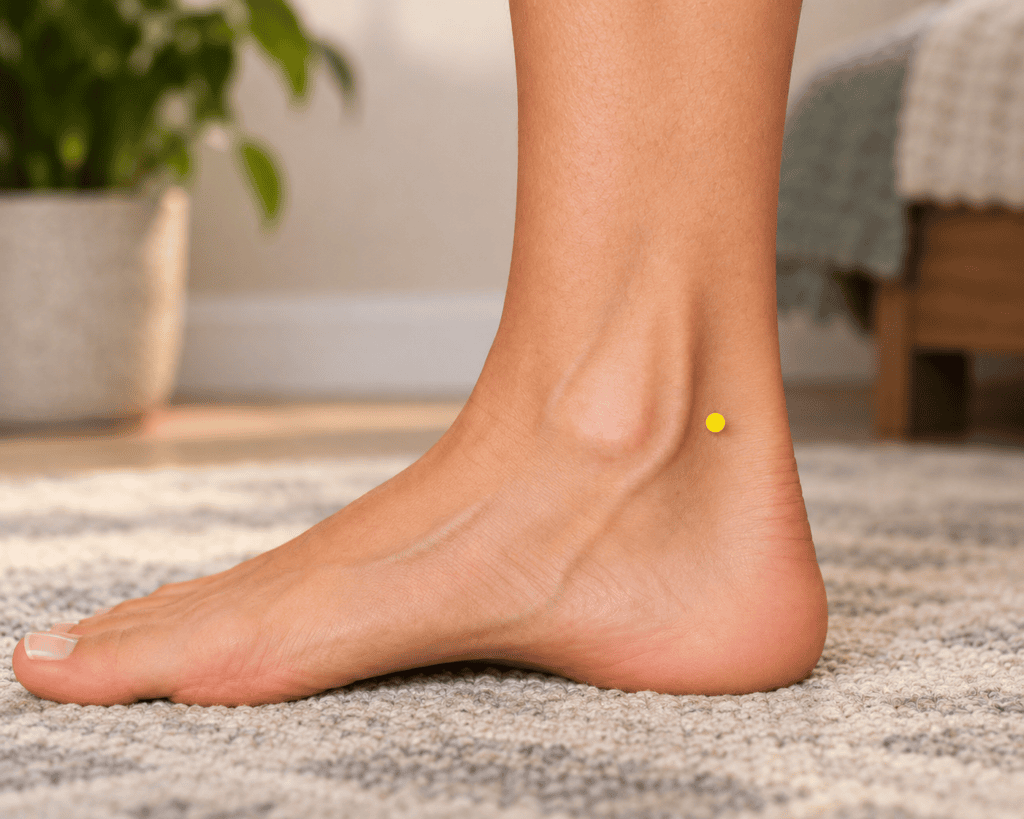
9. Press on KI3 above the inner ankle for chronic vertigo. KI3 sits in the hollow between the inner ankle bone and the Achilles tendon, level with the tip of the ankle bone. Press firmly with your thumb for one to two minutes on each ankle. KI3 is called “Taixi,” the Kidney’s source point.
In Traditional Chinese Medicine, chronic dizziness, especially when linked to aging, tinnitus, memory issues, or a weak lower back, is viewed as a Kidney deficiency. The Kidney, which governs the ears and the body’s deep reserves, is addressed using KI3, the Kidney’s source point. This point helps nourish deep constitutional energy and supports the ears and head, counteracting the effects of Kidney weakness. This approach targets the root cause of long-term and recurrent dizziness. For those experiencing chronic dizziness tied to ear health and deeper reserves, KI3 acts at a fundamental level, helping to stabilize the system alongside other points.
Why These Acupressure Points Work
In Traditional Chinese Medicine, vertigo happens when the head is poorly nourished and unstable. This can result from rising Liver yang, phlegm interference, or inadequate Qi, Blood, or Kidney essence reaching the head. The nine points address all of these factors.
- The head points (GB20, GV20, Yintang) calm and clear the head, steady the spinning, and ease the anxiety a spell brings, with GB20 the central point for vertigo.
- The ear point (SJ17) addresses the inner ear where so much vertigo begins.
- The nausea point (PC6) settles the sick, queasy feeling that comes with a spell.
- The pattern points (LR3, ST40, ST36, KI3) subdue the rising yang, clear the phlegm, rebuild the Qi and Blood, and support the Kidney behind the different types of vertigo.
The common theme here is calming and nourishing a head destabilized by vertigo, which is why the points help steady both the spinning and the sickness it causes.
How to Properly Use These Acupressure Points
Always perform these exercises sitting or lying down, aligning them with your specific type of vertigo where possible.
- For any vertigo spell, start with GB20 and GV20 to steady and clear the head, Yintang to calm, and PC6 for the nausea.
- Add SJ17 if your vertigo involves the ears, LR3 if it flares with stress, ST40 if it is heavy, muzzy, and nauseous, ST36 if it comes with fatigue, and KI3 if it is chronic and age-related.
- Hold each point for one to two minutes with steady pressure, breathing slowly, and stay seated or lying down until the spell eases and for a little while after, then rise slowly.
- Between spells, working the pattern points regularly can help reduce how often vertigo returns, especially for the deficiency and Kidney types.
Acupressure can help ease vertigo symptoms, but other factors also matter. For common positional vertigo, such as when you turn your head or roll over in bed, it usually happens because crystals shift in the inner ear. The most effective treatment is a simple repositioning technique called the Epley maneuver, which should be performed by a healthcare professional like a doctor, physical therapist, or ENT specialist. While acupressure might offer some relief, it should not replace this medical treatment.
During a vertigo episode, sit or lie down and wait for it to subside, move your head slowly, and stay well-hydrated. Because vertigo increases the risk of falling, exercise extra caution on stairs and when getting up.
When to Get Professional Help
Because vertigo can have many causes, from minor issues to serious conditions, it’s important to have a doctor evaluate it rather than manage it at home. Seek medical advice if your vertigo is new, recurring, or persistent, especially if it’s combined with symptoms like new hearing loss, ringing in the ears, or a feeling of fullness in the ear, as these might signal an inner-ear problem needing treatment. Treat vertigo as an emergency and get urgent care if it appears suddenly and severely or if it’s accompanied by neurological signs such as severe headache, weakness, numbness, speech difficulty, double or lost vision, facial drooping, trouble walking, or confusion, since these could indicate a stroke. Vertigo with a fever also needs prompt medical attention.
Acupressure can help ease typical vertigo symptoms; it should complement proper diagnosis and treatment, not replace it.
Above and Beyond Acupuncture offers acupuncture, cupping, and lifestyle coaching at the North Frank Lloyd Wright Boulevard location in Scottsdale.
Schedule an appointment online to start your healing journey.
The points above are only as effective as the technique used to apply them. Where to press, how firmly, and for how long all affect the result. For a full breakdown of how to perform acupressure properly at home, read Performing Acupressure in 3 Easy Steps.

About the Publisher
Paul Kerzner, L.Ac., is a licensed acupuncturist and board-certified herbalist, as well as the founder of Above and Beyond Acupuncture in Scottsdale. His own journey from chronic patient to practicing acupuncturist shapes his commitment to providing honest, clinically grounded information about acupuncture and Traditional Chinese Medicine. Learn more about Paul and his clinical approach on the About Us page.