
Key Takeaways
- A sinus headache causes pressure and pain, often worsened by bending forward or lying down.
- Acupressure can alleviate sinus headaches by targeting specific points that relieve pressure in the facial meridians.
- Nine key acupressure points include LI20, Bitong, Yintang, and GB20, among others, each serving a purpose in relieving sinus pressure.
- Combining acupressure with warmth and hydration enhances relief, while persistent symptoms may need medical evaluation.
- Ensure proper technique and pressure duration for effective acupressure, and consider professional help for ongoing issues.

A sinus headache often feels like a heavy, pressing ache along with a sensation of fullness across your forehead, cheeks, nose bridge, and around your eyes. The pain worsens when you bend forward or lie down. This happens because the pressure and inflammation in your sinuses, air-filled cavities behind your face, make your forehead tender and congested. Acupressure can help because the sinuses lie just beneath points you can easily reach with your fingertips. Gently stimulating these acupressure points, along with specific spots on your hands and at the base of your skull, can help reduce sinus pressure and provide relief.
Traditional Chinese Medicine links sinus pain to the channels that run through the face. The Large Intestine and Stomach meridians pass through the sinus areas, including the nose, cheeks, and forehead. Pain and congestion indicate Qi stagnation and a blocked flow in these channels, often accompanied by wind, heat, or dampness trapped in the face. The points listed below target these meridians, help relieve stagnation in the forehead and cheeks, and reduce the pressure and blockage associated with sinus headaches.
Not every headache labeled a sinus headache actually originates in the sinuses. Studies show that many self-diagnosed sinus headaches are actually migraines or tension headaches that radiate pain into the face, especially when there’s no congestion or discharge. The tips below can help relieve genuine sinus pressure and facial discomfort, but if your headaches persist without clear sinus symptoms, consider other possible causes.
Here are nine acupressure points you can use for relief:
What Acupressure Points to Press and Why
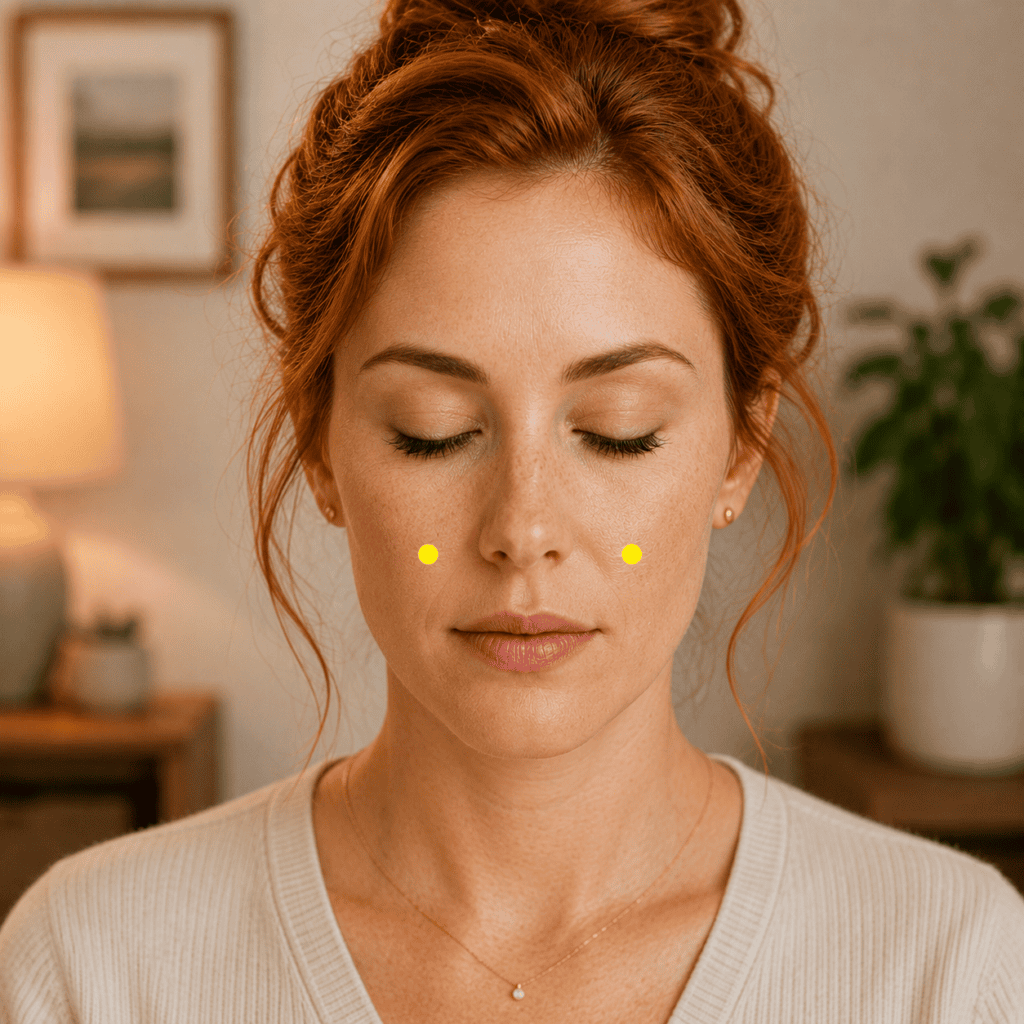
1. Press on LI20 beside the nostrils to open the sinuses. LI20 sits in the groove beside each nostril, at the outer edge where the nostril meets the cheek. Press firmly inward and slightly upward with your fingertips for one to two minutes on both sides at once. LI20 is called “Yingxiang,” which means “Welcome Fragrance,” and it is the single most important point for the nose and sinuses.
LI20 sits directly over the maxillary sinuses beside the nose and is the primary point for opening the nasal passages and clearing sinus congestion and pressure. Its very name points to its long use for a blocked, stuffy nose, since it restores the sense of smell by opening the passages. For the sinus headache centered in the cheeks and around the nose, this is the first and most important point, working right at the site of the pressure. It pairs naturally with the points across the cheeks and brow that follow.
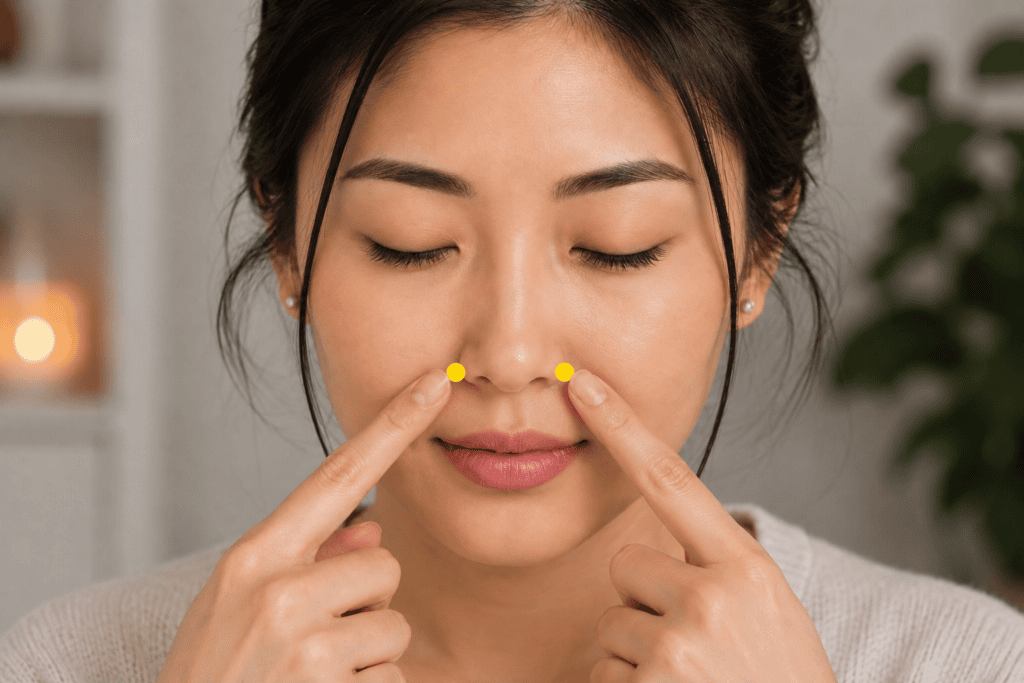
2. Press on Bitong at the top of the nose for nasal pressure. Bitong sits at the top of the crease beside the nose, just above LI20, in the small groove where the side of the nose meets the cheek near the widest part of the nasal bone. Press gently inward with your fingertips for about a minute on both sides. Bitong is an extra point whose name means “Penetrating Nose,” and it is used specifically for the nose and sinuses.
Bitong clears the upper part of the nasal passages and relieves the pressure that builds along the sides of the nose and bridge, sitting just above LI20 to cover the stretch of sinus the lower point does not quite reach. It opens a stuffy, blocked nose and eases the congested fullness felt high beside the nose. For the sinus headache that presses along the bridge and the inner cheeks, this point works in close partnership with LI20 to open the whole nasal region.
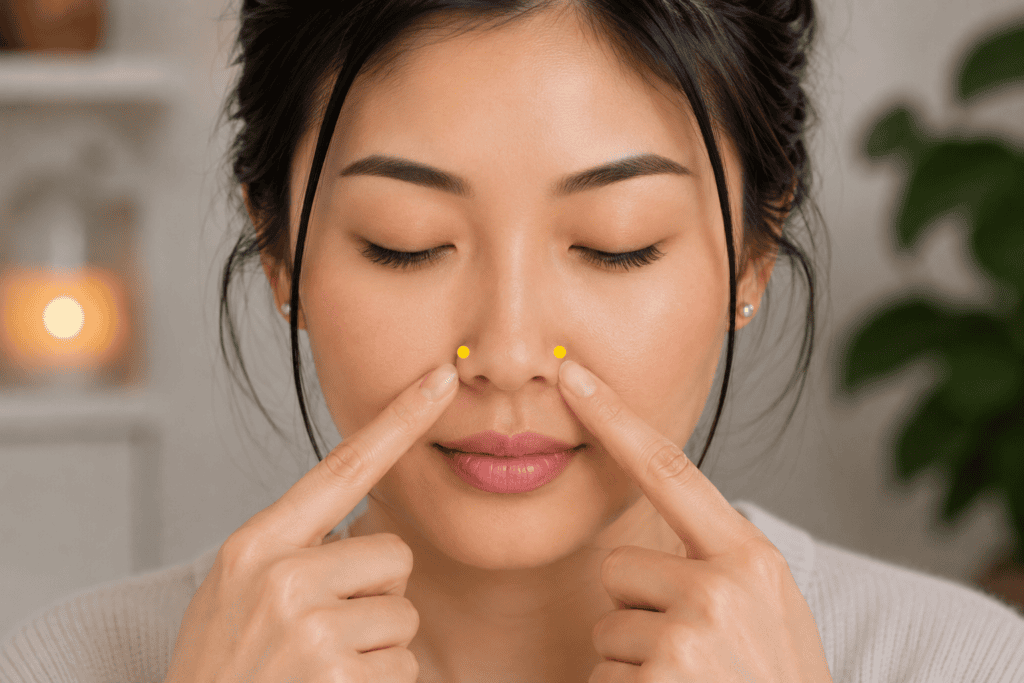
3. Press on Yintang between the eyebrows for frontal pressure. Yintang sits in the center of the forehead, in the small hollow directly between the two eyebrows. Press steadily and hold, or make small circles, with your fingertip for one to two minutes. Yintang is an extra point, and it is one of the most useful points for the front of the face.
Yintang relieves the pressure and ache that build between the eyebrows and across the lower forehead, right over the frontal sinuses and the bridge of the nose. It clears the heavy, congested feeling at the front of the head and calms the whole face along with it. For the sinus headache that concentrates between and above the eyes, this point reaches it directly, and it has a settling quality that eases the tension a pressurized head carries. It works well pressed together with the brow points on either side.

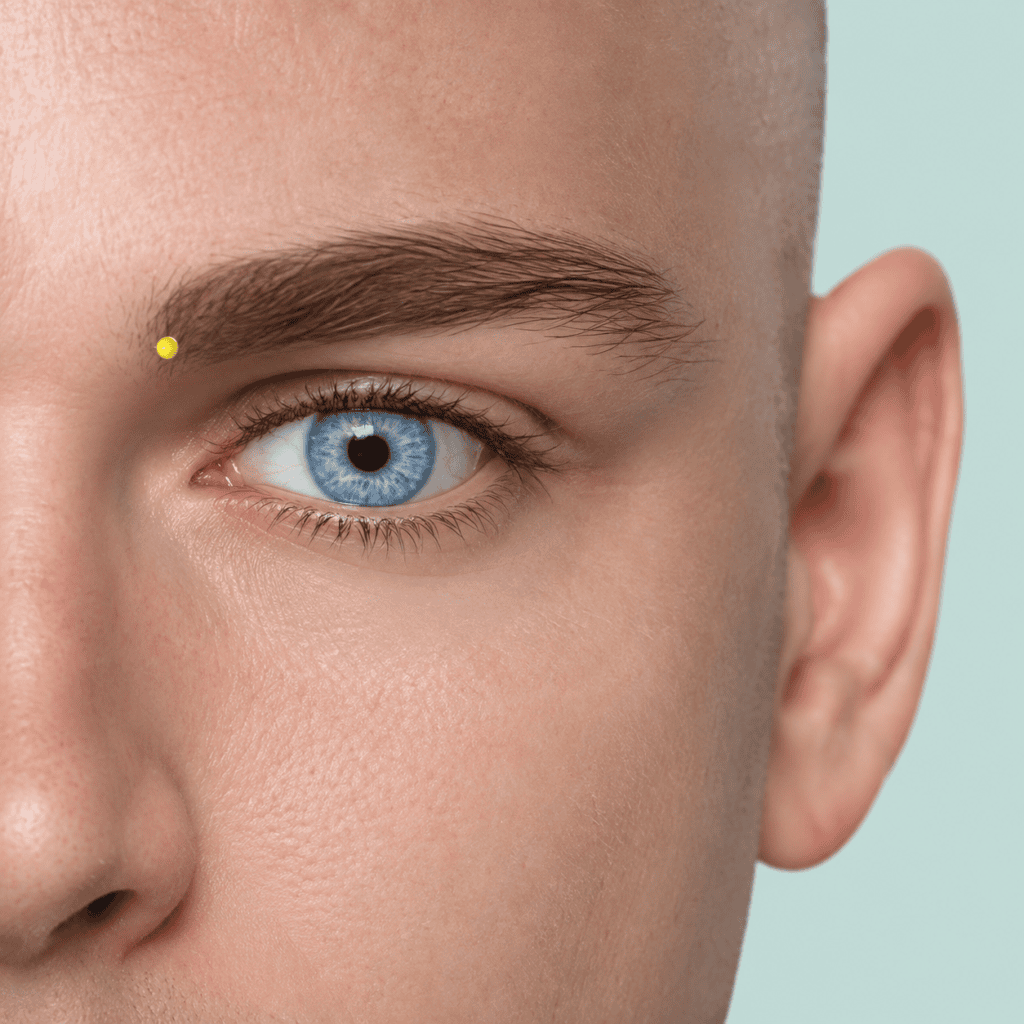
4. Press on BL2 at the inner eyebrow for the frontal sinuses. BL2 sits in the small notch at the inner end of the eyebrow, right where it meets the bridge of the nose. Press gently but firmly up into the notch with your thumbs or fingertips for about a minute on both sides at once. BL2 is called “Zanzhu,” and it relieves pressure over the frontal sinuses.
BL2 sits at the inner brow directly over the frontal sinuses, and pressing it relieves the aching pressure that gathers across the eyebrows and forehead during a sinus headache. It moves the stuck Qi right where the brow feels heavy and tender, easing the frontal fullness that bending forward makes worse. For the sinus headache felt as a band of pressure across the eyebrows and above the eyes, this point works alongside Yintang between the brows to open the whole frontal region.
5. Press on ST2 below the eye for cheek and undereye pressure. ST2 sits on the bony ridge below the eye, in a small hollow about a finger-width beneath the center of the lower eyelid, directly below the pupil. Press gently upward against the ridge with your fingertip for about a minute on both sides. ST2 is called “Sibai,” and it clears the region below the eyes.
ST2 sits over the maxillary sinuses in the cheekbone, and pressing it relieves the pressure, fullness, and tenderness that a sinus headache brings to the area just below the eyes and across the upper cheeks. On the Stomach channel that runs down through the face, it moves the stagnation in the cheek where sinus pressure is often felt most. For the sinus headache that aches beneath the eyes and across the cheekbones, this point reaches it directly, and it pairs with LI20 beside the nose to cover the whole cheek.
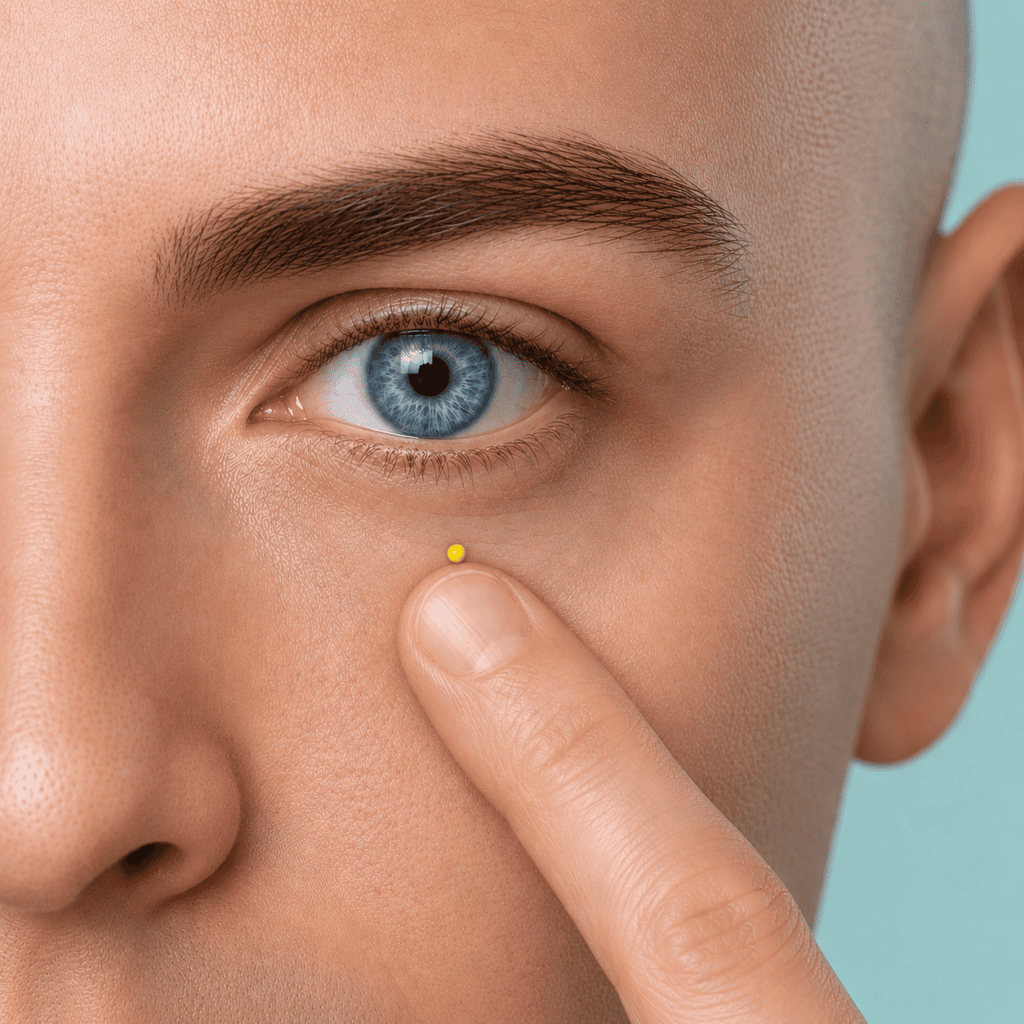
6. Press on ST3 on the cheek to clear the cheekbone sinuses. ST3 sits on the cheek, directly below ST2, level with the lower edge of the nostril and in line with the pupil, in the hollow just below the cheekbone. Press firmly inward and slightly upward with your fingertip for about a minute on both sides. ST3 is called “Juliao,” and it addresses the cheek and sinus region.
ST3 works the broad hollow of the cheek over the maxillary sinus, relieving the deep pressure and ache that fill the cheekbones during a sinus headache. Continuing down the Stomach channel below ST2, it reaches the lower part of the cheek sinus and helps clear the congestion and heaviness across the midface. For the sinus headache that sits deep in the cheeks and makes the whole midface feel full and tender, this point extends the relief that LI20 and ST2 begin, covering the cheek from the nose outward.
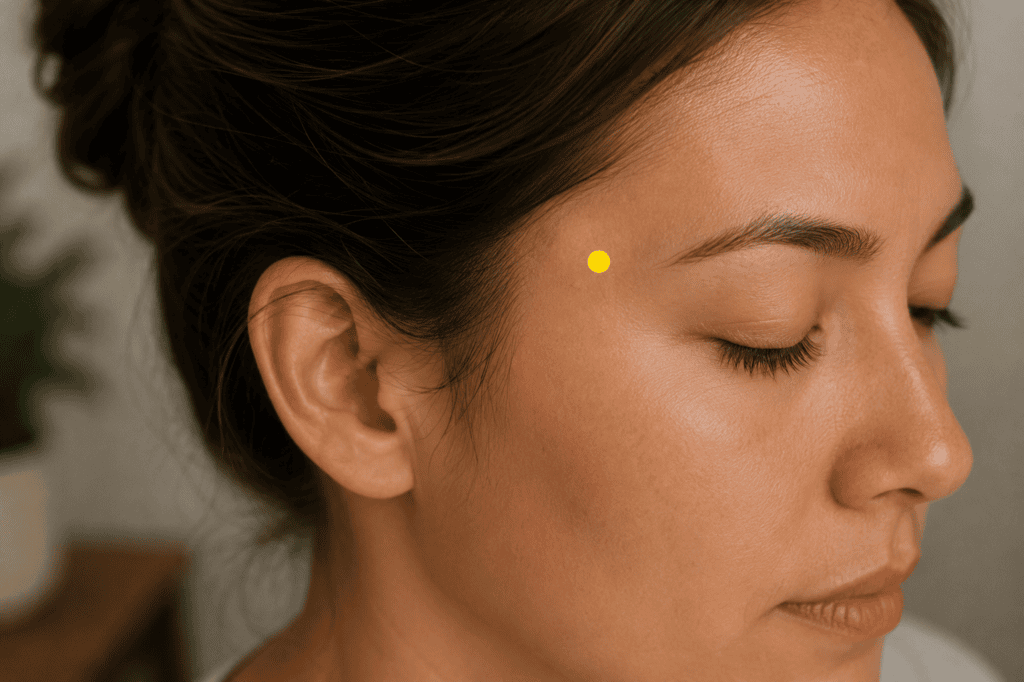
7. Press on Taiyang at the temple to ease the spreading ache. Taiyang sits in the soft hollow of the temple, about a finger-width back from the midpoint between the outer end of the eyebrow and the outer corner of the eye. Press firmly and make small slow circles with your fingertips for one to two minutes on both sides. Taiyang is an extra point, and it is widely used for headaches across the front and sides of the head.
Taiyang relieves the ache that a sinus headache sends out into the temples, since sinus pressure rarely stays put and often spreads to the sides of the head. It moves the stuck Qi and Blood in the temporal region and eases the wraparound quality a bad sinus headache can take on. For the sinus headache that starts in the face but pushes out toward the temples, this point addresses that spread, and its firm, satisfying pressure is a relief after the gentler work around the eyes and nose.
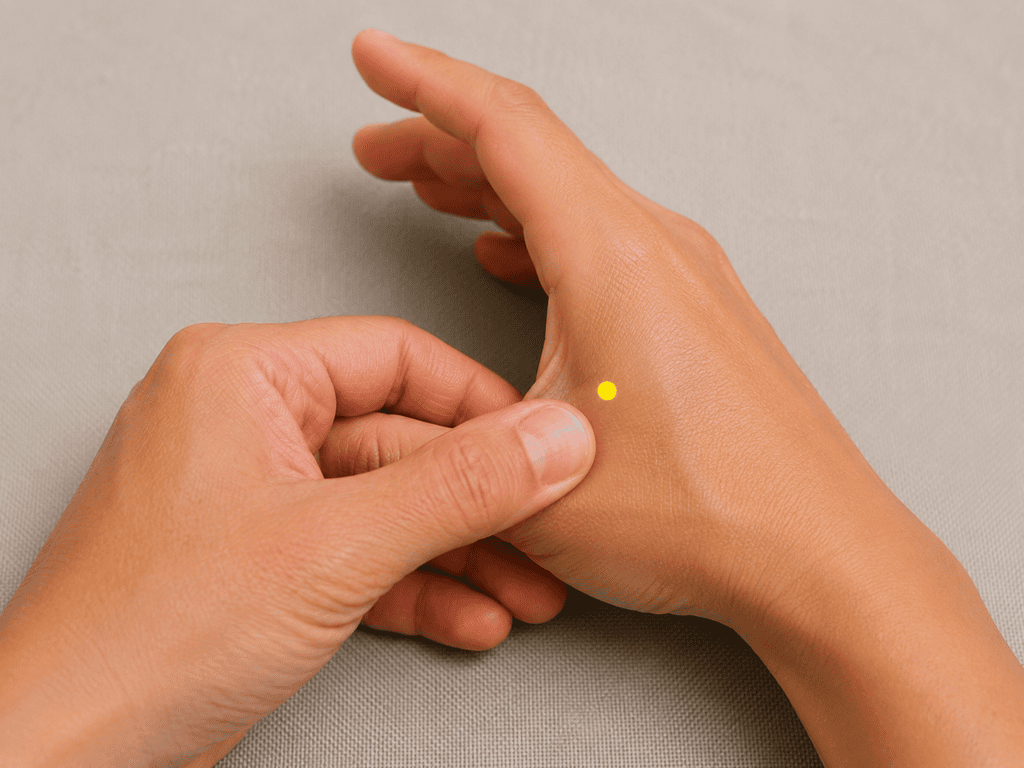
8. Press on LI4 in the hand to relieve pain across the face. LI4 sits in the webbing between the thumb and index finger, at the highest point of the muscle when the thumb and finger are brought together. Press firmly with the thumb of your other hand for one to two minutes on each hand. LI4 is called “Hegu,” and it is the most important distal point for the face and head. LI4 is avoided during pregnancy.
LI4 is the command point for the face, drawing stuck Qi through the entire region and relieving pain and congestion anywhere across it, which makes it essential for a sinus headache. It sits on the Large Intestine channel, the same channel that runs up to LI20 beside the nose, so it reaches the sinuses directly from the hand and reinforces the local facial points. Though it is far from the pain, it clears the face powerfully, and it is discreet enough to press under a desk when sinus pressure builds during the day.
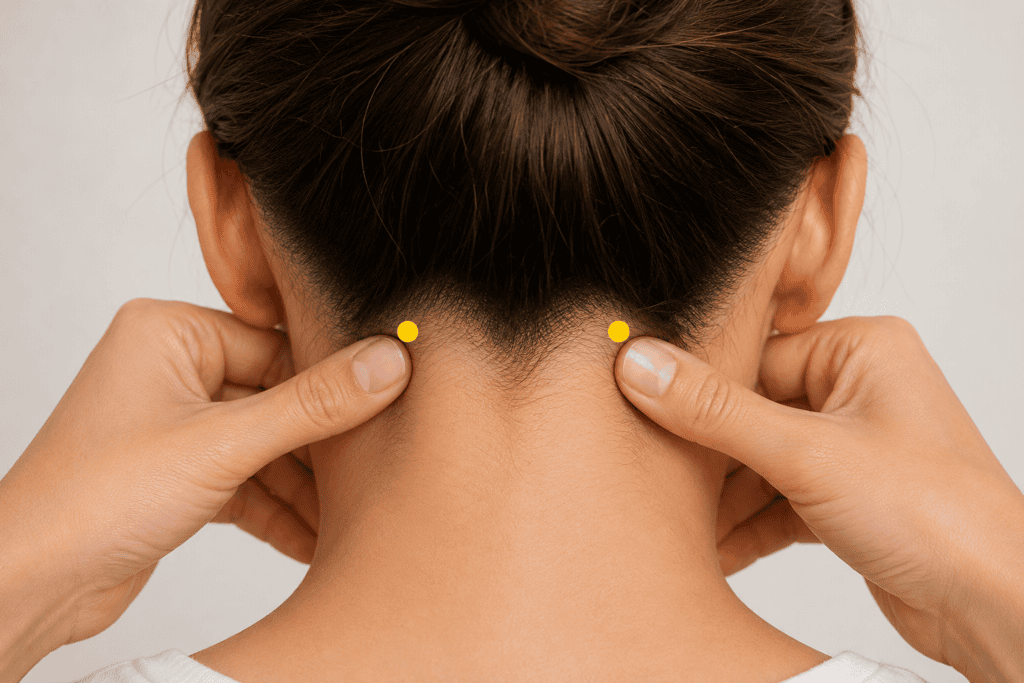
9. Press on GB20 at the base of the skull to clear the head. GB20 sits in the two hollows at the base of the skull, between the two large vertical neck muscles and the outer edge, roughly level with the tops of the ears. Tip your head back slightly and press firmly up and inward with your thumbs for one to two minutes. GB20 is called “Fengchi,” and it clears the head and relieves the pressure a sinus headache creates.
GB20 eases the heavy, congested pressure that a sinus headache pushes to the back and top of the head, and it is one of the main points for clearing wind and relieving headache of nearly any kind. Sinus pressure often radiates backward into the head and neck, and this point releases that spread while loosening the neck tension that a day of a throbbing, stuffy head tends to build. As the closing point of the routine, it clears what the facial points have loosened and settles the whole head.
Why These Acupressure Points Work
In Traditional Chinese Medicine, a sinus headache results from stagnant Qi and blocked flow in the facial channels, mainly the Large Intestine and Stomach meridians that pass through the sinus areas. This condition is often linked to wind, heat, or dampness trapped within these pathways. The nine points are intended to target each aspect of this condition.
- The nose points (LI20, Bitong) open the nasal passages and clear the pressure right beside the nose where a sinus headache is centered.
- The forehead points (Yintang, BL2) relieve the pressure over the frontal sinuses across the brow and between the eyes.
- The cheek points (ST2, ST3) clear the maxillary sinuses in the cheekbones, where much of the deep facial pressure sits.
- The spreading-pain points (Taiyang, GB20) ease the ache that radiates out to the temples and back of the head, and clear the whole head.
- The command point (LI4) draws stuck Qi through the entire face and reaches the sinuses through the Large Intestine channel.
How to Properly Use These Acupressure Points
Apply gentle pressure to the face, then press more firmly on the hands and the base of the skull, starting at the nose and moving outward.
- Start at the nose with LI20 and Bitong, then move up to the forehead with Yintang and BL2, and out across the cheeks with ST2 and ST3, covering each area of sinus pressure in turn.
- Finish with Taiyang at the temples, LI4 in the hand, and GB20 at the base of the skull to clear the spreading ache and the whole head.
- Keep the pressure over the face gentle and comfortable, since the skin and sinuses there are tender, and press firmly only at LI4 and GB20.
- Hold each point for about a minute, breathing slowly, and repeat the routine as needed through the day.
Combining acupressure with natural remedies can speed up sinus relief. Applying warmth to the face, such as a warm compress on the cheeks and forehead, helps open the sinuses and reduce discomfort. Steam from a hot shower or a bowl of hot water loosens congestion, while staying hydrated thins mucus and prevents blockages. Elevating your head, especially during rest, prevents pressure buildup that occurs when lying flat. Gentle self-massage on the cheeks and brow, targeting the points mentioned, provides additional relief.
When to Get Professional Help
Acupressure may help relieve the pressure and pain of a sinus headache, but certain sinus issues require medical attention. Consult a doctor if sinus symptoms persist for more than ten days, recur frequently, or if you experience high fever, thick, discolored nasal discharge, or severe pain, swelling, or redness around the eyes or cheeks, as these could indicate a sinus infection needing treatment.
Seek immediate care if you notice changes in vision, significant swelling around an eye, or a severe headache accompanied by a stiff neck and fever, which could be signs of a serious condition. Many headaches thought to be sinus headaches are actually migraines or tension headaches. Recurrent “sinus” headaches without clear congestion or infection should be evaluated to ensure accurate diagnosis and appropriate treatment.
Acupressure is an effective technique for relieving facial sinus pressure; it should not be considered a substitute for medical care in cases of infection or chronic headache disorders.
Above and Beyond Acupuncture offers acupuncture, cupping, and lifestyle coaching at the North Frank Lloyd Wright Boulevard location in Scottsdale.
Schedule an appointment online or call us today to start your healing journey.
The points above are only as effective as the technique used to apply them. Where to press, how firmly, and for how long all affect the result. For a full breakdown of how to perform acupressure properly at home, read Performing Acupressure in 3 Easy Steps.

About the Publisher
Paul Kerzner, L.Ac., is a licensed acupuncturist and board-certified herbalist, as well as the founder of Above and Beyond Acupuncture in Scottsdale. His own journey from chronic patient to practicing acupuncturist shapes his commitment to providing honest, clinically grounded information about acupuncture and Traditional Chinese Medicine. Learn more about Paul and his clinical approach on the About Us page.