Key Takeaways
- Adrenal fatigue is a popular term for the exhaustion, poor sleep, and cravings that can follow long-term stress, but it is not a recognized medical diagnosis.
- These symptoms are real and common, and may indicate conditions such as adrenal insufficiency, depression, sleep apnea, or thyroid problems. A proper medical evaluation should come first.
- In Traditional Chinese Medicine, this pattern reflects how long-term stress and overwork deplete the Kidney, the body’s deepest energy reserve, while weakening the Spleen and unsettling the Heart.
- Nine acupressure points across the back, abdomen, legs, wrists, and feet help restore energy, stabilize the body’s reserves, ease the “tired but wired” feeling, and promote deeper sleep.
- Acupressure for adrenal fatigue is most effective when combined with rest, consistent routines, and medical care. Never take adrenal supplements without a doctor’s guidance.

Adrenal fatigue is one of the most searched health terms, yet most doctors don’t use it. People searching for it often describe the same pattern: waking up exhausted despite a full night’s sleep, needing coffee to get going and something sweet to make it through the afternoon, then getting a second wind late at night that makes it hard to fall asleep. They may also crave salt, feel easily overwhelmed, and seem to catch every cold that comes along. These symptoms often follow a long period of stress, such as caring for a family member, working a demanding job, dealing with an illness, or spending years getting too little sleep.
According to the Endocrine Society, “adrenal fatigue” refers to a group of symptoms believed to occur in people experiencing long-term mental, emotional, or physical stress. These symptoms include tiredness, difficulty falling asleep, and cravings for salt and sugar. There is no scientific evidence that adrenal fatigue is a true medical condition. Because these symptoms are common and nonspecific, they may indicate adrenal insufficiency, depression, obstructive sleep apnea, or other health problems. Doctors also warn that supplements marketed for adrenal fatigue can be harmful: taking unnecessary adrenal hormones can cause the glands to stop working and trigger a life-threatening adrenal crisis.
That doesn’t make the exhaustion any less real. Long-term stress affects sleep, appetite, mood, and energy, and recovery takes more than one good night’s rest. The most helpful first step is to rule out medical causes, then rebuild the reserves stress has depleted.
Traditional Chinese Medicine describes these symptoms in its own terms. The Kidney is believed to store the body’s deepest energy, known as Essence, which can be depleted by years of overwork, poor sleep, and stress. This may leave you deeply tired, with a weak or sore lower back and a sense of emptiness. The Spleen transforms food into daily energy, so when it is weak, you may crash in the afternoon and crave sugar. If the Kidney cannot balance the Heart, your mind may stay active at night, leaving you tired but wired.
These nine points can help restore energy, replenish the body’s reserves, quiet a restless mind, and promote the deeper sleep needed for recovery.
What Acupressure Points to Press and Why
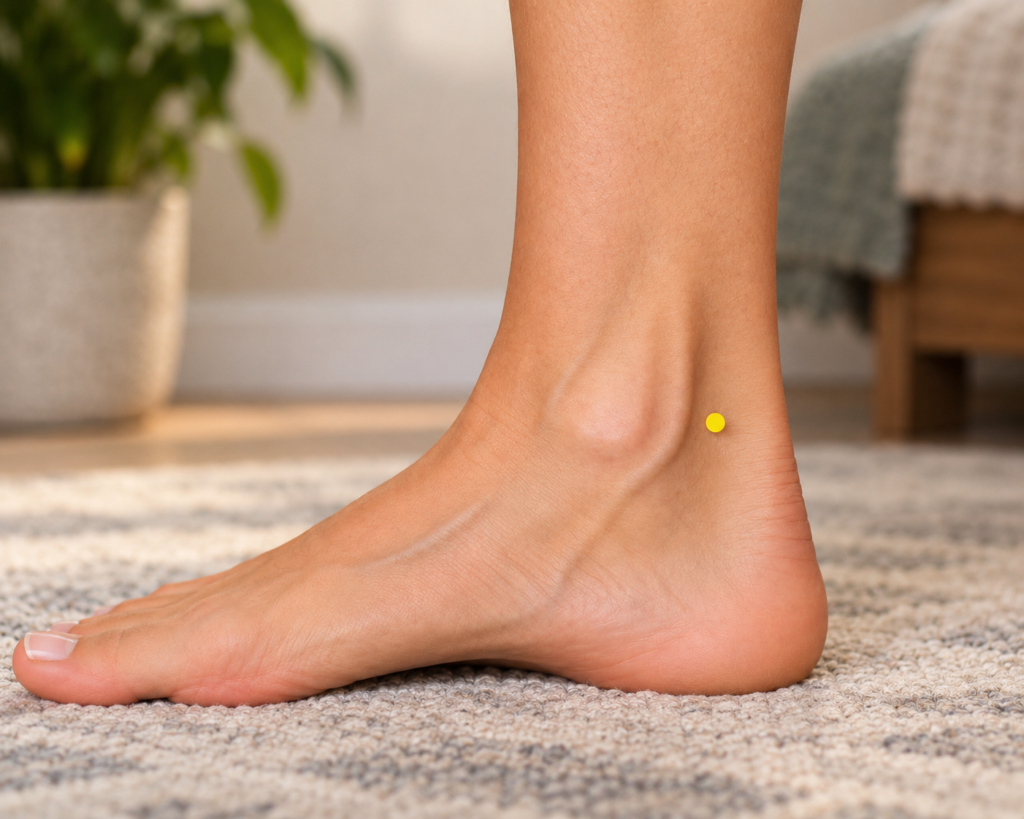
1. Press on KI3 beside the inner ankle to restore the body’s reserves. KI3 sits on the inside of the ankle, in the hollow between the inner ankle bone and the Achilles tendon. Press gently with your thumb for one to two minutes on each ankle. KI3 is called “Taixi,” the “Great Stream.”
KI3 is the Kidney’s source point and one of the most important points in Traditional Chinese Medicine for replenishing the body’s deepest reserves. It’s the point of choice for bone-deep exhaustion, a weak lower back, and the general feeling of being worn out after a long period of stress.
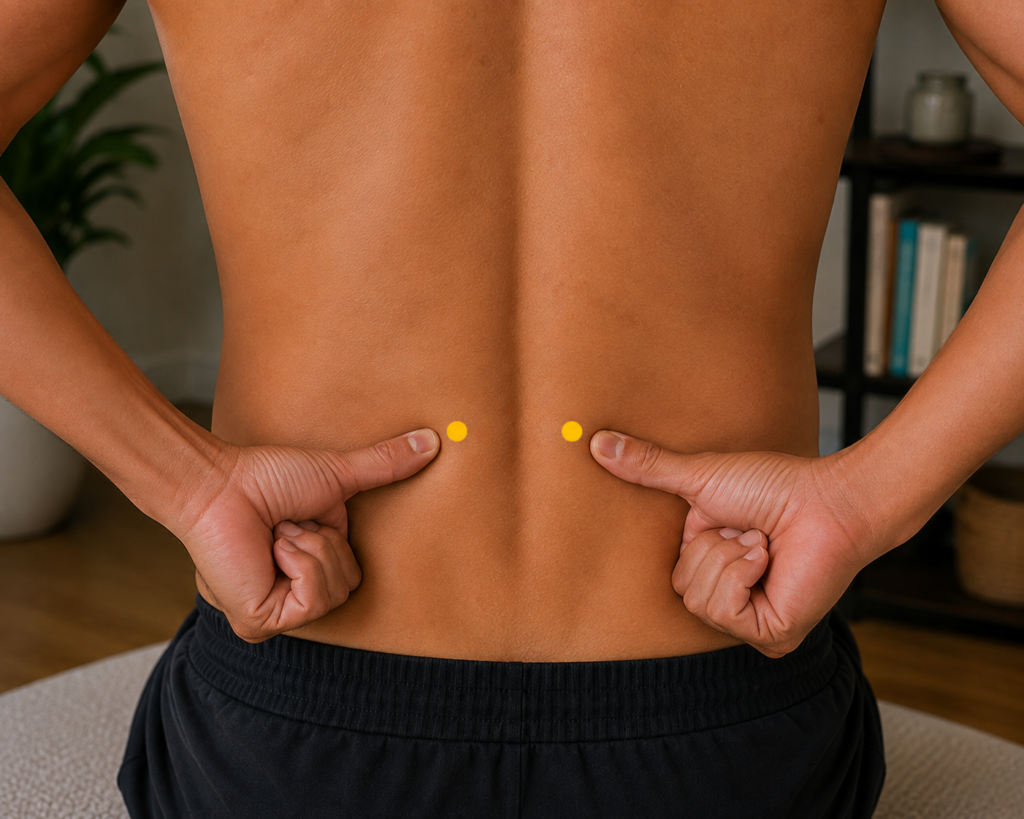
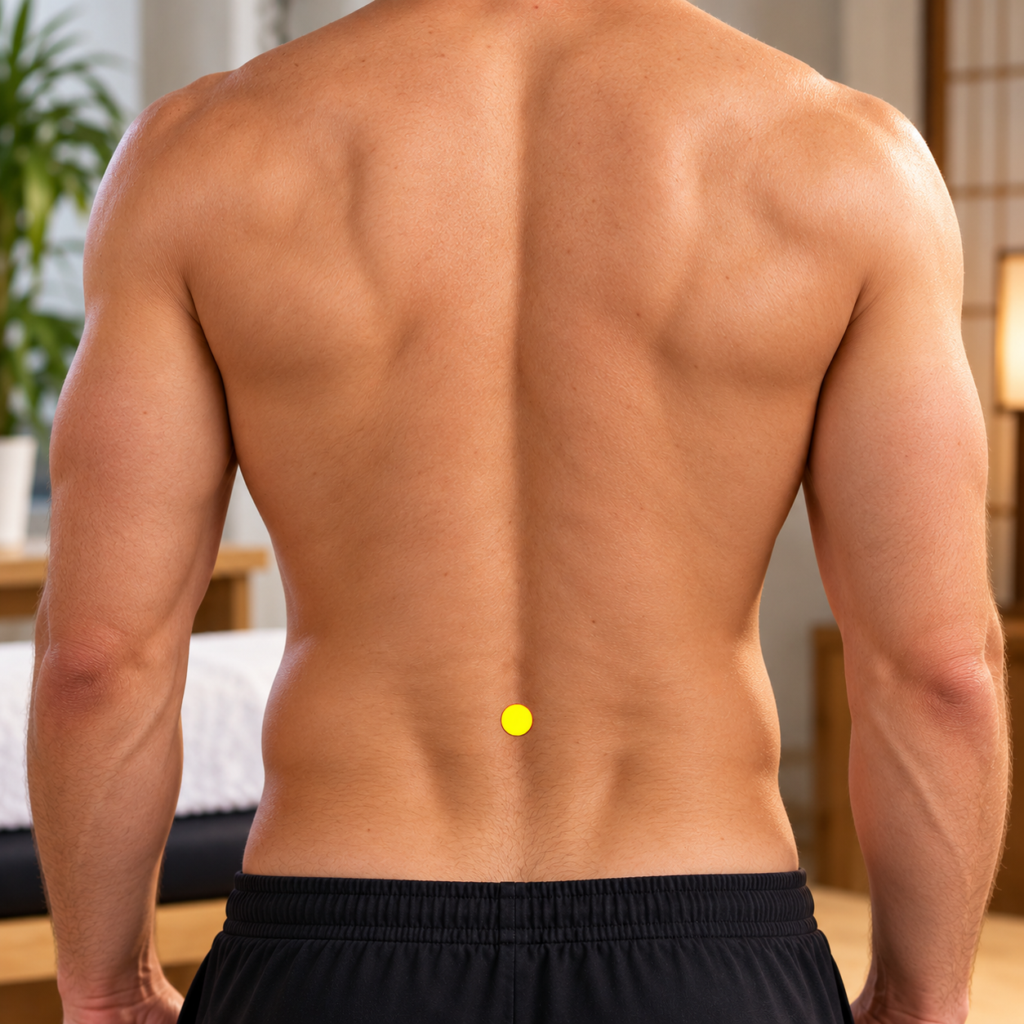
2. Press on BL23 on the low back to strengthen the Kidney. BL23 sits on the low back, about two finger-widths to each side of the spine, at the level of the waist, just below the bottom of the rib cage. Place your hands on your waist with your thumbs pointing toward the spine and press for one to two minutes, or lie on a tennis ball. BL23 is called “Shenshu,” the “Kidney Transport.”
BL23 is the Kidney’s back transport point, where Kidney Qi reaches the surface of the back. It’s one of the most commonly used points for exhaustion, low back weakness, and a sense of depletion. It lies directly over the area of the kidneys and adrenal glands.
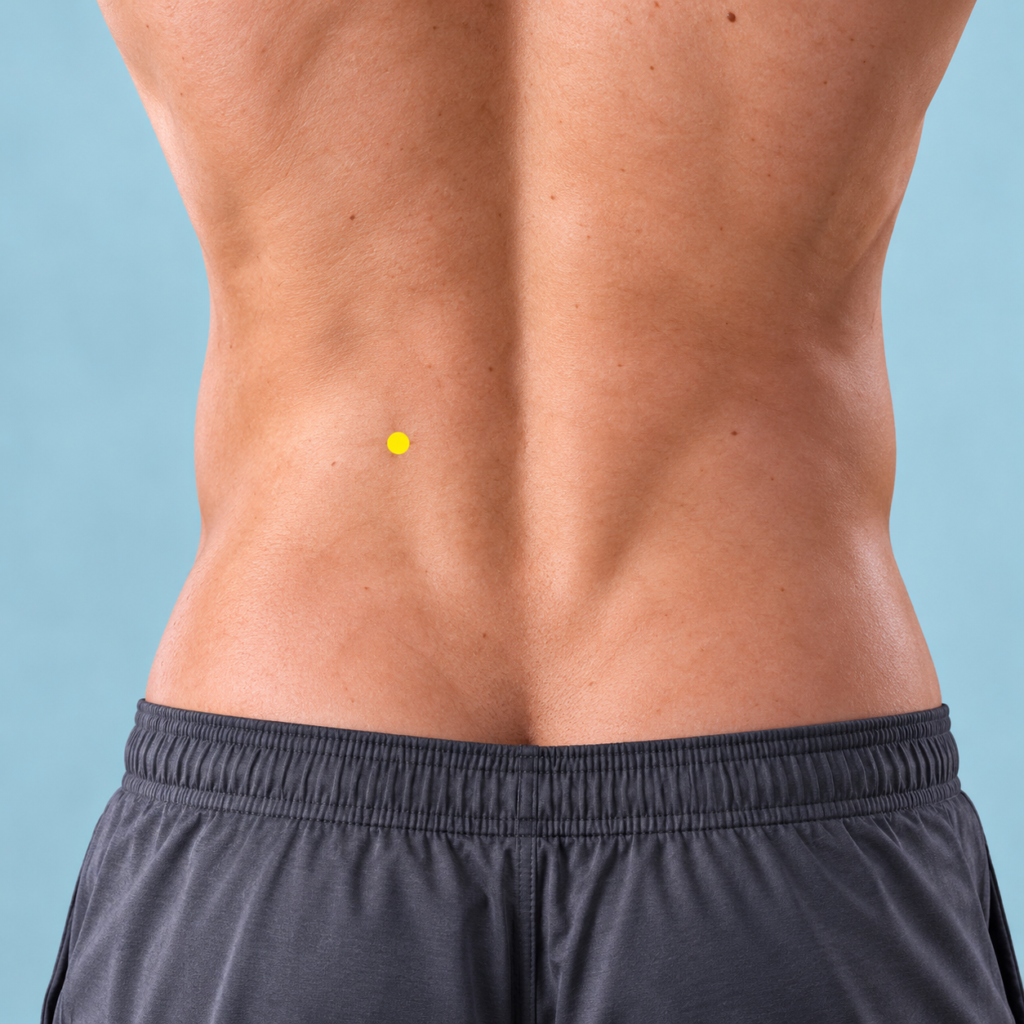
3. Press on BL52 on the low back to support willpower and stamina. BL52 sits on the low back, about four finger-widths to each side of the spine, level with BL23. Press with your thumbs, or lie on a tennis ball, for one to two minutes on each side. BL52 is called “Zhishi,” the “Will Chamber.”
BL52 is just outside BL23 and works the same way to strengthen the Kidney. It’s named for the willpower that Traditional Chinese Medicine says is stored in the Kidney, and it suits the drained, unmotivated feeling of having pushed through too much for too long.
4. Press on GV4 on the low back to warm and revive energy. GV4 sits on the midline of the low back, between the bumps of the spine, directly level with BL23 and the waist. Press gently with your fingertips, or rest a warm hand or warm compress over the point, for one to two minutes. GV4 is called “Mingmen,” the “Gate of Life.”
GV4 is a classic point for supporting body warmth and vitality. It’s indicated for deep exhaustion, cold hands and feet, a cold or weak lower back, and low motivation. One simple way to enhance its effect is to warm the area.
5. Press on CV6 below the navel to replenish energy. CV6 sits on the midline of the abdomen, about two finger-widths below the navel. Rest your fingertips on the point and press gently, or make slow, small circles, for one to two minutes while breathing slowly into the belly. CV6 is called “Qihai,” the “Sea of Qi.” CV6 is avoided during pregnancy.
CV6 is one of the key points for building energy throughout the body. It’s indicated for fatigue that worsens with exertion and a weak, low feeling in the belly. It pairs perfectly with slow belly breathing.

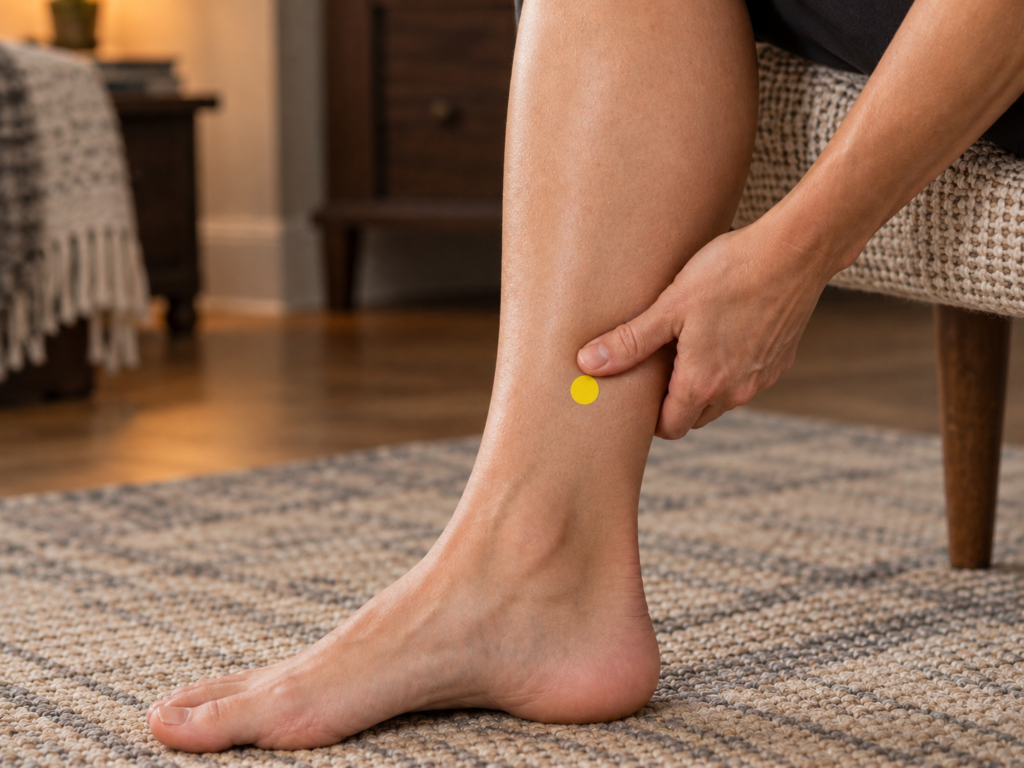
6. Press on ST36 below the knee to steady daily energy. ST36 sits four finger-widths below the bottom of the kneecap, about one finger-width outside the shinbone. Press firmly with your thumb for one to two minutes on each leg. ST36 is called “Zusanli,” the “Leg Three Miles.”
ST36 is one of the most important points in Traditional Chinese Medicine for strengthening the Spleen and Stomach, the organs that turn food into daily energy. It can help steady afternoon crashes, sugar cravings, and the frequent colds associated with long-term stress.

7. Press on SP6 on the inner lower leg to nourish and calm. SP6 sits on the inner lower leg, four finger-widths above the tip of the inner ankle bone, just behind the edge of the shinbone. Press firmly with your thumb for one to two minutes on each leg. SP6 is called “Sanyinjiao,” the “Three Yin Intersection.” SP6 is avoided during pregnancy.
SP6 is where the Spleen, Liver, and Kidney channels meet, and it nourishes Yin and Blood. This helps cool and calm the body when exhaustion is accompanied by a busy mind, night sweats, and restless sleep.
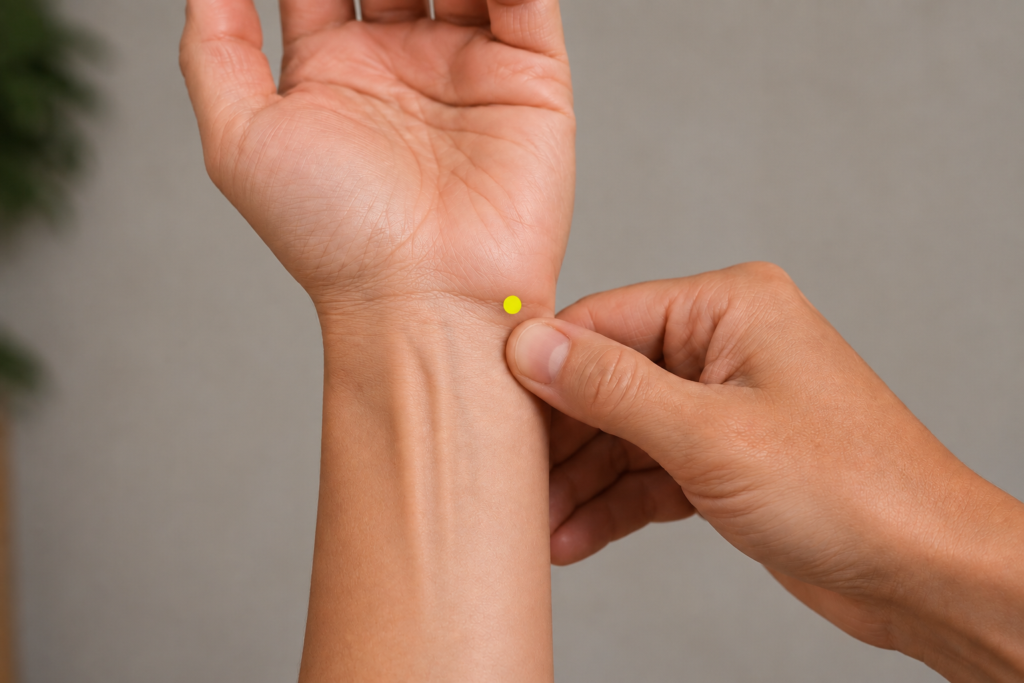
8. Press on HT7 at the wrist crease to quiet the “tired but wired” feeling. HT7 sits on the inner wrist crease, on the pinky side, in the small hollow just to the thumb side of the tendon that runs along the edge of the wrist. Press gently with the thumb of your other hand for one to two minutes on each wrist. HT7 is called “Shenmen,” the “Spirit Gate.”
HT7 is the source point of the Heart, which houses the mind in Traditional Chinese Medicine. It quiets the second wind that keeps you up at night and is essential for the deep, restorative sleep on which recovery depends.
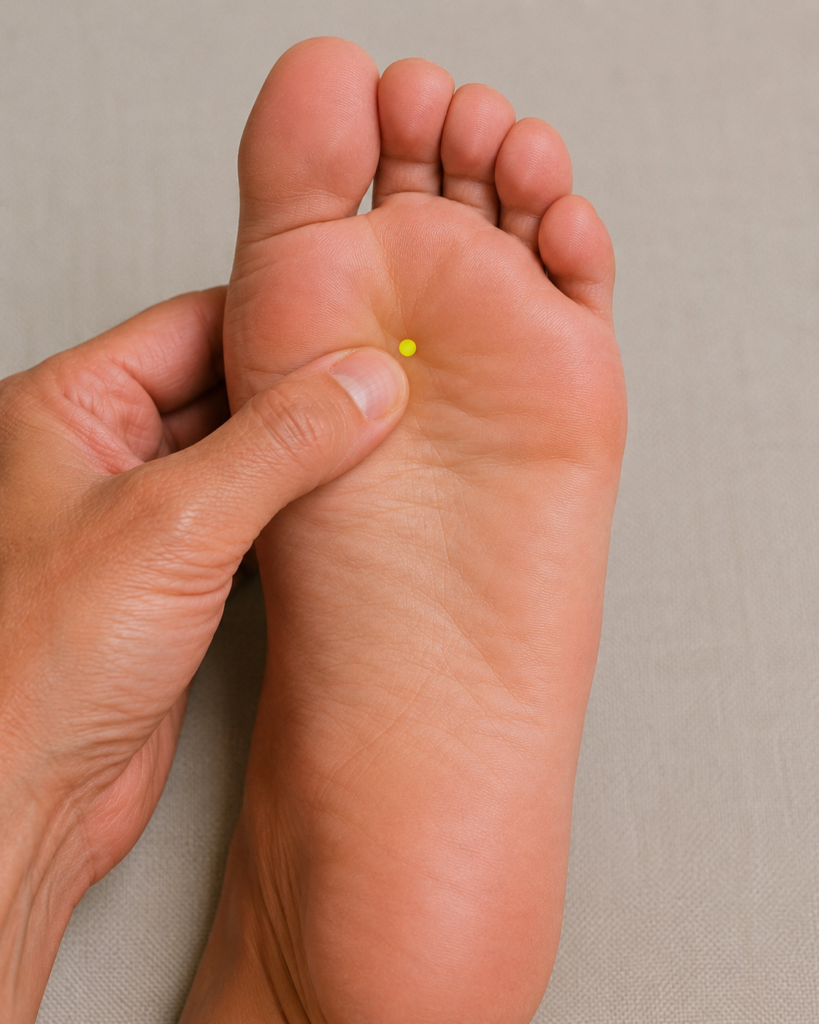
9. Press on KI1 on the sole to ground and anchor energy. KI1 sits on the sole, in the depression about one-third of the way from the base of the second toe to the back of the heel, where a small hollow forms when the toes curl. Press firmly with your thumb for one to two minutes on each foot, ideally before bed. KI1 is called “Yongquan,” the “Bubbling Spring.”
KI1 is the first point on the Kidney channel and the body’s lowest point. Traditionally, it’s used to draw restless energy down from the head, helping calm the mind at night and allowing the body’s reserves to rebuild during sleep.
Why These Acupressure Points Work

In Traditional Chinese Medicine, adrenal fatigue is understood as a pattern in which long-term stress depletes the Kidney’s reserves, weakens the Spleen’s ability to produce daily energy, and leaves the Heart and mind restless. The approach is to strengthen the Kidney, build daily energy, nourish Yin, and calm the mind, allowing sleep to restore the body.
The nine acupressure points restore energy and soothe a depleted, restless system:
- The Kidney points (KI3, BL23, BL52) replenish the body’s deepest reserves.
- The warming and energy points (GV4, CV6) restore vitality and strengthen Qi throughout the body.
- The daily energy points (ST36, SP6) help alleviate the afternoon energy slump and support the body.
- The calming and grounding points (HT7, KI1) help quiet a busy mind and promote deep sleep.
How to Properly Use These Acupressure Points

Acupressure for adrenal fatigue is most effective when practiced consistently rather than as an occasional treatment.
- Work all nine points once daily, holding each for one to two minutes with gentle, steady pressure rather than deep force.
- Activate the energy points (KI3, BL23, BL52, GV4, CV6, ST36) in the morning or early afternoon, then activate the calming points (SP6, HT7, KI1) in the evening before bed.
- Apply a warm compress to the lower back before pressing BL23, BL52, and GV4, particularly if the area feels cold or achy.
- Continue consistently for at least six to eight weeks, as energy depleted over months or years is restored gradually.
Daily habits play an important role in recovery. Keep a consistent bedtime and wake time, aim to be asleep before 11 p.m., and get morning daylight soon after waking. Eat regular meals that include protein, and avoid long gaps between meals that can lead to energy crashes and sugar cravings. Reduce caffeine, especially after noon, and limit alcohol, which can disrupt sleep. When your energy is low, choose gentle movement such as walking, yoga, or tai chi instead of exhausting workouts. Take short breaks throughout the day, and learn to say no to commitments that prolong stress. Traditional Chinese Medicine favors warm, nourishing cooked foods, such as soups, stews, congee, root vegetables, eggs, and black beans, to help rebuild the body’s reserves.
Learn more about restoring your circadian rhythm.
When to Get Professional Help

See a doctor about persistent fatigue, as it can be caused by several conditions, including thyroid problems, anemia, depression, sleep apnea, and adrenal insufficiency, all of which require proper investigation. Seek prompt medical attention if fatigue is accompanied by unexplained weight loss, darkening of the skin, dizziness or fainting when standing, low blood pressure, ongoing nausea, or a strong craving for salt, as these can be signs of adrenal insufficiency. If someone with known adrenal insufficiency develops severe vomiting, abdominal pain, confusion, or fainting, call 911 immediately, as these may indicate an adrenal crisis. Never take adrenal supplements or glandular products without first talking to your doctor, and never stop or change your prescribed steroid medication without medical advice.
Acupressure is a supportive practice in the management of adrenal fatigue and should be viewed as such. It is a complementary practice and not a replacement for diagnosis and medical care.
For related health concerns, acupressure for fatigue, acupressure for stress, and acupressure for trouble staying asleep are companion articles.
Above and Beyond Acupuncture offers acupuncture, cupping, and lifestyle coaching at the North Frank Lloyd Wright Boulevard location in Scottsdale.
Schedule an appointment online to start your healing journey.
The points above are only as effective as the technique used to apply them. Where to press, how firmly, and for how long all affect the result. For a full breakdown of how to perform acupressure properly at home, read Performing Acupressure in 3 Easy Steps.

About the Publisher
Paul Kerzner, L.Ac., is a licensed acupuncturist and board-certified herbalist, as well as the founder of Above and Beyond Acupuncture in Scottsdale. His own journey from chronic patient to practicing acupuncturist shapes his commitment to providing honest, clinically grounded information about acupuncture and Traditional Chinese Medicine. Learn more about Paul and his clinical approach on the About Us page.