Key Takeaways
- An alcohol craving is a strong urge to drink that typically rises, peaks, and then passes. It is often triggered by stress, certain places or people, fatigue, or the time of day when drinking usually begins.
- Alcohol use disorder is a medical condition, and lasting changes in the brain caused by alcohol misuse can keep urges recurring and leave a person vulnerable to relapse.
- In Traditional Chinese Medicine, regular drinking builds Damp-Heat in the Liver and Stomach and gradually depletes Yin, while stress and an unsettled mind drive the urge to reach for a drink.
- Nine acupressure points on the wrists, head, hands, abdomen, and legs help calm the mind, ease stress and restlessness, settle the stomach, and support sleep while the urge passes.
- Acupressure can complement medical care, counseling, and peer support for managing alcohol cravings. If you drink heavily or daily, consult a doctor before cutting back, as withdrawal can be dangerous.

The end of the year gets busy fast. Office parties, family dinners, toasts, and open bars pile up from Thanksgiving through New Year’s Eve, and it feels like drinks are everywhere. If you’re trying to cut back or stay sober, this season can feel more like a daily test than a celebration.
The National Institute on Alcohol Abuse and Alcoholism says alcohol use disorder is a medical condition where someone can’t stop or control drinking, even when it causes problems at work, at home, or with health. It can be mild or severe, and changes in the brain from drinking make it hard to quit and easy to relapse. A key sign is wanting a drink so much that it’s hard to think about anything else.
That urge is real, and it isn’t a matter of willpower. Cravings often build, peak, and then fade if you don’t give in. Having a specific plan for that moment can really help. Effective treatments include behavioral therapy, three FDA-approved medications, and support groups. Many people combine these options.
In Traditional Chinese Medicine, alcohol is considered hot, damp, and pungent. A little can move Qi and Blood, but frequent drinking creates Damp-Heat in the Liver and Stomach, disrupts sleep, and gradually depletes Yin. When stress blocks Liver Qi or the mind feels restless and anxious, the urge to drink intensifies. Alcohol may briefly ease that tension, but it leaves the body more depleted afterward.
The nine points below help calm the mind, ease the stress and restlessness that fuel the urge, settle the stomach, and support the deep sleep the body needs to recover.
What Acupressure Points to Press and Why
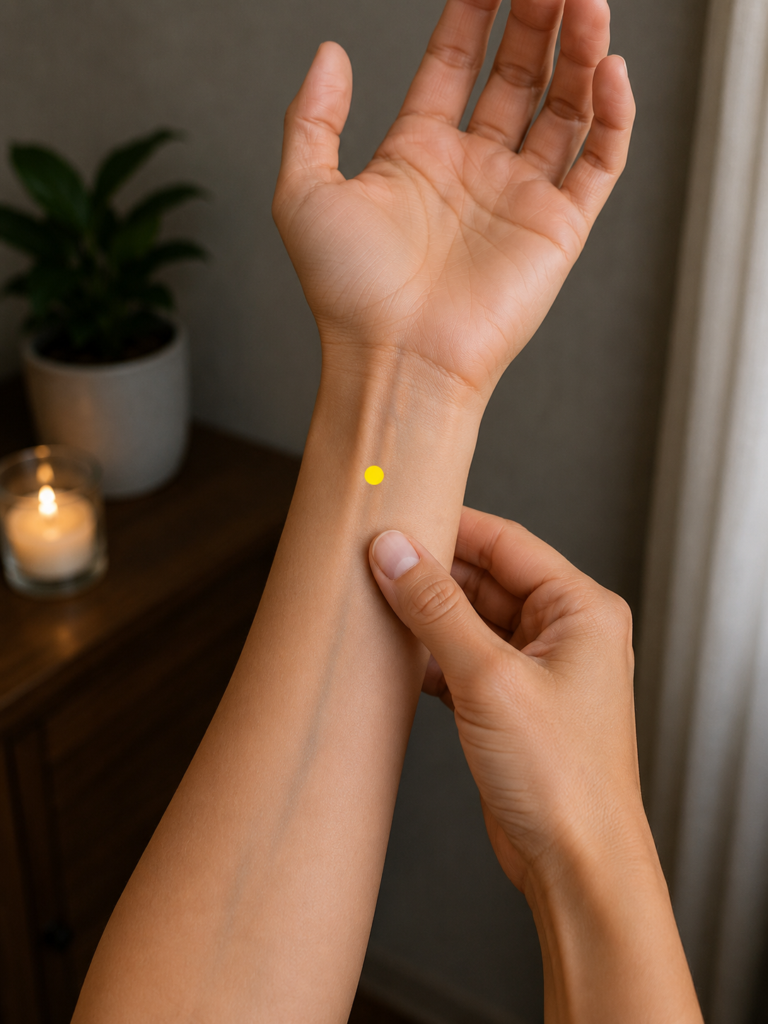
1. Press on PC6 on the inner forearm to ride out an urge. PC6 sits on the inner forearm, three finger-widths above the wrist crease, between the two tendons. Press firmly with the thumb of your other hand for one to two minutes on each arm while breathing slowly. PC6 is called “Neiguan,” the “Inner Pass.”
PC6 is one of the most commonly used points in Traditional Chinese Medicine to calm the mind and open the chest. It can ease anxiety, a racing heart, and nausea. Since it’s easy to press anywhere, it’s the first point to try when the urge to drink begins to build.
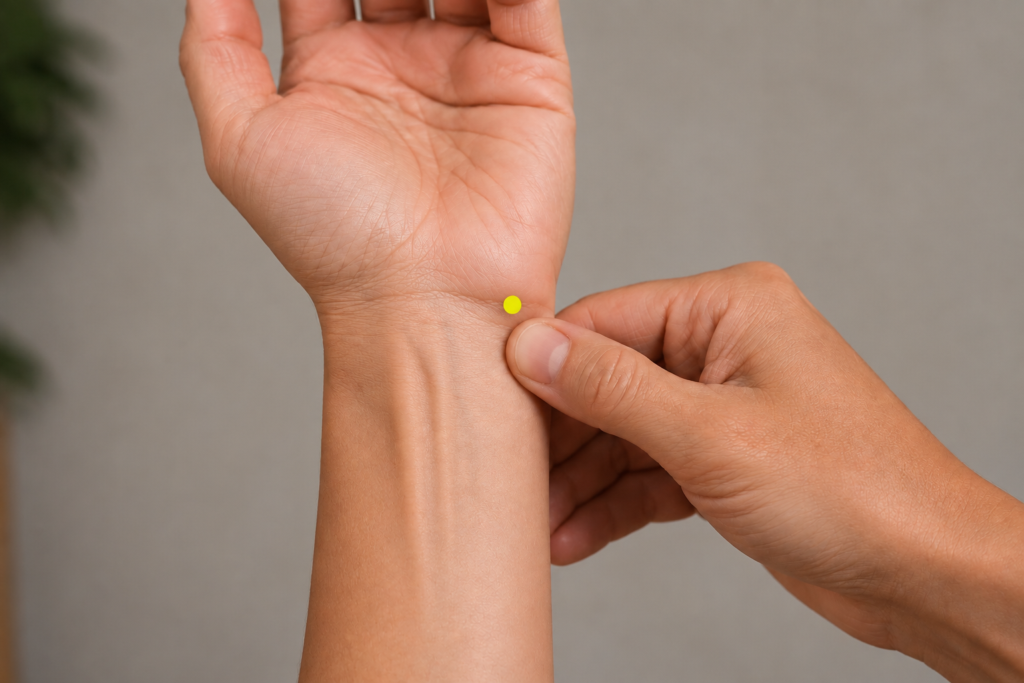
2. Press on HT7 on the wrist crease to settle anxiety and restlessness. HT7 sits on the inner wrist crease, on the pinky side, in the small hollow just to the thumb side of the tendon that runs along the edge of the wrist. Press gently with the thumb of your other hand for one to two minutes on each wrist. HT7 is called “Shenmen,” the “Spirit Gate.”
HT7 is the Heart’s source point (in Traditional Chinese Medicine, the Heart houses the mind). It’s traditionally used for anxiety, restlessness, and insomnia, all of which can increase the urge to drink. Its name, Shenmen, is also shared by one of the five ear points in a well-known ear acupuncture protocol used in addiction treatment programs.
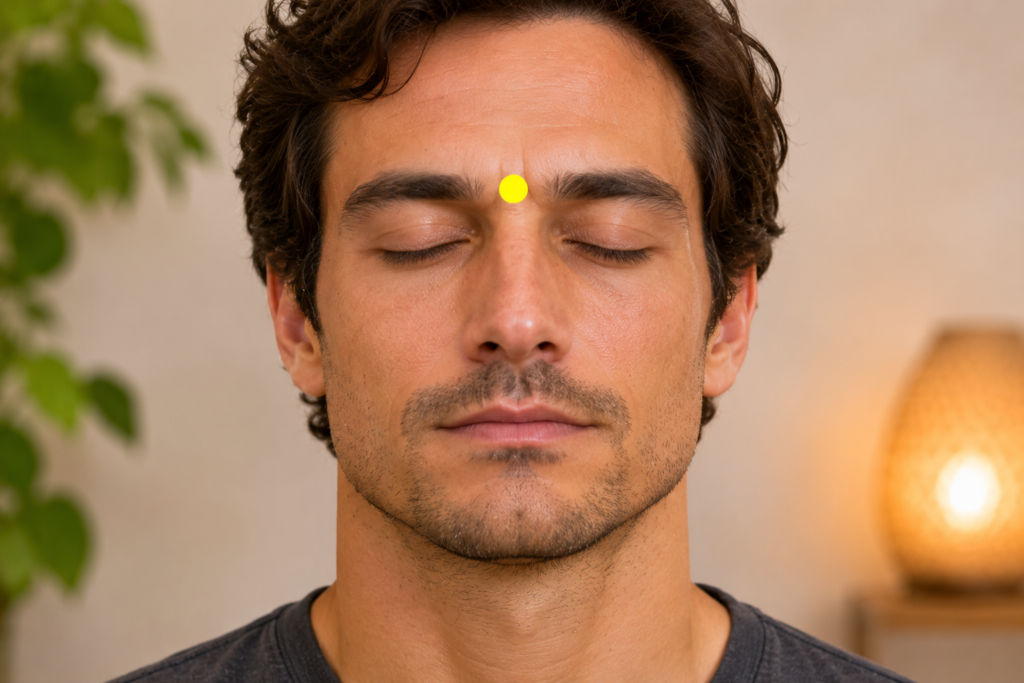
3. Press on Yintang between the eyebrows to quiet a racing mind. Yintang sits on the midline of the forehead, directly between the inner ends of the eyebrows. Press gently with your fingertip, or make slow, small circles, for one to two minutes while breathing slowly. Yintang is called the “Hall of Impression.”
Yintang is an extra point traditionally used to calm the mind, ease anxiety, and quiet the mental back-and-forth that can come with an urge to drink. It’s easy to press discreetly, even in a crowded room.
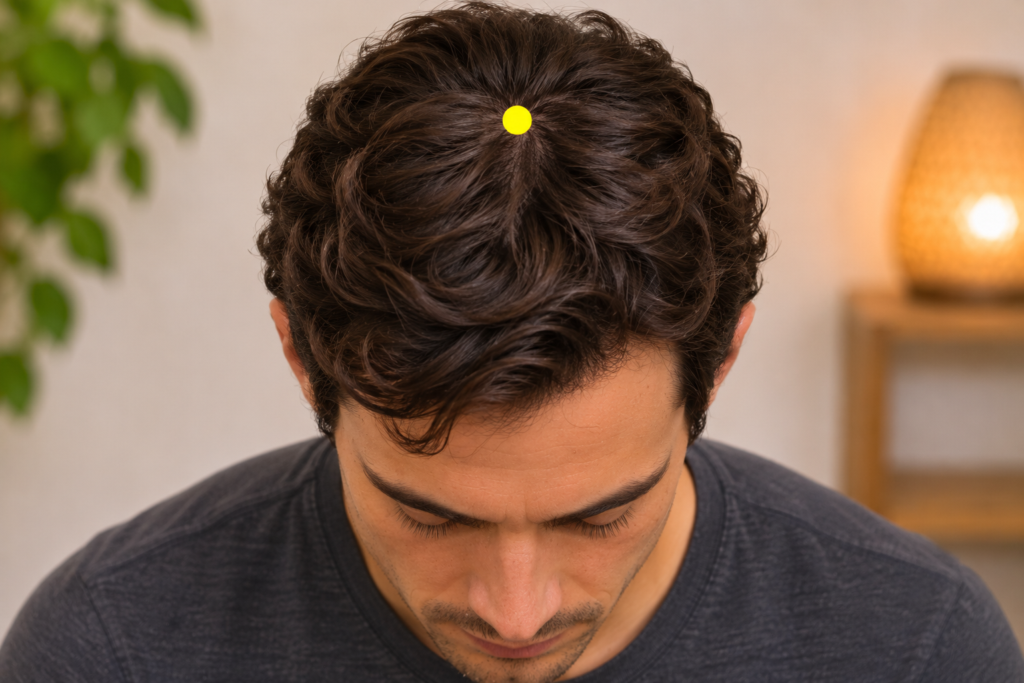
4. Press on GV20 on the top of the head to clear the mind. GV20 sits on the midline of the head, at the midpoint of an imaginary line drawn from the top of one ear, over the head, to the top of the other ear. Press gently with your fingertip, or make small circles, for one to two minutes. GV20 is called “Baihui,” the “Hundred Meetings.”
GV20 is where several channels meet at the crown of the head. In Traditional Chinese Medicine, it’s traditionally used to calm the mind, lift a low mood, and clear a heavy, foggy head. Alongside Yintang, it helps bring stability when urges and emotions run high.
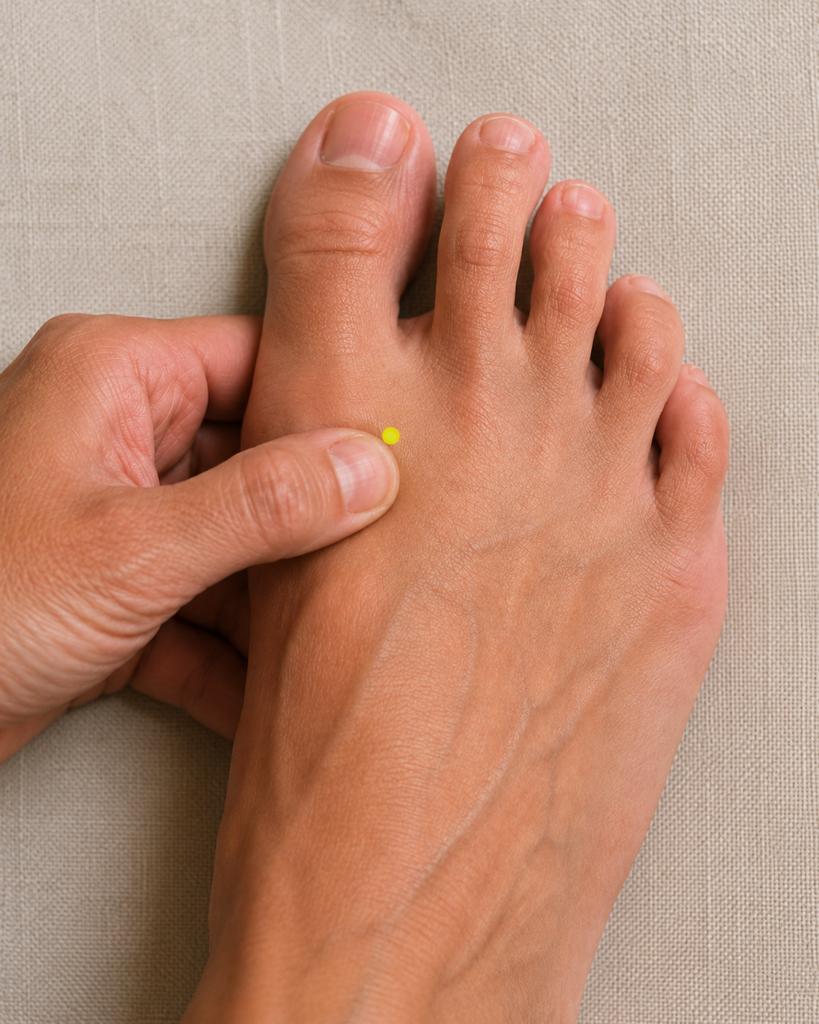
5. Press on LR3 on the top of the foot to release stress and irritability. LR3 sits on the top of the foot, in the hollow where the bones of the big toe and second toe meet, about two finger-widths above the web between the toes. Press firmly with your thumb for one to two minutes on each foot. LR3 is called “Taichong,” the “Great Surge.”
LR3 is the source point of the Liver, the organ in Traditional Chinese Medicine that keeps Qi flowing smoothly and is most affected by alcohol. Stress, frustration, and irritability constrain Liver Qi, and this tension is one of the most common reasons for drinking. LR3 helps release that constraint and supports the Liver as it recovers.
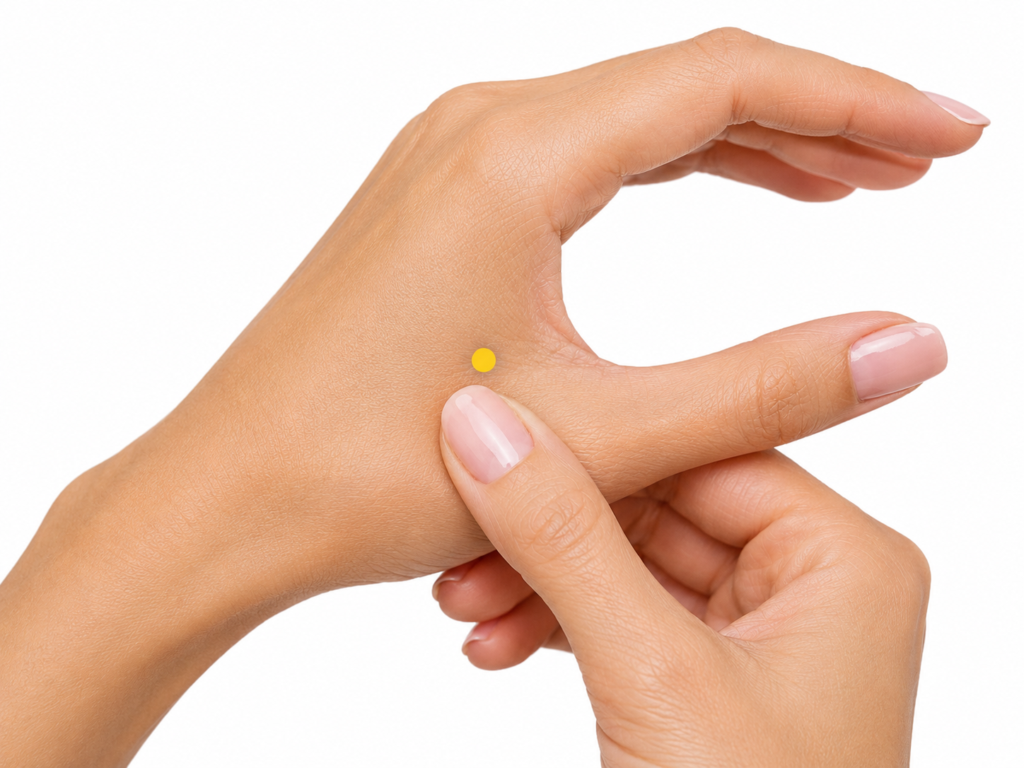
6. Press on LI4 on the back of the hand to ease tension. LI4 sits in the webbing between the thumb and index finger, at the highest point of the muscle when the two are pressed together. Press firmly with the thumb of your other hand for one to two minutes on each hand. LI4 is called “Hegu,” the “Joining Valley.” LI4 is avoided during pregnancy.
LI4 is one of the most important points in Traditional Chinese Medicine for relieving tension, headaches, and pain. Together with LR3, it forms a classic pair known as the Four Gates, used to move stuck Qi through the whole body and bring a sense of calm when stress builds.
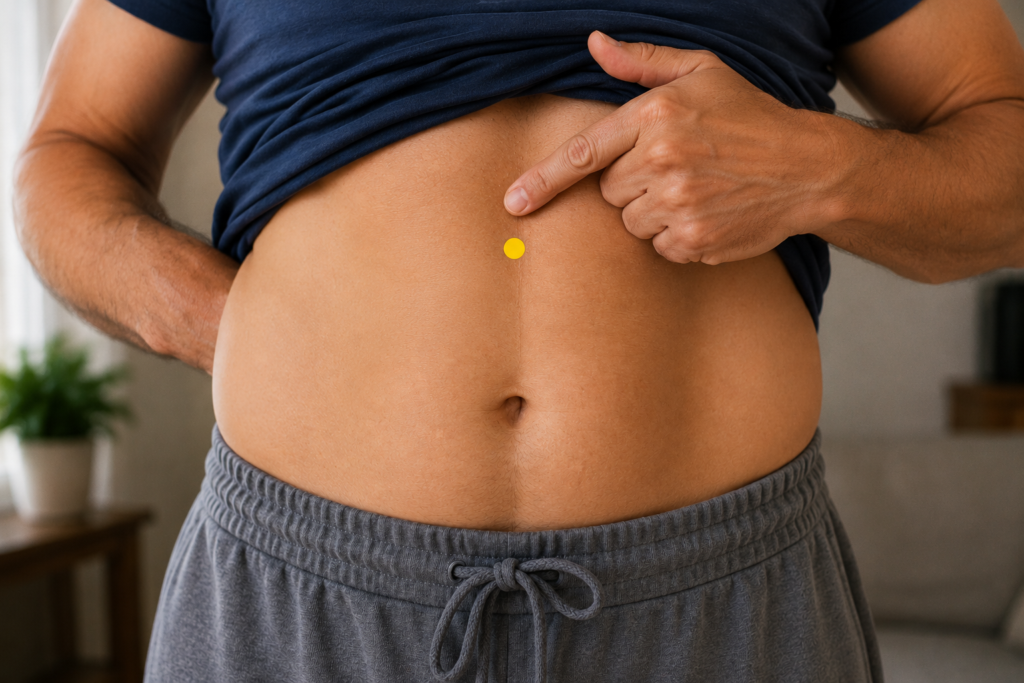
7. Press on CV12 on the upper abdomen to settle the stomach. CV12 sits on the midline of the upper abdomen, halfway between the navel and the bottom of the breastbone. Rest your fingertips on the point and press gently, or make slow circles, for one to two minutes. Avoid this point right after a large meal. CV12 is called “Zhongwan,” the “Middle Cavity.”
CV12 is the Stomach’s front collecting point and the influential point of the hollow digestive organs. Regular drinking can lead to Damp-Heat in the Stomach, causing nausea, acid, poor appetite, and a heavy feeling after eating. CV12 is used to settle the stomach and clear Damp-Heat as the body recovers.
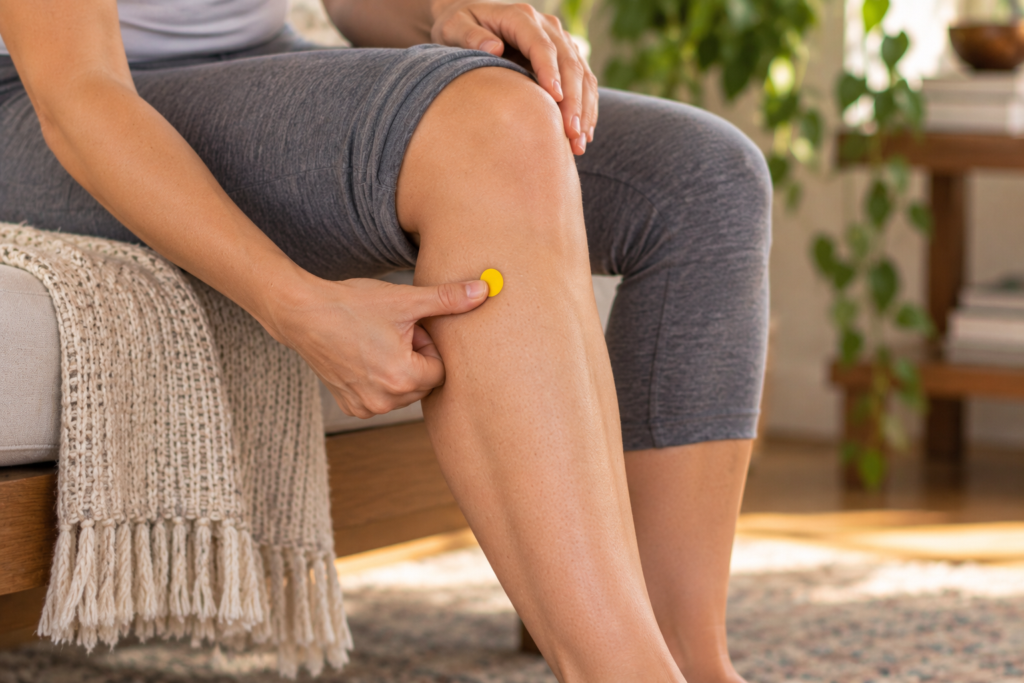
8. Press on ST36 below the knee to rebuild energy. ST36 sits four finger-widths below the bottom of the kneecap, about one finger-width to the outside of the shinbone. Press firmly with your thumb for one to two minutes on each leg. ST36 is called “Zusanli,” the “Leg Three Miles.”
ST36 is one of the most important Traditional Chinese Medicine points for strengthening the Spleen and Stomach and restoring energy. Alcohol weakens digestion and gradually depletes the body; ST36 helps rebuild the Qi and steadiness that make urges much easier to resist.
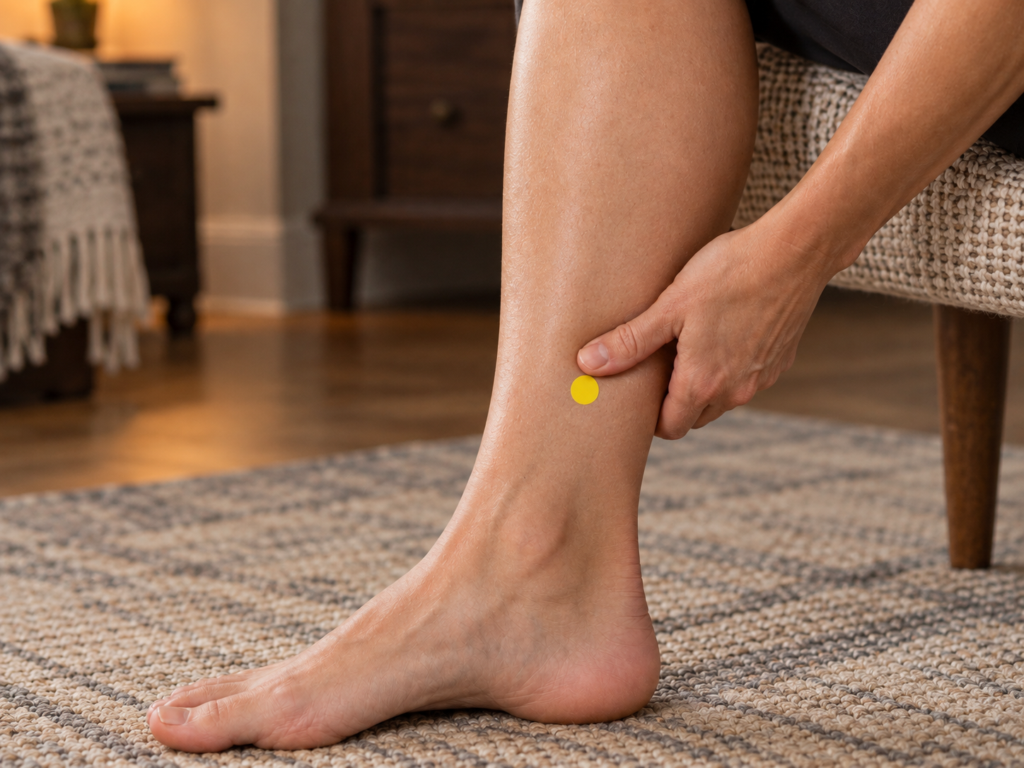
9. Press on SP6 above the inner ankle to restore the Yin and support sleep. SP6 sits on the inner lower leg, four finger-widths above the tip of the inner ankle bone, just behind the edge of the shinbone. Press firmly with your thumb for one to two minutes on each leg. SP6 is called “Sanyinjiao,” the “Three Yin Intersection.” SP6 is avoided during pregnancy.
SP6 is the meeting point of the Spleen, Liver, and Kidney channels. It nourishes the Yin and Blood depleted by regular drinking, calms the mind, and supports restful sleep, which is often disrupted for weeks after cutting back.
Why These Acupressure Points Work
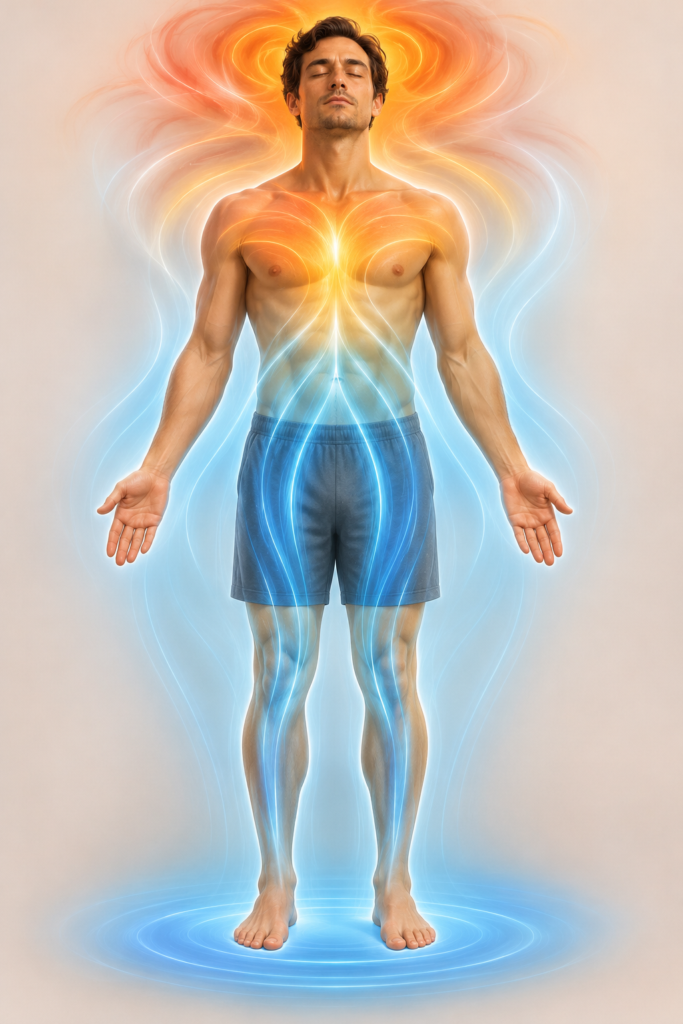
In Traditional Chinese Medicine, the urge to drink is strongest when the mind is restless, stress constrains Liver Qi, and Damp-Heat and depleted Yin have worn down the body. The approach is to calm the mind in the moment, ease the stress driving the urge, settle the stomach, and rebuild the reserves that support steady sleep and mood.
The nine points work together to help alleviate urges and support recovery.
- The calming points (PC6, HT7, Yintang, GV20) settle the mind and ease the anxiety and restlessness that make an urge feel urgent.
- The Liver points (LR3, LI4) release stress and irritability and smooth the flow of Qi.
- The Stomach points (CV12, ST36) settle the stomach, clear Damp-Heat, and rebuild energy.
- The nourishing point (SP6) restores the Yin and Blood and supports deeper sleep.
How to Properly Use These Acupressure Points

Acupressure for alcohol cravings works best as both an in-the-moment tool and a steady daily routine.
- When an urge starts to build, press PC6 on both arms and then Yintang while taking slow, deep breaths, and keep going until the urge eases.
- Work all nine points once or twice a day, holding each for one to two minutes, with one session in the late afternoon or early evening, when drinking usually begins.
- Use gentle pressure on the head, face, and abdomen, and firmer pressure on the arms, hands, legs, and feet.
- Practice every day for several weeks, and keep going through high-risk stretches such as holidays, weekends, and stressful periods at work.
Daily habits can make urges easier to manage. Plan ahead for holiday gatherings by bringing or ordering an alcohol-free drink, setting a time to leave, and identifying a supportive person to call or text. Eat regular meals, since hunger and fatigue can intensify urges, and drink plenty of water. Keep alcohol out of the house, get outside and move each day, and protect your sleep with a consistent bedtime. Traditional Chinese Medicine favors light, cooling foods such as leafy greens, cucumber, and mung bean soup to help clear the Heat associated with regular drinking.
Learn more about how Traditional Chinese Medicine views addiction.
When to Get Professional Help

If you drink heavily or daily, talk with a doctor before cutting back or stopping. Alcohol withdrawal can be dangerous, and you may need medical help to quit safely. Get emergency help right away if, after cutting back, you experience shaking, confusion, hallucinations, a seizure, a racing heart, or a high fever. See a doctor if you have trouble controlling your drinking, it continues to cause problems at home or work, or you keep drinking despite health concerns. Ask about behavioral treatment, FDA-approved medications for alcohol use disorder, and support groups.
Women who are pregnant or trying to become pregnant should avoid alcohol completely.
For free, confidential treatment referrals at any time, call the SAMHSA National Helpline at 1-800-662-4357.
If you’re thinking about self-harm, call or text 988 to reach the Suicide and Crisis Lifeline.
Acupressure can help with cravings, but it is a gentle, supportive practice that should be used along with, not instead of, medical care.
For related health concerns, acupressure for stress, acupressure for trouble falling asleep, and acupressure for a hangover are companion posts.
Above and Beyond Acupuncture offers acupuncture, cupping, and lifestyle coaching at the North Frank Lloyd Wright Boulevard location in Scottsdale.
Schedule an appointment online to start your healing journey.
The points above are only as effective as the technique used to apply them. Where to press, how firmly, and for how long all affect the result. For a full breakdown of how to perform acupressure properly at home, read Performing Acupressure in 3 Easy Steps.

About the Publisher
Paul Kerzner, L.Ac., is a licensed acupuncturist and board-certified herbalist, as well as the founder of Above and Beyond Acupuncture in Scottsdale. His own journey from chronic patient to practicing acupuncturist shapes his commitment to providing honest, clinically grounded information about acupuncture and Traditional Chinese Medicine. Learn more about Paul and his clinical approach on the About Us page.