
Key Takeaways
- Worry depletes energy and adversely impacts both mental and physical health; however, acupressure offers a gentle remedy.
- The article outlines nine acupressure points to calm the mind, relieve tension, nourish the heart and Spleen, and rebalance Qi.
- Using points like Yintang and HT7 can help quiet racing thoughts, while SP3 and ST36 are essential for strengthening the Spleen.
- Regular practice of these acupressure techniques enhances overall well-being and improves sleep quality.
- Seek professional help if worry becomes persistent or starts affecting daily life and emotional health.

Worry can drain your energy, making your mind spin with endless thoughts, worst-case scenarios, and replayed past moments, or leading to restless nights with racing thoughts. Worry doesn’t only affect your mind; it can also upset your stomach, cause muscle tension, lead to fatigue, and disturb your sleep. The good news is that acupressure offers a natural, holistic way to calm your mind and ease the physical tension worry can cause.
In Traditional Chinese Medicine, worry and overthinking relate to the Spleen, the organ responsible for thought and digestion. Excessive thinking can block Qi and weaken the Spleen. This is why long-term worry not only causes mental looping but also leaves you physically tired, foggy, and unsettled in your stomach, as constant overthinking wears down the Spleen. The Heart is involved too, since overthinking drains the Heart Blood that anchors the spirit, leading to poor sleep, a restless mind, and a tired memory. The points below target these issues by calming the mind, settling the Shen, strengthening and freeing the Spleen, nourishing the Heart and Spleen, and releasing the Qi tangled by overthinking.
Here are nine effective acupressure points to help you stop overthinking and unwind:
What Acupressure Points to Press and Why
1. Press on Yintang between the eyebrows to quiet the overthinking mind. Yintang sits in the small hollow directly between the two eyebrows. Press steadily and hold, or make small, slow circles with your fingertip for one to two minutes. Yintang is an extra point and one of the most calming points in the body.
Yintang calms the Shen and soothes a busy, overthinking mind that tends to worry, stopping the endless mental loops and releasing tension between the brows caused by ruminating. It relaxes the entire nervous system and moderates frantic thinking. For those whose worry manifests as a relentless, racing mind, especially at night, this is the primary point to target. Gentle pressure, paired with several deep breaths, can give an overworked mind a true mental pause.

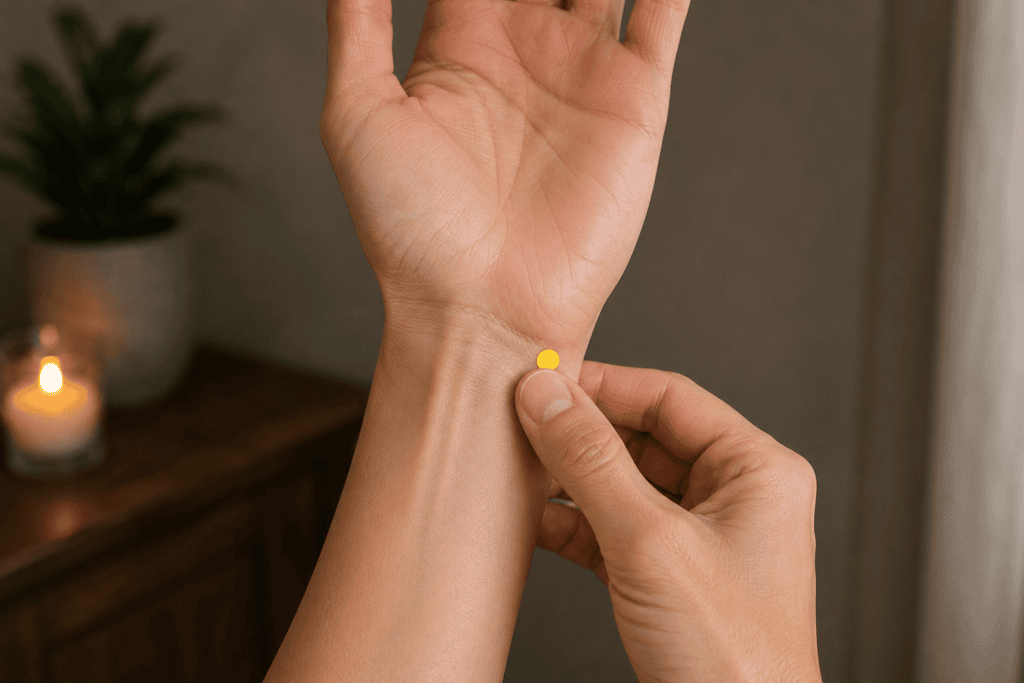
2. Press on HT7 at the wrist to calm and nourish the heart. HT7 sits on the inner wrist crease, on the pinky side, in the small hollow just inside the tendon. Press firmly with your thumb for one to two minutes on each wrist. HT7 is called “Shenmen,” the “Spirit Gate,” and it is the source point of the Heart and the most important point for calming the Shen.
HT7 calms and nourishes the Heart, making it ideal for a worried mind. It helps settle restless overthinking and supports the Heart Blood, which can be depleted by excessive thought. As the Heart’s source, it stabilizes the spirit at its core, easing anxiety, improving sleep, and reducing the tired, unsettled feeling caused by worry. Alongside Yintang, it is a key point for worry, and its discreet location allows gentle pressing whenever the mind begins to spin.
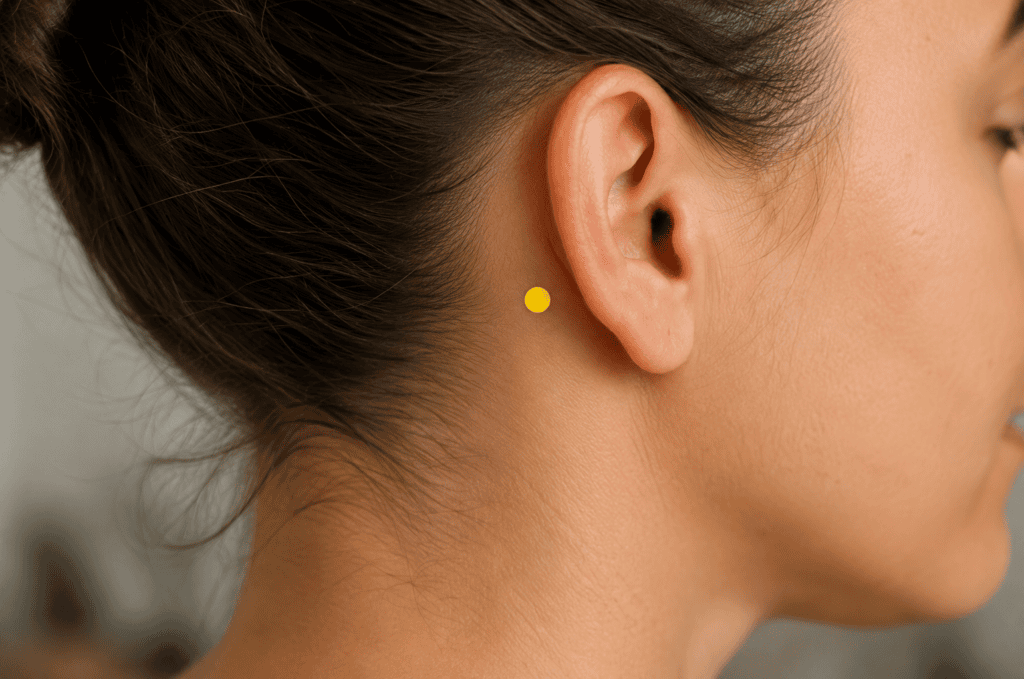
3. Press on Anmian behind the ear for the sleep worry steals. Anmian sits behind the ear, in the hollow between the bony bump behind the earlobe and the base of the skull, a little above the jaw. Press firmly with your fingertip for one to two minutes on both sides. Anmian is an extra point whose name literally means “Peaceful Sleep,” and it is used specifically for insomnia.
Worry often robs us of sleep, keeping our minds active long after bedtime. Anmian is key to addressing this issue. It soothes an overactive mind and helps you fall asleep when worries keep you from relaxing. For those who lie awake nights overwhelmed by anxiety, activating this point can help quiet the mind and prepare it for rest. It works effectively in the evening, especially when combined with Yintang and HT7.
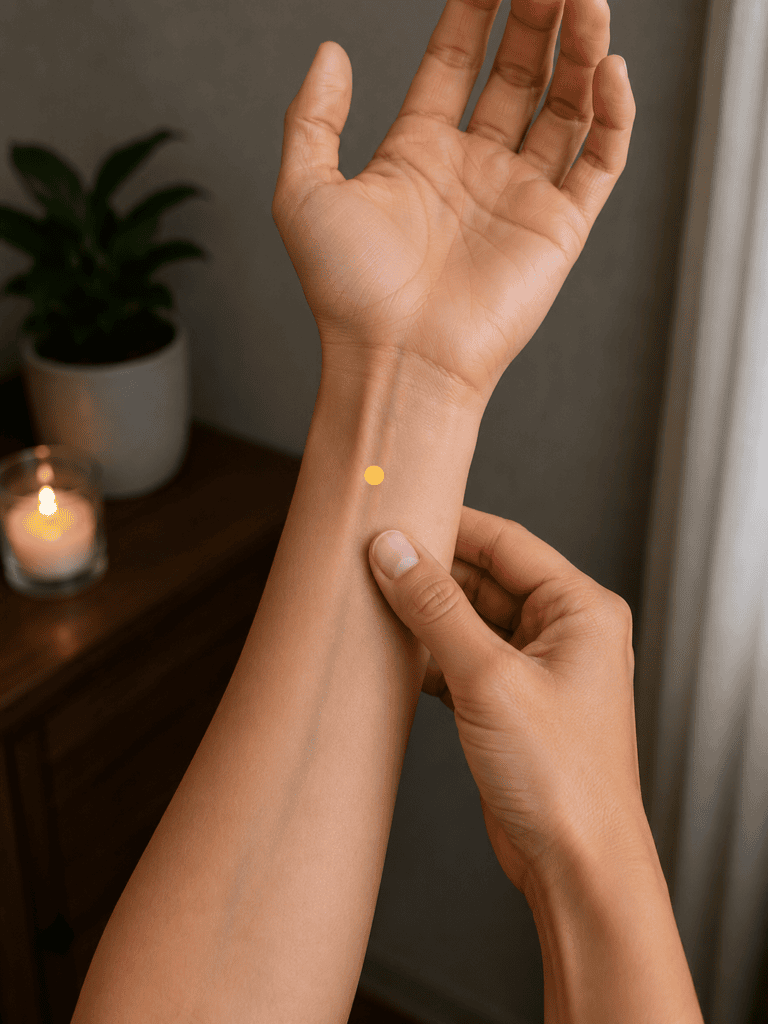
4. Press on PC6 on the inner forearm to ease the churning. PC6 sits three finger-widths above the inner wrist crease, in the center of the forearm between the two tendons. Press firmly with your thumb for one to two minutes on each arm. PC6 is called “Neiguan,” the “Inner Pass,” and it opens the chest and calms the mind.
PC6 unlocks the chest, easing the tight, unsettled sensation of worry in both the chest and stomach. It relieves physical tension and soothes mental agitation. As an important point for the chest and emotional well-being, it loosens the knot of worry and calms an overworking mind. For those experiencing a churning knot in the chest or a queasy, unsettled stomach, this point provides relief and also calms the nerves.
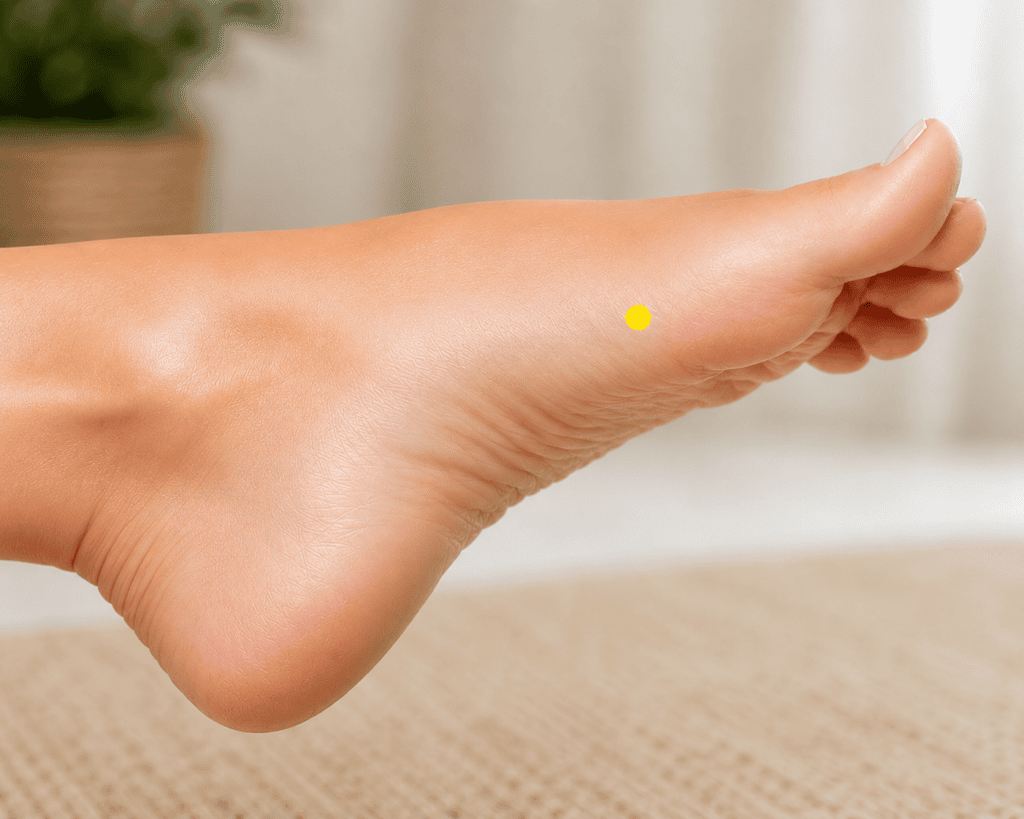
5. Press on SP3 on the foot to strengthen the depleted Spleen. SP3 sits on the inner edge of the foot, in the hollow just behind and below the ball of the big toe, where the skin changes color along the side of the foot. Press firmly with your thumb for one to two minutes on each foot. SP3 is called “Taibai,” the source point of the Spleen.
In Traditional Chinese Medicine, worry and overthinking are believed to weaken the Spleen. SP3, the Spleen’s source point, helps rebuild and strengthen it, especially when excessive thinking over-stimulates it. It targets the lingering tiredness, fogginess, heaviness, and lack of focus caused by chronic worry, addressing the fundamental pattern rather than just alleviating symptoms. For those drained mentally and physically by worrying, this point supports the Spleen system that overthinking depletes. As a highly appropriate point for worry, SP3 restores vitality and balance.
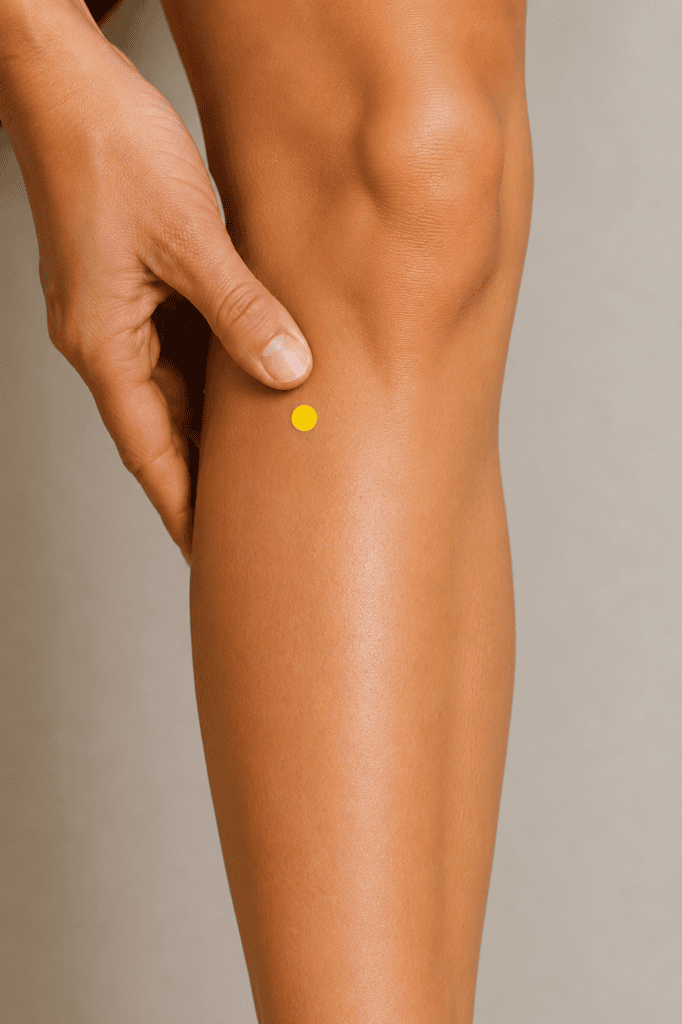
6. Press on ST36 below the knee to rebuild energy and settle the stomach. ST36 sits four finger-widths below the lower edge of the kneecap and one finger-width to the outside of the shinbone, on the muscle that rises when you flex your foot. Press firmly with your thumb for one to two minutes on each leg. ST36 is called “Zusanli,” the “Leg Three Miles,” and it is the master point for energy and digestion in the body.
ST36 bolsters the Spleen and Stomach, replenishing the Qi drained by worry. It targets both the fatigue of a stressed mind and the tense, unsettled digestion caused by overthinking. Because worry constricts Qi in the middle and disturbs the stomach, this point eases that imbalance while boosting overall energy and resilience. For those whose worry leaves them exhausted and with disrupted digestion, this point helps restore their vitality. Regular use also strengthens the Spleen against the effects of persistent worry.
7. Press on CV12 above the navel to ease the knotted stomach. CV12 sits on the midline of the abdomen, halfway between the navel and the lower end of the breastbone, about four finger-widths above the belly button. Press gently but steadily with your fingertips for one to two minutes. CV12 is called “Zhongwan,” and it is the gathering point of the Stomach at the front of the body.
Worry often creates a knot in the stomach, and CV12 can help loosen it. Located directly in the middle of the body, this point helps relieve Qi stagnation from overthinking, which can disturb digestion. It harmonizes the Stomach and Spleen, easing the tight, knotted, uncomfortable sensation caused by worry in the gut. For those who feel worry as both a churning stomach and a busy mind, CV12 stabilizes the physical symptoms and strengthens the central area depleted by overthinking. Use gentle pressure here, especially after eating.

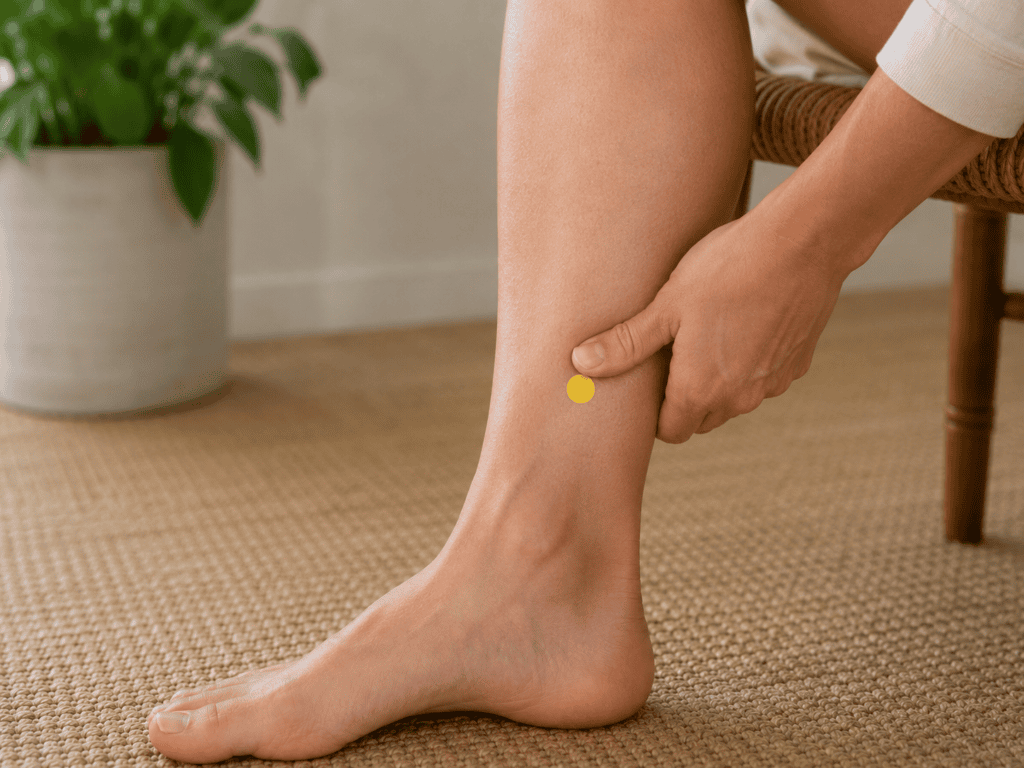
8. Press on SP6 above the inner ankle to nourish the heart and spleen. SP6 sits four finger-widths up from the tip of the inner ankle bone, just behind the back edge of the shinbone. Press firmly for one to two minutes on each leg. SP6 is called “Sanyinjiao,” the “Three Yin Intersection,” where the Spleen, Liver, and Kidney channels meet. SP6 is avoided during pregnancy.
SP6 is a deeply nourishing and calming point in the body. It aligns with the Heart-Spleen pattern by strengthening the Spleen and nourishing the Blood, which overthinking often drains. This point also calms the mind and promotes better sleep. By engaging three channels simultaneously, it replenishes what chronic worry depletes and soothes a restless, exhausted system. For those who feel drained, sleep poorly, and feel foggy, SP6 restores balance and calms the nervous system. It is especially effective in the evening as it supports falling asleep.
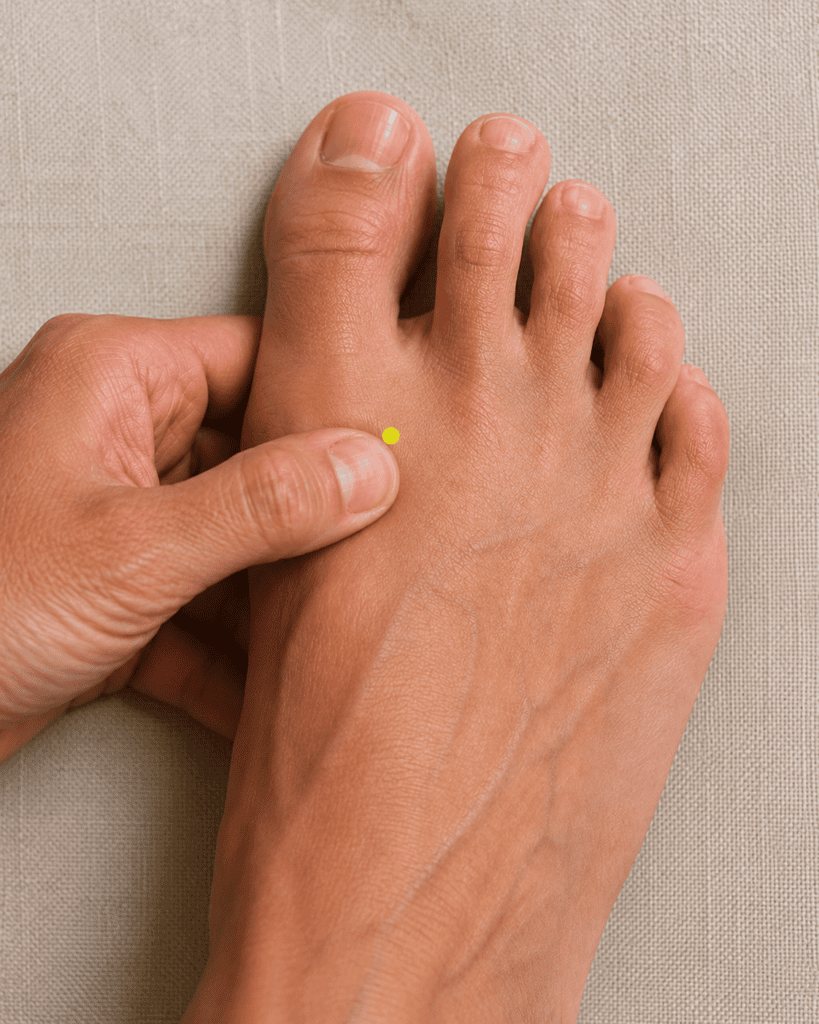
9. Press on LR3 on the top of the foot to free the knotted Qi. LR3 sits on the top of the foot, in the webbing between the big toe and second toe, about two finger-widths back where the bones meet in a small hollow. Press firmly with the thumb for one to two minutes on each foot. LR3 is called “Taichong,” the primary point for smoothing the flow of Qi.
Since worry can create knots and stalls in the Qi, LR3 helps release them, restoring smooth, even movement disrupted by overthinking and easing the tense, stuck feeling of a worried mind. It also anchors the entire system by directing energy downward toward the feet, helping to pull the mind out of its endless upward whirl. For those whose worry shows up as tension and a persistent can’t-let-go attitude, this point encourages Qi and thoughts to flow freely, calming a mind caught in loops.
Why These Acupressure Points Work
In Traditional Chinese Medicine, worry and overthinking are associated with the Spleen’s emotions. Excessive worry knots the Qi, weakens the Spleen, and drains the Heart Blood that calms the mind. This is why chronic worry often leads to mental loops, poor sleep, fatigue, mental fog, and an unsettled stomach. The nine points address this entire pattern.
- The calming points (Yintang, HT7, Anmian, PC6) quiet the overthinking mind, settle the Shen, and ease the churning that worry creates.
- The Spleen-strengthening points (SP3, ST36) rebuild the Spleen that overthinking depletes and restore the energy and focus worry drains.
- The stomach point (CV12) eases the knot worry ties in the gut and harmonizes the middle.
- The nourishing point (SP6) rebuilds the Heart and Spleen and restores sleep, addressing the Heart-Spleen pattern at the root of worry.
- The Qi-freeing point (LR3) unknots and grounds the Qi that overthinking stalls.
How to Properly Use These Acupressure Points
Use these points when worry arises and practice them regularly to help ease anxiousness:
- When your mind is spinning, work Yintang, HT7, and PC6 to quiet the overthinking and ease the churning, and slow your breathing while you press.
- Work SP3, ST36, and CV12 to strengthen the Spleen and settle the knotted stomach that chronic worry depletes and disrupts, and use these regularly rather than only in the moment.
- Work Anmian and SP6 in the evening to calm the mind and rebuild what worry drains so sleep can come, and LR3 to free the knotted, stuck Qi and ground a looping mind.
- Hold each point for one to two minutes with firm, steady pressure, breathing slowly, and let the pressing be a focus for the mind to rest on instead of the worry.
Combining acupressure with a holistic methodology gradually eases worry. Deep, slow breaths quickly calm an overactive mind. Taking a brief, dedicated time to reflect on concerns keeps them from dominating the day. Regular exercise helps circulate stagnant Qi linked to overthinking, while limiting caffeine can significantly reduce nervousness. Since worry weakens the Spleen, Traditional Chinese Medicine advises eating warm, cooked, nourishing foods instead of cold or raw ones, which challenge digestion and help restore energy.
When to Get Professional Help
Some worry is normal and can help us stay alert. These tips are meant to ease typical daily concerns. When worry becomes persistent, uncontrollable, or starts affecting your sleep, focus, relationships, or daily activities, it may indicate more than normal worry. Such ongoing, intense worry is a key sign of generalized anxiety disorder, which often responds well to professional treatment, especially talking therapies like cognitive behavioral therapy. If worry is draining you or accompanied by prolonged feelings of low mood or anxiety, consulting a doctor or therapist is a wise step.
If you ever experience thoughts of self-harm, please contact the 988 Suicide and Crisis Lifeline immediately, anytime. While acupressure can be helpful for managing everyday worry, it isn’t a substitute for professional care for persistent or severe anxiety.
Above and Beyond Acupuncture offers acupuncture, cupping, and lifestyle coaching at the North Frank Lloyd Wright Boulevard location in Scottsdale.
Schedule an appointment online or call us today to start your healing journey.
The points above are only as effective as the technique used to apply them. Where to press, how firmly, and for how long all affect the result. For a full breakdown of how to perform acupressure properly at home, read Performing Acupressure in 3 Easy Steps.

About the Publisher
Paul Kerzner, L.Ac., is a licensed acupuncturist and board-certified herbalist, as well as the founder of Above and Beyond Acupuncture in Scottsdale. His own journey from chronic patient to practicing acupuncturist shapes his commitment to providing honest, clinically grounded information about acupuncture and Traditional Chinese Medicine. Learn more about Paul and his clinical approach on the About Us page.