Key Takeaways
- Carpal tunnel syndrome causes numbness, tingling, and pain, affecting everyday activities.
- Standard care includes wrist splints and medications, but many patients seek home remedies like acupressure.
- Seven specific acupressure points can relieve carpal tunnel symptoms by addressing nerve compression and muscle tension.
- Daily practice of the acupressure protocol can improve symptoms over weeks; however, seek professional help for severe cases.
- Consistency in technique, gentle pressure, and combining acupressure with other management practices enhance effectiveness.
Numbness and tingling in the thumb, index, middle, and half of the ring finger. Weakness in grip strength. Pain that radiates up the forearm. Symptoms that often worsen at night. The condition affects millions of Americans and interferes with daily activities from typing to holding a coffee cup.
Standard care includes wrist splints, ergonomic adjustments, anti-inflammatory medications, corticosteroid injections, and in more severe cases surgery. These interventions have their place, but many patients want additional support they can apply at home.
Acupressure is one of the strongest non-medication tools for supporting mild to moderate carpal tunnel symptoms. The technique addresses the muscular tension in the forearm that contributes to nerve compression, the local circulation around the median nerve pathway, and the underlying patterns that produce the condition. The points can be used during acute symptom flares or as a daily protocol to support the ongoing patterns.
An honest note before starting: Acupressure is genuinely useful for mild to moderate carpal tunnel presentations. It is not a cure for severe or longstanding nerve compression. If your symptoms are severe, progressive, or interfering significantly with function, please see a physician for appropriate evaluation. More on the full clinical picture in Can Acupuncture Treat Carpal Tunnel Syndrome?, which is the companion piece to this article.
Here are seven effective acupressure points that work, why they work, and when to get help if they do not.
What to Press and Why
Each point addresses a different aspect of the carpal tunnel pattern. You can use them individually when a specific region is bothering you, or work through the full protocol once or twice a day.
1. Press on PC7 at the center of your wrist crease for the primary local point. PC7 sits at the center of the wrist crease on the palm side of the wrist, between the two tendons you can feel when you flex your wrist against resistance. Press gently with your thumb for one to two minutes on each wrist. PC7 sits directly over the median nerve as it enters the carpal tunnel and is the primary local point for the condition. Use gentle pressure rather than firm pressure at this point because the median nerve is sensitive to compression.
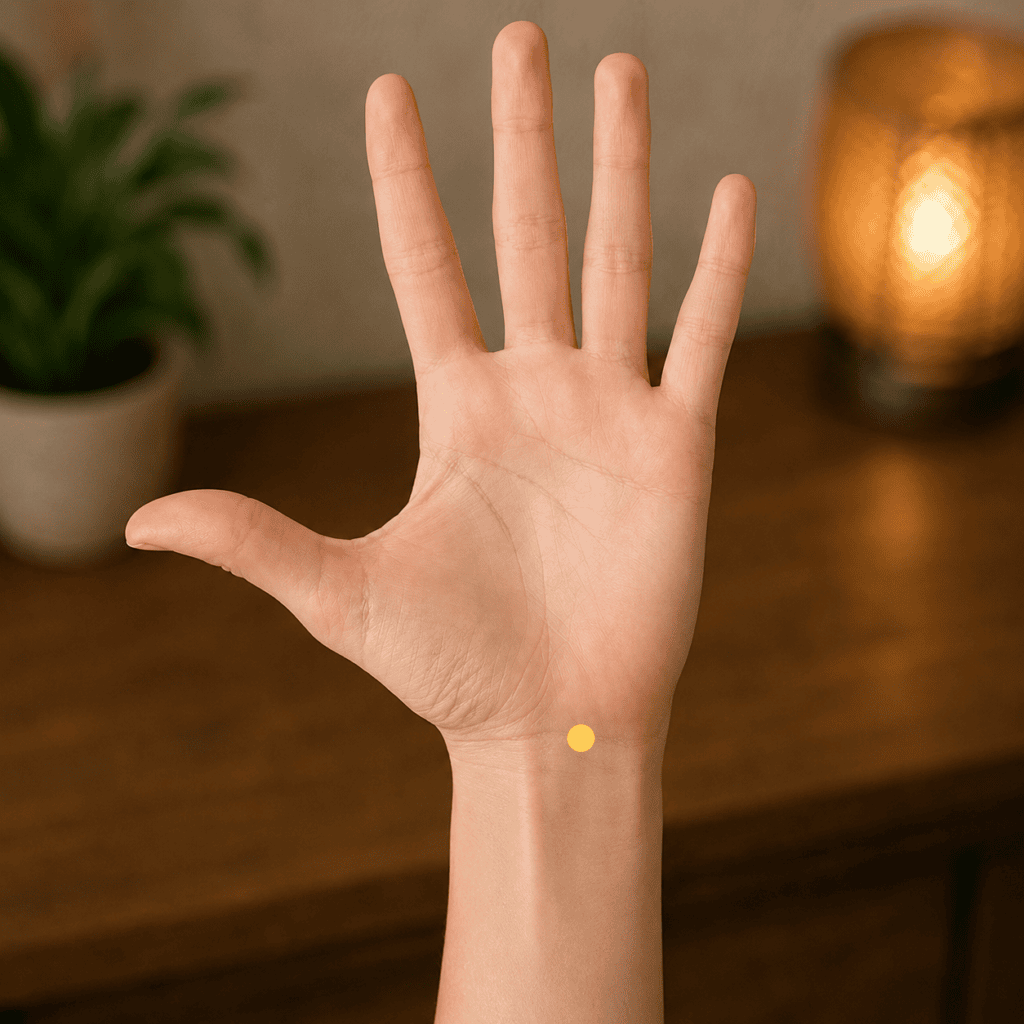
2. Press on PC6 on your inner forearm for the median nerve pathway. PC6 sits about three finger-widths above the inner wrist crease, between the two tendons in the center of the forearm. Press firmly with your thumb for one to two minutes on each arm. PC6 sits along the median nerve pathway above the wrist and addresses the nerve compression from a slightly proximal location. The point also releases the tension in the forearm flexors that contributes to the compression at the wrist.
3. Press on PC8 in the center of your palm for the palm-side symptoms. PC8 sits in the center of the palm, in the depression that forms when you loosely curl your fingers into your palm. Press with your thumb for one to two minutes on each hand. PC8 addresses the palm-side symptoms of carpal tunnel including the numbness and tingling that many patients feel in the palm and fingers. The point also releases tension in the muscles of the hand that develops from chronic gripping and typing.
4. Press on HT7 at your wrist for the ulnar side of the wrist. HT7 sits at the wrist crease on the pinky side, in the small depression just above the wrist bone. Press gently with your thumb for one to two minutes on each hand. HT7 addresses the ulnar side of the wrist and provides balance to the median nerve focus of the other points. The point also calms the mind and addresses the frustration and sleep disruption that often accompany chronic carpal tunnel.
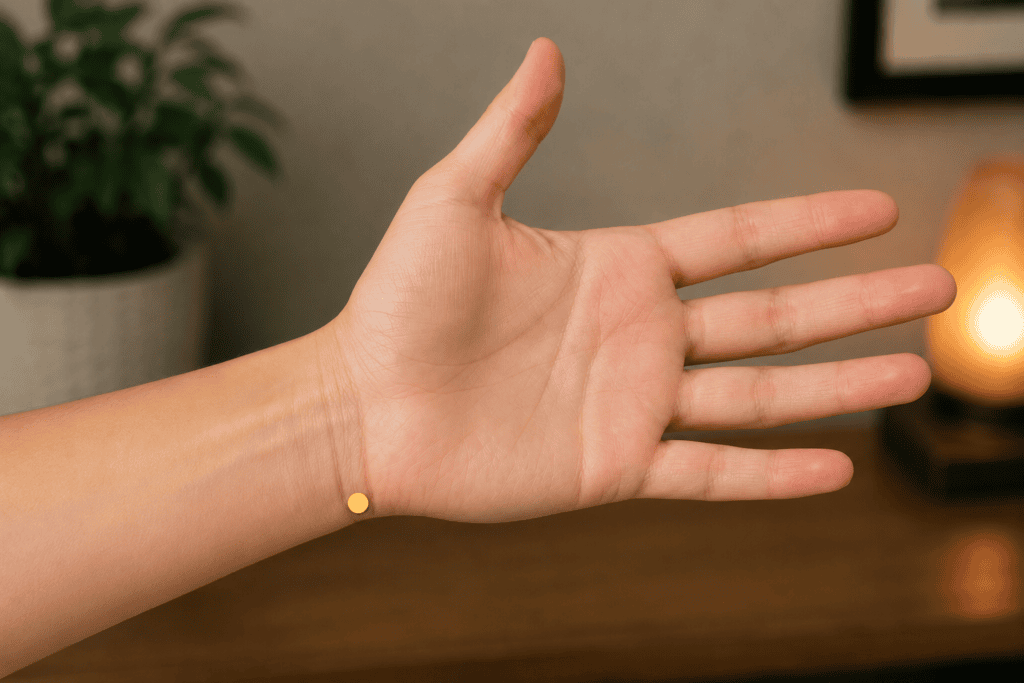
5. Press on LU9 at your wrist for the thumb-side wrist. LU9 sits at the wrist crease on the thumb side, in the depression where you can feel your pulse. Press gently with your thumb for one to two minutes on each hand. LU9 works alongside PC7 to bracket the wrist crease from both sides. The point also supports the circulation to the hand and fingers that carpal tunnel disrupts.
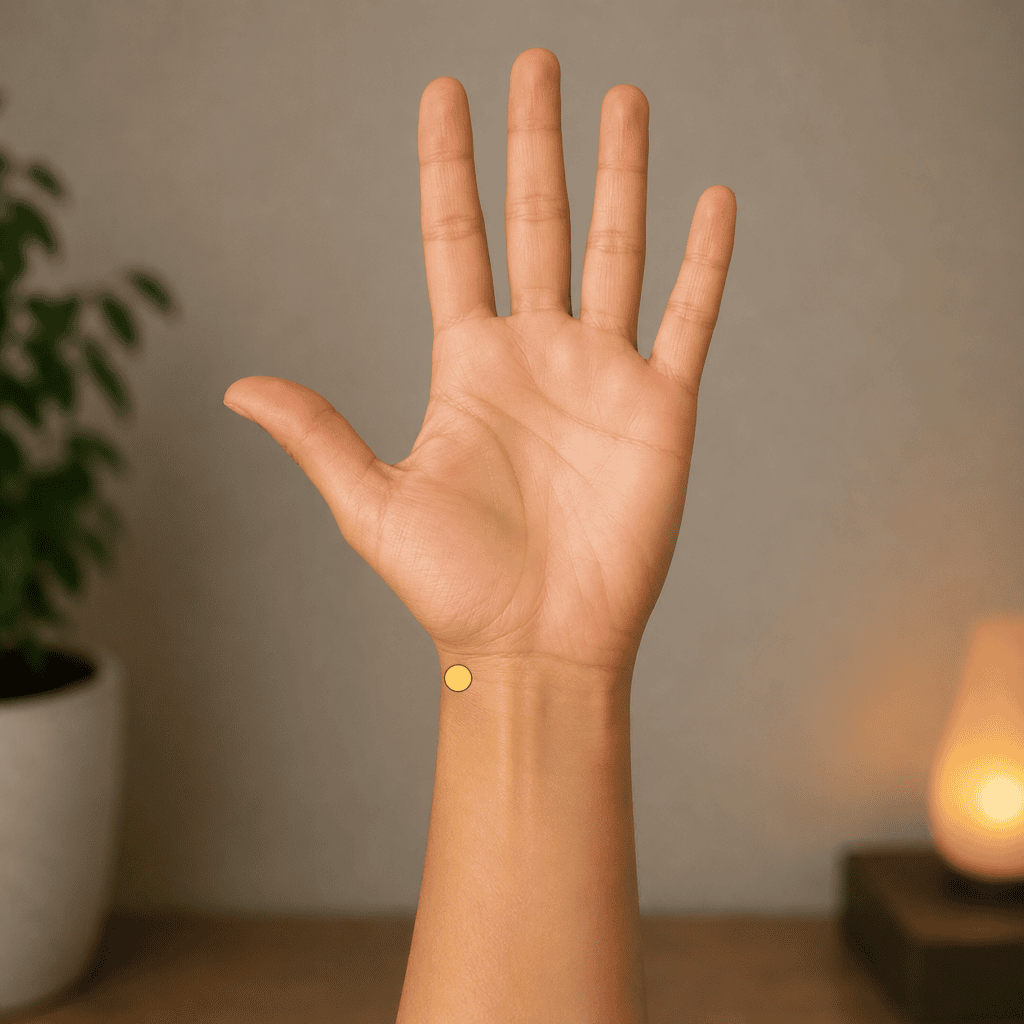
6. Press on LI4 in the webbing between your thumb and index finger for the distal command point. LI4 sits in the soft tissue webbing between the thumb and index finger, in the muscle that bulges when the thumb is pressed against the side of the index finger. Press firmly with the thumb of the opposite hand for one to two minutes on each hand. LI4 is the command point for the face and head but also strongly affects the hand itself. The point supports pain relief and addresses the general dysfunction of the hand. LI4 is contraindicated during pregnancy.
7. Press on SJ5 on your outer forearm for the exterior counterpart. SJ5 sits on the back of the forearm about three finger-widths above the wrist crease, in the depression between the two forearm bones. Press firmly with your thumb for one to two minutes on each arm. SJ5 is the exterior counterpart to PC6 on the inside of the forearm. The point addresses the outer wrist and provides balance to the interior wrist points, which supports the overall circulation and nerve function through the wrist.
Why This Works
Carpal tunnel syndrome involves several overlapping patterns. The median nerve gets compressed as it passes through the narrow carpal tunnel at the wrist. Swelling or thickening of the surrounding tissues contributes to the compression. Chronic muscular tension in the forearm flexors pulls on the tendons that share the tunnel with the nerve. Poor circulation to the hand contributes to the tissue patterns that maintain the condition.
Acupressure works on several of these mechanisms at once.
- The local points (PC7, LU9, HT7) address the wrist itself and support circulation through the carpal tunnel.
- The palm point (PC8) addresses the muscular tension in the hand that develops from chronic use.
- The proximal points (PC6, SJ5) address the forearm flexors whose tension contributes to the compression at the wrist.
- The distal point (LI4) provides pain relief and supports overall hand function.
The chronic inflammation that contributes to tissue swelling around the median nerve is worth naming directly. More on this in What Is Inflammation and Why Is It Affecting Me?.
The Mayo Clinic overview of carpal tunnel syndrome provides the medical framework. The NCCIH summary on acupuncture covers the research base for the treatment.
How to Use the Points
- For acute symptom flares, PC7, PC6, and LI4 produce the fastest response. These points can be pressed multiple times a day during acute episodes.
- For chronic patterns, working through the full seven-point protocol once or twice a day supports the underlying patterns. Consistency matters. Two to four weeks of daily practice typically produces measurable improvement in symptom burden.
- For prevention in patients with early or intermittent symptoms, PC6, PC8, and SJ5 as a daily protocol support the forearm and hand patterns that reduce the likelihood of progression.
Gentle sustained pressure works better than hard pressure at all wrist points because the median nerve is sensitive to compression. Firmer pressure works well on the forearm and hand points.
Pairing acupressure with basic carpal tunnel management practices amplifies the results. Wrist splints particularly at night. Ergonomic adjustments to workstation setup. Regular stretching of the forearm flexors. Breaks from repetitive gripping activities. Ice for acute flares. Working with a physical therapist or hand therapist for complex patterns.
When to Get Professional Help
The tools above work for mild to moderate carpal tunnel presentations. They are not the answer for severe or progressive symptoms. Warning signs warranting medical evaluation include significant weakness in the hand that affects function, muscle wasting at the base of the thumb, symptoms that have not improved with several weeks of conservative care, symptoms that wake you regularly from sleep, and symptoms that interfere significantly with work or daily activities.
If you are dealing with persistent or worsening symptoms that are not responding to self-care, acupuncture treatment offers a more substantial intervention than acupressure alone. The full clinical framework is in Can Acupuncture Treat Carpal Tunnel Syndrome?, the companion piece to this one.
The nervous system and stress patterns that contribute to chronic pain are addressed in Anxiety, Stress, and Depression.
For the range of services the practice offers, see Acupuncture, Cupping & Lifestyle Coaching.
Reach out to Above and Beyond Acupuncture on North Frank Lloyd Wright Boulevard in Scottsdale to schedule a consultation.
Schedule an appointment online or call us today to start your healing journey.
The points above are only as effective as the technique used to apply them. Where to press, how firmly, and for how long all affect the result. For a full breakdown of how to perform acupressure properly at home, read Performing Acupressure in 3 Easy Steps.
About the Publisher
Paul Kerzner, L.Ac., is a licensed acupuncturist and board-certified herbalist, as well as the founder of Above and Beyond Acupuncture in Scottsdale. His own journey from chronic patient to practicing acupuncturist shapes his commitment to providing honest, clinically grounded information about acupuncture and Traditional Chinese Medicine. Learn more about Paul and his clinical approach on the About Us page.