
Key Takeaways
- Neuropathic pain manifests as burning, shooting, or stabbing sensations caused by nerve dysfunction, not muscle or joint problems.
- Acupressure treatment for neuropathic pain targets specific points, such as LI4 for overall relief and LR3 to calm the system.
- Ten acupressure points correspond to specific pain types, such as GB20 for electric pain and LI11 for burning pain.
- Innovative methods in Traditional Chinese Medicine recommend calming the nervous system in addition to treating the pain area for more effective results.
- Daily habits such as ensuring adequate sleep, managing stress, and seeking professional advice can improve the control of neuropathic pain.

Do you experience pain that is burning, shooting, stabbing, or electric in nature rather than a simple ache?
Neuropathic pain is characterized by damage or dysfunction in the nervous system, not from an injury to muscles or joints. It can develop due to various conditions like diabetes, chemotherapy, shingles, nerve compression in the neck or back, nerve injuries, multiple sclerosis, stroke, and more. The hallmark of this pain is how it feels: often described as burning, shooting, stabbing, or electric sensations rather than a dull ache. Patients may experience burning, freezing, or scalding sensations; electric shocks; pins and needles; persistent numbness with pain; and heightened sensitivity, where light touch, clothing, or breezes provoke pain. This type of pain is notoriously hard to treat and often only partially relieved with standard pain medications. Acupressure is a supportive practice that impacts both nerves and the nervous system, with Chinese medicine offering tailored point selection based on the specific nature of your pain.
Neuropathic pain has two primary characteristics. First, damaged nerves can send pain signals even in the absence of injury. Second, over time, the nervous system becomes more sensitive, leading to heightened pain, spreading discomfort, and unnecessary triggers. Because of this, calming the nervous system is just as important as treating the pain site. This routine includes points that relax the mind and target the nerves.
In Traditional Chinese Medicine, understanding the nature of nerve pain is essential for diagnosis. Burning pain usually signifies heat in the channels, whereas electric, shooting, or darting pain that moves and attacks suddenly indicates wind. Fixed stabbing pain that worsens at night suggests blood stagnation. Symptoms like numbness, tingling, and weakness reflect deficiencies in Qi and Blood that impair nerve nourishment. Increased sensitivity and reactivity of the nervous system indicate disturbances in the Shen—the mind and spirit housed in the Heart. Many individuals experience a combination of these symptoms.
Here are ten acupressure points to help, organized by how your pain feels, to better match symptoms.
What Acupressure Points to Press and Why
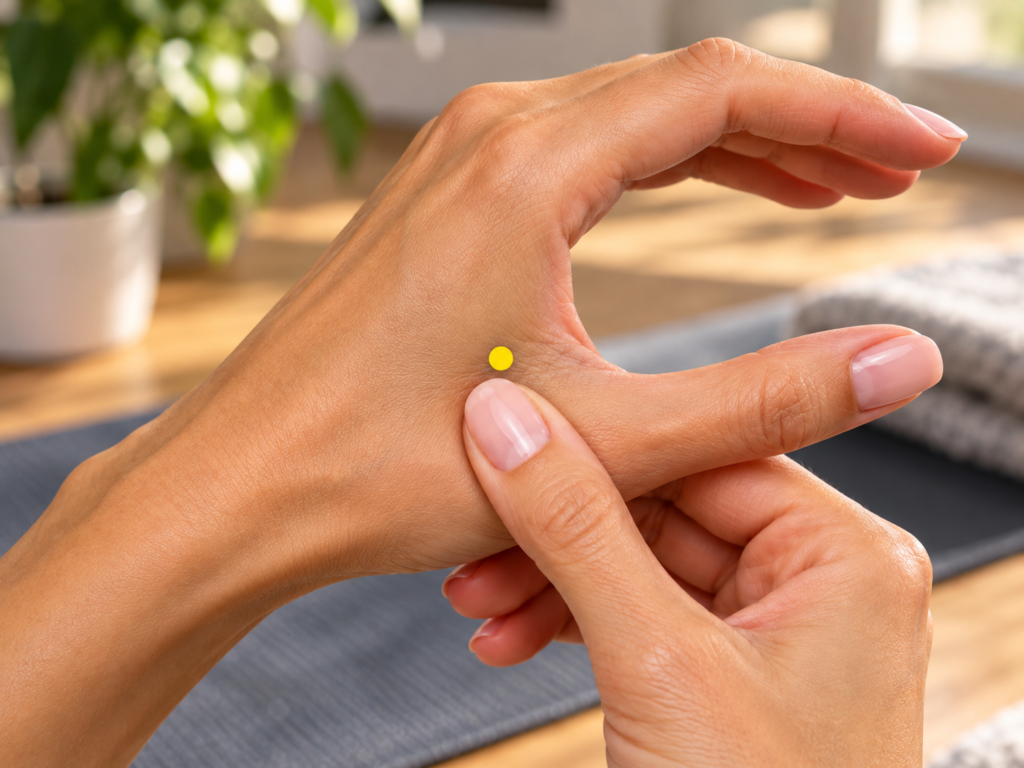
1. Press on LI4 in the hand to ease nerve pain throughout the body. LI4 sits in the webbing between the thumb and index finger, at the highest point of the muscle when you bring the thumb and index finger together. Press firmly with the thumb of your other hand for one to two minutes on each hand. LI4 is called “Hegu.” LI4 is avoided during pregnancy.
LI4 is one of the most powerful points for relieving pain and has a remote effect, which is especially important for neuropathic pain because the affected area is often extremely sensitive to touch. It promotes the circulation of Qi throughout the body and is typically the first point to consider in any nerve pain treatment.
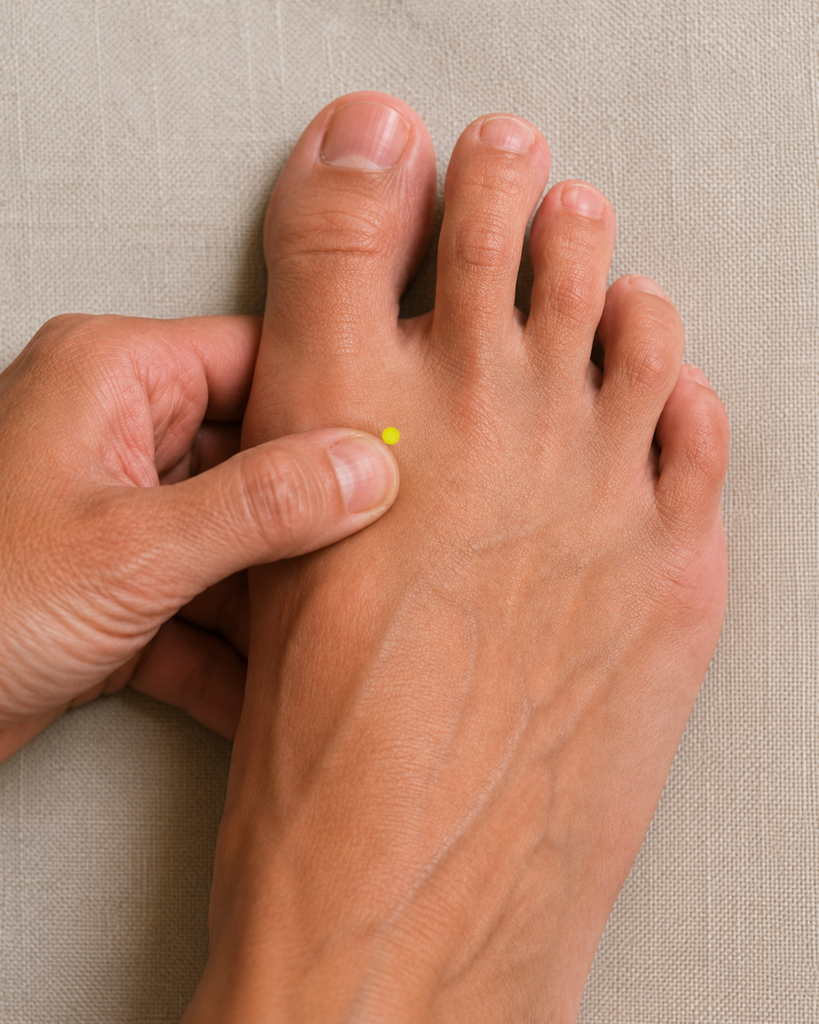
2. Press on LR3 on the top of the foot to calm the system and move the Qi. LR3 sits on the top of the foot, in the webbing between the big toe and second toe, about two finger-widths back where the bones meet in a small hollow. Press firmly with your thumb for one to two minutes on each foot. LR3 is called “Taichong.”
LR3 helps to unblock stagnant Qi, easing tension and irritability linked to chronic nerve pain. It also helps settle internal wind responsible for electric, shooting pains. Paired with LI4 to form the Four Gates, it promotes Qi flow and alleviates pain throughout the body.
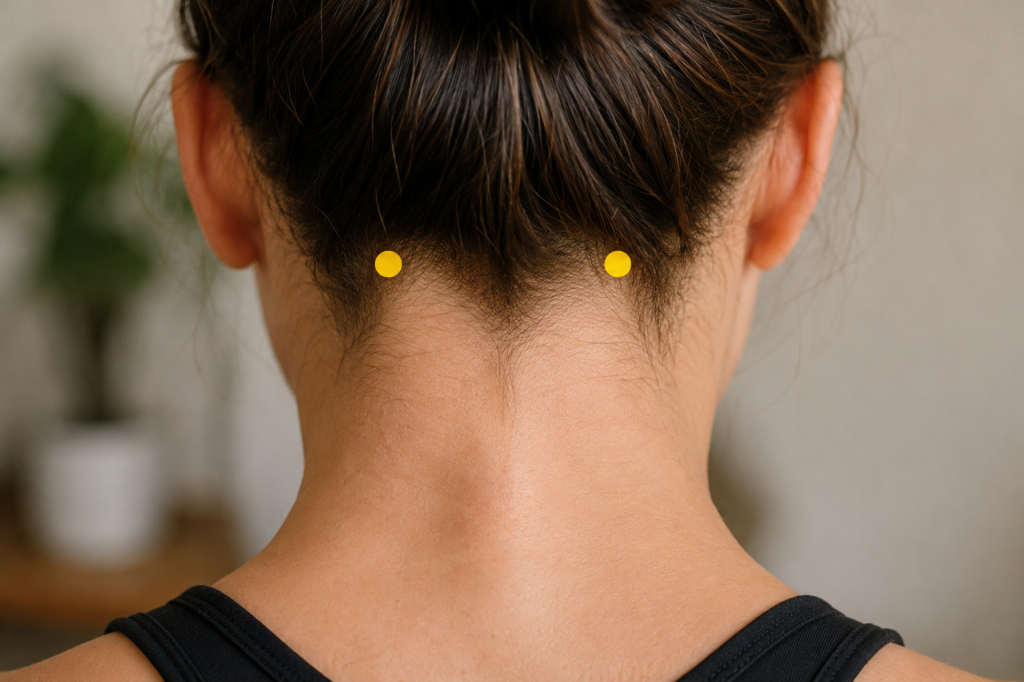
3. Press on GB20 at the base of the skull for electric, shooting pain. GB20 sits in the two hollows at the base of the skull, between the two large vertical neck muscles and the outer edge, roughly level with the tops of the ears. Tip your head back slightly and press up and inward with your thumbs for one to two minutes. GB20 is called “Fengchi,” the “Wind Pool.”
When nerve pain manifests as an electric shock, shooting along a path, or moving from one area to another, traditional Chinese medicine sees this as caused by wind in the channels. It considers GB20 a crucial point for soothing this pain, as it also relieves neck tension, calms the head, and helps soothe the nervous system overall.
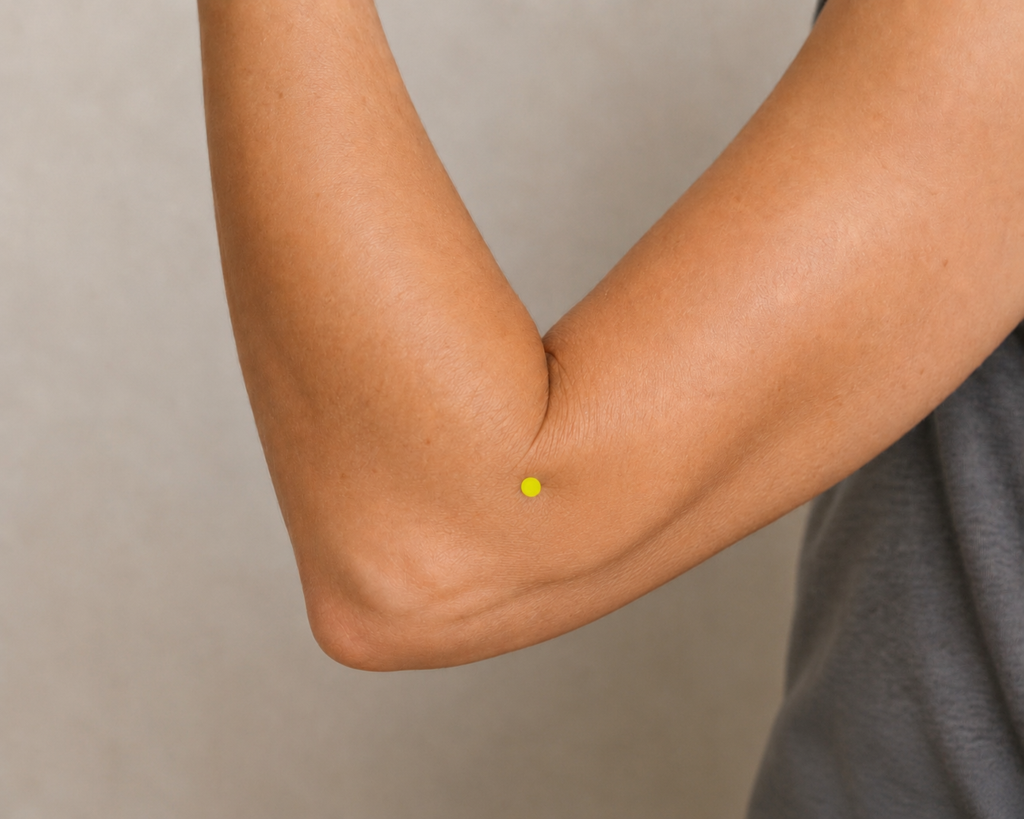
4. Press on LI11 at the elbow for burning pain. LI11 sits at the outer end of the elbow crease, in the hollow that forms when you bend your elbow. Press firmly with your thumb for one to two minutes on each arm. LI11 is called “Quchi,” the “Pool at the Crook.”
According to Traditional Chinese Medicine, nerve pain that feels like burning or heat is seen as heat in the meridians. The LI11 point is especially effective at reducing this heat and is particularly helpful for alleviating burning sensations in the hands, arms, and skin. It works efficiently with LI4, which is located on the same meridian.
5. Press on SP10 above the knee for stabbing pain that is worse at night. SP10 sits on the inner thigh, about three finger-widths above the inner upper corner of the kneecap, on the bulge of the muscle there. Press firmly with your thumb for one to two minutes on each leg. SP10 is called “Xuehai,” the “Sea of Blood.”
Sharp, persistent pain that worsens at night indicates blood stagnation in the small vessels supplying the nerves. SP10 is a key acupoint for dispersing stagnant blood and cooling excess heat in the blood, especially helpful when the stabbing pain is accompanied by a burning sensation.
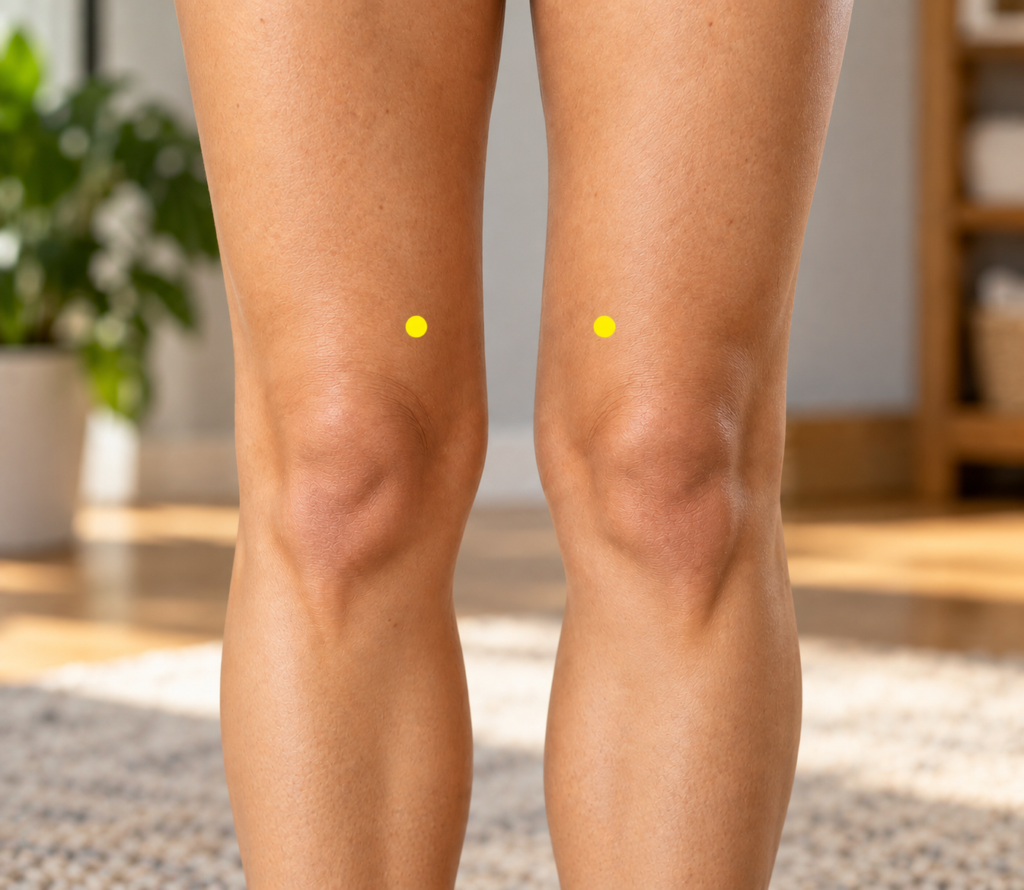
6. Press on ST36 below the knee for numbness and weakness. ST36 sits four finger-widths below the lower edge of the kneecap and one finger-width to the outside of the shinbone, on the muscle that rises when you flex your foot. Press firmly with your thumb for one to two minutes on each leg. ST36 is called “Zusanli,” the “Leg Three Miles.”
Symptoms like numbness, tingling, and weakness suggest that Qi and Blood are severely depleted and can no longer nourish the nerves. ST36 enhances both Qi and Blood at their root and is one of the most researched acupoints for nerve disorders. It should be used daily, especially for chronic nerve pain.
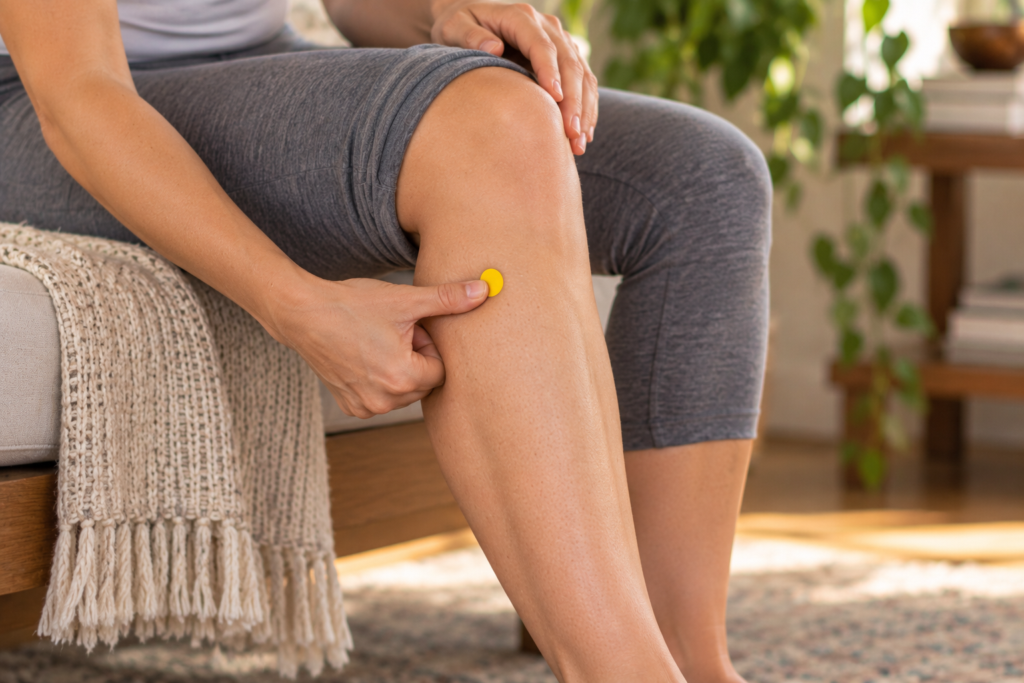
7. Press on SP6 above the inner ankle to nourish and move the Blood. SP6 sits four finger-widths up from the tip of the inner ankle bone, just behind the back edge of the shinbone. Press firmly for one to two minutes on each leg. SP6 is called “Sanyinjiao,” the “Three Yin Intersection.” SP6 is avoided during pregnancy.
SP6 enhances the Blood and Yin, which maintain healthy nerves, while also improving Blood circulation. This addresses both the deficiency causing numbness and the stagnation leading to stabbing pain. It also calms the mind and supports sleep, which nerve pain often disrupts.
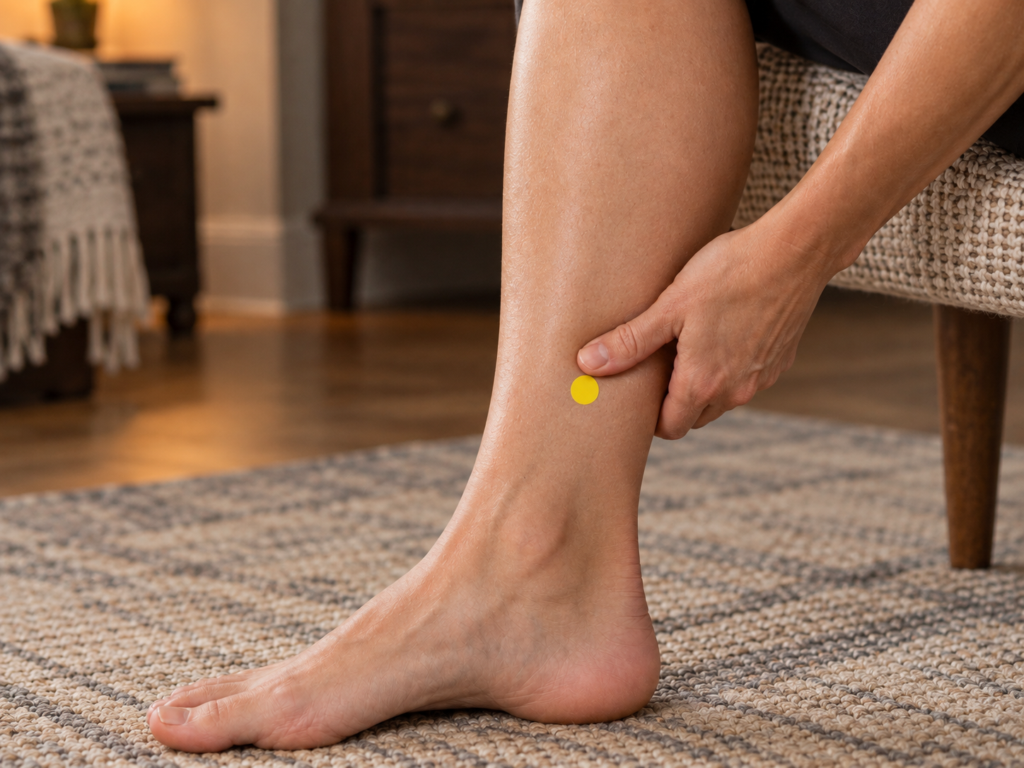
8. Press on GB34 below the outer knee for cramping and tight muscles. GB34 sits on the outer lower leg, in the hollow just below and in front of the head of the fibula, the bony knob below the outer side of the knee. Press firmly with your thumb for one to two minutes on each leg. GB34 is called “Yanglingquan,” the influential point for the sinews.
If nerve disorders lead to muscle cramps, spasms, twitching, or tightness around painful areas, GB34 helps relax muscles throughout the body. It also improves circulation in the legs and reduces long-standing muscle tension associated with persistent pain.
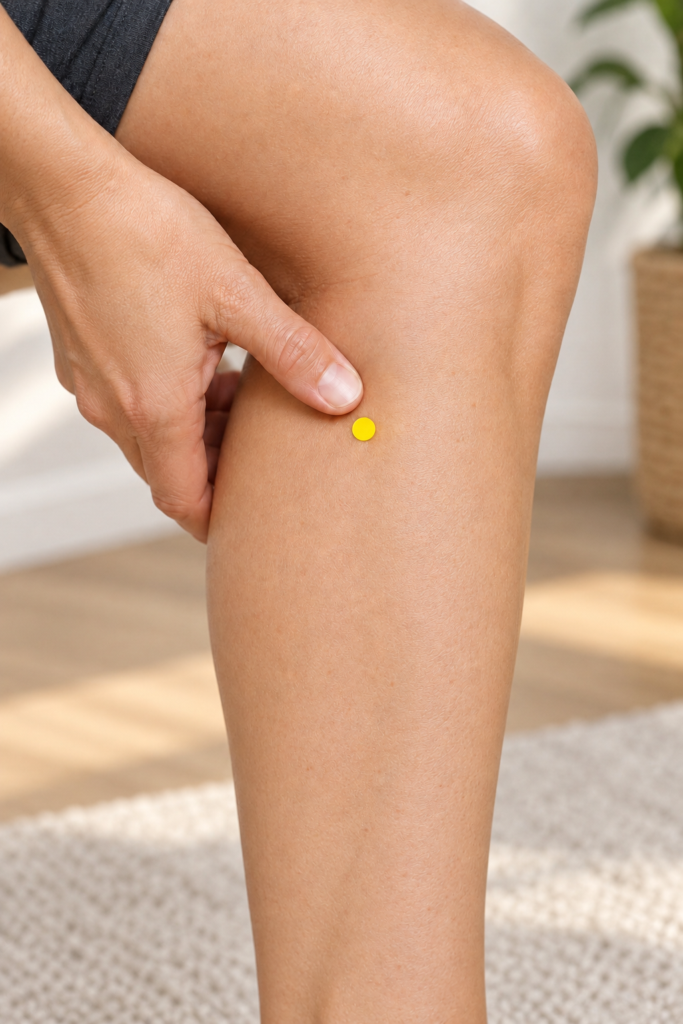
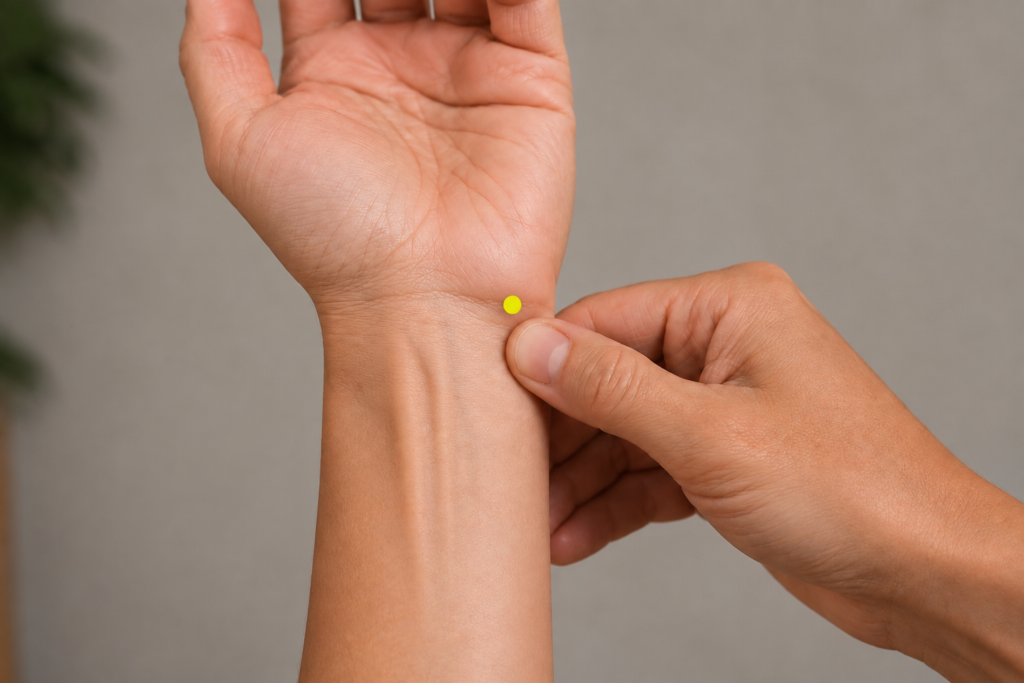
9. Press on HT7 at the wrist to calm a sensitized nervous system. HT7 sits on the inner wrist crease, on the pinky side, in the small hollow just inside the tendon. Press firmly with your thumb for one to two minutes on each wrist. HT7 is called “Shenmen,” the “Spirit Gate.”
In Traditional Chinese Medicine, pain is perceived through the Heart. When the mind experiences stress, lack of sleep, and anxiety, nerve pain levels tend to rise. The HT7 point helps calm the Heart and stabilize the Shen, which can decrease sensitivity, agitation, and sleep disturbances that often worsen the pain cycle. It is especially beneficial before bed and during moments when pain feels intense.
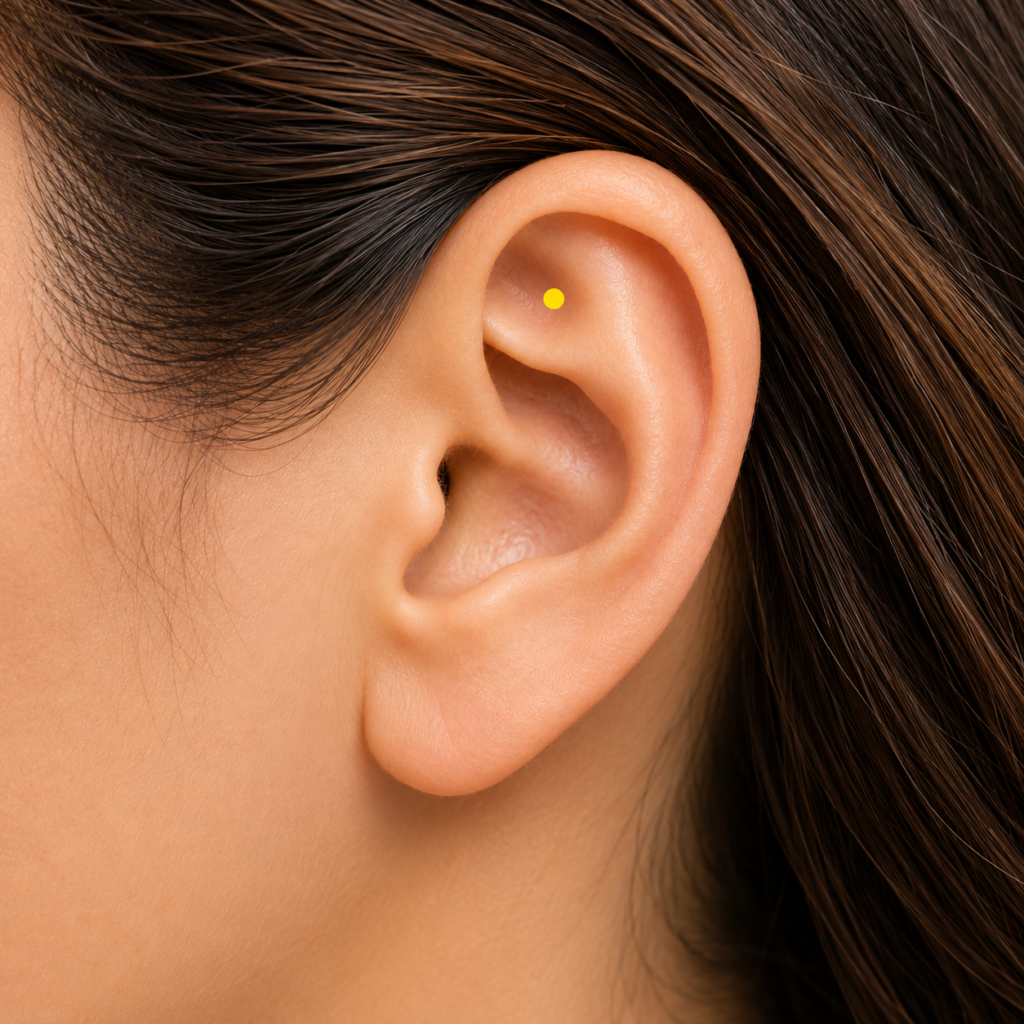
10. Press Ear Shenmen for fast, gentle relief. Ear Shenmen sits in the upper part of the ear, in the triangular hollow near the top, at its apex. Press gently with your fingertip for about a minute on each ear.
Ear Shenmen is a commonly used ear acupoint to relieve pain and soothe the nervous system. It can be pressed without touching painful zones. If other areas are too sensitive or if a sudden flare-up happens, it is one of the gentlest points to begin with.
Why These Acupressure Points Work
In Traditional Chinese Medicine, neuropathic pain is characterized by specific patterns: heat causes burning feelings, wind triggers shooting pains, stagnant blood results in stabbing sensations, deficiency leads to numbness, and a disturbed Shen worsens pain. These ten points are applicable throughout this framework.
- The core pain points (LI4, LR3) alleviate pain throughout the body by acting from a distance, creating the Four Gates.
- The quality-matched points correspond to particular sensations: GB20 for electric and shooting pain, LI11 for burning, SP10 for stabbing, and ST36 and SP6 for numbness and weakness.
- The sinew point (GB34) helps relieve cramping and tension in guarded muscles.
- The calming points (HT7, Ear Shenmen) help soothe the nervous system that intensifies pain.
Research on acupuncture for neuropathic pain is ongoing, showing the most promising results in conditions like diabetic and chemotherapy-related neuropathy. Acupressure provides an option for daily self-treatment of related points at home.
How to Properly Use These Acupressure Points
- Begin each session by stimulating the Four Gates points, LI4 and LR3, followed by HT7 or Ear Shenmen to help relax the system.
- Add points matching your pain: GB20 for electric/shooting pain, LI11 for burning, SP10 for stabbing/night pain, and ST36 and SP6 for numbness, tingling, and weakness. Include GB34 for cramping or tight muscles.
- Avoid pressing on tender skin, and whenever possible, focus on points away from the painful area.
- If you have decreased sensation in your hands or feet, apply gentler pressure and stay mindful of your actions.
- Breathe slowly and apply pressure gradually, as slow breathing naturally calms the nervous system.
- Hold each point for one to two minutes, perform the routine once or twice daily, and continue for several weeks.
- Continue taking your prescribed medications. Many nerve pain drugs should not be discontinued abruptly; always consult your doctor before making any changes.
Daily habits can alleviate nerve pain. Ensuring good sleep is crucial, as lack of rest may worsen discomfort. Gentle movements can enhance blood flow and support nerve health. Reducing stress through deep breathing, meditation, or outdoor activities can help, since stress can heighten pain. Identify underlying causes such as blood sugar issues, review medications, or check for vitamin deficiencies, and consult your doctor about B12 levels. If your skin is sensitive, wear soft clothing and protect numb areas from cuts and burns.
When to Get Professional Help
Neuropathic pain requires accurate diagnosis since its underlying cause guides treatment. Seek emergency care if you experience sudden weakness, numbness, or tingling on one side, especially if accompanied by facial drooping, speech difficulties, or confusion—that could signal a stroke. Also, go to emergency services if weakness rapidly spreads up the legs over hours or days, or if you notice loss of bladder or bowel control or numbness in the groin and inner thighs. See a doctor quickly for new or worsening nerve pain, spreading pain, or burning pain with a new rash on one side; this may be shingles, which benefits from treatment within a few days. Evaluate any wound on a numb area that doesn’t heal. Chronic nerve pain can impact mental health, so tell your doctor if you’re struggling. If pain causes thoughts of self-harm, contact the 988 Suicide and Crisis Lifeline immediately.
Acupressure is a supportive practice for neuropathic pain, used alongside the medical care its cause requires.
Above and Beyond Acupuncture offers acupuncture, cupping, and lifestyle coaching at the North Frank Lloyd Wright Boulevard location in Scottsdale.
Schedule an appointment online to start your healing journey.
The points above are only as effective as the technique used to apply them. Where to press, how firmly, and for how long all affect the result. For a full breakdown of how to perform acupressure properly at home, read Performing Acupressure in 3 Easy Steps.
For specific nerve pain conditions, the companion posts delve deeper: acupressure for peripheral neuropathy, acupressure for diabetic neuropathy, acupressure for postherpetic neuralgia, and acupressure for trigeminal neuralgia.

About the Publisher
Paul Kerzner, L.Ac., is a licensed acupuncturist and board-certified herbalist, as well as the founder of Above and Beyond Acupuncture in Scottsdale. His own journey from chronic patient to practicing acupuncturist shapes his commitment to providing honest, clinically grounded information about acupuncture and Traditional Chinese Medicine. Learn more about Paul and his clinical approach on the About Us page.