
Key Takeaways
- Cervical radiculopathy typically results in neck pain that radiates down the shoulder and arm because of nerve compression.
- Acupressure for cervical radiculopathy focuses on specific points to reduce tension and enhance Qi flow in the neck and arm meridians.
- Nine effective acupressure points include cervical Jiaji, GB20, GB21, SI11, LI15, LI11, LI4, SJ5, and SI3.
- Proper technique is essential: use gentle pressure on neck points and firmer on arm points, maintaining each for one to two minutes.
- Seek medical advice if you have severe symptoms or additional issues such as weakness, clumsiness, or changes in bowel control.
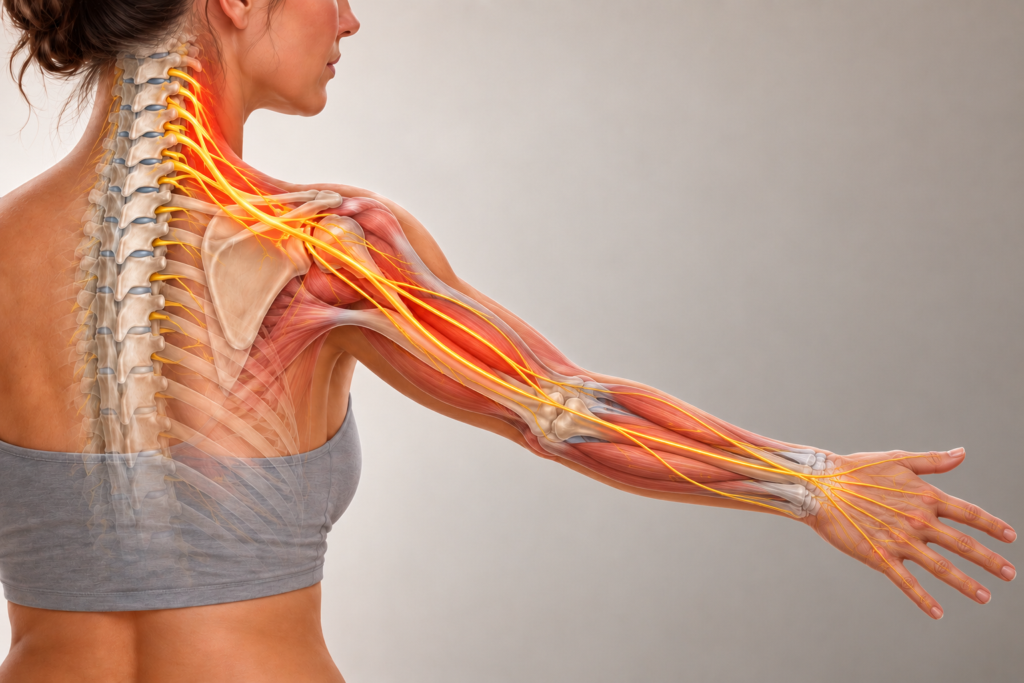
Is your neck pain radiating into your shoulder, arm, or hand? This commonly indicates cervical radiculopathy, which occurs when a nerve in your neck is pinched. Typically, this results from compression or irritation of a nerve root in the neck, often due to a bulging or herniated disc, or age-related bone spurs and narrowing. Symptoms may include sharp, burning, or electric pain down the arm; tingling or numbness in specific fingers; muscle weakness; and a stiff, sore neck. These signs often worsen when you look up or turn your head toward the affected side. Fortunately, most people improve with simple treatments within a few weeks or months.
In Traditional Chinese Medicine, cervical radiculopathy is considered a blockage of Qi and Blood in the neck and arm channels, called Bi syndrome. Activities like strain, poor posture, injury, cold exposure, or aging can obstruct the flow at the neck, allowing the blockage to descend along the channels into the arm. This aligns well with modern anatomy since each cervical nerve root connects to specific areas of the arm and fingers, with acupuncture channels following similar pathways. For instance, tingling in the thumb and index finger corresponds to the Large Intestine channel, while tingling in the middle finger relates to the Triple Burner and Pericardium channels, and tingling in the ring and little fingers follows the Small Intestine channel.
Here are nine acupressure points that relieve neck and shoulder tension and open arm channels carrying symptoms.
What Acupressure Points to Press and Why
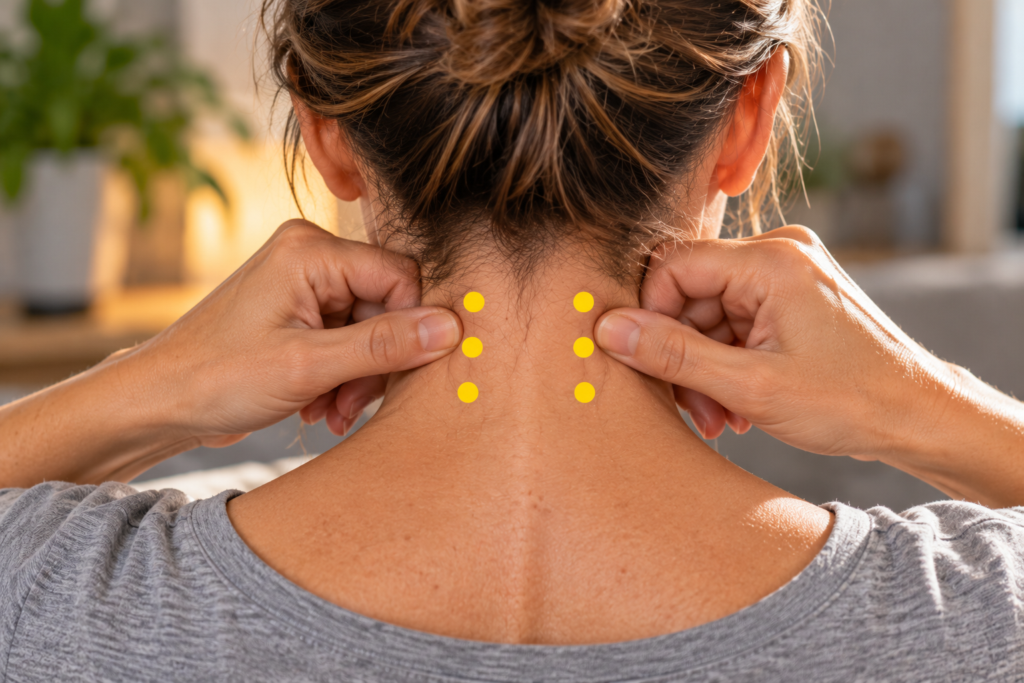
1. Press on the cervical Jiaji points along the back of the neck. The Jiaji points run along both sides of the spine, about half a thumb-width out from the bony bumps of the vertebrae. For cervical radiculopathy, the most important are in the lower half of the neck, from the middle of the neck down to the prominent bone at its base. Using your fingertips, press gently into the muscles on either side of the spine, working slowly downward, for one to two minutes, or have someone do it for you while you lie face down. Jiaji is an extra point group named for the ancient physician Hua Tuo.
Jiaji points are located near where nerve roots exit the spine, making them important targets for treating cervical radiculopathy. They are often stimulated in acupuncture for this condition. Gentle, consistent pressure on these points can help relax tense muscles that may be compressing nerves and improve blood flow to the inflamed area. Be careful not to press too hard and avoid pressing deeply on the spinal bones. If you feel sharp pain down your arm, stop right away.
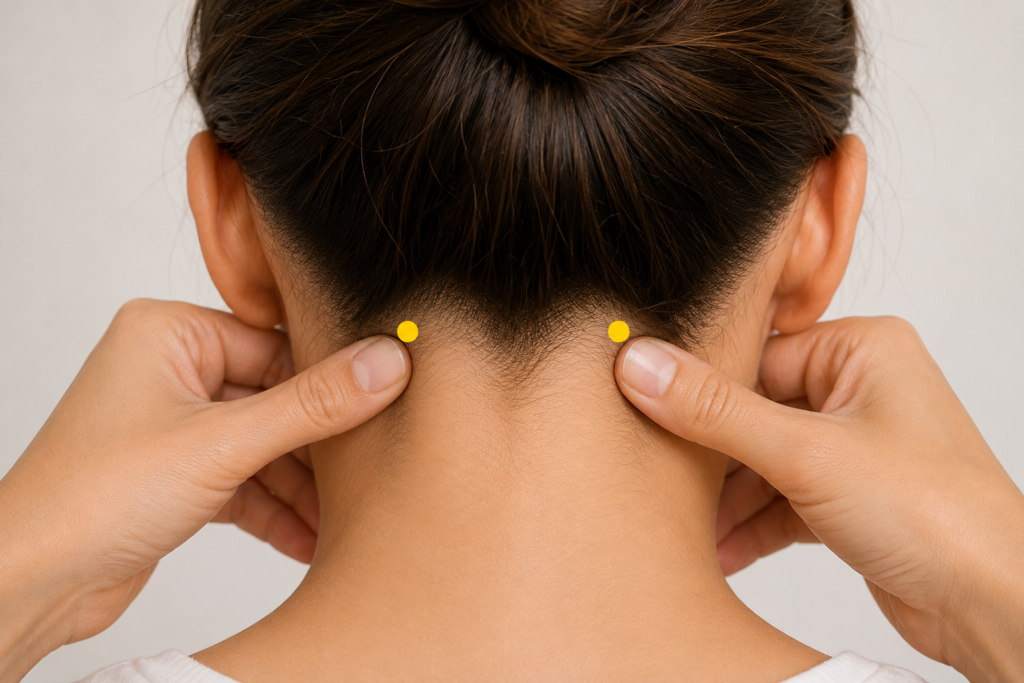
2. Press on GB20 at the base of the skull to release the upper neck. GB20 sits in the two hollows at the base of the skull, between the two large vertical neck muscles and the outer edge, roughly level with the tops of the ears. Tip your head back slightly and press up and inward with your thumbs for one to two minutes. GB20 is called “Fengchi,” the “Wind Pool.”
GB20 helps alleviate tension at the top of your neck, easing stiffness and headaches often caused by a pinched nerve. When the neck is stiff, the entire cervical spine compensates by working harder, so relaxing the upper neck allows the lower neck to move more easily. It’s one of the most effective points for a stiff or sore neck.
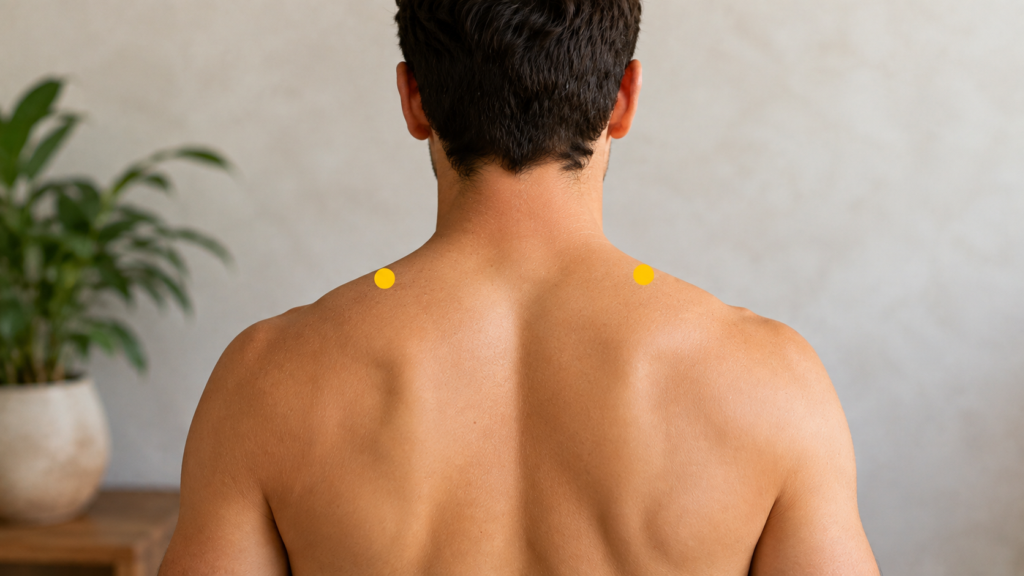
3. Press on GB21 on top of the shoulder to release the trapezius. GB21 sits at the highest point of the shoulder, midway between the base of the neck and the tip of the shoulder, on the ridge of the trapezius muscle. Press down firmly or squeeze the muscle for one to two minutes on each side. GB21 is called “Jianjing.” GB21 is avoided during pregnancy.
The trapezius is the thick muscle covering the top of your shoulders. When it contracts due to a pinched nerve, it can pull on your neck and increase pressure. Applying pressure to GB21 helps relax this muscle and relieves tension that extends from your neck into your shoulder. If you experience a knotted, aching shoulder along with your other symptoms, this point is particularly beneficial.
4. Press on SI11 in the center of the shoulder blade for referred pain. SI11 sits in the center of the shoulder blade, in a tender hollow in the middle of the flat, triangular bone. Lean against a wall with a tennis ball over the point, or have someone press it, for one to two minutes on the affected side. SI11 is called “Tianzong.”
Pain from a pinched nerve in the lower neck frequently radiates into the shoulder blade, resulting in a persistent, deep ache that may seem like a different problem. SI11 sits right where this discomfort typically occurs and is traditionally stimulated to ease pain that spreads through the shoulder blade and down the arm. The area is often very sensitive, and applying a tennis ball can provide significant relief.
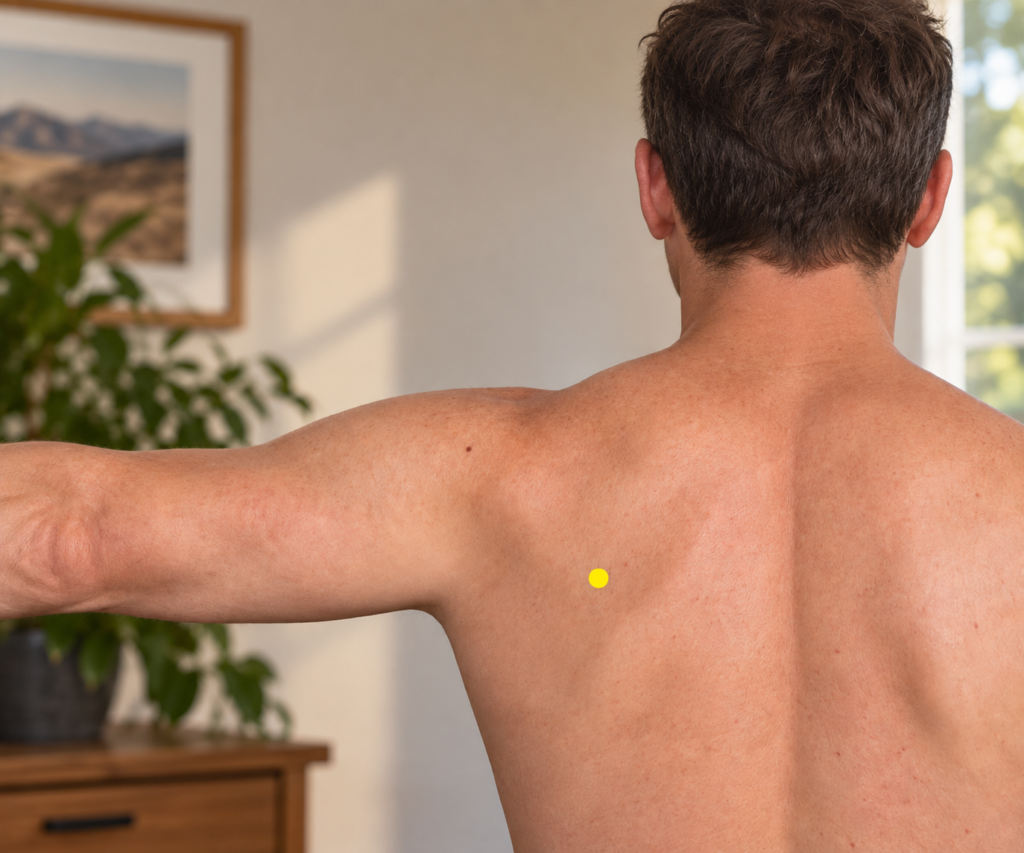
5. Press on LI15 at the front of the shoulder to open the path into the arm. LI15 sits at the front of the shoulder, in the hollow that forms at the outer edge of the shoulder when you raise your arm out to the side. Press firmly with your fingertips for one to two minutes on the affected side. LI15 is called “Jianyu.”
The shoulder acts as a conduit between the neck and the arm, with LI15 as the main point to open this channel. It helps alleviate shoulder pain, stiffness, and heaviness while encouraging the flow of Qi and Blood into the arm. If your pain is primarily at the shoulder before spreading down the arm, this point can assist in promoting energy movement.

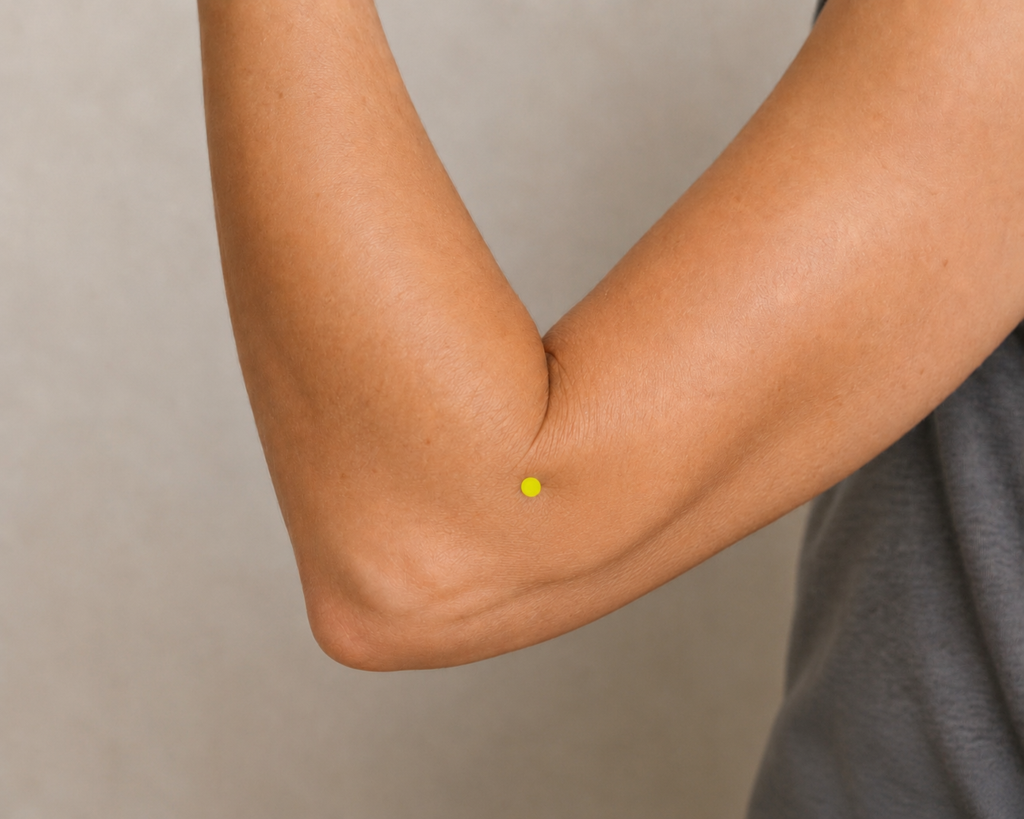
6. Press on LI11 at the elbow for arm pain and numbness. LI11 sits at the outer end of the elbow crease, in the hollow that forms when you bend your elbow. Press firmly with your thumb for one to two minutes on the affected arm. LI11 is called “Quchi,” the “Pool at the Crook.”
LI11 is a vital point for alleviating pain, numbness, and weakness anywhere along your arm. It promotes the flow of Qi and Blood from the elbow to the hand, helping to relieve burning nerve pain. This point is particularly beneficial if your symptoms are on the thumb side of your forearm and hand, corresponding with the Large Intestine channel.
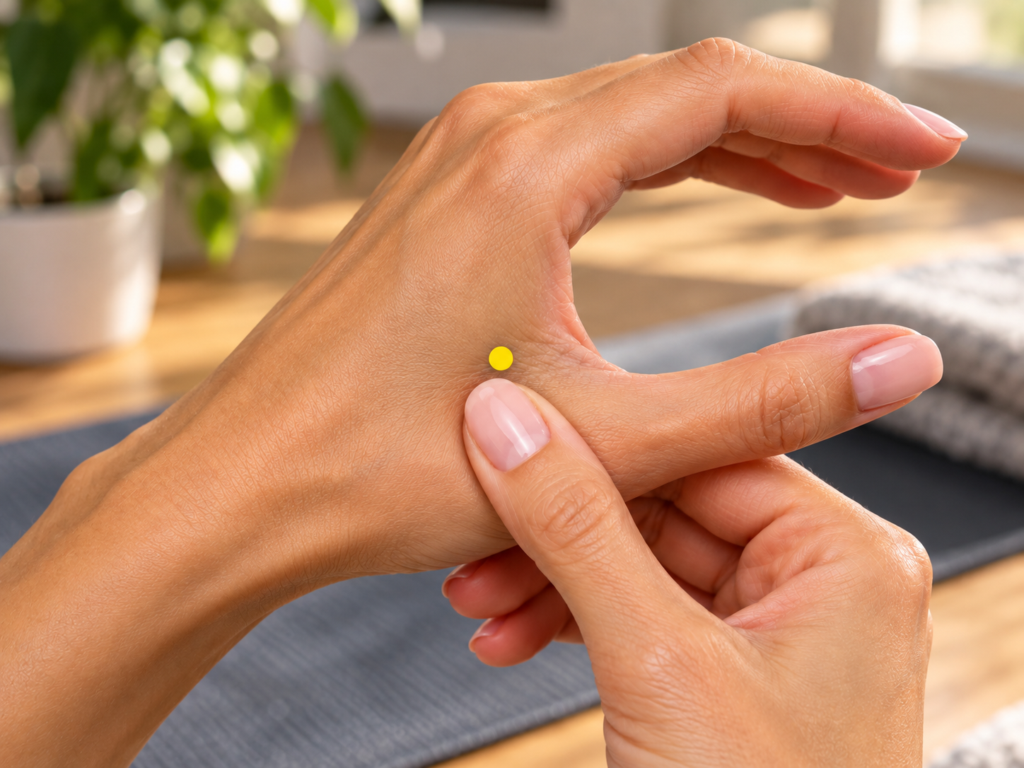
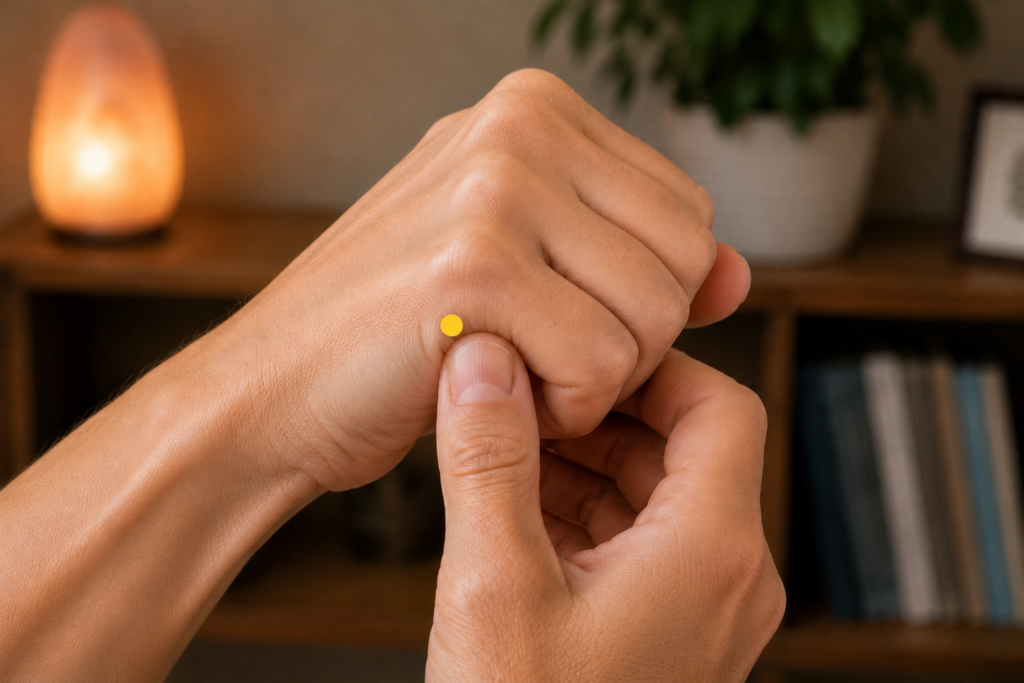
7. Press on LI4 in the hand between the thumb and index finger. LI4 sits in the webbing between the thumb and index finger, at the highest point of the muscle when you bring them together. Press firmly with the thumb of your other hand for one to two minutes on the affected hand. LI4 is called “Hegu.” LI4 is avoided during pregnancy.
If you experience tingling, numbness, or pain in your thumb and index finger, LI4 is the primary hand point to target. Located at the end of the same channel extending to LI15 near the shoulder, LI4 is highly effective for pain relief. It can also alleviate arm pain that spreads to other areas.
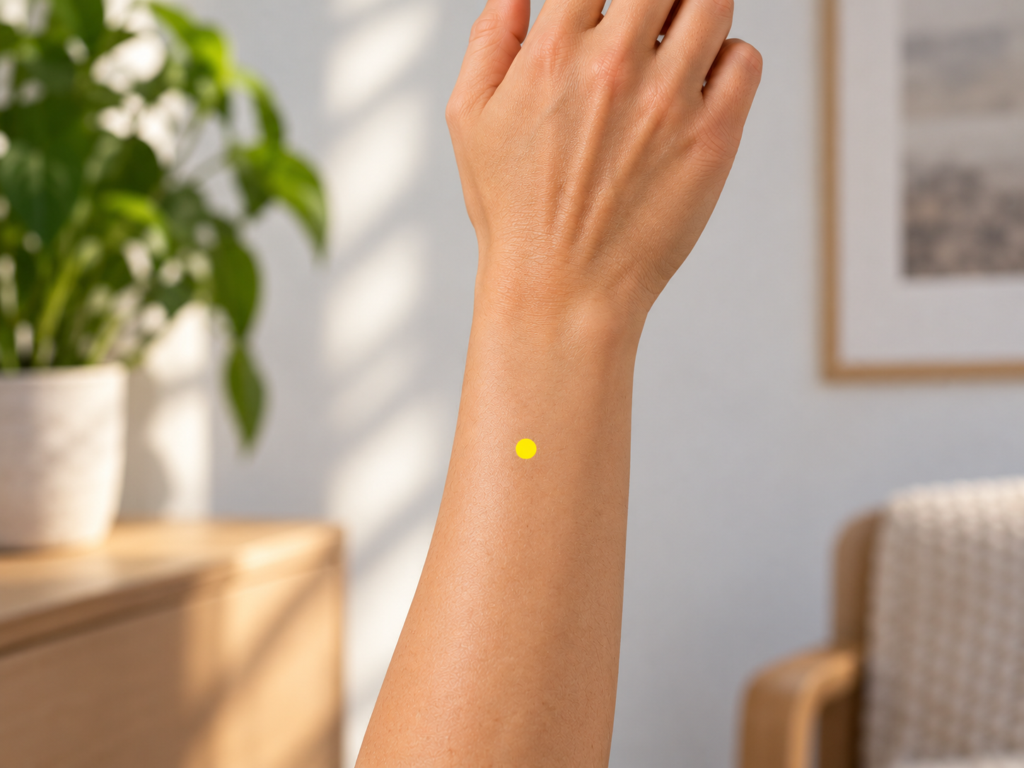
8. Press on SJ5 on the back of the forearm for the middle finger. SJ5 sits on the back of the forearm, about three finger-widths above the wrist crease, in the hollow between the two forearm bones. Press firmly with your thumb for one to two minutes on the affected arm. SJ5 is called “Waiguan,” the “Outer Pass.”
If your symptoms are centered on the middle finger and the back of the forearm, SJ5 targets that channel. It promotes the flow of Qi and Blood through the forearm, alleviates pain and numbness, and can lessen the pins-and-needles sensation. Additionally, SJ5 is effective for overall arm symptoms that aren’t limited to a single finger.
9. Press on SI3 on the side of the hand for the ring and little fingers and the neck. SI3 sits on the outer edge of the hand, on the little finger side, in the crease that forms just below the knuckle of the little finger when you make a loose fist. Press firmly with your thumb for one to two minutes on the affected hand. SI3 is called “Houxi,” the “Back Stream.”
SI3 serves two primary functions. It alleviates tingling and numbness in the ring and little fingers, following the Small Intestine channel, and is also traditionally used for stiff necks by opening the spine’s channel. This makes SI3 beneficial for cervical radiculopathy regardless of the affected fingers, and it’s a useful point to press while gently turning your head within a comfortable range.
Why These Acupressure Points Work
In Traditional Chinese Medicine, cervical radiculopathy is understood as a blockage of Qi and Blood in the neck that extends down the channels into the arm. The nine points above are designed to target both the neck and the arm.
- The neck and shoulder points, including the cervical Jiaji points, GB20, GB21, SI11, and LI15, relieve tension around the compressed nerve root and open the gateway to the arm.
- The arm and hand points (LI11, LI4, SJ5, SI3) target the specific channels that transmit your symptoms and correspond to the affected fingers.
Multiple small clinical studies indicate that acupuncture can alleviate pain and enhance functionality in individuals with cervical radiculopathy. The acupuncture points near the spine are particularly significant in treatment.
How to Properly Use These Acupressure Points
Start at the neck and trace your symptoms down the arm.
- Start with the cervical Jiaji points, GB20 and GB21, then proceed to SI11 and LI15 to relieve tension in the neck, shoulders, and shoulder blades.
- Select the arm points corresponding to your fingers: LI11 and LI4 for the thumb and index finger, SJ5 for the middle finger, and SI3 for the ring and little fingers. If unsure, use all four points.
- Apply gentle pressure on the neck and firm pressure on the arm and hand points. Avoid deep pressure on the front or sides of the neck; don’t press hard on the spine bones, and never press in a way that causes shooting pain down the arm. The goal is relief, not to reproduce symptoms.
- Begin by warming the neck and shoulders with a heat pack or a warm shower before working on the points. This helps relax the tissues and improves circulation.
- Hold each point for one to two minutes, and perform the routine once or twice daily.
Your daily habits are as vital as following these guidelines. Keep screens at eye level and avoid prolonged looking down at your phone or laptop. Sit back in your chair instead of thrusting your head forward. Use a pillow to keep your neck in a neutral position, and avoid sleeping on your stomach. Some find relief by resting their arm on top of their head, which can alleviate nerve tension. Refrain from heavy overhead lifting during symptoms, and never attempt to crack or force your neck. A physical therapist can teach you gentle exercises, like chin tucks, to decompress the nerve and prevent symptoms from recurring.
When to Get Professional Help
See a doctor to verify your diagnosis if you experience pain, tingling, or numbness extending from your neck into your arm. Medical imaging and physical examinations can identify the precise cause. If you notice increasing weakness, difficulty gripping, dropping items, symptoms in both arms, hand clumsiness, trouble with fine motor tasks like buttoning, unsteadiness when walking, or changes in bladder or bowel control, seek urgent medical care. These signs may indicate spinal cord compression. Also, seek prompt treatment if your symptoms followed a fall or accident, or if you have neck pain with fever, unexplained weight loss, a cancer history, or severe pain that doesn’t improve with rest. If you have left arm pain with chest pain, pressure, shortness of breath, sweating, or nausea, go to emergency services, as heart problems could be involved.
Acupressure can serve as a safe and supportive complement to your medical treatment for cervical radiculopathy.
Above and Beyond Acupuncture offers acupuncture, cupping, and lifestyle coaching at the North Frank Lloyd Wright Boulevard location in Scottsdale.
Schedule an appointment online to start your healing journey.
The points above are only as effective as the technique used to apply them. Where to press, how firmly, and for how long all affect the result. For a full breakdown of how to perform acupressure properly at home, read Performing Acupressure in 3 Easy Steps.
To grasp the overall picture of pinched nerves across the body, understanding nerve impingement clarifies how Western diagnosis complements Traditional Chinese Medicine.

About the Publisher
Paul Kerzner, L.Ac., is a licensed acupuncturist and board-certified herbalist, as well as the founder of Above and Beyond Acupuncture in Scottsdale. His own journey from chronic patient to practicing acupuncturist shapes his commitment to providing honest, clinically grounded information about acupuncture and Traditional Chinese Medicine. Learn more about Paul and his clinical approach on the About Us page.