
Key Takeaways
- A dry cough is a tickling irritation in the throat or airways that does not produce phlegm. It often persists for several weeks after a cold or the flu.
- Common causes include allergies, asthma, postnasal drip, acid reflux, smoke and other irritants, and certain blood pressure medications.
- In Traditional Chinese Medicine, the Lung thrives on moisture and is easily injured by dryness, so a dry cough indicates Dryness, lingering Heat, or a deficiency of Lung Yin, the cooling, moistening aspect of the Lung.
- Nine acupressure points on the wrists, hands, arms, chest, upper back, and ankles may help soothe throat dryness, ease irritation, relieve coughing, and restore moisture to the lungs.
- For a dry cough, acupressure works best alongside fluids and a humidifier. Seek medical care if your cough lasts more than three weeks, you cough up blood, or you experience wheezing or trouble breathing.

Some coughs are productive. Wet coughs help clear mucus from the chest, bringing something up each time. Dry coughs, on the other hand, don’t produce anything. They often begin as a tickle in the throat or behind the breastbone, leading to coughing fits that leave the throat sore, only for the tickle to return. Things like talking, laughing, cold air, or lying down at night can trigger it again.
According to Cleveland Clinic, a dry cough is a tickling irritation in the airways or throat that doesn’t produce phlegm or mucus. It can linger for weeks as you recover from a cold or the flu. Other causes include allergies, asthma, bronchitis, postnasal drip, acid reflux, smoking, exposure to chemicals or other irritants, and side effects from certain blood pressure medications. Fluids, warm tea or water with honey and lemon, cough drops, and a cool-mist humidifier or steamy shower can help soothe irritated airways.
Dry air makes almost any dry cough worse. Indoor heating in winter, air conditioning, long flights, and sleeping with your mouth open can all dry out the throat. The cough itself, of course, adds to the problem: each episode irritates the lining a little more, making the next episode easier to trigger. Breaking that cycle is often the first step toward quiet nights again.
Traditional Chinese Medicine calls the Lung the “delicate organ” because it is most exposed to outside air. It thrives on moisture and is easily harmed by dryness. A dry cough after a cold often reflects Heat or Dryness that remains in the Lung after the illness has passed. A cough that lasts for months, worsens in the evening, and comes with a dry throat or hoarse voice usually points to a lack of Lung Yin, the Lung’s cooling and moistening aspect. The Kidney supplies Yin to the whole body, so the Lung’s lasting moisture also depends on it.
The following nine points moisturize the throat, soothe irritation, alleviate coughing, and help restore moisture to the lungs.
What Acupressure Points to Press and Why
1. Press on LU7 above the wrist to moisten the throat. LU7 sits on the thumb side of the forearm, about two finger-widths above the wrist crease. To find it, interlace the thumbs and index fingers of both hands, and the tip of the top index finger will rest in a small groove on the edge of the forearm, just above the bony bump of the wrist. Press gently with your fingertip for one to two minutes on each arm. LU7 is called “Lieque,” the “Broken Sequence.”
LU7 is the Lung channel’s connecting point and one of the most important Traditional Chinese Medicine points for cough. It helps the Lung Qi descend, which can ease the urge to cough, and is classically paired with KI6 for a dry, sore throat.

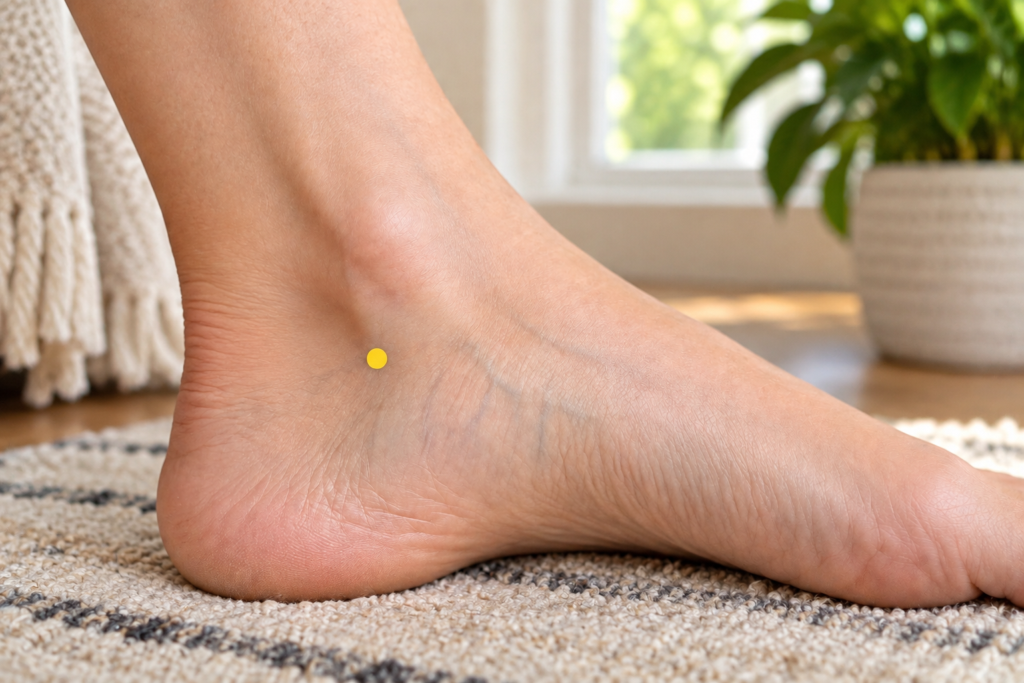
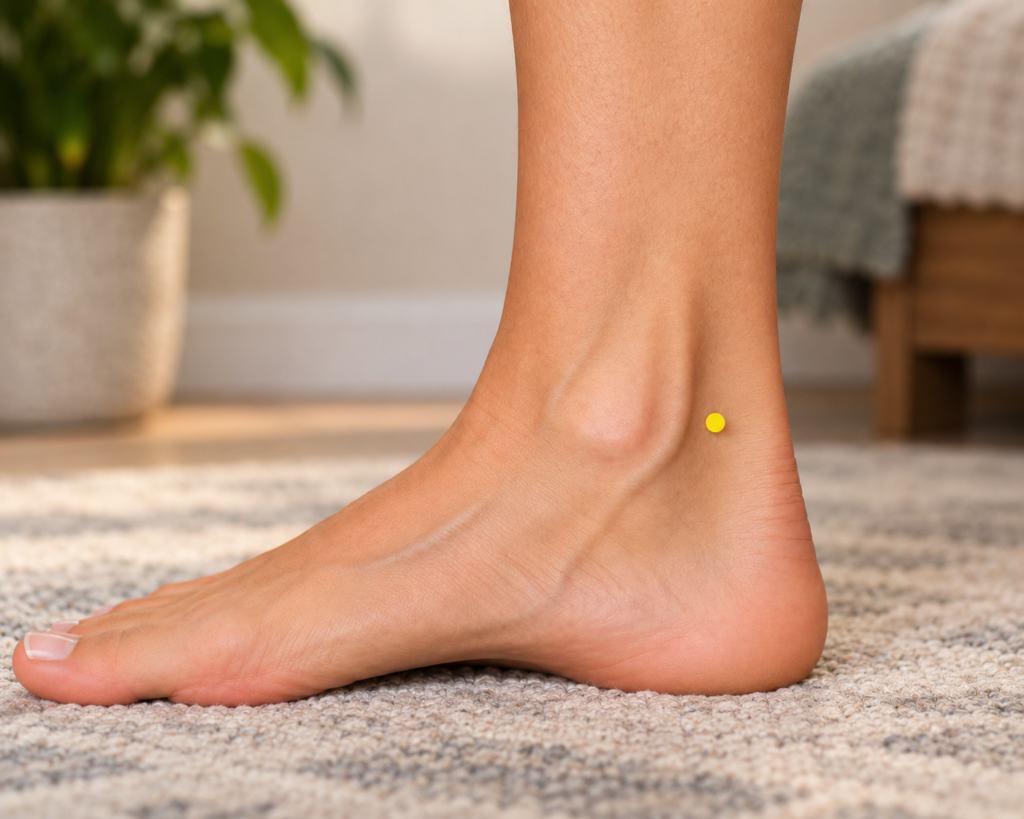
2. Press on KI6 below the inner ankle to bring moisture to the throat. KI6 sits on the inside of the ankle, in the small hollow directly below the tip of the inner ankle bone. Press gently with your thumb for one to two minutes on each ankle. KI6 is called “Zhaohai,” the “Shining Sea.”
KI6 nourishes Kidney Yin and sends moisture up to the throat. Together with LU7, it opens a channel pathway to the throat and chest. That’s why the two points are traditionally pressed together to relieve a dry, tickly throat and a cough that worsens at night.
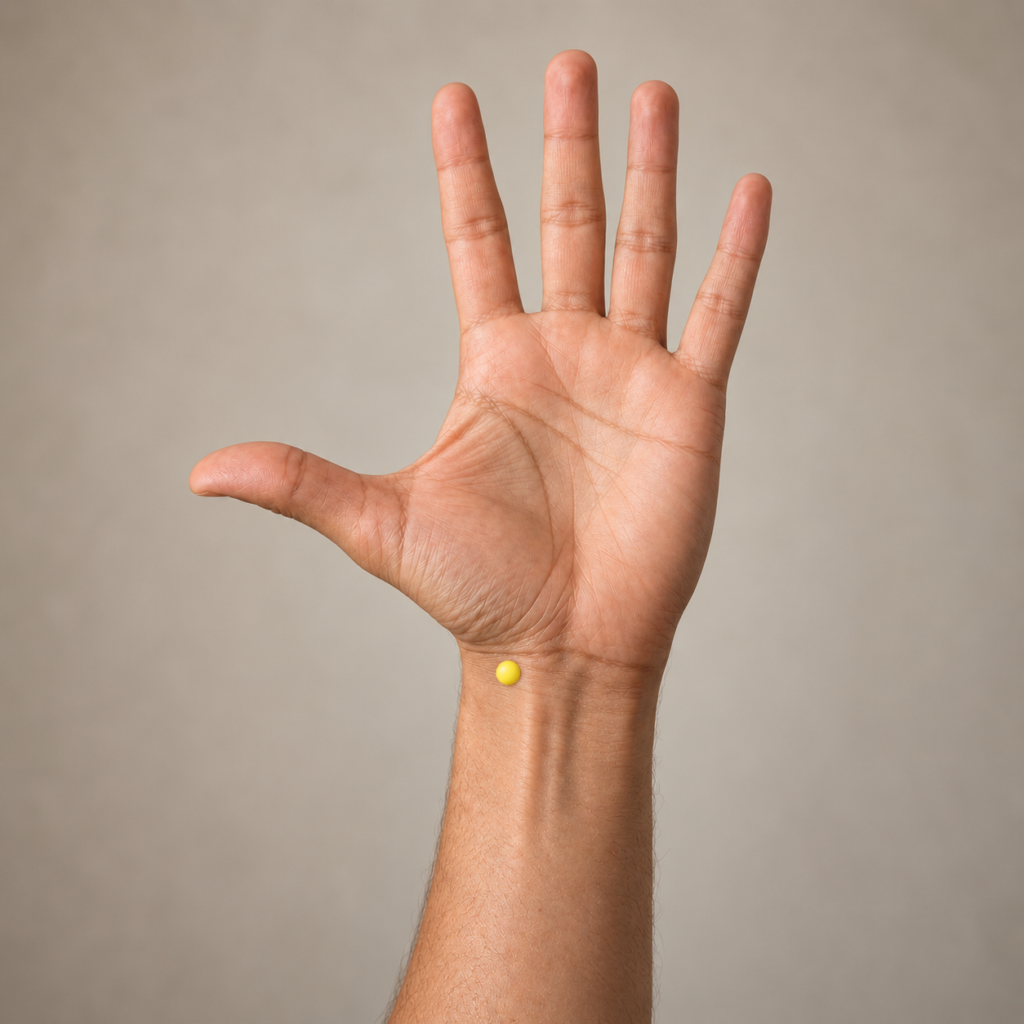
3. Press on LU9 at the wrist crease to restore the Lung’s moisture. LU9 sits on the inner wrist crease, on the thumb side, in the hollow just beside the pulse. Press gently with the thumb of your other hand for one to two minutes on each wrist. LU9 is called “Taiyuan,” the “Great Abyss.”
LU9 is the Lung’s source point, making it one of the most important points for strengthening the Lung and nourishing its Yin. It is the point of choice for a dry cough that has persisted for weeks or months and left the voice weak and the breath short.
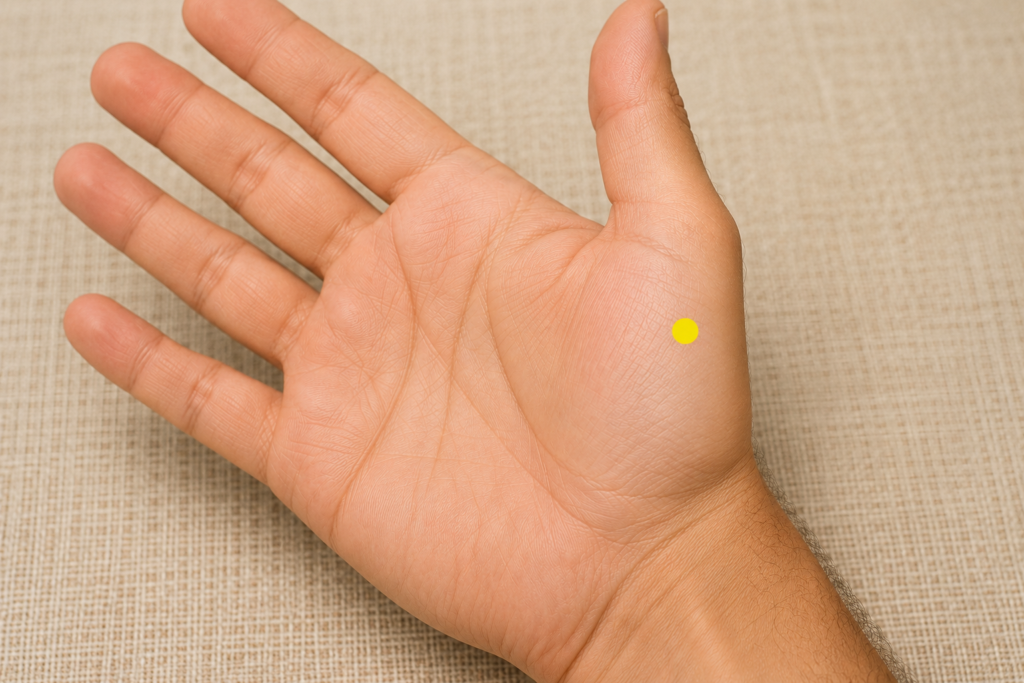
4. Press on LU10 on the pad of the thumb to soothe a dry, scratchy throat. LU10 sits on the palm side of the hand, at the midpoint of the bone that runs from the wrist to the base of the thumb, where the pale skin of the palm meets the darker skin of the back of the hand. Press firmly with the thumb of your other hand for one to two minutes on each hand. LU10 is called “Yuji,” the “Fish Border.”
LU10 clears Heat from the Lung and benefits the throat. It is traditionally used for a dry, scratchy, or hoarse throat, as well as the harsh, hacking cough that often follows a cold.
5. Press on LU5 at the inner elbow to settle the cough. LU5 sits on the inner elbow crease, on the thumb side of the large tendon that stands out when you bend the elbow slightly. Press firmly with the thumb of your other hand for one to two minutes on each arm. LU5 is called “Chize,” the “Cubit Marsh.”
LU5 is the Lung channel’s water point. It clears residual Heat in the Lung and helps Qi descend. It is useful for a dry cough that is hot, harsh, and irritating.

6. Press on CV22 at the base of the throat to calm the tickle. CV22 sits in the small hollow at the base of the throat, just above the top of the breastbone. Rest your fingertip in the hollow and press gently downward, toward the top of the breastbone rather than straight into the throat, for about one minute. CV22 is called “Tiantu,” the “Heaven’s Chimney.”
CV22 is one of the most important local points for cough and throat irritation. Gentle pressure on this point will quiet the tickle that starts each spell, and it can be used at any time when the urge to cough is building.

7. Press on LU1 below the collarbone to open the chest. To find LU1, locate the hollow just below the outer end of the collarbone, then move about one thumb-width straight down. Press gently with your fingertips for one to two minutes on each side while breathing slowly. LU1 is called “Zhongfu,” the “Central Treasury.”
LU1 is the front collecting point of the Lung, the point where Lung Qi gathers in the chest. It’s very effective for easing cough and chest tightness and for settling the breath after a prolonged cough.

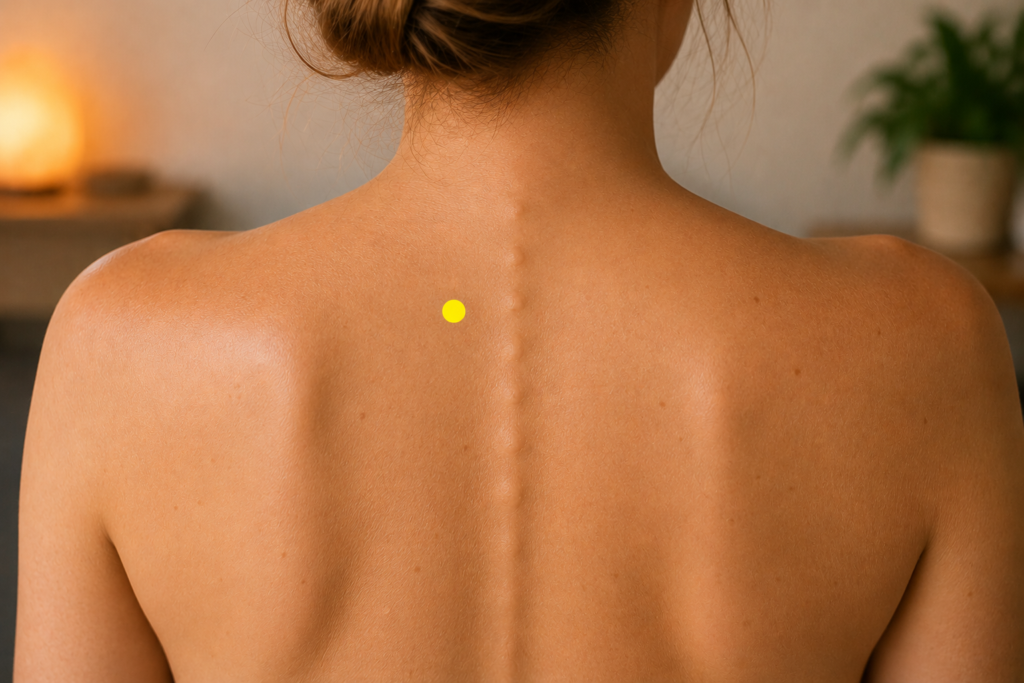
8. Press on BL13 on the upper back to strengthen the Lung. BL13 sits on the upper back, about two finger-widths to each side of the spine, at the level just below the third bump of the spine counting down from the large bump at the base of the neck. To reach it on your own, place a tennis ball between your upper back and a wall, beside the spine near the top of the shoulder blades, and lean into it gently for one to two minutes on each side. BL13 is called “Feishu,” the “Lung Transport.”
BL13 is the Lung’s back transport point, where Lung Qi reaches the surface of the back. It’s used for many types of coughs and is especially helpful for a cough that lingers after an illness.
9. Press on KI3 beside the inner ankle to nourish the body’s moisture at the root. KI3 sits on the inside of the ankle, in the hollow between the inner ankle bone and the Achilles tendon. Press gently with your thumb for one to two minutes on each ankle. KI3 is called “Taixi,” the “Great Stream.”
KI3 is the source point of the Kidney and supplies Yin to all the organs. For a persistent dry cough, KI3 can help restore the moisture the Lung draws on, particularly when the cough is accompanied by a dry mouth at night, fatigue, and a feeling of heat in the evening.
Why These Acupressure Points Work

In Traditional Chinese Medicine, a dry cough suggests that the Lung has lost moisture and Lung Qi is no longer descending properly. Lingering Heat or Dryness irritates the throat, causing the tickle to return and trigger another cough. Treatment aims to calm the cough in the moment, clear any residual Heat, and restore moisture to both the Lung and the Kidney so the tickle doesn’t come back.
The nine points work together to calm the cough and restore the Lung’s moisture:
- The moistening pair (LU7, KI6) sends moisture to the throat and settles a cough that worsens at night.
- The Lung clearing points (LU10, LU5) clear lingering Heat and soothe a scratchy, harsh throat.
- The local chest and throat points (CV22, LU1) calm the tickle and ease tightness in the chest.
- The root points (LU9, BL13, KI3) strengthen the Lung and restore its Yin so the cough does not linger.
How to Properly Use These Acupressure Points

Acupressure for a dry cough is most effective when used both as an immediate response to a coughing episode and as part of a daily routine.
- When the tickling sensation begins, gently press CV22 while breathing slowly through the nose, then press LU7 and KI6 on one side.
- Work through all nine points once or twice daily, holding each for one to two minutes. Do one session in the evening before bed.
- Apply gentle pressure to the throat, chest, wrist crease, and ankles, and firmer pressure to the thumb pad, inner elbow, and upper back.
- Continue daily for one to two weeks, as a cough that persists after a cold typically resolves gradually.
Daily habits can help the throat heal between episodes. Sip warm water or tea throughout the day. Adding a little honey and lemon may soothe an irritated throat, but do not give honey to children under one year old. Run a cool-mist humidifier in the bedroom, breathe through your nose, and avoid smoke, strong fragrances, and cold, dry air. If reflux triggers the cough, avoid lying down for a few hours after a large meal. Traditional Chinese Medicine recommends moistening foods such as poached pears, soups with white fungus or lily bulb, almonds, and sesame. It also advises limiting spicy, fried, and very salty foods, as well as alcohol, which can all dry the Lung.
Find out more about how much water you should be drinking each day.
When to Get Professional Help

See a doctor if a dry cough lasts more than 3 weeks, especially if the cause is unclear. Seek prompt medical attention for coughing up blood, difficulty breathing, wheezing, fever and chills, extreme fatigue, or unexplained weight loss. Call 911 for sudden chest pain or severe difficulty breathing. Children who have coughing fits followed by a whoop and/or vomiting should be seen by a doctor. Babies with any persistent cough should also be seen by a doctor. If your cough began after you started a new blood pressure medication, discuss it with your prescribing provider, and do not stop taking the medication on your own.
Acupressure is a gentle, supportive practice for dry cough. It complements, and does not replace, diagnosis and medical care.
For related health concerns, acupressure for a cough, acupressure for a sore throat, and acupressure for postnasal drip are companion pieces.
Above and Beyond Acupuncture offers acupuncture, cupping, and lifestyle coaching at the North Frank Lloyd Wright Boulevard location in Scottsdale.
Schedule an appointment online to start your healing journey.
The points above are only as effective as the technique used to apply them. Where to press, how firmly, and for how long all affect the result. For a full breakdown of how to perform acupressure properly at home, read Performing Acupressure in 3 Easy Steps.

About the Publisher
Paul Kerzner, L.Ac., is a licensed acupuncturist and board-certified herbalist, as well as the founder of Above and Beyond Acupuncture in Scottsdale. His own journey from chronic patient to practicing acupuncturist shapes his commitment to providing honest, clinically grounded information about acupuncture and Traditional Chinese Medicine. Learn more about Paul and his clinical approach on the About Us page.