Key Takeaways
- Dry mouth, also known as xerostomia, can result from multiple causes such as medication, dehydration, and anxiety.
- Acupressure provides relief by pressing specific points to boost saliva flow and nourish body fluids.
- Important acupressure points are CV24 and CV23, which induce immediate salivation, and KI6 and SP6, which help nourish Yin and fluids.
- Consistent use of these points, combined with lifestyle habits such as staying hydrated and maintaining good dental hygiene, can greatly alleviate dry mouth.
- Persistent dry mouth might necessitate seeking medical advice to identify and treat any underlying health conditions causing dryness.

The sticky feeling, trouble swallowing dry food, difficulty speaking for long periods, constant need for water, and sleep disruptions can quietly wear you down. Dry mouth, or xerostomia, happens when your mouth doesn’t produce enough saliva. It is very common, often a side effect of medication, but it can also result from dehydration, anxiety, aging, or certain health conditions. Acupressure may help by targeting points that stimulate the salivary glands and support the body’s fluids to ease dryness. Think of it as a comfort measure worth trying.
In Traditional Chinese Medicine, dry mouth is seen as a lack of body fluids, often linked to low Yin, which is the cooling and moistening part that keeps the body lubricated. When Yin and fluids are low because of age, illness, medication, heat, or general depletion, the mouth can become dry, sometimes with a feeling of heat that makes it worse. Fluids should rise and moisten the mouth, but if the Stomach and Spleen are not working well, or if heat dries up the fluids, dryness happens. The points below help in two ways: some are near the salivary glands and mouth to boost saliva directly, while others support Yin and fluids and help clear heat, tackling dryness both at the surface and at its source.
Here are nine acupressure points to help relieve dry mouth.
What Acupressure Points to Press and Why
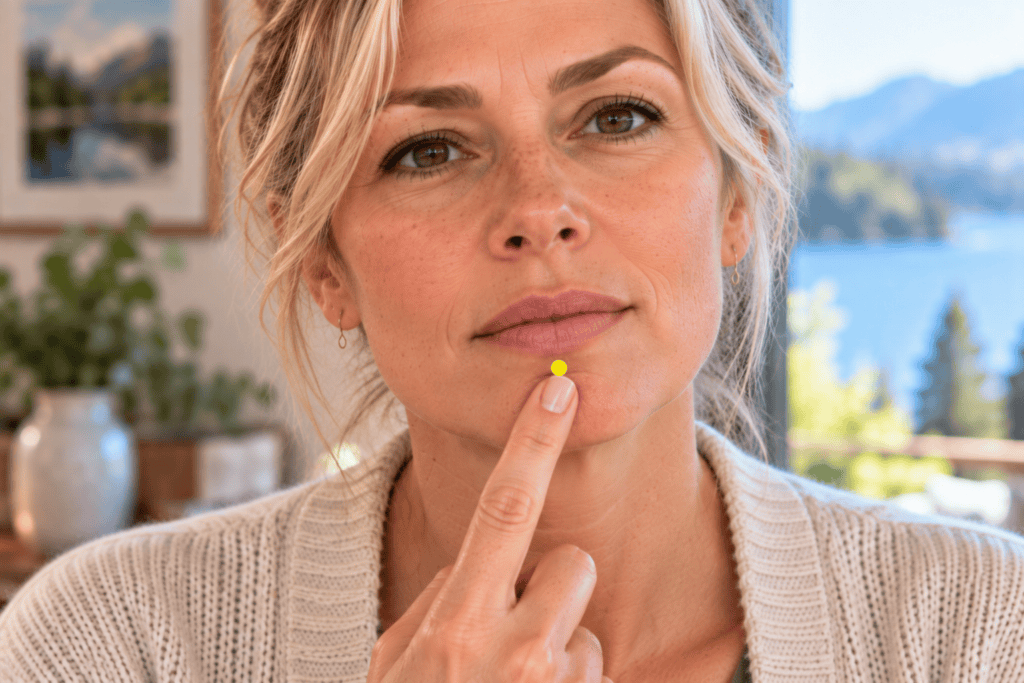
1. Press on CV24 below the lower lip to stimulate saliva. CV24 sits in the hollow at the center of the chin, just below the lower lip, in the small indentation. Press gently with your fingertip for one to two minutes. CV24 is called “Chengjiang,” a classic point for the mouth and for promoting salivation.
CV24 is situated at the mouth’s entrance and is a traditional point used to stimulate saliva and alleviate dry mouth. Its name and history relate to collecting fluids in the mouth, and pressing it encourages saliva secretion to address dryness directly. As a local mouth point, it is an excellent first option for dryness. For immediate relief from dry mouth, this point can help restore some moisture and works effectively with other nearby mouth and salivary gland points.
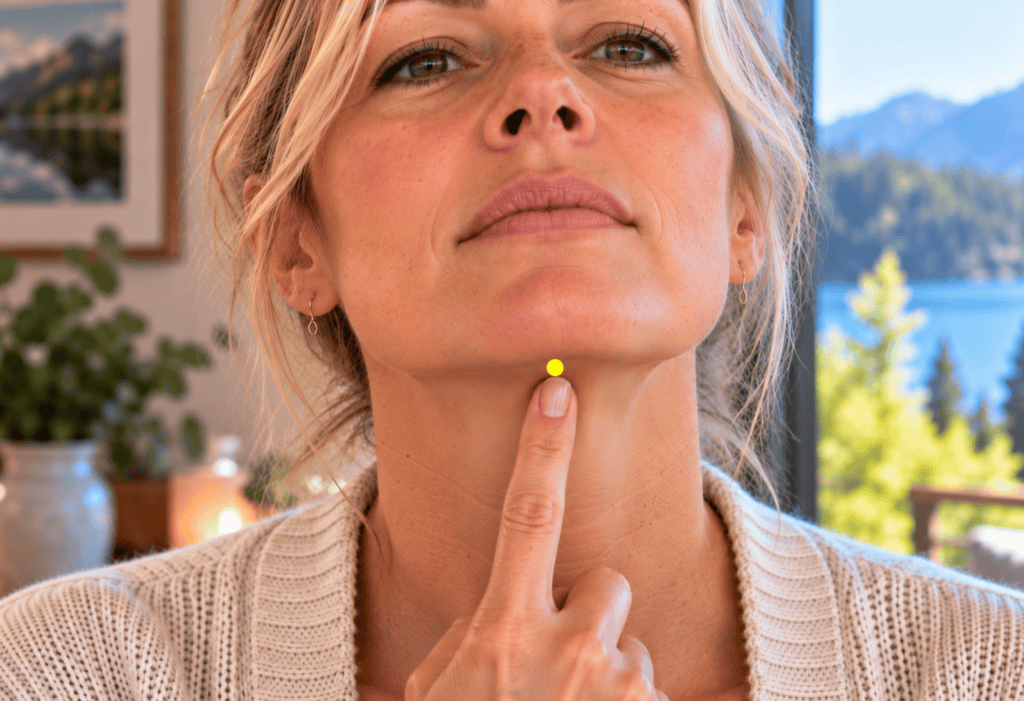
2. Press on CV23 under the chin for the tongue and salivation. CV23 sits under the chin, on the midline, in the soft area above the top of the voice box, between the chin and the throat. Press gently upward with your fingertip for about a minute. CV23 is called “Lianquan,” and it is the classic point for the tongue and for promoting salivation.
CV23 is crucial for tongue function and oral fluid production, making it particularly beneficial for dry mouth. It stimulates saliva and moistens a dry tongue and mouth by affecting the area beneath the mouth where fluids accumulate. Since it is located over a soft part of the throat, apply gentle, upward pressure. For a dry, sticky tongue and parched sensation, this point promotes saliva production directly and works effectively with CV24 to stimulate the mouth from both below and in front.
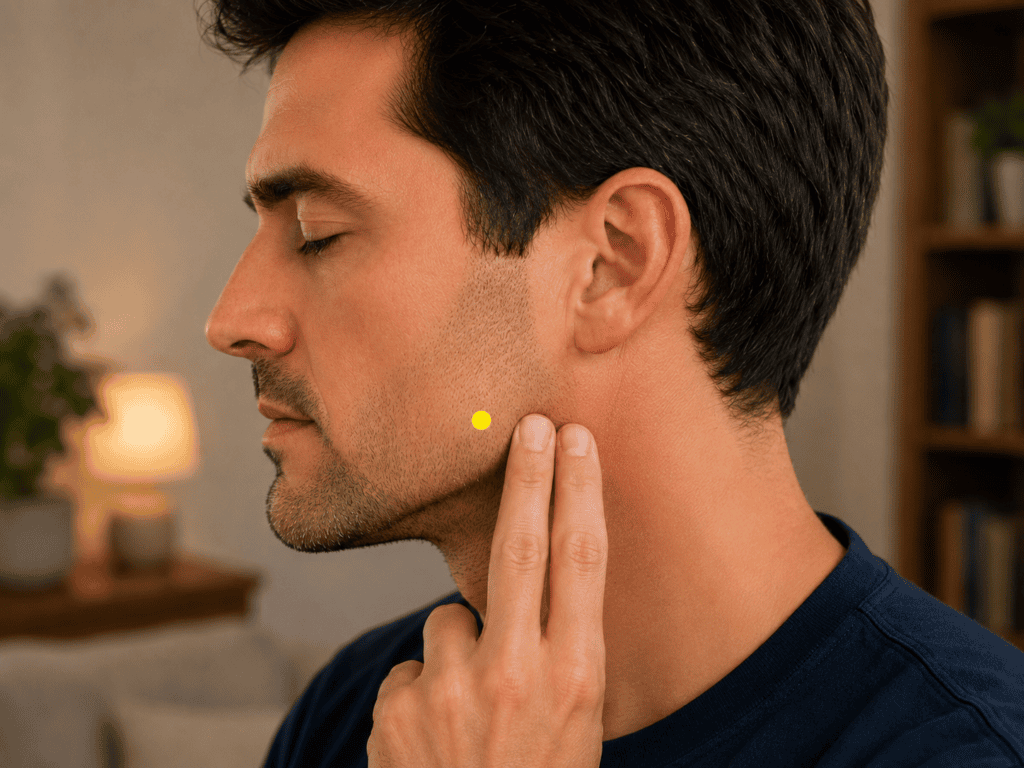
3. Press on ST6 on the cheek over the salivary gland. ST6 sits on the cheek, on the bulge of the muscle you feel when you clench your teeth, about a finger-width up and forward from the angle of the jaw. Press firmly with your fingertip for one to two minutes on both sides. ST6 is called “Jiache,” and it sits over the cheek and the salivary glands.
ST6 is situated above the masseter muscle near the cheek’s salivary glands, making it an effective point for stimulating saliva production. Applying gentle pressure and massage to this area encourages the glands to produce more saliva, alleviating dryness at its source. It is one of the most accessible points for targeting the salivary glands directly. For dry mouth relief, massaging this cheek point along with the mouth points can promote saliva release, and you can easily treat both sides simultaneously.
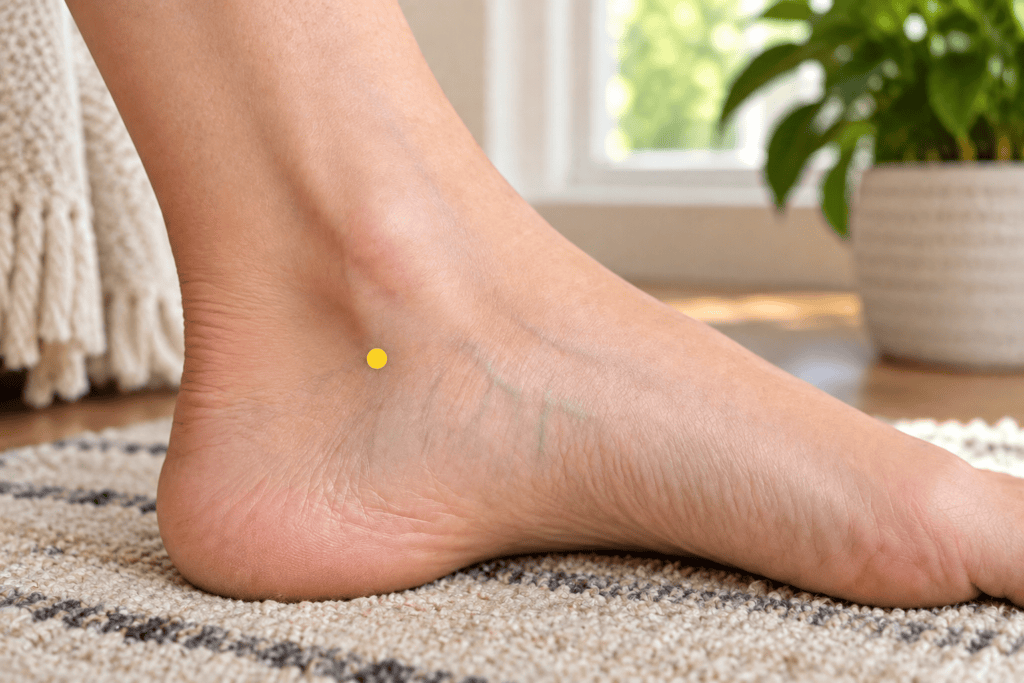
4. Press on KI6 below the inner ankle to nourish the fluids. KI6 sits in the hollow just below the tip of the inner ankle bone. Press firmly with your thumb for one to two minutes on each ankle. KI6 is called “Zhaohai,” and it nourishes the Yin and is classically used for dryness of the mouth and throat.
KI6 is an excellent distal point for dry mouth as it supports Kidney Yin and body fluids. It is traditionally used to remedy dry mouth and throat. Its function addresses dryness at its root by replenishing moistening Yin and clearing heat that depletes fluids. For dry mouth associated with general dryness, depletion, or low Yin, this point helps tackle the underlying fluid deficiency and should be used alongside local mouth points.
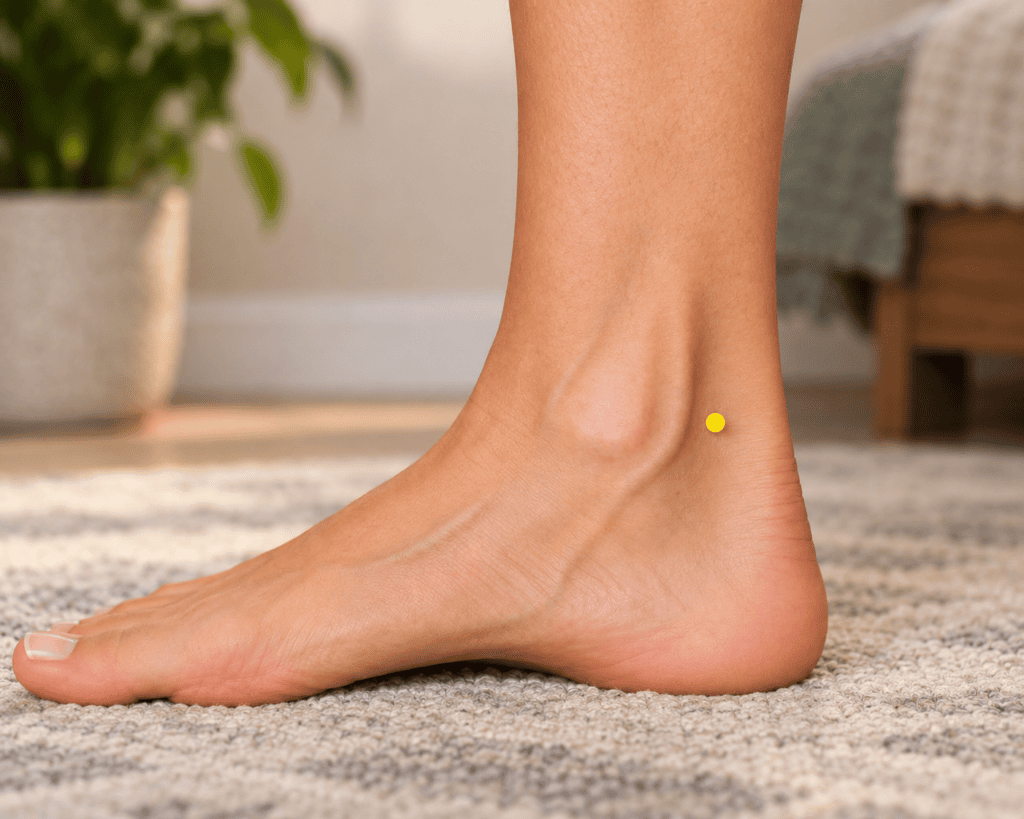
5. Press on KI3 above the inner ankle to nourish the Yin at the root. KI3 sits in the hollow between the inner ankle bone and the Achilles tendon, level with the tip of the ankle bone. Press firmly with your thumb for one to two minutes on each ankle. KI3 is called “Taixi,” the Kidney’s source point.
Dry mouth often results from a significant deficiency of Yin and fluids. KI3, the primary point for the Kidney, helps restore this moistening foundation by nourishing Kidney Yin, which is often diminished in chronic dryness. It also supports the body’s reserves. For dry mouth due to aging, depletion, or a naturally dry constitution, this point addresses the root cause and is effective when combined with KI6 to nourish and hydrate the Kidney.
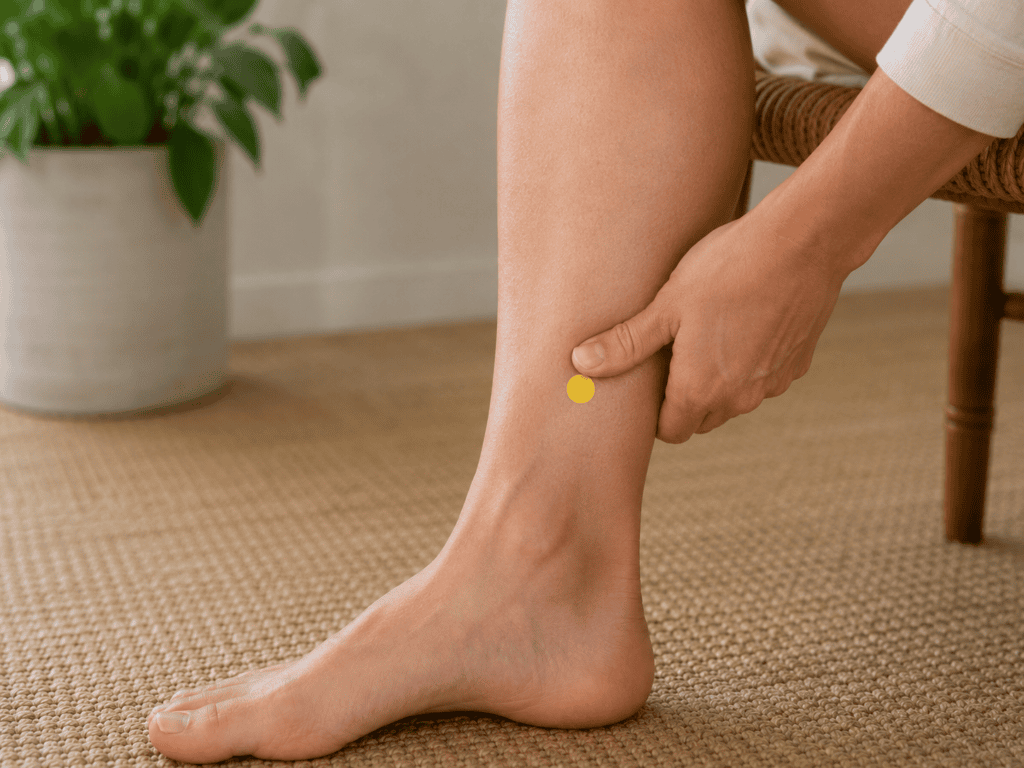
6. Press on SP6 above the inner ankle to nourish the fluids and Blood. SP6 sits four finger-widths up from the tip of the inner ankle bone, just behind the back edge of the shinbone. Press firmly for one to two minutes on each leg. SP6 is called “Sanyinjiao,” the “Three Yin Intersection,” where the Spleen, Liver, and Kidney channels meet. SP6 is avoided during pregnancy.
SP6 is a highly nourishing point connecting the three Yin channels. It supports Yin, Blood, and fluids, which can alleviate dry mouth caused by deficiencies in these areas. Additionally, SP6 promotes the Spleen’s role in producing and distributing fluids to keep the body moist, addressing dryness from a fluid-generating perspective. For dry mouth linked to general dryness or depletion, this point helps restore fluids and works effectively with Kidney points to support overall body moisture. However, avoid stimulating this point during pregnancy.
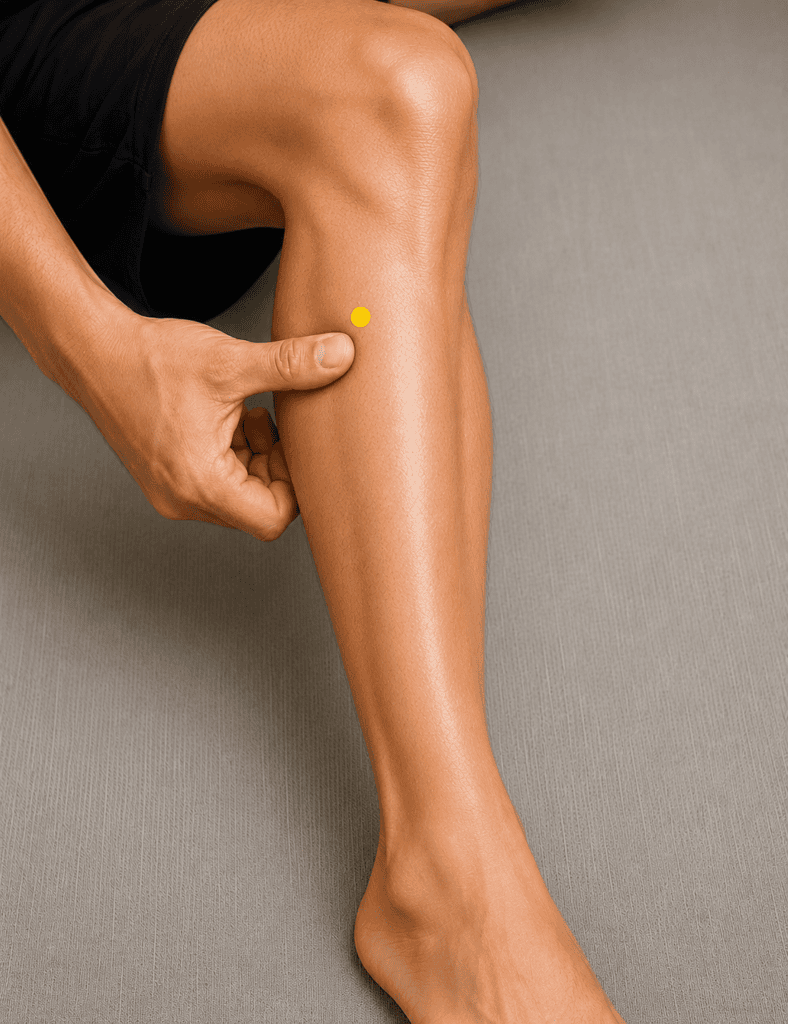
7. Press on ST36 below the knee to support the fluids of the Stomach. ST36 sits four finger-widths below the lower edge of the kneecap and one finger-width to the outside of the shinbone, on the muscle that rises when you flex your foot. Press firmly with your thumb for one to two minutes on each leg. ST36 is called “Zusanli,” the “Leg Three Miles,” and it is the master point for the Stomach and digestion.
In Traditional Chinese Medicine, the Stomach is crucial for producing body fluids. ST36 strengthens the Stomach and Spleen, helping them generate and distribute fluids that keep the mouth moist. This point addresses fluid production at its origin, not merely at the mouth. For individuals with dry mouth and weak or poorly nourished digestion, ST36 helps restore the foundational ability to produce fluids and works effectively with Yin points to promote overall hydration.
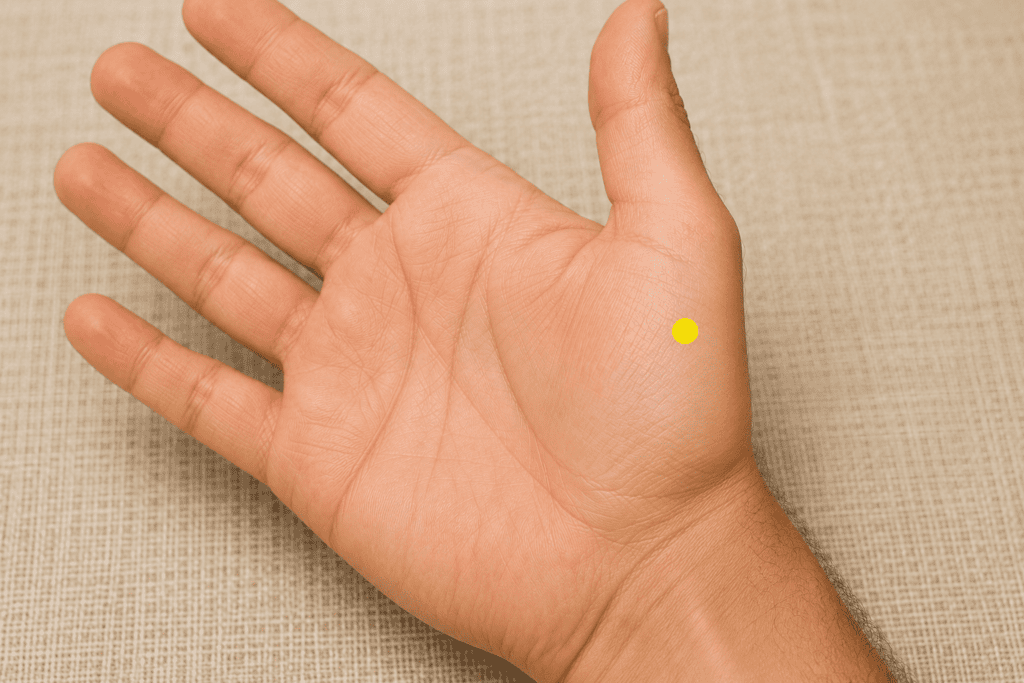
8. Press on LU10 on the thumb pad to clear heat and dryness. LU10 sits on the palm side of the hand, in the middle of the fleshy mound at the base of the thumb, where the red and white skin of the palm’s edge meet. Press firmly with the thumb of your other hand for about a minute on each hand. LU10 is called “Yuji,” the “Fish Border,” and it clears heat that dries the mouth and throat.
If you have dry mouth accompanied by a hot, dry feeling and a dry throat, LU10 can help dispel that heat. According to Traditional Chinese Medicine, the Lung regulates fluids, so clearing Lung heat can moisten the mouth and throat. This point targets dryness caused by heat rather than dehydration alone. For dry mouth that feels hot and dry, LU10 cools and soothes, especially when used with Yin-nourishing points to eliminate heat that drains fluids.
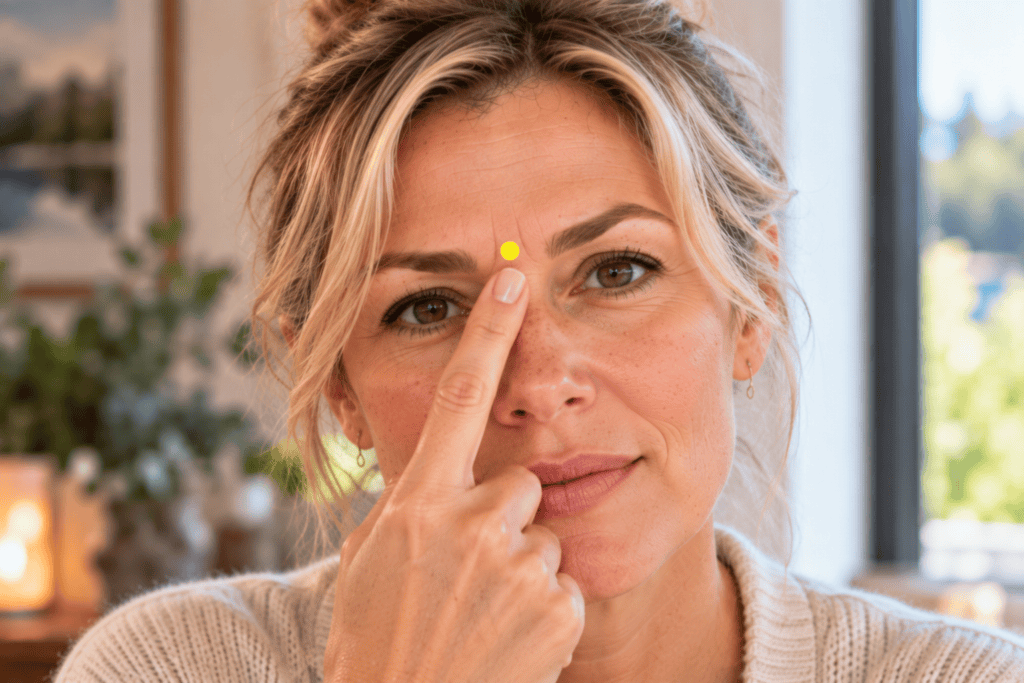
9. Press on Yintang between the eyebrows to ease an anxious, dry mouth. Yintang sits in the small hollow directly between the two eyebrows. Press steadily and hold, or make small, slow circles with your fingertip for one to two minutes. Yintang is an extra point and one of the most calming points in the body.
Stress and anxiety often cause dry mouth and that characteristic dry, parched feeling linked to nerves. Yintang helps soothe the mind and nervous system, which often drive this dryness. During stress, the fight-or-flight response can reduce saliva production, leading to dry mouth during anxious moments. Easing this response can help improve saliva flow. If dry mouth worsens with stress or anxiety, stimulating this point may help address the root cause. Gentle pressure combined with deep breathing can be very calming. This point can help manage the emotional factors contributing to dry mouth.
Why These Acupressure Points Work
In Traditional Chinese Medicine, dry mouth indicates that the body lacks sufficient fluids, usually due to low Yin, sometimes because heat dries out the fluids, or because the Stomach and Spleen are not moving fluids up to the mouth. The nine points listed address all these causes.
- The local mouth-and-gland points (CV24, CV23, ST6) directly stimulate saliva production in the mouth and salivary glands.
- The Yin-nourishing points (KI6, KI3, SP6) replenish moistening Yin and fluids; their deficiency leaves the mouth dry, and KI6 is classically used for this.
- The fluid-producing point (ST36) supports the Stomach and Spleen, which generate and distribute the fluids.
- The heat-clearing point (LU10) cools the heat that dries the mouth, and the calming point (Yintang) eases the anxious, dry mouth of a stressed, nervous system.
Research on acupressure for dry mouth shows mixed outcomes. View these points as a supplementary measure that may help stimulate the glands and promote bodily fluids. They are worth trying alongside the other tips below, but they don’t guarantee relief.
How to Properly Use These Acupressure Points
Regularly use points that stimulate saliva and nourish fluids.
- Work the local points CV24, CV23, and ST6 with gentle pressure and light massage to stimulate saliva directly, which often provides the most immediate relief.
- Add the nourishing points KI6, KI3, SP6, and ST36 to work regularly to replenish the body’s fluids at the root, and LU10 if heat and dryness are present, or Yintang if stress and anxiety drive your dry mouth.
- Gently press the mouth and throat points, especially CV23 over the soft throat, and press the leg and hand points more firmly, holding each for a minute or two.
- Use these points regularly, as building up the body’s fluids takes time. Whenever dryness bothers you, use the local salivary points for quick relief.
Acupressure can assist, and certain simple habits significantly improve dry mouth. Drink water frequently throughout the day and keep some by your bedside at night. Chewing sugar-free gum or lozenges can stimulate saliva production. Avoid mouth-drying factors such as caffeine, alcohol, alcohol-based mouthwashes, and tobacco. Using a humidifier at night helps if the air is dry. Over-the-counter saliva substitutes and dry-mouth products can be beneficial if dryness becomes severe. Because dry mouth raises the risk of tooth decay and gum issues, maintaining good dental hygiene and seeing your dentist regularly is crucial, especially if the dryness persists.
When to Get Professional Help
If dry mouth persists, consult a doctor. Medications can cause dry mouth, and adjusting your prescription might help. Persistent dry mouth could also indicate underlying health issues like Sjögren’s syndrome, diabetes, or other conditions that require diagnosis. Consult your dentist, as dry mouth increases the risk of tooth decay, gum disease, and infections; they can advise on protecting your oral health. If radiation or chemotherapy caused the dry mouth, your care team can recommend suitable treatments.
Acupressure and the tips above can provide real comfort for everyday dry mouth, but they are not a substitute for finding and treating the cause if the dryness persists.
Above and Beyond Acupuncture offers acupuncture, cupping, and lifestyle coaching at the North Frank Lloyd Wright Boulevard location in Scottsdale.
Schedule an appointment online to start your healing journey.
The points above are only as effective as the technique used to apply them. Where to press, how firmly, and for how long all affect the result. For a full breakdown of how to perform acupressure properly at home, read Performing Acupressure in 3 Easy Steps.
Because dry mouth so often travels with a dry, scratchy throat, acupressure for a sore throat shares some of this territory when both are dry.

About the Publisher
Paul Kerzner, L.Ac., is a licensed acupuncturist and board-certified herbalist, as well as the founder of Above and Beyond Acupuncture in Scottsdale. His own journey from chronic patient to practicing acupuncturist shapes his commitment to providing honest, clinically grounded information about acupuncture and Traditional Chinese Medicine. Learn more about Paul and his clinical approach on the About Us page.