Key Takeaways
- Frozen shoulder causes stiffness and pain, making daily tasks challenging; it can last for months without treatment.
- Acupressure effectively supports frozen shoulder using specific points for relief and improved movement.
- Key acupressure points include ST38 for empirical treatment, LI15 and SJ14 for shoulder movement, and LI4 for pain relief.
- A consistent practice of acupressure over weeks can lead to measurable improvements in symptoms.
- Seek professional help for severe cases, sudden pain, or unresponsive conditions; acupressure complements but doesn’t replace professional care.
If you have frozen shoulder, you already know how limiting it becomes. The gradual tightening that turns into constant stiffness. The specific movements that produce sharp pain. The way daily tasks like reaching behind you, putting on a shirt, or sleeping on the affected side become difficult or impossible. Frozen shoulder can persist for months or years without appropriate treatment.
Acupressure is one of the strongest home tools for supporting frozen shoulder. The points below include the empirical distal points that Traditional Chinese Medicine has used for centuries for this specific condition, the local shoulder points that address the muscular tension around the joint, and the supporting distal points that regulate the meridians running through the shoulder.
The empirical point Tiao Kou (ST38) deserves special mention. This point sits on the lower leg and has no obvious anatomical connection to the shoulder. Traditional Chinese Medicine identified centuries ago that pressing this specific point while actively moving the affected shoulder produces meaningful improvement in frozen shoulder specifically. Modern practitioners continue to use it because it works.
For patients whose frozen shoulder needs more substantial support than home acupressure alone provides, Can Acupuncture Treat Frozen Shoulder? covers the clinical picture and how acupuncture addresses the condition.
Here are eight acupressure points that work, why they work, and how to use them.
What Acupressure Points to Press and Why
Each point addresses a different aspect of the frozen shoulder pattern. The local points are pressed on the affected side. The distal points (LI4, SJ5, ST38) are pressed on the side opposite the affected shoulder, which is the classical approach that produces the strongest response.
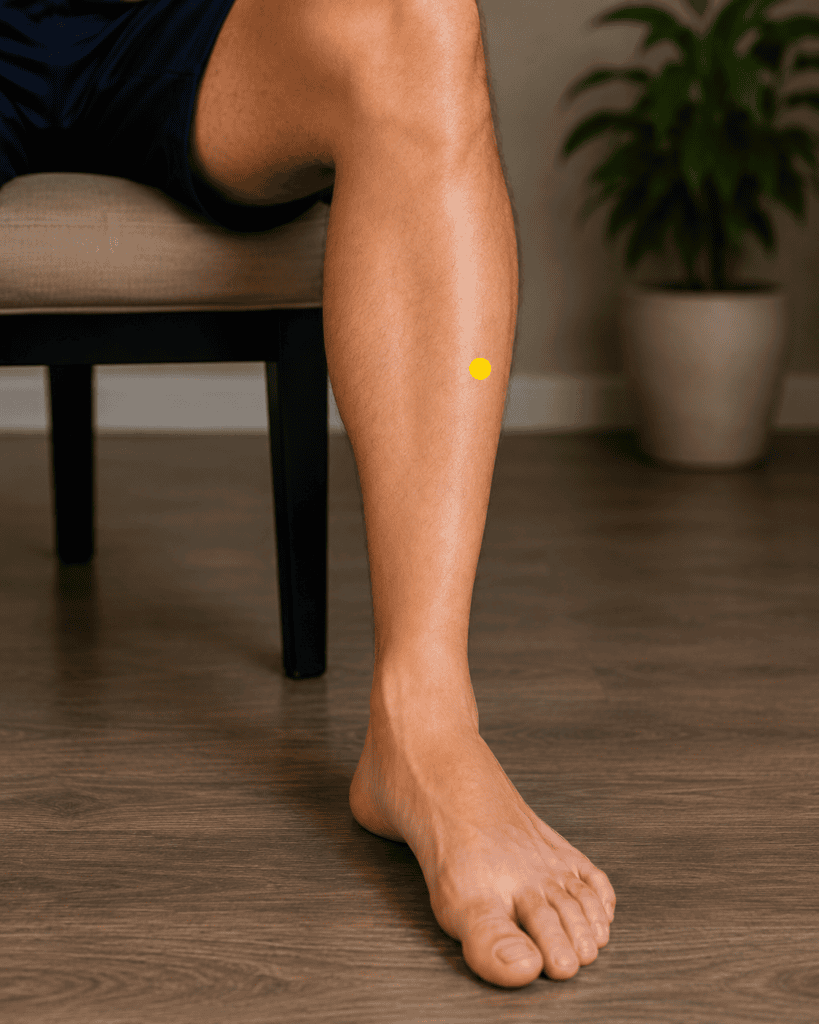
1. Press on ST38 on your lower leg for the empirical frozen shoulder point. ST38 sits on the front of the lower leg, halfway between the knee and the ankle, about two finger-widths to the outside of the shinbone. Press firmly with your thumb for one to two minutes on the leg opposite the affected shoulder. Here is the key part. While pressing ST38, actively move the affected shoulder through whatever range of motion you can manage. Slow circles. Reaching movements. Any movement that engages the joint. ST38 is called “Tiao Kou” and is the classical empirical distal point for frozen shoulder. Traditional Chinese Medicine identified centuries ago that this specific point combined with active shoulder movement produces meaningful improvement.
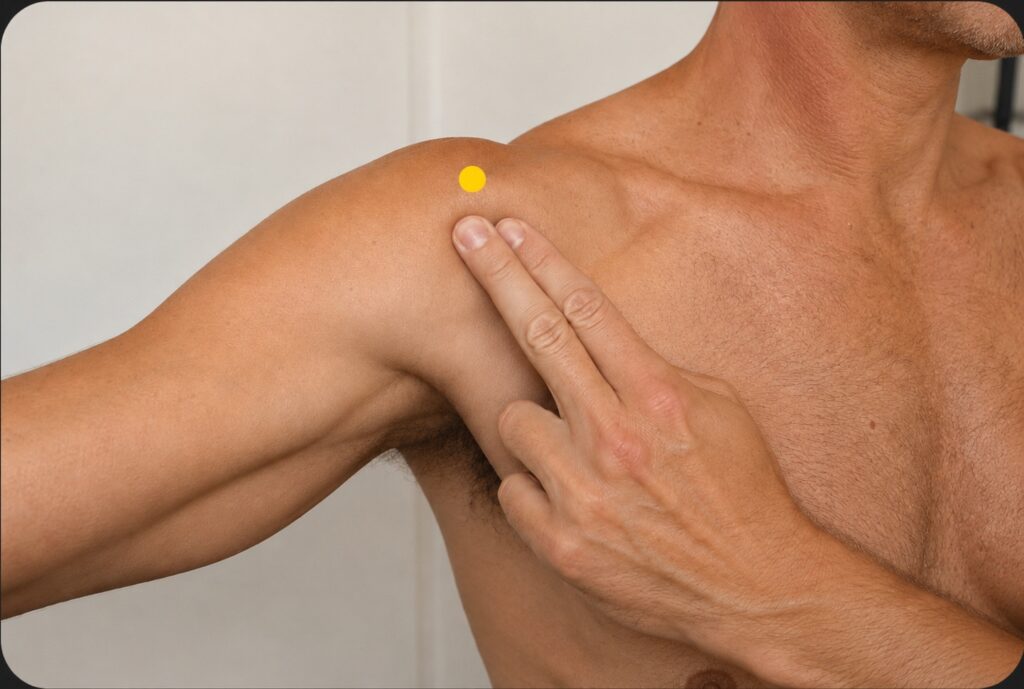
2. Press on LI15 on the front of your shoulder for the anterior deltoid. LI15 sits in the depression at the front of the shoulder that appears when you raise your arm to shoulder level. Press firmly with the fingertips of the opposite hand for one to two minutes. LI15 is called “Jianyu” and addresses the anterior deltoid and the front of the shoulder joint. The point supports the range of motion for lifting and reaching forward that frozen shoulder restricts.
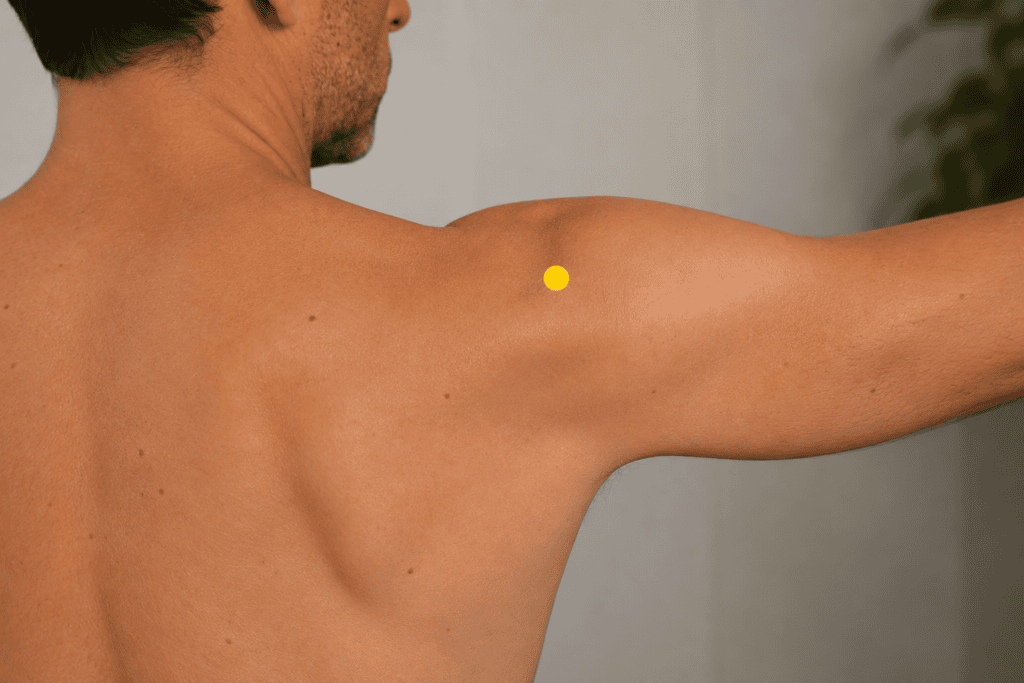
3. Press on SJ14 on the back of your shoulder for the posterior deltoid. SJ14 sits in the depression on the back of the shoulder that appears when you raise your arm. Press firmly with the fingertips of the opposite hand for one to two minutes. SJ14 is called “Jianliao” and addresses the posterior deltoid and back of the shoulder joint. The point supports the movements of reaching behind the back and external rotation that frozen shoulder restricts.
4. Press on SI9 below the back of your shoulder joint for the rotator cuff. SI9 sits about one thumb-width above the back of the armpit crease, on the back of the shoulder. Press firmly with the fingertips of the opposite hand for one to two minutes. SI9 is called “Jianzhen” and addresses the rotator cuff and posterior shoulder muscles. The point supports the deep muscular patterns that stabilize the shoulder joint.
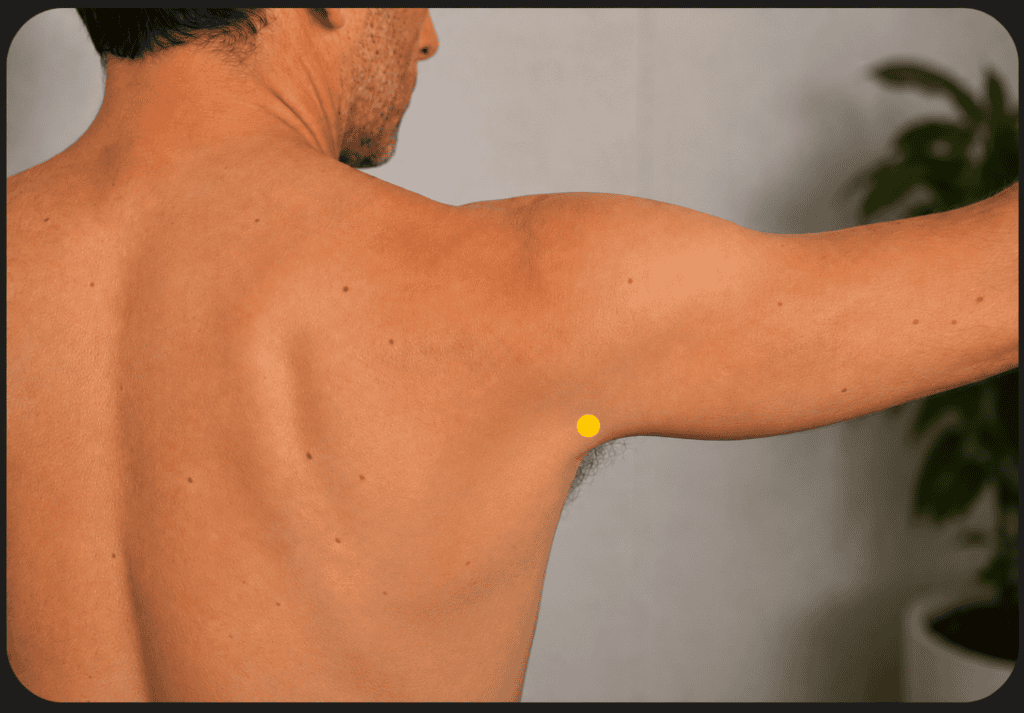
5. Press on LI16 above your shoulder joint for the upper shoulder. LI16 sits in the depression above the shoulder joint, in the hollow between the collarbone and the shoulder blade. Press firmly with the fingertips of the opposite hand for one to two minutes. LI16 is called “Jugu” and addresses the upper shoulder area where the collarbone and shoulder blade meet. The point supports the movements of shrugging and overhead reaching.
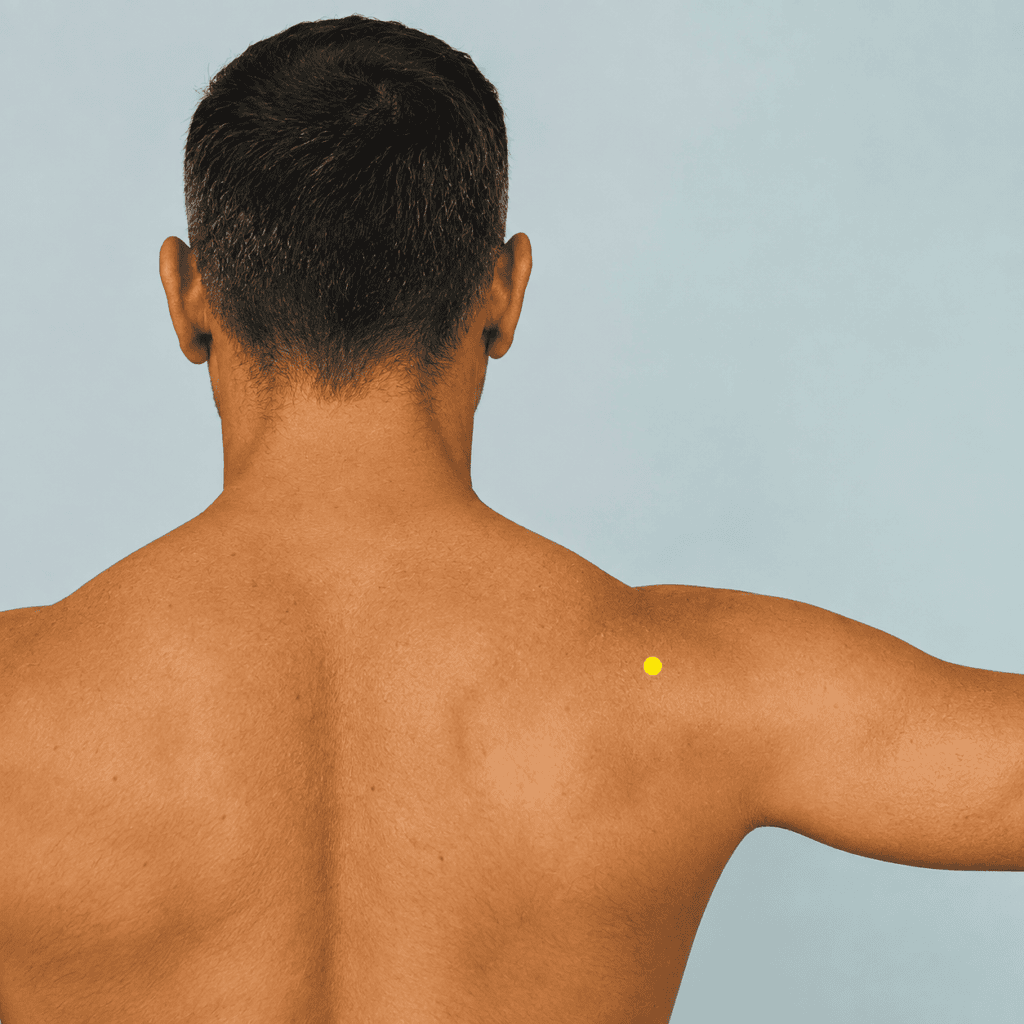
6. Press on GB21 at the top of your shoulder for the trapezius. GB21 sits at the highest point of the shoulder, midway between the base of the neck and the tip of the shoulder. Press firmly with the fingertips of the opposite hand for one to two minutes. GB21 is called “Jianjing” and addresses the upper trapezius muscle that becomes chronically tight around frozen shoulder. The point releases the compensatory tension that develops from the guarded posture of shoulder pain. GB21 is contraindicated during pregnancy.

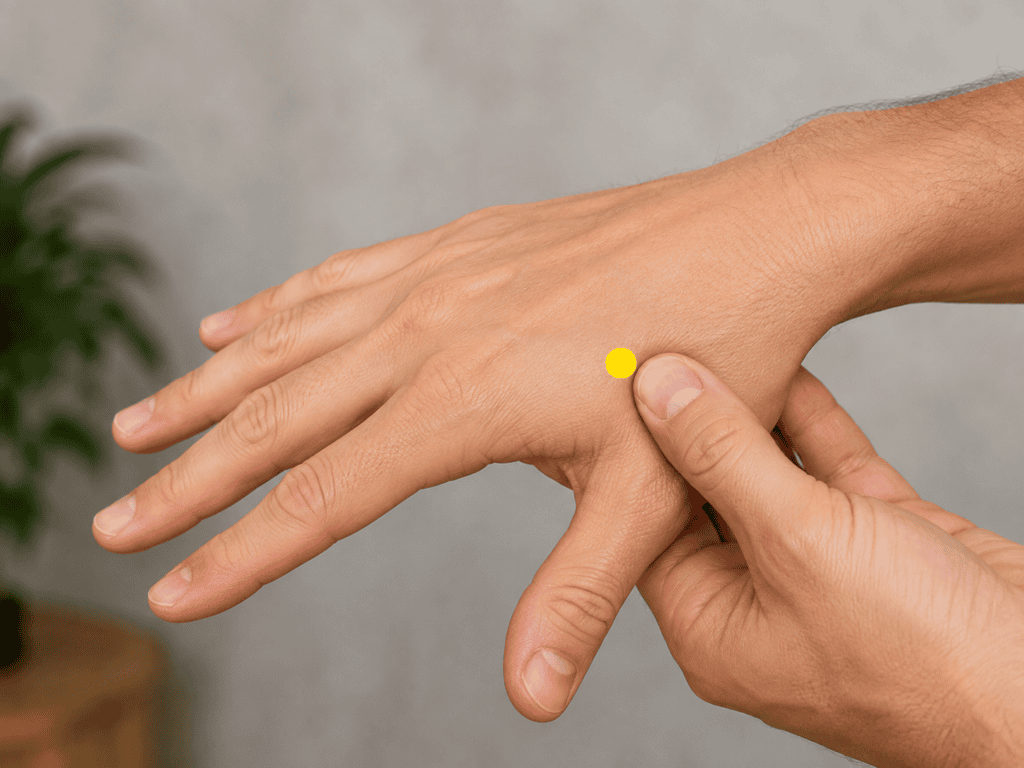
7. Press on LI4 in the webbing between your thumb and index finger for the distal command point. LI4 sits in the soft tissue webbing between the thumb and index finger, in the muscle that bulges when the thumb is pressed against the side of the index finger. Press firmly with the thumb of the opposite hand for one to two minutes. LI4 is the classical command point for the face, head, and upper limb. Regular pressure on LI4 provides pain relief for the affected shoulder and supports the overall meridian flow through the arm. LI4 is contraindicated during pregnancy.
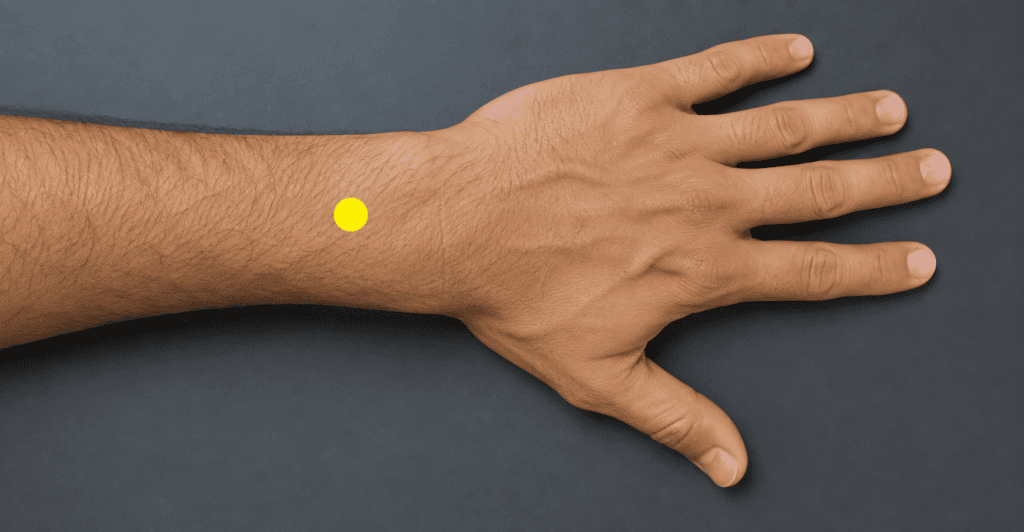
8. Press on SJ5 on the outer forearm for meridian regulation. SJ5 sits on the back of the forearm about three finger-widths above the wrist crease, in the depression between the two forearm bones. Press firmly with the thumb of the opposite hand for one to two minutes on the arm opposite the affected shoulder. SJ5 is called “Waiguan” and is the confluence point of the Yang linking vessel. The point regulates the Yang meridians that run through the shoulder and supports the overall flow through the affected side.
Why These Acupressure Points Work
Frozen shoulder involves several overlapping patterns. The joint capsule becomes inflamed and progressively contracts, restricting movement. The surrounding muscles develop chronic tension from guarding the joint. The compensatory patterns spread to the neck, upper back, and opposite shoulder. The nerve function through the affected arm changes over time. The circulation to the joint capsule and surrounding tissues suffers.
Acupressure works on several of these patterns at once:
- The empirical distal point (ST38) applied with active shoulder movement produces measurable improvement in range of motion and pain, though the mechanism through which this specific point works is not fully understood in Western terms. Traditional Chinese Medicine explains it through meridian connections. Modern practitioners continue to use it because clinical results support it.
- The local shoulder points (LI15, SJ14, SI9, LI16, GB21) address the muscular tension around the affected joint and support the local circulation needed for tissue healing.
- The distal command point (LI4) provides pain relief and regulates the meridian flow through the affected arm.
- The meridian regulator (SJ5) supports the overall flow through the shoulder region.
The chronic inflammation that contributes to the joint capsule changes responds to the acupressure practice and constitutional support these points provide.
The Mayo Clinic overview of frozen shoulder provides the medical picture. The NCCIH summary examines the clinical evidence for acupuncture across a range of conditions.
How to Use the Acupressure Points
When treating frozen shoulder, start with ST38 while moving the affected shoulder. Do this for two to three minutes with continuous slow movement of the affected arm. The combination of the empirical point and active movement produces the strongest response.
Then work through the local shoulder points (LI15, SJ14, SI9, LI16, GB21). One to two minutes on each. Consistent firm pressure.
Finish with the distal supporting points (LI4, SJ5). One to two minutes on each.
For daily maintenance, working through the full eight-point protocol once a day supports the underlying patterns over time. Consistency matters. Two to four weeks of daily practice typically produces measurable improvement.
For acute pain flare-ups, ST38 with active movement and LI4 provide the fastest response.
Firm sustained pressure works well for the leg, arm, and hand points. Moderate pressure works better on the shoulder points themselves since the tissues around the affected joint are often sensitive.
Pairing acupressure with basic frozen shoulder management increases the results:
- Gentle range of motion exercises.
- Heat before and after movement.
- Physical therapy for structured protocols.
- Sleep positioning that avoids the affected shoulder.
- Working with a physical therapist for progressive stretching.
When to Get Professional Help
Acupressure supports frozen shoulder recovery. It does not replace professional care for severe or non-responding cases.
Seek professional medical evaluation for sudden severe shoulder pain from injury, significant weakness that has developed rapidly, symptoms of nerve involvement including numbness or tingling in the arm, symptoms that have not improved with several weeks of consistent home care, and any signs of infection or other pathology.
For patients whose frozen shoulder needs more substantial support than home acupressure, Can Acupuncture Treat Frozen Shoulder? covers the professional treatment path for Traditional Chinese Medicine.
Many patients dealing with chronic shoulder pain also experience anxiety, stress, and depression that overlap with the limitation and discomfort of a long-term condition.
Above and Beyond Acupuncture offers acupuncture, cupping, and lifestyle coaching at the North Frank Lloyd Wright Boulevard location in Scottsdale.
Schedule an appointment online or call us today to start your healing journey.
The points above are only as effective as the technique used to apply them. Where to press, how firmly, and for how long all affect the result. For a full breakdown of how to perform acupressure properly at home, read Performing Acupressure in 3 Easy Steps.
About the Publisher
Paul Kerzner, L.Ac., is a licensed acupuncturist and board-certified herbalist, as well as the founder of Above and Beyond Acupuncture in Scottsdale. His own journey from chronic patient to practicing acupuncturist shapes his commitment to providing honest, clinically grounded information about acupuncture and Traditional Chinese Medicine. Learn more about Paul and his clinical approach on the About Us page.