Key Takeaways
- Jet lag disrupts your body’s internal clock, leading to fatigue, headaches, and sleep issues.
- Acupressure offers an effective way to alleviate jet lag by targeting specific points to boost energy or promote sleep.
- Key acupressure points include Yintang for calming the mind, GV20 for waking up, and HT7 for settling into sleep.
- Use energizing points during the day and calming points in the evening to realign your body with local time.
- Combine acupressure with habits like sunlight exposure, hydration, and adjusting sleep schedules to combat jet lag.
Jet lag can really put a damper on a trip.
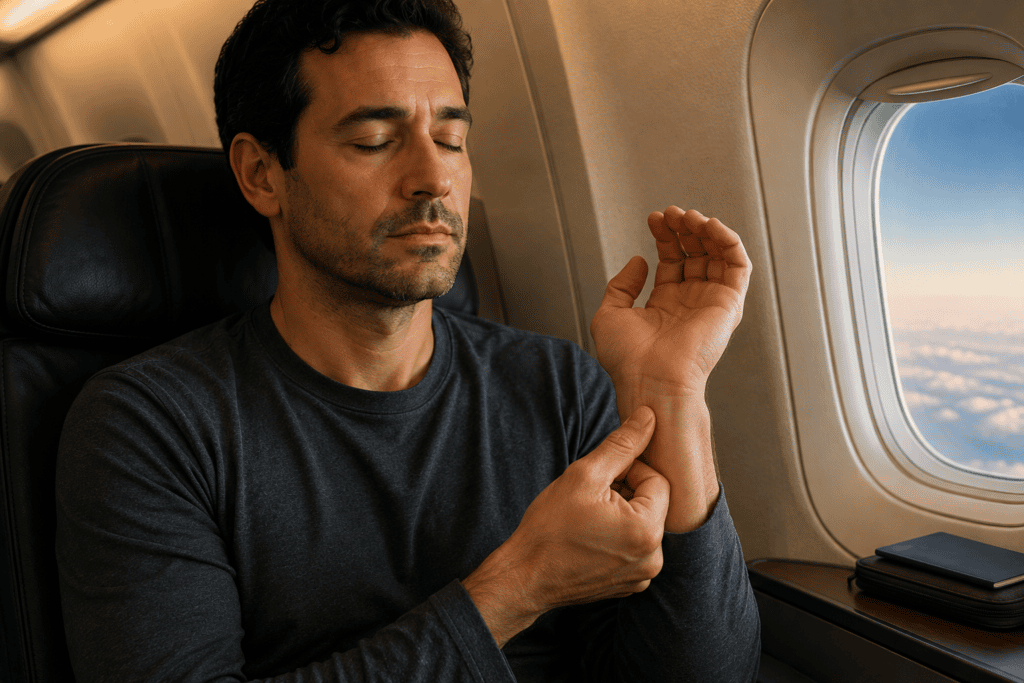
When you arrive in a new time zone, your body still feels like it’s on your old schedule, which can leave you wide awake at three in the morning and then groggy as the day starts. It’s common to experience headaches, brain fog, slow digestion, and a general sense of being out of sync with your surroundings. That’s why acupressure can be such a handy, portable tool, helping you shake off tiredness and get back in sync. By activating specific pressure points, you can boost alertness when you need it or relax into sleep when it’s time to rest, helping your body align with local time.
Traditional Chinese Medicine views jet lag holistically. It sees the body as having an internal clock: a daily cycle in which Qi circulates through organs at set times. Traveling across multiple time zones disrupts this cycle, causing it to fall out of sync with environmental signals like light, food, and sleep, which throws the system off. The Shen, which governs sleep and alertness, struggles to synchronize, and the Spleen and Stomach, which handle digestion, are also affected, leading to scattered Qi flow. The following points focus on restoring this rhythm by calming and energizing the Shen at the right times, supporting digestion, and promoting smooth Qi flow to help the body adapt to local time faster.
Acupressure can help relieve jet lag discomfort and works best when paired with natural techniques that help reset the body’s clock, as discussed in the practical section below. Because jet lag disrupts the body’s rhythm, restoring your natural circadian cycle is key to resolving it.
Below are nine acupressure points that can help you manage both aspects of jet lag:
What Acupressure Points to Press and Why
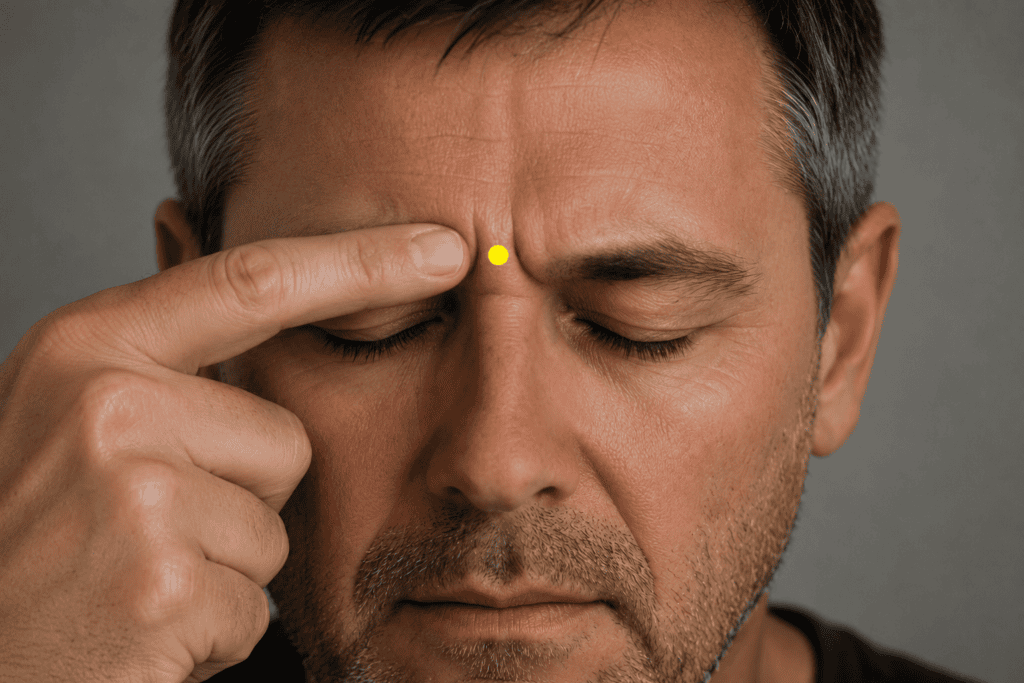
1. Press on Yintang between the eyebrows to reset and calm the mind. Yintang sits in the small hollow directly between the two eyebrows. Press steadily and hold, or make small, slow circles with your fingertip for one to two minutes. Yintang is an extra point and one of the most calming and centering points in the body.
Yintang harmonizes the Shen and calms a restless mind that runs on an irregular schedule. It is especially helpful for the nighttime, wired feeling of jet lag, as it stimulates the region near the pineal gland, which controls melatonin production and the body’s light and time responses. Since resetting the internal clock is central to overcoming jet lag, this point is particularly useful; it soothes the mind for sleep and helps the entire system realign. Apply pressure to Yintang in the evening to relax, and anytime a travel-stressed mind needs calming.
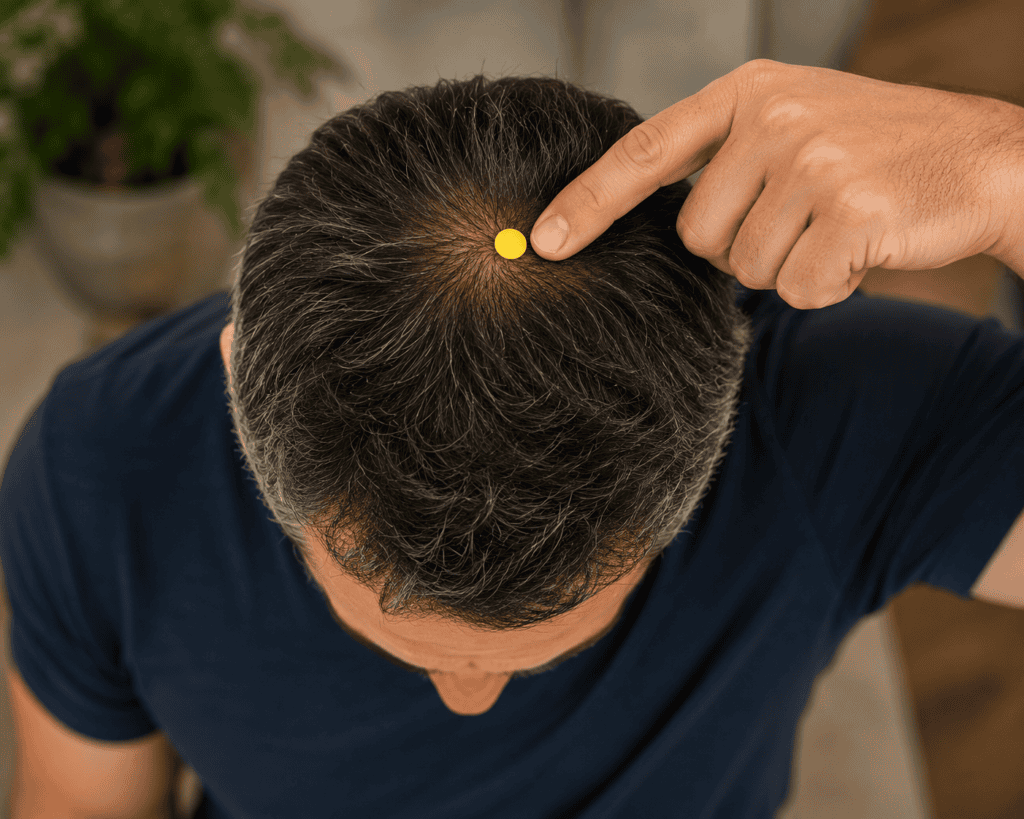
2. Press on GV20 at the top of the head to wake up and clear the fog. GV20 sits at the very top of the head, on the midline, on a line drawn up from the tops of both ears. Press straight down, or make small circles, with your fingertip for one to two minutes. GV20 is called “Baihui,” the “Hundred Meetings,” where many channels converge at the crown.
GV20 lifts the Yang and clears the head, making it ideal to combat heavy, foggy grogginess and daytime sleepiness caused by jet lag. It boosts energy and sharpens a dull, sluggish mind, helping you feel awake and present when your body’s clock says to rest but you need to stay alert. Use this point in the morning and throughout the day to push past grogginess and align with local waking hours, preferably combined with the energizing points listed further down.
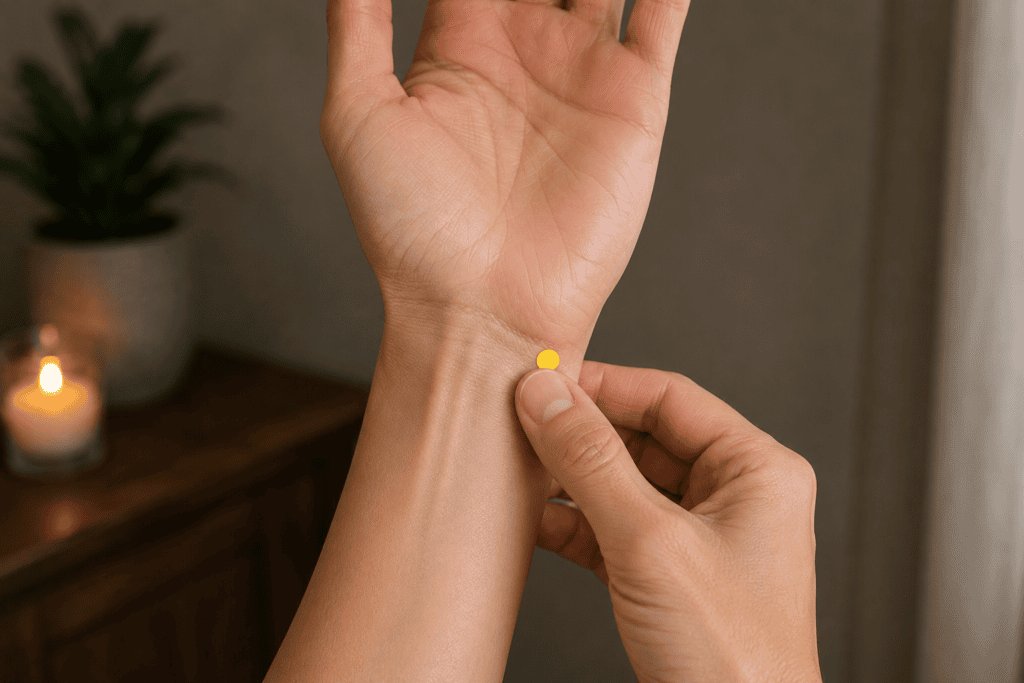
3. Press on HT7 at the wrist to settle into sleep. HT7 sits on the inner wrist crease, on the pinky side, in the small hollow just inside the tendon. Press firmly with your thumb for one to two minutes on each wrist. HT7 is called “Shenmen,” the “Spirit Gate,” and it is the source point of the Heart and the most important point for calming the Shen.
HT7 calms the Shen and relaxes the body to promote sleep, counteracting jet lag when your body resists sleeping at the local bedtime. It soothes restless, wired wakefulness that causes you to stare at the ceiling in a different time zone, and because it is associated with the Heart, it helps stabilize the entire spirit. Use this point in the evening when you’re trying to sleep on local time, and it is subtle enough to work on a plane or in a hotel bed whenever sleep is elusive.
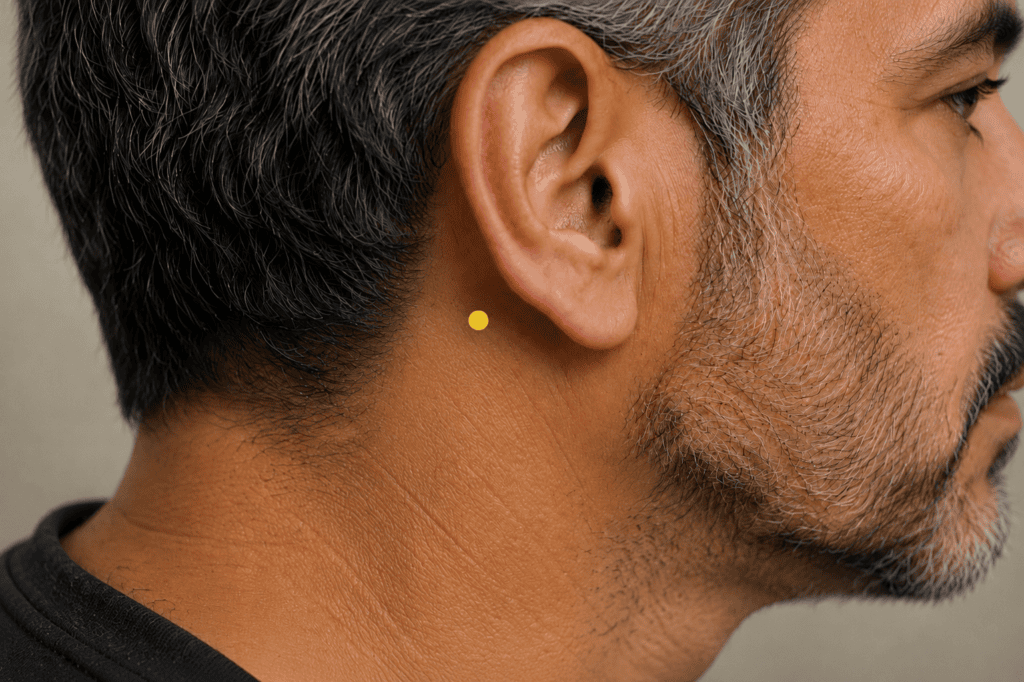
4. Press on Anmian behind the ear for disrupted sleep. Anmian sits behind the ear, in the hollow between the bony bump behind the earlobe and the base of the skull, a little above the jaw. Press firmly with your fingertip for one to two minutes on both sides. Anmian is an extra point whose name literally means “Peaceful Sleep,” and it is used specifically for insomnia.
Anmian is a key point for sleep issues and jet lag, which is mainly a sleep timing problem. It helps soothe the mind and encourages the body to fall asleep when it resists, addressing the core difficulty of the first jet-lagged nights. When combined with HT7 and Yintang in the evening, it enhances overall calming effects. It also helps with broken, fragmented sleep that often persists for several nights after crossing time zones.
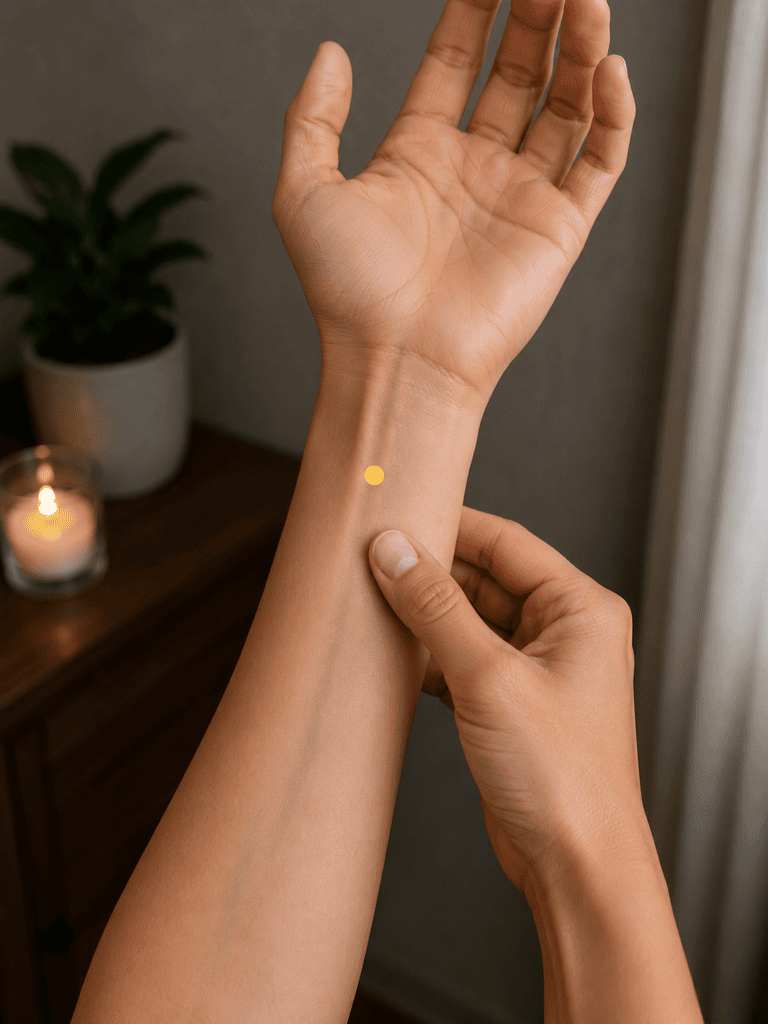
5. Press on PC6 on the inner forearm for a queasy, unsettled stomach. PC6 sits three finger-widths above the inner wrist crease, in the center of the forearm between the two tendons. Press firmly with your thumb for one to two minutes on each arm. PC6 is called “Neiguan,” the “Inner Pass,” and it is the best-known point for nausea and an unsettled stomach.
Travel and jet lag often cause stomach discomfort, leaving you queasy and unsettled because of unpredictable meal times and disrupted digestion. PC6 is the primary point for soothing this. It relieves nausea and stomach upset while opening the chest and calming the mind, making it effective for both travel sickness and anxiety. Use it whenever your stomach feels off, whether on the plane or after landing. It also complements subsequent digestive points for better relief.
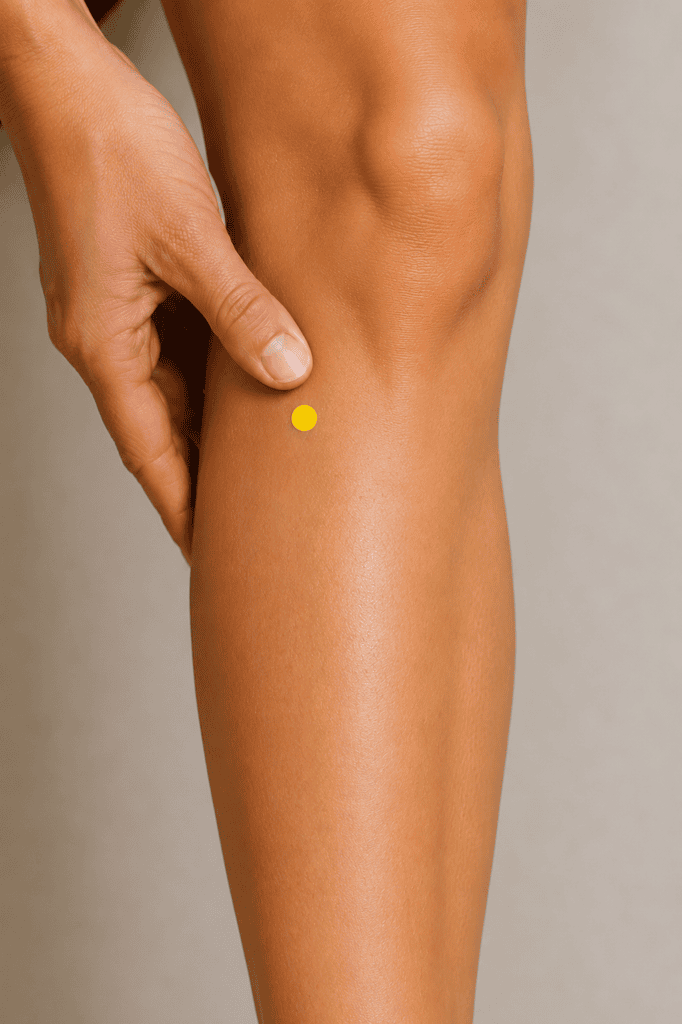
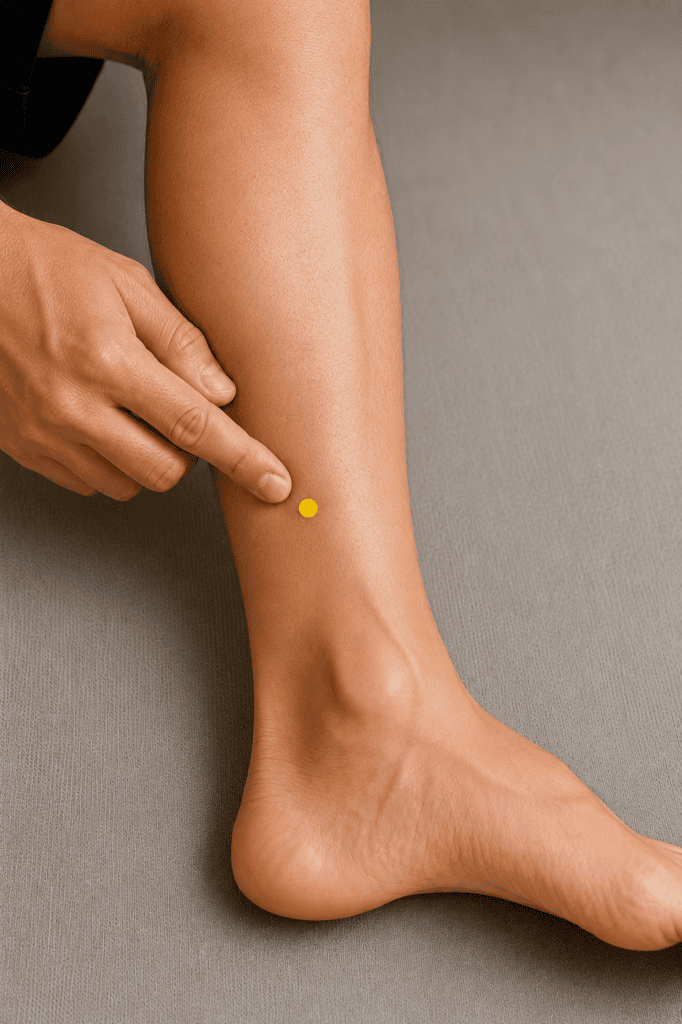
6. Press on ST36 below the knee to rebuild energy and steady digestion. ST36 sits four finger-widths below the lower edge of the kneecap and one finger-width to the outside of the shinbone, on the muscle that rises when you flex your foot. Press firmly with your thumb for one to two minutes on each leg. ST36 is called “Zusanli,” the “Leg Three Miles,” and it is the master point for energy and digestion in the whole body.
ST36 targets two major jet lag symptoms simultaneously: overwhelming fatigue and disrupted digestion. It works by replenishing the body’s Qi and strengthening the Spleen and Stomach, which are essential for digestion. This point helps restore energy when you feel drained and unbalanced, while also easing bloating, sluggishness, and irregularity caused by a misaligned gut and mealtime schedule. Pressing it throughout the day can combat fatigue and help recalibrate your digestion to local time. Overall, it is one of the most versatile points for aiding recovery from travel.
7. Press on SP6 above the inner ankle to nourish and restore sleep. SP6 sits four finger-widths up from the tip of the inner ankle bone, just behind the back edge of the shinbone. Press firmly for one to two minutes on each leg. SP6 is called “Sanyinjiao,” the “Three Yin Intersection,” where the Spleen, Liver, and Kidney channels meet. SP6 is avoided during pregnancy.
SP6 supports digestion and calms the mind, making it ideal for jet lag, where both gut function and sleep are disrupted. Its three-channel composition makes it highly nourishing and grounding, replenishing what extensive travel depletes and helping the body prepare for rest. When used in the evening with sleep points, it enhances the calming effect, and additional remedies for difficulty falling or staying asleep can provide further relief if sleep remains the most challenging aspect of jet lag.
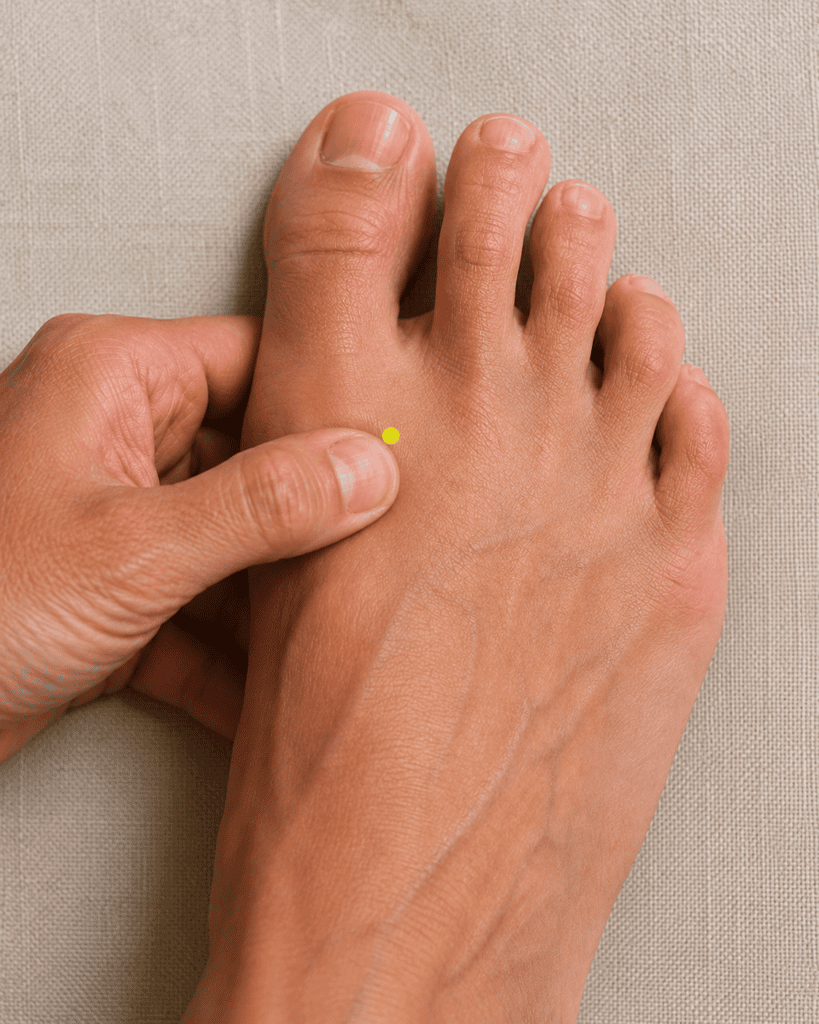
8. Press on LR3 on the top of the foot to smooth the disrupted flow. LR3 sits on the top of the foot, in the webbing between the big toe and second toe, about two finger-widths back where the bones meet in a small hollow. Press firmly with the thumb for one to two minutes on each foot. LR3 is called “Taichong,” the primary point for smoothing the flow of Qi.
The Liver maintains a smooth, even flow of Qi throughout the body. Jet lag disrupts this flow, leading to symptoms like irritability, headaches, tension, and a general feeling of being out of sorts when crossing time zones. LR3 helps to restore the flow of Qi, calming these issues by grounding the system and directing energy down toward the feet. This point is especially effective for relieving tension, irritability, and jet-lag-related headaches, and it helps stabilize and anchor the body as it adjusts to the new local time.
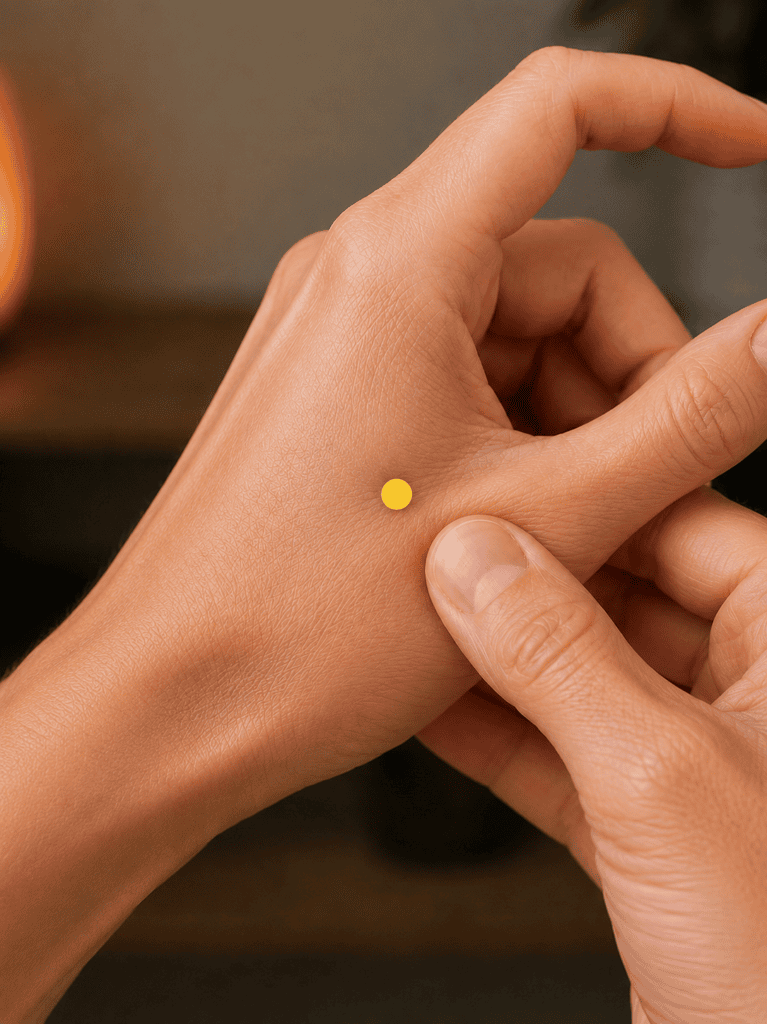
9. Press on LI4 in the hand to clear the head and revive. LI4 sits in the webbing between the thumb and index finger, at the highest point of the muscle when you bring the thumb and finger together. Press firmly with the thumb of your other hand for one to two minutes on each hand. LI4 is called “Hegu,” the command point for the head and face. LI4 is avoided during pregnancy.
LI4 alleviates brain fog and headaches often associated with jet lag, providing a revitalizing, invigorating sensation that enhances alertness and presence. When combined with LR3 on the foot, it creates the well-known Four Gates, a powerful acupressure duo that promotes the flow of stuck Qi throughout the body and relieves tension and disorientation. Use this pair throughout the day to clear jet-lagged symptoms and restore smooth Qi flow.
Why These Acupressure Points Work
In Traditional Chinese Medicine, jet lag occurs when the body’s internal clock, governed by the daily Qi rhythm through the organs, falls out of sync with local time. This dissonance unsettles the Shen, causing sleep and alertness to occur at the wrong times, disrupting the Spleen and Stomach that manage digestion, and interfering with the smooth flow of Qi. These nine points address this entire process and are divided into two groups based on when and how they are used.
- The calming and sleep points (Yintang, HT7, Anmian, SP6) settle the Shen and help the body sleep at the local bedtime, worked in the evening.
- The energizing and clearing points (GV20, LI4) lift the Yang and clear the foggy head so you can be awake and alert on local daytime hours, worked in the morning and through the day.
- The digestive points (PC6, ST36) settle the queasy, disrupted stomach and rebuild the energy that travel drains.
- The Qi-smoothing point (LR3), paired with LI4 as the Four Gates, restores the even flow of Qi that time-zone travel scatters.
How to Properly Use These Acupressure Points
The key to managing jet lag is timing: use energizing points to stay awake during local daytime and calming points to sleep at local night, helping your body recover faster.
- In the morning and through the day, work GV20 and LI4 to clear the fog and wake up, and ST36 to rebuild energy, to help you stay awake and alert on local hours even when your body wants to sleep.
- In the evening and at bedtime, work Yintang, HT7, Anmian, and SP6 to settle the mind and ease into sleep at the local bedtime.
- Use PC6 and ST36 anytime your stomach feels queasy or off, and the Four Gates of LR3 and LI4 to clear a jet-lagged head and smooth an irritable, out-of-sorts system.
- Hold each point for one to two minutes with firm, steady pressure, breathing slowly, and repeat as needed. The points are portable, so you can use them on the plane, in the airport, or in your hotel.
Acupressure works best when paired with natural, holistic techniques that reset your body clock. As soon as you board, set your watch to your destination’s local time and align your eating and sleeping schedules accordingly. At your destination, get daylight exposure, since light is the strongest cue for resetting your internal clock, and go outside as soon as you arrive. Stay well hydrated and limit alcohol and caffeine, especially during the flight, as both can intensify jet lag. Keep naps short, about twenty to thirty minutes, to avoid disrupting your sleep at night, and adjust your meals to local mealtimes to help your digestion settle. Many travelers also find taking melatonin helpful, which works well with these strategies.
When to Get Professional Help
Jet lag is a temporary condition that usually resolves as your body adapts to the local time, typically within a few days. The tips mentioned above can help speed up this process. It is not considered a medical issue and rarely requires professional treatment.
See a doctor if jet lag symptoms persist beyond a few days, if severe sleep issues continue after adjusting to local time, or if you have a health condition affected by travel and disrupted sleep, such as one requiring strict medication schedules. Additionally, long flights pose a small risk of blood clots in the legs, so seek medical attention promptly if you experience pain, swelling, warmth, or redness in a calf after flying—these are signs that are not jet lag and require care.
Acupressure can help with typical disruptions from crossing time zones; it is not a substitute for medical care if a more serious or persistent problem develops.
Please read the companion piece “Can Acupuncture Treat Jet Lag?” to learn more about how Traditional Chinese Medicine addresses this disruption.
Above and Beyond Acupuncture offers acupuncture, cupping, and lifestyle coaching at the North Frank Lloyd Wright Boulevard location in Scottsdale.
Schedule an appointment online or call us today to start your healing journey.
The points above are only as effective as the technique used to apply them. Where to press, how firmly, and for how long all affect the result. For a full breakdown of how to perform acupressure properly at home, read Performing Acupressure in 3 Easy Steps.

About the Publisher
Paul Kerzner, L.Ac., is a licensed acupuncturist and board-certified herbalist, as well as the founder of Above and Beyond Acupuncture in Scottsdale. His own journey from chronic patient to practicing acupuncturist shapes his commitment to providing honest, clinically grounded information about acupuncture and Traditional Chinese Medicine. Learn more about Paul and his clinical approach on the About Us page.