Key Takeaways
- Lymphedema is swelling caused by a buildup of lymph between the skin and muscle, most often in an arm or leg after cancer surgery, lymph node removal, or radiation.
- It can appear soon after treatment or years later. It cannot be cured, but it can be managed, especially when care begins early.
- In Traditional Chinese Medicine, lymphedema is a form of Water accumulation in which the Lung, Spleen, and Kidney can no longer move and transform fluids effectively, and the channels in the affected area have been injured.
- Nine acupressure points on the abdomen, back, arms, and legs help support the body’s handling of fluids when light pressure is applied only to limbs that are not affected.
- Acupressure for lymphedema works best alongside compression, exercise, and care from a certified lymphedema therapist. Redness, warmth, pain, or fever in the swollen area requires a call to the doctor right away.
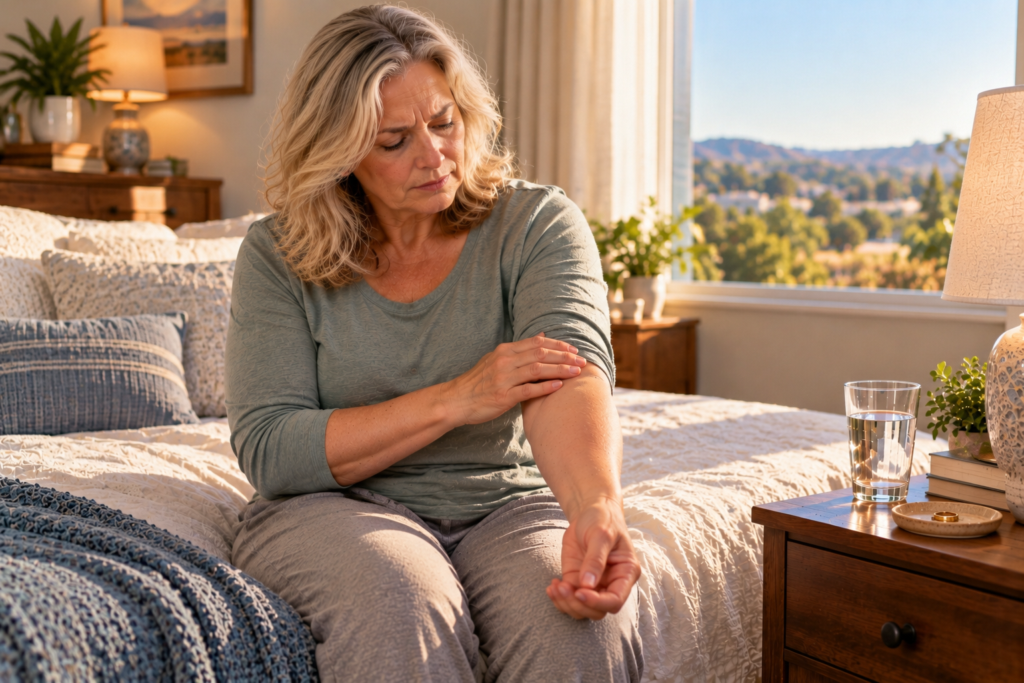
Months or even years after cancer treatment, many individuals notice something they didn’t expect. Maybe a sleeve feels tighter, a ring won’t come off, or an arm or leg feels heavy by day’s end. These changes are often subtle and easy to overlook, but they can be the first signs of lymphedema.
According to the National Cancer Institute, lymphedema is swelling caused by a buildup of lymph fluid between the skin and muscle. It occurs when lymph flow is blocked or disrupted, whether by a tumor, surgery to remove lymph nodes, such as underarm nodes during breast cancer surgery, or radiation that leaves scar tissue. Lymphedema most often affects an arm or leg, but it can also affect the abdomen, genitals, head, or neck. In addition to swelling, symptoms can include heaviness, tightness, numbness or tingling, weakness, and difficulty moving the affected limb.
Lymphedema often develops gradually over months or even years. Although it can’t be cured, it can be managed, particularly when treatment starts early. Management may include wearing compression garments, receiving manual lymphatic drainage, exercising regularly, caring for your skin, and working with a certified lymphedema therapist. Lymphedema can also result from causes other than cancer, including infection, injury, or a lymphatic system that did not fully develop at birth.
Traditional Chinese Medicine views lymphedema as a form of Water buildup. In this view, the Lung moves fluids, the Spleen transforms them, and the Kidney oversees Water. The Triple Energizer keeps water pathways open. Surgery and radiation can damage the channels in the affected area, slowing the flow of Qi and Blood. Fatigue after cancer treatment can also weaken the Spleen and Kidney, causing fluid to collect where it cannot drain.
These nine points support the Lung, Spleen, and Kidney, help open the water passages, and encourage fluid movement with light pressure suited to the lymphatic system.
What Acupressure Points to Press and Why
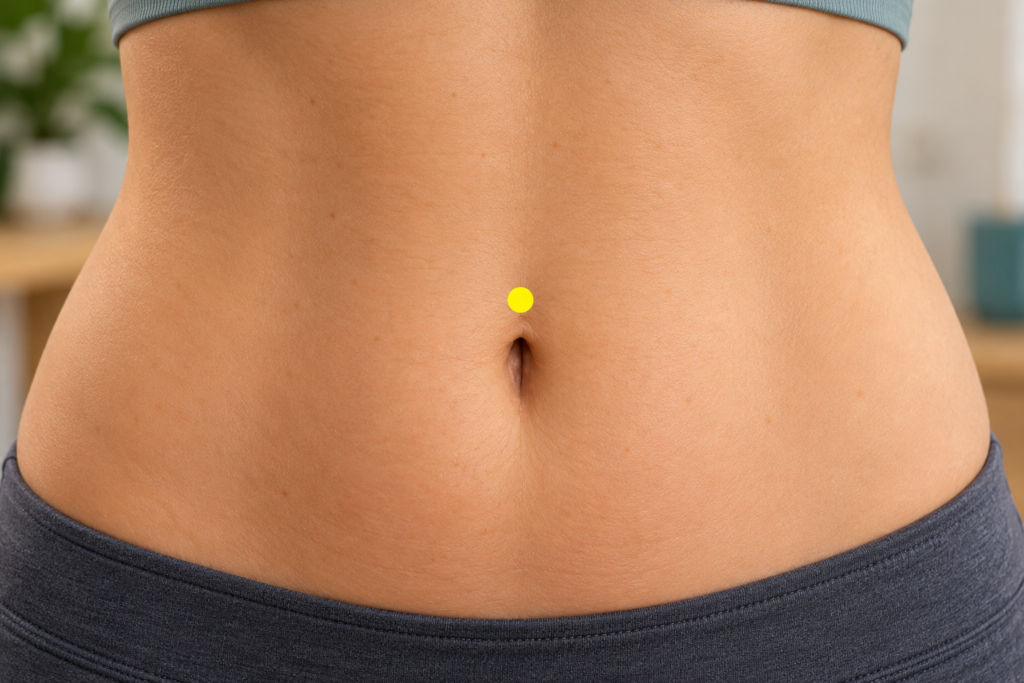
1. Press on CV9 above the navel to help the body move fluids. CV9 sits on the midline of the abdomen, about one thumb-width above the navel. Rest your fingertips on the point and use light pressure, or make slow, gentle circles, for one to two minutes while breathing slowly into the belly. CV9 is called “Shuifen,” the “Water Divide.”
CV9 is a key point in Traditional Chinese Medicine for swelling and fluid buildup. It’s used to separate clear fluids from turbid ones and help the body move fluid that has accumulated where it shouldn’t.
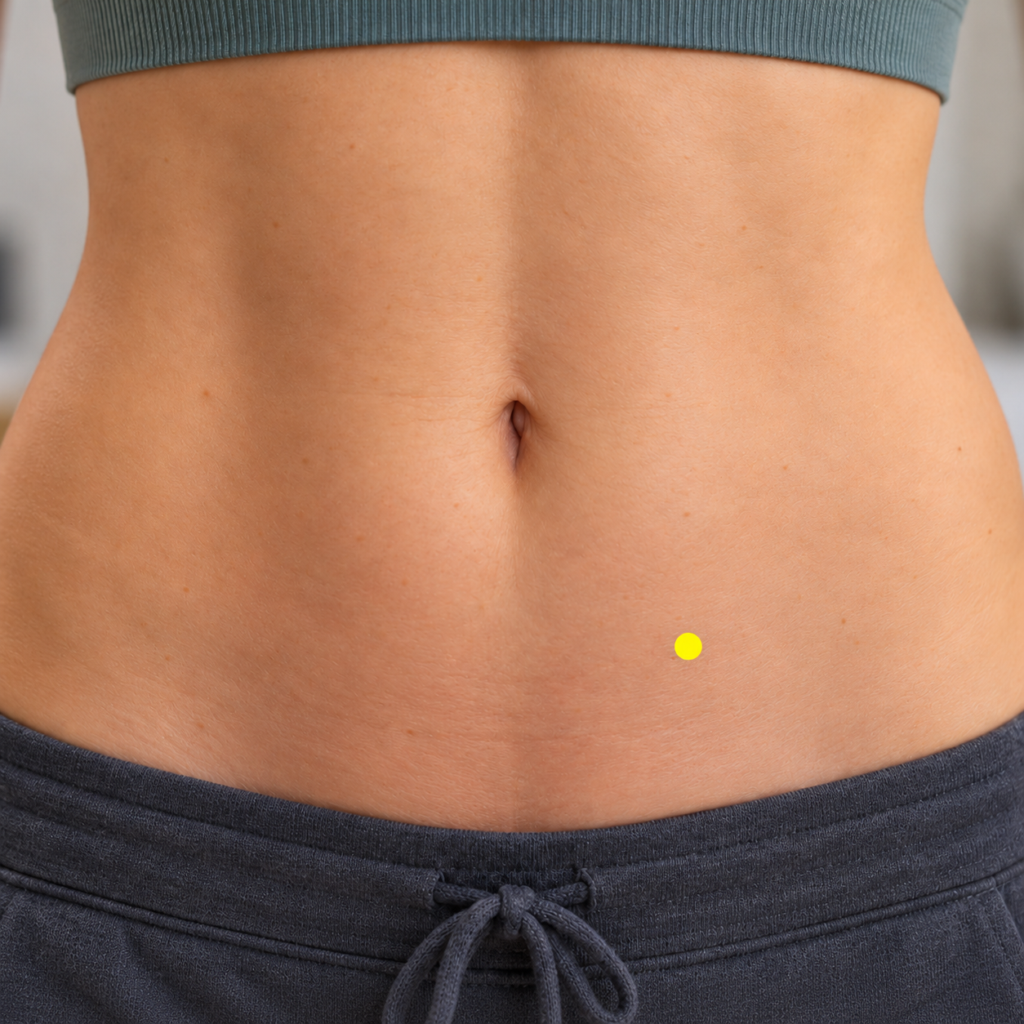
2. Press on ST28 on the lower abdomen to open the water passages. ST28 sits on the lower abdomen, about four finger-widths below the navel and about three finger-widths to each side of the midline. Rest your fingertips on both points at once and use light pressure for one to two minutes. ST28 is called “Shuidao,” the “Water Passage.”
ST28 helps open the water passages, allowing fluids to move downward and leave the body. Used with CV9, it supports the abdomen, where the Spleen and Kidney help transform and drain fluids.
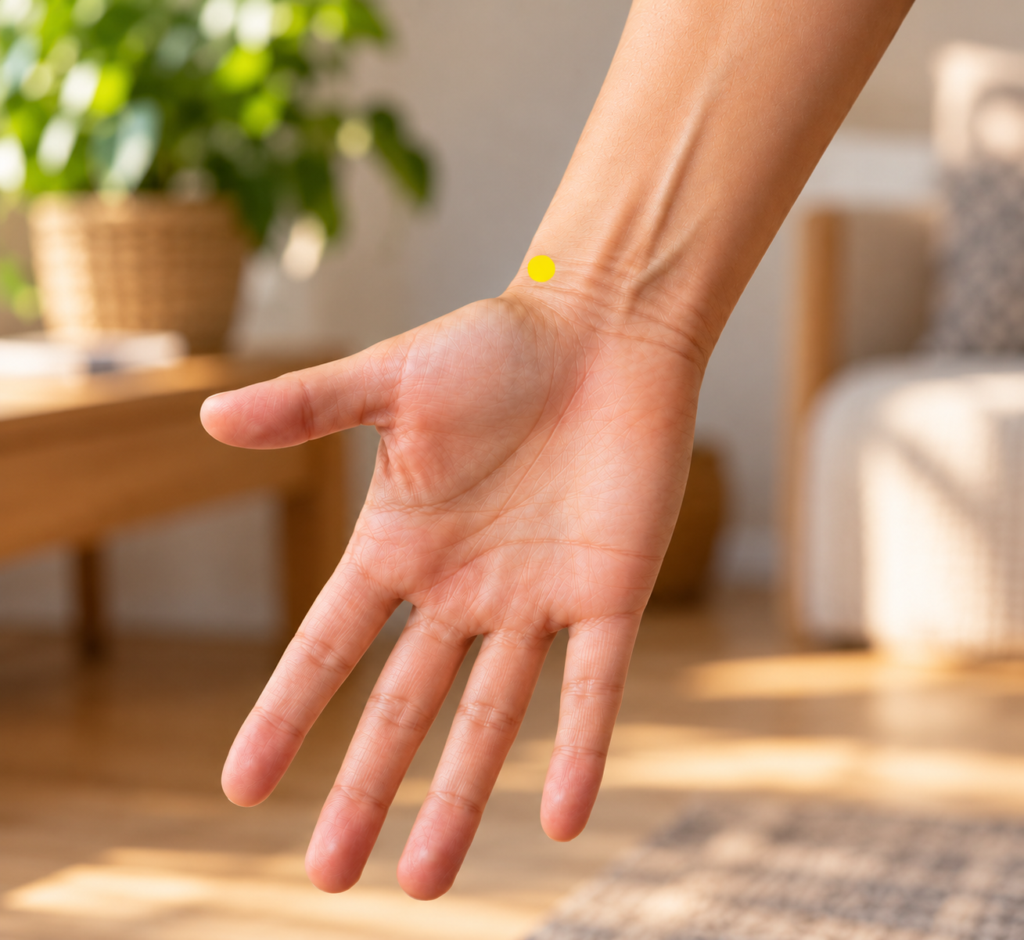
3. Press on LU7 above the wrist to support the Lung’s control of fluids. LU7 sits on the thumb side of the forearm, about two finger-widths above the wrist crease. To find it, interlace the thumbs and index fingers of both hands, and the tip of the top index finger will rest in a small groove on the edge of the forearm, just above the bony bump of the wrist. Use light pressure for one to two minutes, only on an arm that is not affected by swelling. LU7 is called “Lieque,” the “Broken Sequence.”
In Traditional Chinese Medicine, the Lung is considered the upper source of Water and helps regulate the body’s water passages. LU7 is the connecting point of the Lung channel and is used to support fluid movement, particularly when swelling affects the upper body.
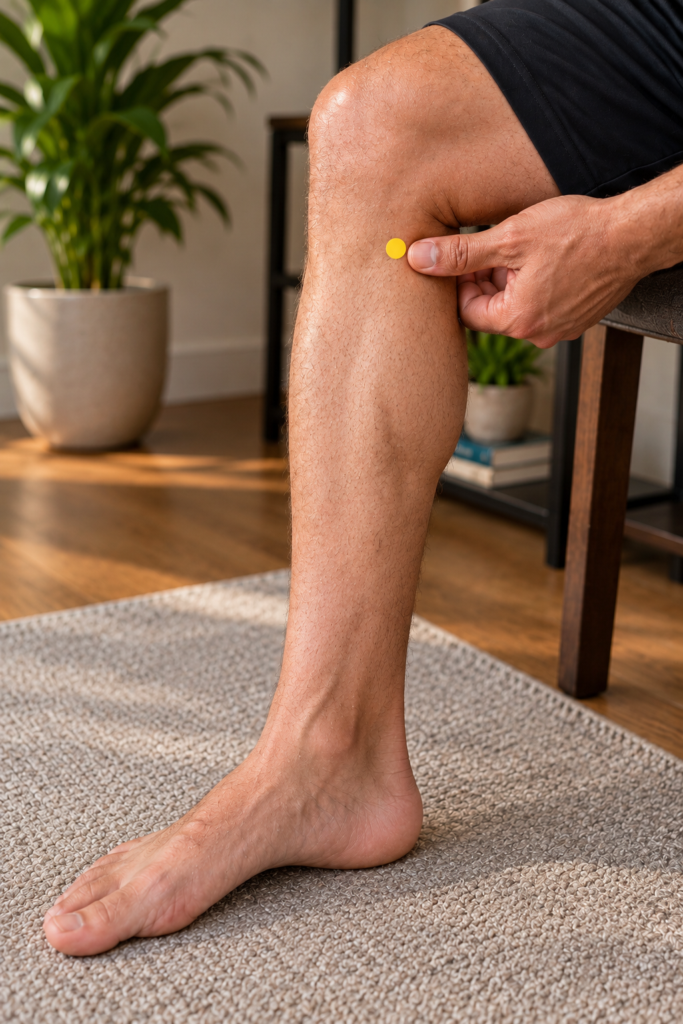
4. Press on SP9 below the knee to drain excess fluid. SP9 sits on the inner side of the lower leg, in the hollow just below the knee. Run your thumb up the inner edge of the shinbone until it stops where the bone curves up toward the knee. Use light pressure for one to two minutes, only on a leg that is not affected by swelling. SP9 is called “Yinlingquan,” the “Yin Mound Spring.”
In Traditional Chinese Medicine, SP9 is the primary point for draining Dampness and reducing swelling. It helps the Spleen transform fluids and is especially useful when swelling is accompanied by heaviness and fatigue.
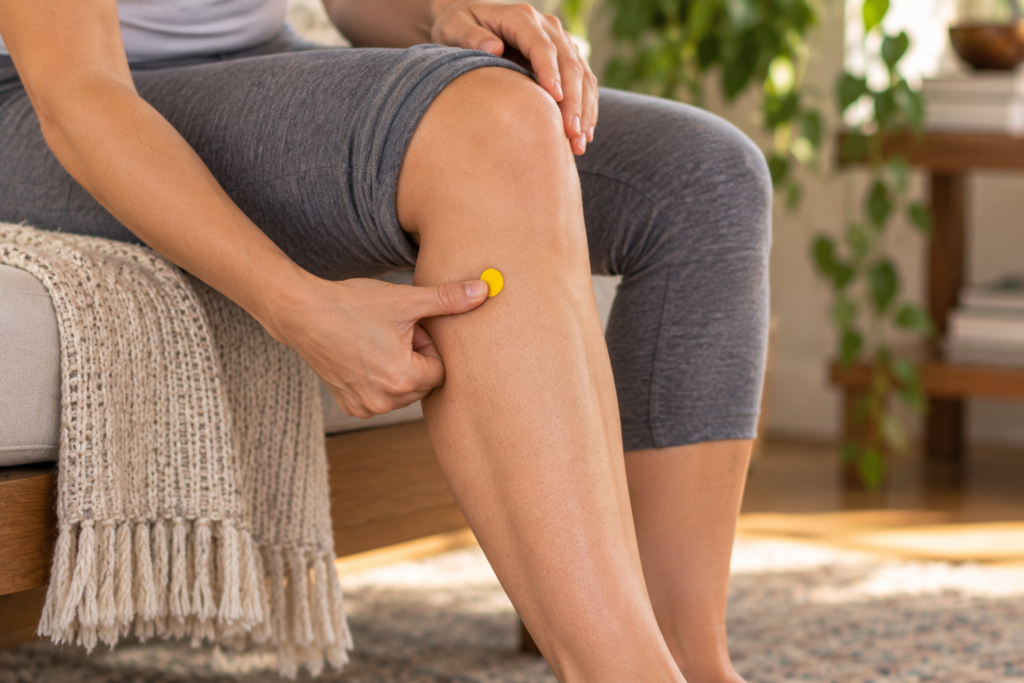
5. Press on ST36 below the knee to strengthen recovery. ST36 sits four finger-widths below the bottom of the kneecap, about one finger-width to the outside of the shinbone. Use light to moderate pressure for one to two minutes, only on a leg that is not affected by swelling. ST36 is called “Zusanli,” the “Leg Three Miles.”
In Traditional Chinese Medicine, ST36 is a key point for strengthening the Spleen and Stomach and restoring energy after illness. Cancer treatment can leave the body depleted; ST36 helps rebuild the Qi needed to move and transform fluids.
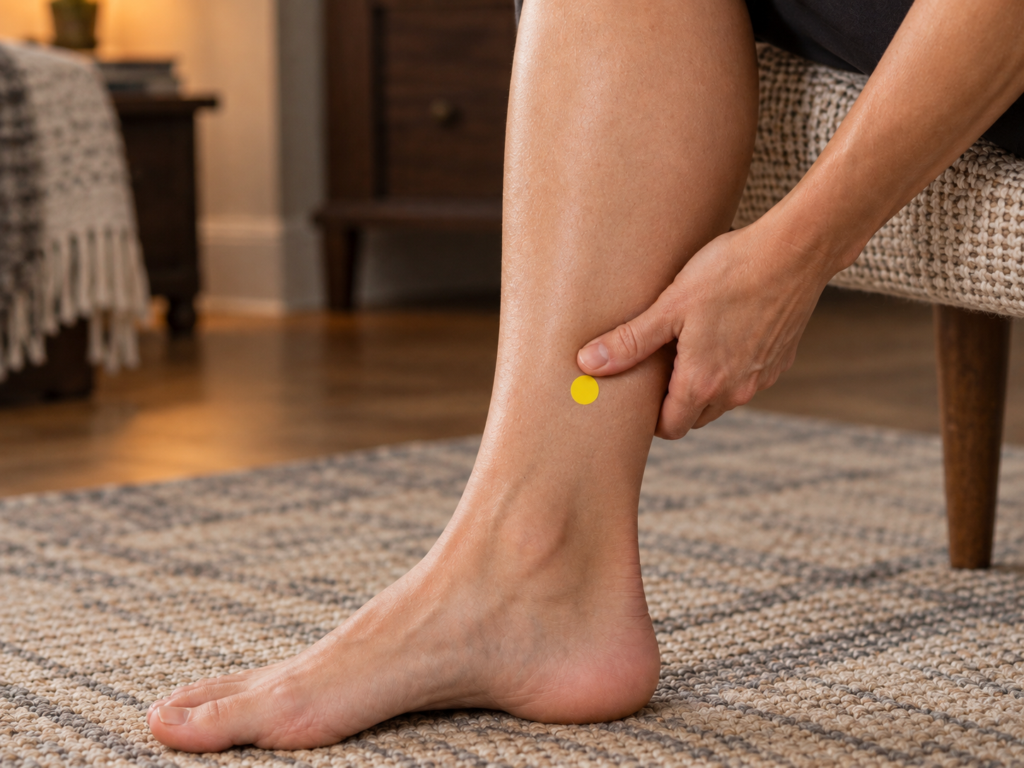
6. Press on SP6 above the inner ankle to support the Spleen and Kidney. SP6 sits on the inner lower leg, four finger-widths above the tip of the inner ankle bone, just behind the edge of the shinbone. Use light pressure for one to two minutes, only on a leg that is not affected by swelling. SP6 is called “Sanyinjiao,” the “Three Yin Intersection.” SP6 is avoided during pregnancy.
SP6 is where the Spleen, Liver, and Kidney channels converge. It helps the Spleen transform fluids, supports the Kidney, and promotes the movement of Qi and Blood. For swelling, SP6 works well with SP9.
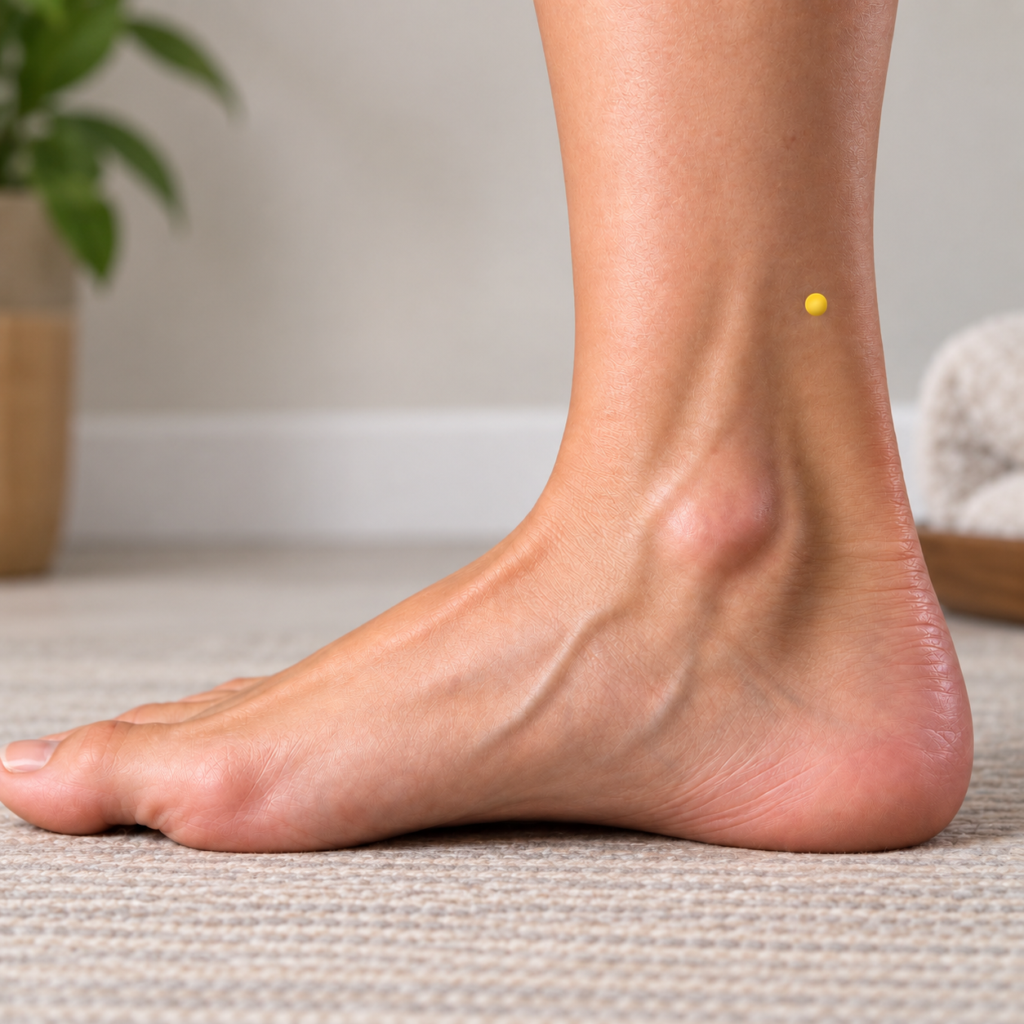
7. Press on KI7 above the inner ankle to support the Kidney’s control of Water. KI7 sits on the inner side of the lower leg, about three finger-widths above the hollow between the inner ankle bone and the Achilles tendon, at the front edge of the tendon. Use light pressure for one to two minutes, only on a leg that is not affected by swelling. KI7 is called “Fuliu,” the “Returning Current.”
In Traditional Chinese Medicine, the Kidney manages Water and controls how fluids are stored and released. KI7 is a classic point for swelling and is used to strengthen the Kidney’s regulation of fluid metabolism, especially when swelling worsens in the evening or is accompanied by tiredness and a cold, achy lower back.
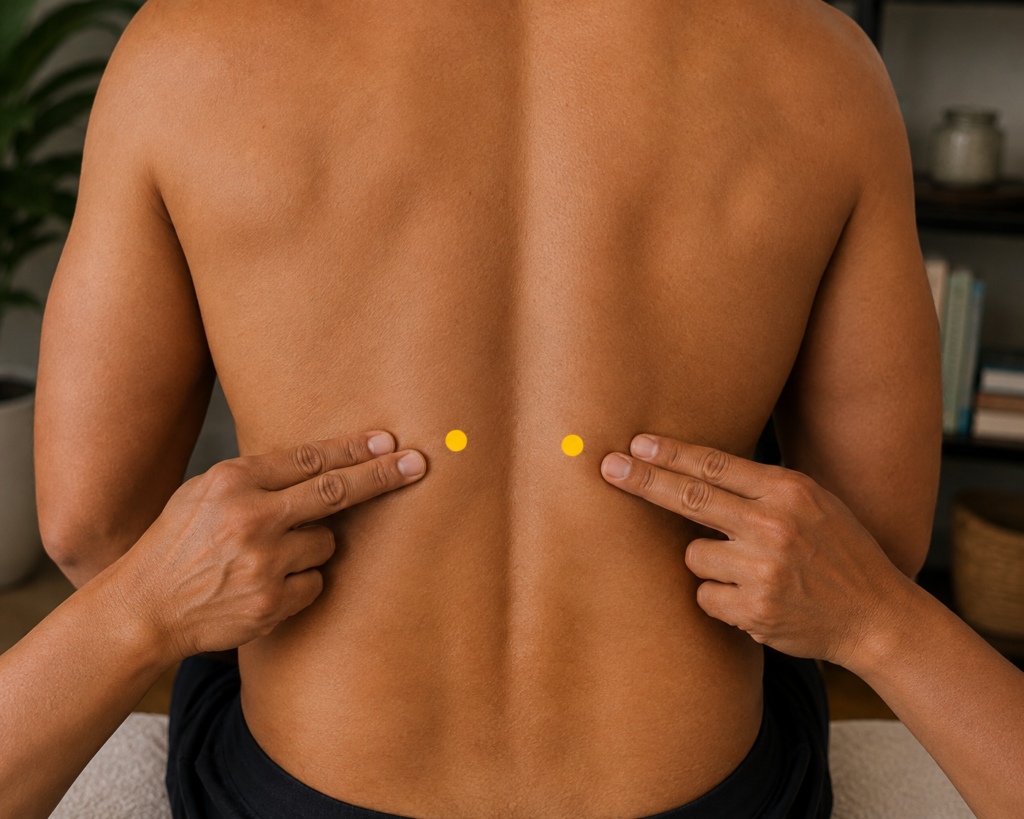
8. Press on BL20 on the back to strengthen the Spleen. BL20 sits on the back, about two finger-widths to each side of the spine, roughly level with the lowest ribs. Ask someone to rest their thumbs on both points and use light pressure for one to two minutes, or lean gently against a soft ball placed between your back and a wall. BL20 is called “Pishu,” the “Spleen Transport Point.”
BL20 is the Spleen’s back transport point. It helps the Spleen transform food and fluids, move fluids rather than let them accumulate, and support energy that cancer treatment often drains.
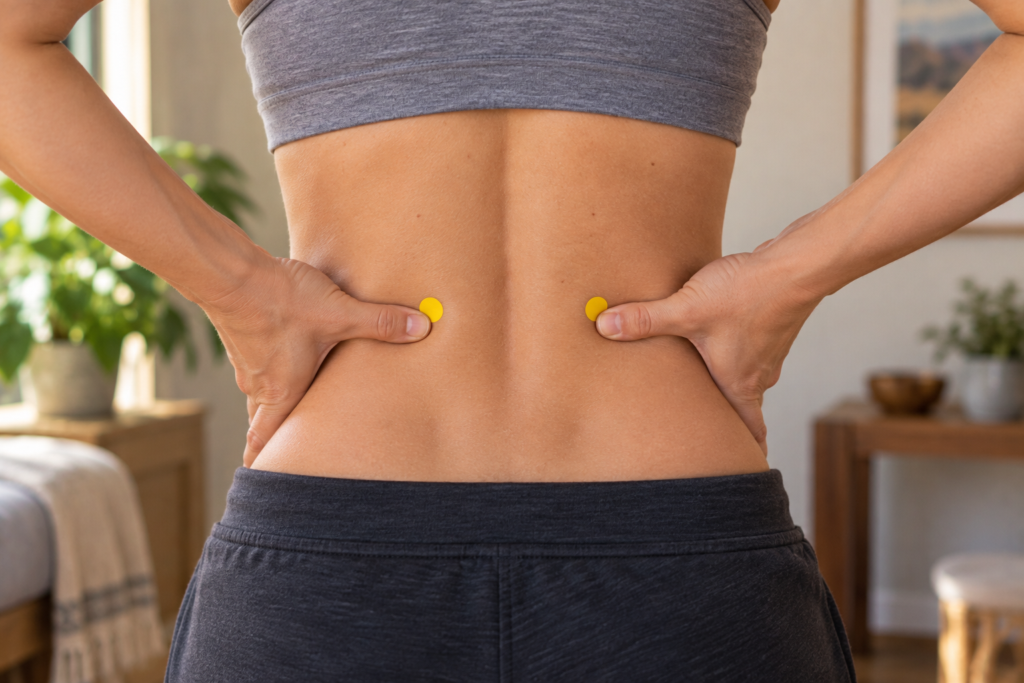
9. Press on BL23 on the lower back to strengthen the Kidney. BL23 sits on the lower back, about two finger-widths to each side of the spine, about three vertebrae below BL20, roughly level with the waist. Use the same method as BL20, with light pressure for one to two minutes. BL23 is called “Shenshu,” the “Kidney Transport Point.”
BL23 is the Kidney’s back transport point, associated with Water in Traditional Chinese Medicine. It helps the Kidney regulate fluids and supports the body’s deep reserves during recovery. Together, BL20 and BL23 support both the Spleen and the Kidney.
Why These Acupressure Points Work
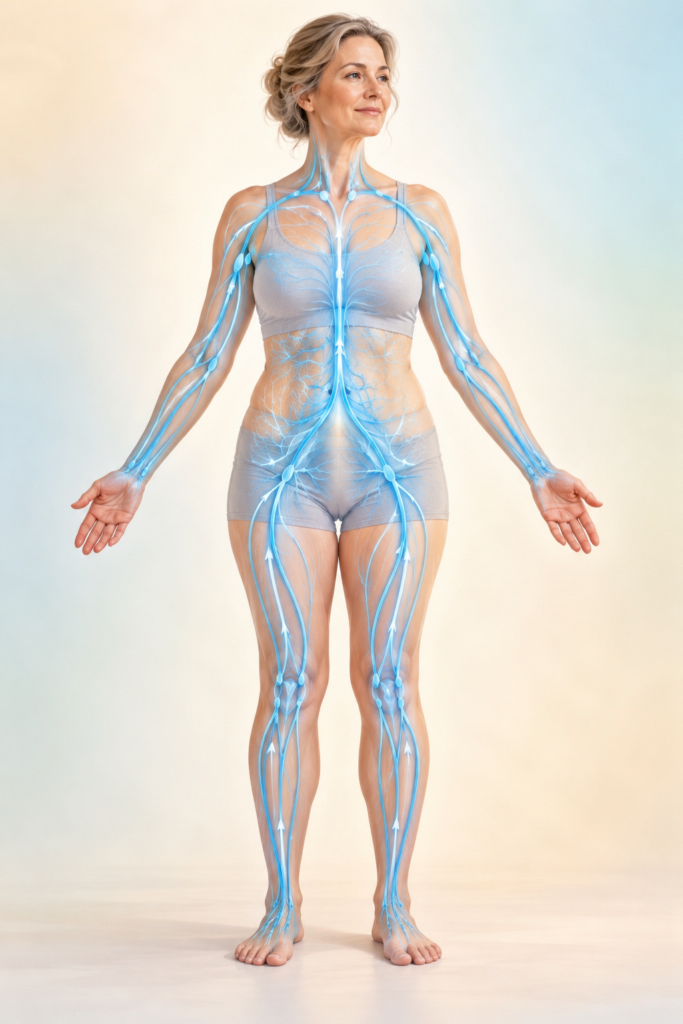
In Traditional Chinese Medicine, healthy fluid movement depends on the Lung moving fluids, the Spleen transforming them, the Kidney managing Water, and the water passages remaining open for drainage. Lymphedema occurs when channels in the affected area are injured and these organs can’t move fluid effectively, causing it to collect under the skin. The goal is to strengthen the organs that manage fluids, open the water passages, and support the movement of Qi and Blood.
The nine points work together to support the body’s fluid regulation.
- The abdominal points (CV9, ST28) help separate and drain fluids and open the water passages.
- The Lung point (LU7) supports the Lung’s role in moving fluids, especially in the upper body.
- The Spleen points (SP9, SP6, ST36, BL20) strengthen fluid transformation and restore energy after treatment.
- The Kidney points (KI7, BL23) support the Kidney’s control of Water.
How to Properly Use These Acupressure Points
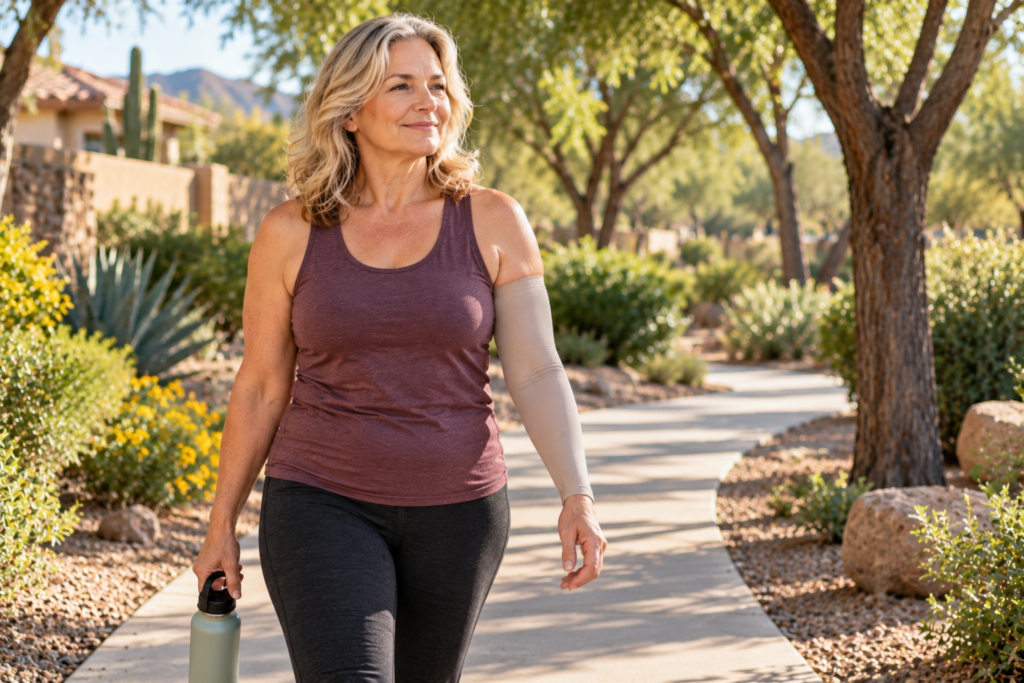
Acupressure for lymphedema should use light pressure because lymphatic vessels lie just beneath the skin and respond best to a gentle touch.
- Apply pressure to each point once daily, holding for one to two minutes. Begin with several minutes of slow, deep abdominal breathing to support lymphatic flow through the trunk.
- Do not apply pressure to points on a limb affected by lymphedema. Instead, use the corresponding point on the opposite limb. If both arms or both legs are affected, omit limb points entirely.
- Keep the pressure light everywhere, and avoid skin that is broken, irritated, recently treated with radiation, or near a surgical scar that has not fully healed.
- Combine acupressure with the compression, exercise, and lymphatic drainage plan recommended by a certified lymphedema therapist, and consult your care team before getting started.
Daily habits can help you manage lymphedema. Stay active with gentle exercise, such as walking, swimming, or exercises recommended by your lymphedema therapist. Wear compression garments as prescribed, and elevate the affected limb while resting. Protect your skin by keeping it clean and moisturized, treating small cuts promptly, and wearing gloves for gardening and housework. Avoid extreme heat, including hot tubs and saunas, and avoid tight clothing or jewelry on the affected limb. Maintain a healthy weight, limit salt, and stay well hydrated.
Learn more about how much water you should drink each day.
When to Get Professional Help
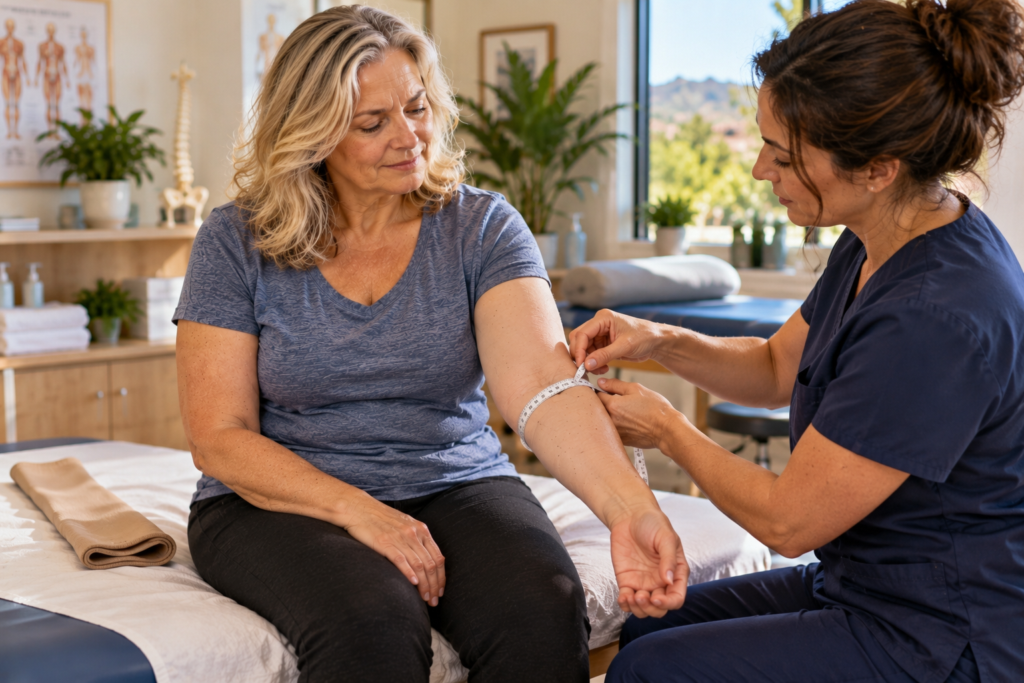
Contact your care team at the first sign of new swelling, heaviness, or tightness in an arm, leg, or other area after cancer treatment. Lymphedema is easier to manage when treated early, so ask for a referral to a certified lymphedema therapist. Call your doctor right away if you notice redness, warmth, pain, more swelling in the affected area, or a fever, as these can be signs of cellulitis, a common and serious skin infection. Get emergency care if you have sudden swelling in one leg with pain or tenderness in the calf, or if you have chest pain or sudden shortness of breath, which could mean a blood clot. If swelling appears for the first time without a history of cancer treatment, or if both legs are swollen, see a doctor to find out why. Acupressure is a gentle, supportive practice for lymphedema. It can help, but it does not replace diagnosis or medical care.
For related health concerns, acupressure for cancer-related fatigue, acupressure for cancer pain, and acupressure for chemotherapy side effects are companion articles. If treatment has also left numbness or tingling in the hands or feet, learn about acupressure for chemotherapy-induced peripheral neuropathy.
Above and Beyond Acupuncture offers acupuncture, cupping, and lifestyle coaching at the North Frank Lloyd Wright Boulevard location in Scottsdale.
Schedule an appointment online to start your healing journey.
The points above are only as effective as the technique used to apply them. Where to press, how firmly, and for how long all affect the result. For a full breakdown of how to perform acupressure properly at home, read Performing Acupressure in 3 Easy Steps.
About the Publisher
Paul Kerzner, L.Ac., is a licensed acupuncturist and board-certified herbalist, as well as the founder of Above and Beyond Acupuncture in Scottsdale. His own journey from chronic patient to practicing acupuncturist shapes his commitment to providing honest, clinically grounded information about acupuncture and Traditional Chinese Medicine. Learn more about Paul and his clinical approach on the About Us page.