
Key Takeaways
- Acupressure can help manage cancer pain alongside conventional treatments by relieving discomfort and calming the nervous system.
- Research shows that acupressure reduces cancer pain and can decrease reliance on pain medications, as supported by various medical guidelines.
- Nine specific acupressure points target pain relief, Qi movement, and emotional calming, addressing complex cancer pain issues.
- Use acupressure gently, stay consistent, and communicate with your oncology team about any pain management techniques.
- Consult a healthcare professional if pain worsens, new symptoms appear, or emotional issues occur, to ensure thorough cancer management.

Pain is one of the most common and most feared parts of living with cancer. It can come from the tumor itself pressing on bones, nerves, or organs, from surgery, from radiation, from chemotherapy that damages nerves, and from hormone therapies that make the joints ache. It can be constant or come in waves, and it is often tangled up with fatigue, poor sleep, anxiety, and the side effects of pain medication. Good medical pain management is the foundation of care, and acupressure can be a genuinely helpful addition to it, easing pain, calming the nervous system, and giving you something you can do for yourself. The points below can help.
Research on this topic is more promising than many realize. A 2020 meta-analysis in JAMA Oncology showed that acupuncture and acupressure can reduce cancer pain and decrease the need for pain medications. Guidelines from the Society for Integrative Oncology and the American Society of Clinical Oncology recommend acupuncture for aromatase inhibitor–related joint pain and list acupuncture and acupressure as options for managing general cancer pain. Studies have also examined ear acupressure and acupuncture specifically for cancer pain. While acupressure isn’t a substitute for pain medication, it can be a helpful complement.
Traditional Chinese Medicine sees cancer pain as a result of obstruction and depletion. Tumors, surgery, or radiation can damage tissues, leading to Qi and Blood stagnation. This stiffness causes deep, persistent pain that often worsens at night. The illness and its treatments also drain the body’s Qi, Blood, and Yin, leading to tissue aches and slow recovery. Chemotherapy may harm channels in the hands and feet, causing neuropathic burning and tingling, while hormone therapies can stiffen and inflame the sinews and joints. Emotional factors like fear, grief, and exhaustion can disturb the Shen, heightening pain sensitivity.
Here are nine acupressure points to help move stagnated Qi and Blood, replenish what is drained, relax sinews and joints, alleviate medication side effects, and calm the mind.
What Acupressure Points to Press and Why
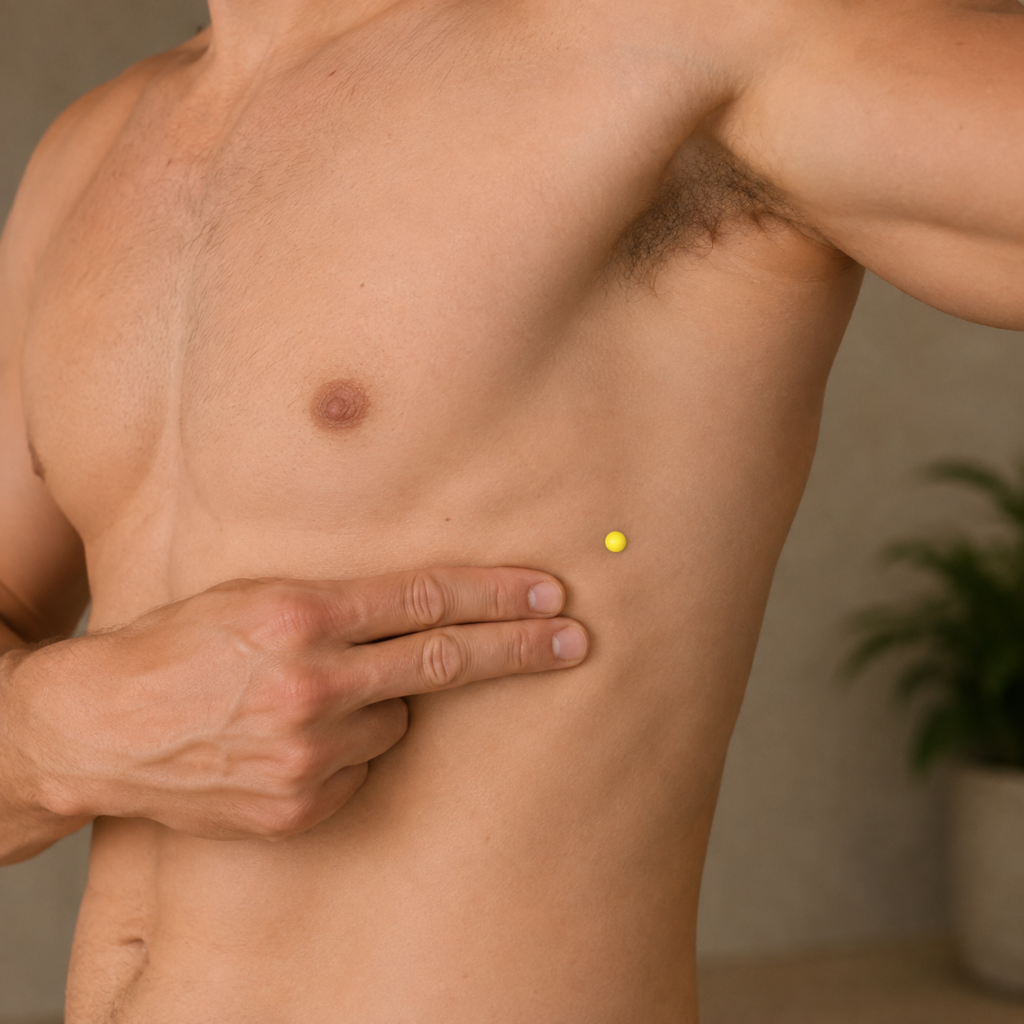
1. Press on SP21 on the side of the chest for pain throughout the body. SP21 sits on the side of the rib cage, on a line straight down from the center of the armpit, about a hand’s width below the armpit in the space between the ribs. Cross your arms over your chest as if giving yourself a hug, and press gently into the sides of the ribs with your fingertips for one to two minutes. SP21 is called “Dabao,” the “Great Embracing,” and it is the Great Luo point of the Spleen. Skip this point if you have had surgery, radiation, or a tumor in the chest wall, breast, or armpit on that side.
SP21 is known for helping with pain that is felt all over the body as well as weakness and heaviness in the limbs. For cancer pain that is widespread, aching, or hard to describe, this point can help the whole body at once. Its name, the Great Embracing, matches the way you press it by wrapping your arms around yourself, which many people find comforting. Be sure to keep the pressure gentle.
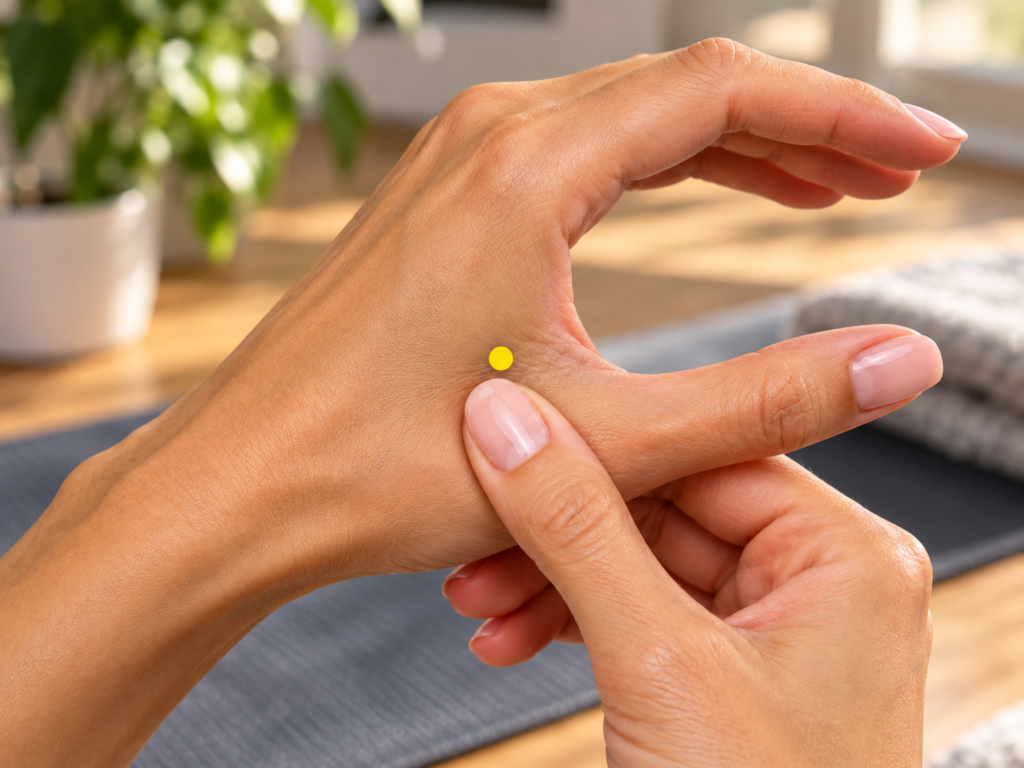
2. Press on LI4 in the hand to relieve pain. LI4 sits in the webbing between the thumb and index finger, at the highest point of the muscle when you bring them together. Press firmly with the thumb of your other hand for one to two minutes on each hand. LI4 is called “Hegu,” and it is one of the most powerful pain-relieving points in the body. LI4 is contraindicated during pregnancy.
LI4 promotes the movement of Qi throughout the body and is widely recognized for its ability to induce natural pain relief. It can alleviate pain even without pressing directly on the affected spot. Located on the hand, you can activate this point whenever pain worsens, even while waiting for the effects of medication.
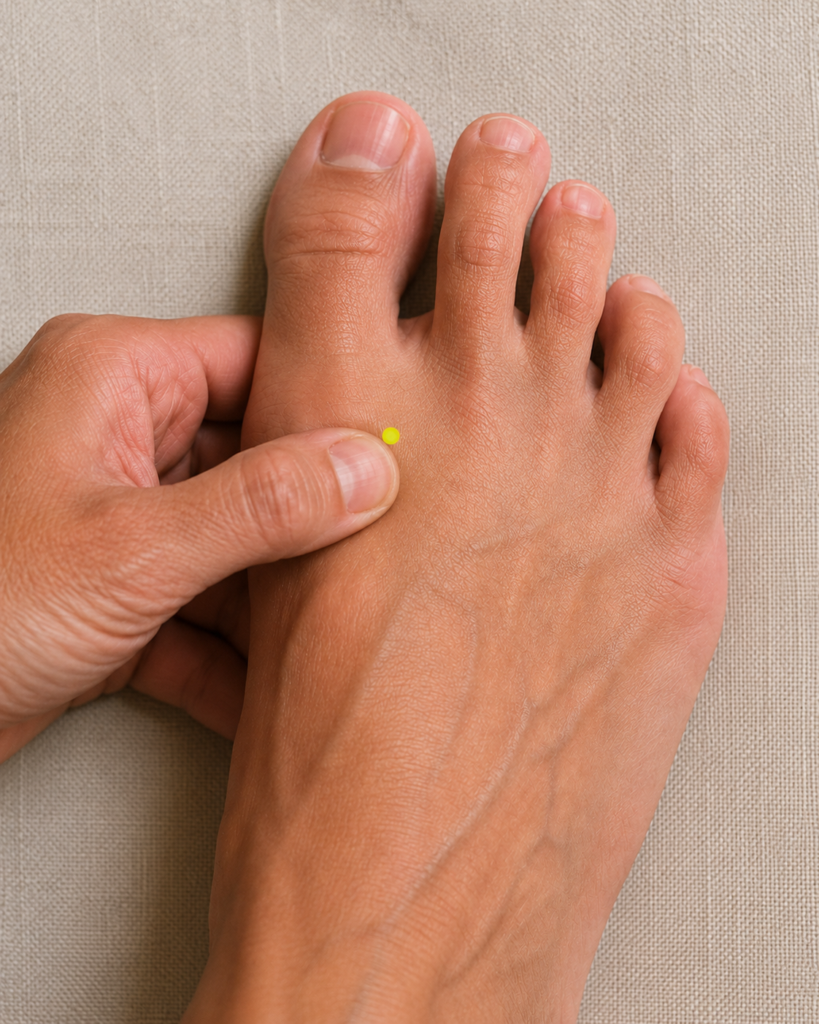
3. Press on LR3 on the top of the foot to complete the Four Gates. LR3 sits on the top of the foot, in the webbing between the big toe and second toe, about two finger-widths back where the bones meet in a small hollow. Press firmly with your thumb for one to two minutes on each foot. LR3 is called “Taichong,” and it is the primary point for moving stuck Liver Qi.
LR3 helps release stuck Qi, reduces tension and stress that can worsen pain, and helps ground your body. When used together with LI4, these points form the Four Gates, a key combination in acupuncture for moving Qi and Blood and easing pain anywhere in the body. Pressing all four points on both hands and both feet is a simple routine a family member can do for you.
4. Press on Ear Shenmen to calm pain through the ear. Ear Shenmen sits in the upper part of the ear, in the triangular hollow near the top, at its apex. Press gently with your fingertip or squeeze between your finger and thumb for about a minute on each ear. Ear Shenmen shares its name, “Spirit Gate,” with the Heart point HT7.
Researchers have explored the ear’s role in managing cancer pain, with Ear Shenmen being a widely used point to relieve pain and calm the nervous system. It effectively calms the Shen, reduces anxiety that could intensify pain, and can be pressed while lying down. Because the ear is distant from other treatment sites, it offers a safe option when your body is sore or has recently undergone treatment.

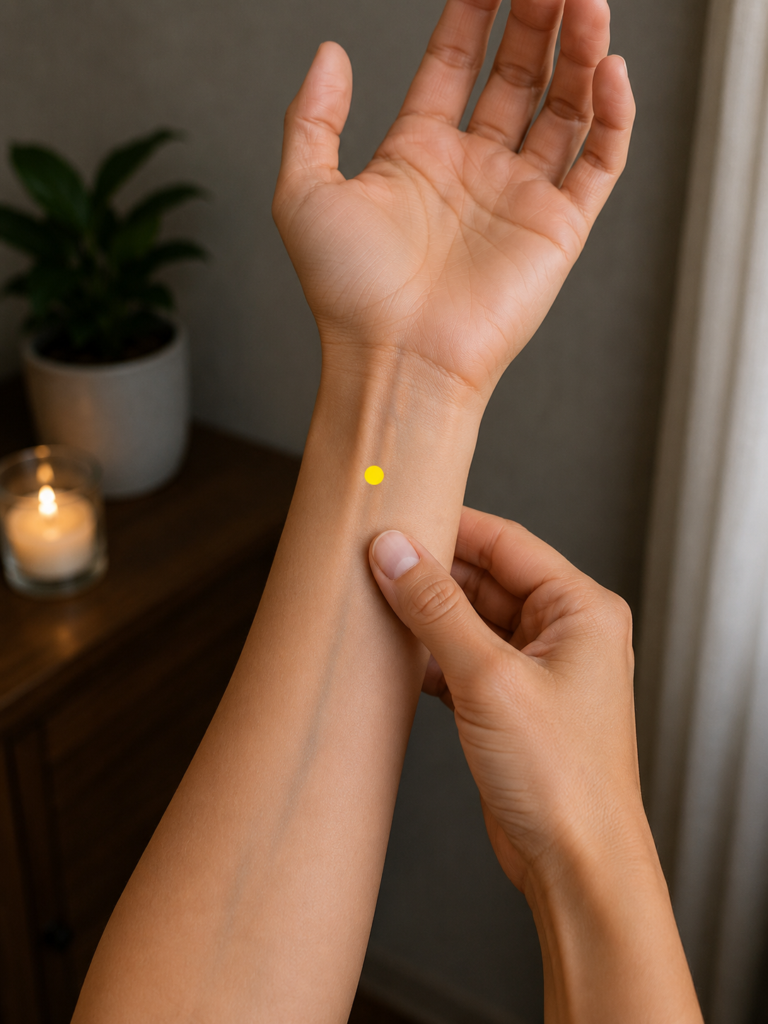
5. Press on PC6 on the inner forearm for pain and nausea. PC6 sits three finger-widths above the inner wrist crease, in the center of the forearm between the two tendons. Press firmly with your thumb for one to two minutes on each arm. PC6 is called “Neiguan,” the “Inner Pass,” and it opens the chest, calms the mind, and settles the stomach.
Pain and nausea often go together during cancer treatment because chemotherapy, radiation, and pain medications can upset your stomach. PC6 is the most studied point for nausea and also helps calm the Heart and ease pain in the chest and upper body. If you have pain with queasiness, or nausea from pain medication, this point can help with both.
6. Press on GB34 below the outer knee for joint and muscle pain. GB34 sits on the outer lower leg, in the hollow just below and in front of the head of the fibula, the bony knob below the outer side of the knee. Press firmly with your thumb for one to two minutes on each leg. GB34 is called “Yanglingquan,” and it is the influential point for the sinews, tendons, and muscles.
Hormone therapies, particularly aromatase inhibitors used in breast cancer treatment, frequently lead to aching and stiff joints. Acupuncture has the strongest evidence for relieving this type of pain. The primary acupuncture point for addressing sinew-related issues is GB34, which helps relax stiff joints and tense muscles throughout the body. It also helps reduce muscle tension that often accumulates with ongoing pain.
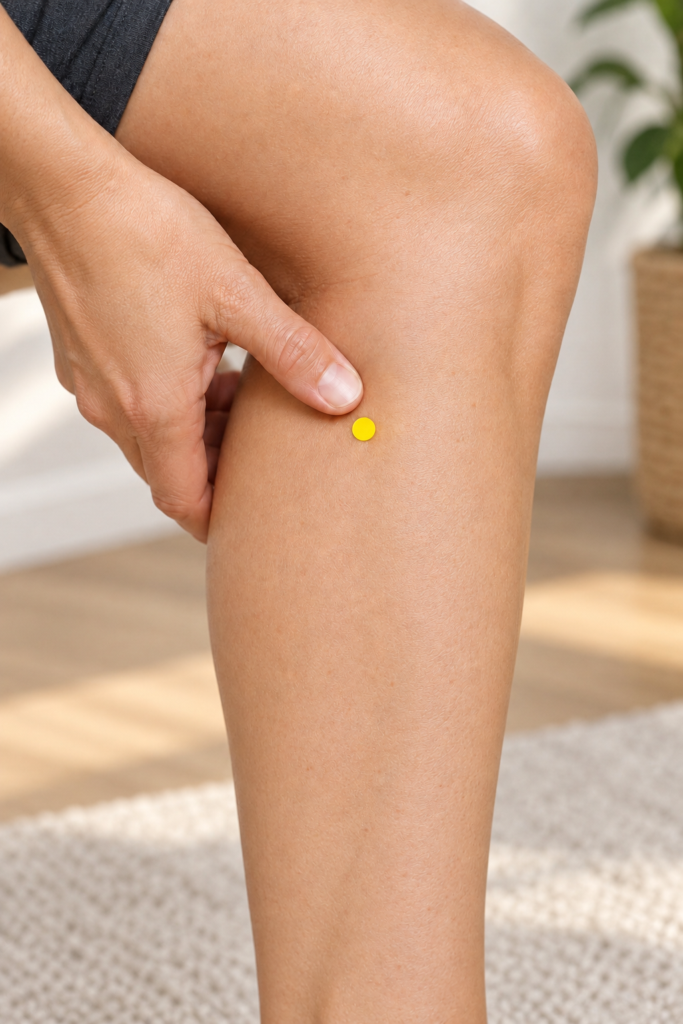
7. Press on ST36 below the knee to rebuild strength and resilience. ST36 sits four finger-widths below the lower edge of the kneecap and one finger-width to the outside of the shinbone, on the muscle that rises when you flex your foot. Press firmly with your thumb for one to two minutes on each leg. ST36 is called “Zusanli,” the “Leg Three Miles,” and it is the master point for building Qi and Blood.
Cancer and its treatments can weaken your body, increasing tissue pain and slowing healing. ST36 helps restore Qi and Blood, boosts appetite and digestion, and supports your body’s ability to manage treatment and recovery. It is a well-researched and essential acupuncture point for daily use.
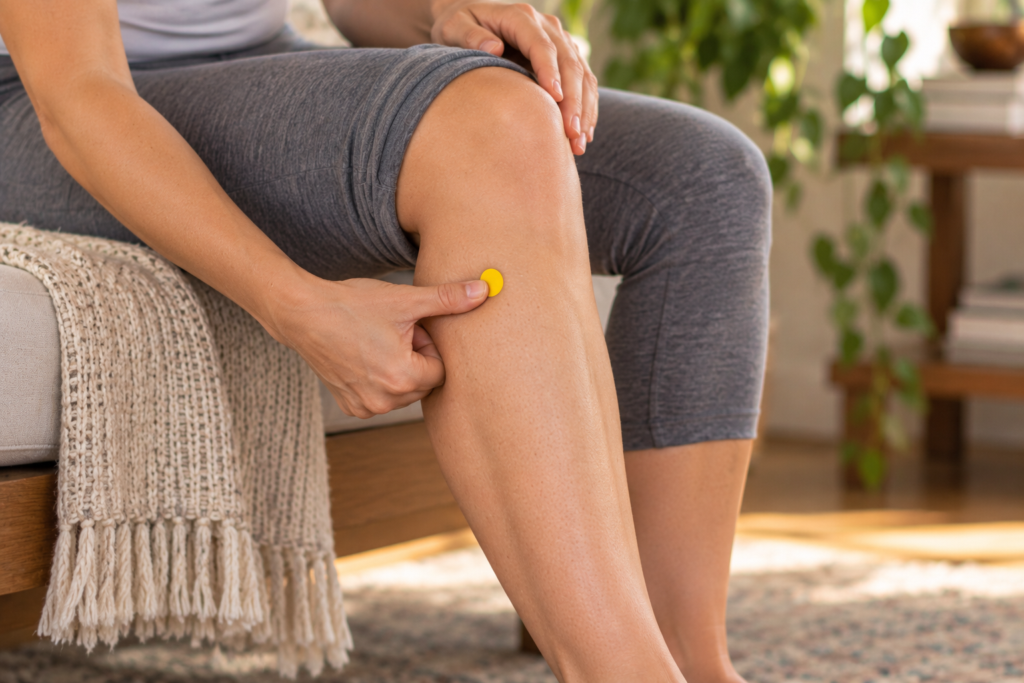
8. Press on SP6 above the inner ankle to nourish and move the Blood. SP6 sits four finger-widths up from the tip of the inner ankle bone, just behind the back edge of the shinbone. Press firmly for one to two minutes on each leg. SP6 is called “Sanyinjiao,” the “Three Yin Intersection,” where the Spleen, Liver, and Kidney channels meet. SP6 is contraindicated during pregnancy.
SP6 supports nourishing and moving Blood, addressing both depletion and stagnation that may lead to cancer pain. It benefits the Spleen, Liver, and Kidney, calms the mind, and can improve sleep issues often associated with pain. This point is particularly effective in the evening when preparing to rest.
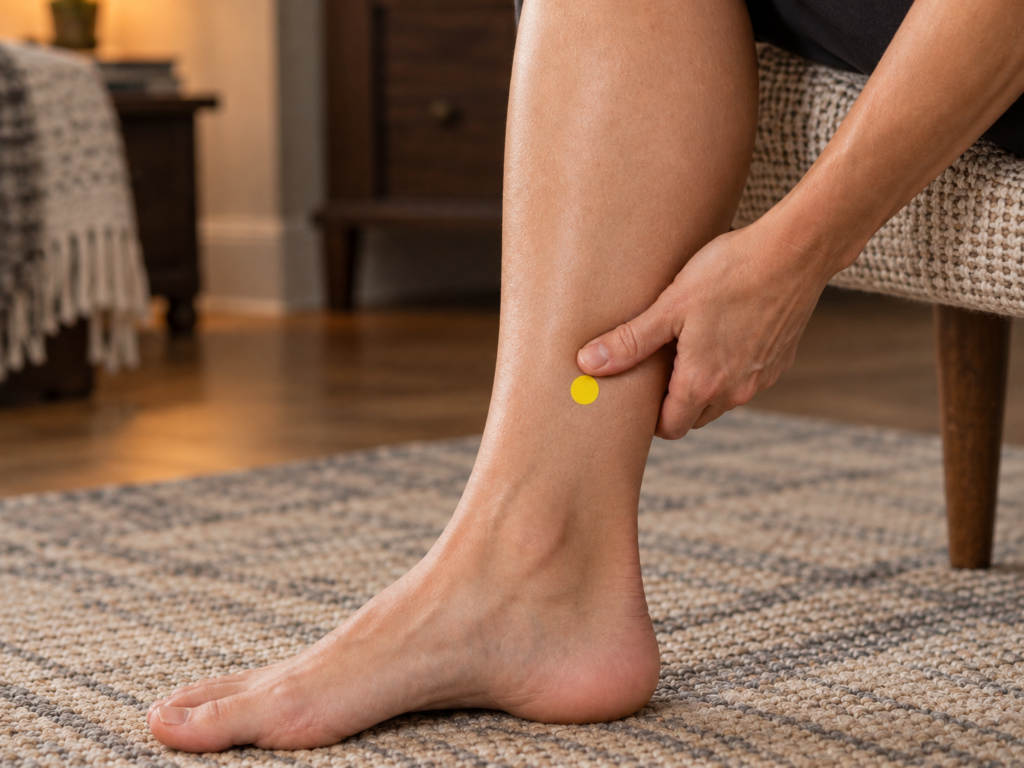
9. Press on HT7 at the wrist to calm the mind and ease pain. HT7 sits on the inner wrist crease, on the pinky side, in the small hollow just inside the tendon. Press gently to firmly with your thumb for one to two minutes on each wrist. HT7 is called “Shenmen,” the “Spirit Gate,” and it is the most important point for calming the Shen.
In Traditional Chinese Medicine, pain is associated with the Heart, and emotions such as fear, grief, and insomnia can intensify the sensation. HT7 helps soothe the Heart and calm the Shen, reducing anxiety and restlessness that may amplify pain, while also promoting restful sleep essential for healing. It pairs effectively with Ear Shenmen, the two Spirit Gates, for a calming bedtime routine or during challenging times.
Why These Acupressure Points Work
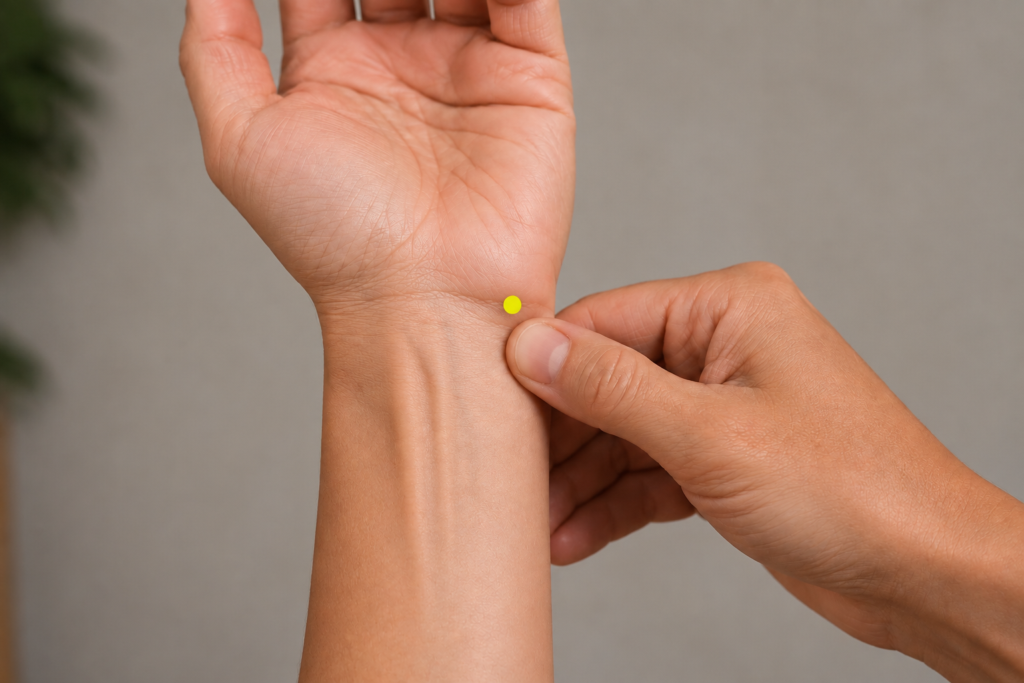
In Traditional Chinese Medicine, cancer pain is considered a combination of Qi and Blood stagnation, tissue disruption, depletion from illness and treatment, and an unsettled Shen that exacerbates pain. The nine points aim to target all these aspects.
- The whole-body points (SP21, LI4, LR3) move Qi and Blood throughout the body and ease pain from a distance; LI4 and LR3 form the Four Gates.
- The calming points (Ear Shenmen, HT7) settle the Shen (Spirit) and the nervous system that amplifies pain.
- The points for side effects (PC6, GB34) help reduce nausea caused by pain, medication, and the joint and muscle pain associated with hormone therapy.
- The rebuilding points (ST36, SP6) replenish the Qi and Blood lost during treatment and aid restful sleep and recovery.
Research indicates that acupuncture and acupressure can be effective complements to medical pain management, potentially alleviating pain and decreasing reliance on pain medications.
How to Properly Use These Acupressure Points
Always focus on being gentle and safe first, then maintain consistency in your routine.
- Avoid pressing on or close to a tumor, surgical incision, port, drain, or skin that has recently undergone radiation treatment.
- If you have cancer that has metastasized to the bones, apply gentle pressure and avoid pressing on any painful or affected bones.
- If you’ve had lymph nodes removed or experience lymphedema, apply gentle pressure to that limb or focus on the points on the opposite side.
- If your platelet count is low or you tend to bruise easily, apply gentle pressure and consult your oncology team before proceeding.
- Work the Four Gates (LI4 & LR3), ST36, SP6, and HT7 daily; add Ear Shenmen and PC6 for pain or nausea, and use GB34 for joint pain. Hold each for 1-2 minutes with steady pressure.
- A family member or caregiver can handle most of these points for you, which many find reassuring.
- Continue taking your prescribed pain medication exactly as instructed. Acupressure complements your medication rather than replacing it, so be sure to inform your care team that you are using it.
Gentle movement when possible, applying warmth to sore muscles away from treated areas, ensuring restful sleep, and providing emotional support can be beneficial. Palliative care teams are experienced in managing pain and symptoms at all cancer stages, not just at the end of life. If your pain persists and is poorly managed, requesting a referral could help.
When to Get Professional Help
Notify your oncology team about any new, worsening, or unmanageable pain. Proper adjustments typically improve cancer pain control. Seek emergency care if you experience new back or neck pain with weakness, numbness, or tingling in your limbs, or if you lose bladder or bowel control, as these may signal spinal cord pressure and need urgent attention. Also, seek immediate help for sudden severe pain, new bone pain (especially after a fall or minor injury), pain with fever during chemotherapy, or a severe headache with vomiting or confusion.
Emotional support is essential; share feelings of pain, fear, or exhaustion with your team. If you’re thinking about self-harm, reach out to or text the 988 Suicide and Crisis Lifeline.
Acupressure can be a helpful, low-risk addition to cancer pain management and should complement your overall treatment plan.
Above and Beyond Acupuncture offers acupuncture, cupping, and lifestyle coaching at the North Frank Lloyd Wright Boulevard location in Scottsdale.
Schedule an appointment online to start your healing journey.
The points above are only as effective as the technique used to apply them. Where to press, how firmly, and for how long all affect the result. For a full breakdown of how to perform acupressure properly at home, read Performing Acupressure in 3 Easy Steps.

About the Publisher
Paul Kerzner, L.Ac., is a licensed acupuncturist and board-certified herbalist, as well as the founder of Above and Beyond Acupuncture in Scottsdale. His own journey from chronic patient to practicing acupuncturist shapes his commitment to providing honest, clinically grounded information about acupuncture and Traditional Chinese Medicine. Learn more about Paul and his clinical approach on the About Us page.