Key Takeaways
- Mood swings are pronounced emotional fluctuations that may be influenced by various factors, including hormonal changes, stress, and diet.
- Traditional Chinese Medicine identifies specific acupressure points to support emotional stability and promote the smooth flow of Liver Qi.
- Daily acupressure may help promote emotional stability for individuals experiencing mood swings. Consider focusing on key points such as CV15, PC7, and BL47.
- Maintaining a healthy routine is essential; regular meals, consistent sleep, and exercise can help regulate mood.
- Seek professional assistance if mood swings are severe, frequent, or interfere with daily life, as they may indicate underlying concerns.

One moment, everything feels okay; the next, a small comment can spark anger or bring you to tears. By evening, you may feel completely drained. Mood swings can make you feel unpredictable to yourself and others, often leaving you guilty or confused about your intense reactions.
Everyone’s mood shifts throughout the day. Hunger, fatigue, good news, and bad news can all affect it. Mood swings are different: the changes are more intense, happen more quickly, or occur more often than expected. They may follow a monthly pattern, emerge during hormonal changes, or build after weeks of poor sleep and high stress.
According to Cleveland Clinic, mood swings are sudden changes in how a person feels, and common causes include hormonal shifts during PMS, pregnancy, the postpartum period, and menopause, along with poor sleep and some medications. Hormones commonly contribute to mood swings. Changes in estrogen and progesterone before a period, during pregnancy, after childbirth, and throughout perimenopause can affect how your brain works. Shifts in testosterone and thyroid levels can also influence your mood. Blood sugar plays a role, too: skipping meals or eating sugary snacks can cause sharp drops, leading to irritability and low energy. Poor sleep, ongoing stress, caffeine, alcohol, and some medications may make mood swings worse. They can also be associated with depression, anxiety, ADHD, or bipolar disorder.
In Traditional Chinese Medicine, the Liver helps Qi and emotions flow smoothly. Stress or hormonal changes can block Liver Qi, building pressure that releases in bursts and causes swings from irritability to tearfulness and back again. The Liver also stores the Hun, the part of the spirit that gives direction to your emotions. If the Heart, which holds the Shen, loses its anchor and Yin and Yang fall out of balance, moods can rise and fall without a steady center.
These nine points help the Liver Qi flow smoothly, anchor the spirit, restore Yin-Yang balance, and keep energy steady throughout the day.
What Acupressure Points to Press and Why
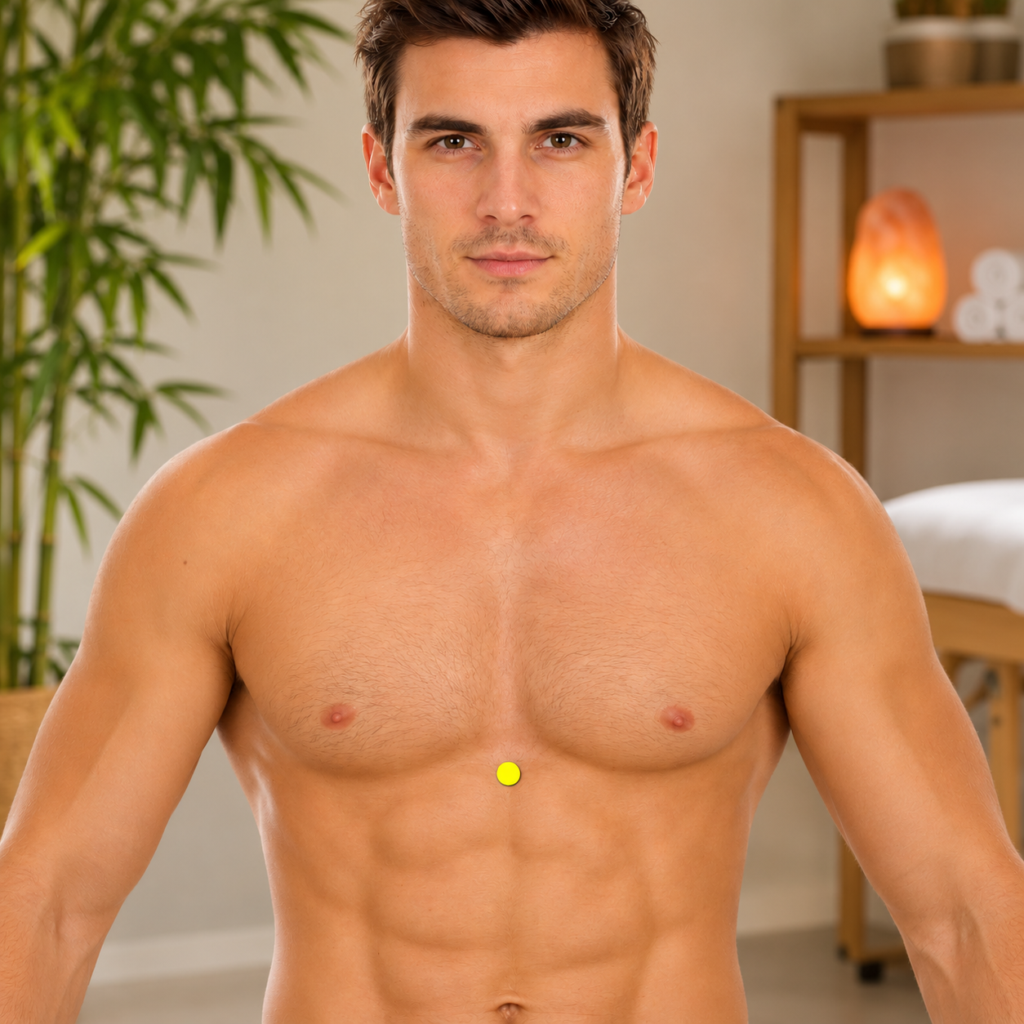
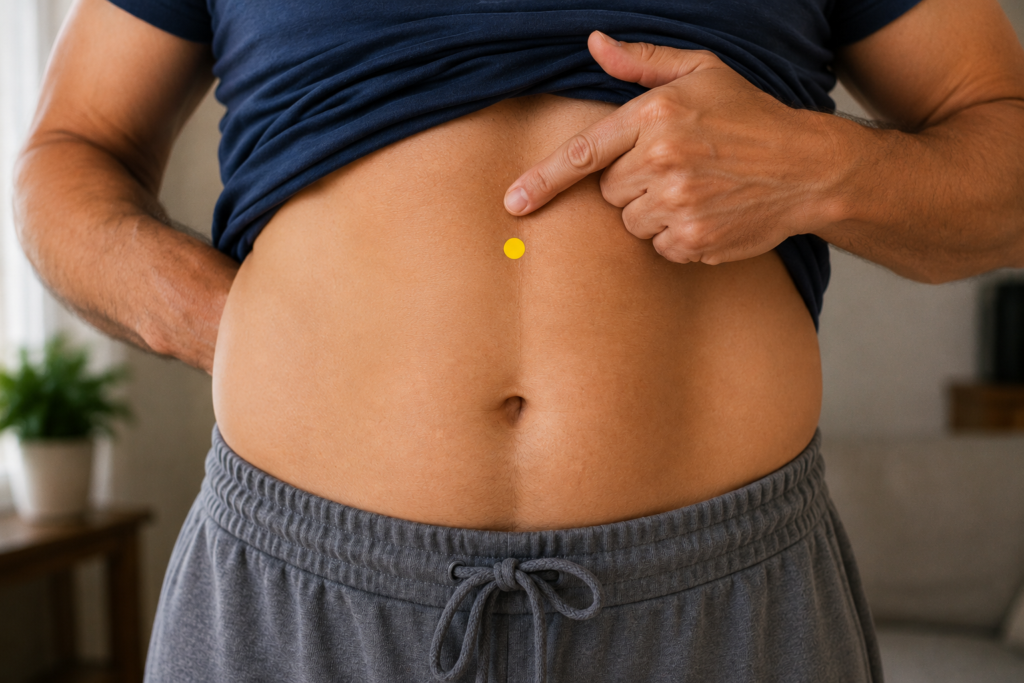
1. Press on CV15 below the breastbone to steady the highs and lows. CV15 sits on the midline of the upper abdomen, about one thumb-width below the spot where the lower ribs meet at the bottom of the breastbone. Rest your fingertips on the point and press gently, or make slow circles, for one to two minutes while breathing into the belly. CV15 is called “Jiuwei,” the “Turtledove Tail.”
CV15 is the connecting point of the Conception Vessel and one of the most important points in Traditional Chinese Medicine for calming the Shen. It has long been used to address emotional states that swing between extremes, from agitation to low mood. It also eases the tight, fluttery feeling that often settles just below the breastbone during an emotional surge.
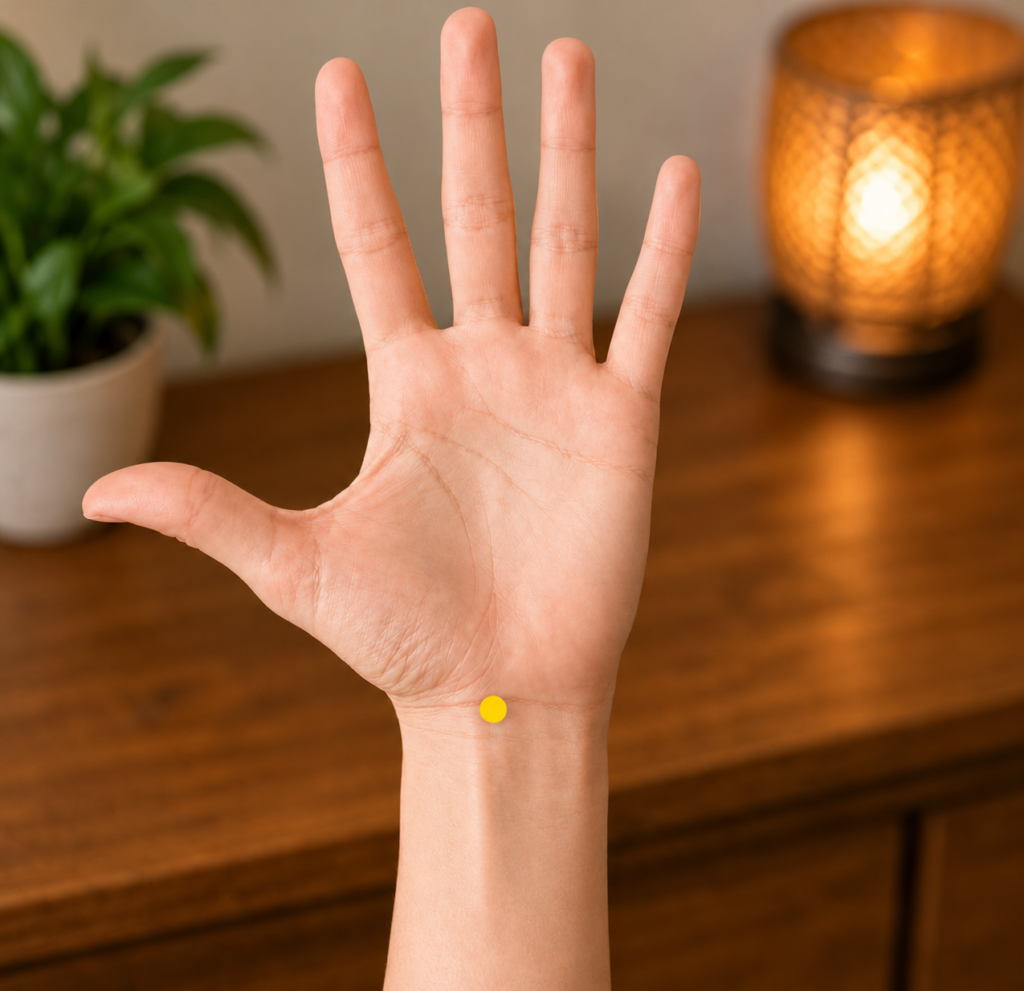
2. Press on PC7 at the center of the wrist to calm the Heart. PC7 sits at the center of the inner wrist crease, between the two tendons. Press firmly with the thumb of your other hand for one to two minutes on each wrist. PC7 is called “Daling,” the “Great Mound.”
PC7 is the Pericardium’s source point, and the Pericardium protects the Heart. In Traditional Chinese Medicine, it’s used for both ends of an emotional swing, from restlessness and agitation to sadness and tearfulness. It helps settle the Shen and steady the heartbeat, and is easy to press discreetly when a mood starts to shift.
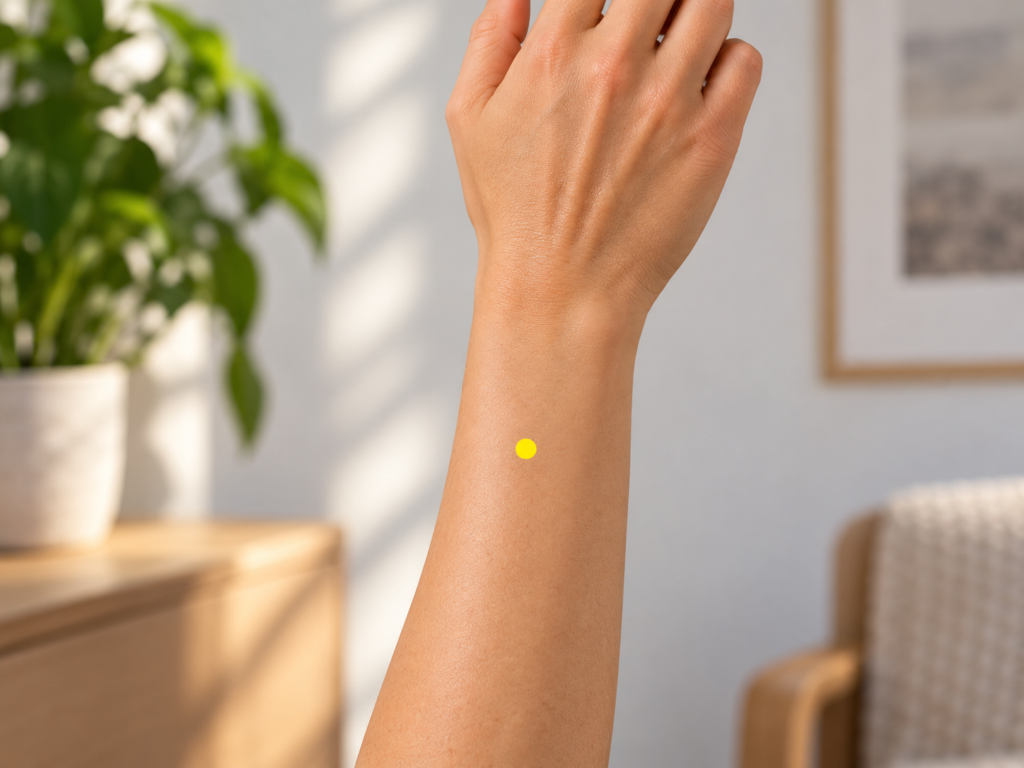
3. Press on TE5 on the back of the forearm to restore balance. TE5 sits on the back of the forearm, three finger-widths above the wrist crease, between the two forearm bones. Press firmly with the thumb of your other hand for one to two minutes on each arm. TE5 is called “Waiguan,” the “Outer Pass.”
TE5 belongs to the Shaoyang channels, which Traditional Chinese Medicine describes as the body’s hinge between inside and outside. Shaoyang imbalances often appear in alternating patterns, such as hot and cold or up and down, much like mood swings. TE5 helps this hinge move smoothly and pairs with GB41 on the foot.
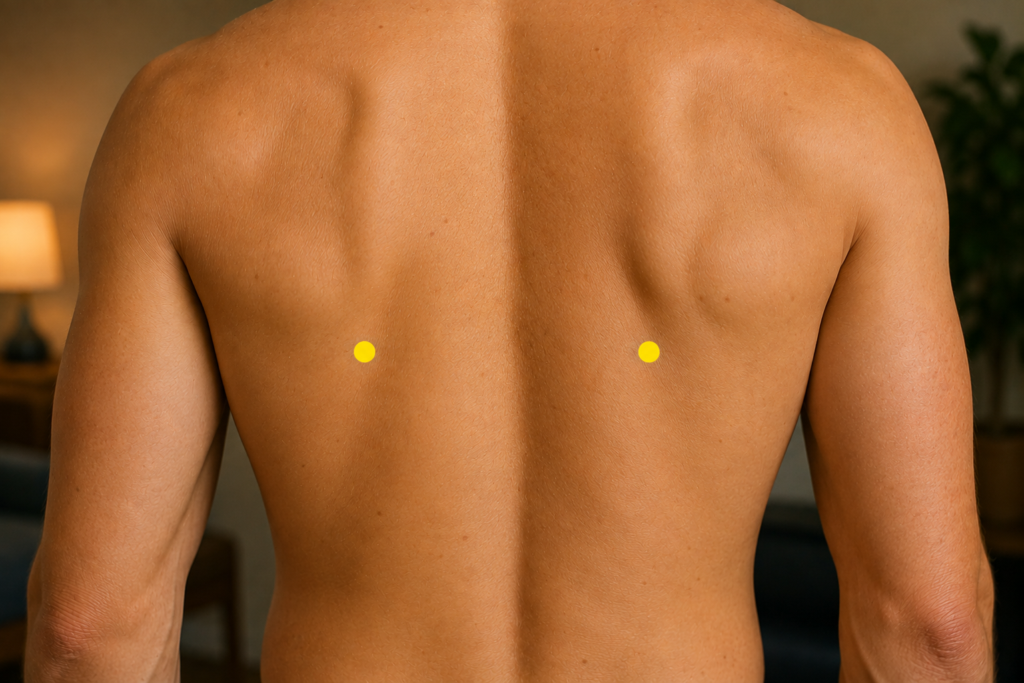
4. Press on BL47 on the middle back to settle the Hun. BL47 sits on the middle back, about four finger-widths to each side of the spine, roughly two vertebrae below the level of the bottom tips of the shoulder blades. Since this area is hard to reach, place a tennis ball between your back and a wall, lean into it gently, and hold for one to two minutes on each side. BL47 is called “Hunmen,” the “Gate of the Ethereal Soul.”
BL47 lies beside the Liver’s back point and is named after the Hun, the part of the spirit stored in the Liver. The Hun gives emotional life a sense of direction; when unsettled, moods can easily drift and shift. BL47 helps settle the Hun and release stress-related tension across the middle back.
5. Press on CV12 on the upper abdomen to keep energy steady. CV12 sits on the midline of the upper abdomen, halfway between the bottom of the breastbone and the navel. Rest your fingertips or a warm palm on the point and press gently, or make slow clockwise circles, for one to two minutes. CV12 is called “Zhongwan,” the “Middle Cavity.”
CV12 is the alarm point of the Stomach and a primary point for digestion in Traditional Chinese Medicine. A strong Spleen and Stomach turn food into steady energy. When digestion is weak, or meals are skipped, energy and mood can rise and fall together. CV12 supports digestion and helps keep the body balanced.
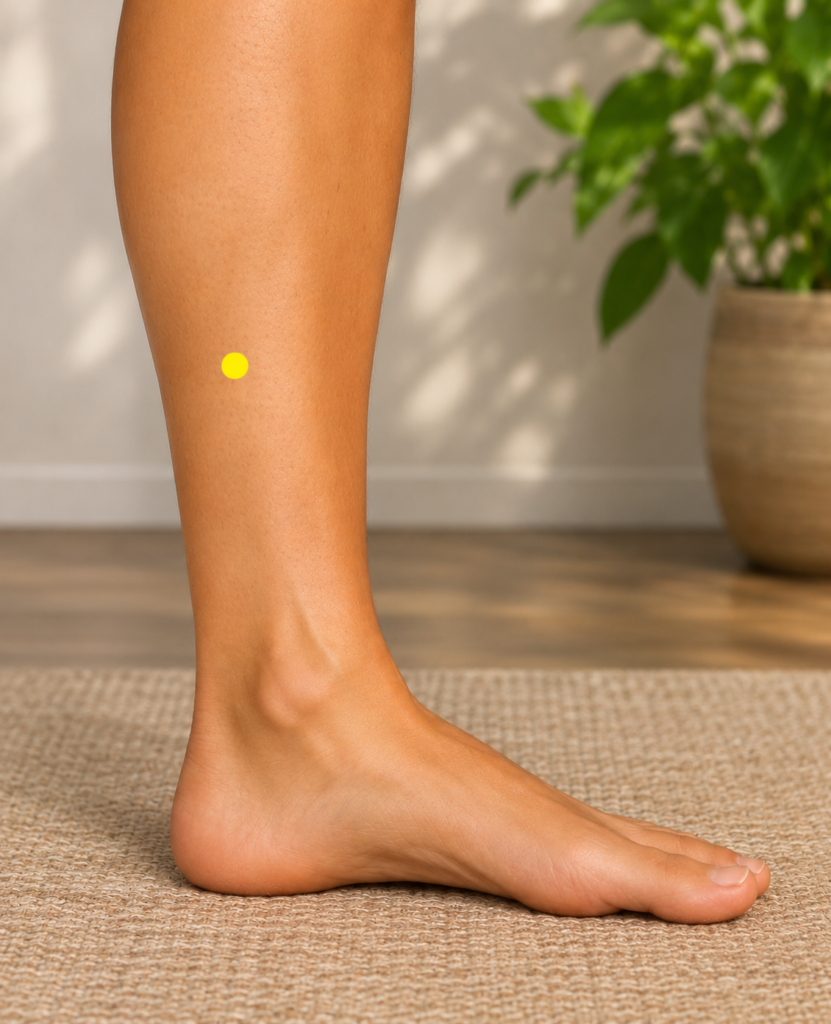
6. Press on LR5 on the inner shin to smooth the cycle. LR5 sits on the inner side of the lower leg, about seven finger-widths above the tip of the inner ankle bone, on the flat inner surface of the shinbone. Press firmly with your thumb for one to two minutes on each leg. LR5 is called “Ligou,” the “Woodworm Canal.”
LR5 connects the Liver to the genitals and lower abdomen. In Traditional Chinese Medicine, it addresses emotional ups and downs related to the menstrual cycle, irregular periods, and the stress-related feeling that something is stuck in the throat. It helps the Liver Qi flow smoothly, preventing tension from building into outbursts.
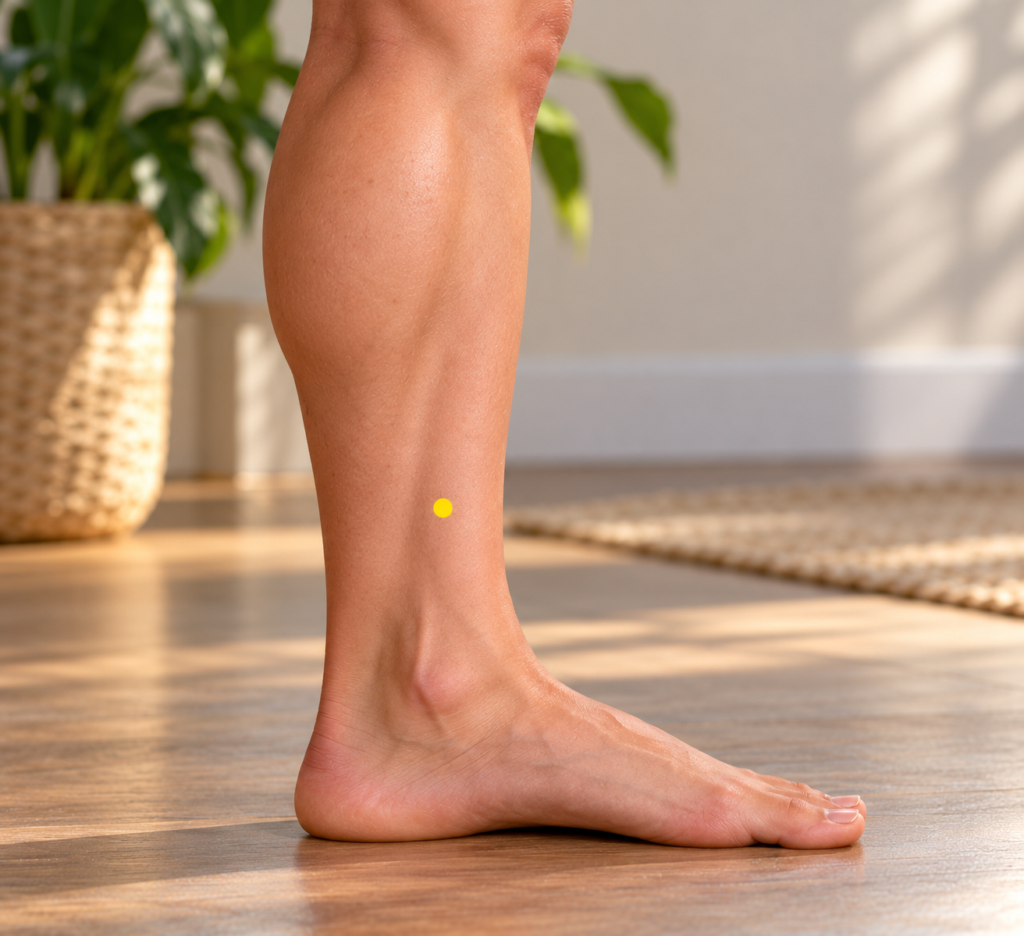
7. Press on KI9 on the inner calf to calm and nourish the Yin. KI9 sits on the inner side of the lower leg, about seven finger-widths above the hollow behind the inner ankle bone, where the calf muscle begins to rise, about one thumb-width behind the inner edge of the shinbone. Press firmly with your thumb for one to two minutes on each leg. KI9 is called “Zhubin,” the “Guest House.”
KI9 is the cleft point of the Yin Linking Vessel, which connects and steadies the body’s Yin. In Traditional Chinese Medicine, it is used for agitation, restlessness, and moods that shift toward anger or distress. It nourishes Kidney Yin, the body’s cooling, calming reserve that helps keep emotions steady.
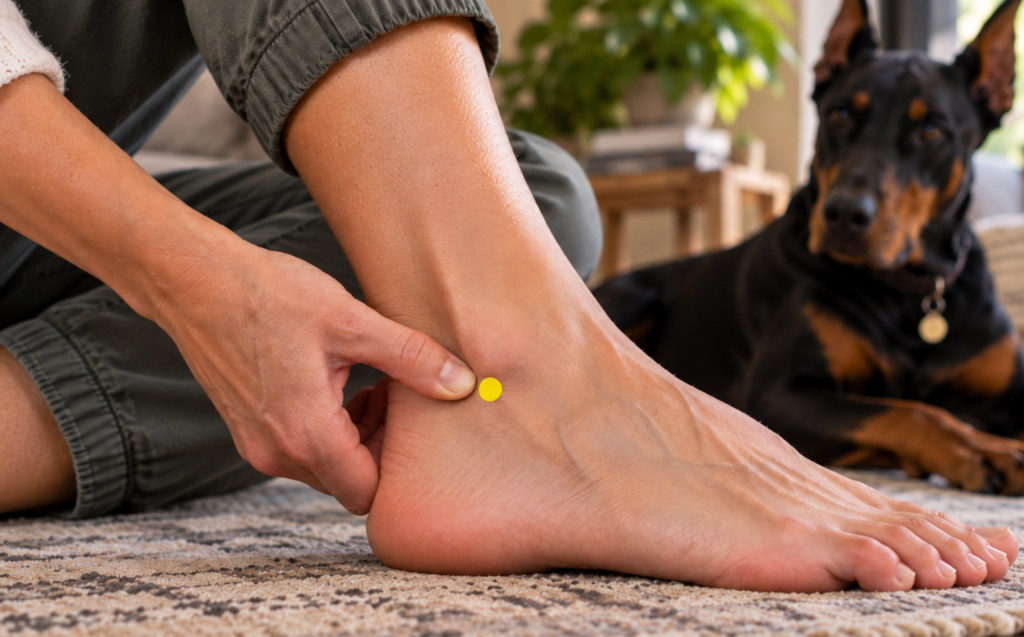
8. Press on BL62 below the outer ankle to balance activity and rest. BL62 sits in the hollow directly below the tip of the outer ankle bone. Press firmly with your thumb for one to two minutes on each foot. BL62 is called “Shenmai,” the “Extending Vessel.”
BL62 opens the Yang Heel Vessel, which governs activity, wakefulness, and the balance of Yin and Yang in the body. When this balance is disrupted, a person may swing between restless, wired energy and heavy fatigue. BL62 helps restore a steadier rhythm between activity and rest and supports more settled sleep.
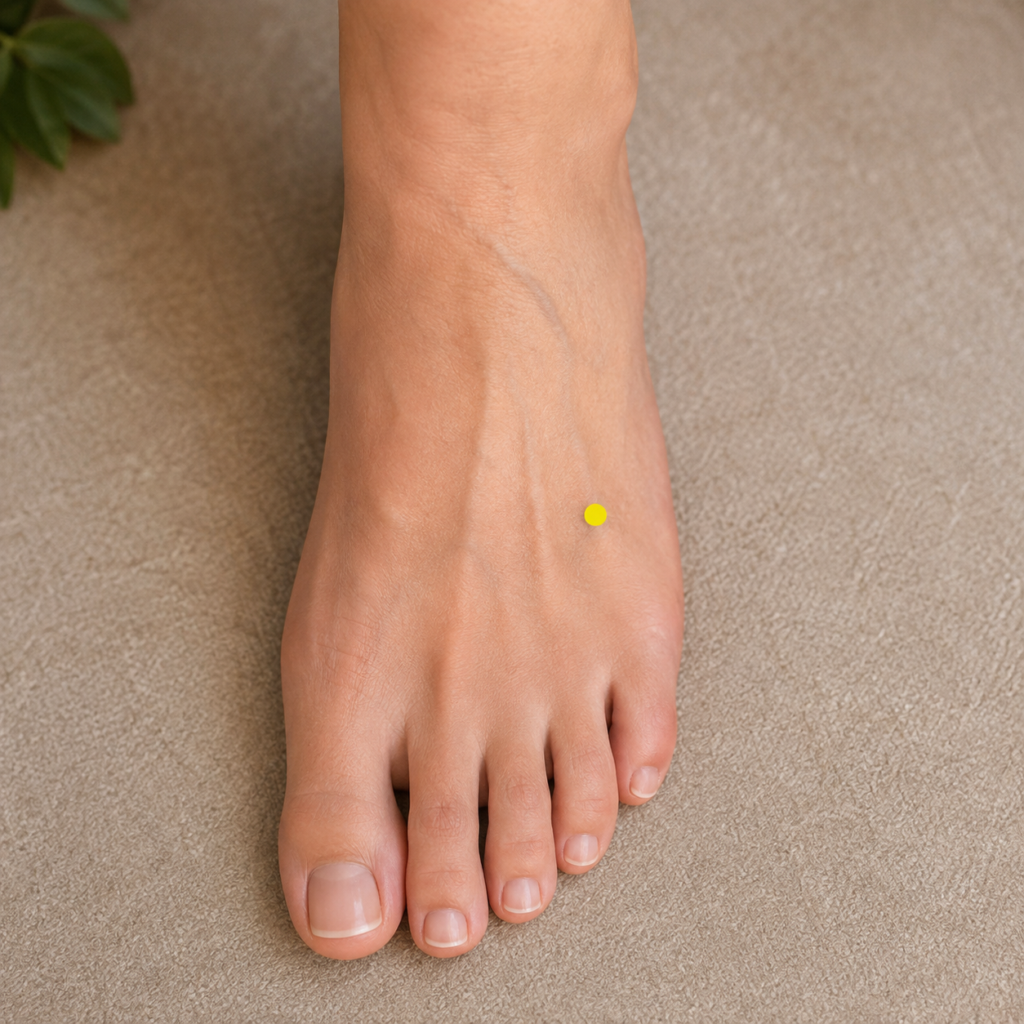
9. Press on GB41 on the top of the foot to release built-up tension. GB41 sits on the top of the foot, in the hollow just in front of where the bones leading to the fourth and fifth toes meet, on the outer side of the small tendon to the little toe. Press firmly with your thumb for one to two minutes on each foot. GB41 is called “Zulinqi,” the “Foot Governor of Tears.”
GB41 opens the Girdle Vessel, the channel that wraps around the waist. It is a classic point for irritability, breast tenderness, and the tension that builds before a period. Paired with TE5, it forms one of the main combinations for the Shaoyang channels, helping the hinge of the emotions open and close smoothly.
Why These Acupressure Points Work

In Traditional Chinese Medicine, a steady mood relies on smoothly flowing Liver Qi, a Shen anchored in the Heart, balanced Yin and Yang, and strong digestion to provide steady energy. Mood swings arise when one or more of these becomes unbalanced, so the routine addresses each factor.
The nine points work together to stabilize the mood:
- The Heart points (CV15, PC7) anchor the Shen and calm both sides of an emotional swing.
- The Liver and Shaoyang points (TE5, GB41, LR5, BL47) smooth the flow of Liver Qi, settle the Hun, and release tension before it turns into outbursts.
- The balancing points (KI9, BL62) nourish the Yin and restore an even rhythm between activity and rest.
- The digestive point (CV12) supports the steady energy that helps keep moods even.
How to Properly Use These Acupressure Points
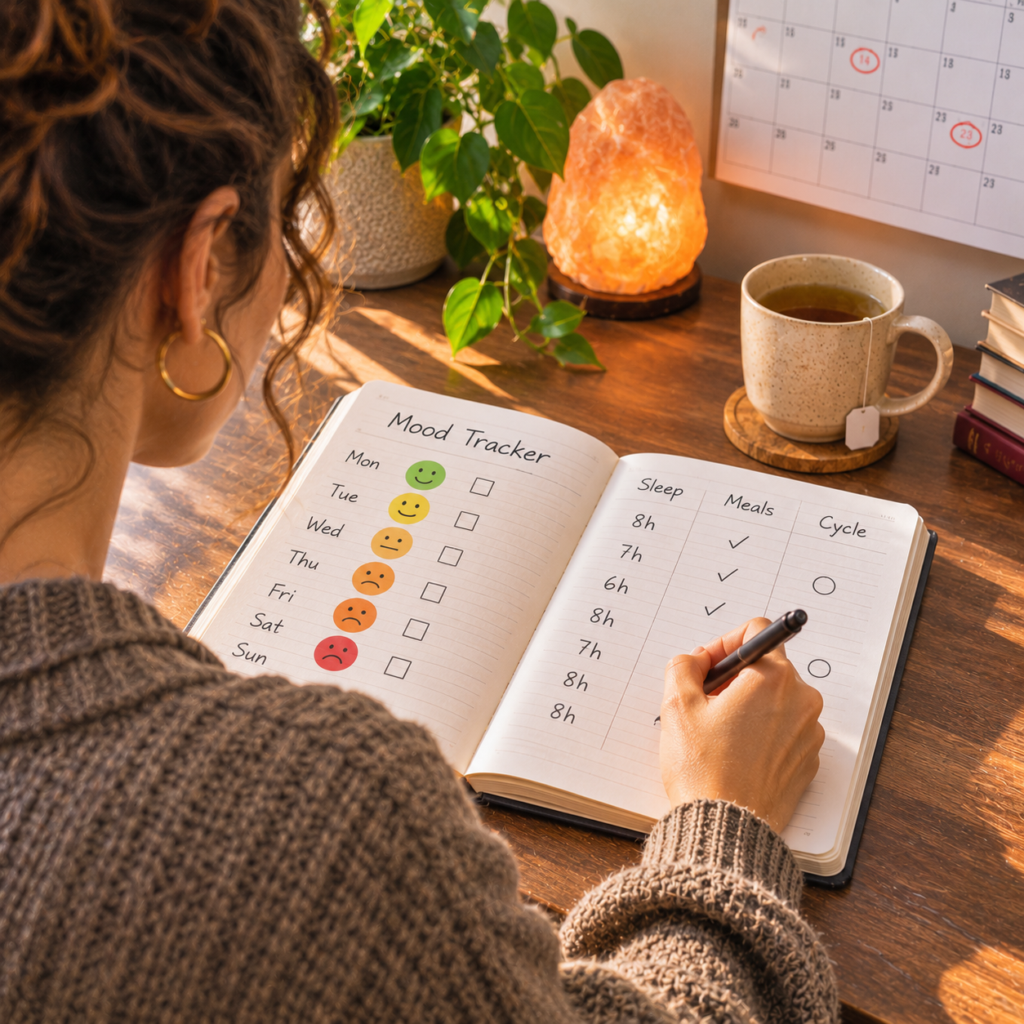
Acupressure for mood swings is most effective as a daily routine, with extra attention during the times of the month or day when moods are more likely to shift.
- Complete the full routine once daily, holding each position for one to two minutes, preferably at the same time each day.
- As your mood begins to shift, press PC7 on both wrists, then CV15, and take five slow breaths.
- If mood swings track the menstrual cycle, focus especially on LR5, GB41, and TE5 during the week before the period.
- Practice consistently for at least two to three months, or three menstrual cycles, because hormonal and emotional patterns take time to change.
Your daily habits can make a difference. Try to eat regular meals with protein, fiber, and healthy fats, and avoid going too long without eating, since blood sugar drops can trigger mood swings. Keep a consistent sleep routine and limit caffeine and alcohol, since both can make you more sensitive to mood changes. Aim to move every day, even if it’s just a brisk walk; exercise can help balance stress hormones and lift your mood. For a few months, track your moods alongside your sleep, meals, and menstrual cycle, since recording these patterns can be helpful. Slow breathing, spending time outdoors, and saying no to extra tasks during more sensitive times of the month can also help.
Learn more about acupressure for emotional dysregulation.
When to Get Professional Help

Talk to your doctor if your mood swings happen often, feel intense, interfere with work or relationships, begin after starting a new medication, or occur alongside changes in weight, energy, or heat or cold tolerance. These may point to thyroid problems, hormonal conditions such as premenstrual dysphoric disorder, or other medical issues that need evaluation. If mood swings come with depression, anxiety, or difficulty managing anger, consider speaking with a mental health professional. Seek help right away if you experience periods of very high energy with little need for sleep, racing thoughts, or risky behavior, as these may be signs of bipolar disorder. Also seek help for severe mood changes during pregnancy or after childbirth.
If you ever think about harming yourself, call or text 988 for support.
Acupressure is a gentle, supportive practice for mood swings. It complements, and does not replace, diagnosis and medical care.
For related health concerns, acupressure for irritability, acupressure for PMS, and acupressure for PMDD are companion posts.
Above and Beyond Acupuncture offers acupuncture, cupping, and lifestyle coaching at the North Frank Lloyd Wright Boulevard location in Scottsdale.
Schedule an appointment online to start your healing journey.
The points above are only as effective as the technique used to apply them. Where to press, how firmly, and for how long all affect the result. For a full breakdown of how to perform acupressure properly at home, read Performing Acupressure in 3 Easy Steps.

About the Publisher
Paul Kerzner, L.Ac., is a licensed acupuncturist and board-certified herbalist, as well as the founder of Above and Beyond Acupuncture in Scottsdale. His own journey from chronic patient to practicing acupuncturist shapes his commitment to providing honest, clinically grounded information about acupuncture and Traditional Chinese Medicine. Learn more about Paul and his clinical approach on the About Us page.