Key Takeaways
- Neck pain is prevalent, often caused by muscular tension, postural issues, chronic stress, and old injuries.
- Traditional treatments like medications and physical therapy may not address underlying causes, leading to limited relief.
- Acupuncture treats neck pain by relaxing muscles, regulating the nervous system, and stimulating natural pain relief mechanisms.
- Most patients require multiple sessions to see lasting improvements and should adopt self-care measures between visits.
- Persistent or severe symptoms may require medical evaluation to rule out serious conditions like nerve compression.
Neck pain is one of the most common chronic conditions in modern life. According to a National Institutes of Health analysis, neck pain is the third leading cause of chronic pain in the United States, with more than a quarter of American adults reporting it as a persistent issue. The numbers have been climbing for years, and the drivers are not going away.
Prolonged sitting at desks. Hours spent looking down at phones. Sleep positions that leave the neck stiff by morning. Chronic stress that lodges in the trapezius and cervical muscles. Old injuries that never fully resolved. The modern lifestyle produces the exact conditions that drive persistent neck pain, and the pattern has become nearly universal.
The conventional approach involves anti-inflammatory medications, muscle relaxers, physical therapy, and sometimes injections or surgery for structural issues. These have their place. They also do not always address the muscular tension, the referred pain patterns, and the chronic stress dimension that drive most cases of neck pain. Acupuncture treatment offers a different approach that addresses these underlying patterns rather than only managing the resulting symptoms.
What Causes Neck Pain

Neck pain has several distinct patterns. Understanding which pattern is producing the pain matters because different patterns respond to different aspects of treatment.
- Muscular tension is the most common driver. The trapezius, cervical, and suboccipital muscles carry chronic tension from postural patterns, chronic stress, and sustained positions of the head and neck. The tension itself produces the pain and creates the referred patterns that spread across the shoulders, up into the head, and sometimes down into the arms.
- Postural patterns maintain the muscular tension over time. Forward head posture from prolonged sitting or phone use produces sustained loading on the cervical spine. The head weighs roughly ten to twelve pounds, and every inch it drifts forward significantly increases the load on the muscles that hold it up. Weeks and months of forward head posture produce structural changes in the muscles and the underlying fascia.
- Cervical disc issues and nerve impingement produce a distinct pattern. The pain is often sharper, may radiate into the arm, and can come with numbness, tingling, or weakness. This pattern requires medical evaluation to identify the specific structural issue and determine the appropriate treatment approach. Acupuncture can be helpful alongside medical care for these patterns but is not a substitute for it.
- Chronic stress drives the muscular tension that produces most cases of everyday neck pain. The sympathetic nervous system activation that comes with sustained stress keeps the upper body in a state of chronic tension. The trapezius muscles in particular respond to stress by tightening, which is why the shoulders climb toward the ears during stressful periods. The fuller picture of how chronic stress affects the body is in What Is Cortisol and Why Do I Have So Much of It?.
- Sleep positions and pillows contribute to acute stiff neck. A pillow that is too high, too low, or too soft can produce the pattern of waking up with a stiff neck that cannot easily turn. This is common enough that classical Chinese medicine has a specific empirical point called Luo Zhen (which literally translates to “Fallen Pillow”) for this exact pattern.
- Old injuries often leave residual patterns that produce ongoing pain even years after the original injury. The pain signal becomes self-reinforcing through the nervous system, which is why chronic pain often persists after the original tissue damage has resolved. The fuller picture is in Am I Stuck in a Pain Cycle?.
How Acupuncture Treats Neck Pain
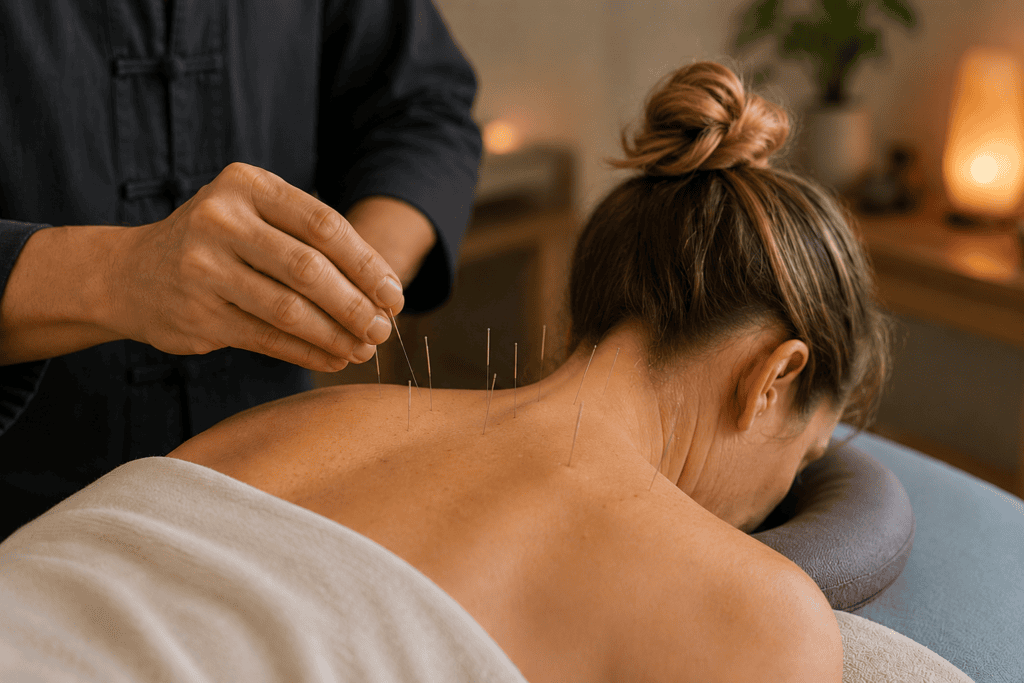
Acupuncture works on the multiple mechanisms that produce neck pain simultaneously rather than only masking the resulting symptoms.
- Muscular release. The treatment directly relaxes the trapezius, cervical, and suboccipital muscles where the tension actually lives. The needling produces measurable effects on muscle tone, blood flow, and fascial mobility that patients often feel during the session and continue to notice afterward.
- Nervous system regulation. Acupuncture shifts the autonomic nervous system from sympathetic dominance (fight-or-flight) toward parasympathetic activation (rest-and-digest). This shift reduces the chronic tension pattern at its source. When the nervous system stops driving the muscles to stay tight, the muscles can actually release.
- Endogenous pain relief. The treatment stimulates the release of endorphins, enkephalins, and other natural pain-relieving chemicals produced by the body itself. These chemicals reduce the pain signal without the side effects of external medication.
- Channel-based effects. Traditional Chinese Medicine uses the channel system to treat the neck through points on the hands, arms, and back. Distal points on the Small Intestine, Large Intestine, and Bladder channels all treat the neck through channel connections. This is why acupuncture treatment for neck pain often includes needles far from the neck itself, and why the referred pain patterns that spread from the neck respond well to the treatment.
- Pattern recognition and treatment. A licensed acupuncturist identifies the specific pattern producing the pain and treats accordingly. Muscular tension patterns get different treatment than the disc-related patterns. Stress-driven patterns get treatment that includes the emotional and nervous system dimensions. This individualized approach is one of the reasons acupuncture produces better results than protocol-based approaches for neck pain.
The Western research base for acupuncture and neck pain is substantial. A 2016 systematic review published in Medicine analyzed 27 clinical trials and found that acupuncture produced significantly better outcomes than sham acupuncture and standard care, with effects that lasted beyond the treatment period. The NCCIH summary on acupuncture describes the growing use of acupuncture for neck pain among patients and clinicians who recognize the limits of medication-only approaches.
What to Expect From Treatment
Neck pain treatment with acupuncture is not usually a single-session fix. The muscular and postural patterns that produce the pain have developed over time, and unwinding them requires sustained work. Most patients need a course of treatment of six to twelve sessions over four to eight weeks to see meaningful sustained improvements.
The improvements often emerge in stages. The initial sessions typically produce noticeable relief during and immediately after the treatment, with the effects lasting a few days at first. As the course of treatment progresses, the improvements last longer between sessions and the baseline pain level starts to shift downward. Many patients also notice improvements in areas they were not tracking, including sleep quality, headache frequency, upper body tension, and general stress levels.
For patients with acute neck pain (a specific flare or a stiff neck from sleeping wrong), fewer sessions are often sufficient. Two or three treatments over a week or two can produce substantial relief for acute patterns.
For patients with chronic neck pain that has persisted for months or years, treatment usually involves the initial course to shift the pattern followed by periodic maintenance sessions to keep the improvements in place. This is similar to how physical therapy or massage works for chronic patterns.
Between Sessions
Acupressure is a useful self-care tool between acupuncture sessions. Massaging acupressure points for neck pain helps to address the muscular tension, the referred pain patterns, and the acute stiff neck presentation. Patients who activate the points regularly often maintain their improvements more effectively between clinical sessions.
Postural changes matter as much as the treatment itself. Workstation ergonomics, phone posture, sleep positioning, and regular movement all reduce the load on the neck that produces the underlying pattern.
Addressing the broader stress picture is essential for lasting relief. Anxiety, Stress, and Depression covers how acupuncture treats the underlying patterns that drive the chronic muscular tension that shows up as neck pain.
When to See a Medical Professional
Most everyday neck pain responds to the approaches described above. Neck pain that comes with radiating pain, numbness, or weakness in the arms warrants medical evaluation because these symptoms can indicate nerve compression that requires specific treatment. Neck pain following significant trauma should also be evaluated to rule out structural injury. Neck stiffness with fever requires immediate medical attention because it can indicate meningitis or other serious infections.
For everyday neck pain that is persistent or recurring, acupuncture treatment offers a substantial intervention that addresses the underlying patterns rather than only masking the symptoms. The full picture of what the practice offers is in Acupuncture, Cupping & Lifestyle Coaching.
Reach out to Above and Beyond Acupuncture on North Frank Lloyd Wright Boulevard in Scottsdale to schedule a consultation.
Schedule an appointment online or call us today to start your healing journey.