
Key Takeaways
- Bell’s palsy causes sudden facial weakness, often resembling a stroke, and requires prompt evaluation.
- Early treatment with corticosteroids is crucial, ideally within 72 hours, to improve recovery chances.
- Acupuncture enhances recovery through direct nerve stimulation, improved circulation, and muscular support.
- Combining acupuncture with standard medical care yields better outcomes and reduces complications.
- Seek immediate medical attention for sudden facial weakness to distinguish Bell’s palsy from more serious conditions.
Bell’s palsy is a sudden onset condition. One day the face works normally. The next day one side of the face is weak or fully paralyzed. The corner of the mouth droops. The eye on the affected side may not close fully. Tears and saliva production change. Speech, eating, and even the ability to smile become difficult. For patients experiencing this for the first time, the fear that they are having a stroke often sends them to the emergency room before they know what is actually happening.
Bell’s palsy is a specific form of facial paralysis. It is idiopathic (meaning the exact cause is unknown, though it appears to involve inflammation of the seventh cranial nerve, often triggered by viral infections). It is peripheral (meaning the problem is in the nerve itself rather than in the brain, which distinguishes it from stroke). And it affects one side of the face at a time, developing rapidly over 24 to 72 hours.
The condition affects roughly 40,000 Americans each year. Most patients recover completely within three to six months without intervention, but a significant minority experience incomplete recovery with residual weakness, synkinesis (involuntary movement of facial muscles), or chronic asymmetry. This is where treatment timing and treatment quality make a meaningful difference.
The most important thing to know about Bell’s palsy treatment is that timing matters. The window for optimal treatment is measured in days, not weeks or months. Acupuncture, when integrated with standard medical care and started as early as possible, is one of the most substantial complementary interventions available for this condition.
The Time-Sensitive Nature of Bell’s Palsy Treatment
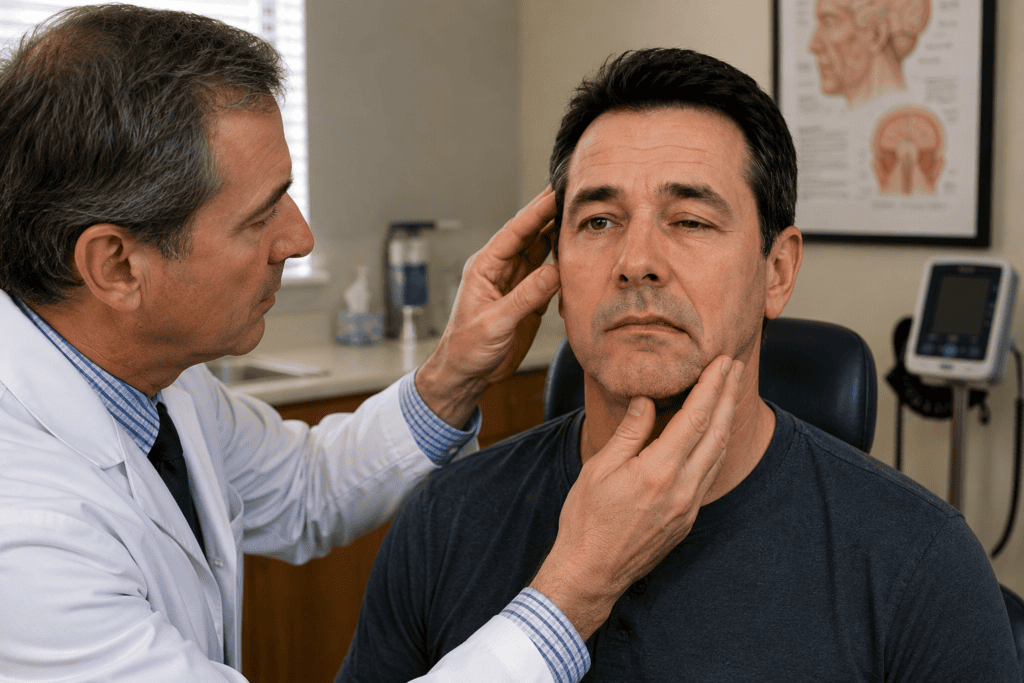
Standard medical care for Bell’s palsy involves corticosteroids (typically prednisone) started within 72 hours of symptom onset. Multiple studies have shown that early corticosteroid treatment significantly improves the likelihood of complete recovery. Waiting longer than a few days significantly reduces the benefit of the medication.
Antiviral medications may be added for severe cases, though the evidence for their benefit is more mixed. Eye protection is essential when the eye cannot close fully, including lubricating drops and eye patches at night to prevent corneal damage.
The Mayo Clinic overview of Bell’s palsy and the Cleveland Clinic summary both emphasize the importance of prompt medical evaluation. If you have suddenly developed facial weakness, seek medical evaluation immediately. The evaluation serves two purposes. First, it confirms Bell’s palsy rather than a stroke or other neurological condition that requires different treatment. Second, it starts the clock on the time-sensitive medication protocol.
Acupuncture treatment ideally begins within the same window. The research base for acupuncture in Bell’s palsy consistently shows better outcomes when treatment starts early. Patients who begin acupuncture within days to weeks of symptom onset typically experience faster recovery and better final outcomes than patients who wait until months into the course.
How Acupuncture Treats Bell’s Palsy
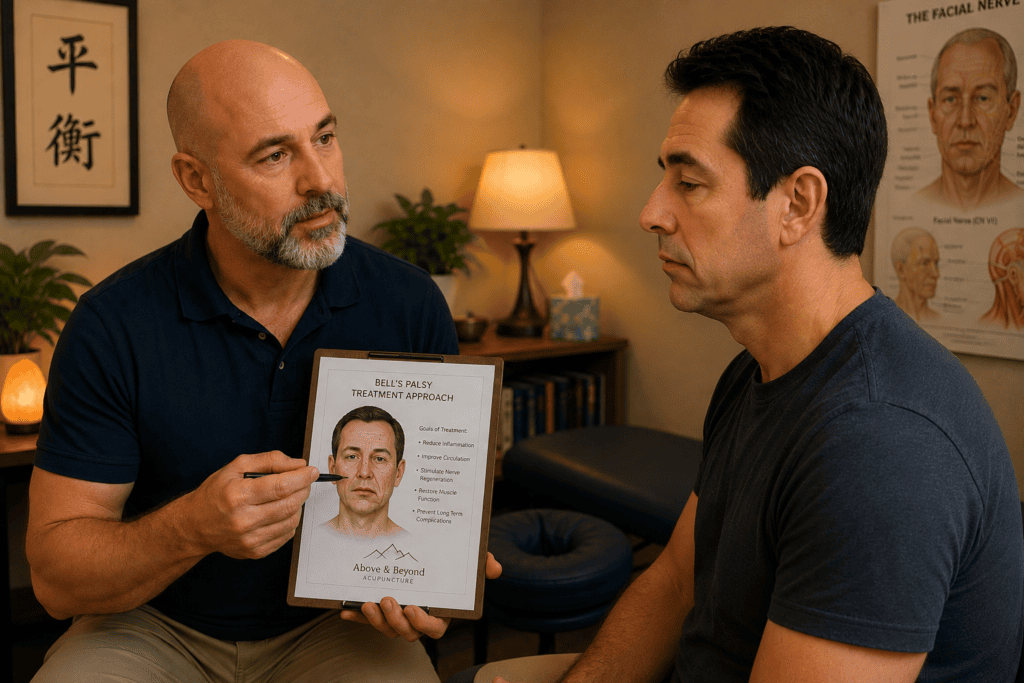
Acupuncture addresses Bell’s palsy through several mechanisms that work directly on the affected nerve and the surrounding facial muscles.
- Direct nerve stimulation. Acupuncture points on the face are located directly along the pathway of the facial nerve. Needling these points stimulates the nerve directly, which supports the recovery of nerve function. Electroacupuncture, which passes a small electrical current between paired needles, provides even stronger stimulation and is often used for Bell’s palsy specifically.
- Local circulatory improvement. Bell’s palsy involves inflammation and swelling of the facial nerve as it passes through a narrow bony canal. Acupuncture improves local circulation at the treatment sites, which supports the resolution of inflammation and delivers more oxygen and nutrients to the healing nerve.
- Muscular support. The facial muscles on the affected side lose their nerve input, which leads to disuse atrophy and altered muscle patterns. Acupuncture stimulates the affected muscles directly, which helps preserve muscle tone during the recovery period and prevents the abnormal muscle patterns that can persist as long-term complications.
- Anti-inflammatory effects. Acupuncture has documented anti-inflammatory effects that support the resolution of the underlying nerve inflammation.
- Nervous system regulation. The stress of dealing with a sudden facial paralysis is significant. Acupuncture supports nervous system regulation, which reduces the sympathetic activation that can complicate recovery.
- Traditional Chinese Medicine pattern differentiation. Chinese medicine has treated Bell’s palsy for centuries and identifies specific patterns that shape the treatment approach. Wind-cold invasion. Wind-heat invasion. Underlying constitutional patterns that made the individual susceptible. A licensed acupuncturist identifies the specific patterns in each patient and treats accordingly.
The full explanation of what acupuncture does to the body across multiple mechanisms is in What Does Acupuncture Actually Do to Your Body?.
The Research Base
The research on acupuncture for Bell’s palsy is more robust than for many other conditions because the condition is common in China and has been extensively studied. Multiple systematic reviews and meta-analyses have examined acupuncture as both a standalone and complementary treatment for Bell’s palsy.
The findings consistently show that acupuncture, particularly electroacupuncture, produces meaningful improvements in facial nerve function and recovery when integrated with standard medical care. Early treatment produces better outcomes than late treatment. The combination of corticosteroids and acupuncture generally produces better outcomes than corticosteroids alone.
The NCCIH summary on acupuncture covers the broader research base for the treatment.
What to Expect From Treatment
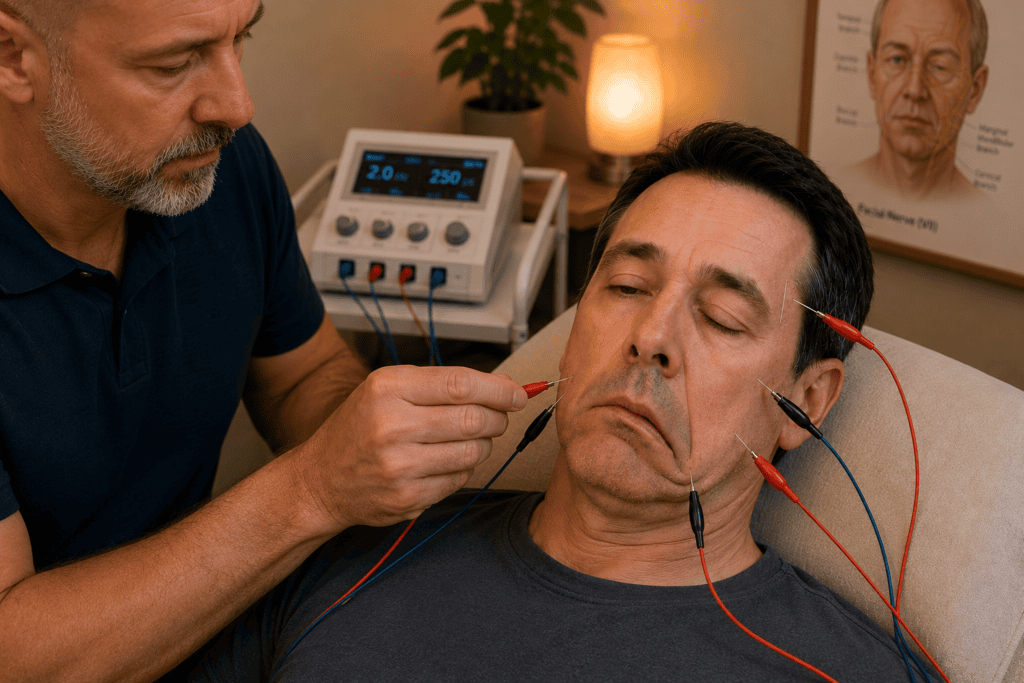
Bell’s palsy treatment with acupuncture is a course of treatment rather than a single session. Most patients need two sessions per week during the acute phase (the first several weeks), with sessions typically decreasing to once per week as recovery progresses. The total course of treatment usually runs 8 to 20 sessions over 2 to 6 months, depending on the severity of the initial paralysis and the response to treatment.
The treatment itself is focused on the affected side of the face and involves several types of needle placement. Local points at the corner of the mouth, on the cheek, near the ear, and around the eye directly stimulate the affected nerve and muscles. Distal points on the hands, arms, and legs support the overall constitutional pattern. Electroacupuncture is often used to provide stronger stimulation to the affected nerve and muscles.
The response typically emerges in stages. The initial sessions may produce small improvements in muscle tone or subtle sensations of movement returning. Over the course of treatment, patients typically experience gradual improvement in facial symmetry, muscle strength, and voluntary movement. Full recovery, when it occurs, is usually a matter of months rather than weeks.
For patients who received prompt medical treatment and started acupuncture early, complete recovery is common. For patients whose treatment was delayed or whose paralysis was severe from the outset, partial recovery is possible with some residual weakness or asymmetry. Acupuncture continues to be useful even in the later stages of recovery for these patients.
The Complications Worth Preventing
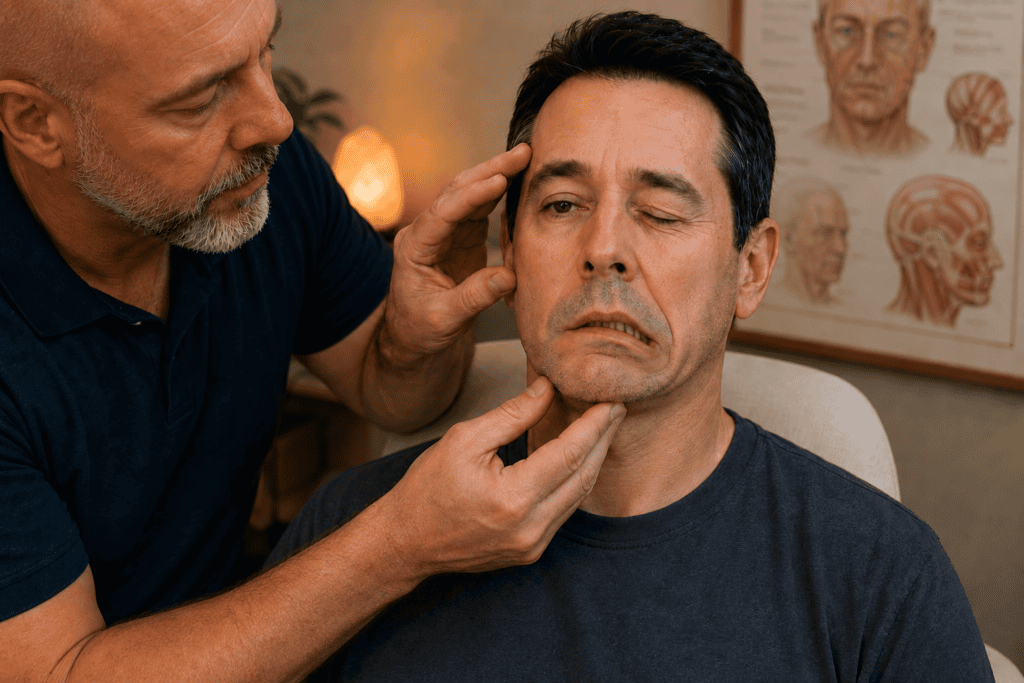
Untreated or under-treated Bell’s palsy can produce several long-term complications that patients need to know about.
- Synkinesis is the involuntary movement of facial muscles. As the nerve regenerates, the connections can become disorganized, producing patterns like the eye closing when the mouth moves or vice versa. This complication is more common when recovery is incomplete and when treatment was inadequate during the acute phase.
- Contracture is the shortening and tightening of the facial muscles on the affected side, producing an asymmetric appearance even at rest. This can develop when the muscles are not properly stimulated during the recovery period.
- Chronic weakness with incomplete return of facial function is the most common residual complication for patients whose recovery is not complete.
- Facial pain and sensitivity changes can persist in some patients.
Early and comprehensive treatment, including acupuncture, reduces the risk of these complications. This is one of the primary reasons prompt treatment matters so much for Bell’s palsy.
The Integrated Approach

The best outcomes for Bell’s palsy come from an integrated approach that combines standard medical care with acupuncture, appropriate self-care, and eye protection when needed.
- Corticosteroids started within 72 hours of onset represent the medical foundation for most cases.
- Acupuncture treatment started as early as possible provides the direct nerve and muscle support that standard care does not offer.
- Facial exercises prescribed by a physical therapist or the treating acupuncturist support the recovery of voluntary movement.
- Eye protection prevents the corneal damage that can occur when the eye cannot close fully. This includes lubricating drops during the day and often an eye patch or moisture chamber at night.
- Stress management supports the underlying nervous system recovery. The broader stress and nervous system framework is covered in Anxiety, Stress, and Depression.
When to Seek Emergency Care
Sudden facial weakness or paralysis always warrants immediate medical evaluation to distinguish Bell’s palsy from stroke or other serious conditions. Do not wait to see if the symptoms resolve on their own. The evaluation is essential for both diagnostic clarity and for starting time-sensitive treatment.
Symptoms suggesting stroke rather than Bell’s palsy include weakness affecting the arm or leg on the same side as the facial weakness, difficulty speaking or understanding speech, severe headache, vision changes affecting both eyes, or loss of coordination. These require emergency evaluation.
Where to Start
If you or someone you know has developed sudden facial weakness or paralysis, the first step is medical evaluation, ideally within hours of symptom onset. Once Bell’s palsy is confirmed and standard treatment has been initiated, adding acupuncture treatment as early as possible offers substantial support for the recovery process.
For patients already several weeks or months into the course of Bell’s palsy who have not fully recovered, acupuncture treatment is still valuable and produces meaningful improvements for many patients.
The full picture of what the practice offers is in Acupuncture, Cupping & Lifestyle Coaching.
Reach out to Above and Beyond Acupuncture on North Frank Lloyd Wright Boulevard in Scottsdale to schedule a consultation. Bell’s palsy is a condition where prompt integrated treatment makes a real difference in outcomes, and acupuncture is one of the most substantial complementary interventions available.
Schedule an appointment online or call us today to start your healing journey.