Key Takeaways
- Raynaud’s syndrome results in blood vessels narrowing when exposed to cold or stress, causing color changes and numbness in fingers and toes.
- Acupressure for Raynaud’s syndrome can enhance blood flow and alleviate symptoms by targeting specific body points.
- Key acupressure points include SJ4, PC8, Baxie, LI4, LR3, Ba Feng, KI1, ST36, and SP6 to warm extremities and enhance blood flow.
- Practicing acupressure daily can assist in managing symptoms, especially during colder weather or stressful times.
- Seek advice from a healthcare provider if you experience severe symptoms or to identify your specific type of Raynaud’s.
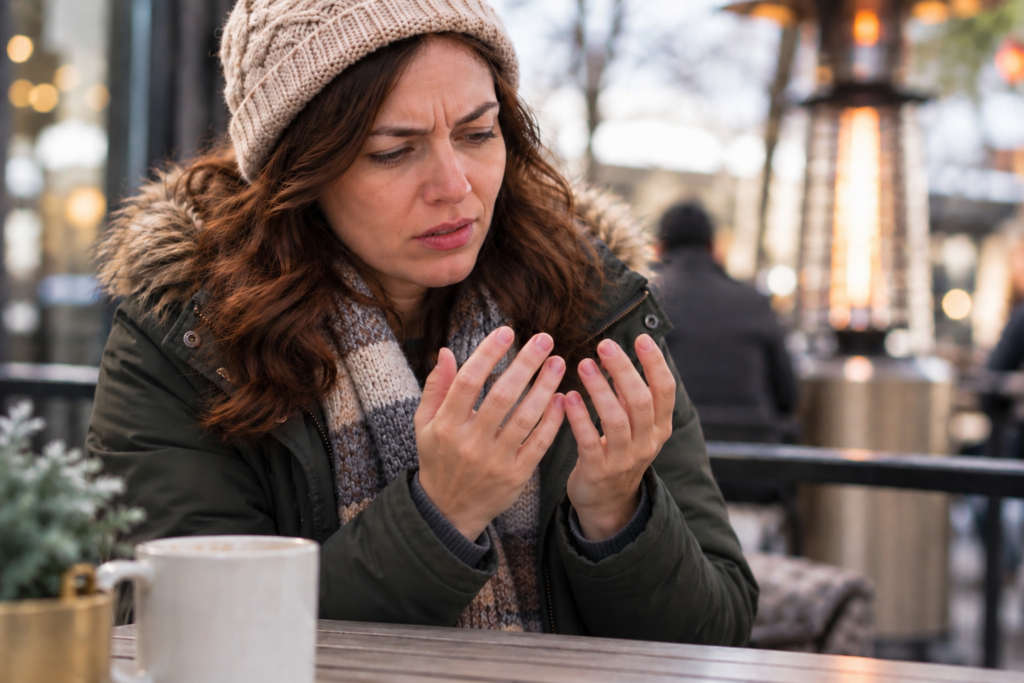
Do your fingers turn white, then blue, and finally red when you touch the freezer or step into an air-conditioned space?
Raynaud’s syndrome, also called Raynaud’s phenomenon, is characterized by small blood vessels in the fingers and toes constricting in response to cold or stress, reducing blood flow. During an attack, the affected areas turn pale or white, feel numb and cold, may shift to blue as oxygen diminishes, and then turn red with throbbing, tingling, or burning sensations as blood flow resumes. These episodes can last from a few minutes to longer and may also affect the nose, ears, and lips. In Arizona, Raynaud’s is quite common, often triggered by strong air conditioning, freezer aisles, iced drinks, or cold pool water. Gentle acupressure can help improve circulation, reduce attack frequency, and lessen severity.
Raynaud’s disease comes in two types. Primary Raynaud’s is the more common form, typically beginning in the teenage years or 30s, affecting women more often, and not associated with other health conditions. Though it can cause discomfort, it rarely leads to long-term damage. Secondary Raynaud’s, on the other hand, is connected to other illnesses, frequently autoimmune ones like scleroderma or lupus, and tends to be more severe. It can sometimes result in sores on the fingertips. If you experience symptoms of Raynaud’s, seeing a healthcare provider is crucial to determine which type you have.
Traditional Chinese Medicine has long identified a pattern of cold hands and feet caused by insufficient Qi and Blood flow to the limbs, similar to Raynaud’s phenomenon. Usually, three main factors are involved: weak Yang, which is the body’s warming energy and cannot adequately heat the fingers and toes, leading to paleness and coldness; low Blood levels, which restrict nourishment for the extremities, causing numbness and tingling; and stress, which can block Liver Qi flow. This blockage traps warmth in the body’s center, resulting in cold extremities. Emotional stress can also trigger attacks, much like cold weather. External cold exposure can further worsen the condition by constricting blood vessels.
Here are nine acupressure points to stimulate Yang, support Blood flow, unblock Qi, and enhance circulation to the extremities.
What Acupressure Points to Press and Why
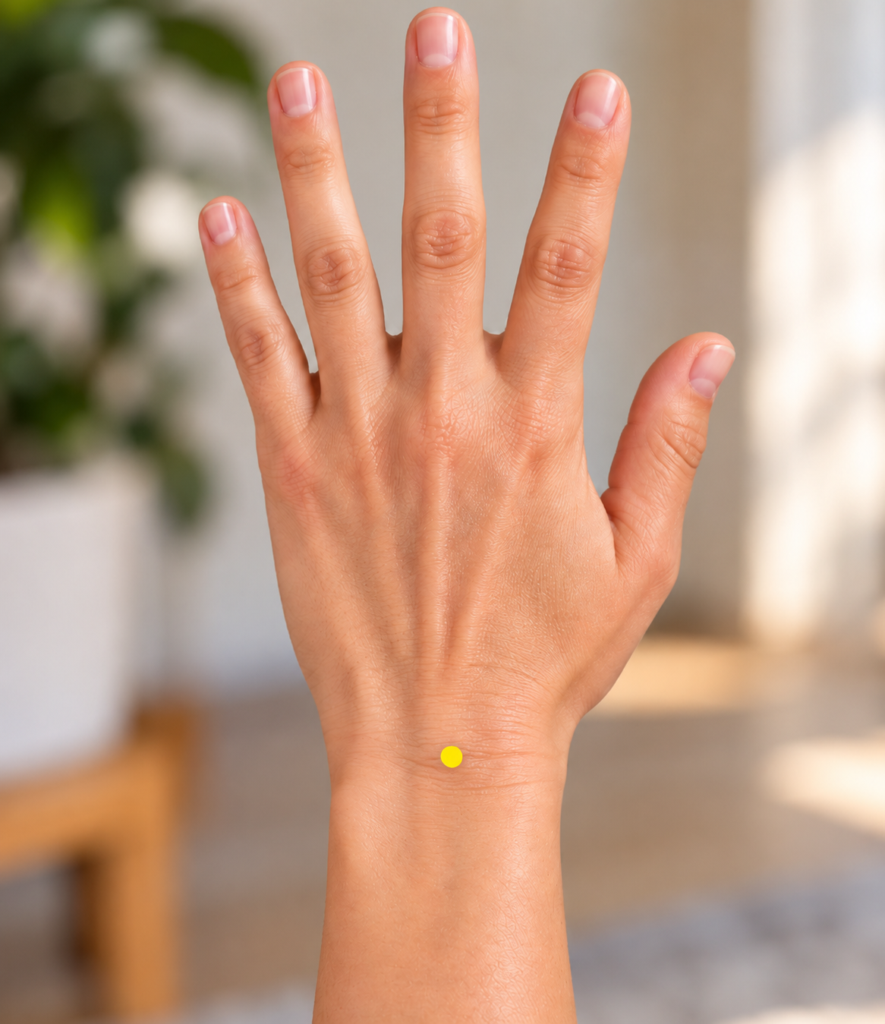
1. Press on SJ4 on the back of the wrist to warm the hands. SJ4 sits on the back of the wrist, in the hollow of the wrist crease, roughly in line with the gap between the ring and little fingers, just next to the tendon. Press firmly with your thumb for one to two minutes on each wrist, or rub the area briskly until warm. SJ4 is called “Yangchi,” the “Yang Pool.”
SJ4, as its name suggests, is a point associated with Yang energy, which warms the body. It is traditionally used for cold hands and wrists, helping warm them. This point is especially beneficial during or right after an attack, when the hands begin to warm up.
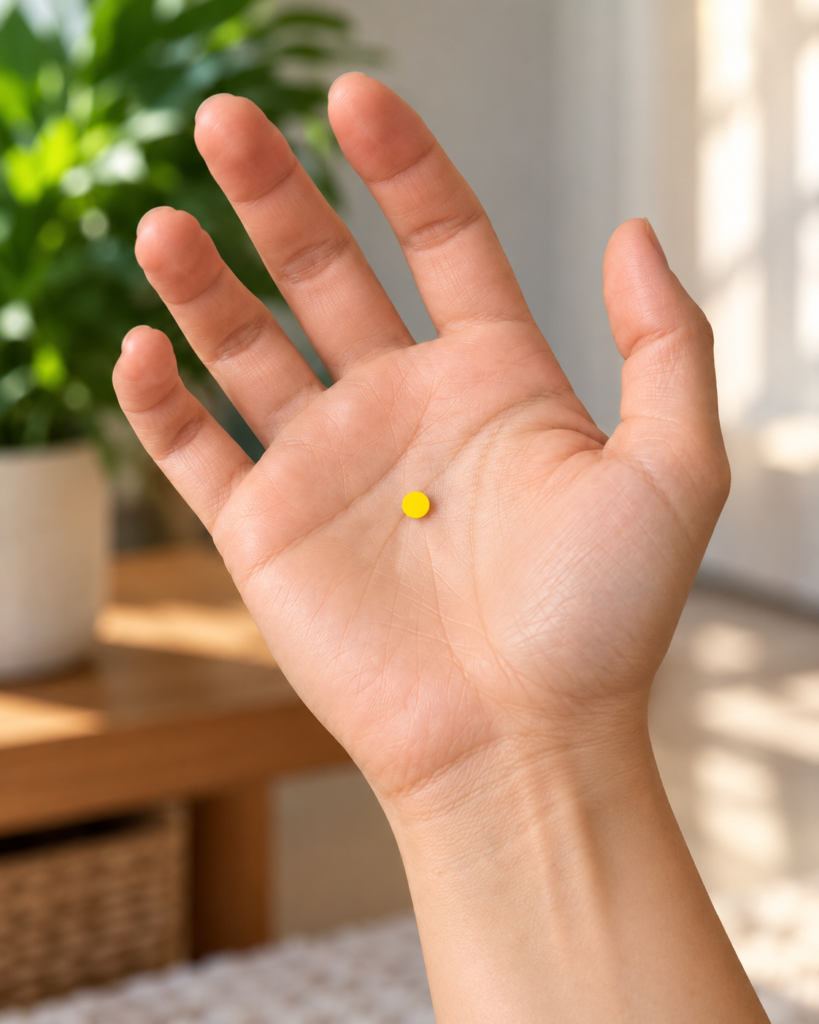
2. Press on PC8 in the center of the palm to bring warmth to the fingers. PC8 sits in the center of the palm, where the tip of the middle finger lands when you make a loose fist. Press firmly with the thumb of your other hand, or rub the palms together briskly, for one to two minutes. PC8 is called “Laogong,” the “Palace of Labor.”
PC8 is situated at the center of the hand and is commonly used to warm the palms and fingers, as well as to soothe the mind. Rubbing your palms together until they feel warm activates this point on both hands. This simple exercise can be done anytime your hands start to feel cold.
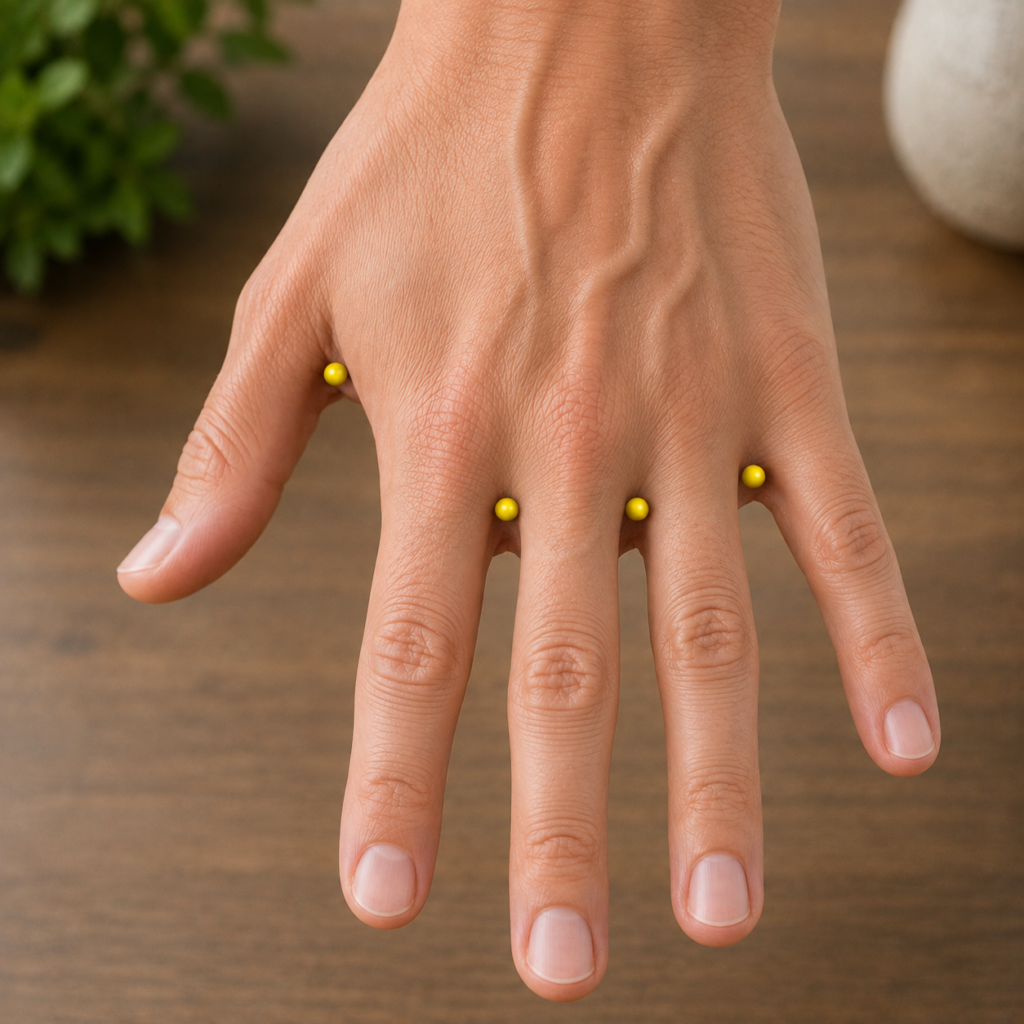
3. Press on Baxie between the knuckles to open circulation to the fingers. Baxie are four points on the back of each hand, in the webbing between each pair of fingers, just behind where the fingers meet the hand. Press each gently with your thumb and index finger for thirty seconds to a minute, working across the hand. Baxie means “Eight Evils.”
Classical finger pressure points are used to address numbness, coldness, pain, and poor circulation. Gentle daily stimulation of these points, especially during rewarming in an attack, can help promote Qi and Blood flow to the fingertips—the affected area in Raynaud’s. Avoid pressing on fingers with sore or open skin.
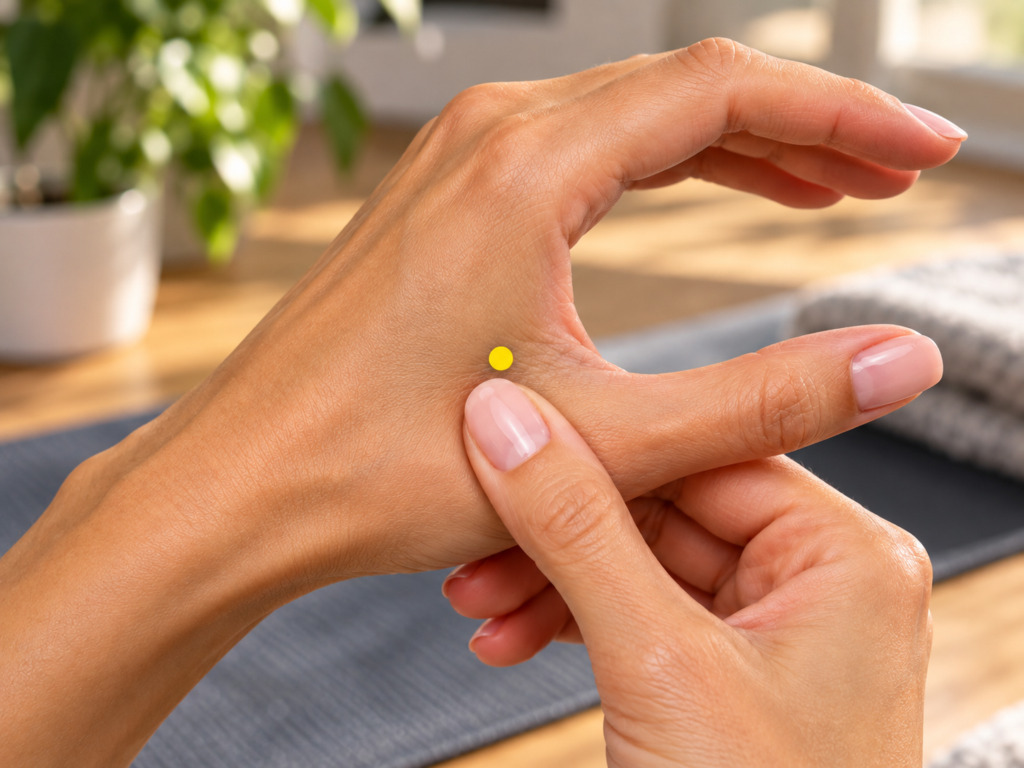
4. Press on LI4 in the hand to move the Qi and Blood. LI4 sits in the webbing between the thumb and index finger, at the highest point of the muscle when you bring them together. Press firmly with the thumb of your other hand for one to two minutes on each hand. LI4 is called “Hegu.” LI4 is contraindicated in pregnancy.
LI4 significantly influences the movement of Qi and Blood in the hand and arm, promoting circulation to the fingertips and relieving throbbing pain during rewarming. When used with LR3, it forms the Four Gates, a traditional combination that helps release blocked Qi, allowing warmth to extend to the limbs.
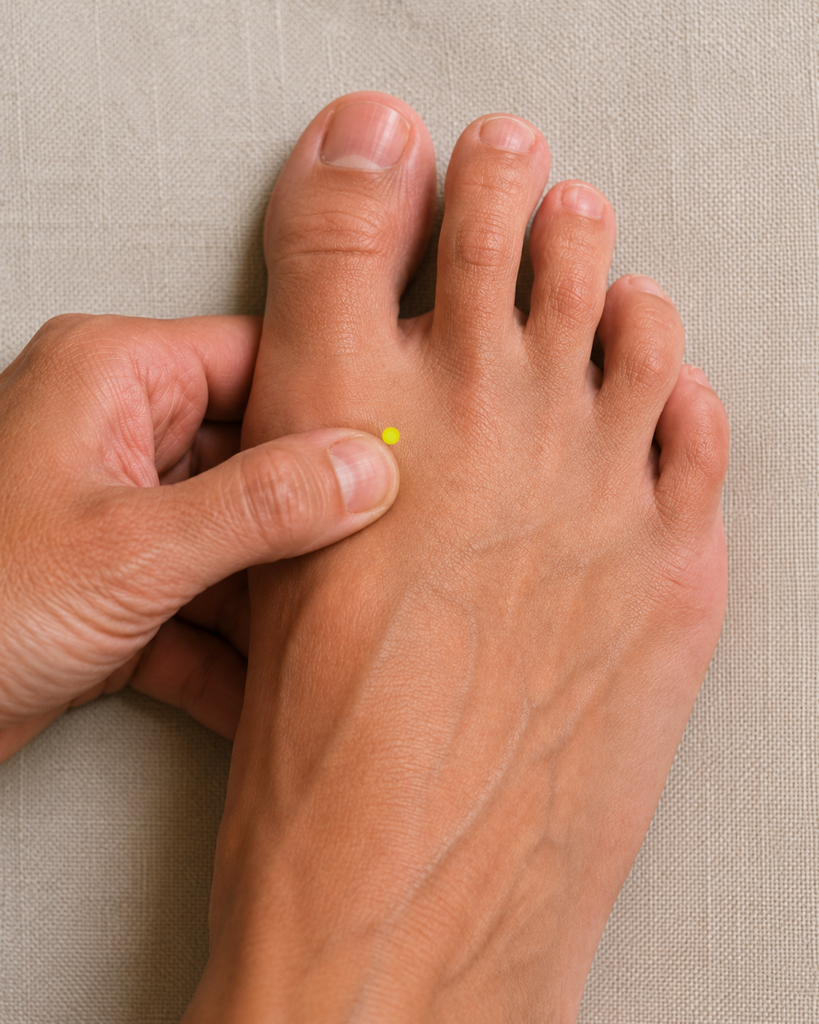
5. Press on LR3 on the top of the foot to release stress-triggered attacks. LR3 sits on the top of the foot, in the webbing between the big toe and second toe, about two finger-widths back where the bones meet in a small hollow. Press firmly with your thumb for one to two minutes on each foot. LR3 is called “Taichong.”
Traditional Chinese Medicine views an attack as resulting from Liver Qi stagnation that prevents warmth from reaching the hands and feet. LR3 helps by dispersing the stagnant Qi, allowing warmth to return to the extremities, and also benefits the toes, which are often affected in Raynaud’s. This point is especially significant for individuals whose attacks follow stressful events.
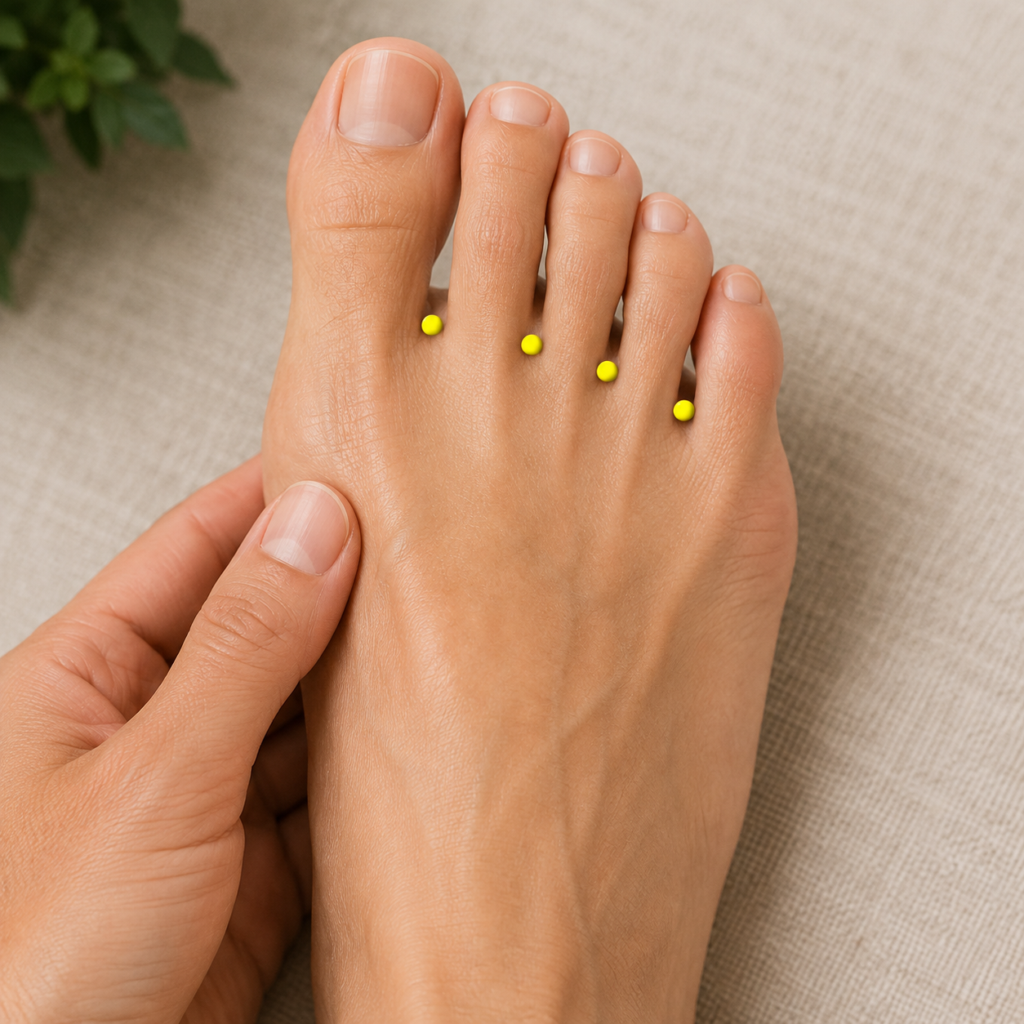
6. Press on Ba Feng between the toes for cold, pale toes. Ba Feng are four points on the top of each foot, in the webbing between the toes where each pair meets the foot. Press each gently with your thumb for thirty seconds to a minute, working across the foot. Ba Feng means “Eight Winds.”
The Ba Feng points correspond to the Baxie points and are located on the toes. For Raynaud’s disease, which affects the feet, stimulating these points can help improve circulation in cold, pale, and numb toes. Gently work on these points, avoiding any toes with sore or broken skin.
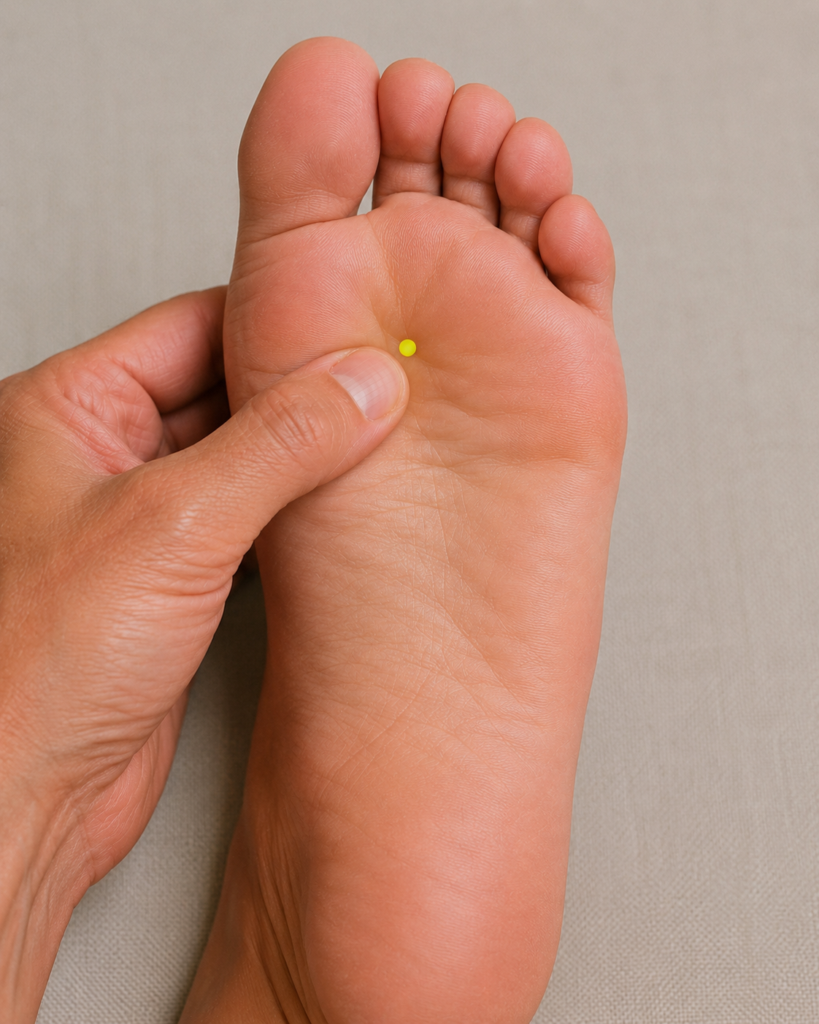
7. Press on KI1 on the sole of the foot to warm from the root. KI1 sits on the sole of the foot, in the hollow that forms in the center of the ball of the foot when you curl the toes. Rub the sole briskly until warm, then press firmly for about a minute on each foot. KI1 is called “Yongquan,” the “Bubbling Spring.”
KI1 is the starting point of the Kidney channel. Since the Kidney stores the body’s essential Yang energy, which is responsible for warming, it is customary to rub the soles until they feel warm to address cold feet and to warm the entire body from the root. This practice also serves as a good way to end the day, especially if your feet are often cold.
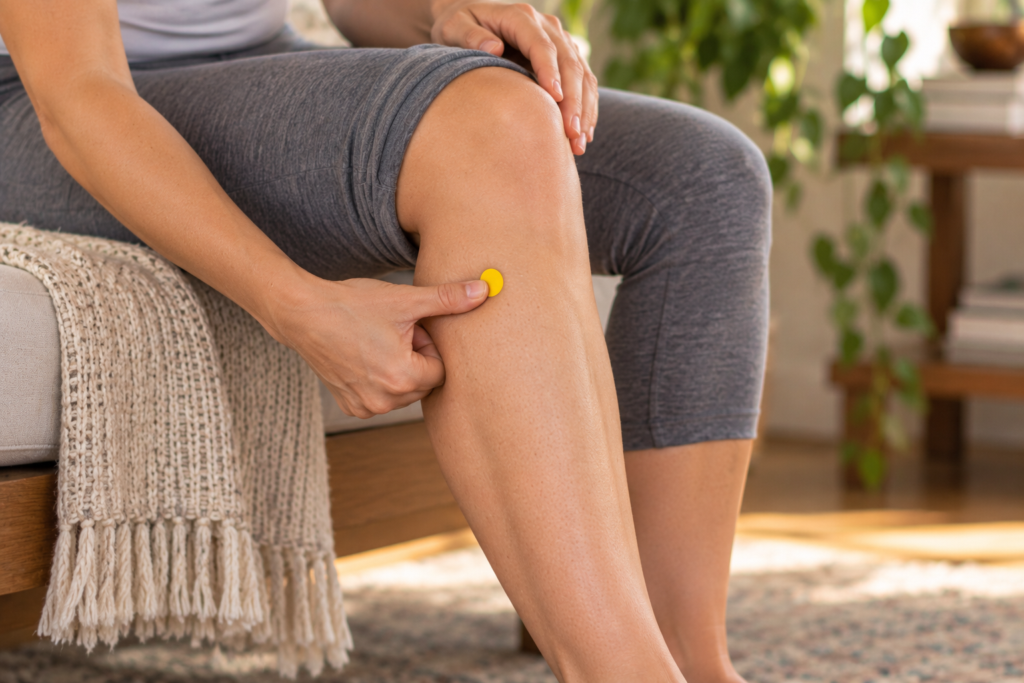
8. Press on ST36 below the knee to build Qi and Blood. ST36 sits four finger-widths below the lower edge of the kneecap and one finger-width to the outside of the shinbone, on the muscle that rises when you flex your foot. Press firmly with your thumb for one to two minutes on each leg. ST36 is called “Zusanli,” the “Leg Three Miles.”
Warm hands and feet come from adequate Qi and Blood circulation outward. ST36 enhances these at their source and helps keep the body’s warmth and circulation steady. Stimulate it daily, especially in cooler months and during the hot, air-conditioned summer.
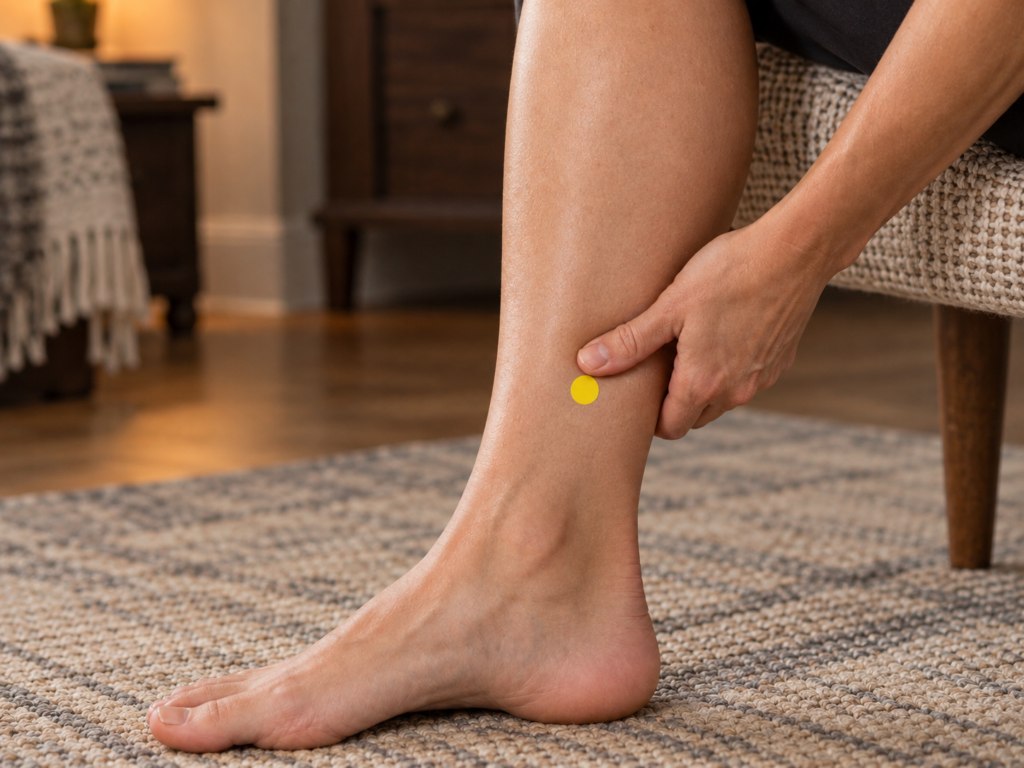
9. Press on SP6 above the inner ankle to nourish and move the Blood. SP6 sits four finger-widths up from the tip of the inner ankle bone, just behind the back edge of the shinbone. Press firmly for one to two minutes on each leg. SP6 is called “Sanyinjiao,” the “Three Yin Intersection.” SP6 is avoided during pregnancy.
SP6 supports blood health and improves circulation, addressing Blood deficiency symptoms like pale, numb fingers and toes that are prone to cold. It is especially helpful for women, as their Raynaud’s phenomenon often fluctuates with the menstrual cycle, and it pairs well with ST36.
Why These Acupressure Points Work
In Traditional Chinese Medicine, Raynaud’s phenomenon is attributed to insufficient warmth, Qi, and Blood reaching the hands and feet, caused by weak Yang, Blood deficiency, stress blocking Qi flow, and cold congealing in the meridians. The nine points are relevant to this condition.
- The hand points (SJ4, PC8, Baxie, LI4) draw warmth and circulation into the hands and fingers.
- The foot points (LR3, Ba Feng, KI1) warm the toes and release stress-triggered attacks.
- The building points (ST36, SP6) strengthen and nourish the Qi and Blood that the extremities need.
Certain studies indicate that acupuncture might reduce the frequency of Raynaud’s attacks, though research is still evolving. Meanwhile, acupressure provides an easy method for daily stimulation of the corresponding points.
How to Properly Use These Acupressure Points
- When experiencing an attack, move away from the cold zone and warm your hands or feet by running lukewarm, not hot, water over them or by tucking them into your armpits. Because numb fingers can’t sense temperature, always test the water with your elbow first.
- As color begins to return, rub your palms together over PC8, press SJ4, LI4, and Baxie, then gently wiggle and massage your fingers. Swinging your arms in large circles can also promote blood flow to the hands.
- Follow this full daily routine to generate warmth: start with ST36 and SP6, then move to the hand points, then LR3, Ba Feng, and KI1, and finish by rubbing the soles of your feet until they feel warm.
- If stress causes your attacks, press LR3 and LI4 simultaneously whenever you notice tension building.
- Avoid applying pressure on fingers or toes that have a sore, ulcer, or broken skin.
- Hold each point for one to two minutes, and continue the routine throughout the seasons when attacks are most common.
Effective management of Raynaud’s fundamentally depends on prevention, and Traditional Chinese Medicine, with its emphasis on warming, aligns well with this strategy. It’s essential to keep your entire body warm, not just your hands, since a cold core can hinder blood circulation to the extremities. Dress in layers, carry a light jacket or sweater for air-conditioned environments, and wear a hat during cold weather. Mittens are more efficient than gloves for keeping hands warm, so consider using them along with hand warmers. Use insulated cups for cold drinks, wear gloves when handling frozen foods or working in freezers, and warm up gradually after swimming. Avoid smoking and limit caffeine intake, as both restrict blood vessels. Managing stress is vital because it can trigger attacks, just like cold weather. Consult your doctor about medications such as decongestants, migraine treatments, or blood pressure medicines that might worsen Raynaud’s. A healthcare provider might also recommend warming herbal remedies tailored to your specific pattern.
When to Get Professional Help
If you have symptoms of Raynaud’s, consult a doctor to distinguish between primary and secondary types. Seek medical advice promptly if attacks begin after age thirty, affect only one side or just one or two fingers, are severe or painful, or come with joint pain, skin rash, thick or tight skin on the fingers, difficulty swallowing, unusual fatigue, or muscle weakness; these could signal an underlying autoimmune disease. Immediate care is needed for any sore, ulcer, or crack on a fingertip or toe that does not heal. Emergency care should be sought if a finger or toe stays white or blue and doesn’t regain color after warming, turns black, or is extremely painful, as this may indicate compromised blood flow.
Acupressure can serve as a natural supplementary approach for Raynaud’s and should be used alongside your medical treatment according to your individual condition.
Above and Beyond Acupuncture offers acupuncture, cupping, and lifestyle coaching at the North Frank Lloyd Wright Boulevard location in Scottsdale.
Schedule an appointment online to start your healing journey.
The points above are only as effective as the technique used to apply them. Where to press, how firmly, and for how long all affect the result. For a full breakdown of how to perform acupressure properly at home, read Performing Acupressure in 3 Easy Steps.

About the Publisher
Paul Kerzner, L.Ac., is a licensed acupuncturist and board-certified herbalist, as well as the founder of Above and Beyond Acupuncture in Scottsdale. His own journey from chronic patient to practicing acupuncturist shapes his commitment to providing honest, clinically grounded information about acupuncture and Traditional Chinese Medicine. Learn more about Paul and his clinical approach on the About Us page.