Key Takeaways
- Frequent sneezing can interfere with daily activities and is often triggered by allergies, irritants, or weather changes.
- Acupressure offers natural techniques to stop sneezing and soothe nasal irritation by stimulating specific points on the body.
- Nine effective acupressure points, such as GV26 and LI20, may reduce sneezing and boost the body’s resistance to triggers.
- Acupressure is a safe complementary approach that may decrease sneezing and can be combined with medical treatments if needed.
- If severe allergic reactions occur, get urgent medical help.

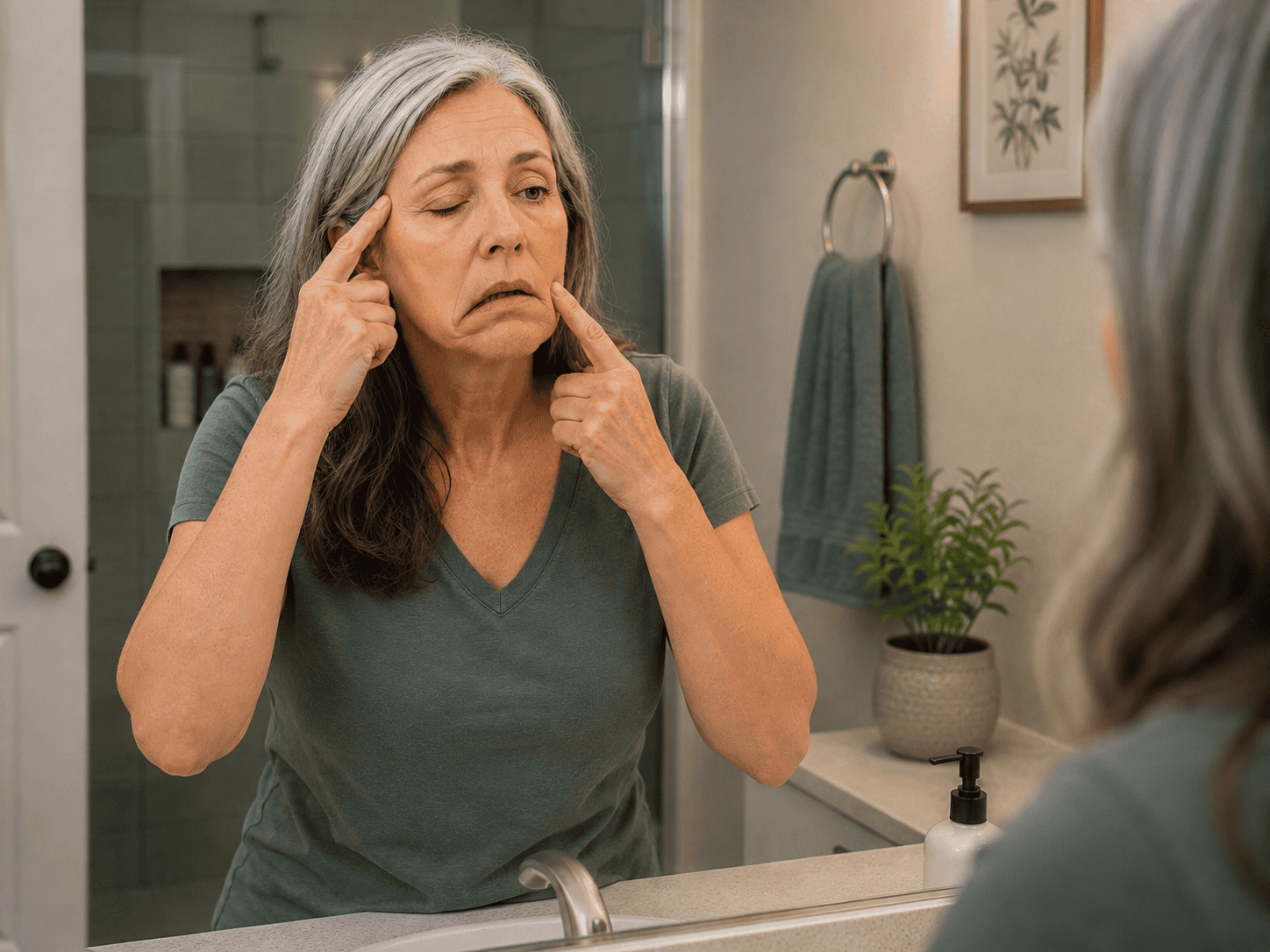
Have you ever had a relentless chain of sneezes, where one triggers another, making your eyes water and your nose run?
A single sneeze clears irritants from the nose, but frequent sneezing, such as in the morning, outdoors on windy days, or upon entering a dusty room, can be tiring and disruptive. Causes often include allergies to pollen, dust, pet dander, or mould, along with early cold symptoms, dry air, dust storms, strong odors, smoke, and sudden bright lights. Acupressure offers two relief methods: a quick technique to stop a sneeze mid-sneeze and specific points to calm an oversensitive nose, reducing how often you sneeze.
In Traditional Chinese Medicine, a sneeze is viewed as wind entering through the nose. ‘Wind’ refers to sudden, shifting external factors like pollen, cold air, and dust. The Lung controls the nose and the body’s defensive energy, Wei Qi, which flows just beneath the surface to fend off external threats. When both the Lung and Wei Qi are strong, the nose can effectively resist pollen and cold air. Weakness in these areas allows wind to penetrate more easily, leading to sneezing, itching, and a runny nose. A clear, watery discharge with sneezing indicates wind-cold, whereas itchy, red eyes and a sore throat suggest wind-heat. Frequent morning sneezing, especially upon waking, coupled with fatigue or cold hands and feet, often points to deeper Lung and Kidney weakness in Chinese medicine.
Here are nine acupressure points that can help stop sneezing, calm the nose, dispel wind, and strengthen defensive Qi to reduce nasal reactivity.
What Acupressure Points to Press and Why
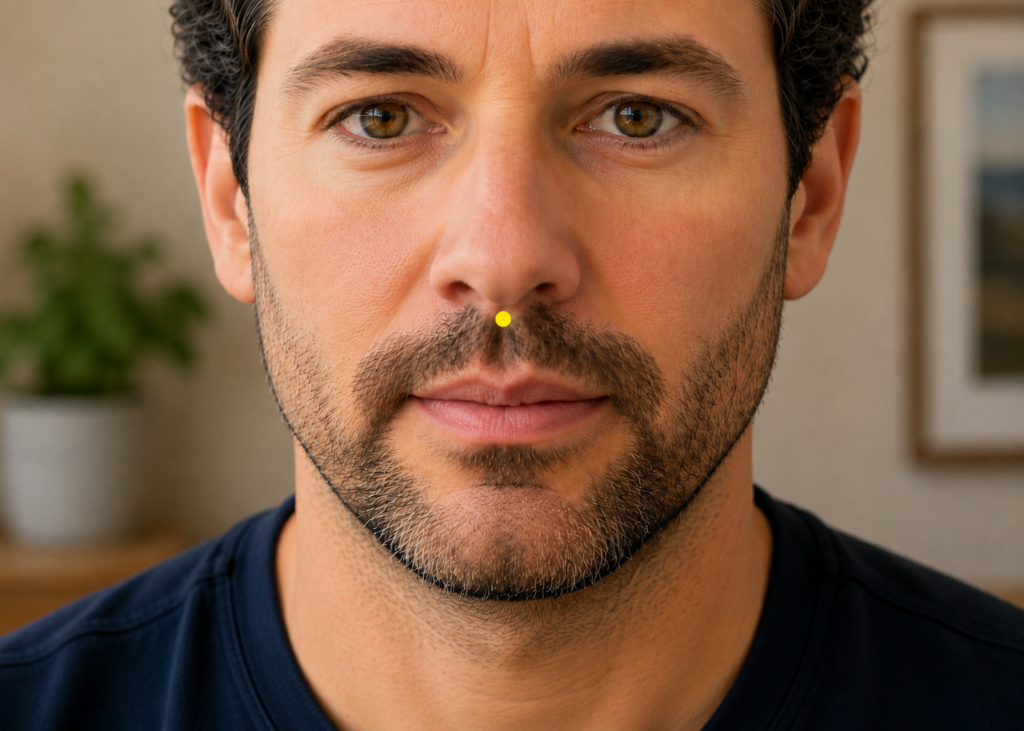
1. Press on GV26 above the upper lip to stop a sneeze as it builds. GV26 sits on the midline of the upper lip, in the groove between the nose and the lip, about a third of the way down from the base of the nose. When you feel a sneeze coming, press firmly upward into this spot with your fingertip or the side of your index finger for a few seconds, holding until the urge passes. GV26 is called “Shuigou,” the “Water Trough.”
GV26 is traditionally used to revive and restore the body in emergencies, and firm pressure can quickly stop a sneeze. By pressing upward just below the nose at the onset of the tickle, it is often possible to prevent the sneeze before it occurs. This point is handy during meetings, in quiet rooms, or whenever a sneezing fit would be disruptive.
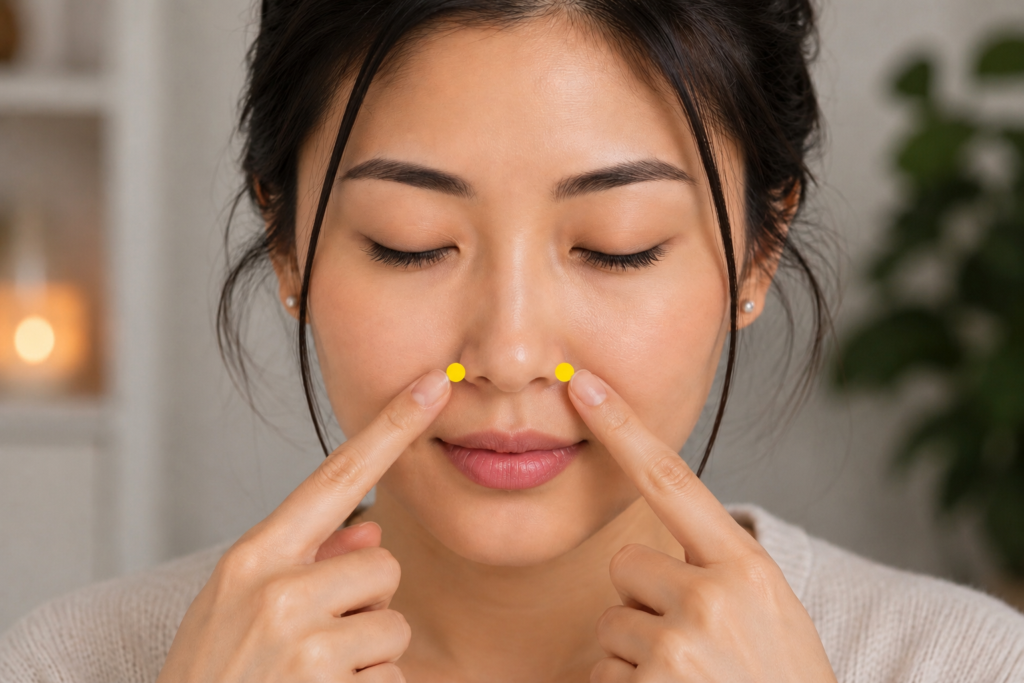
2. Press on LI20 beside the nostrils to calm the nose. LI20 sits in the groove beside each nostril, at the outer edge where the nostril meets the cheek. Press firmly inward and slightly upward with your fingertips for one to two minutes on both sides. LI20 is called “Yingxiang,” the “Welcome Fragrance.”
LI20 is the primary acupressure point for the nose and helps alleviate itching, sneezing, and congestion at the source. When you feel the sensation that precedes a sneeze, pressing both sides of the nose at LI20 can often prevent the sneeze. It pairs well with LI4, which is on the same meridian.
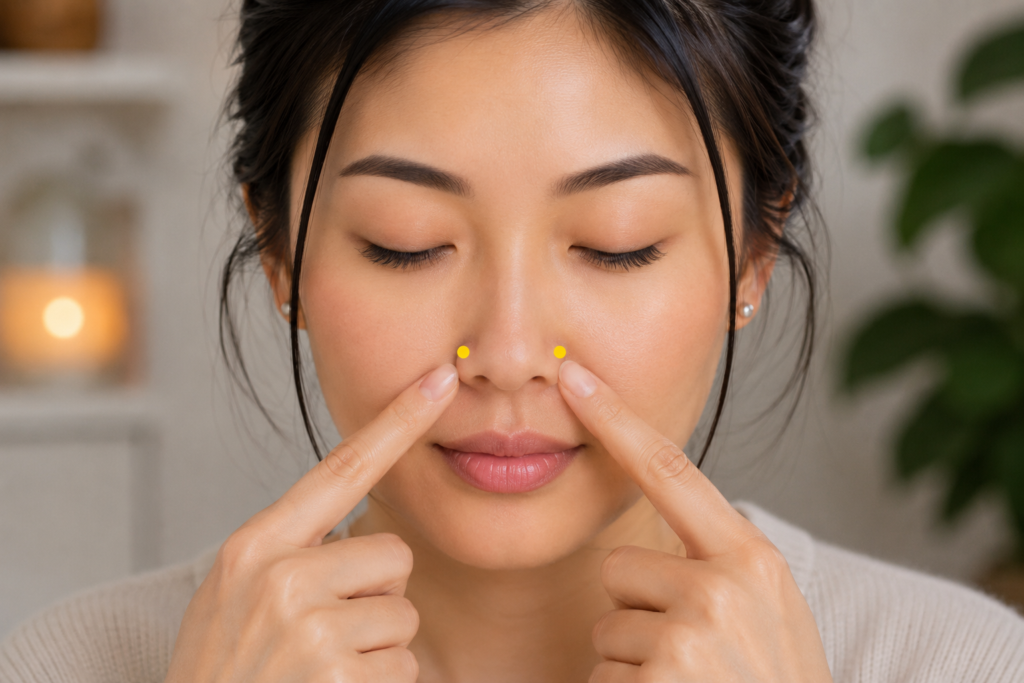
3. Press on Bitong at the top of the nasal groove to open the upper nose. Bitong sits on either side of the nose, at the top of the groove where the bony bridge meets the softer cartilage. Press gently upward with your fingertips for one to two minutes, or stroke up and down between Bitong and LI20. Bitong is an extra point whose name means “Open the Nose.”
Bitong stimulates the upper part of the nose, where itching and irritation that trigger sneezing typically begin. Running your finger along the sides of the nose between Bitong and LI20 can soothe an irritated, sensitive nose and ease congestion that often follows a sneeze.
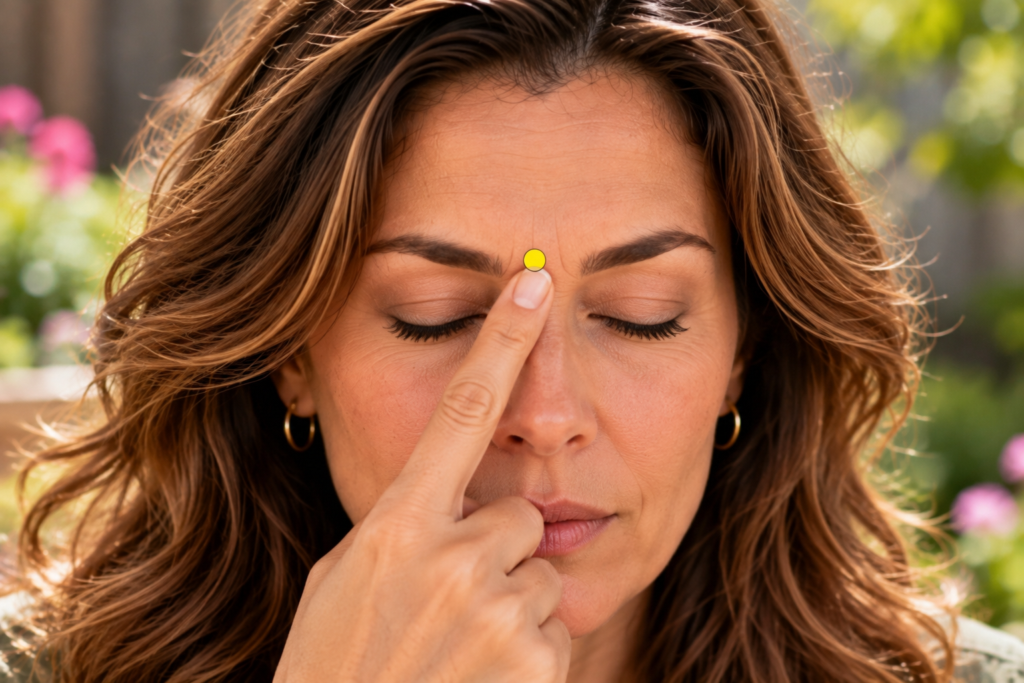
4. Press on Yintang between the eyebrows to calm the nose and eyes. Yintang sits in the small hollow directly between the two eyebrows. Press steadily and hold, or make small, slow circles with your fingertip for one to two minutes. Yintang is an extra point.
Yintang is located just above the nose root and is commonly used to relieve nasal congestion, sneezing, and itchy eyes. It also helps calm the nervous system. When sneezing occurs alongside itchy, watery eyes, often linked to allergies, Yintang addresses both issues at once.
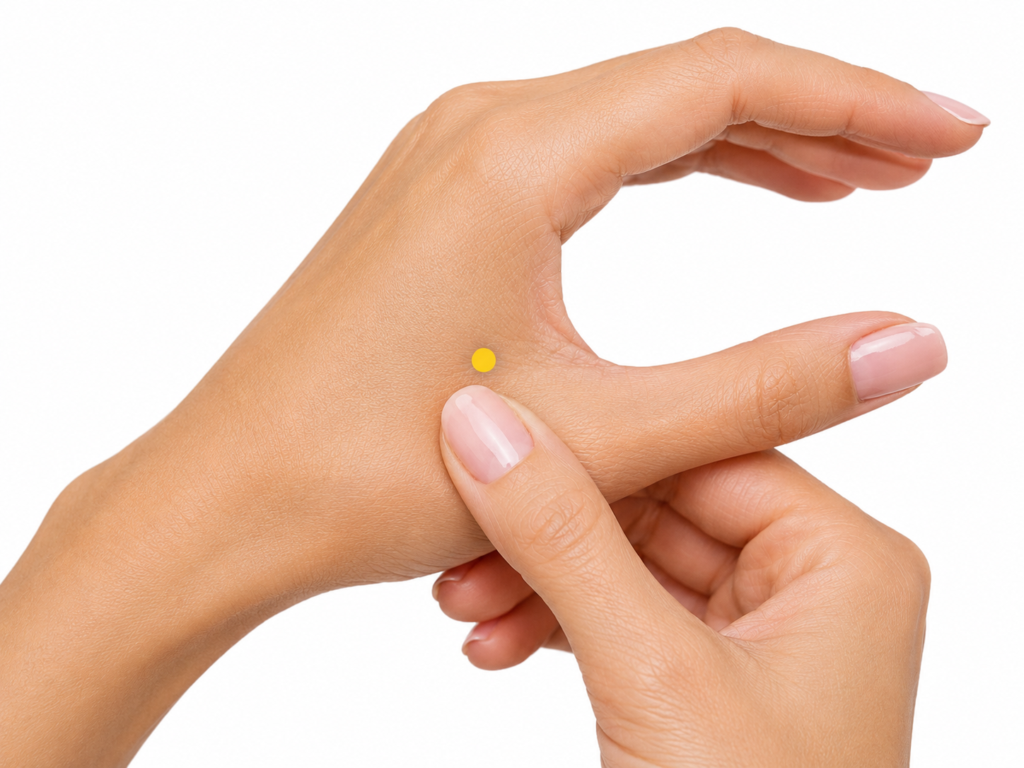
5. Press on LI4 in the hand, the command point for the face. LI4 sits in the webbing between the thumb and index finger, at the highest point of the muscle when you bring them together. Press firmly with the thumb of your other hand for one to two minutes on each hand. LI4 is called “Hegu.” LI4 is contraindicated during pregnancy.
LI4 is an acupuncture point on the face that helps release wind from the body’s surface. It helps stop sneezing, clear the nose, and relieve headaches and facial pressure often associated with sneezing fits. You can press it discreetly and easily.
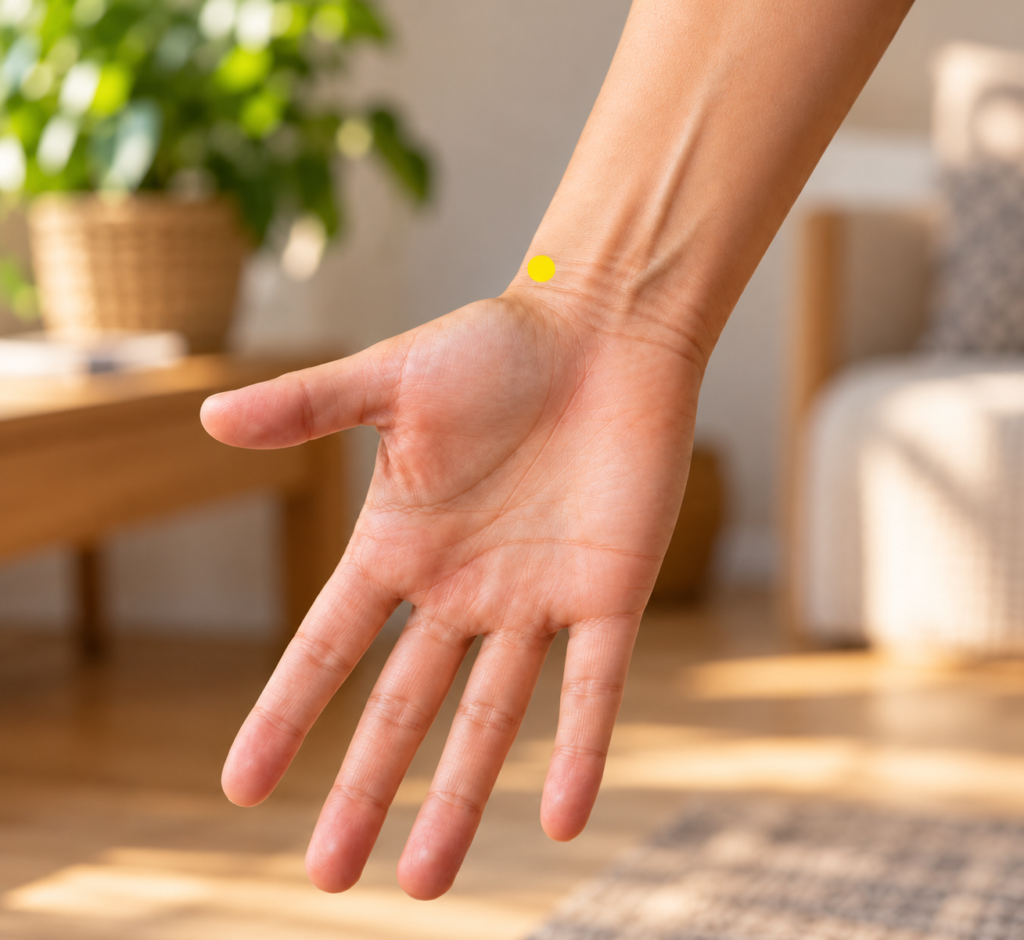
6. Press on LU7 on the wrist to release wind from the Lung. LU7 sits on the thumb side of the forearm, about two finger-widths above the wrist crease, in a small groove on the edge of the bone. Press firmly with your thumb or fingertip for one to two minutes on each arm. LU7 is called “Lieque.”
LU7 is a crucial point for the Lungs and nose. It helps dispel wind entering the body and alleviates sneezing, runny nose, and early cold symptoms. It is particularly useful for sudden sneezing triggered by weather changes or chills.
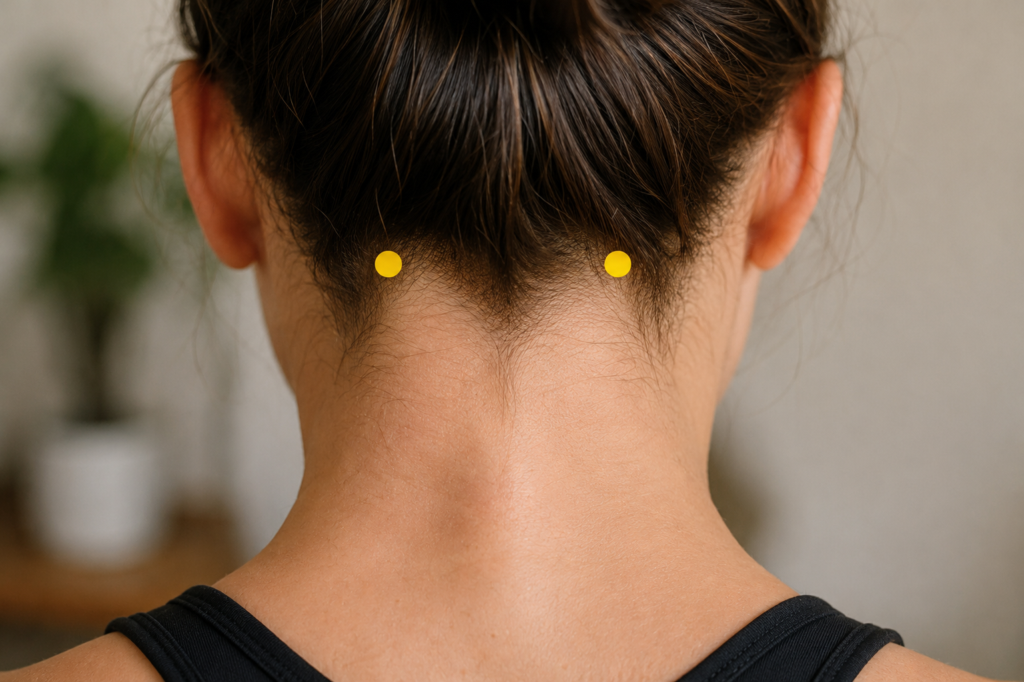
7. Press on GB20 at the base of the skull to expel wind. GB20 sits in the two hollows at the base of the skull, between the two large vertical neck muscles and the outer edge, roughly level with the tops of the ears. Tip your head back slightly and press firmly up and inward with your thumbs for one to two minutes. GB20 is called “Fengchi,” the “Wind Pool.”
As the name suggests, GB20 is a key acupressure point used to dispel wind and is traditionally used for conditions like sneezing, nasal congestion, and colds beginning with chills. In Traditional Chinese Medicine, the back of the neck is where wind most easily enters the body, so keeping this area covered in cold, windy weather can help prevent sneezing.
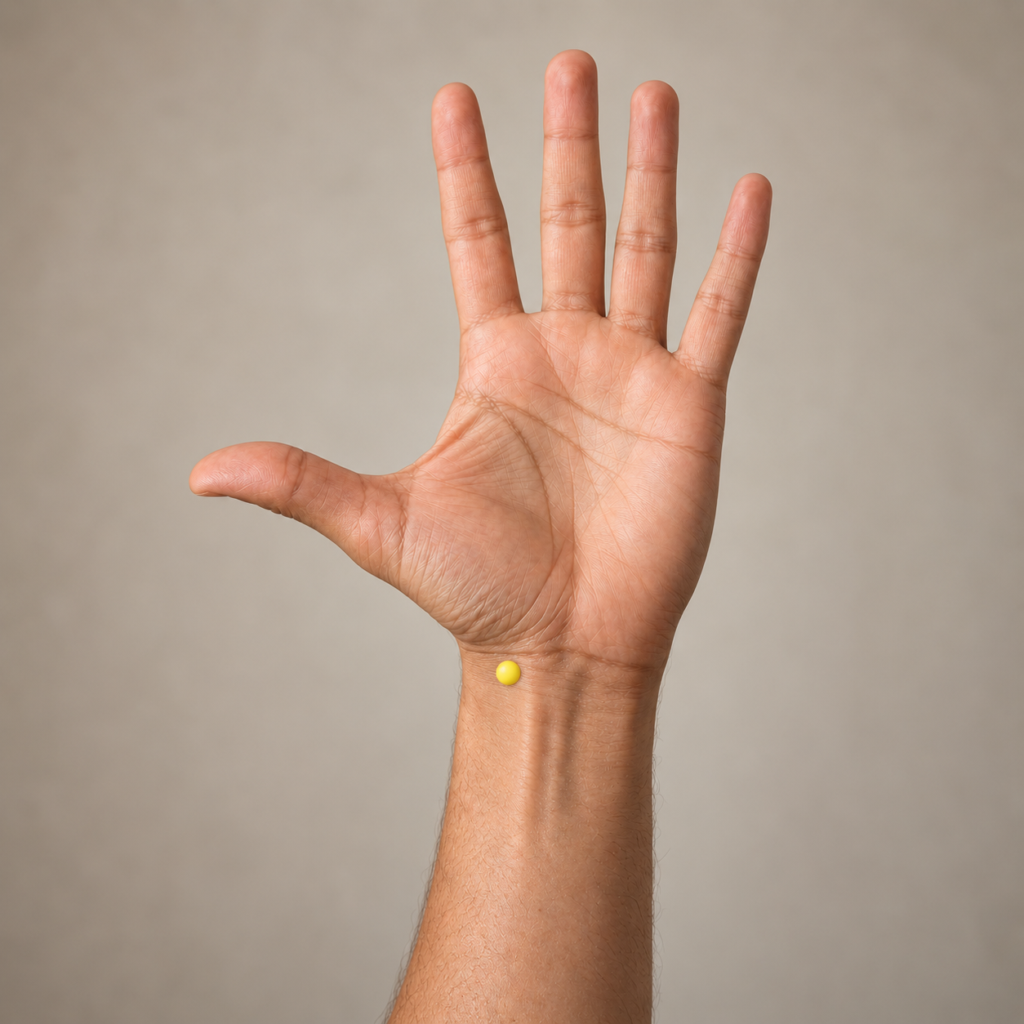
8. Press on LU9 at the wrist to strengthen the defensive Qi. LU9 sits on the inner wrist crease, on the thumb side, in the hollow where you can feel the pulse. Press firmly with your thumb for one to two minutes on each wrist. LU9 is called “Taiyuan,” the Lung’s source point.
To address persistent daily sneezing, strengthen the Lung and its defensive Qi to prevent the nose from overreacting. Use LU9, the Lung’s source point, for this purpose; stimulate it regularly, especially in the weeks leading up to and during allergy season.
9. Press on ST36 below the knee to build resistance. ST36 sits four finger-widths below the lower edge of the kneecap and one finger-width to the outside of the shinbone, on the muscle that rises when you flex your foot. Press firmly with your thumb for one to two minutes on each leg. ST36 is called “Zusanli,” the “Leg Three Miles.”
In Traditional Chinese Medicine, defensive Qi originates from the Qi produced by the Spleen and Stomach through digestion, so strong digestion enhances nasal resilience. The point ST36 strengthens this foundation, boosts the immune system, and helps the body resist repeated sneezing triggers, especially when fatigue is a factor.

Why These Acupressure Points Work
In Traditional Chinese Medicine, a sneeze is seen as wind entering the nose because the Lung and defensive Qi are too weak to keep it out. The nine points influence both the immediate event and its long-term effects.
- The point GV26 affects the process of sneezing as it begins to develop.
- Points LI20, Bitong, and Yintang specifically soothe itching and irritation at the nose.
- The acupressure points LI4, LU7, and GB20 can help release wind, especially during a sudden sneeze.
- The points LU9 and ST36 are used to bolster the defensive Qi, which leads to a less reactive nose.
How to Properly Use These Acupressure Points
- When you feel a sneeze coming on, press GV26 firmly upward, just below the nose, and hold until the urge subsides.
- When sneezing, slide your fingers along the sides of the nose, then proceed to Yintang, LI4, and LU7.
- On windy days or when pollen levels are high, use GB20 and ensure your neck is covered when you go outside.
- To boost your defenses, focus on LU9 and ST36 daily, especially during the weeks before allergy season.
- Hold each point for one to two minutes, except for GV26, which needs just a few seconds of firm pressure. Apply gentle pressure around the face.
Certain habits can help decrease triggers. After being outside, rinse your nose with saline to remove pollen and dust, and shower plus change clothes on days with high pollen. Keep windows closed and use a HEPA purifier during windy days and dust storms. Use a humidifier in dry weather to prevent nasal irritation. Wash bedding weekly in hot water to reduce dust mites. If bright light causes sneezing, try wearing sunglasses. Also, avoid strong fragrances, smoke, and other irritants when possible.
When to Get Professional Help
If you experience swelling of the lips, tongue, face, or throat; hives; difficulty breathing; or dizziness after exposure to food, a sting, or medication, or while sneezing, contact emergency services immediately, as this may indicate a severe allergic reaction. Seek medical attention if sneezing is accompanied by wheezing, chest tightness, or shortness of breath, as these could signal allergy-related asthma. Also consult a doctor if you have a fever with facial pain and thick, discolored mucus lasting over ten days, frequent nosebleeds, or nasal blockage or bleeding on one side. Seek prompt medical care if a persistent, clear, watery discharge from one nostril follows a head injury. When frequent sneezing and allergy symptoms interfere with daily life, allergy testing can help identify triggers.
Acupressure is a safe, simple method that can help reduce sneezing and can be used alongside medical treatments when needed.
Above and Beyond Acupuncture offers acupuncture, cupping, and lifestyle coaching at the North Frank Lloyd Wright Boulevard location in Scottsdale.
Schedule an appointment online to start your healing journey.
The points above are only as effective as the technique used to apply them. Where to press, how firmly, and for how long all affect the result. For a full breakdown of how to perform acupressure properly at home, read Performing Acupressure in 3 Easy Steps.
If allergies are triggering sneezing, alleviating allergies with acupuncture explains how Traditional Chinese Medicine addresses the root cause; for stuffiness and sinus pressure, acupressure for sinus congestion is the companion post.

About the Publisher
Paul Kerzner, L.Ac., is a licensed acupuncturist and board-certified herbalist, as well as the founder of Above and Beyond Acupuncture in Scottsdale. His own journey from chronic patient to practicing acupuncturist shapes his commitment to providing honest, clinically grounded information about acupuncture and Traditional Chinese Medicine. Learn more about Paul and his clinical approach on the About Us page.