
Key Takeaways
- Seasonal affective disorder causes fatigue and low mood during winter; acupressure helps alleviate these symptoms.
- Key acupressure points include Yintang for mood lifting, GV20 for spirit elevation, and HT7 for calming effects.
- Proper use of these points involves firm pressure for one to two minutes, ideally on a daily basis during winter.
- Acupressure works best when combined with other strategies like daylight exposure, physical activity, and maintaining social connections.
- For severe symptoms or persistent low mood, seek professional help; support and treatment options are available.

As days shorten and sunlight fades, seasonal affective disorder can cause fatigue, low motivation, and sadness. You might sleep more yet still feel tired, crave specific foods, withdraw from others, or struggle to feel like yourself during winter. Acupressure offers a simple way to support your well-being when these symptoms appear.
Traditional Chinese Medicine sees winter lows as part of the season’s natural cycle. Winter, linked to the Water element and the Kidney, our deepest source of warmth and energy, is a time to slow down and reflect inward. When severe cold and darkness prevail, they deplete the Kidney’s warmth and weaken the body’s Yang, the active and warming vitality, causing feelings of cold, fatigue, heaviness, and low mood. As Yang diminishes, Qi can stagnate, mood can sink, and the Heart’s Shen, or spirit, can dim as the light fades. These points aim to invigorate and warm Yang, enhance Qi flow, replenish Kidney energy, and brighten the Shen.
Seasonal affective disorder (SAD) is a type of depression, and acupressure can be an effective aid when combined with daylight, physical activity, and other supportive measures. For especially gloomy days, “How to Use Acupressure for Depression” is a helpful guide.
These nine acupressure points can help ease the heaviness and fatigue associated with seasonal depression, offering a natural resource for challenging winter days.
What Acupressure Points to Press and Why
1. Press on Yintang between the eyebrows to brighten mood and lift lethargy. Yintang sits in the small hollow directly between the two eyebrows. Press steadily and hold, or make small, slow circles with your fingertip for one to two minutes. Yintang is an extra point, and it is the single most important point for seasonal affective disorder.
Yintang is particularly useful when seasonal depression comes with mental fog, lethargy, restlessness, or difficulty settling the mind. This makes it the key point for winter depression caused by this system. It soothes and energizes the Shen, alleviates lethargy and heaviness, and helps reduce the low mood and mental fog associated with SAD. For those struggling through the dark months, this is the primary point to target; return to it daily with gentle presses and deep breaths.

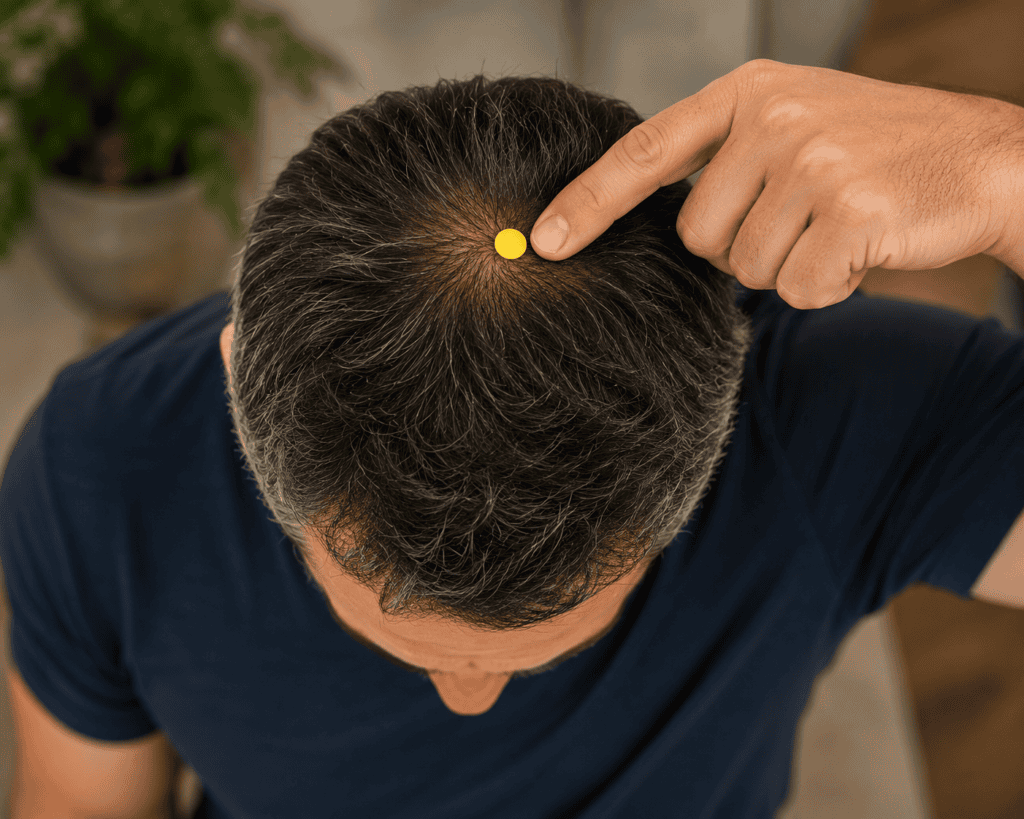
2. Press on GV20 at the top of the head to lift the sunken spirit. GV20 sits at the very top of the head, on the midline, on a line drawn up from the tops of both ears. Press straight down, or make small circles, with your fingertip for one to two minutes. GV20 is called “Baihui,” the “Hundred Meetings,” where many channels converge at the crown.
GV20 acts as the body’s key lifting point, elevating Yang energy that diminishes during the dark season and counteracting the heavy, withdrawn sensation of SAD. Unlike other points that soothe or warm, GV20 lifts, drawing collapsed energy upward and clearing foggy, heavy-headedness. It helps combat the low, unmotivated feelings typical of winter depression by lifting the spirit. This point works well with Yintang to enhance mood and boost energy together.
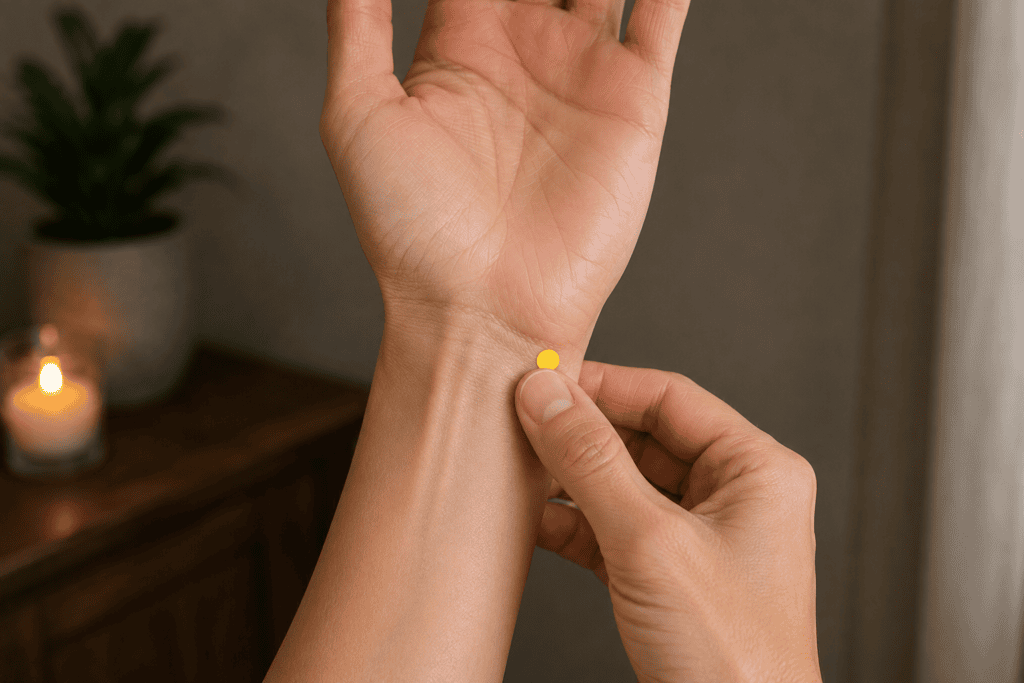
3. Press on HT7 at the wrist to calm and steady the mood. HT7 sits on the inner wrist crease, on the pinky side, in the small hollow just inside the tendon. Press firmly with your thumb for one to two minutes on each wrist. HT7 is called “Shenmen,” the “Spirit Gate,” and it is the source point of the Heart.
HT7 calms and nourishes the Heart, stabilizing a low, unsettled mood and alleviating poor sleep and heaviness associated with seasonal depression. As the Heart’s source point, it supports the Shen at its foundation, helping brighten a spirit dulled by a lack of light. For individuals experiencing winter lows with a restless, heavy heart and broken sleep, this point provides calming support and can be pressed quietly whenever mood dips.
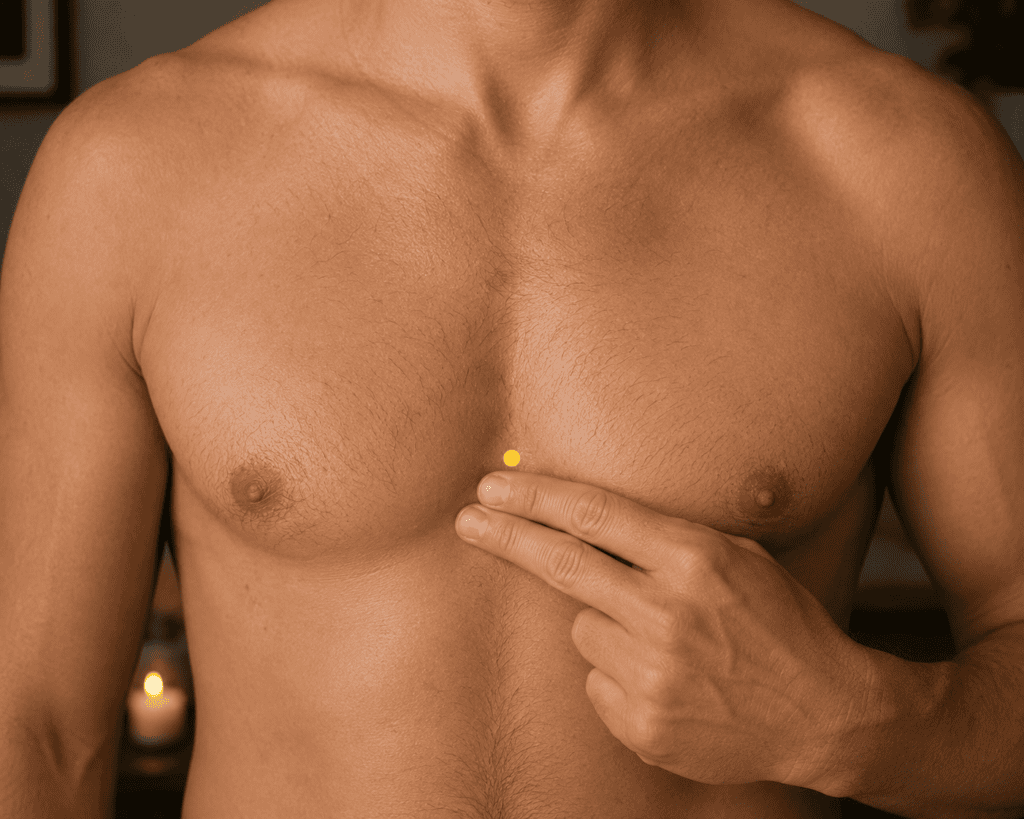
4. Press on CV17 at the center of the chest to release the heavy mood. CV17 sits on the midline of the breastbone, level with the space between the nipples, in the center of the chest. Press gently but steadily with your fingertip for one to two minutes, breathing slowly into the pressure. CV17 is called “Shanzhong,” and it is the meeting point of Qi in the chest.
CV17 activates the chest, releasing accumulated emotional Qi that builds up during low moods, reducing the sensation of heaviness. It is the main point for alleviating stagnation of grief and heaviness stored in the body’s center. For someone experiencing winter depression as a physical heaviness in the chest, stimulating this point helps lift and open the chest. Gentle pressing combined with deep breathing offers a subtle, calming relief.
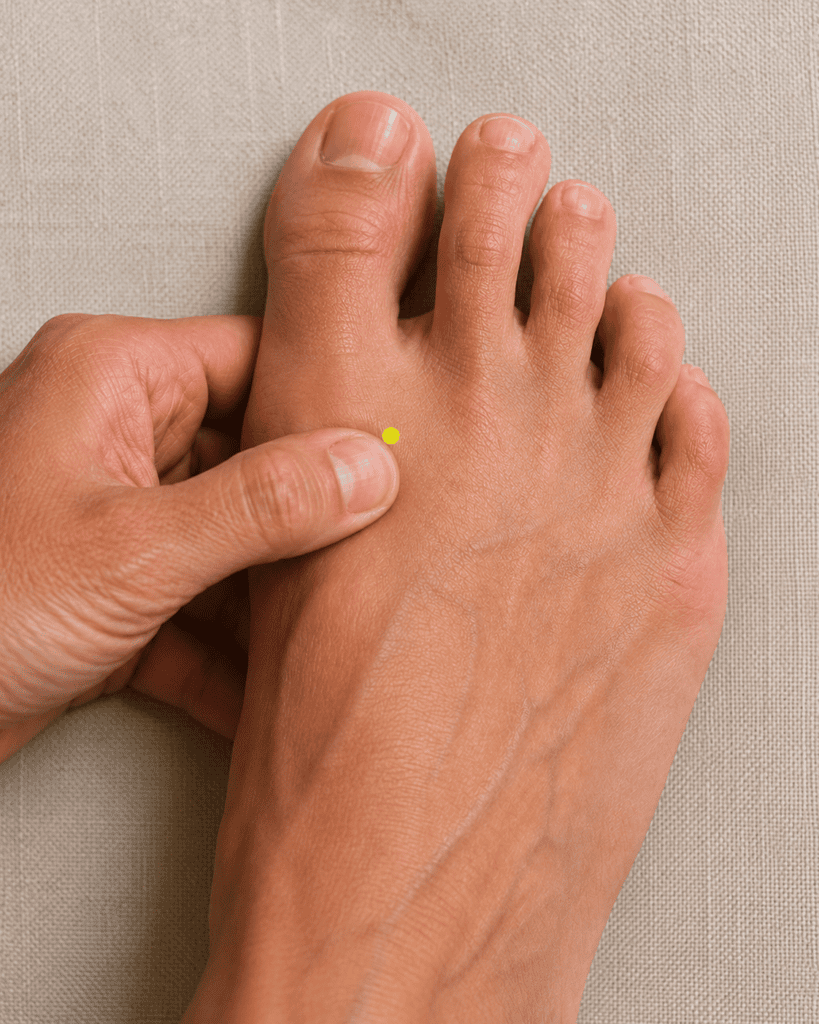
5. Press on LR3 on the top of the foot to move the stuck mood. LR3 sits on the top of the foot, in the webbing between the big toe and second toe, about two finger-widths back where the bones meet in a small hollow. Press firmly with the thumb for one to two minutes on each foot. LR3 is called “Taichong,” the primary point for moving stuck Liver Qi.
A dull, stagnant mood in Chinese medicine often indicates Liver Qi stagnation, the heavy, immobile, unmotivated sensation that refuses to move. LR3 is the key point for releasing this blockage. It promotes Qi circulation, eases the low, dull mood caused by stagnation, and stabilizes the system by directing energy downward toward the feet. For individuals feeling stuck, sluggish, or unable to get started, especially during winter, this point helps to shift the mood. It is one of the most effective points for addressing low mood.
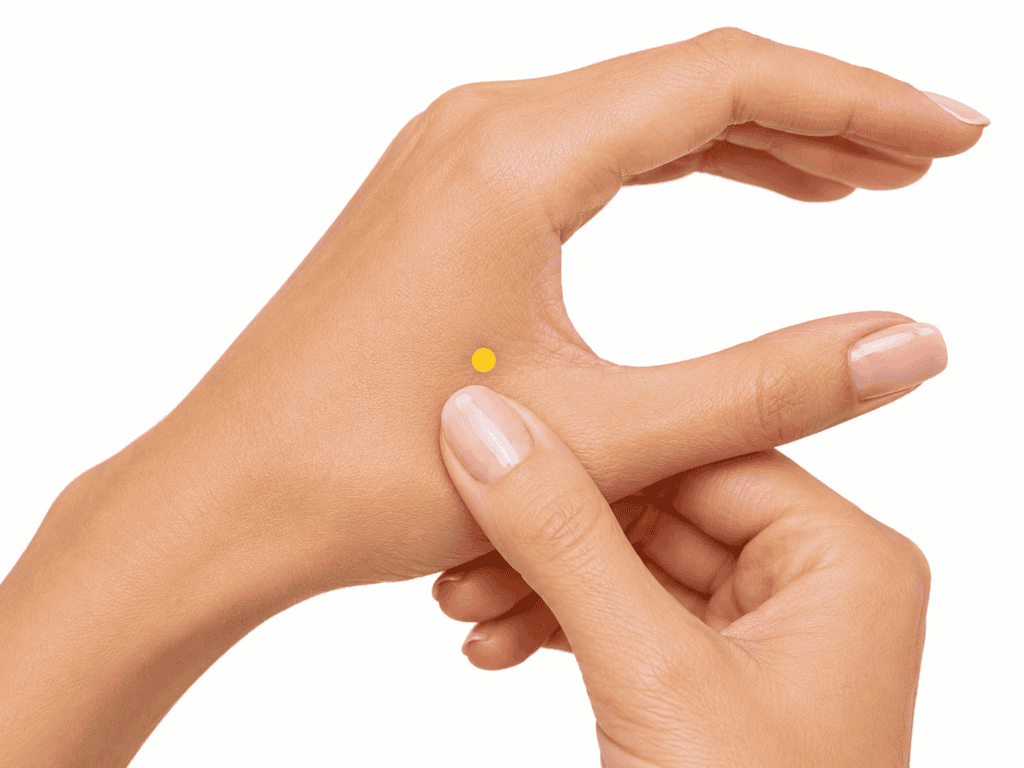
6. Press on LI4 in the hand to move Qi and lift the mood. LI4 sits in the webbing between the thumb and index finger, at the highest point of the muscle when you bring the thumb and finger together. Press firmly with the thumb of your other hand for one to two minutes on each hand. LI4 is called “Hegu.” LI4 is avoided during pregnancy.
LI4 is a key point for moving Qi, and when pressed together with LR3 on the foot, it creates the well-known Four Gates. This combination is highly effective in stimulating Qi flow throughout the body and lifting low, stagnant moods. Using both points together releases winter heaviness more thoroughly than using either alone. For those experiencing persistent sluggishness and SAD symptoms, this pairing helps restore full system movement.
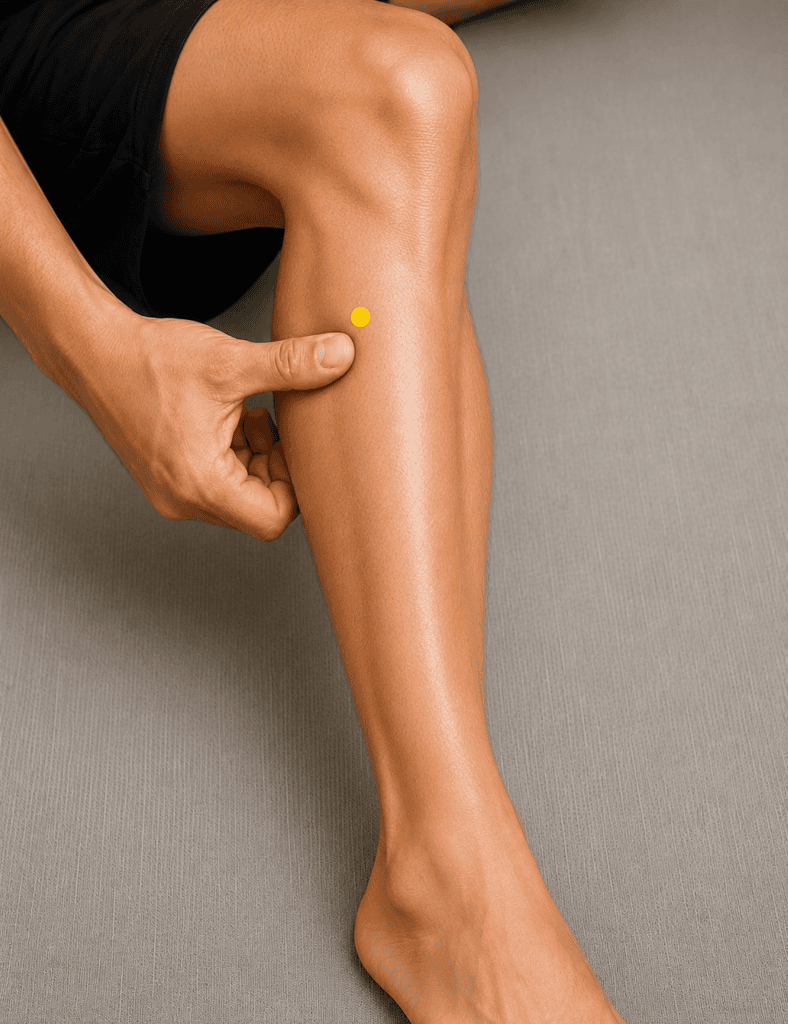
7. Press on ST36 below the knee to rebuild energy and fight fatigue. ST36 sits four finger-widths below the lower edge of the kneecap and one finger-width to the outside of the shinbone, on the muscle that rises when you flex your foot. Press firmly with your thumb for one to two minutes on each leg. ST36 is called “Zusanli,” the “Leg Three Miles,” and it is the master point for building energy in the whole body.
Deep fatigue and low energy are often among the most challenging symptoms of SAD. ST36 is the primary acupuncture point used to restore Qi and vitality damaged by the dark season. It benefits the whole body, eases exhaustion, and helps maintain energy throughout winter, which is why it’s emphasized here. For people who feel heavy, drained, and unable to find energy during the cold months, this point helps rebuild their reserves. Regular use of ST36 can also enhance resilience against seasonal lows.
8. Press on CV4 below the navel to warm the depleted Yang. CV4 sits on the midline of the lower abdomen, about four finger-widths below the navel. Rest your fingertips or palm there and press gently and warmly for one to two minutes. CV4 is called “Guanyuan,” the “Gate of Origin,” and it is one of the main points for warming and rebuilding the body’s deep Yang. Use CV4 with caution during pregnancy.
Winter drains Kidney warmth and dampens Yang, causing feelings of coldness, exhaustion, and low energy. CV4 is a highly warming and tonifying point that replenishes this inner fire at its source. Applying warmth to this point, whether with a warm hand or compress, can restore the lost warmth and vitality during the dark season. This helps counteract the cold, sunken heaviness associated with SAD. For those who feel not just low but also cold and completely depleted during winter, stimulating this point can effectively warm and reinforce their core strength.

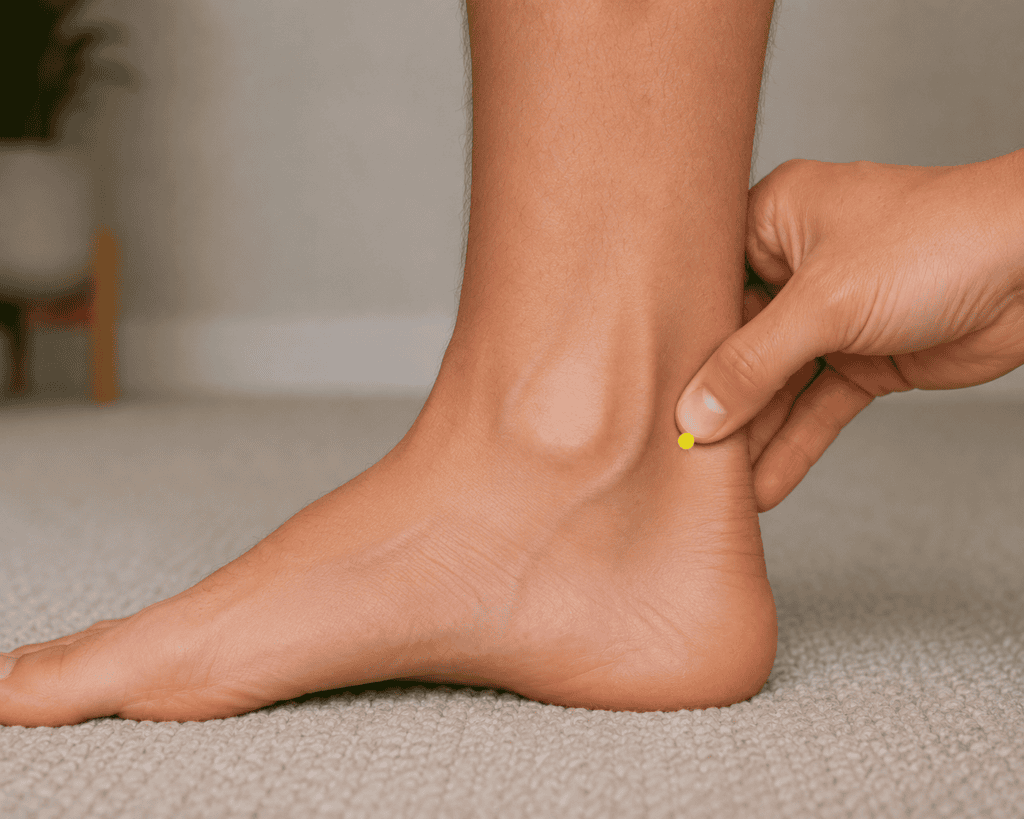
9. Press on KI3 above the inner ankle to strengthen the winter reserves. KI3 sits in the hollow between the inner ankle bone and the Achilles tendon, level with the tip of the ankle bone. Press firmly with your thumb for one to two minutes on each ankle. KI3 is called “Taixi,” the source point of the Kidney.
Winter corresponds to the Kidney season, when the dark, cold months most affect Kidney reserves. KI3 nourishes and boosts these reserves as the Kidney system’s source point. It helps rebuild deep vitality and alleviates the fear and heaviness that occur when reserves are low. Since the Kidney is at the root of the winter dip, this point supports the body exactly where SAD causes depletion, grounding and strengthening the entire system throughout the season.
Why These Acupressure Points Work
In Traditional Chinese Medicine, seasonal affective disorder can be understood as cold and darkness weakening Kidney warmth and causing Yang to sink. Qi and mood can stagnate, while the Shen, or spirit, dims along with the light. These nine points help to address this entire process:
- The mood-brightening points (Yintang, GV20) lift the sunken Yang and brighten a spirit dimmed by the dark season, with Yintang working on the light-and-melatonin system directly.
- The Shen points (HT7, CV17) calm and steady the low mood and release the heaviness held in the chest.
- The Qi-moving points (LR3, LI4) free the stuck, stalled mood, working together as the Four Gates.
- The rebuilding and warming points (ST36, CV4, KI3) restore the energy, warmth, and deep Kidney reserves that winter drains.
How to Properly Use These Acupressure Points
Spend time each day working through the points during the darker months, and when you’re most exhausted, turn to the warming ones to lift your spirits.
- Begin each day with Yintang and GV20 to brighten the mood and lift the energy, the two that most directly counter the winter low.
- Add HT7 and CV17 to steady and open a heavy heart, LR3 with LI4 as the Four Gates to move a stuck mood, and ST36, CV4, and KI3 to rebuild energy and warmth.
- Hold CV4 with a warm hand or a warm compress when you feel cold and drained, and work the points in the morning where you can, to support the body as the day begins.
- Hold each point for one to two minutes with firm, steady pressure, breathing slowly, and make it a daily practice through the season rather than an occasional one.
Acupressure is most effective when combined with holistic strategies that combat winter depression. Maximize your exposure to daylight, especially in the morning, and try to spend time outside even on cold, cloudy days. Many people benefit from light therapy, which involves daily use of a bright lightbox and complements this practice. Maintaining your circadian rhythm, which the season can disrupt, is also very helpful. Additionally, stay active, keep a consistent sleep schedule, eat nutritious food, and remain socially connected, even when the urge to withdraw is strong.
When to Reach Out for Support
Seasonal affective disorder is a type of depression that is highly treatable, providing genuine hope for recovery. If your low mood is intense or persistent, affecting your work, sleep, or relationships, or if it recurs every winter, consider consulting a doctor or therapist. They can recommend various support options, including light therapy and other effective treatments used alongside it.
If you’re ever having thoughts of harming yourself, please contact the 988 Suicide and Crisis Lifeline immediately by calling or texting; it’s available 24/7.
Please read “Can Acupuncture Treat Seasonal Affective Disorder?” to learn more about how acupuncture can help provide support during a challenging experience.
Above and Beyond Acupuncture offers acupuncture, cupping, and lifestyle coaching at the North Frank Lloyd Wright Boulevard location in Scottsdale.
Schedule an appointment online or call us today to start your healing journey.
The points above are only as effective as the technique used to apply them. Where to press, how firmly, and for how long all affect the result. For a full breakdown of how to perform acupressure properly at home, read Performing Acupressure in 3 Easy Steps.

About the Publisher
Paul Kerzner, L.Ac., is a licensed acupuncturist and board-certified herbalist, as well as the founder of Above and Beyond Acupuncture in Scottsdale. His own journey from chronic patient to practicing acupuncturist shapes his commitment to providing honest, clinically grounded information about acupuncture and Traditional Chinese Medicine. Learn more about Paul and his clinical approach on the About Us page.