Key Takeaways
- Erectile dysfunction is the persistent difficulty of getting or maintaining an erection firm enough for sex. It becomes more common with age, stress, and health conditions such as diabetes and high blood pressure.
- Erectile dysfunction may be an early sign of heart disease, making a medical evaluation an important first step.
- In Traditional Chinese Medicine, erectile dysfunction involves the Kidney (sexual vitality), Liver (blood flow to the genitals), and Heart (stress and anxiety).
- Nine acupressure points strengthen the Kidney, keep circulation flowing to the pelvis, and calm the stress and performance anxiety that so often play a part.
- Research suggests acupuncture may improve erectile function, especially alongside medication; daily acupressure can support results at home.

Have you noticed that erections are harder to get or keep than they used to be? Has stress, fatigue, or worry about performance started to affect your sex life or your confidence? Erectile dysfunction, often called ED, is far more common than most men realize, and it is one of the most treatable conditions in men’s health.
Erectile dysfunction is rarely caused by just one factor. Blood flow, nerves, hormones, sleep, stress, and confidence all play a role; when one is out of balance, the others can be affected too. Acupressure offers a simple daily practice that may improve circulation to the pelvis, support the body’s reserves, and calm the nervous system. It can also complement medical treatment and positive lifestyle changes. To learn how clinic-based treatment fits in, see our accompanying post on whether acupuncture can be used to treat erectile dysfunction.
What Is Erectile Dysfunction?
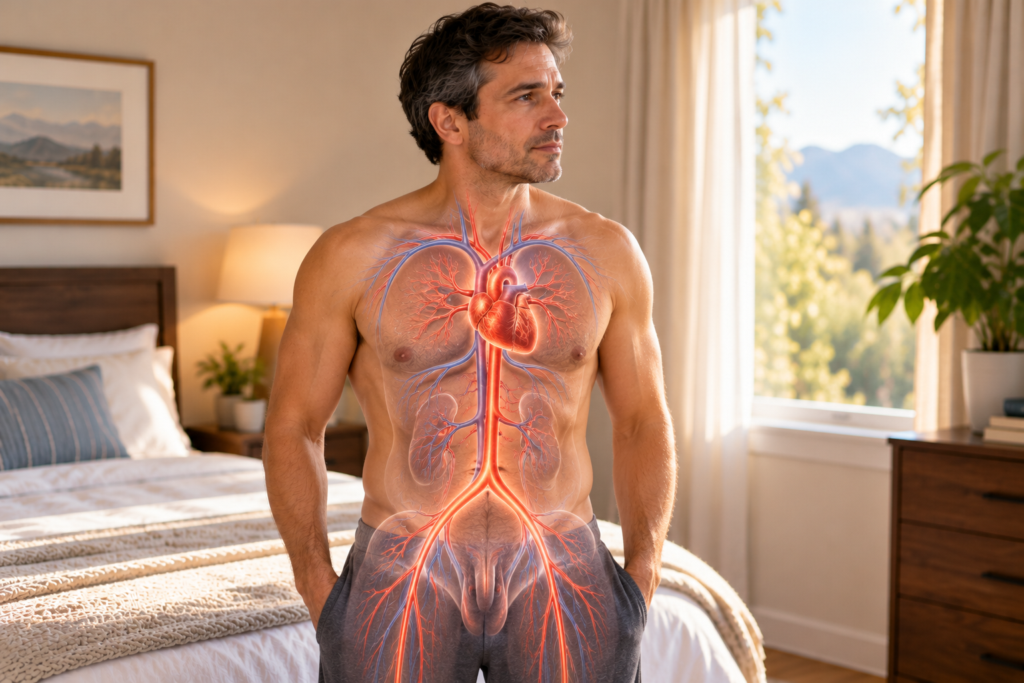
Erectile dysfunction (ED) is the ongoing inability to achieve or maintain an erection firm enough for satisfying sexual intercourse. Most men occasionally have difficulty getting an erection, especially when stressed, tired, or after drinking alcohol; this is normal. ED refers to difficulties that persist over time.
An erection involves several systems working together. When a person is sexually aroused, the brain sends signals through the nerves to the penis. These signals relax the smooth muscle in the blood vessels, allowing blood to flow into and fill the spongy tissue. At the same time, the veins contract to keep the blood there. Hormones such as testosterone help create sexual desire, and the nervous system needs to be relaxed for the process to occur. Problems with blood flow, nerves, hormones, or mental well-being can disrupt any of these steps.
Common signs of erectile dysfunction include:
- Difficulty getting an erection
- Difficulty keeping an erection during sex
- Erections that are less firm than before
- Fewer morning or nighttime erections
- Reduced sexual desire in some men
- Anxiety, frustration, or avoidance of intimacy
- Strain in a relationship or a loss of confidence
What Causes Erectile Dysfunction and Who Is Affected?

ED becomes more common with age, but it isn’t an inevitable part of aging and can affect men at any age. Physical causes are more common in older men, while stress, anxiety, and lifestyle factors often play a larger role in younger men. For many men, physical and emotional causes overlap.
Common causes and contributing factors include:
- Narrowed or stiffened blood vessels, the same process behind heart disease
- Diabetes, which damages both blood vessels and nerves
- High blood pressure and high cholesterol
- Excess body weight and an inactive lifestyle
- Smoking, heavy alcohol use, and recreational drug use
- Low testosterone and other hormonal imbalances
- Certain medications, including some blood pressure medicines, antidepressants, and prostate medications
- Prostate surgery, pelvic radiation, or injury to the pelvis or spine
- Sleep apnea and poor sleep
- Stress, anxiety, depression, and performance anxiety
- Relationship tension and communication difficulties
Because the blood vessels in the penis are smaller than those around the heart, they often show signs of narrowing first. This is why erectile dysfunction can appear several years before other signs of heart disease and warrants medical evaluation rather than simply a prescription.
How Erectile Dysfunction Differs From Related Concerns

Several concerns overlap with ED, and understanding the distinctions can help guide appropriate care.
- Low libido means a reduced desire for sex, while ED refers to difficulty with the physical response. They often occur together, particularly with low testosterone, depression, or fatigue.
- Performance anxiety can make it difficult to get or maintain an erection in certain situations, often with a new partner or after a previous difficulty. Morning erections and erections during self-stimulation usually remain normal, suggesting the cause is mainly psychological.
- Premature ejaculation affects how quickly ejaculation occurs, not the ability to get an erection, although some men experience both.
- Peyronie’s disease can cause the penis to curve, sometimes with pain or a firm area beneath the skin, and may make intercourse difficult.
- Male fertility concerns involve sperm quality, which may be completely normal even when erections are difficult, and vice versa.
A useful clue is whether you still get firm erections in the morning or at night. If you do, the physical systems are likely working, and stress or anxiety may be a bigger factor. If you don’t, a physical cause is more likely, so a medical evaluation is especially important.
How Traditional Chinese Medicine Views Erectile Dysfunction
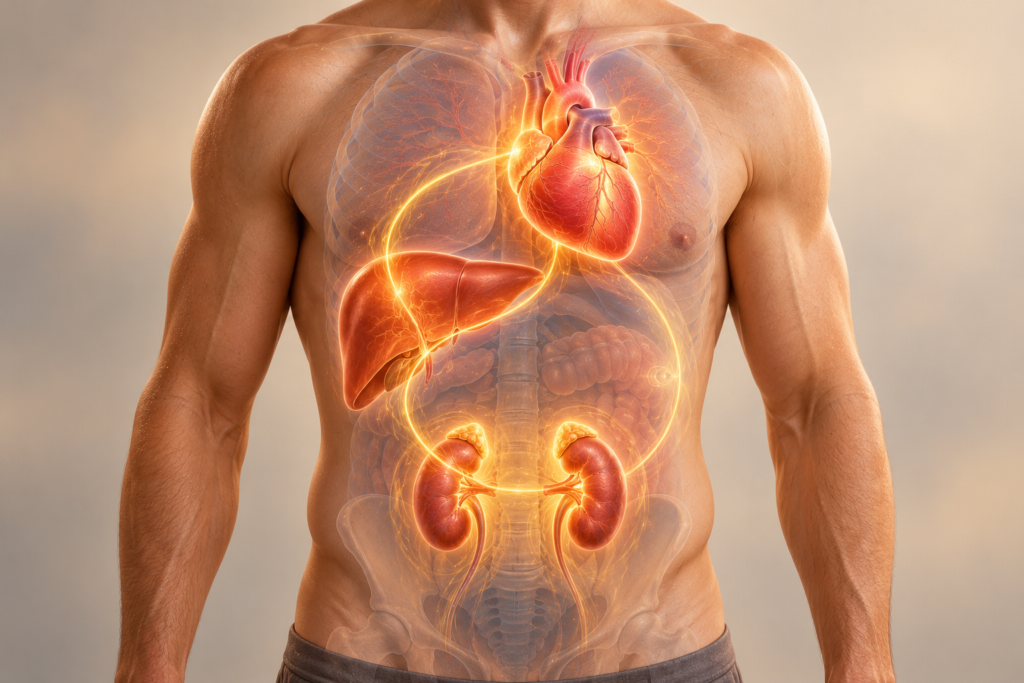
In Traditional Chinese medicine, sexual vitality is rooted in the Kidney, which stores Jing, or Essence, and Kidney Yang, the warming energy behind desire and physical response. The Liver channel wraps around the genitals and carries Blood to them, while stress and frustration easily affect the Liver. The Heart houses the mind, and anxiety, worry, and poor sleep can disturb its connection with the Kidney. Most men with ED show more than one of these patterns, and the points in this routine are chosen to address each.
- Liver Qi stagnation: difficulty with erections during periods of stress, frustration, or tension, often with irritability, tight shoulders, and a sense of being wound up. This is one of the most common patterns in modern men. LR3 and SP6 move the Liver Qi and keep Blood flowing to the pelvis.
- Kidney Yang deficiency: weak or soft erections, low desire, cold hands and feet, low back pain, frequent urination, and fatigue, especially with age. CV4, CV6, BL23, and GV4 warm and strengthen the Kidney Yang.
- Kidney Jing deficiency: gradual decline in sexual function with age, overwork, or long-term illness, often with weakness in the lower back and knees. CV4, BL23, and KI3 strengthen the Kidney and replenish the Jing.
- Heart and Kidney disharmony: performance anxiety, racing thoughts, poor sleep, palpitations, and difficulty staying present during intimacy. HT7 and KI1 calm the Heart, ground the mind, and reconnect the Heart and Kidney.
- Damp heat in the lower body: a heavy feeling in the groin, a history of heavy alcohol use or rich food, and sometimes prostate or urinary irritation. SP6 and LR3 help clear damp heat, and dietary changes support the process.
- Blood stagnation: long-standing difficulty linked to poor circulation, often alongside high blood pressure, high cholesterol, or diabetes. SP6 and LR3 move the Blood.
The goal is to strengthen the Kidney, keep Qi and Blood flowing to the pelvis, calm the mind, and restore the connection between relaxation and response.
What the Research Shows

Acupuncture has shown encouraging results for erectile dysfunction. A 2019 systematic review and meta-analysis in The World Journal of Men’s Health gathered twenty-two randomized trials of acupuncture for ED. Men who received acupuncture together with tadalafil, a common ED medication, had significantly greater improvement in erectile function scores than men who took the medication alone, and acupuncture combined with herbal medicine also improved erectile function more than herbal medicine alone. Most of the trials focused on ED linked to stress and anxiety, where acupuncture appears especially helpful. The authors called for larger trials to build on these results.
Research specifically on acupressure for ED is limited, but it targets many of the same points and channels. It offers a practical way to support circulation, ease stress, and strengthen the body in daily life, alongside medical care and acupuncture.
Here are nine acupressure points that can help:
What Acupressure Points to Press and Why
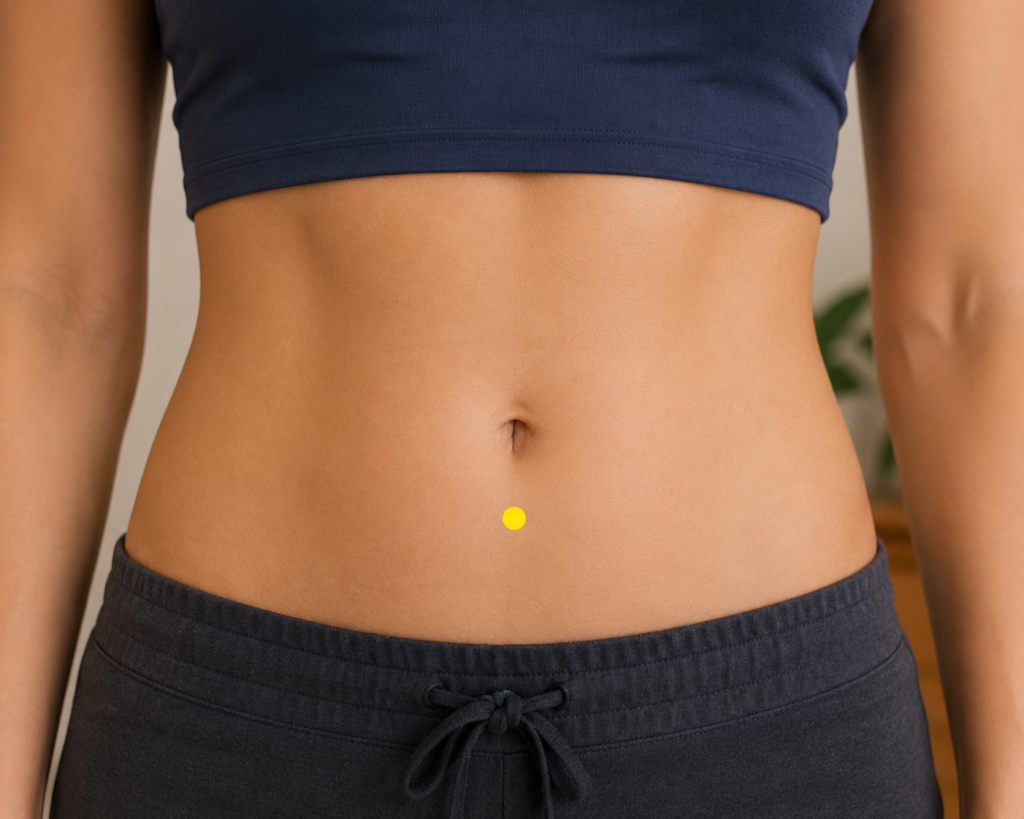
1. Press on CV4 below the navel to strengthen the Kidney and Jing. CV4 sits on the midline of the lower abdomen, four finger-widths below the navel. Lie on your back and press gently but steadily with two or three fingertips for one to two minutes while breathing slowly into the lower belly. CV4 is called “Guanyuan,” the “Gate of Origin.”
CV4 is one of the key acupressure points for strengthening the Kidney and replenishing Jing, the deep reserve that supports sexual vitality. Located in the lower abdomen just above the pelvis, it sits in an area that Traditional Chinese medicine regards as the root of reproductive and sexual energy. CV4 has traditionally been used to address erectile difficulties and is the foundation of this treatment procedure. Do not press on a full stomach.

2. Press on CV6 below the navel to build the Qi. CV6 sits on the midline of the lower abdomen, two finger-widths below the navel. Press gently with two or three fingertips for one to two minutes while breathing slowly. CV6 is called “Qihai,” the “Sea of Qi.”
CV6 strengthens the body’s Qi and supports Kidney Yang, the warming energy responsible for desire and physical response. It works well with CV4. Warm both points by placing a palm on the lower abdomen. Slowing your breathing while pressing CV6 can also help the body shift out of a taut, alert state that is contrary to arousal.
3. Press on BL23 on the lower back to strengthen the Kidney. BL23 sits on the lower back, two finger-widths on either side of the spine, at the waist, roughly level with the bottom of the rib cage. Make loose fists and press the knuckles into both points at once, or rub the area briskly with your palms until warm, for one to two minutes. BL23 is called “Shenshu,” the “Kidney Shu.”
BL23 is the point on the back associated with the Kidney, where its energy gathers. It strengthens Kidney Yang and Jing, warms the lower back, and helps maintain sexual vitality. Traditionally, people rub the lower back until it feels warm each morning to support the Kidney, especially when erectile dysfunction is accompanied by lower-back aching or fatigue.
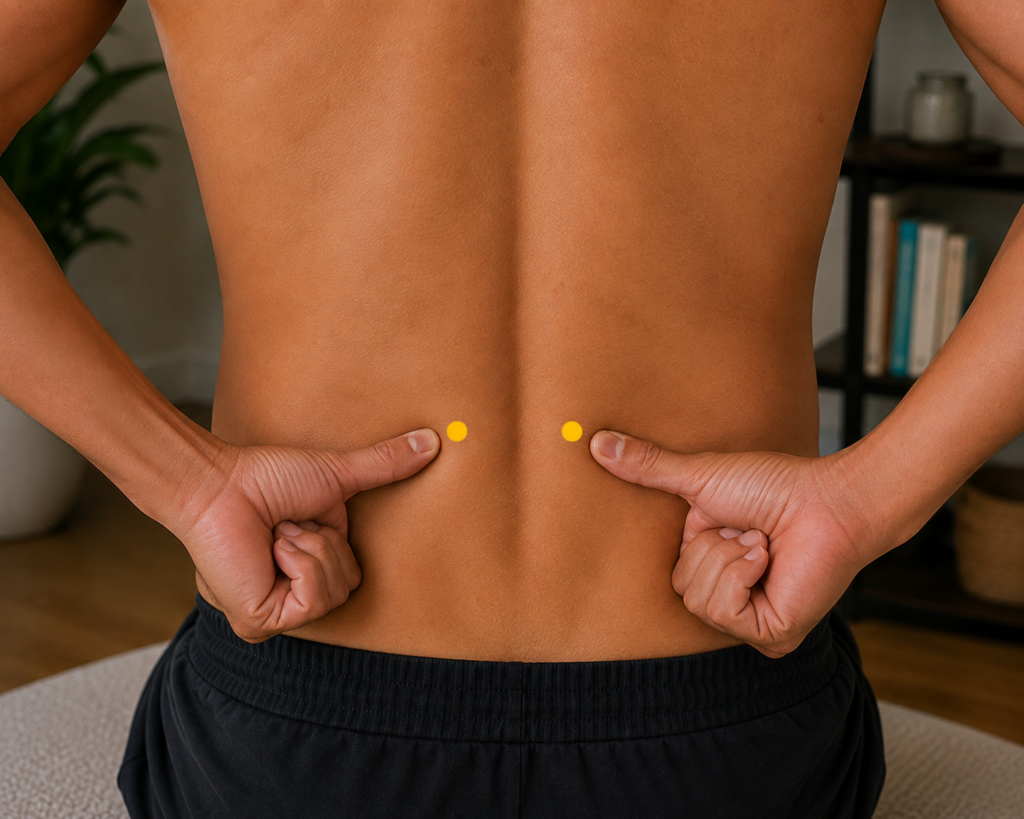
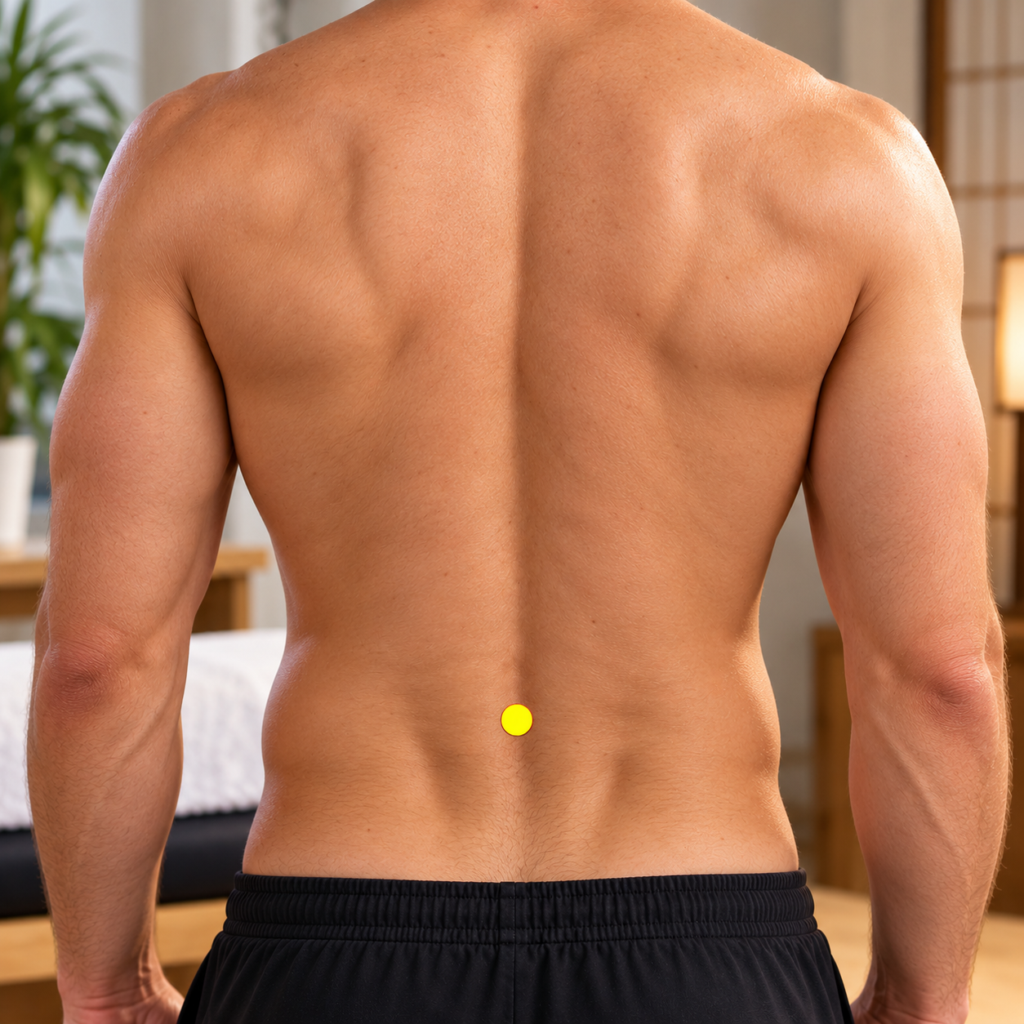
4. Press on GV4 on the lower back to warm the Kidney Yang. GV4 sits on the midline of the lower back, in the hollow just below the bony bump of the second lumbar vertebra, directly between the two BL23 points. Press with your knuckle or fingertips for one to two minutes, or rub the area until warm. GV4 is called “Mingmen,” the “Gate of Life.”
GV4 is considered the gateway for the body’s warming, stimulating energy. It strengthens Kidney Yang, which supports desire, physical response, and energy. It may be especially helpful for ED accompanied by cold hands and feet, lower back aches, low desire, or a general feeling of depletion.
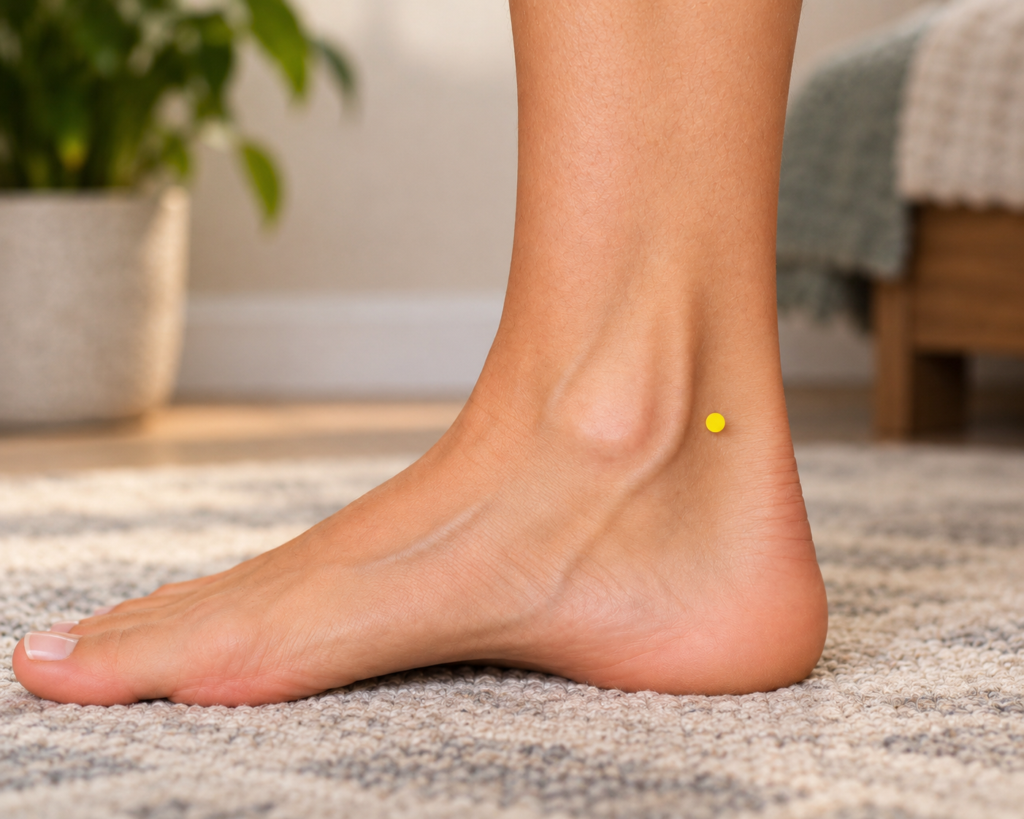
5. Press on KI3 behind the inner ankle to nourish the Kidney. KI3 sits in the hollow between the inner ankle bone and the Achilles tendon, level with the tip of the ankle bone. Press firmly with your thumb for one to two minutes on each ankle. KI3 is called “Taixi,” the “Great Stream,” and is the source point of the Kidney.
KI3 strengthens both Kidney Yin and Kidney Yang, making it one of the most balanced acupressure points for sexual health. It nourishes the Jing, eases weakness in the back and knees, and helps maintain steady energy. Stimulate this acupressure point daily, especially for men whose erectile dysfunction has gradually developed due to aging or overwork.
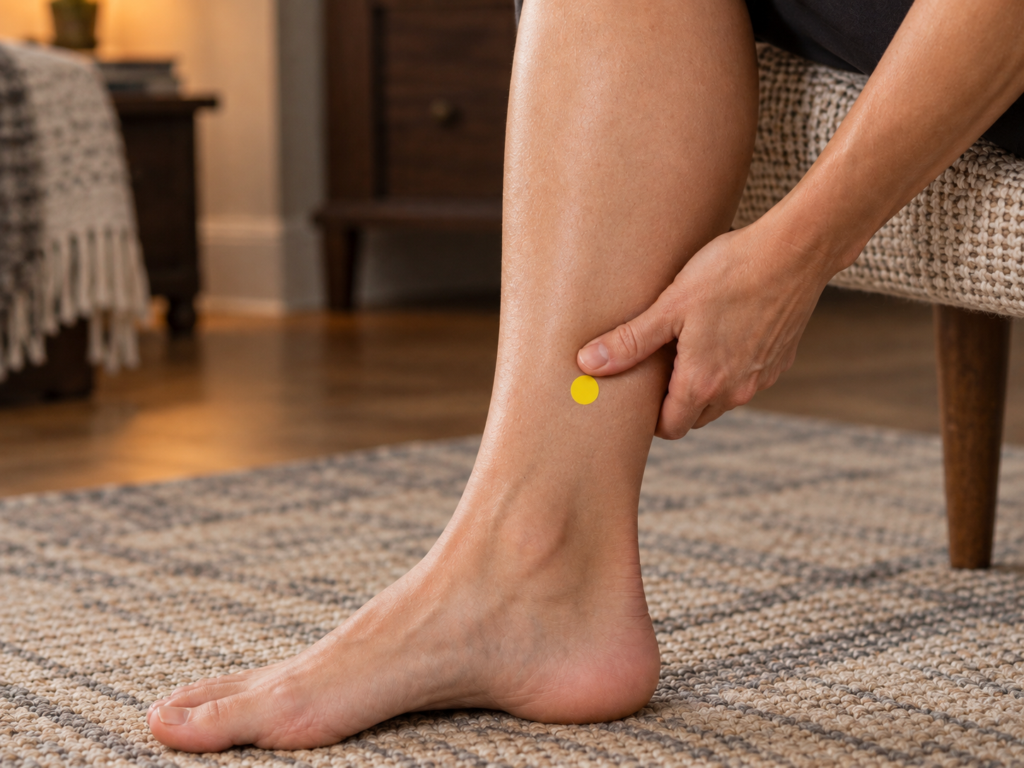
6. Press on SP6 above the inner ankle to move the Blood to the pelvis. SP6 sits four finger-widths up from the tip of the inner ankle bone, just behind the back edge of the shinbone. Press firmly with your thumb for one to two minutes on each leg. SP6 is called “Sanyinjiao,” the “Three Yin Intersection.” SP6 is avoided during pregnancy, so partners who are pregnant should not use it.
SP6 is where the Spleen, Liver, and Kidney channels converge; all three pass through the pelvis and genital area. It promotes Blood movement, supports healthy circulation in the pelvic region, and helps clear damp heat from the lower body. It is especially useful for erectile dysfunction accompanied by poor circulation, high blood pressure, or a history of prostate or urinary irritation.
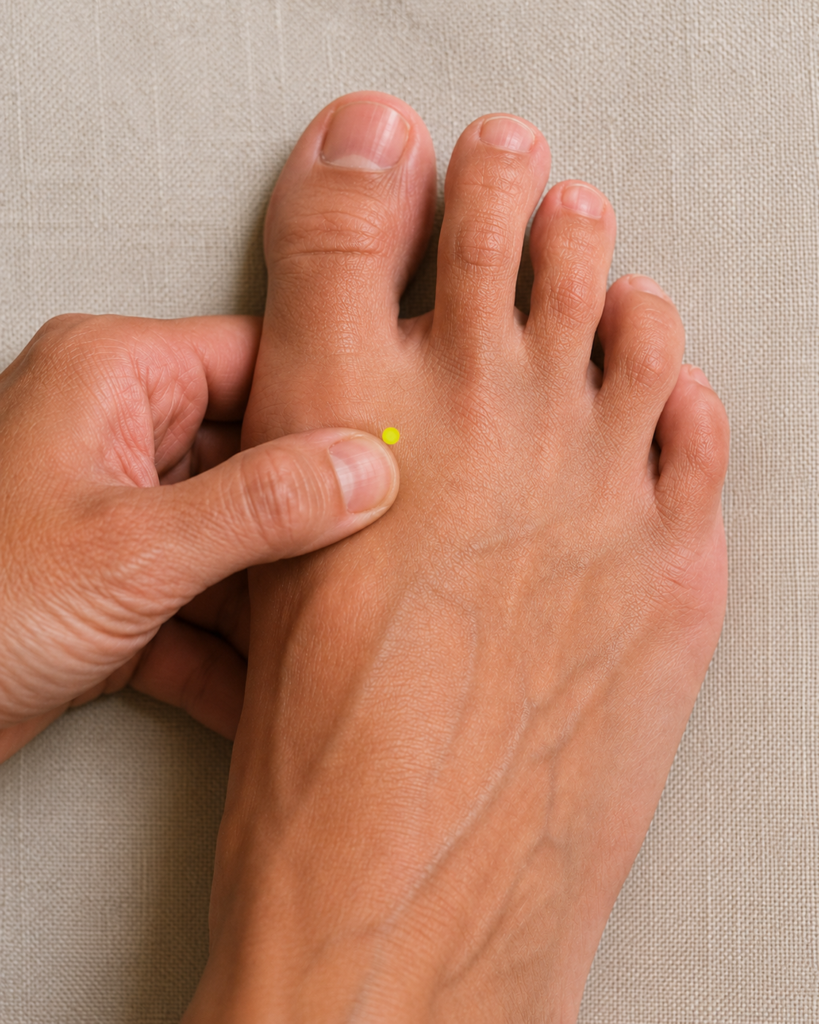
7. Press on LR3 on the top of the foot to release stress and move the Qi. LR3 sits on the top of the foot, in the webbing between the big toe and second toe, about two finger-widths back from the webbing, in the hollow just before the two bones meet. Press firmly with your thumb for one to two minutes on each foot. LR3 is called “Taichong,” the “Great Surge.”
The Liver meridian encircles the genital area. When stress causes the Liver to become tense, the flow of Qi and Blood to the pelvis is blocked. LR3 is the principal acupressure point for relieving this tension. It helps reduce stress, frustration, and irritability while maintaining circulation to the genitals. This makes it one of the most important points for treating ED caused by a demanding job, a stressful period in life, or tension in a relationship.
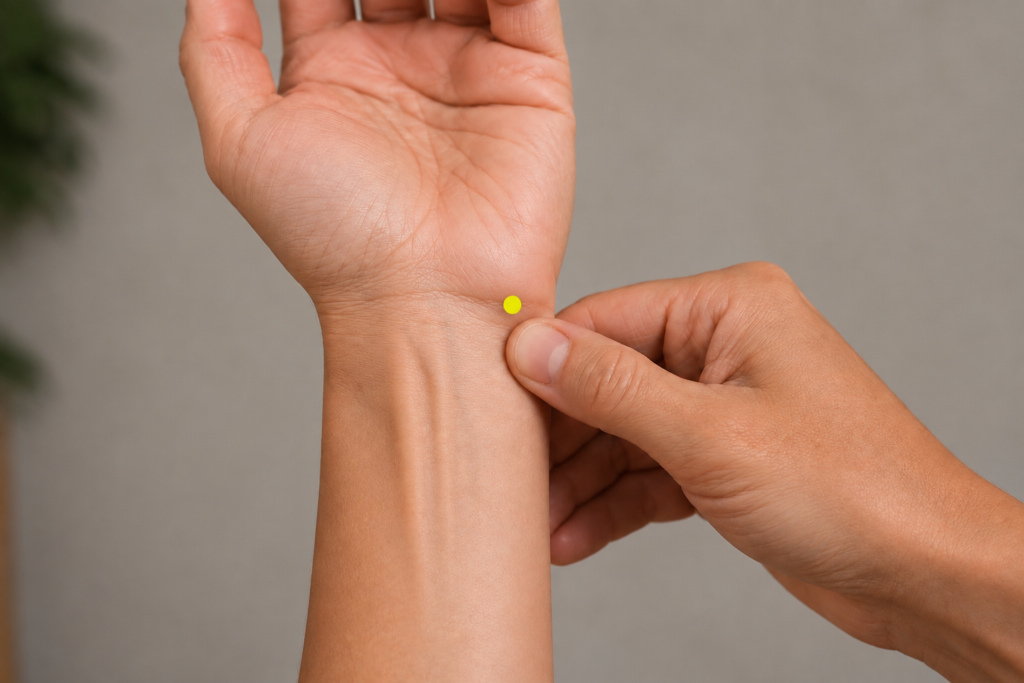
8. Press on HT7 at the wrist to calm performance anxiety. HT7 sits on the inner wrist crease, on the pinky side, in the small hollow just inside the tendon. Press firmly with your thumb for one to two minutes on each wrist. HT7 is called “Shenmen,” the “Spirit Gate.”
Anxiety is one of the main causes of erectile dysfunction. When a problem occurs, concern about it happening again can perpetuate the cycle. HT7 helps calm the heart and stabilise the Shen, reducing worry, racing thoughts, and restless sleep. Pressing HT7 while breathing slowly, either before intimacy or in bed before sleep, can help the body enter the relaxed state needed for a healthy response.
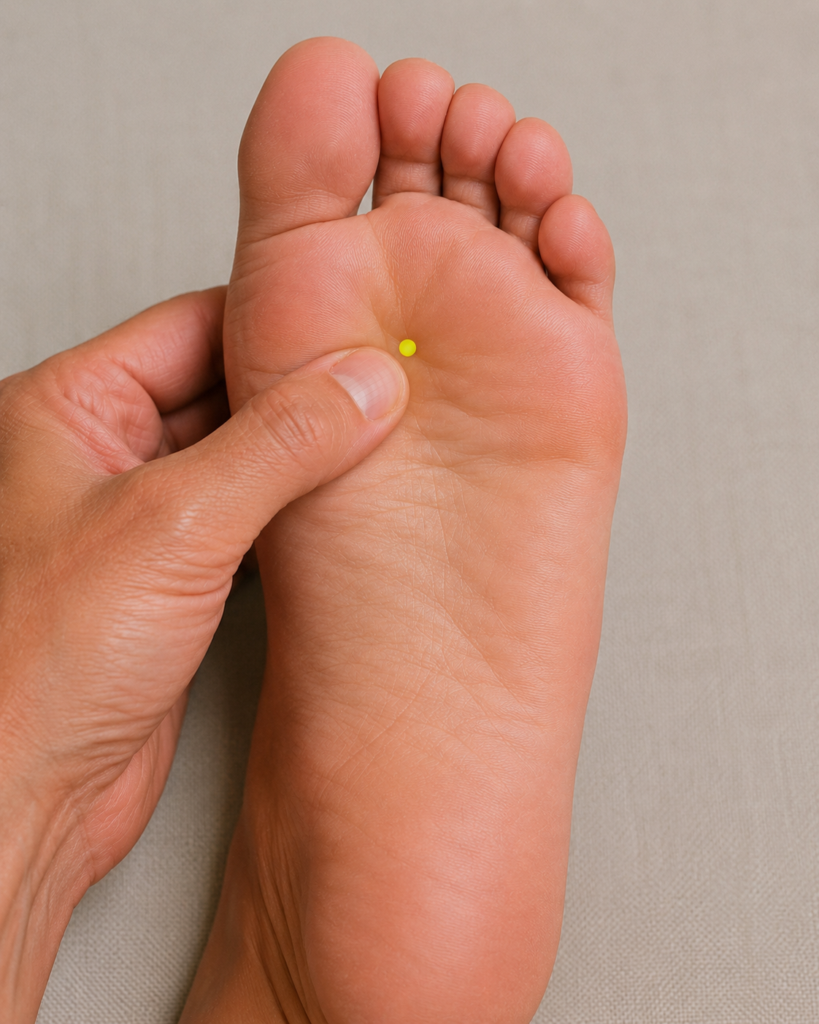
9. Press on KI1 on the sole of the foot to ground the mind and strengthen the Kidney. KI1 sits on the sole of the foot, in the hollow that forms in the center of the ball of the foot when you curl the toes. Press firmly with your thumb for about a minute on each foot, or rub the soles briskly until warm. KI1 is called “Yongquan,” the “Bubbling Spring.”
KI1 is the starting point of the Kidney channel and one of the body’s most grounding points. It draws energy from a restless mind down to the lower body, reconnects the Heart and Kidney, and helps the Kidney express its warming energy. Traditionally, people rub the soles of their feet until warm before bed to strengthen the Kidney and calm the mind.
Why These Acupressure Points Work
In Traditional Chinese Medicine, productive sexual function depends on strong Kidney Yang and Jing, the smooth flow of Liver Qi and Blood to the pelvis, and a tranquil Heart that can connect with the Kidney.
- The lower-abdominal points (CV4, CV6) strengthen the Kidney, replenish the Jing, and build the Qi at the root of sexual vitality.
- The lower-back points (BL23, GV4) warm and strengthen Kidney Yang, supporting desire and response.
- The Kidney points (KI3 and KI1) nourish the Jing and ground the mind in the lower body.
- The circulation and calming points (SP6, LR3, HT7) help move Qi and Blood to the pelvis while easing stress and performance anxiety.
How to Properly Use These Acupressure Points
- Do the full routine once daily, holding each point for one to two minutes (KI1 for about one minute) while breathing slowly into your lower belly.
- While lying on your back, apply gentle, steady pressure to the abdominal points. Avoid applying pressure when your stomach is full.
- Apply firm pressure to the back, legs, and feet, as well as to HT7 on the wrist.
- Rub the lower back over BL23 and GV4, and the soles of the feet over KI1, until they feel warm.
- If anxiety rises before intimacy, spend a few minutes on HT7 and LR3 while breathing slowly into your lower belly.
- Practice the routine consistently for several weeks or more, as strengthening the Kidney and improving circulation take time.
- If your partner is pregnant or might be pregnant, she should avoid using SP6.
Sample routines:
- Morning (five minutes): rub the lower back over BL23 and GV4 until warm, then press KI3 and SP6.
- During the workday (two minutes): LR3 or HT7 when stress builds.
- Before intimacy (three minutes): HT7 and LR3 with slow breathing into the lower belly.
- Evening (ten to fifteen minutes): the full routine, beginning with CV4 and CV6 lying down and finishing by rubbing the soles of the feet over KI1 before sleep.
Home Care and Lifestyle Support for Erectile Dysfunction

The same habits that support heart and blood vessel health can also improve erectile function, and many men see meaningful results from lifestyle changes alone.
- Exercise regularly. Walking, cycling, swimming, and strength training boost circulation and are some of the most effective natural ways to improve erectile function.
- Maintain a healthy weight, as losing excess weight can often improve erections.
- Quit smoking, as it damages your blood vessels.
- Cut back on alcohol, as heavy drinking can interfere with erections and testosterone levels.
- Avoid recreational drugs, including cannabis, as they may affect sexual function.
- Maintain healthy blood pressure, blood sugar, and cholesterol levels, and take prescribed medications as directed.
- Aim for seven to nine hours of sleep, and ask your doctor about sleep apnea if you snore heavily or wake feeling tired.
- Exercises that strengthen the pelvic floor muscles may improve erectile firmness for some men.
- Reduce stress by practicing slow breathing, meditating, exercising, or spending time outdoors.
- Talk openly with your partner. Easing pressure and focusing on connection, rather than performance, can often help.
- Consider counseling or sex therapy if anxiety, depression, or relationship strain is part of the picture.
- Avoid unregulated sexual performance supplements; they may contain hidden prescription drugs.
Traditional Chinese Medicine offers its own principles. Warm, cooked, nourishing meals are thought to support the Kidney, while walnuts, black sesame seeds, black beans, lamb, shrimp, and bone broth are traditionally used to strengthen Kidney Yang and Jing. Go easy on greasy, fried, or very spicy foods, as well as alcohol, which are believed to create damp heat in the lower body. Avoid too many cold, raw foods and iced drinks, which are thought to weaken Kidney Yang. Keep your lower back and feet warm, and avoid sitting on cold surfaces. Rest is also considered essential: overwork, late nights, and ongoing stress are believed to drain the Kidney over time.
How Acupuncture Can Help
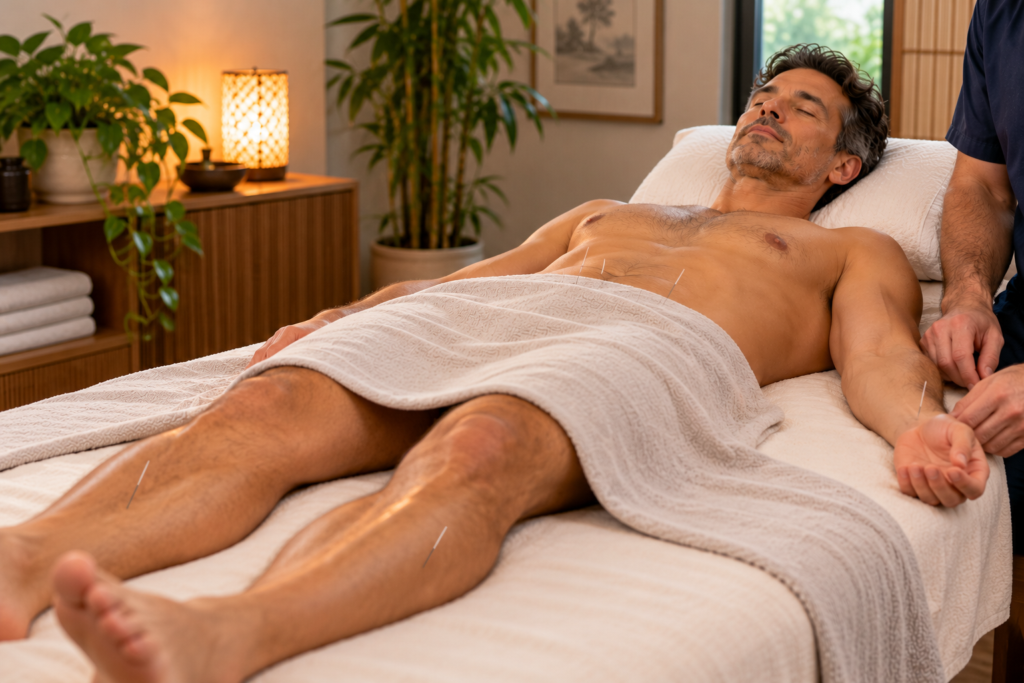
Acupuncture can help with erectile dysfunction by improving blood circulation to the pelvis, calming the nervous system, supporting the Kidneys, and addressing the stress and anxiety that often contribute to the problem. Treatment is tailored to each man’s specific condition, whether the main factor is stress, depletion, poor circulation, or performance anxiety. Many men find that regular acupuncture not only improves sexual function but also boosts confidence, sleep, and energy. It can also be used alongside ED medication, herbal formulations, and counseling.
For more information on whether acupuncture can be used to treat erectile dysfunction, please see this companion post .
Acupuncture works well alongside the care of your doctor or urologist. Because many men with ED also have high blood pressure, learn more about how acupuncture can help with high blood pressure.
When to Get Professional Help

If erection problems persist for more than a few weeks, see your doctor. Erectile dysfunction can be an early sign of heart disease, diabetes, high blood pressure, or low testosterone, and a medical examination may identify a treatable cause. Seek medical attention promptly if erectile dysfunction begins suddenly; occurs with low sex drive, fatigue, or low mood; develops after starting a new medication; or is accompanied by penile curvature, pain, or a firm area beneath the skin. Do not stop a prescribed medication without first consulting your doctor. If you take nitrates for chest pain or have heart disease, discuss erectile dysfunction medication with your doctor before using it. Seek emergency care if an erection lasts longer than four hours or if you experience chest pain, shortness of breath, or dizziness during or after sexual activity.
Acupressure is a natural, supportive approach to erectile dysfunction that supplements, but does not replace, diagnosis and medical treatment.
Because stress and anxiety play such a large part in ED, acupressure for stress and acupressure for anxiety offer simple tools. If ED comes with heart or blood sugar concerns, acupressure for high blood pressure and acupressure for diabetes are companion posts.
Above and Beyond Acupuncture offers acupuncture, cupping, and lifestyle coaching at the North Frank Lloyd Wright Boulevard location in Scottsdale.
Schedule an appointment online to start your healing journey.
The points above are only as effective as the technique used to apply them. Where to press, how firmly, and for how long all affect the result. For a full breakdown of how to perform acupressure properly at home, read Performing Acupressure in 3 Easy Steps.

About the Publisher
Paul Kerzner, L.Ac., is a licensed acupuncturist and board-certified herbalist, as well as the founder of Above and Beyond Acupuncture in Scottsdale. His own journey from chronic patient to practicing acupuncturist shapes his commitment to providing honest, clinically grounded information about acupuncture and Traditional Chinese Medicine. Learn more about Paul and his clinical approach on the About Us page.