Key Takeaways
- Shin splints, or medial tibial stress syndrome, are common among runners and arise from overuse, leading to pain along the shinbone.
- The key causes include sudden increases in activity, running on hard surfaces, and muscle tightness; they typically manifest as a dull ache.
- Acupressure for shin splints offers relief by targeting specific points that promote circulation and relax muscles, particularly along the Stomach and Spleen channels.
- Nine acupressure points provide effective treatment for shin splints; they help support muscles, ease tension, and strengthen bones during recovery.
- For ongoing pain or severe symptoms, consult a medical professional; acupressure complements, but does not replace, proper medical care.
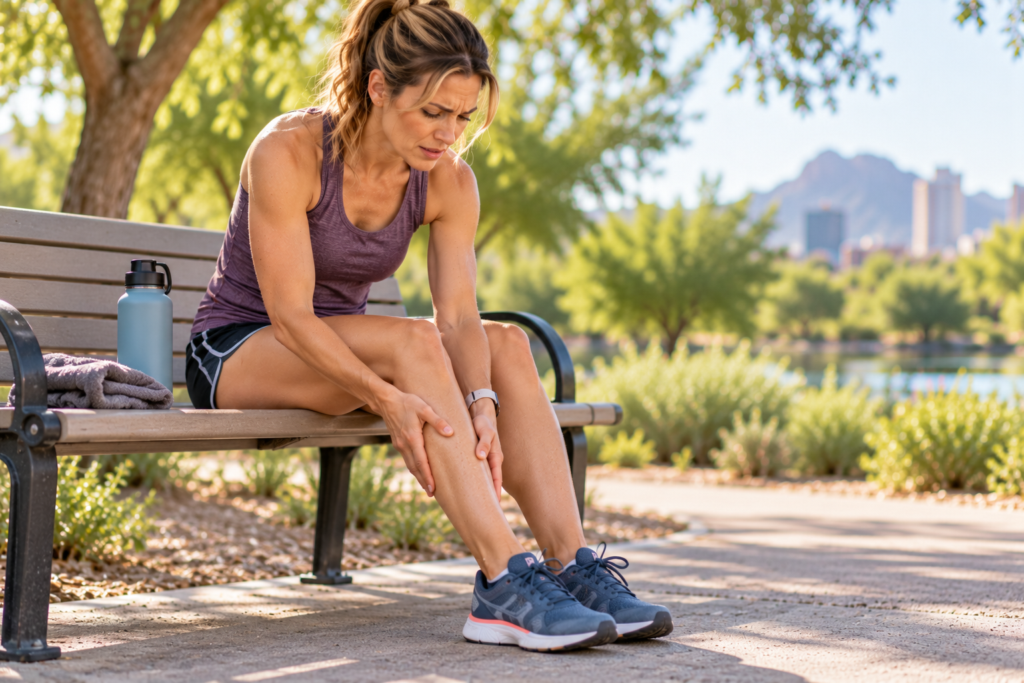
Do you feel a dull ache along the front or inner part of your shins a few minutes into a run? Does it ease as you warm up, then return more intensely later or the next morning? Is the inner edge of your shin bone tender when you press it? These are common signs of shin splints, an overuse injury that often affects runners, dancers, hikers, and people who are new to exercise.
Shin splints, also called medial tibial stress syndrome, occur when the muscles and connective tissue in your lower leg absorb more impact than they can handle. With each step, they pull on the points where your calf and shin muscles attach to your shinbone. Repeated strain can irritate the tissue and stress the underlying bone.
Shin splints usually have several causes. A sudden increase in running distance, running on hard or uneven surfaces, wearing old shoes, flat feet or tight calves, and weak hips can all put extra strain on your shins. The pain often runs along several inches of the inner shinbone instead of staying in one sharp spot, which can help distinguish it from a stress fracture.
According to Traditional Chinese Medicine, the Stomach channel runs down the front of the shin, while the Spleen channel follows its inner edge. Excessive impact or overuse can obstruct the flow of Qi and Blood through these channels, causing aching, tenderness, and tightness along the shinbone. The Liver supports the sinews, the Spleen supports the muscles, and the Kidney supports the bones, making all three important for recovery.
The encouraging news is that shin splints typically heal well when strain is reduced and the body is given sufficient time to adjust. The following nine points can help relax the lower leg muscles, promote blood flow along the shin, and support the muscles and bones during recovery.
What Acupressure Points to Press and Why
1. Press on ST36 below the knee to strengthen the legs. ST36 sits four finger-widths below the lower edge of the kneecap and one finger-width to the outside of the shinbone, on the muscle that rises when you flex your foot. Press firmly with your thumb for one to two minutes on each leg. ST36 is called “Zusanli,” the “Leg Three Miles.”
ST36 sits at the top of the muscle along the front of the shin, which works hardest to control each step. It helps build the Qi and Blood muscles need to recover and is traditionally used to restore strength and endurance to tired legs. It’s a good point to start with before working down the shin.
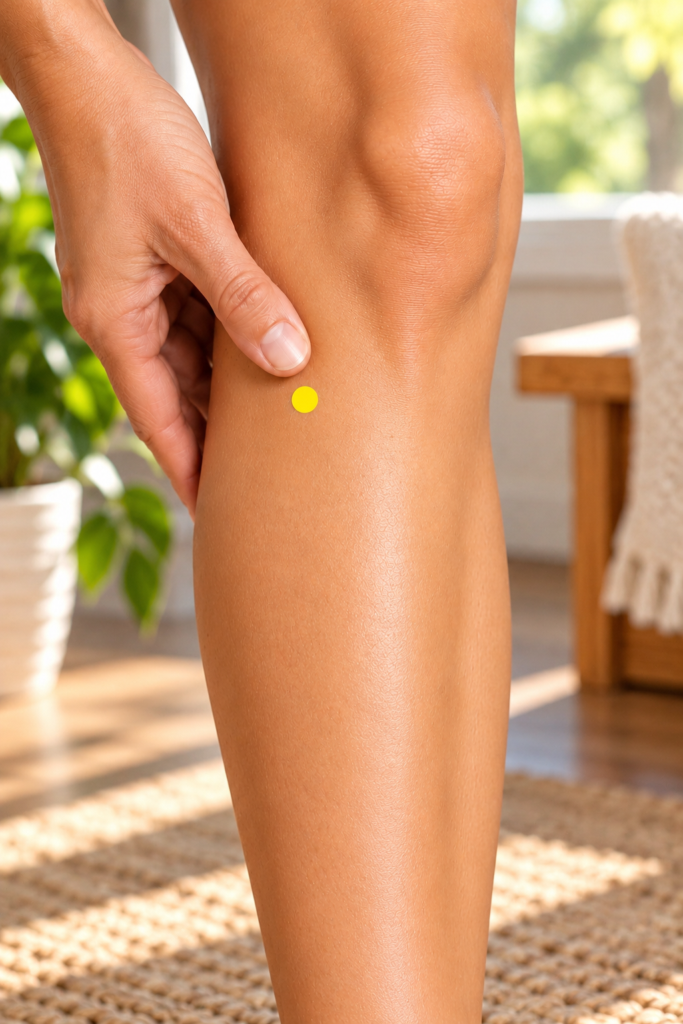
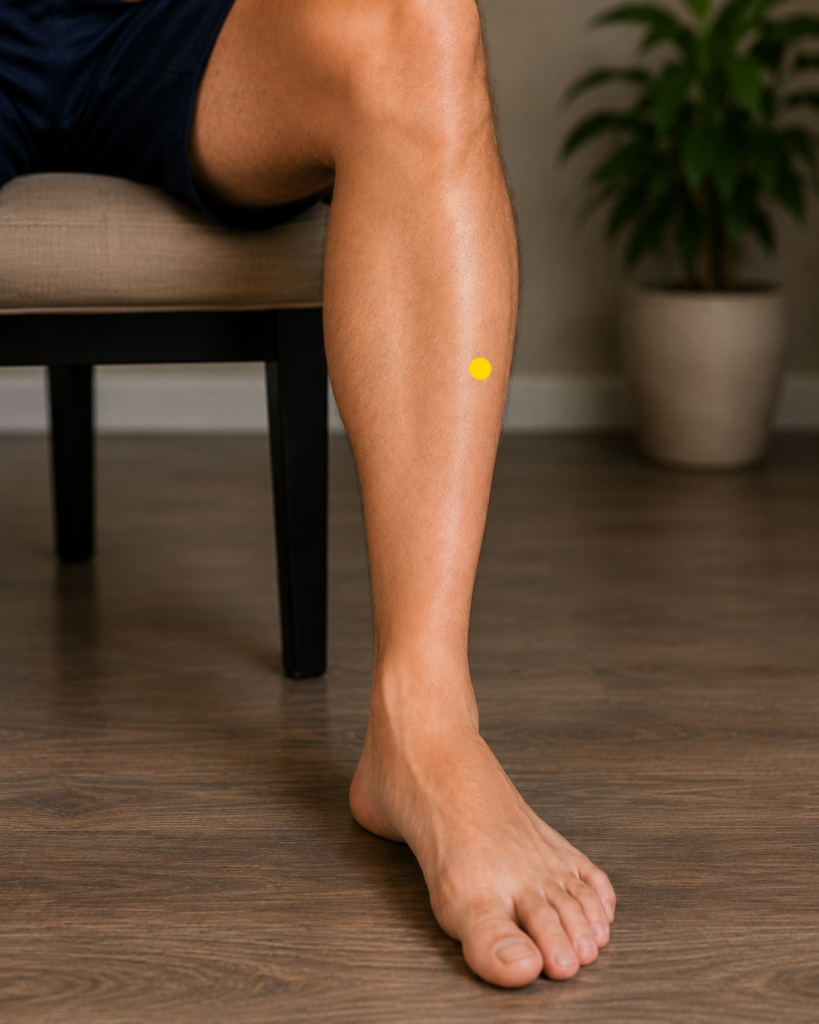
2. Press on ST38 on the front of the shin to ease muscle tension. ST38 sits on the front of the lower leg, halfway between the lower edge of the kneecap and the front of the ankle crease, one finger-width to the outside of the shinbone. Press firmly with your thumb for one to two minutes on each leg. ST38 is called “Tiaokou,” the “Ribbon Opening.”
ST38 lies in the belly of the shin muscle, where tightness often builds during running or walking. Pressing the point can release that tension and help move Qi and Blood along the Stomach channel. Work on the muscle beside the shinbone, not on the bone itself.
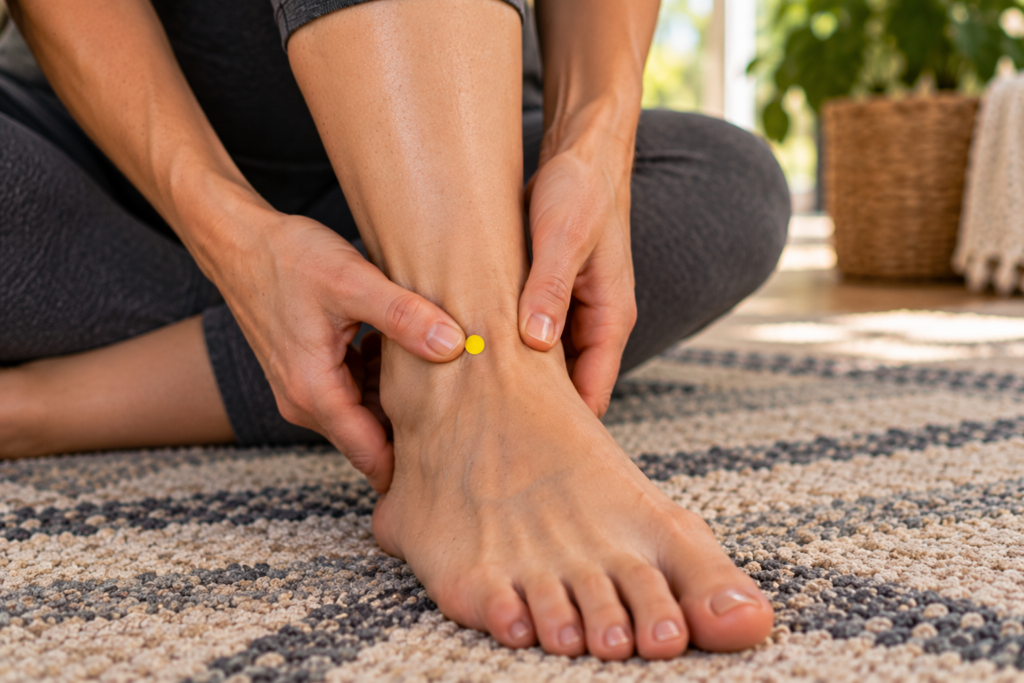
3. Press on ST41 at the front of the ankle to release the lower shin. ST41 sits on the front of the ankle, in the center of the crease where the foot meets the leg, in the hollow between the two tendons that stand out when you lift your toes. Press gently but firmly with your thumb for about a minute on each ankle. ST41 is called “Jiexi,” the “Stream Divide.”
ST41 is located where the shin muscle tendons cross the ankle. It eases tension along the lower Stomach channel and helps relieve pain and tightness in the lower shin and front of the ankle after impact.
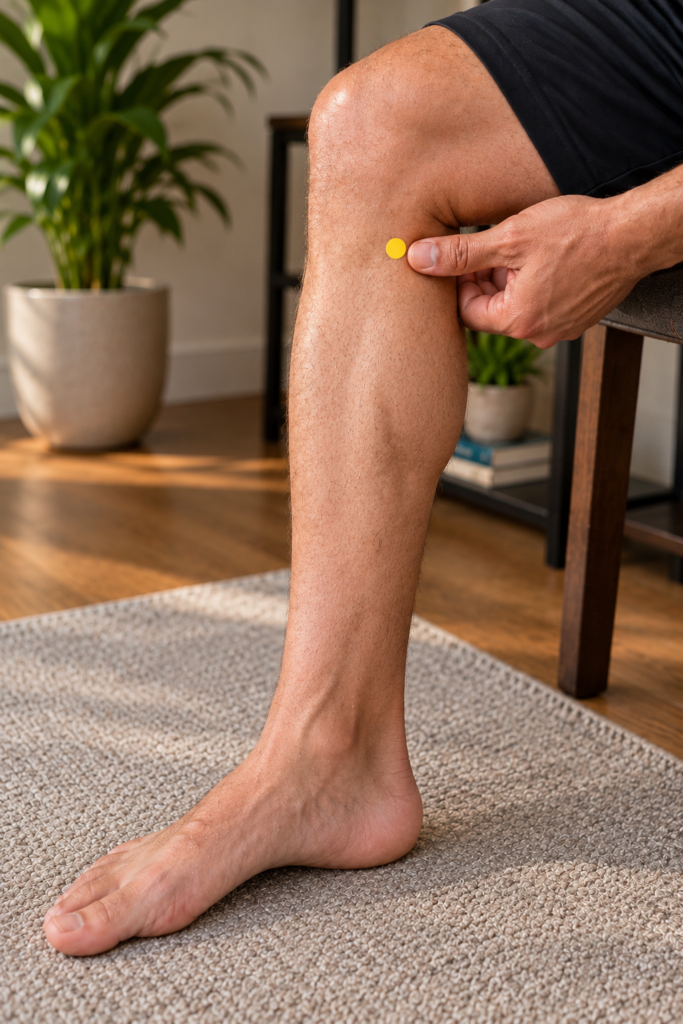
4. Press on SP9 below the inner knee to clear swelling and heaviness. SP9 sits on the inner side of the lower leg, in the hollow just below the knee where the inner edge of the shinbone curves upward. Slide your thumb up the inner edge of the shinbone until it stops under the knee, then press firmly for one to two minutes on each leg. SP9 is called “Yinlingquan,” the “Yin Mound Spring.”
SP9 lies at the top of the Spleen channel along the inner shin, on the same edge of the bone where shin splints most often hurt. It helps clear dampness, which Traditional Chinese Medicine associates with swelling and heaviness, and promotes circulation down the inner shin. It’s especially useful when the lower legs feel puffy or heavy after activity.
5. Press on SP6 above the inner ankle to move the Blood along the inner shin. SP6 sits four finger-widths up from the tip of the inner ankle bone, just behind the back edge of the shinbone. Press firmly with your thumb for one to two minutes on each leg. SP6 is called “Sanyinjiao,” the “Three Yin Intersection.” SP6 is avoided during pregnancy.
SP6 is where the Spleen, Liver, and Kidney channels meet. These three channels govern the muscles, sinews, and bones. It lies near the lower inner shin, where shin splint pain often settles, and moves the Blood to ease aching and tenderness. If the area around SP6 is very sore, press just above or below the tenderest spot.
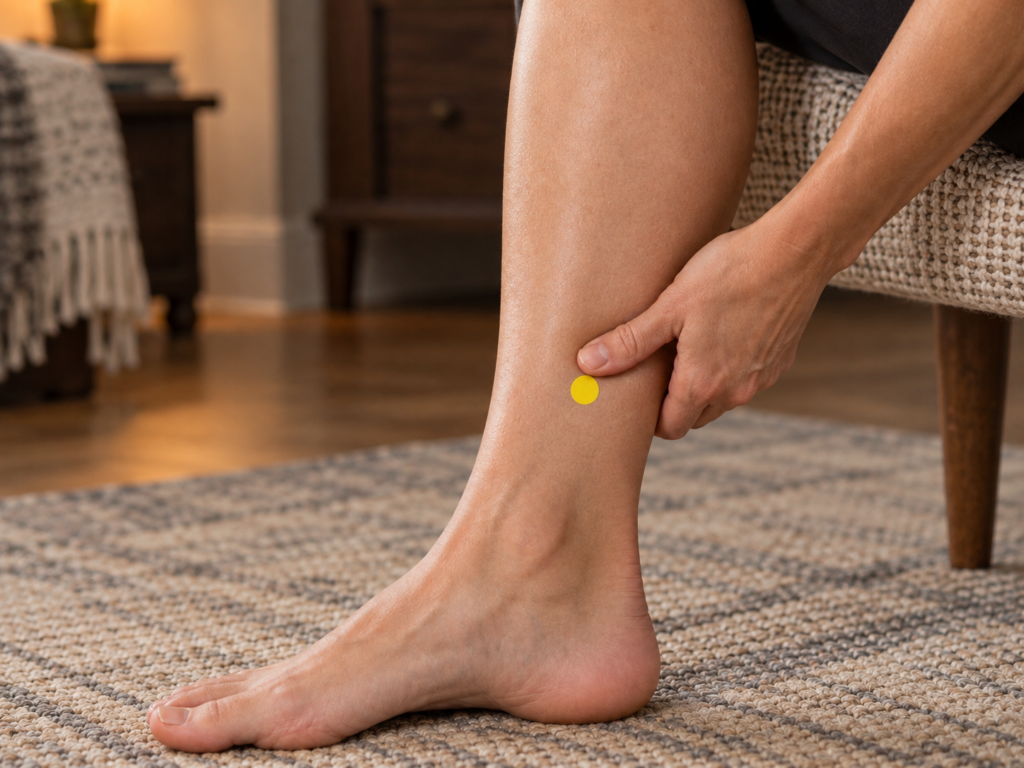
6. Press on GB34 below the outer knee to relax the sinews. GB34 sits on the outside of the lower leg, in the hollow just in front of and below the small bony knob below the outer knee. Press firmly with your thumb for one to two minutes on each leg. GB34 is called “Yanglingquan,” the “Yang Mound Spring.”
GB34 is the influential point for the sinews, supporting the muscles, tendons, and ligaments throughout the body. It relaxes the lower-leg muscles that pull on the shinbone with each stride and supports connective tissue as it heals.
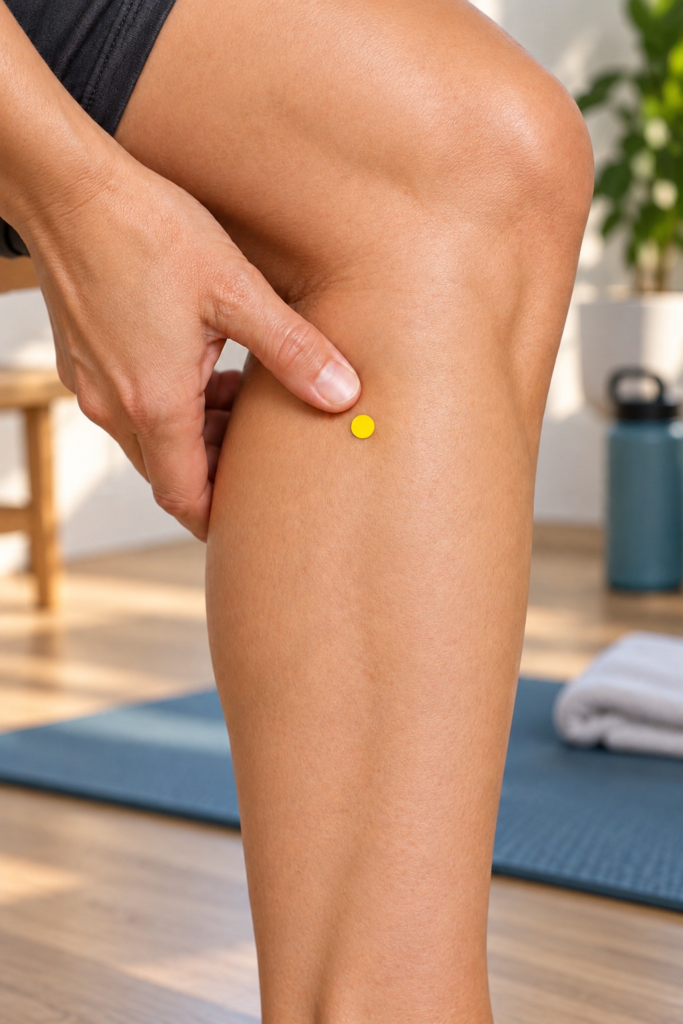
7. Press on BL57 on the back of the calf to release tight calves. BL57 sits on the back of the lower leg, about midway between the crease behind the knee and the heel, in the hollow that forms just below the calf muscle when you rise up on your toes. Press firmly with your thumb for one to two minutes on each leg. BL57 is called “Chengshan,” the “Supporting Mountain.”
Tight calves are among the most common contributors to shin splints because the deep calf muscles attach along the shinbone’s inner edge. BL57 relaxes the calf and reduces the pull on the shin. It is especially useful after a run or at the end of a long day on your feet.
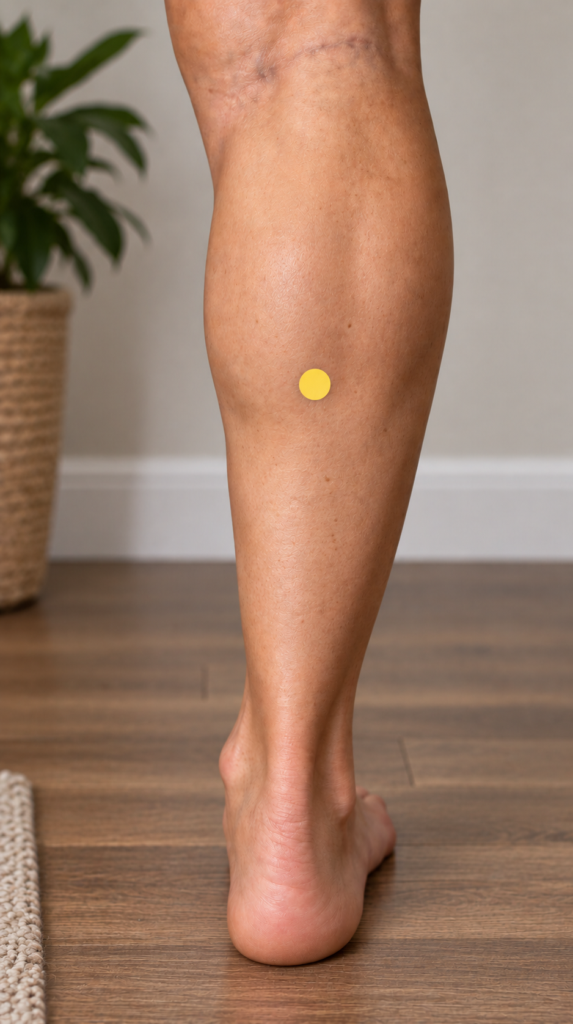
8. Press on LR3 on the top of the foot to relax the sinews. LR3 sits on the top of the foot, in the webbing between the big toe and second toe, about two finger-widths back from the webbing, in the hollow just before the two bones meet. Press firmly with your thumb for one to two minutes on each foot. LR3 is called “Taichong,” the “Great Surge.”
The Liver governs the sinews, and LR3 is the primary point for nourishing and relaxing them. It relieves tension in the muscles and tendons of the lower leg and pairs naturally with GB34 as a classic combination for strained sinews.
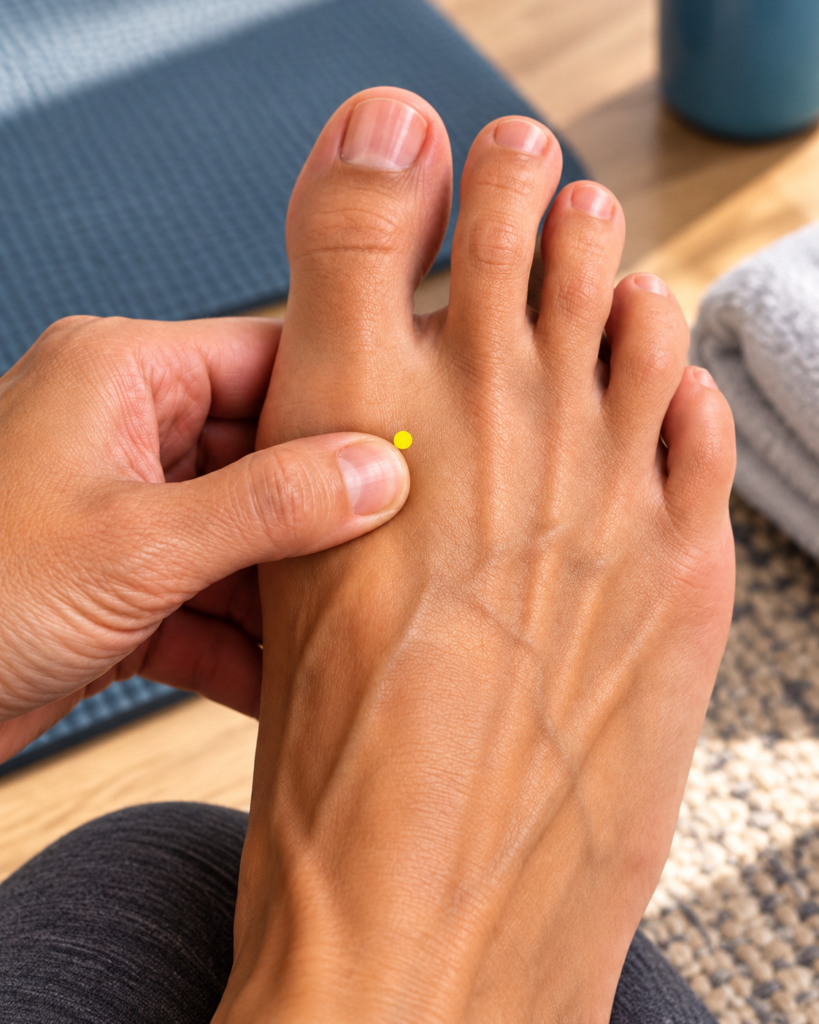
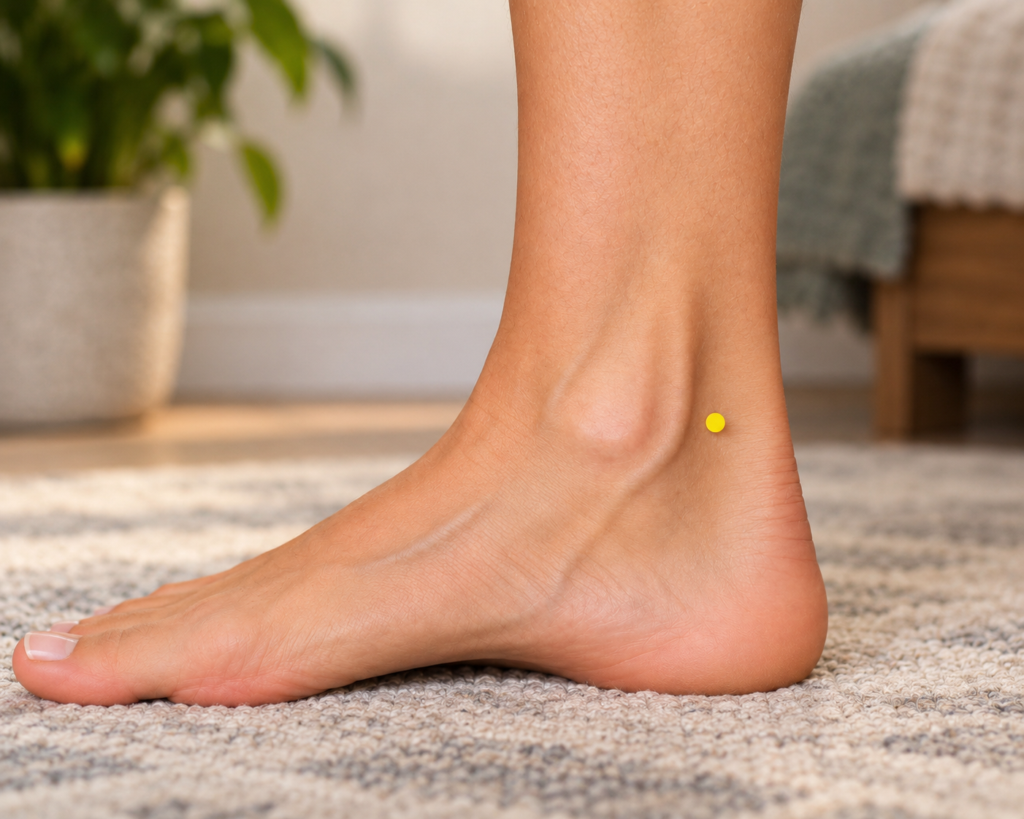
9. Press on KI3 behind the inner ankle to strengthen the bones. KI3 sits in the hollow between the inner ankle bone and the Achilles tendon, level with the tip of the ankle bone. Press firmly with your thumb for one to two minutes on each ankle. KI3 is called “Taixi,” the “Great Stream,” and is the source point of the Kidney.
In Traditional Chinese Medicine, the Kidney governs the bones, and KI3 helps strengthen the Kidney. Because shin splints put stress on the shinbone itself, KI3 may support the bone as it adapts to training. It may be especially useful for recurring shin pain or pain accompanied by fatigue and weak legs.
Why These Acupressure Points Work
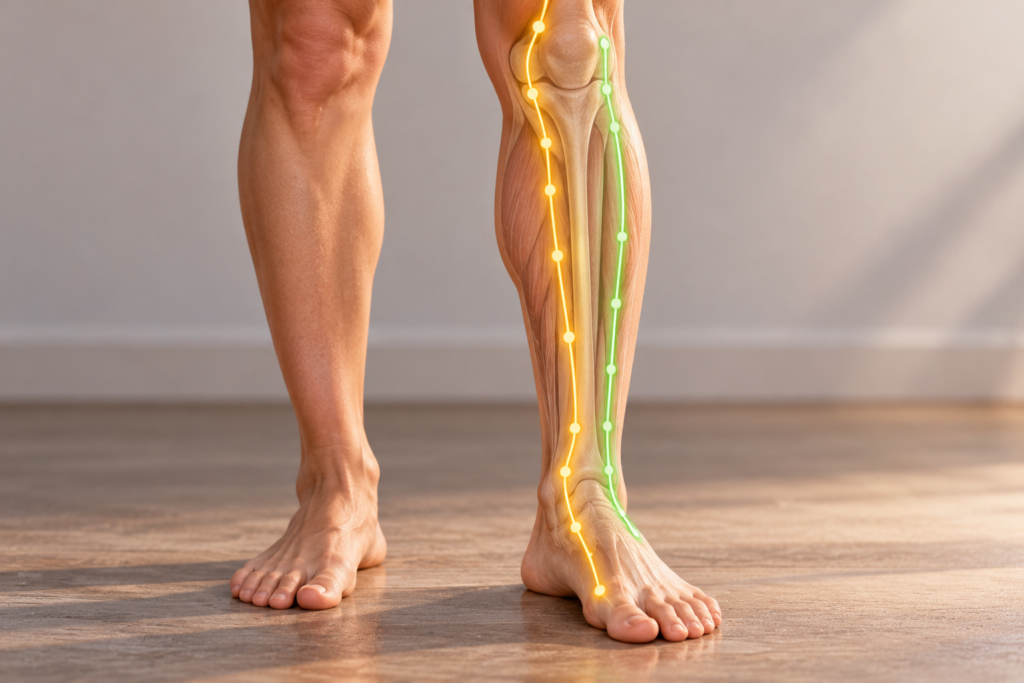
In Traditional Chinese Medicine, healthy shins rely on Qi and Blood flowing smoothly through the Stomach and Spleen channels, as well as supple sinews, strong muscles, and sturdy bones. The Stomach channel runs along the front of the shin, while the Spleen channel follows its inner edge, directly over the areas where shin splints cause pain.
The nine points cover both the strain and the recovery:
- The front of the shin points (ST36, ST38, ST41) relax the shin muscle and move circulation along the Stomach channel.
- The inner shin points (SP9, SP6) clear swelling and ease aching along the inner edge of the shinbone.
- The sinew points (GB34, BL57, LR3) release the calves and lower leg muscles that pull on the shin.
- The bone point (KI3) strengthens the Kidney to support the shinbone as it adapts.
How to Properly Use These Acupressure Points
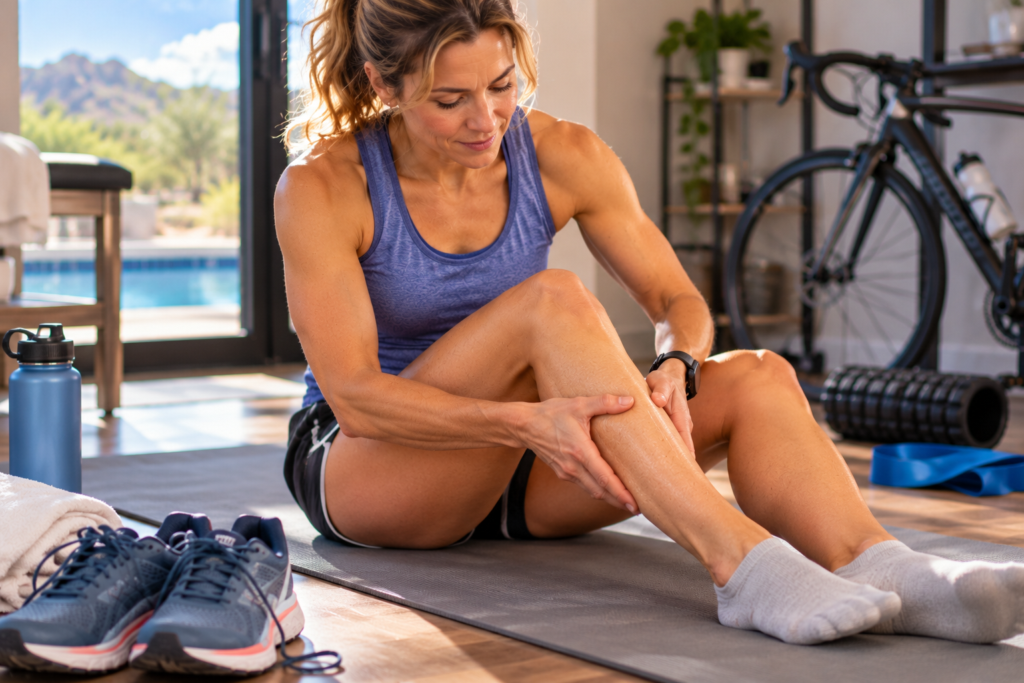
Acupressure for shin splints works best as a consistent daily practice during recovery.
- Complete the full routine at least once daily, holding each point for one to two minutes while breathing slowly.
- Press the muscles alongside the shinbone, but avoid pressing directly on its sore edge.
- Use the calf and shin points after a run or walk, while your muscles are warm and tight.
- Keep practicing consistently for several weeks, as irritated tissue along the shin needs time to settle.
Resting from high-impact activities is just as important as using acupressure points. Take a break from running and jumping until you can walk without pain, while staying active with swimming, cycling, or other low-impact exercises. When you return to running, increase your distance gradually, choose softer surfaces, and replace worn-out shoes. Stretch and strengthen your calves, ankles, and hips, as tightness or weakness in these areas can put extra strain on your shins. You can also learn more about acupressure for calf pain. Warming up before being active can help loosen tight muscles.
When to Get Professional Help
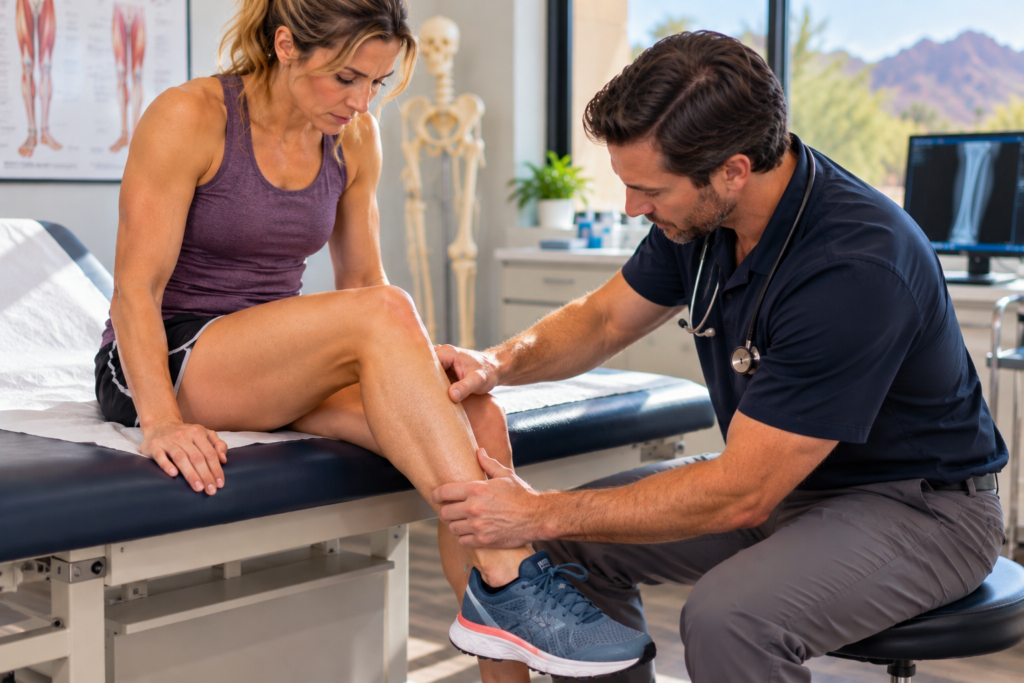
See your doctor or a sports medicine provider if your shin pain lasts more than a few weeks despite rest, returns when you resume activity, or gets worse. Get checked promptly if you have a tender, pinpoint area of bone pain; pain that continues at rest or at night; swelling over the shin; or pain that makes you limp, as these may be signs of a stress fracture. Also contact your doctor promptly if you notice numbness, tingling, or weakness in your foot during exercise, or if your lower leg feels tight and swollen during activity but improves with rest. Go to the emergency room for severe, worsening lower-leg pain accompanied by a hard, tense, swollen calf or shin, numbness, or trouble moving your foot—especially after an injury—as these may indicate compartment syndrome, which requires immediate care.
Acupressure can provide natural, supportive relief for shin splints; it should be used alongside proper medical diagnosis and treatment, not as a substitute for them.
For related health conditions, acupressure for leg cramps, acupressure for knee pain, and acupressure for ankle pain are companion articles.
Above and Beyond Acupuncture offers acupuncture, cupping, and lifestyle coaching at the North Frank Lloyd Wright Boulevard location in Scottsdale.
Schedule an appointment online to start your healing journey.
The points above are only as effective as the technique used to apply them. Where to press, how firmly, and for how long all affect the result. For a full breakdown of how to perform acupressure properly at home, read Performing Acupressure in 3 Easy Steps.

About the Publisher
Paul Kerzner, L.Ac., is a licensed acupuncturist and board-certified herbalist, as well as the founder of Above and Beyond Acupuncture in Scottsdale. His own journey from chronic patient to practicing acupuncturist shapes his commitment to providing honest, clinically grounded information about acupuncture and Traditional Chinese Medicine. Learn more about Paul and his clinical approach on the About Us page.