Key Takeaways
- Teeth grinding, or bruxism, affects many people and often goes unnoticed until dental issues arise.
- Acupressure for teeth grinding involves pressing nine key points to relax the jaw, clear heat, and calm the mind.
- Practice acupressure before bed and throughout the day, focusing on specific points such as ST6, ST7, and HT7 to relieve symptoms.
- Daily habits, such as reducing caffeine and alcohol, can also help alleviate grinding symptoms.
- Consult a dentist if you notice tooth damage or experience related jaw pain, as professional help may be needed.

Often, someone else notices the first sign. A dentist may spot flattened molars or a small chip in a tooth, while a partner might mention hearing you grind your teeth at night. You might also wake up with a tight, aching jaw, a dull headache at your temples, and sore teeth when you bite down.
Teeth grinding, or bruxism, is more common than many people think. A 2024 study in the Journal of Clinical Medicine found that about 21 percent of people grind their teeth while sleeping, and about 23 percent clench or grind when awake. Most people do not realize they are doing it until they notice changes in their teeth, jaw, or sleep.
The two types of grinding have different causes. Sleep grinding often occurs during light sleep and is more likely with stress, caffeine, alcohol, smoking, sleep apnea, or certain medications, such as some antidepressants. Daytime clenching usually happens during periods of focus, frustration, or anxiety, such as while driving, working at a computer, or exercising. Over time, both can wear down enamel, crack teeth or dental work, and strain the jaw muscles and joints.
Traditional Chinese Medicine views grinding as tension and heat rising to the jaw. Stress and frustration block Liver Qi, tightening the muscles. Heat from the Stomach, often triggered by rich or spicy foods or alcohol, travels along the Stomach channel around the mouth and lower jaw. At night, a restless Shen, or spirit, keeps sleep light, allowing grinding to begin.
The nine points below relax the jaw, release tension along the channels that reach it, and calm the mind so sleep can settle more deeply.
What Acupressure Points to Press and Why
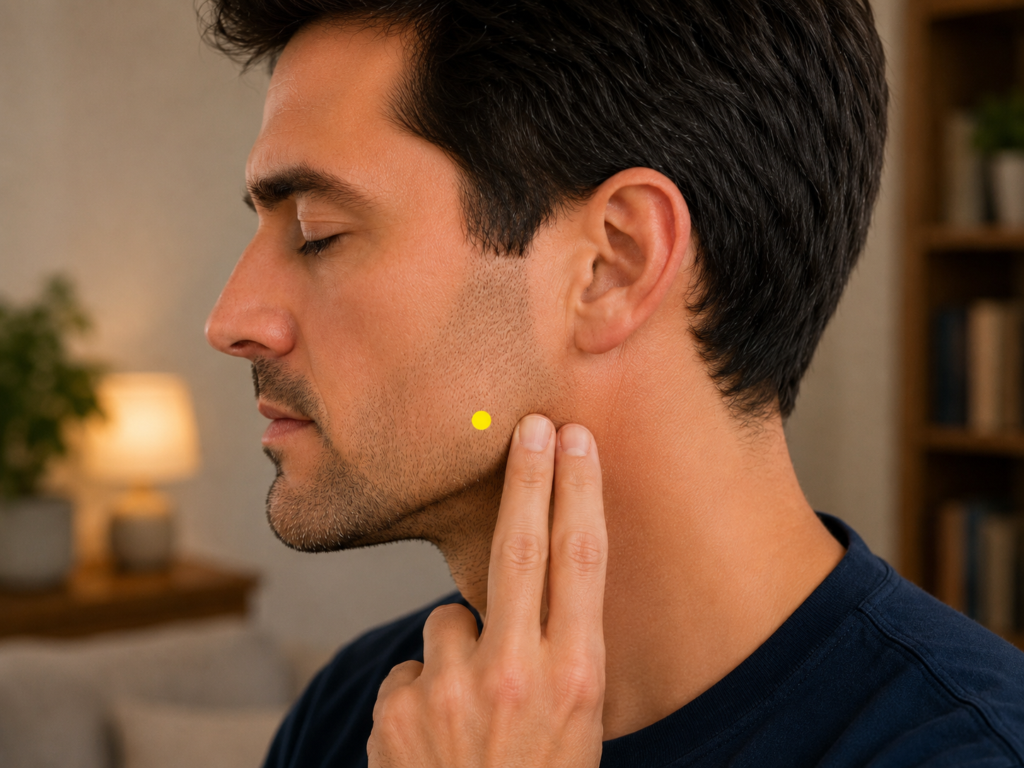
1. Press on ST6 at the angle of the jaw to relax the chewing muscle. Clench your teeth gently and feel for the muscle that bulges near the angle of the jaw, about one finger-width up and forward from the corner. Relax your jaw, then press the center of that muscle with your fingertips for one to two minutes on each side. ST6 is called “Jiache,” the “Jaw Chariot.”
ST6 is located on the masseter, the main chewing muscle and the one that works hardest during grinding. In Traditional Chinese Medicine, it’s the key local point for a tight, aching, or clenched jaw. Steady pressure here helps the muscle relax.
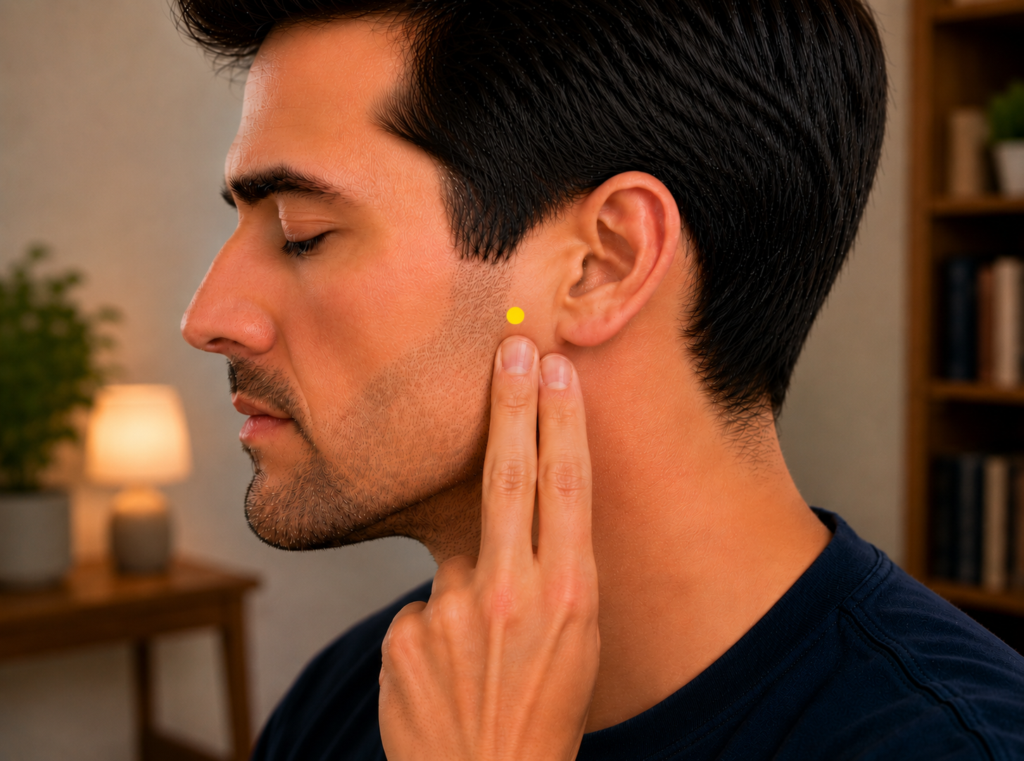
2. Press on ST7 in front of the ear to ease the jaw joint. Place your fingertip just in front of the ear, below the cheekbone. With your mouth closed, ST7 sits in the hollow there and fills in when you open your mouth. Keep your mouth closed and press gently for one to two minutes on each side. ST7 is called “Xiaguan,” the “Lower Gate.”
ST7 lies over the jaw joint and the upper part of the chewing muscle. It is commonly used to relieve jaw pain, clicking, stiffness, and toothache, as well as soreness in the joint after nighttime grinding.
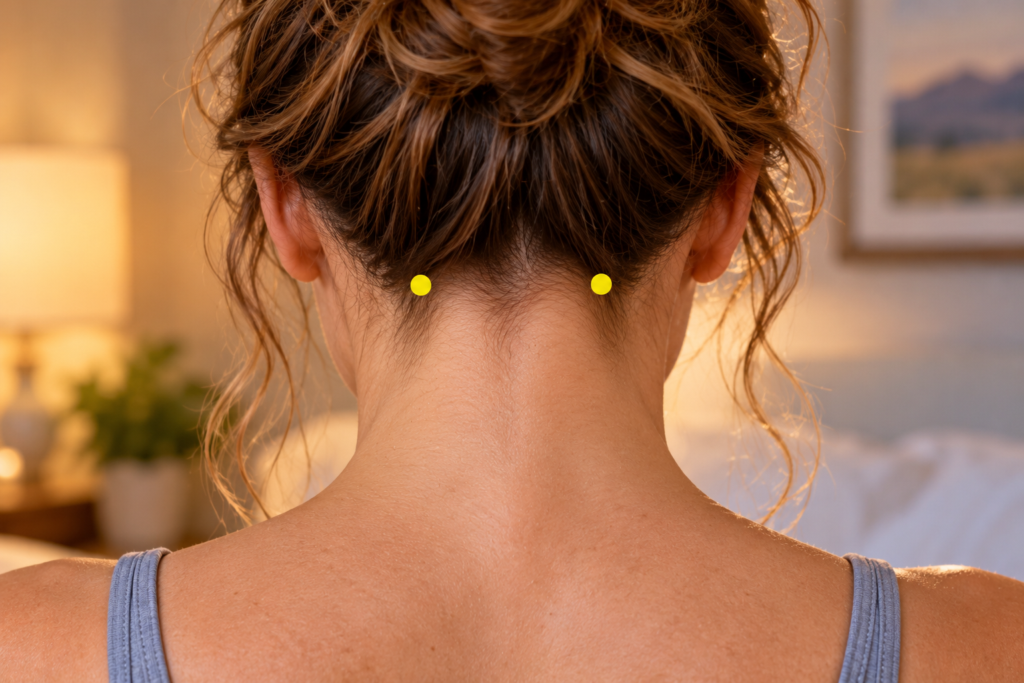
3. Press on GB20 at the base of the skull to release the neck and temples. Place your thumbs at the base of the skull and slide them outward until they sink into the hollows between the two large muscles at the back of the neck. Press upward toward the skull for one to two minutes. GB20 is called “Fengchi,” the “Wind Pool.”
Jaw tension often spreads into the neck and up the sides of the head, where the temple muscles also clench during grinding. GB20 helps release the neck and the Gallbladder channel, which runs over the temples, and it can ease the morning headaches that often come with grinding.
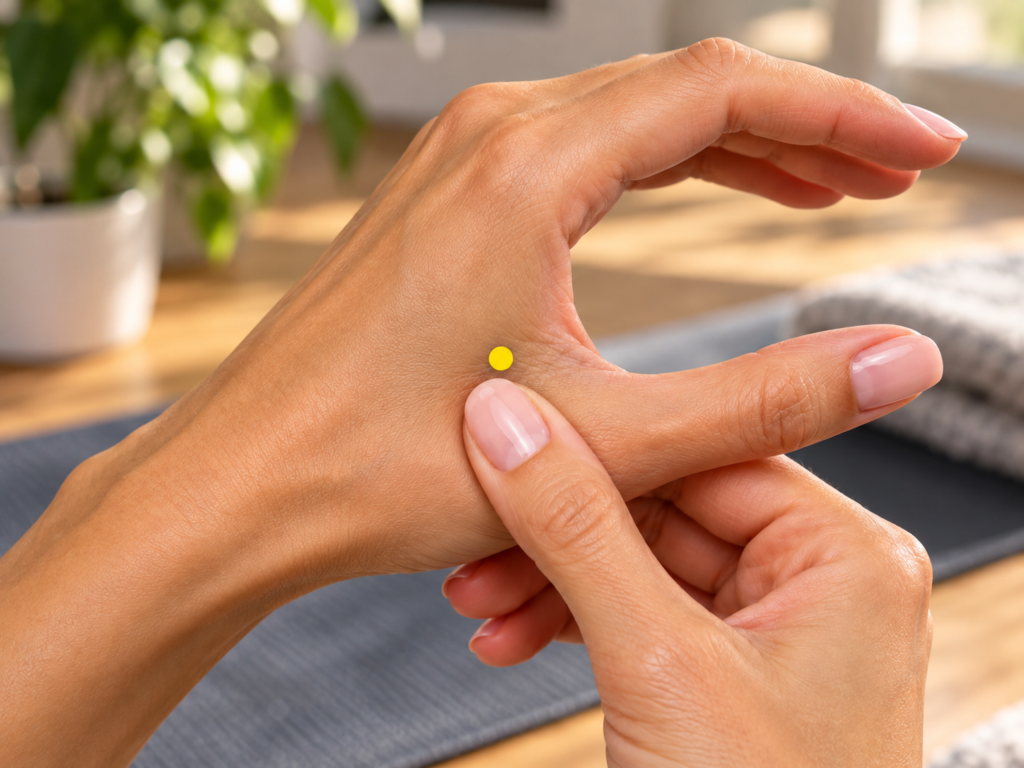
4. Press on LI4 on the back of the hand to relax the face and mouth. LI4 sits in the webbing between the thumb and index finger, at the highest point of the muscle when the two are pressed together. Press firmly with the thumb of your other hand for one to two minutes on each hand. LI4 is called “Hegu,” the “Joining Valley.” LI4 is contraindicated during pregnancy.
In Traditional Chinese Medicine, LI4 is the command point for the face and mouth. The Large Intestine channel travels up the arm, crosses the lower teeth, and ends beside the nose. Pressing this point on the hand may therefore help relax the jaw and ease tooth and facial pain from a distance.
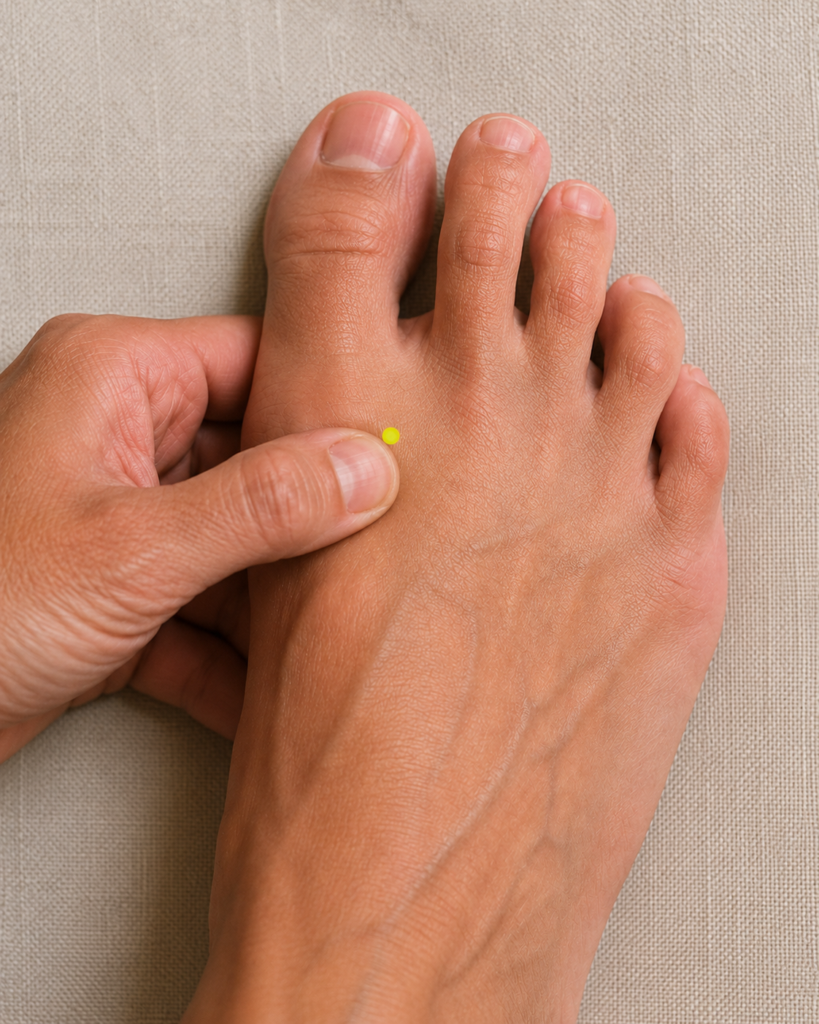
5. Press on LR3 on the top of the foot to release stress. LR3 sits on the top of the foot, in the hollow between the bones of the big toe and second toe, about two finger-widths back from the webbing. Press firmly with your thumb for one to two minutes on each foot. LR3 is called “Taichong,” the “Great Surge.”
LR3 is the source point of the Liver and helps move Liver Qi blocked by stress. Paired with LI4, it forms the Four Gates, a classic Traditional Chinese Medicine combination for releasing tension and calming the whole body.
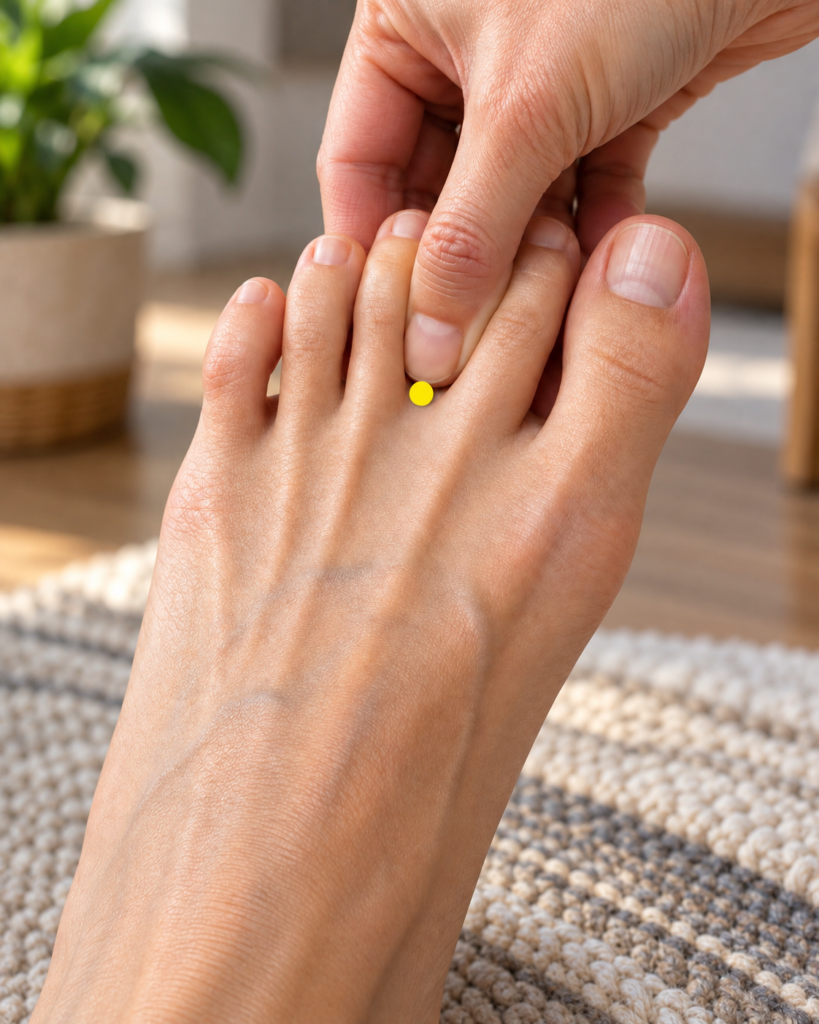
6. Press on ST44 between the second and third toes to clear heat from the jaw. ST44 sits on the top of the foot, at the end of the webbing between the second and third toes. Press gently with your fingertip for one to two minutes on each foot. ST44 is called “Neiting,” the “Inner Court.”
ST44 is an important point in Traditional Chinese Medicine for clearing heat from the Stomach channel, which circles the mouth and passes through the gums and lower jaw. It is often used for grinding accompanied by signs such as bad breath, intense thirst, or sore gums.
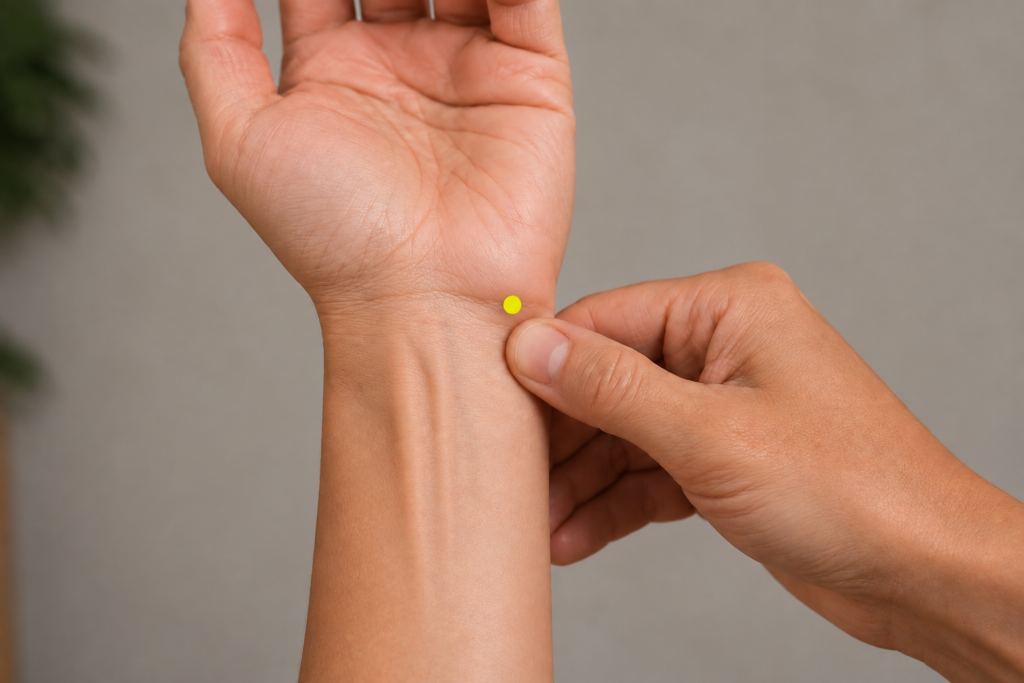
7. Press on HT7 at the wrist crease to calm the mind. Turn your palm up and find the wrist crease on the little finger side. HT7 sits in the small hollow just inside the tendon there. Press gently with your thumb for one to two minutes on each wrist. HT7 is called “Shenmen,” the “Spirit Gate.”
HT7 is the source point of the Heart, which houses the Shen in Traditional Chinese Medicine. It can help calm anxiety and restlessness and support deeper sleep. This is important because sleep grinding often occurs when sleep is light and easily disturbed.
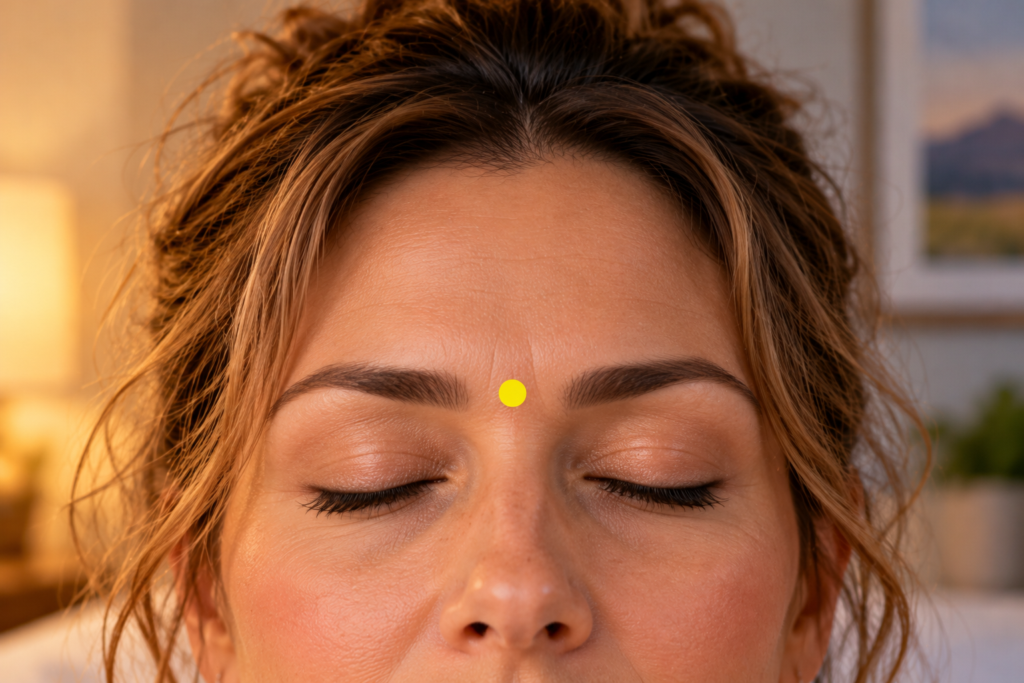
8. Press on Yintang between the eyebrows to quiet the mind. Yintang sits at the midpoint between the inner ends of the eyebrows. Rest your fingertip on the point and press gently, or make slow circles, for one to two minutes while breathing slowly. Yintang is called the “Hall of Impression.”
In Traditional Chinese Medicine, Yintang is commonly used to calm the mind and ease worry. Pressing it before bed can help your body shift out of the alert, tense state that leads to clenching and grinding.
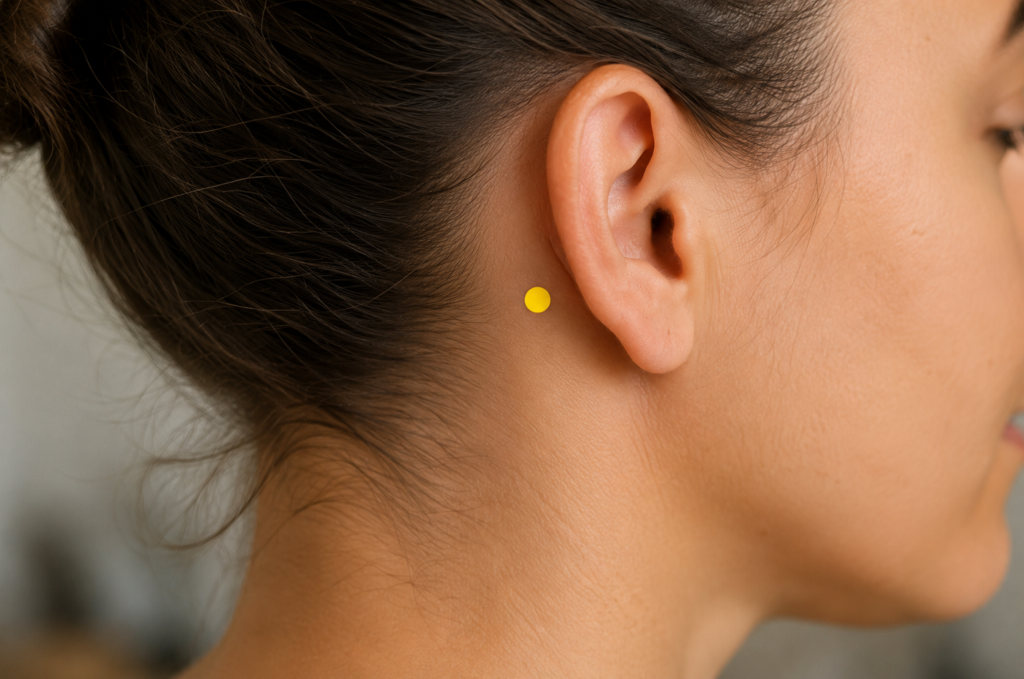
9. Press on Anmian behind the ear to support peaceful sleep. Find the hollow just behind the earlobe, then find GB20 at the base of the skull. Anmian sits midway between the two, just behind the bony bump behind the ear. Press gently with your fingertips for one to two minutes on each side. Anmian is called the “Peaceful Sleep” point.
Anmian is an extra point commonly used to address insomnia and restless sleep. Located near the jaw and neck, it may also ease tension in that area and help your body settle into deeper, more restful sleep.
Why These Acupressure Points Work

In Traditional Chinese Medicine, teeth grinding is understood as tension and heat rising to the jaw, linked to blocked Liver Qi, heat in the Stomach channel, and a restless Shen that keeps sleep light. The aim is to relax the jaw, move Qi and clear heat from a distance, and calm the mind so the body can rest.
The nine points work together to relax the jaw and promote a restful night:
- The jaw points (ST6, ST7) relax the chewing muscles and ease the jaw joint directly.
- The neck point (GB20) releases tension from the neck, the sides of the head, and the temples.
- The distance points (LI4, LR3, ST44) move the Qi and clear heat along the channels that reach the jaw.
- The calming points (HT7, Yintang, Anmian) settle the Shen and support deeper, quieter sleep.
How to Properly Use These Acupressure Points

Night grinding and daytime clenching respond best to slightly different routines, so it’s helpful to use both.
- Before bed, press each of the nine points for one to two minutes, ending with HT7, Yintang, and Anmian as you settle into sleep.
- During the day, when you notice yourself clenching, gently press ST6 and ST7. Let your teeth part, keep your lips closed, and rest your tongue on the floor of your mouth.
- Use light pressure on the face and head, and firmer pressure on the hands and feet. If you’re pregnant, avoid LI4.
- Practice every night for at least two to three weeks, as grinding often eases gradually when sleep deepens and jaw tension subsides.
Daily habits matter. Cut back on caffeine, especially after midday, and limit alcohol, as both can make sleep lighter and grinding more likely. Avoid chewing gum, pens, or ice to keep your jaw muscles from staying active. During the day, practice keeping your lips together and your teeth apart. Applying a warm compress to your jaw for 10 minutes before bed can help relax your muscles, while a calm, screen-free wind-down routine can support better sleep. Traditional Chinese Medicine also recommends lighter evening meals with less spicy, greasy, or rich food, as these can add heat to the Stomach.
Learn more about acupressure for stress.
When to Get Professional Help

See a dentist if your teeth look worn, flattened, chipped, or cracked; feel sensitive; or you wake with jaw pain or headaches. A dentist can check for damage and fit you with a night guard to protect your teeth. If your partner notices loud snoring, gasping, or pauses in your breathing, talk to your doctor, since sleep apnea is closely linked to sleep grinding and requires its own treatment. If the grinding began after you started a new medication, such as certain antidepressants, ask your doctor about it, but do not stop or change any medication on your own. Seek prompt care if your jaw locks open or closed, you cannot fully open your mouth, or tooth pain is accompanied by facial swelling or fever, as these may signal an infection. Children often grind their teeth and usually outgrow it, but mention it to their dentist so they can check their teeth.
Acupressure is a gentle, supportive practice for teeth grinding. It complements, but does not replace, diagnosis and proper medical care.
For related health concerns, acupressure for jaw pain, acupressure for TMJ pain, and why do I clench my jaw all the time are companion posts. If grinding has left the teeth sore, learn about acupressure for toothache.
Above and Beyond Acupuncture offers acupuncture, cupping, and lifestyle coaching at the North Frank Lloyd Wright Boulevard location in Scottsdale.
Schedule an appointment online to start your healing journey.
The points above are only as effective as the technique used to apply them. Where to press, how firmly, and for how long all affect the result. For a full breakdown of how to perform acupressure properly at home, read Performing Acupressure in 3 Easy Steps.

About the Publisher
Paul Kerzner, L.Ac., is a licensed acupuncturist and board-certified herbalist, as well as the founder of Above and Beyond Acupuncture in Scottsdale. His own journey from chronic patient to practicing acupuncturist shapes his commitment to providing honest, clinically grounded information about acupuncture and Traditional Chinese Medicine. Learn more about Paul and his clinical approach on the About Us page.