
Key Takeaways
- Acupuncture is safe for kids when performed by licensed practitioners trained in pediatric techniques.
- Pediatric acupuncture uses methods like Shonishin, brief needle contact, and acupressure to comfort children during treatment.
- Many common conditions, such as chronic pain, anxiety, and sleep issues, respond well to acupuncture in kids.
- Parents should prepare children by providing clear expectations, comfort items, and a calm environment.
- Choosing a qualified practitioner with pediatric experience is crucial for positive acupuncture experiences for children.

Parents considering acupuncture for their child are often navigating two questions at once. Is the treatment safe? And will their child actually be comfortable enough with the process to receive it? Both questions deserve honest answers rather than either dismissive reassurance or overstated caution.
The short version is that acupuncture is very safe for children when performed by a licensed practitioner with appropriate pediatric training. The clinical evidence supports its use for a range of common childhood conditions, particularly pain, nausea, chronic headaches, anxiety, and sleep issues. And the field has developed specific pediatric modalities that address the natural concerns children have about needles.
Here is what parents need to know about acupuncture for children, how the treatment is adapted for younger patients, what conditions it can help, and how to know if it is the right fit for your child.
How Pediatric Acupuncture Is Different From Adult Acupuncture
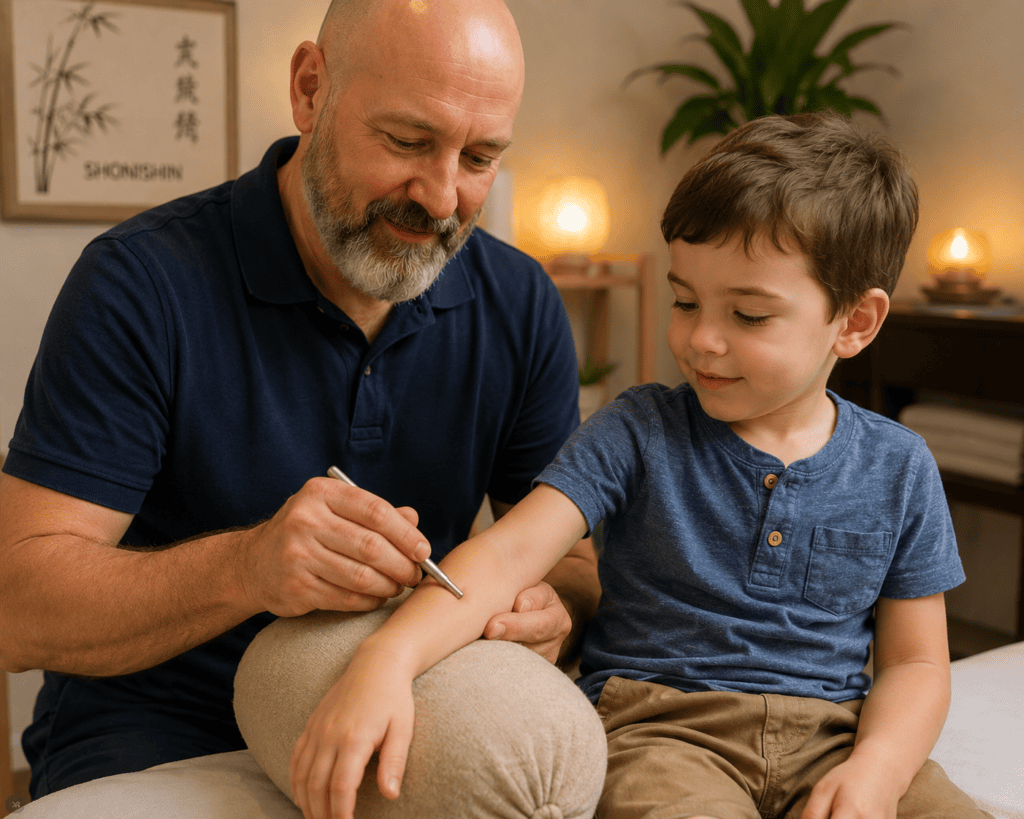
The image most parents have of acupuncture, involving multiple thin needles retained for 20 to 30 minutes, is not the primary approach used with young children. Pediatric acupuncture has developed several specific modalities designed for children’s smaller bodies, more sensitive nervous systems, and different tolerance for sustained needle retention.
- Shonishin is a traditional Japanese pediatric acupuncture technique that uses no needle insertion. Instead, the practitioner uses specialized tools to gently tap, brush, or press specific points on the child’s skin. The stimulation is enough to produce a therapeutic effect without any penetration. Shonishin has been used for centuries and is particularly effective for infants and young children who cannot tolerate any form of needling.
- Brief needle contact techniques involve inserting a very fine needle for a much shorter duration than adult treatment, sometimes only a few seconds. The stimulation is quick, the child moves on, and the effect is achieved without prolonged needle retention that would be difficult for many children to tolerate.
- Point selection is more focused. Pediatric treatment typically uses fewer points than adult treatment, often just a few well-chosen points rather than a complex protocol. This makes the session shorter and less demanding for the child.
- Session length is shorter. Where adult sessions often run 45 to 60 minutes, pediatric sessions may be 15 to 30 minutes depending on the child’s age and comfort level.
- Acupressure and other non-invasive techniques can be used with children who are anxious about needles or as an introduction before moving to any form of needling. The foundational technique is covered in Performing Acupressure in 3 Easy Steps, which parents can also use at home to support their child between clinical sessions.
Is Acupuncture Actually Safe for Kids?
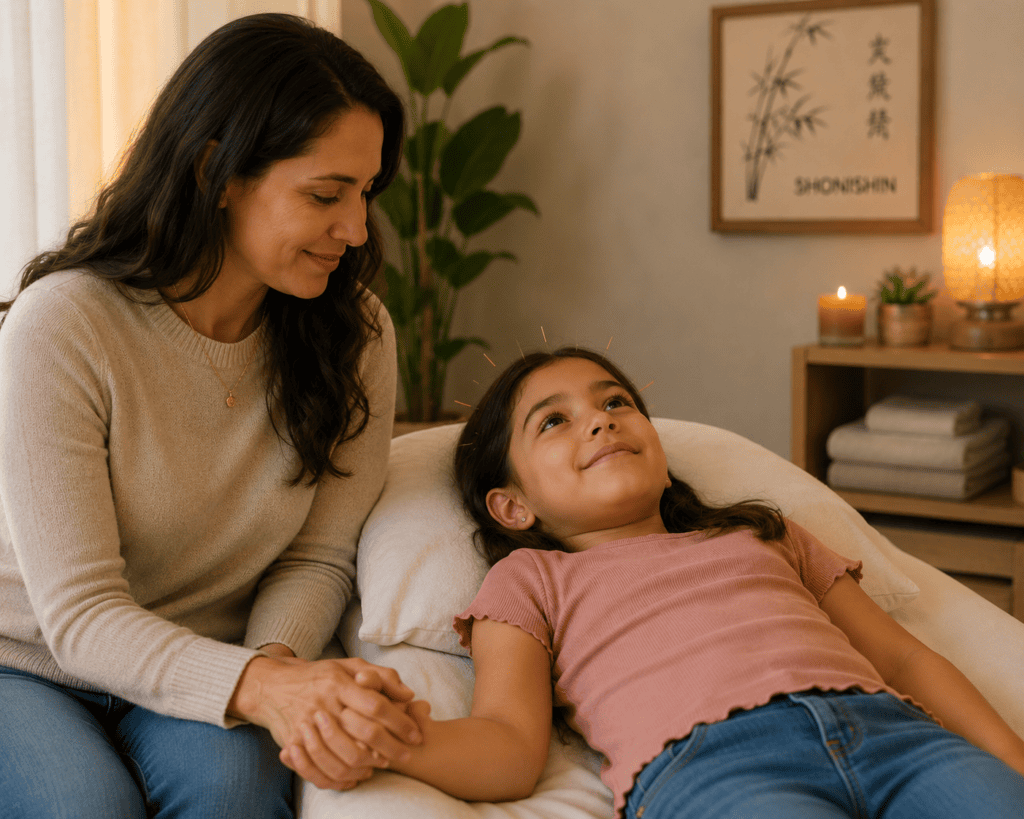
The safety profile of acupuncture in children, when performed by qualified practitioners, is very strong. Serious adverse events are extremely rare. The most common side effects are mild and short-lived, including brief soreness at the needle site, small bruising, or occasional lightheadedness. These are the same mild reactions adults sometimes experience.
The key qualifier is that the treatment must be performed by a licensed practitioner with appropriate pediatric training. Not every acupuncturist has experience treating children, and pediatric acupuncture requires specific skills including the modalities described above, familiarity with pediatric anatomy, and the ability to work effectively with children and their families. Parents should ask specifically about pediatric experience when considering a practitioner for their child.
The NCCIH summary on acupuncture covers the broader safety profile and evidence base. For the mechanism section, the fuller picture of how acupuncture affects the body is in What Does Acupuncture Actually Do to Your Body?.
How Acupuncture Works in Children

The mechanisms of acupuncture in children are the same as in adults, but the effects are often faster and more pronounced because children’s nervous systems are more responsive.
- Autonomic nervous system regulation. Acupuncture shifts the balance from sympathetic activation toward parasympathetic activation. In children experiencing anxiety, sleep disruption, or digestive symptoms, this shift often produces noticeable improvements within the first session or two.
- Endogenous pain relief. The treatment stimulates the release of endorphins and other natural pain-relieving chemicals. This is particularly relevant for pediatric pain conditions and post-injury recovery.
- Anti-inflammatory effects. Acupuncture has documented effects on inflammatory markers, which supports children dealing with chronic inflammatory conditions.
- Sleep quality improvement. Better sleep produces better daytime function through fundamental physiological mechanisms. Sleep-related issues in children often respond well to acupuncture.
- Traditional Chinese Medicine pattern differentiation. A licensed acupuncturist identifies the specific patterns producing the child’s condition and treats accordingly. Children often present with clear TCM patterns that respond quickly to appropriate treatment.
- Conditions That Respond Well to Pediatric Acupuncture
- The clinical evidence for pediatric acupuncture is strongest for several categories of conditions.
- Chronic pain. Children with chronic pain conditions, including musculoskeletal pain, complex regional pain syndrome, and post-surgical pain, often respond well to acupuncture treatment.
- Headaches and migraines. Pediatric headache is common and often responds to acupuncture when standard interventions have been insufficient.
- Nausea. Acupuncture is well-established for nausea across all age groups, including chemotherapy-induced nausea, motion sickness, and general nausea patterns.
- Anxiety. Children experiencing anxiety often respond meaningfully to acupuncture through the direct effects on the autonomic nervous system.
- Sleep issues. Difficulty falling asleep, difficulty staying asleep, and non-restorative sleep in children can all respond to acupuncture treatment.
- Digestive issues. Acupuncture can support children dealing with functional digestive concerns, including gut motility issues and stress-driven digestive symptoms.
For conditions requiring medical management (asthma, allergies, diabetes, and others), acupuncture serves as a complement to appropriate medical care rather than a replacement for it. Children with these conditions can still benefit from acupuncture alongside their regular medical treatment.
What to Expect From a Pediatric Session
The first session typically begins with a thorough intake conversation. The practitioner will ask about the child’s specific symptoms, sleep, digestion, energy, mood, and general health. For younger children, most of this information comes from the parent. For older children and teens, the practitioner will engage the child directly and involve them in the process.
The physical examination is gentler than a typical medical exam. The practitioner may look at the child’s tongue and take their pulse, which is a distinctive feature of Chinese medicine diagnosis. This part is usually easy for children to tolerate and often becomes something they find interesting.
The treatment itself depends on the modality being used. Shonishin involves tapping or brushing tools that most children find gentle and even pleasant. Brief needle contact techniques are quick enough that children handle them well once they see how it feels. Longer needle retention, when appropriate for older children, involves the same fine needles used in adult treatment.
Most children need a course of treatment rather than a single session to see meaningful sustained results. The specific number depends on the condition, but typically ranges from 4 to 12 sessions over several weeks to a few months.
How to Prepare Your Child

Parents can support their child’s acupuncture experience through a few practical approaches.
- Be honest about what will happen. Children generally handle new experiences better when they know what to expect. A brief age-appropriate explanation of what the practitioner will do reduces anxiety more than surprise does.
- Bring comfort items. A favorite stuffed animal, book, or blanket can help children feel more comfortable during the session.
- Stay calm yourself. Children take cues from their parents. If you are relaxed, they are more likely to be relaxed. If you are nervous, they will pick up on it.
- Choose an appropriate time. Avoid scheduling sessions when the child is likely to be hungry, overtired, or overstimulated. Well-rested children with settled emotions have the best experience.
- Follow up at home. Simple after-care includes staying hydrated, avoiding intense activity for a few hours, and paying attention to how the child feels over the following days. Some improvements show up right after the session, while others emerge over the following days.
Finding a Qualified Practitioner
The most important factor in a positive pediatric acupuncture experience is finding a practitioner with appropriate training and experience working with children. Not every licensed acupuncturist treats children regularly, and the modalities used with children require specific skills.
When considering a practitioner, ask about their experience treating children in the age range of your child. Ask about which modalities they use (shonishin, brief needle contact, other approaches). Ask about the specific conditions they have treated in children similar to yours. A good practitioner will be direct about what they can offer and honest about when a specific condition or child would be better served elsewhere.
The Mayo Clinic overview of acupuncture covers the general practice standards and safety considerations that apply to practitioners in the field.
Where to Start
If you are considering acupuncture for your child, the first step is scheduling a consultation to discuss whether the treatment is appropriate for your child’s specific situation. This conversation gives the practitioner a chance to understand your child’s needs and gives you a chance to assess whether the practitioner is a good fit for your family.
The broader stress and nervous system framework that shows up in many chronic conditions in both children and adults is covered in Anxiety, Stress, and Depression.
The full picture of what the practice offers is in Acupuncture, Cupping & Lifestyle Coaching.
Reach out to Above and Beyond Acupuncture on North Frank Lloyd Wright Boulevard in Scottsdale to schedule a consultation. Acupuncture is a substantial tool for pediatric care that many families find genuinely valuable once they see how gentle the process can be.
Schedule an appointment online or call us today to start your journey to relief.