Key Takeaways
- Wrist pain most often results from repetitive strain, such as typing, texting, gripping, and lifting, as well as from sprains, tendinitis, De Quervain’s tenosynovitis, arthritis, and ganglion cysts.
- Where the pain is located often hints at its source, with thumb-side pain commonly involving the thumb tendons and pinky-side pain often involving the cartilage and ligaments on that side.
- In Traditional Chinese Medicine, wrist pain is a blockage of Qi and Blood in the channels that cross the joint, caused by overuse, injury, or the settling of cold and dampness.
- Nine acupressure points on the wrist, forearm, and hand help ease pain, reduce stiffness, and restore free movement to the joint.
- Acupressure works best when combined with regular breaks, a neutral wrist position, and medical care for injuries, numbness, or pain that does not improve.

The wrist is always in action. It types, scrolls, and texts; grips the steering wheel; lifts the coffee pot; carries the groceries; and pushes the body out of bed in the morning. Most of the time, it gets on with all this without complaint, until one day it starts to ache when turning a doorknob, twinge when opening a jar, or throb after a long day at the keyboard.
Much of that pain comes from repetitive strain. A study from The Hong Kong Polytechnic University found that students at university who used handheld electronic devices for five or more hours a day were more likely to report wrist and hand pain than those who used them for less time. Wrist ultrasound showed changes in the nerve that passes through the wrist. Hours of typing, texting, gaming, gardening, lifting a baby, or using tools can irritate the tendons and soft tissue that cross the joint.
Other common causes include sprains from falling on an outstretched hand, tendinitis, De Quervain’s tenosynovitis (on the thumb side of the wrist), arthritis, and ganglion cysts. The location of the pain often helps identify the cause. Pain on the thumb side usually involves the tendons that move the thumb; pain on the pinky side usually involves the cartilage and ligaments there. Pain across the back of the wrist is common with overuse and ganglion cysts.
In Traditional Chinese Medicine, wrist pain is seen as a blockage of Qi and Blood in the channels that cross the joint. The Lung and Large Intestine channels run along the thumb side, the Heart and Small Intestine channels along the pinky side, and the Pericardium and Triple Energizer channels through the center. Repetitive strain can cause Qi and Blood to become stuck, while an injury can lead to Blood stasis. Cold or dampness may also enter the joint and worsen stiffness, particularly in the morning.
These nine points target the wrist, forearm, and hand to ease pain, reduce stiffness, and restore the joint’s free movement.
What Acupressure Points to Press and Why
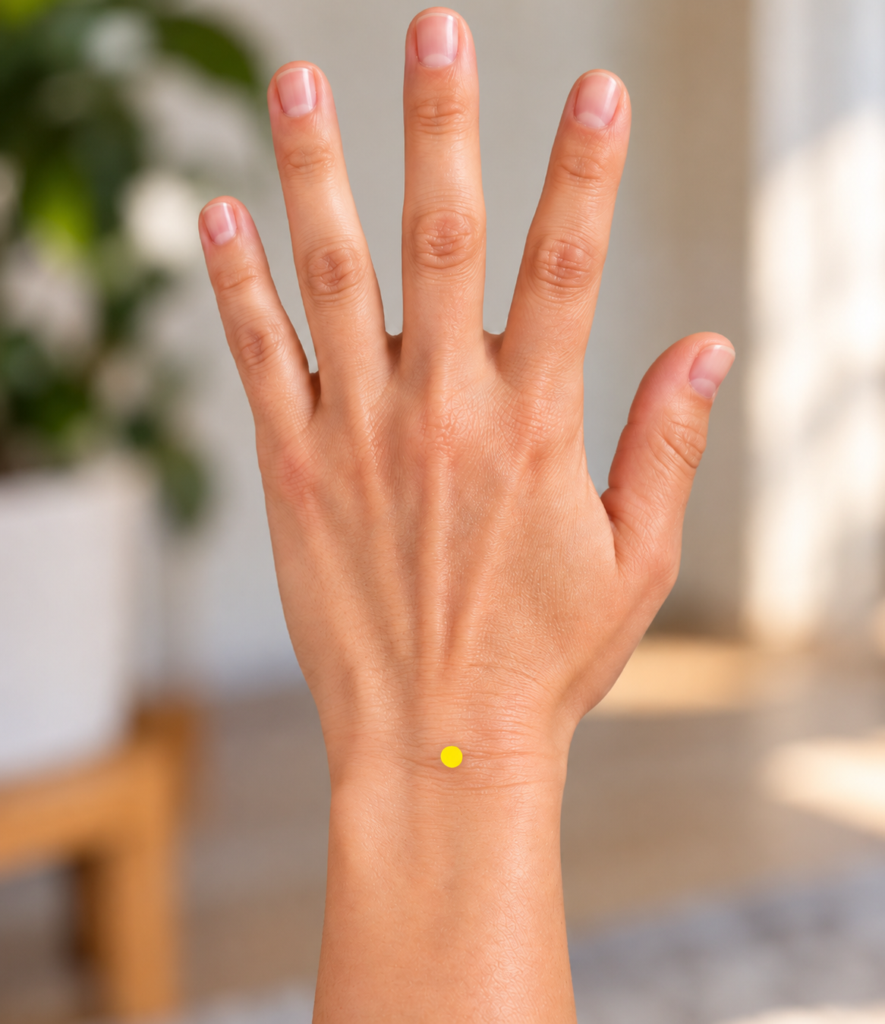
1. Press on TE4 on the back of the wrist to ease stiffness. TE4 sits on the back of the wrist, in the hollow on the wrist crease, just to the pinky side of the tendons that run to the fingers. Bend the wrist back slightly to find the hollow, then press gently with the thumb of your other hand for one to two minutes on the affected wrist. TE4 is called “Yangchi,” the “Yang Pool.”
TE4 is the source point of the Triple Energizer channel and one of the wrist joint’s most significant local points. Located at the center of the back of the wrist, where pain from typing and overuse often settles, it helps move Qi and Blood through the joint and relieve stiffness.
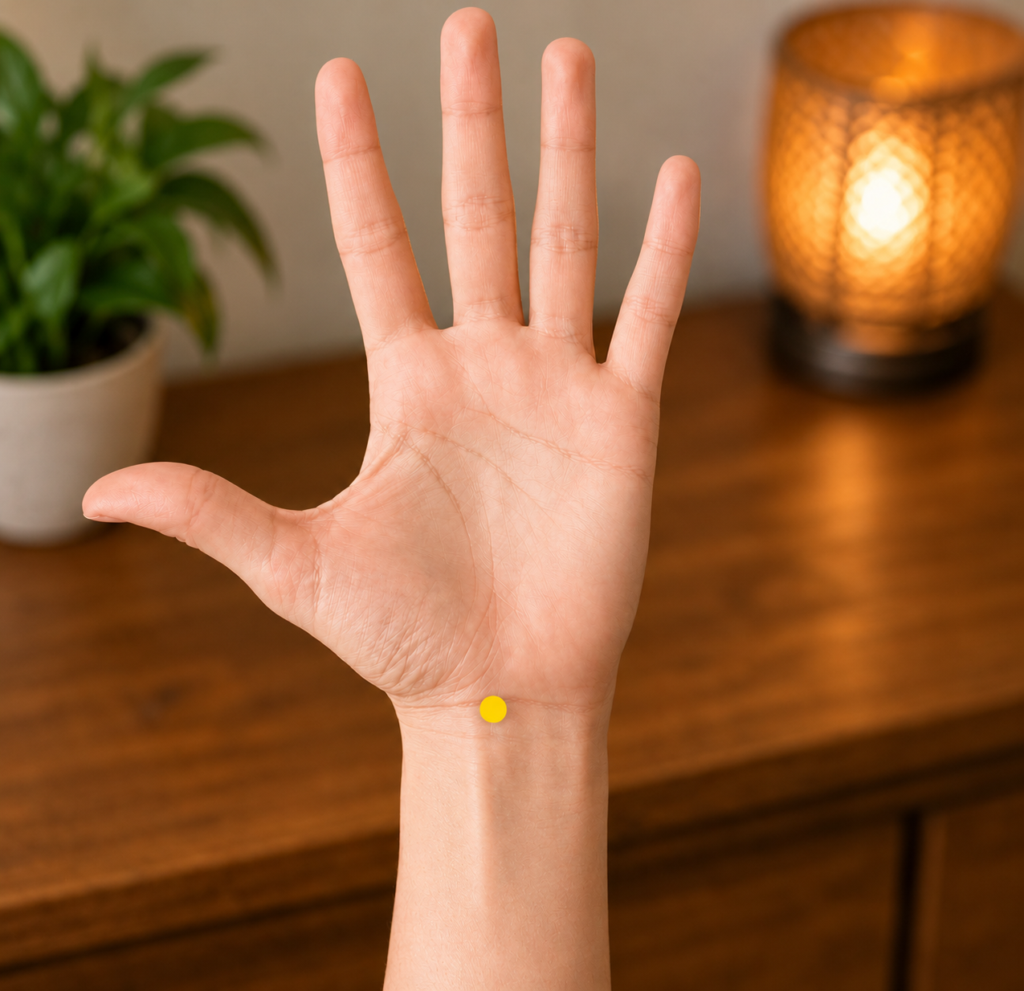
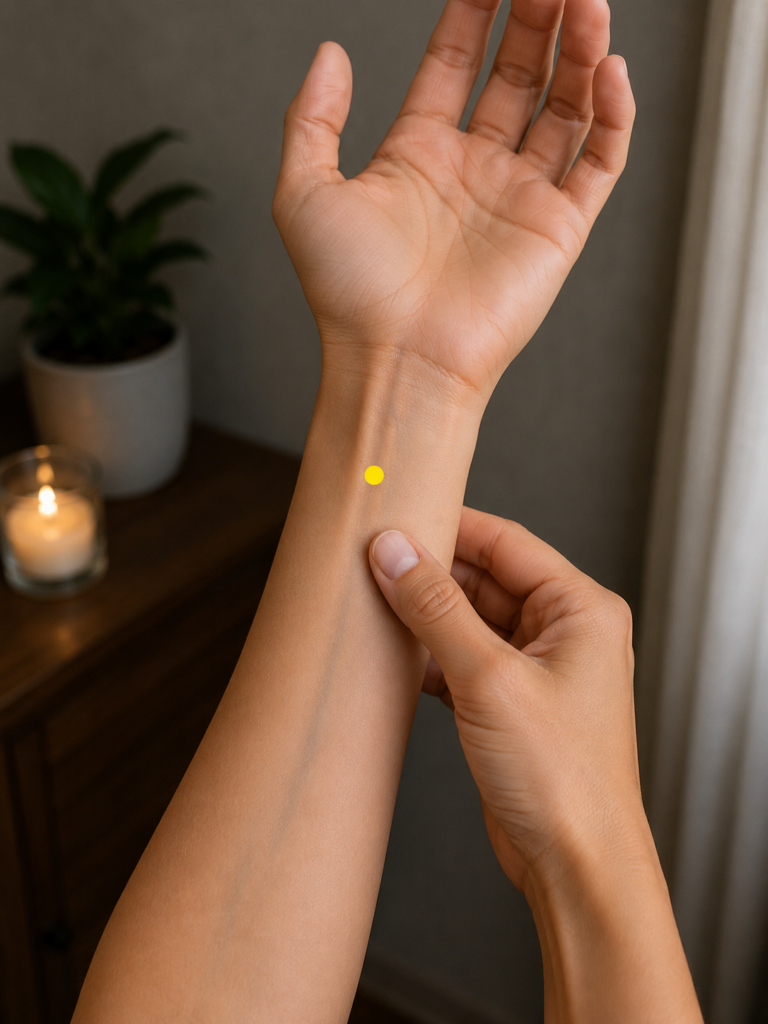
2. Press on PC7 in the center of the inner wrist crease to relieve pain through the front of the joint. PC7 sits in the middle of the wrist crease on the palm side, between the two tendons that stand out when you make a fist and bend the wrist slightly. Press gently with the thumb of your other hand for one to two minutes on the affected wrist. PC7 is called “Daling,” the “Great Mound.”
PC7 is the source point of the Pericardium channel and the main local point on the palm side of the wrist. It lies over the passage where the tendons and the median nerve enter the hand, so it is traditionally used to address wrist pain and finger numbness or tingling. Apply gentle pressure here, especially if your fingers are tingling.
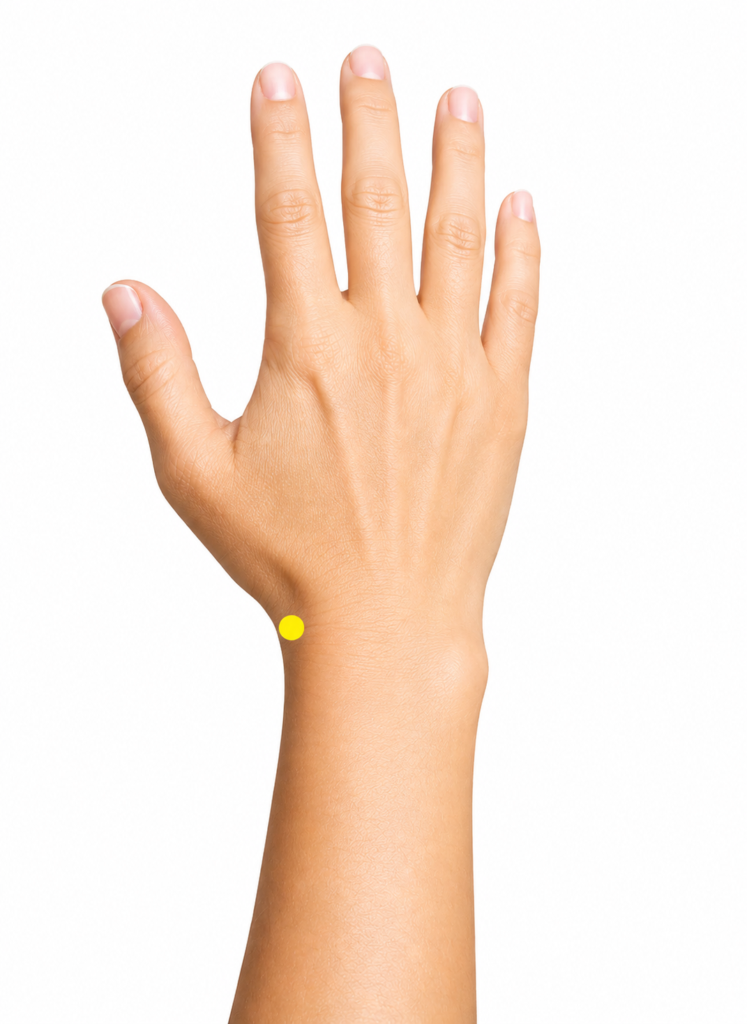
3. Press on LI5 at the base of the thumb to ease thumb-side wrist pain. LI5 sits on the thumb side of the back of the wrist. Lift the thumb up and back, and a small hollow appears between the two tendons at the base of the thumb. LI5 sits in the center of that hollow. Press gently with your fingertip for one to two minutes on the affected wrist. LI5 is called “Yangxi,” the “Yang Stream.”
LI5 is a key point for pain on the thumb side of the wrist, including pain from heavy texting or gripping and De Quervain’s tenosynovitis. It moves Qi and Blood along the Large Intestine channel, from the index finger across the wrist to the outer forearm.
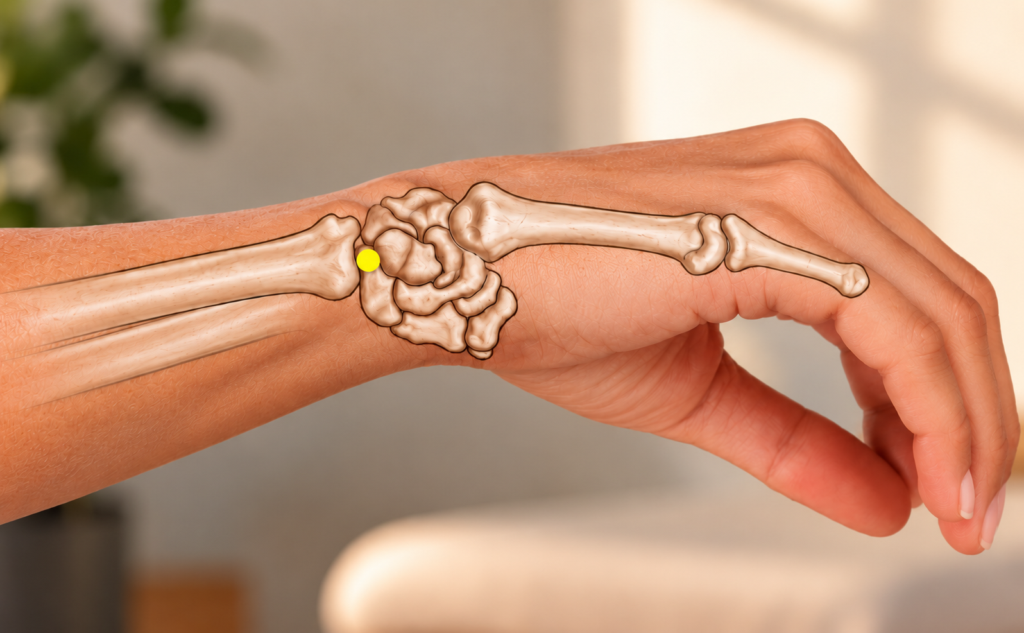
4. Press on SI5 on the pinky edge of the wrist to ease outer wrist pain. SI5 sits on the pinky edge of the wrist crease, in the hollow between the end of the forearm bone and the small bone of the wrist just below it. Press gently with the thumb of your other hand for one to two minutes on the affected wrist. SI5 is called “Yanggu,” the “Yang Valley.”
SI5 is the main acupressure point on the pinky side of the wrist, which is especially prone to pain from twisting movements like wringing out a towel, turning a key, or using a mouse. It moves Qi and Blood along the Small Intestine channel and eases stiffness along the joint’s outer edge.
5. Press on LU7 above the wrist to relieve tension in the thumb tendons. LU7 sits on the thumb side of the forearm, about two finger-widths above the wrist crease. To find it, interlace the thumbs and index fingers of both hands, and the tip of the top index finger will rest in a small groove on the edge of the forearm, just above the bony bump of the wrist. Press gently with your fingertip for one to two minutes on the affected arm. LU7 is called “Lieque,” the “Broken Sequence.”
LU7 lies over the tendons that move the thumb, the area affected by De Quervain’s tenosynovitis and heavy thumb use. As the connecting point of the Lung channel, it works with LI5 to move Qi down the thumb side of the wrist. Apply gentle pressure if the tendons are swollen or very tender.
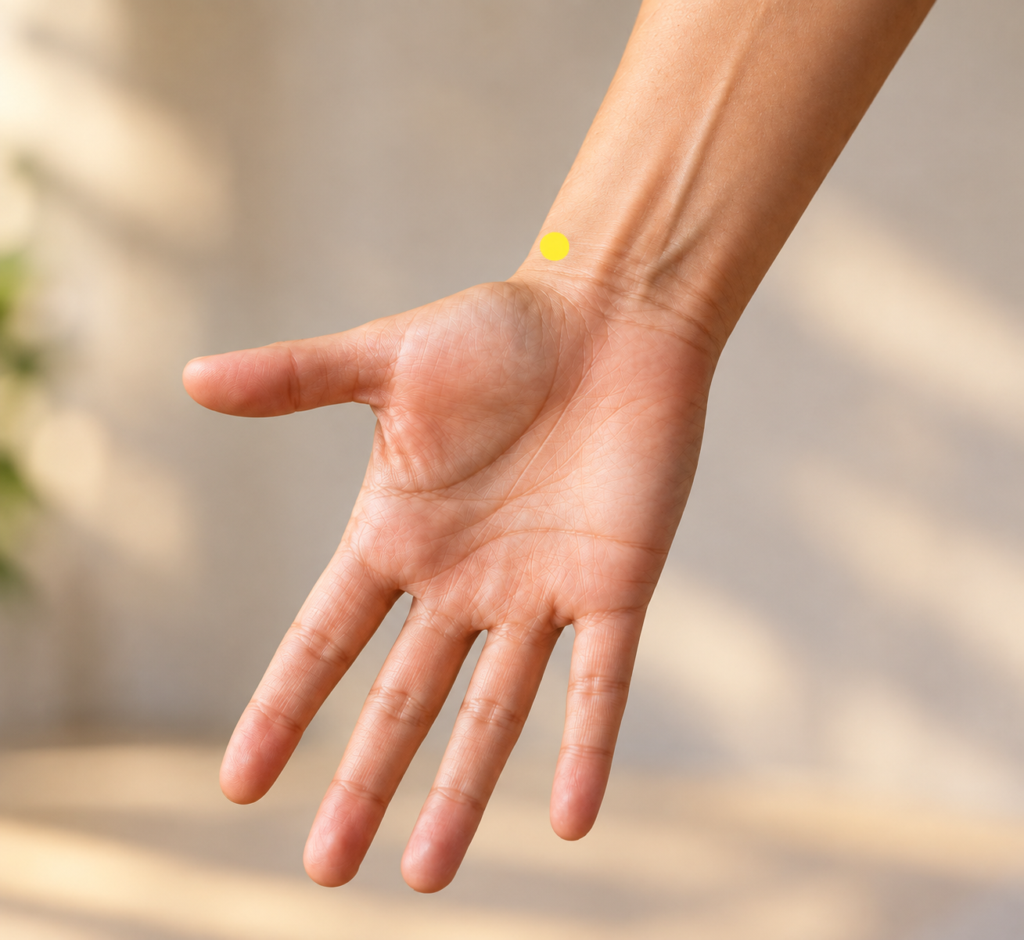
6. Press on PC6 on the inner forearm to release the front of the wrist. PC6 sits on the palm side of the forearm, about three finger-widths above the wrist crease, between the same two tendons as PC7. Press firmly with the thumb of your other hand for one to two minutes on the affected arm. PC6 is called “Neiguan,” the “Inner Pass.”
PC6 is the connecting point of the Pericardium channel. It is one of the most commonly used points for pain and tension in the inner forearm and wrist. Used alongside PC7, it helps relieve pain at the front of the joint and is traditionally indicated for wrist pain accompanied by finger numbness.
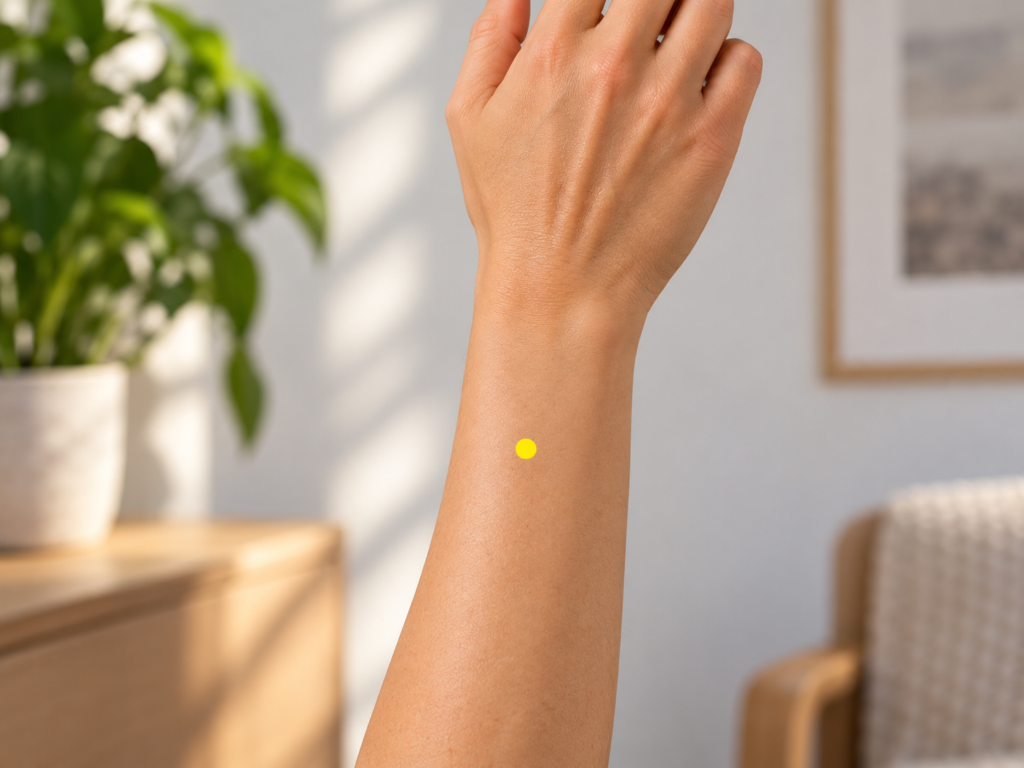
7. Press on TE5 on the back of the forearm to ease pain and stiffness. TE5 sits on the back of the forearm, about three finger-widths above the wrist crease, in the groove between the two forearm bones, directly opposite PC6. Press firmly with the thumb of your other hand for one to two minutes on the affected arm. TE5 is called “Waiguan,” the “Outer Pass.”
TE5 is the connecting point of the Triple Energizer channel. It is a classic point for pain and stiffness in the wrist, hand, and fingers. Working with TE4, it helps move Qi and Blood through the back of the wrist. Pressing PC6 and TE5 together, one on each side of the forearm, releases tension from the front and back of the forearm.
8. Press on LI10 below the elbow to release the forearm muscles. LI10 sits on the thumb side of the forearm, about three finger-widths below the outer end of the elbow crease. Bend the elbow and press into the thick muscle there with the thumb of your other hand for one to two minutes on the affected arm. LI10 is called “Shousanli,” the “Arm Three Miles.”
The muscles that flex and extend the wrist originate near the elbow and can tighten during prolonged typing, gripping, and lifting. LI10 lies in the middle of these muscles and is traditionally indicated for forearm and wrist pain, stiffness, and weakness. Releasing the muscles can ease strain on the tendons as they cross the joint.
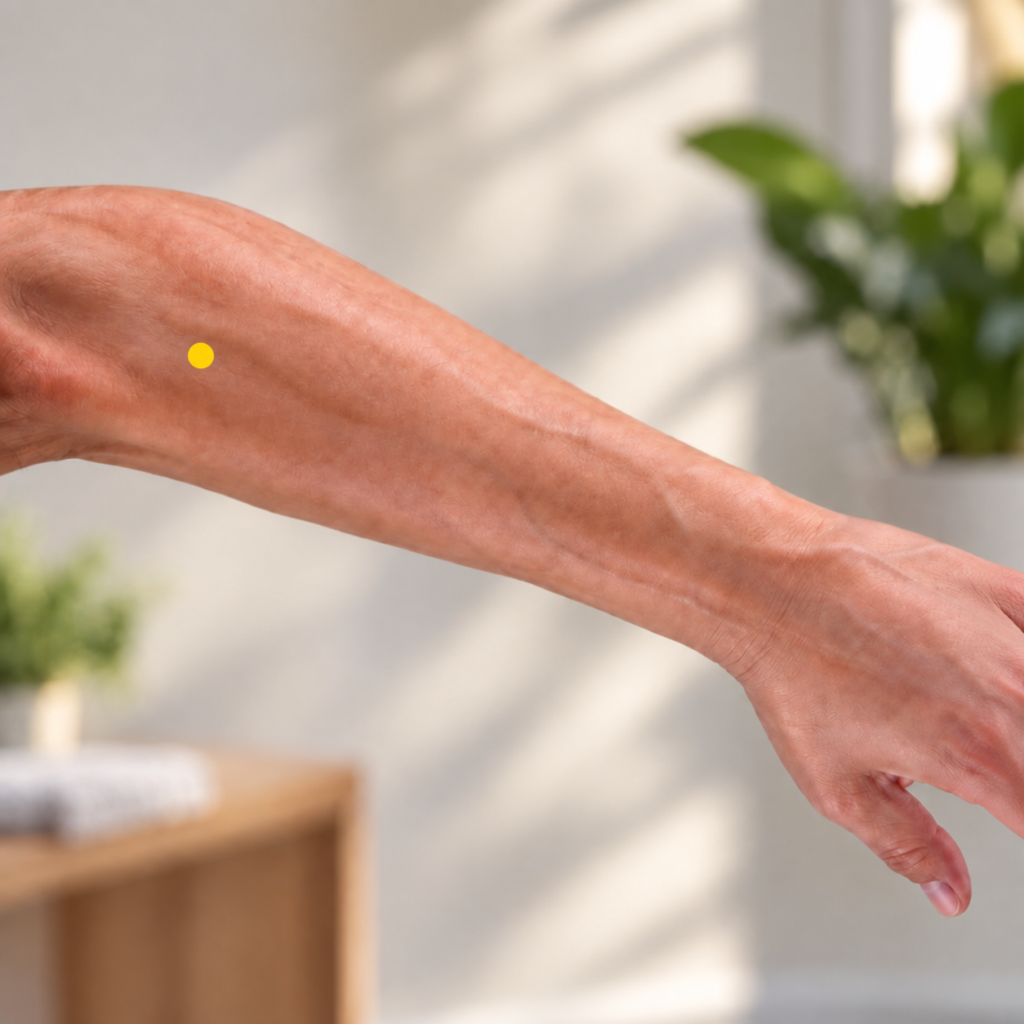
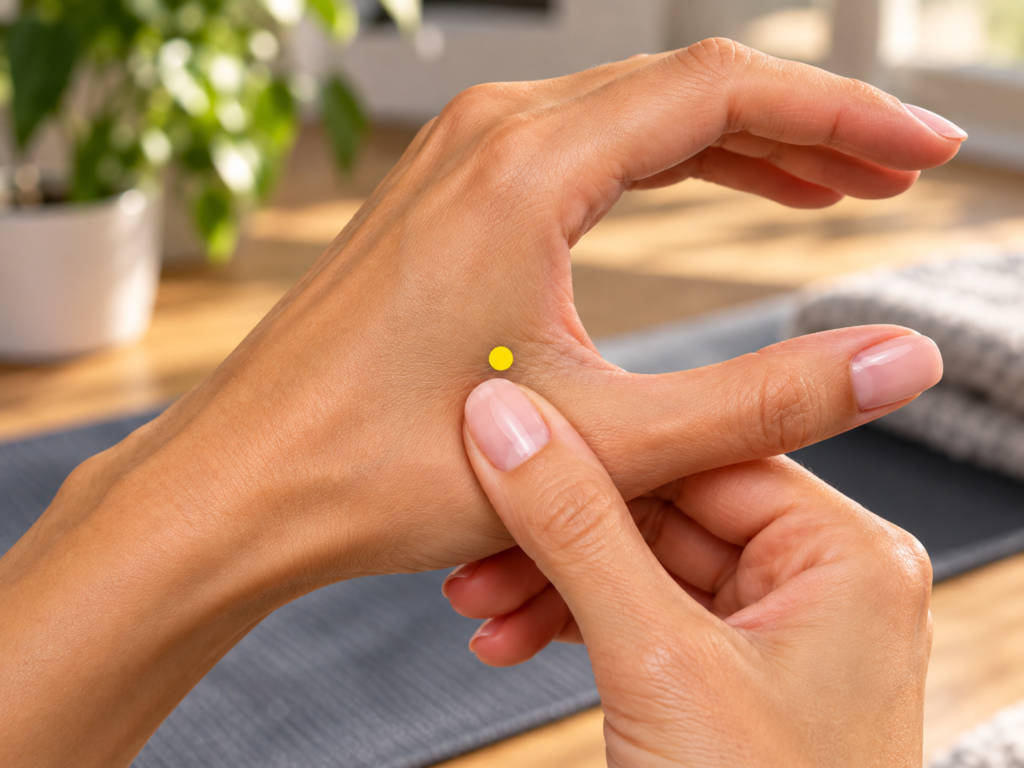
9. Press on LI4 on the back of the hand to relieve pain. LI4 sits in the webbing between the thumb and index finger, at the highest point of the muscle when the two are pressed together. Press firmly with the thumb of your other hand for one to two minutes on the affected hand. LI4 is called “Hegu,” the “Joining Valley.” LI4 is avoided during pregnancy.
LI4 is one of the most important Traditional Chinese Medicine points for relieving pain anywhere in the body, particularly in the hand and wrist. As the source point of the Large Intestine channel, which crosses the wrist at LI5, it is especially useful for moving Qi and Blood throughout the arm.
Why These Acupressure Points Work
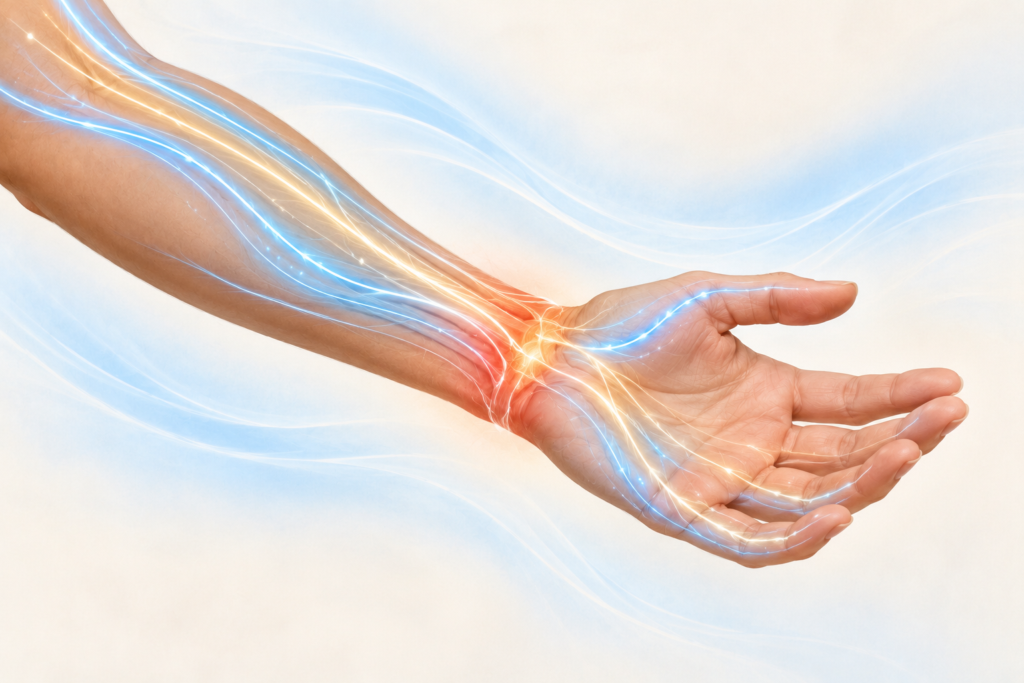
In Traditional Chinese Medicine, a healthy wrist allows Qi and Blood to flow freely through the six channels that cross it. Repetitive strain, injury, and cold can disrupt this flow, causing pain, stiffness, and weakness in the joint. The approach combines points on the wrist with points on the forearm and hand to address the problem from several angles.
The nine points work together to restore the wrist’s full range of motion.
- The center points (TE4, PC7) ease pain and stiffness in the joint, both at the front and back.
- The side points (LI5, LU7, SI5) relieve pain in the thumb tendons and on the pinky edge of the wrist.
- The forearm points (PC6, TE5, LI10) release the muscles and tendons that move the wrist.
- The hand point (LI4) relieves pain and moves Qi and Blood throughout the entire arm.
How to Properly Use These Acupressure Points

For the best results, practice acupressure for wrist pain daily and rest from the movements that caused it.
- Perform the complete routine once daily on the affected side, holding each point for one to two minutes.
- If your wrist becomes irritated while you are working, apply pressure to PC6 and TE5 simultaneously with your thumb and fingers while slowly rotating your wrist for five measured breaths.
- Apply gentle pressure to the points on the wrist, particularly over swollen or tender tendons, and firmer pressure to the forearm and hand. If you are pregnant, avoid LI4.
- Practice consistently for two to three weeks to address overuse pain, and continue for a longer period if the pain has been developing over several months.
Daily habits can help your wrist heal and keep the pain from returning. Take a short break every 30 to 45 minutes of typing, texting, or gripping to gently shake out and stretch your hands. Keep your wrists straight and relaxed at the keyboard, raise your screen to eye level, and when using your phone, hold it in one hand and type with the other instead of using both thumbs. Wearing a wrist brace at night may help after a flare. A warm compress can ease longstanding stiffness, and Traditional Chinese Medicine recommends keeping your wrists covered and away from the cold (i.e., not exposed to cold drafts or air conditioning). Once the pain has settled, you can gradually begin strengthening your forearms.
When to Get Professional Help

If you experience wrist pain following a fall or injury, particularly if it is accompanied by swelling, bruising, a visible deformity, or tenderness when pressing the hollow at the base of the thumb, seek medical attention promptly, as you may have a fracture. A scaphoid fracture, in particular, may not be visible on the initial X-ray and requires appropriate management.
Seek urgent care if your wrist is hot, red, and swollen, especially if you also have a fever, as these symptoms may indicate an infection or gout. Consult a doctor or hand specialist if the pain persists for more than two weeks despite rest; if you develop numbness, tingling, or weakness in your fingers; if a lump appears or grows; or if your wrist begins clicking or catching, or feels unstable. A physical therapist or hand therapist can provide assistance with bracing, stretching, and strengthening.
Acupressure is a gentle, supportive approach to wrist pain and should be viewed as complementary to, rather than a substitute for, diagnosis and medical treatment.
For related health concerns, acupressure for carpal tunnel syndrome and acupressure for arthritis are companion posts.
Above and Beyond Acupuncture offers acupuncture, cupping, and lifestyle coaching at the North Frank Lloyd Wright Boulevard location in Scottsdale.
Schedule an appointment online to start your healing journey.
The points above are only as effective as the technique used to apply them. Where to press, how firmly, and for how long all affect the result. For a full breakdown of how to perform acupressure properly at home, read Performing Acupressure in 3 Easy Steps.

About the Publisher
Paul Kerzner, L.Ac., is a licensed acupuncturist and board-certified herbalist, as well as the founder of Above and Beyond Acupuncture in Scottsdale. His own journey from chronic patient to practicing acupuncturist shapes his commitment to providing honest, clinically grounded information about acupuncture and Traditional Chinese Medicine. Learn more about Paul and his clinical approach on the About Us page.