Key Takeaways
- Golfer’s elbow, medically known as medial epicondylitis, is a common condition affecting those with repetitive gripping activities.
- Standard care often fails to provide long-term relief, as it addresses inflammation rather than tendon degeneration.
- Acupuncture treats golfer’s elbow by improving circulation, releasing muscular tension, and providing pain relief.
- Traditional Chinese Medicine views golfer’s elbow through the lens of Liver and Qi patterns, addressing underlying deficiencies.
- Research shows acupuncture effectively reduces pain and improves function in chronic elbow tendon conditions.
Golfer’s elbow is one of the most frustrating musculoskeletal conditions to treat. Pain on the inner side of the elbow. Weakness with gripping. Difficulty with everyday tasks like lifting a coffee mug, shaking hands, or opening a jar. Standard care often provides partial relief but leaves many patients dealing with pain that persists for months or years.
Despite the name, golfer’s elbow affects many people who have never played golf. The condition is common in weightlifters, throwers, carpenters, plumbers, painters, typists, and anyone who performs repetitive gripping or wrist flexion movements. The pain is real and the impact on daily life is substantial when the condition becomes chronic.
Acupuncture and Traditional Chinese Medicine offer meaningful support for golfer’s elbow. The treatment addresses the tendon degeneration underlying the condition, the muscular tension in the forearm flexors, and the underlying patterns that produce chronic tendon dysfunction. Here is what golfer’s elbow actually is, why standard care sometimes falls short, and how acupuncture treats it.
What Is Golfer’s Elbow?
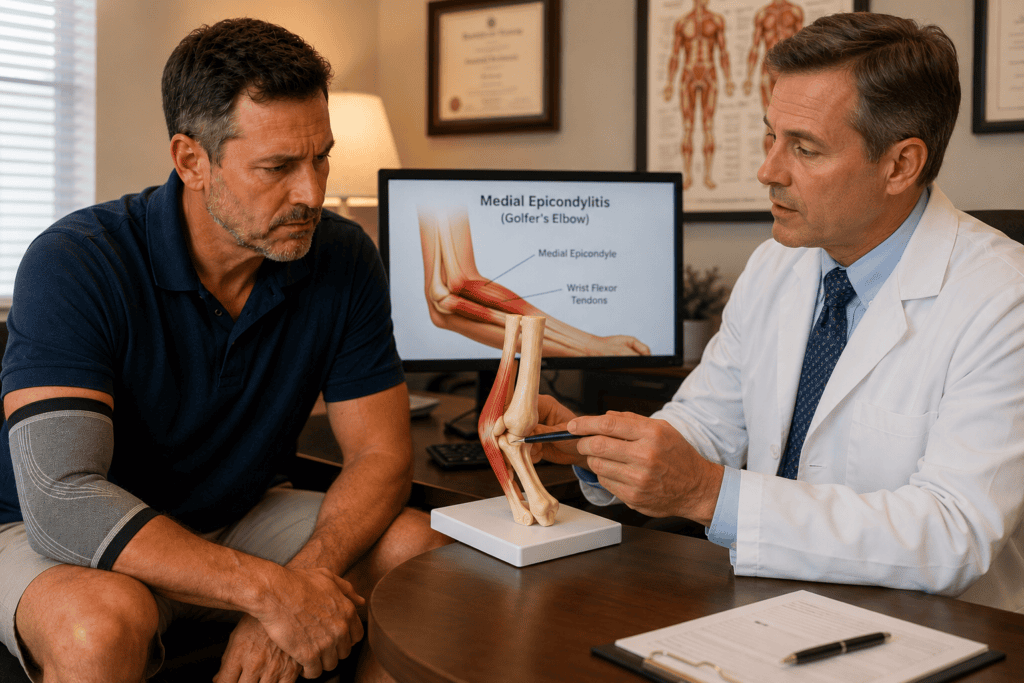
Golfer’s elbow is medically known as medial epicondylitis or medial epicondylopathy. The condition involves the tendons that attach the forearm flexor muscles to the medial epicondyle, which is the bony bump on the inner side of the elbow. Repetitive stress on these tendons produces the characteristic pain and dysfunction.
The current clinical understanding has shifted meaningfully over the past two decades. The condition was long called “tendinitis” (implying inflammation) but modern research shows it is actually “tendinopathy” or “tendinosis” involving tendon degeneration rather than active inflammation. This distinction matters because anti-inflammatory approaches are less effective than approaches that support tissue healing.
Common symptoms include pain and tenderness on the inner side of the elbow, weakness in the wrist and hand, pain with gripping activities, stiffness in the elbow, and sometimes tingling or numbness that radiates into the forearm.
Common contributors include repetitive gripping activities from work or sport, throwing sports including baseball and quarterback throwing, weightlifting particularly with heavy grip demands, racket sports (though tennis elbow is more common in racket sports), typing and mouse work with poor ergonomics, carpentry, plumbing, painting, and any activity that repeatedly stresses the forearm flexors.
The Mayo Clinic overview of golfer’s elbow and the Cleveland Clinic summary provide the medical framework for understanding the condition.
Why Standard Care Sometimes Falls Short
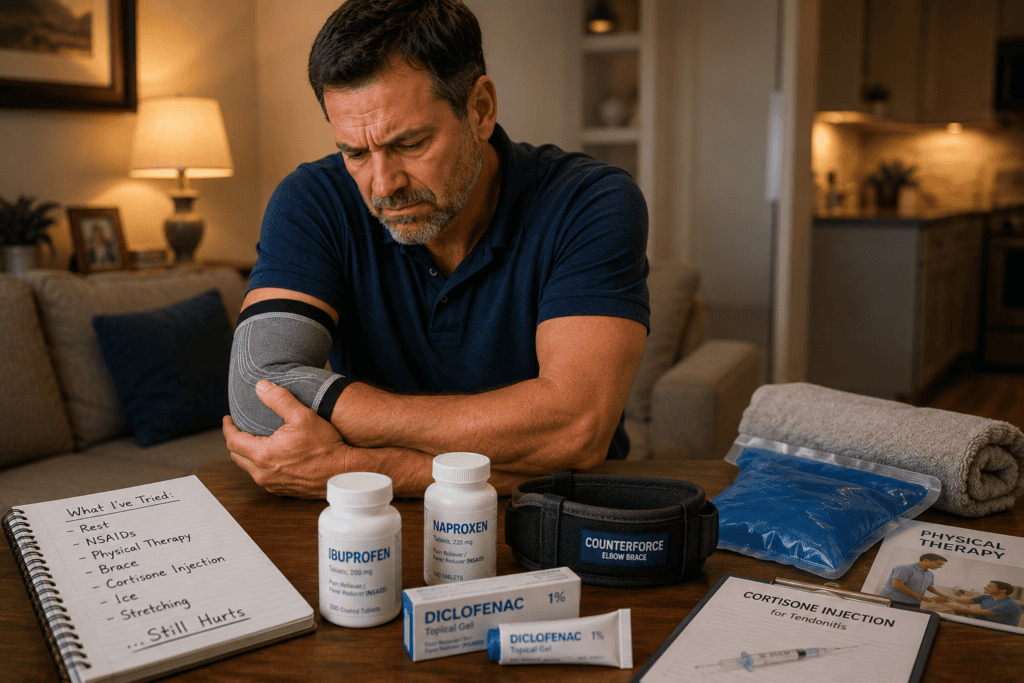
Standard care for golfer’s elbow includes rest, activity modification, ice, NSAIDs, physical therapy including eccentric strengthening exercises, counterforce braces (elbow straps), corticosteroid injections, and in refractory cases surgical debridement.
These interventions work for some patients but have significant limitations for chronic cases.
Rest and activity modification are challenging because most patients need to continue their work or activities that produce the stress. NSAIDs reduce pain but do not address the tendon degeneration and long-term use produces side effects. Physical therapy with eccentric strengthening has genuine research support but requires consistent effort over weeks to months. Counterforce braces provide symptomatic relief but do not address the underlying tissue problem. Corticosteroid injections provide short-term relief for many patients but research suggests they may impair long-term tendon healing.
Patients with chronic golfer’s elbow often cycle through multiple interventions without sustained relief. The tendon degeneration involved does not respond well to standard treatments alone because the condition involves impaired healing rather than pure inflammation.
How Traditional Chinese Medicine Views Golfer’s Elbow
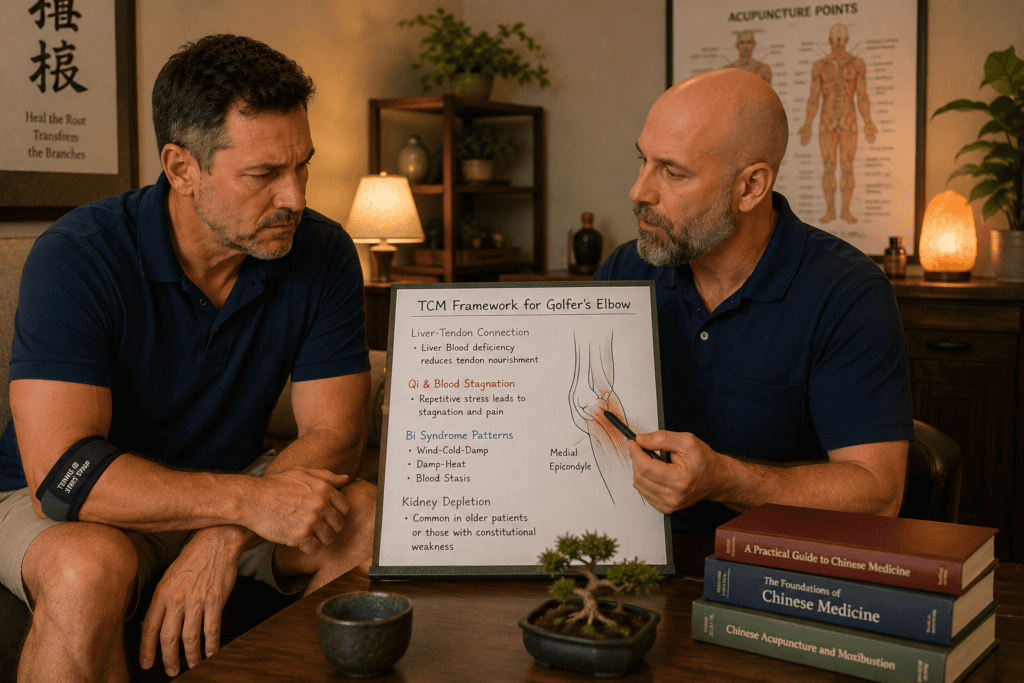
Traditional Chinese Medicine offers a rich framework for understanding tendon conditions like golfer’s elbow.
- The Liver-Tendon connection. The Liver in Chinese medicine governs the tendons and ligaments. Chronic tendon conditions including golfer’s elbow reflect Liver system patterns. Liver Blood deficiency in particular is often involved because the tendons require adequate Blood nourishment to remain healthy and heal properly.
- Qi and Blood stagnation. Repetitive stress produces Qi and Blood stagnation at the site of the injury. This stagnation impairs the local circulation needed for tissue healing and produces the fixed pain characteristic of chronic tendon conditions.
- Bi syndrome patterns. Bi syndrome refers to painful obstruction. Wind-Cold-Damp Bi produces pain that worsens with cold and damp conditions. Damp-Heat Bi produces pain with warmth and swelling in acute flares. Blood Stasis Bi produces sharp fixed pain worse at night that often follows chronic patterns.
- Kidney depletion. In older patients or those with constitutional weakness, Kidney depletion contributes to tendon vulnerability and impaired healing.
A licensed acupuncturist identifies which patterns are dominant and treats accordingly.
How Acupuncture Treats Golfer’s Elbow
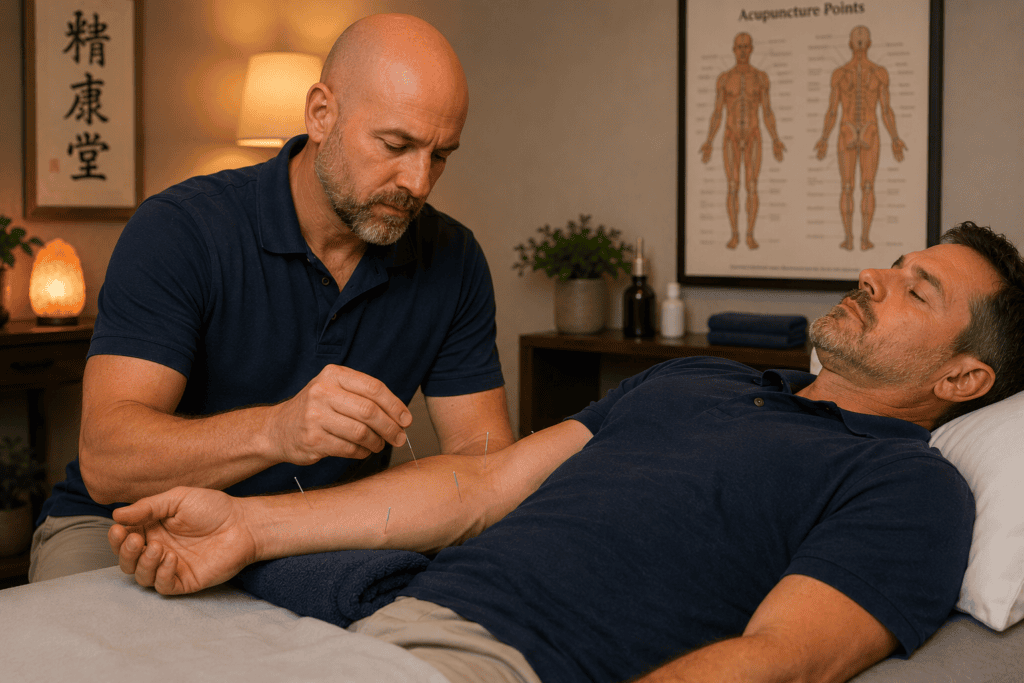
Acupuncture addresses golfer’s elbow through several mechanisms that map directly onto the underlying pathophysiology.
- Improved local circulation. Chronic tendon conditions involve impaired local blood flow, which prevents proper healing. Acupuncture increases circulation at the site of injury, which supports the tissue repair that standard care does not always achieve.
- Endogenous pain relief. Acupuncture stimulates the release of endorphins and other natural pain-relieving chemicals. This produces both immediate pain relief and reduces the overall pain sensitivity that chronic pain patients develop.
- Muscular release. The forearm flexors that attach at the medial epicondyle become chronically tight in golfer’s elbow, which perpetuates the tendon stress. Acupuncture directly releases this muscular tension.
- Tendon tissue support. GB34 is the influential point for tendons and ligaments in Chinese medicine and is central to treating any tendon condition. Combined with local needling around the medial epicondyle, GB34 supports the tissue healing that chronic tendinopathy requires.
- Liver Blood nourishment. For patients whose golfer’s elbow involves Liver Blood deficiency, acupuncture points that tonify Liver Blood support the constitutional pattern underlying the tendon dysfunction.
- Anti-inflammatory effects. While chronic tendinopathy is not primarily inflammatory, acute flares often involve inflammation. Acupuncture has documented anti-inflammatory effects that support these acute episodes.
- Nervous system regulation. Chronic pain involves changes in the central nervous system that make pain more difficult to resolve. Acupuncture affects the descending pain modulation system, which reduces the central sensitization that develops with chronic tendon pain.
- Pattern differentiation. The individualized Chinese medicine approach treats the specific patterns present in each patient rather than applying a uniform protocol. This is what distinguishes Traditional Chinese Medicine from protocol-only approaches.
Golfer’s elbow specifically responds well to acupuncture because the condition involves tissue degeneration that acupuncture can support through improved circulation and pattern-based treatment. Patients who have not responded to physical therapy, injections, and other standard approaches often experience meaningful improvement with acupuncture.
Learn more about the mechanisms and effects acupuncture has in What Does Acupuncture Actually Do to Your Body?.
The Research Base

Research on acupuncture for lateral and medial epicondylitis has been generally positive. Systematic reviews have found acupuncture effective for reducing pain and improving function in tendon conditions of the elbow. While the research base is smaller than for some other applications, clinical experience strongly supports acupuncture as a valuable component of care for chronic elbow tendon conditions.
The NCCIH summary on acupuncture covers the broader research base for pain conditions that acupuncture has clinically improved.
The Holistic Integrative Approach

Golfer’s elbow responds best to a coordinated approach that addresses all the contributing factors.
- Regular acupuncture treatment. Weekly acupuncture during the initial course supports pain reduction and tendon healing. Most patients need six to twelve sessions to see meaningful sustained improvement.
- Activity modification. Reducing or modifying the activities that produce the stress is essential during the healing period. Complete rest is rarely feasible or necessary, but reducing the specific movements that aggravate the tendon supports recovery.
- Eccentric strengthening. Physical therapy with specific eccentric strengthening exercises has strong research support for tendon conditions. These exercises support the tendon remodeling that healing requires. Working with a physical therapist to develop appropriate exercises produces the best results.
- Ergonomic assessment. For patients whose golfer’s elbow relates to work activities, ergonomic assessment and adjustments to the workstation or tools reduce the ongoing stress.
- Appropriate rest and gradual return. Returning to full activity too quickly often produces recurrence. A gradual progression back to full activity supports lasting recovery.
- Sleep support. Poor sleep affects tissue healing and pain sensitivity. Improving sleep quality supports tendon recovery.
- Coordination with orthopedic care. For patients under orthopedic care, acupuncture works alongside their treatment rather than replacing it. Communication between providers supports the best outcomes. Learn more about inflammation and the systemic effect it has on the body in What Is Inflammation and Why Is It Affecting Me?.
When to See a Doctor
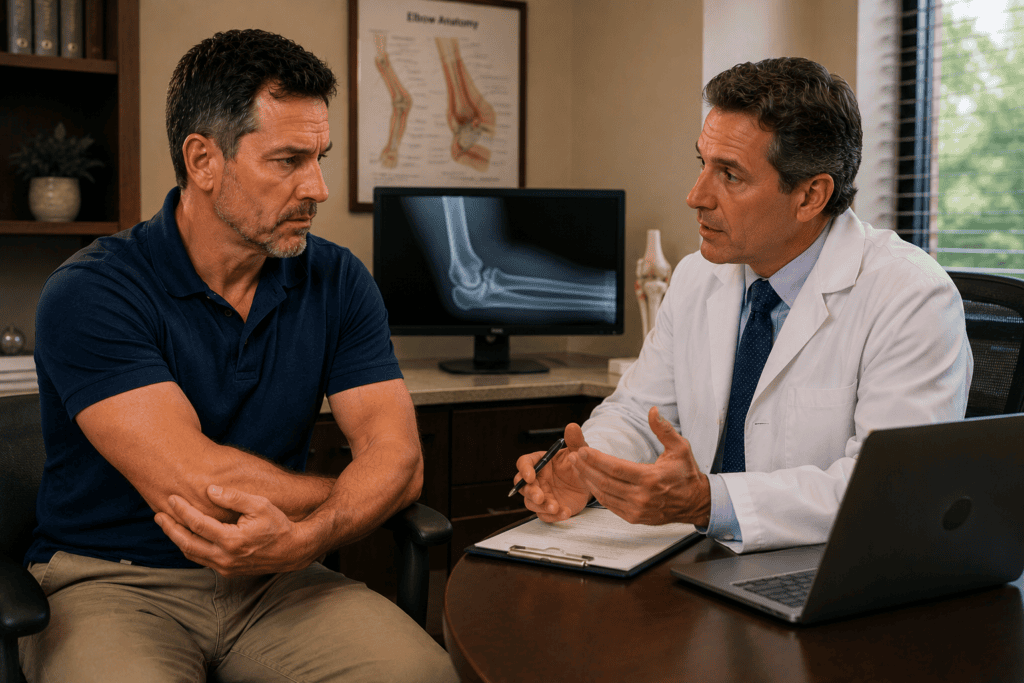
Certain symptoms warrant orthopedic or medical evaluation rather than complementary care alone.
Sudden severe pain from acute injury. Significant weakness in the hand or wrist. Numbness or tingling that persists or is progressive. Clicking or locking of the elbow. Pain that has not improved after six to eight weeks of conservative care. Signs of infection including warmth, redness, and fever.
For patients with chronic golfer’s elbow that is not fully responding to standard care, acupuncture can offer significant relief that addresses the underlying tendon and constitutional patterns.
This practice offers acupuncture, cupping, and lifestyle coaching that addresses the underlying patterns causing chronic elbow pain.
Reach out to Above and Beyond Acupuncture on North Frank Lloyd Wright Boulevard in Scottsdale to schedule a consultation.
Schedule an appointment online or call us today to start your healing journey.

About the Publisher
Paul Kerzner, L.Ac., is a licensed acupuncturist and board-certified herbalist, as well as the founder of Above and Beyond Acupuncture in Scottsdale. His own journey from chronic patient to practicing acupuncturist shapes his commitment to providing honest, clinically grounded information about acupuncture and Traditional Chinese Medicine. Learn more about Paul and his clinical approach on the About Us page.