
Key Takeaways
- This article focuses on how to treat acid reflux holistically, emphasizing the importance of addressing underlying causes rather than just symptoms.
- Natural treatments include dietary changes, lifestyle adjustments, stress management, and Traditional Chinese Medicine.
- Foods that support digestive health, like whole grains and lean proteins, can help reduce reflux episodes.
- Acupuncture and Chinese Medicine can effectively address the patterns causing acid reflux by regulating the nervous system and reducing inflammation.
- Managing stress and implementing healthy eating behaviors play crucial roles in holistic acid reflux treatment.
This is Part 2 of a two-part series on treating acid reflux holistically. Part 1 covered what acid reflux is, what causes it, what the symptoms look like, and why the conventional acid-suppressing approach so often falls short of lasting relief. This piece covers the natural and holistic treatments that address the underlying pattern rather than only managing the symptoms.
The holistic approach starts from a different question. Instead of asking how to suppress the acid, it asks why the reflux is happening and what can be done to reduce or resolve the underlying pattern. The answers usually involve some combination of dietary changes, lifestyle shifts, stress management, and Traditional Chinese Medicine treatment. Each of these addresses part of the picture, and together they offer many patients meaningful relief without indefinite reliance on medication.
Acid Reflux Versus GERD
A brief clinical distinction is worth naming before moving into treatment. Acid reflux and gastroesophageal reflux disease (GERD) are related but not identical.
Acid reflux is the backward flow of stomach acid into the esophagus. Everyone experiences occasional acid reflux, particularly after large meals or when lying down soon after eating. This is common and usually not concerning.
GERD is the medical diagnosis given when acid reflux becomes chronic and produces symptoms at least twice a week or leads to complications. Chronic acid exposure can damage the esophageal lining over time and, in rare cases, contribute to more serious conditions including Barrett’s esophagus and esophageal cancer.
The Cleveland Clinic overview of acid reflux and GERD covers the diagnostic distinction and the risks associated with each. The practical implication is that occasional reflux can often be addressed through dietary and lifestyle changes alone, while GERD usually benefits from more sustained intervention that may include medication, holistic treatment, or both working together.
Foods That Support Digestive Function
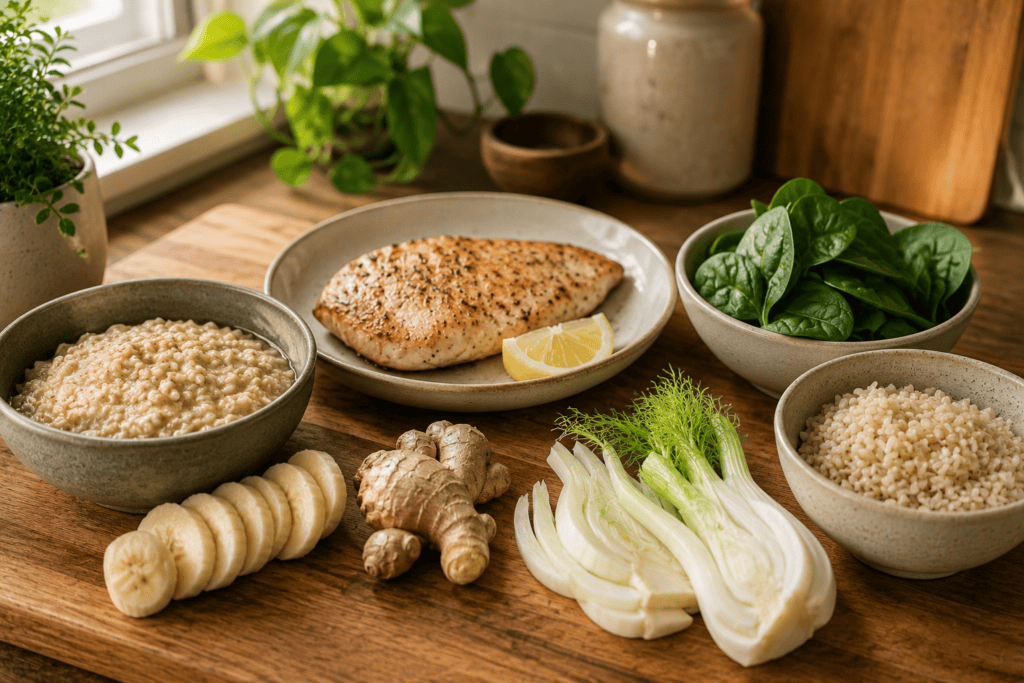
Part 1 covered the foods that commonly trigger acid reflux. The next step is identifying the foods that support healthy digestive function and reduce the frequency of reflux episodes.
Whole grains including oatmeal and brown rice help absorb excess stomach acid and provide steady digestion without producing the acid spikes that come from refined carbohydrates.
Non-citrus fruits including bananas, melons, and pears provide easy-to-digest nutrition without the acidity that aggravates reflux.
Vegetables including leafy greens, celery, cucumbers, fennel, and root vegetables support digestive function and provide the fiber that regulates the gut. The Johns Hopkins summary on GERD-friendly diet covers the specific foods that support acid reflux management.
Lean proteins including fish, seafood, chicken, and turkey are less likely to trigger reflux than fatty red meats. Preparation matters. Grilling, baking, or poaching produces less reflux than frying.
Ginger has been used across many traditional medicine systems for digestive support. Ginger tea, small amounts of fresh ginger in cooking, or ginger chews can help settle the stomach and reduce reflux frequency for some patients.
Fermented foods including yogurt with live cultures, kefir, sauerkraut, and kimchi support the gut microbiome, which increasingly appears to play a role in digestive function including reflux. Introduce these gradually because some patients find that certain fermented foods trigger rather than help their reflux.
The broader picture of foods that support digestion is covered in Five Foods to Improve Digestion.
Beyond Food Selection
How you eat matters as much as what you eat. Several eating behaviors can significantly reduce reflux frequency without any change to the foods themselves.
- Eat smaller meals more frequently rather than large meals. Large meals distend the stomach and increase pressure on the lower esophageal sphincter.
- Eat slowly and chew thoroughly. This reduces air swallowing and gives the digestive system time to process food properly.
- Avoid eating within two to three hours of lying down. Gravity is one of the best defenses against reflux. Sitting or standing upright after meals gives the stomach time to empty before the body goes horizontal.
- Stay upright for at least an hour after meals. Even sitting slouched or leaning back significantly can increase reflux frequency.
- Wear loose clothing around the abdomen. Tight waistbands and belts increase pressure on the stomach and worsen reflux.
The Alkaline Water Question
Alkaline water has received attention as a potential intervention for acid reflux. A 2012 study published in the Annals of Otology, Rhinology, and Laryngology found that alkaline water with a pH of 8.8 instantly denatures pepsin, the digestive enzyme that contributes to esophageal damage when reflux carries it upward. The study concluded that alkaline water may have therapeutic benefits for patients with reflux disease.
The clinical picture is more nuanced than the marketing around alkaline water suggests. The effect appears real but modest, and alkaline water is not a replacement for the broader dietary and lifestyle changes that address underlying causes. For patients who want to incorporate it, alkaline water can be a reasonable addition to a broader approach rather than a standalone intervention.
The Stress Dimension
Chronic stress is one of the most under-addressed causes of acid reflux in conventional treatment. The mechanism involves the autonomic nervous system, which regulates digestive function. When the sympathetic (fight-or-flight) branch dominates from chronic stress, the parasympathetic (rest-and-digest) branch cannot do its job properly. Digestion slows. Stomach acid production shifts. The lower esophageal sphincter relaxes at the wrong times. Reflux becomes more frequent.
The gut-brain connection also runs the other direction. Chronic reflux and digestive dysfunction produce their own stress, which further disrupts autonomic regulation. The result is a self-reinforcing cycle that becomes harder to break the longer it continues.
Addressing the stress dimension is essential for lasting relief. This includes the obvious interventions like reducing stressors where possible and getting adequate sleep, but it also includes more direct interventions that regulate the nervous system itself. The fuller picture of how chronic stress affects digestion is in Why Does My Stomach Hurt When I Get Upset?. The broader picture of how chronic stress affects the body is in What Is Cortisol and Why Do I Have So Much of It?.
Acupuncture and Chinese Medicine for Acid Reflux

Acupuncture and Traditional Chinese Medicine offer some of the most effective interventions for the underlying patterns that produce acid reflux. The clinical evidence has grown substantially over the past decade. A 2019 systematic review published in the Journal of Neurogastroenterology and Motility analyzed 25 clinical trials on acupuncture for gastroesophageal reflux disease and found that acupuncture combined with conventional treatment produced significantly better results than conventional treatment alone, both in symptom improvement and in reduction of recurrence.
The mechanisms are consistent with what acupuncture does in the body more broadly. The treatment shifts the autonomic nervous system toward parasympathetic dominance, which supports digestive function. It stimulates the vagus nerve, which regulates the stomach and the lower esophageal sphincter. It reduces inflammation in the esophageal and gastric tissue. It calms the stress response that drives so many cases of chronic reflux.
Chinese medicine describes acid reflux most often through the framework of the Liver-Stomach relationship. The Liver in Chinese medicine governs the smooth flow of Qi throughout the body. When chronic stress causes the Liver Qi to become stagnant or overactive, it invades the Stomach and disrupts its normal downward-directing function. Stomach Qi that should move food downward begins to move upward instead, producing the reflux pattern along with the burning, belching, and other symptoms that patients recognize.
A licensed acupuncturist trained in the classical framework will identify the specific pattern producing reflux in each patient. Some patients have the Liver invading Stomach pattern described above. Others have Stomach heat, Stomach Yin deficiency, or damp-heat patterns that require different treatment approaches. The differentiation matters because the same treatment does not work for every case.
Where to Start
For patients dealing with chronic acid reflux who want to explore alternatives to indefinite medication use, the holistic approach offers a real path forward. The dietary and lifestyle changes above are the foundation. The stress management and nervous system regulation address the driver that conventional care usually misses. Acupuncture and Chinese medicine treatment address the underlying pattern that produces the symptoms.
For patients ready to consider acupuncture specifically for reflux, Can Acupuncture Treat Acid Reflux? covers the clinical dimensions of the treatment in more depth.
The broader stress and nervous system patterns that drive many chronic digestive conditions are covered in Anxiety, Stress, and Depression.
The full picture of what the practice offers is in Acupuncture, Cupping & Lifestyle Coaching.
Reach out to Above and Beyond Acupuncture on North Frank Lloyd Wright Boulevard in Scottsdale to schedule a consultation.
Schedule an appointment online or call us today to start your journey to holistic healing.