Key Takeaways
- Feeling lost in life can stem from major changes, prompting individuals to question their purpose and identity.
- Acupressure points can help restore direction by grounding the spirit, clarifying intentions, and reconnecting with one’s roots.
- Nine acupressure points, including GB16 and KI23, support mental and emotional clarity.
- Practicing acupressure gently and consistently over time can help restore a sense of purpose.
- Seek professional help if feelings of being lost persist and interfere with daily functioning.

Everything might seem fine at first glance. The job is steady, the bills get paid, and each day passes by. Still, there can be a quiet feeling of drifting, as if life is moving forward without a clear purpose. Some people say it feels like waking up and not recognizing their own life.
Feeling lost often accompanies major life changes. You may finish a degree unsure of what to do next, or find that a job that once felt right no longer suits you. A marriage may end, children may move out, retirement may begin, or illness or loss may change everything. Old roles can fade before new ones take shape, leaving you questioning who you are and what you want.
A sense of purpose affects more than mood. In a University of Michigan study of nearly 7,000 adults ages 51 to 61, reported by NPR, people without a strong sense of purpose were more than twice as likely to die during the study period as those with one, particularly from heart and circulatory disease. Feeling lost can also lead to restlessness, low energy, poor sleep, comparisons with others, and a heavy, flat mood.
In Traditional Chinese Medicine, a clear sense of direction arises when several aspects of the spirit work together. The Liver stores the Blood and houses the Hun, the ethereal soul that gives a person vision, dreams, and a sense of where life is headed. The Heart houses the Shen, which recognizes what truly matters. The Spleen holds the Yi, the capacity for intention, while the Kidney houses the Zhi, the will to follow a chosen path. When Liver Blood is depleted or the Heart and Kidney lose their connection, the Hun drifts, and life can feel aimless.
These nine points help clear the path ahead, strengthen your sense of identity, reconnect you with your roots, and ground the parts of your spirit that give life direction.
What Acupressure Points to Press and Why
1. Press on GB16 on the top of the head to see the way forward. GB16 sits on the head, about one and a half thumb-widths behind the front hairline, directly above the pupil when looking straight ahead. Press both points at once with your fingertips, or make slow circles, for one to two minutes. GB16 is called “Muchuang,” the “Window of the Eye.”
GB16 is traditionally used to clear the mind and brighten the eyes. Its name, the Window of the Eye, evokes clear vision, including the ability to look ahead and imagine a future worth pursuing. As a point on the Gallbladder channel, it also supports the Gallbladder’s role in choosing a direction.
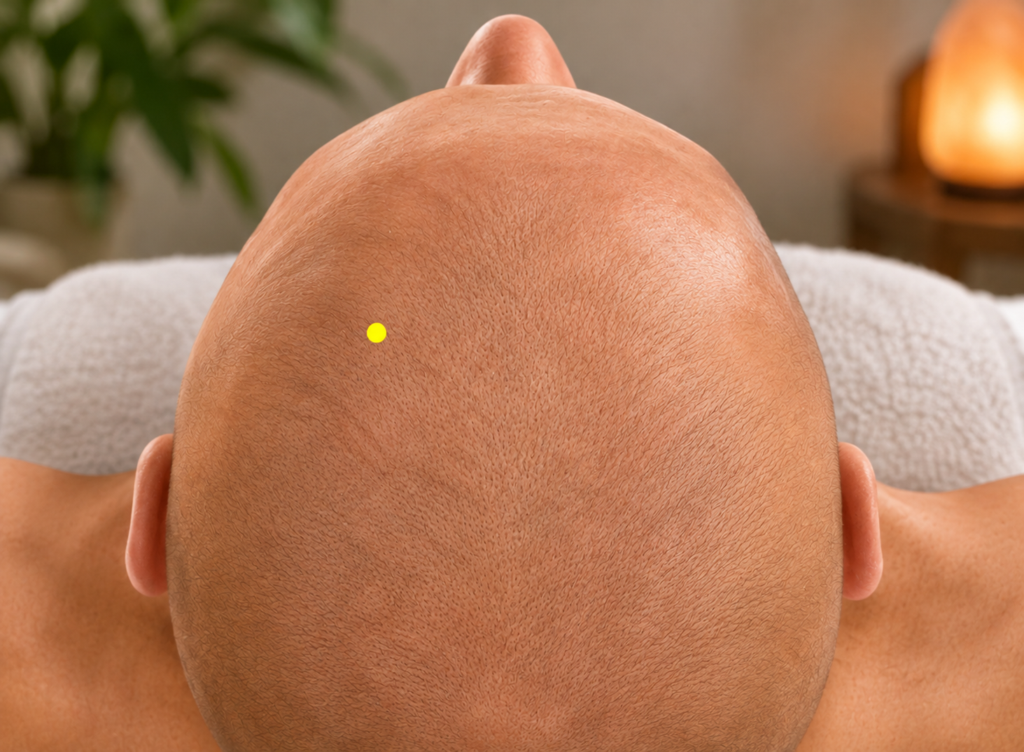
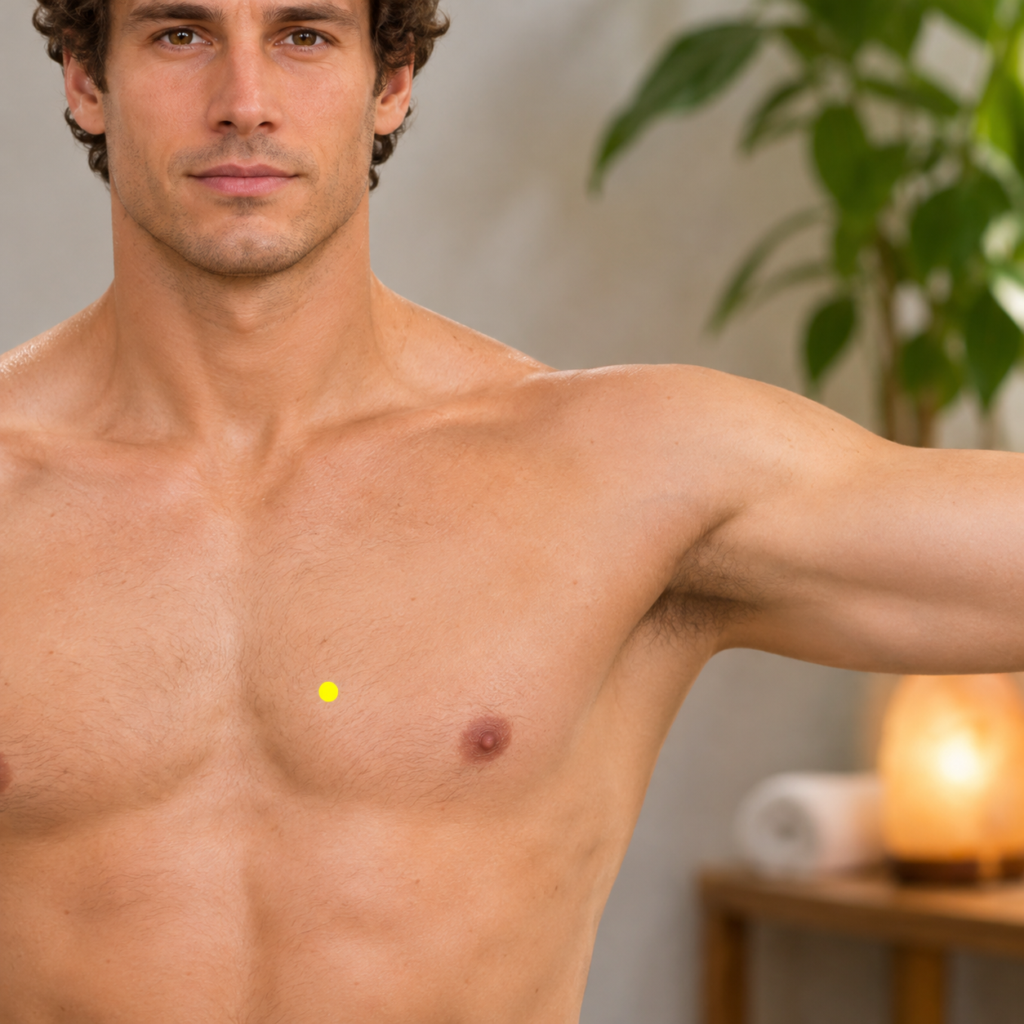
2. Press on KI23 on the chest to steady your sense of self. KI23 sits on the chest, in the fourth space between the ribs, about three finger-widths to each side of the center of the breastbone, roughly level with the nipples. Press both points gently with your fingertips, or make slow circles, for one to two minutes while breathing slowly. KI23 is called “Shenfeng,” the “Spirit Seal.”
KI23 is one of the Kidney points on the chest traditionally used when the spirit feels unsettled. Its name, the Spirit Seal, evokes the mark that makes a person who they are. KI23 opens the chest, eases tightness and anxiety, and helps someone feel more grounded in their identity during times of change.
3. Press on CV4 below the navel to reconnect with your roots. CV4 sits on the midline of the lower abdomen, four finger-widths below the navel. Rest a warm palm over the point or press gently with your fingertips for one to two minutes while breathing slowly into the belly. CV4 is called “Guanyuan,” the “Gate of Origin.” CV4 is avoided during pregnancy.
CV4 is one of the most important points in Traditional Chinese Medicine, representing the body’s deepest reserves, the constitution a person is born with. Its name, the Gate of Origin, is a fitting reminder to return to what has always mattered to you. Resting a warm hand over CV4 is also a simple way to come back into the body when the mind feels scattered.

4. Press on BL44 on the upper back to reconnect with what matters. BL44 sits on the upper back, about four finger-widths to each side of the spine, roughly halfway down the shoulder blades along their inner edges. Place a tennis ball between your upper back and a wall, lean into it gently, and hold for one to two minutes on each side. BL44 is called “Shentang,” the “Spirit Hall.”
BL44 lies beside the Heart’s back point and is named after the Shen, the spirit housed in the Heart. In Traditional Chinese Medicine, the Heart recognizes what truly matters and gives a person a sense of calling. BL44 supports the Heart and helps bring that inner sense of meaning back into focus.
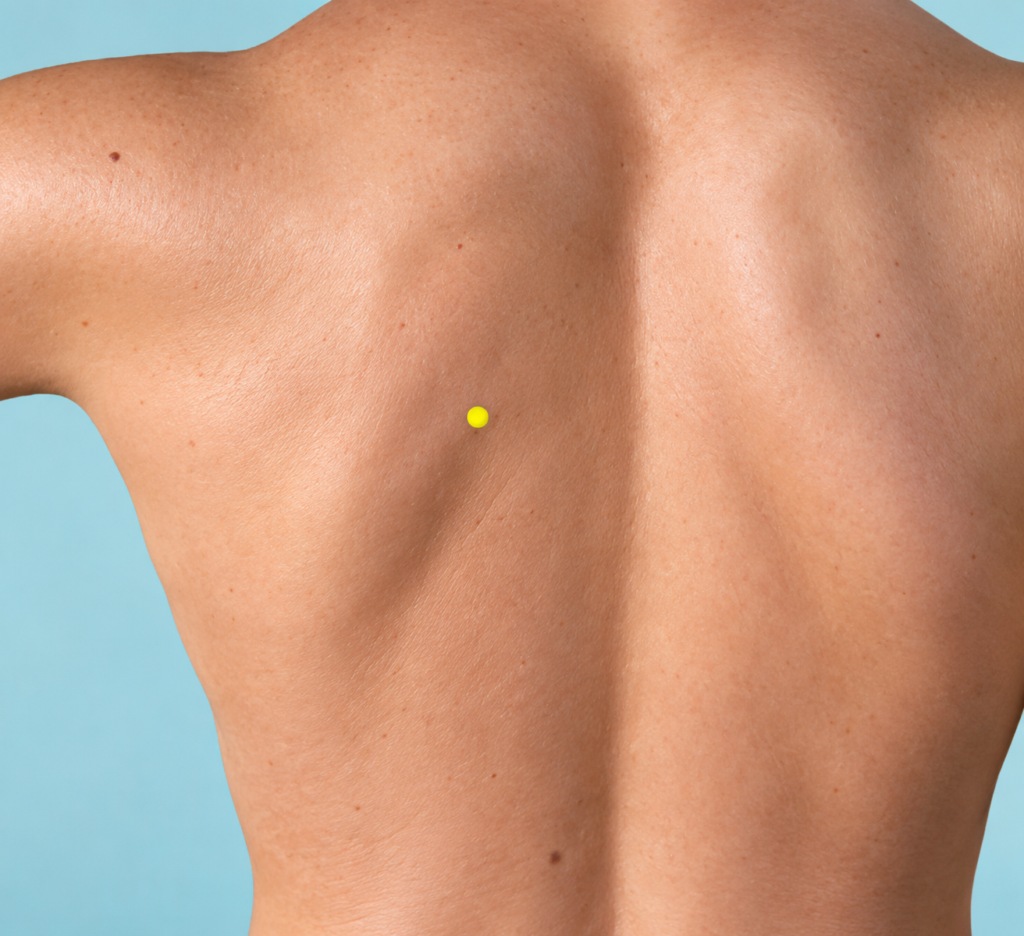
5. Press on BL49 on the middle back to clarify your intentions. BL49 sits on the middle back, about four finger-widths to each side of the spine, roughly a hand-width above the top of the hip bones. Use the same tennis ball method, leaning into it gently for one to two minutes on each side. BL49 is called “Yishe,” the “Abode of Thought.”
BL49 sits beside the back point of the Spleen and is named for the Yi, the part of the spirit that guides thought and intention. When a person feels lost, the mind can churn through possibilities without settling on one. BL49 helps the Yi settle, making intentions clearer and more grounded.
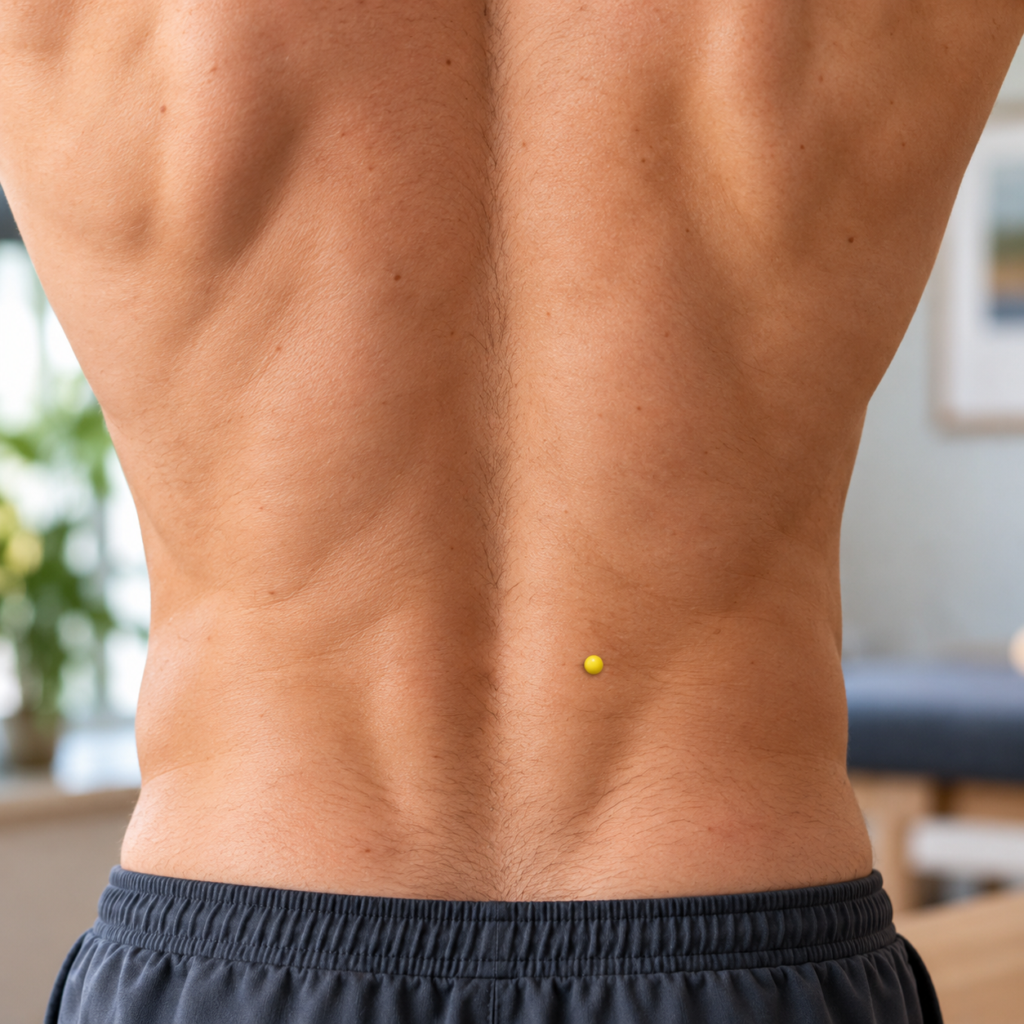
6. Press on GV4 on the lower back to reconnect with your path. GV4 sits on the midline of the lower back, in the hollow just below the second lumbar vertebra, roughly level with the navel. Press firmly with your knuckles, or rub your palms together until they are warm and rest them over the area for one to two minutes. GV4 is called “Mingmen,” the “Gate of Life.”
GV4 is one of the key points for the warming fire that fuels the whole body. Ming in its name can also mean destiny, and the point has long been linked to a person’s life path. By strengthening the Kidney, the home of the Zhi, GV4 supports the drive to move forward when a direction becomes clear.
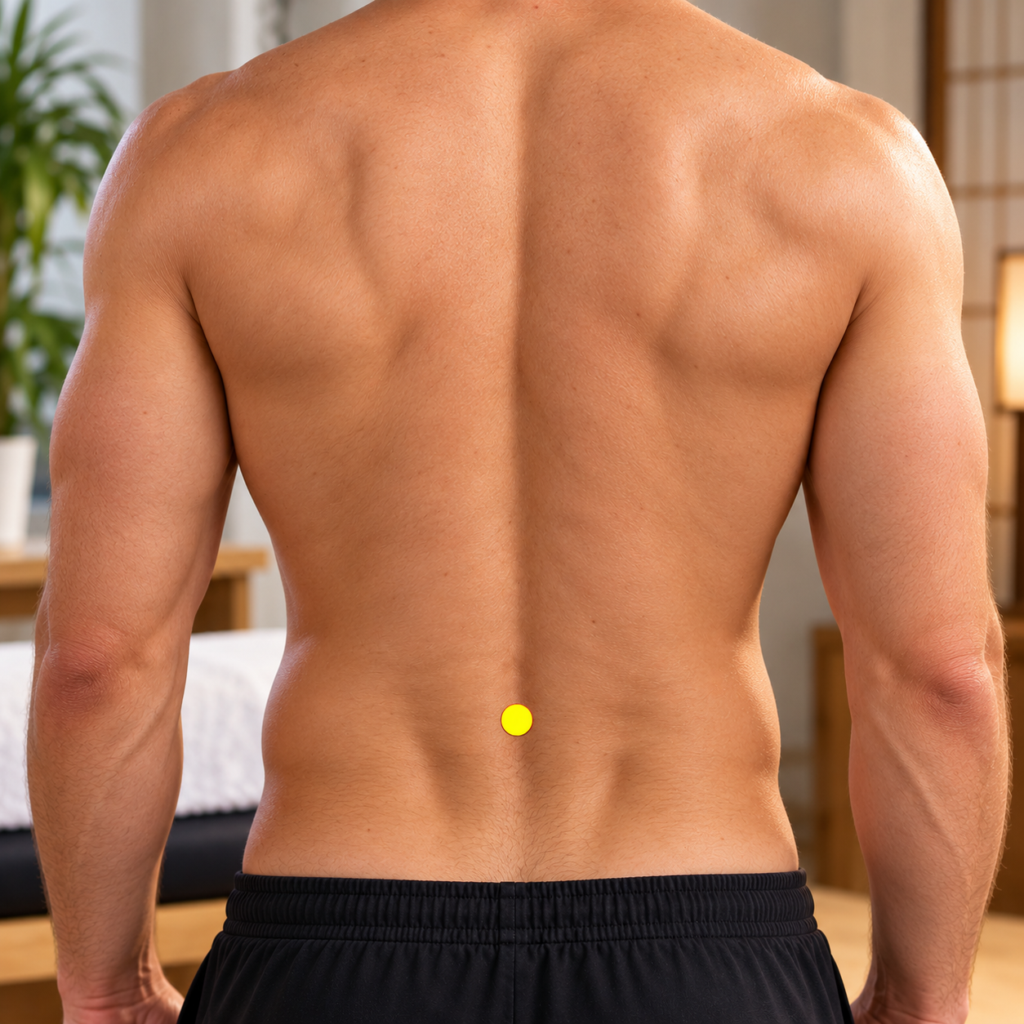
7. Press on SI3 on the edge of the hand to reconnect mind and body. SI3 sits on the outer edge of the hand, below the little finger. Make a loose fist, and the point sits at the end of the crease that forms just below the knuckle of the little finger, where the skin of the palm meets the skin of the back of the hand. Press firmly with the thumb of your other hand for one to two minutes on each hand. SI3 is called “Houxi,” the “Back Stream.”
SI3 opens the Governing Vessel, a channel that runs up the spine and into the brain. In Traditional Chinese Medicine, it is used to clear the mind and strengthen the connection between the brain, spine, and the rest of the body. It may help when feeling lost is accompanied by a sense of disconnection from yourself.
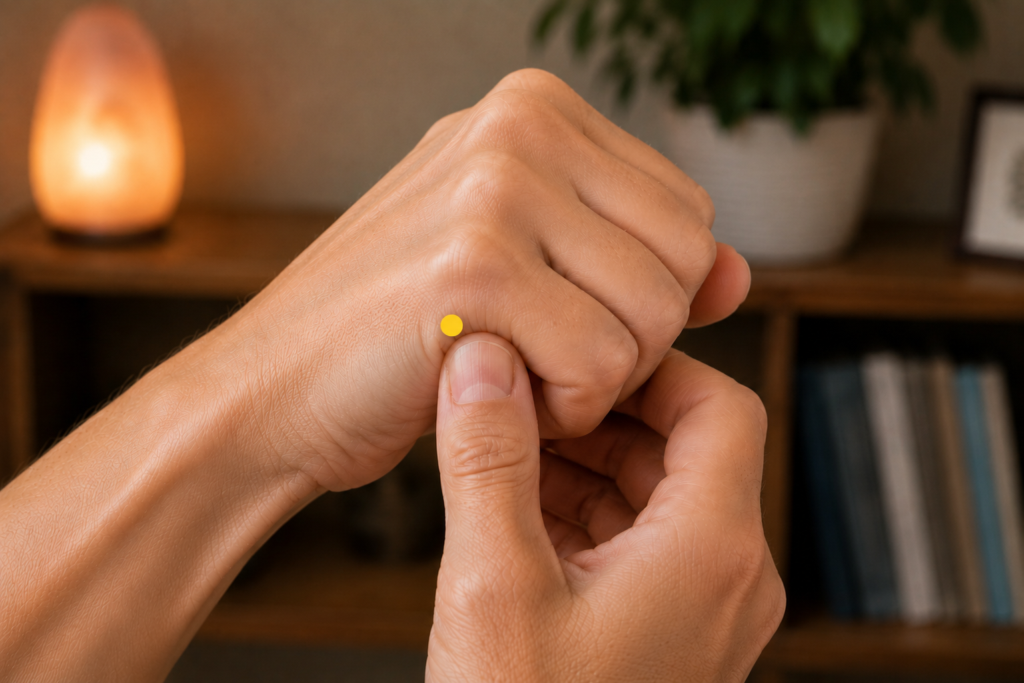
8. Press on TE4 on the back of the wrist to draw on your deepest reserves. TE4 sits on the back of the wrist, in the hollow on the wrist crease, just to the pinky side of the tendons that run to the fingers. Press firmly with the thumb of your other hand for one to two minutes on each wrist. TE4 is called “Yangchi,” the “Yang Pool.”
TE4 is the source point of the Triple Energizer, the channel that distributes the body’s Source Qi, its deepest inherited energy, to every organ. Traditional Chinese Medicine uses TE4 to warm and strengthen the body when energy feels flat. During a season of uncertainty, TE4 supports the steady energy needed to explore what comes next.
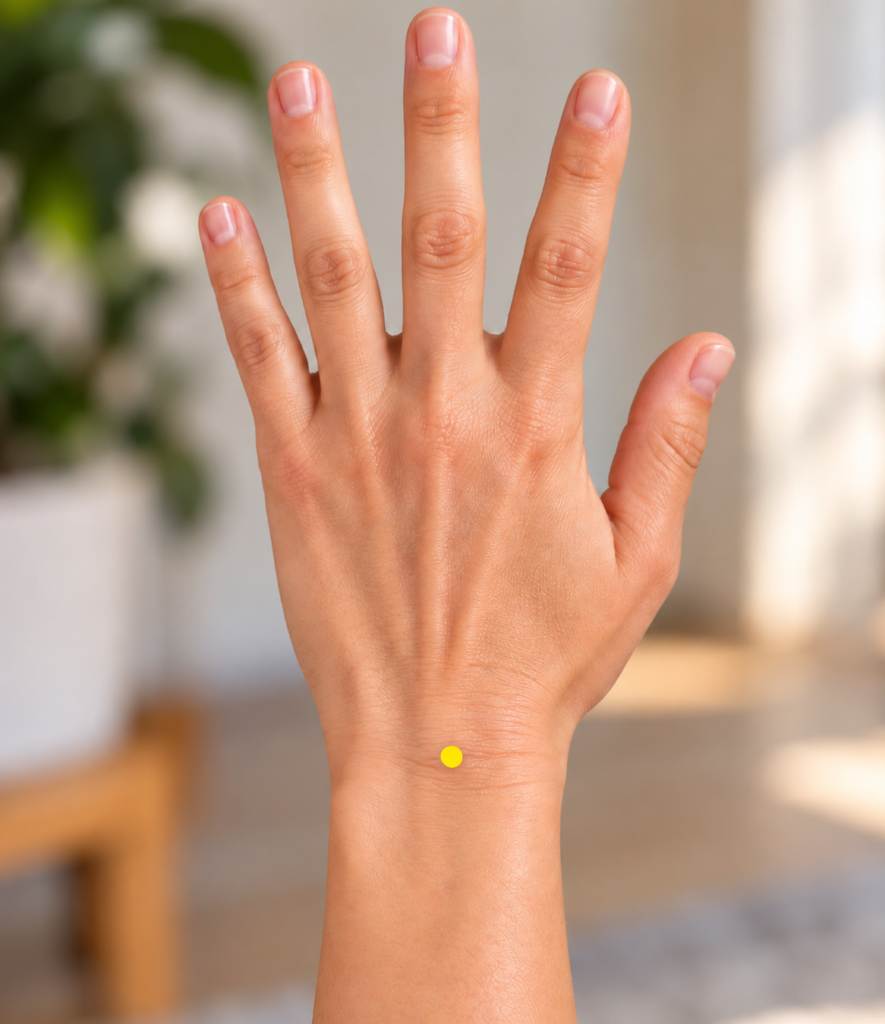
9. Press on LR8 at the inner knee to anchor the Hun. Bend the knee and find the inner end of the knee crease, then press into the hollow just in front of the tendons there. Press firmly with your thumb for one to two minutes on each leg. LR8 is called “Ququan,” the “Spring at the Bend.”
The Liver stores the Blood, and the Blood anchors the Hun, the part of the spirit that gives life its vision and direction. When stress, overwork, or poor sleep depletes Liver Blood, the Hun may drift, and life can feel aimless. LR8 nourishes Liver Blood and helps the Hun settle, allowing a sense of direction to return.

Why These Acupressure Points Work

In Traditional Chinese Medicine, a clear sense of direction depends on the Hun being anchored in Liver Blood, the Shen recognizing what matters, the Yi forming intentions, and the Zhi having the will to follow through. Feeling lost arises when these aspects of the spirit drift apart or become undernourished, leaving a person unsure of who they are and where to go.
The nine points work together to restore a sense of direction:
- The vision point (GB16) helps clear the view ahead.
- The spirit and identity points (KI23, BL44, BL49) steady the sense of self, reconnect with what matters, and clarify intentions.
- The root points (CV4, GV4, TE4) reconnect you with your origins, your path, and your deepest reserves.
- The anchoring and connecting points (LR8, SI3) settle the Hun and strengthen the connection between mind and body.
How to Properly Use These Acupressure Points

Acupressure can be especially helpful when you’re feeling lost if you approach it as a gentle, steady practice and take time to listen to what comes up.
- Complete the full routine once daily, holding each position for one to two minutes. If possible, choose a quiet time that allows you to reflect afterward.
- Before journaling or reflecting on a decision about your future, place a warm palm over CV4, then press GB16 while taking five slow breaths.
- Apply gentle pressure to the head, chest, and abdomen, and firmer pressure to the back, hands, and legs.
- Practice consistently over several weeks, as regaining a sense of direction typically occurs gradually rather than all at once.
Building daily habits can help you discover a new direction. Each week, set aside some quiet time to reflect on what you enjoy, what drains your energy, and what you would do if no one were watching. Write down the moments when you feel most like yourself. Experiment with small changes, such as taking a class, volunteering, or talking with someone whose work interests you. Taking action often brings more clarity than simply thinking. Spend time with people who know you well and can remind you of your strengths. Try not to compare your path with others’ online, and make sure you get enough sleep, since the Hun settles at night.
You can also look into ways to find your life purpose.
When to Get Professional Help

If you feel lost and notice a low mood that lasts most of the day for two weeks or more, lose interest in things you used to enjoy, or experience changes in your sleep or appetite, it may be a sign of depression, which can be treated. You should also reach out for help if a major life change, such as divorce, losing a job, retirement, or the death of someone close, makes it hard to function, or if you find yourself using alcohol or other substances to cope. A therapist or life coach can help you sort through your values and choices if you feel stuck. If you ever feel hopeless or think about harming yourself, call or text 988 to reach the Suicide and Crisis Lifeline right away.
Acupressure is a gentle, supportive practice for feeling lost in life. It complements, and does not replace, diagnosis and medical care.
For related emotional challenges, acupressure when you feel stuck, acupressure for lack of motivation, and acupressure for indecisiveness are companion pieces.
Above and Beyond Acupuncture offers acupuncture, cupping, and lifestyle coaching at the North Frank Lloyd Wright Boulevard location in Scottsdale.
Schedule an appointment online to start your healing journey.
The points above are only as effective as the technique used to apply them. Where to press, how firmly, and for how long all affect the result. For a full breakdown of how to perform acupressure properly at home, read Performing Acupressure in 3 Easy Steps.

About the Publisher
Paul Kerzner, L.Ac., is a licensed acupuncturist and board-certified herbalist, as well as the founder of Above and Beyond Acupuncture in Scottsdale. His own journey from chronic patient to practicing acupuncturist shapes his commitment to providing honest, clinically grounded information about acupuncture and Traditional Chinese Medicine. Learn more about Paul and his clinical approach on the About Us page.