Key Takeaways
- Lack of motivation often stems from physical factors like sleep, stress hormones, and nutrient deficiencies rather than character flaws.
- Traditional Chinese Medicine identifies various body sources for motivation, linking it to energy, willpower, and enthusiasm.
- Acupressure points can help boost motivation by stimulating energy flow and addressing heaviness caused by Dampness.
- Practicing acupressure daily, particularly in the morning before beginning tasks, may help address low motivation.
- Consult a medical professional if low motivation persists alongside other symptoms, as this may indicate an underlying health concern.

Lack of motivation is often seen as a matter of character, as if people who get things done simply want it more. In reality, drive depends heavily on the body. Sleep, stress hormones, blood sugar, inflammation, and brain chemicals such as dopamine all influence a person’s energy to start and finish tasks.
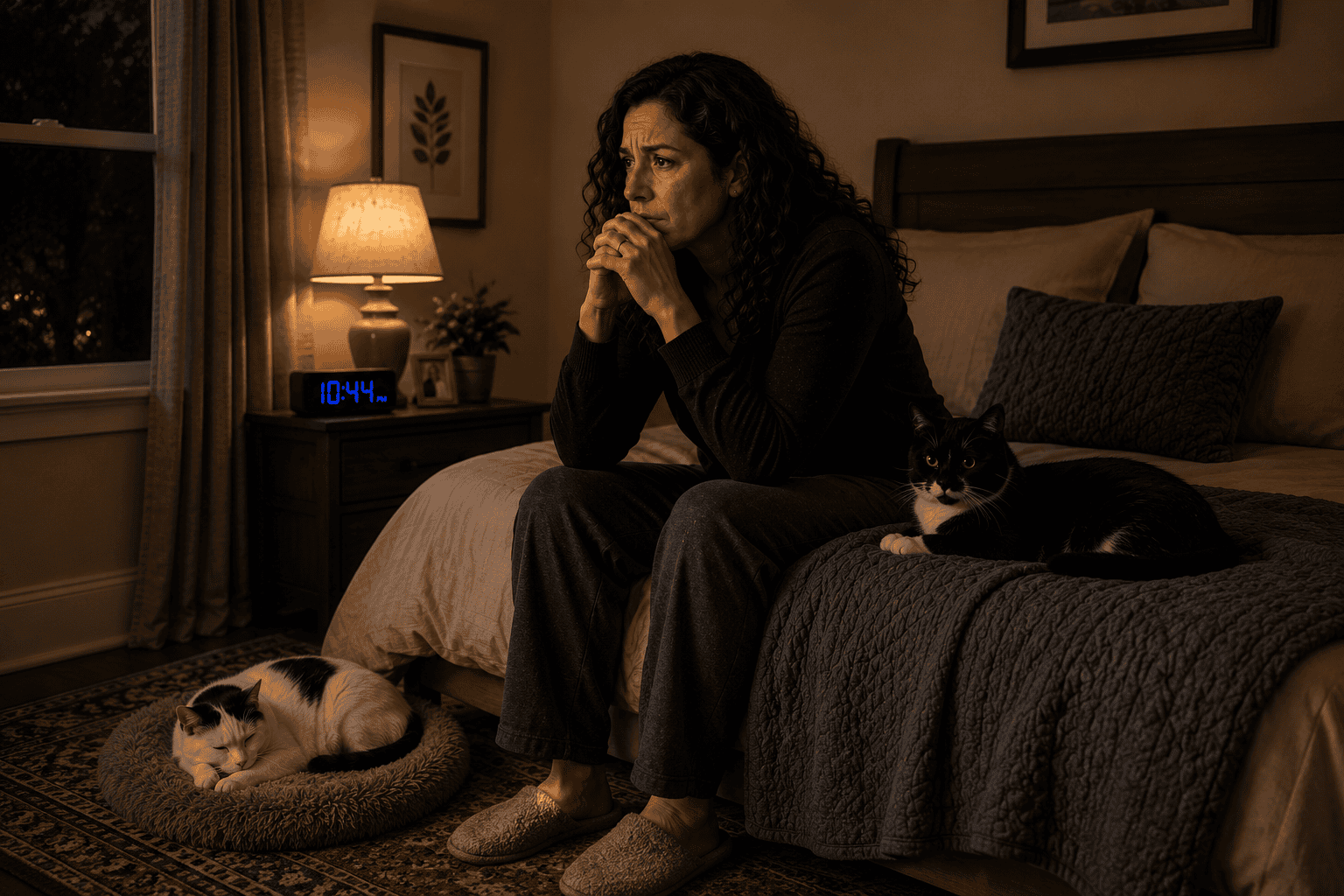
When your energy is low, you notice it right away. The alarm goes off, and getting out of bed feels like a struggle. Simple tasks can linger on your to-do list for days. Hobbies, friendships, and goals that once excited you now feel like work, leaving you wondering what happened to the old you who cared more. Guilt and self-criticism often follow, making it even harder to feel motivated.
There are many possible reasons for low motivation, and understanding what may be behind it can be a helpful first step. Chronic stress and burnout can gradually drain your energy, while poor sleep, limited movement, and excessive screen time may affect your brain’s reward system. Iron deficiency, low vitamin D, thyroid problems, blood sugar swings, and certain medications can also play a role. If you’ve been losing interest in things, it may be a sign of depression, and difficulty getting started is common with attention deficit hyperactivity disorder.
Traditional Chinese Medicine sees motivation as arising from several sources. The Heart brings enthusiasm and joy. The Spleen and Stomach transform food into Qi, which fuels action. The Kidney holds the Zhi, or willpower, and the warming Yang that powers the body. The Liver keeps Qi moving, but when it becomes blocked or Dampness builds up, everything can feel stuck and heavy.
The nine points below stimulate the body’s Yang energy, rekindle the Heart’s vitality, strengthen inner reserves and resolve, and alleviate the heaviness that makes it difficult to begin.
What Acupressure Points to Press and Why
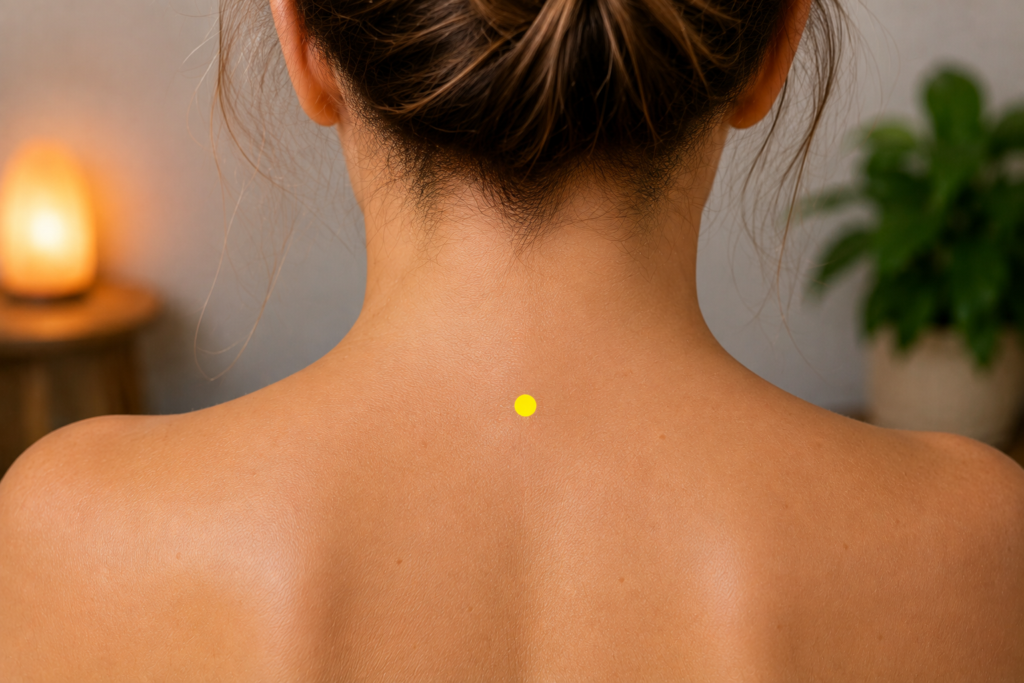
1. Press on GV14 at the base of the neck to rouse your energy. GV14 sits on the midline at the base of the neck, in the hollow just below the most prominent bone that sticks out when you bend your head forward. Press with your fingertips for one to two minutes, or rub the area briskly with your palm until it feels warm. GV14 is called “Dazhui,” the “Great Vertebra.”
GV14 is where all the Yang channels converge, bringing warmth, activity, and outward movement. If your body feels heavy and sluggish, stimulating this point can help awaken your Yang energy and get things moving. Rubbing it in the morning is a simple way to feel more alert before starting your day.
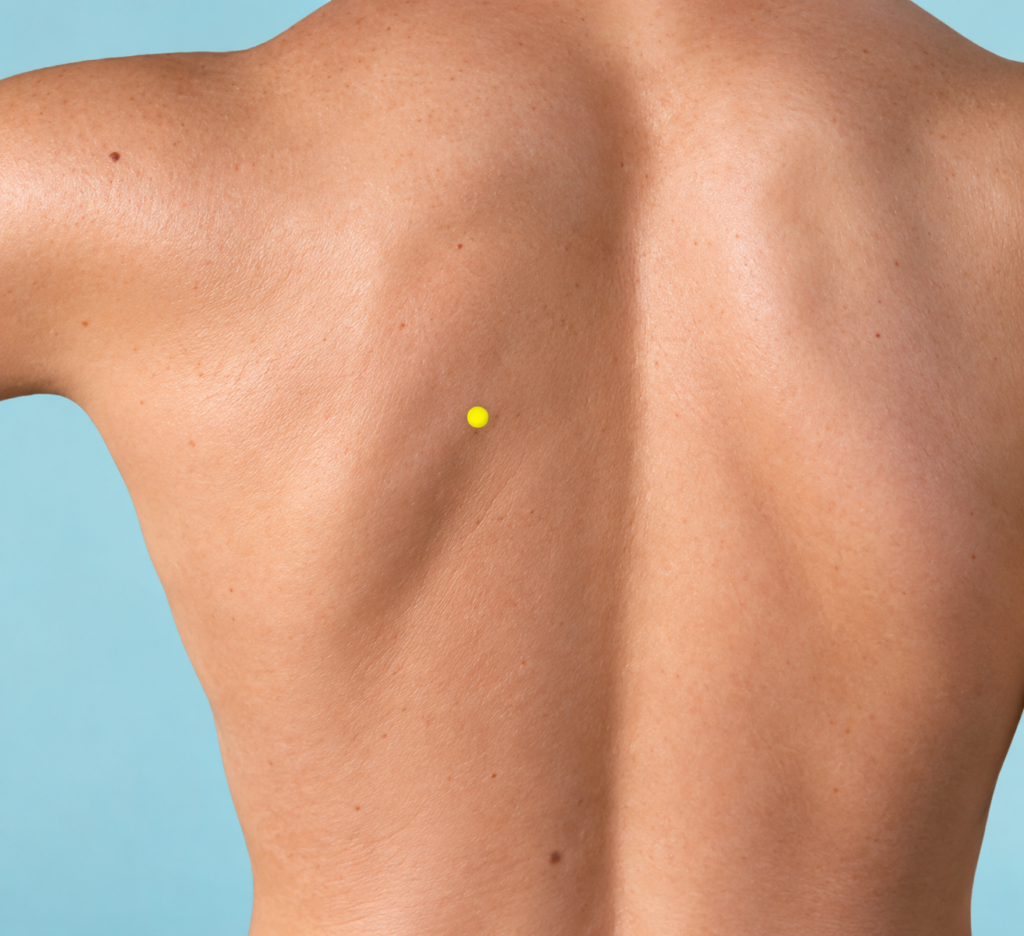
2. Press on BL44 on the upper back to rekindle enthusiasm. BL44 sits on the upper back, about four finger-widths to each side of the spine, roughly halfway down the shoulder blades along their inner edges. Since this area is hard to reach, place a tennis ball between your upper back and a wall, lean into it gently, and hold for one to two minutes on each side. BL44 is called “Shentang,” the “Spirit Hall.”
BL44 is located next to the back point of the Heart and is named after the Shen, the spirit of the Heart. In Traditional Chinese Medicine, the Heart provides the joy and enthusiasm that make a person want to engage with life. BL44 supports the Heart and helps rekindle that spark.
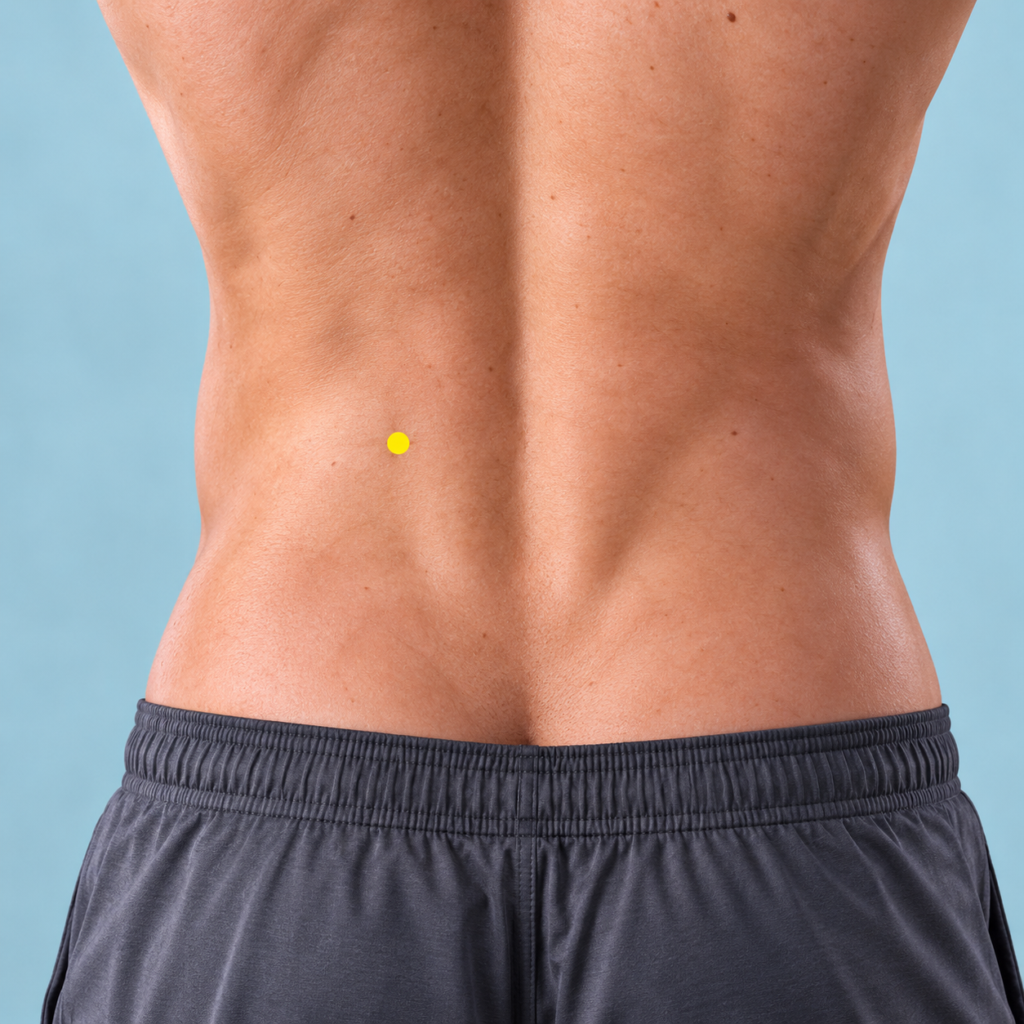
3. Press on BL52 on the lower back to strengthen your willpower. BL52 sits on the lower back, about four finger-widths to each side of the spine, roughly level with the navel. Place your hands on your hips with the thumbs pointing toward the spine, then press firmly with your thumbs or knuckles for one to two minutes. BL52 is called “Zhishi,” the “Room of the Will.”
BL52 lies near the back point of the Kidney and is named for Zhi, or willpower, which is associated with the Kidney. When Zhi is weak, you may know what to do but lack the drive to do it. BL52 helps strengthen the Kidney and supports the steady resolve needed to keep working toward your goals.
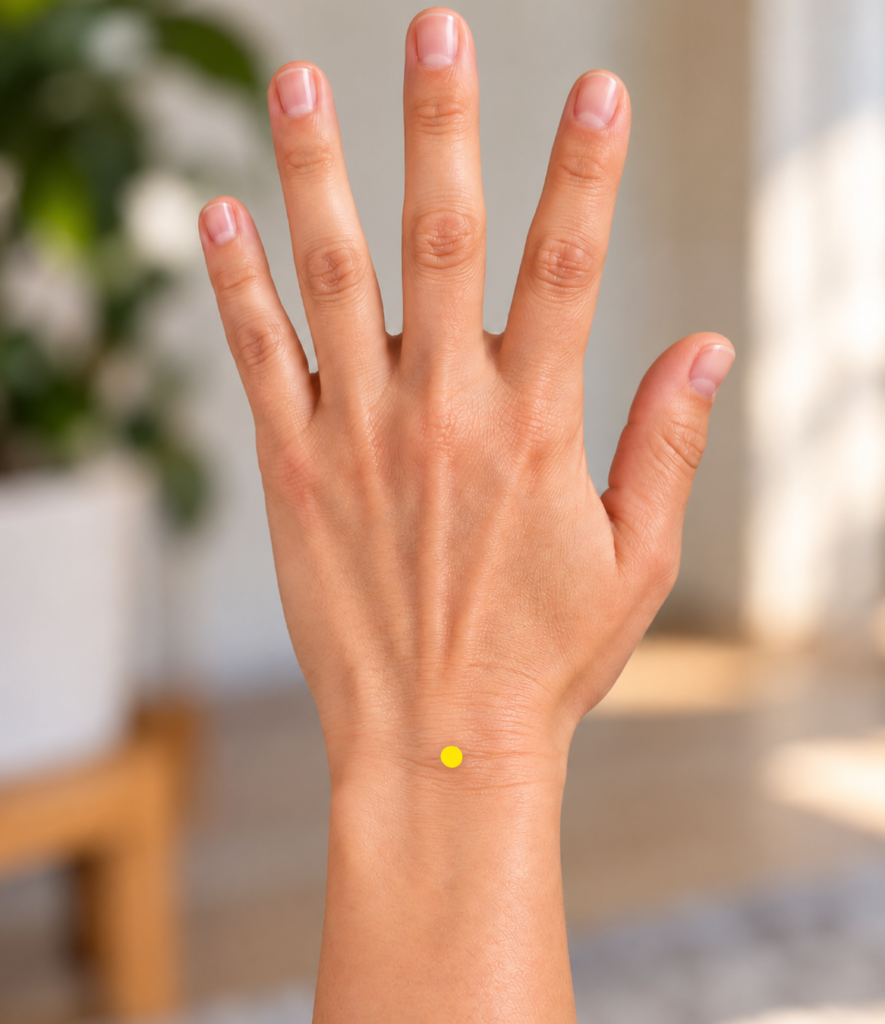
4. Press on TE4 on the back of the wrist to warm your inner fire. TE4 sits on the back of the wrist, in the hollow on the wrist crease, just to the pinky side of the tendons that run to the fingers. Press firmly with the thumb of your other hand for one to two minutes on each wrist. TE4 is called “Yangchi,” the “Yang Pool.”
TE4 is the source point of the Triple Energizer, the channel that sends the body’s Source Qi, its deepest inherited energy, to every organ. In Traditional Chinese Medicine, this point is used to warm and strengthen the body when energy feels low. It’s easy to press during the day whenever your motivation starts to drop.
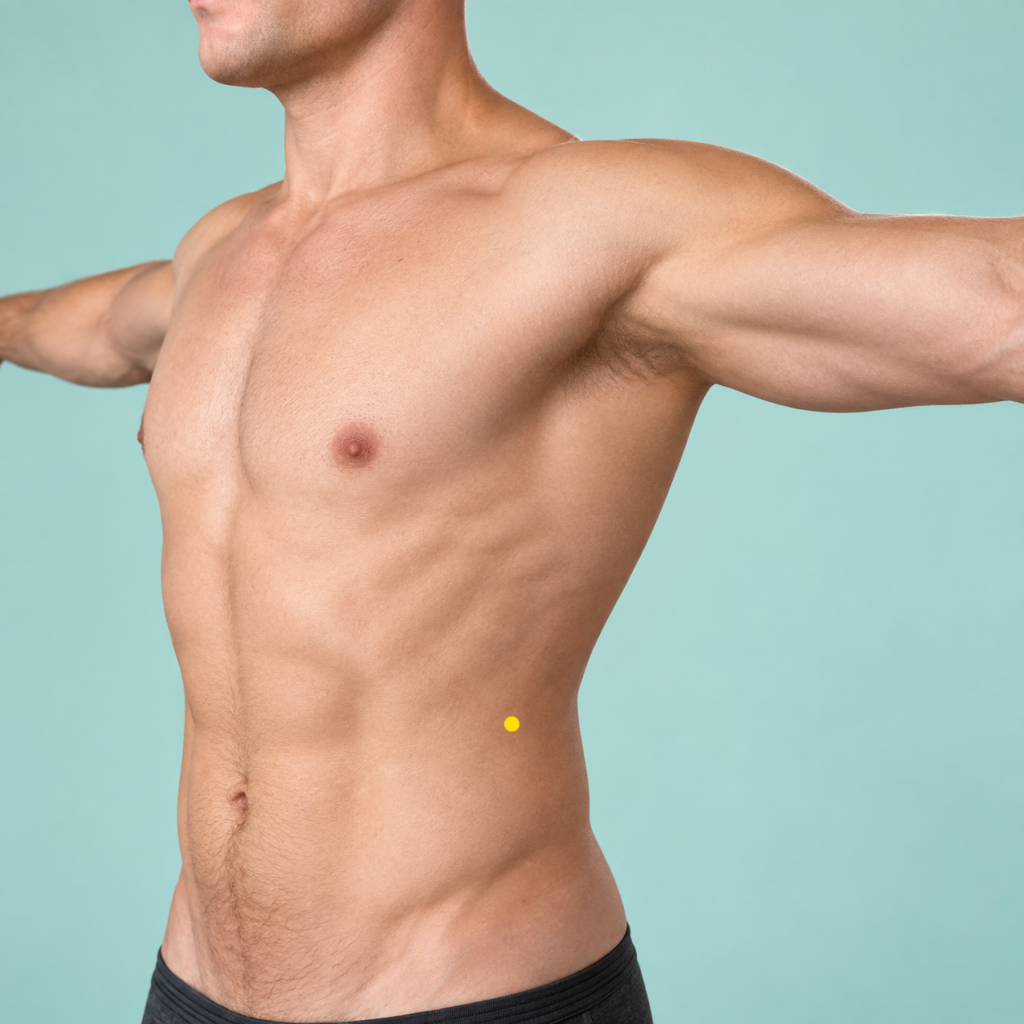
5. Press on LR13 on the side of the abdomen to keep energy moving. LR13 sits on the side of the abdomen, just below the free tip of the eleventh rib. To find it, let your arms hang at your sides with your elbows bent; the point sits roughly where the elbow tip touches the side of your body. Press gently with your fingertips for one to two minutes on each side. LR13 is called “Zhangmen,” the “Completion Gate.”
LR13 is the Spleen’s front collecting point and helps the Liver and Spleen work in harmony. It allows Liver Qi to flow freely and helps the Spleen turn food into fresh energy. Its name, the Completion Gate, is a fitting reminder of how difficult it can be to follow through when motivation is low.
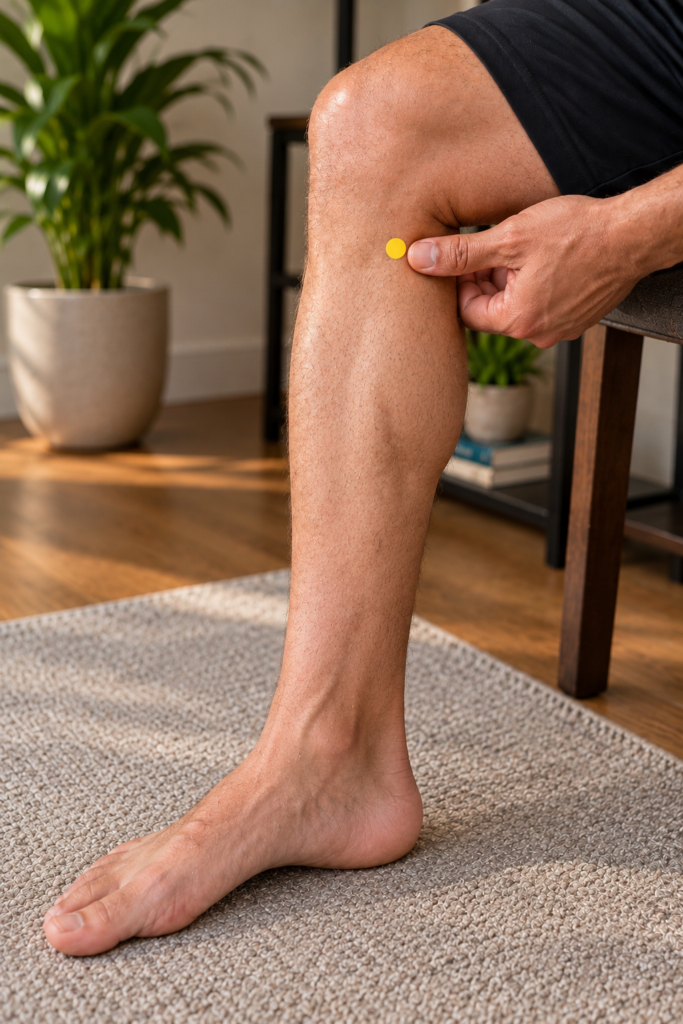
6. Press on SP9 below the inner knee to lift heaviness. SP9 sits on the inner side of the lower leg, in the hollow just below the knee where the bottom edge of the large bony knob of the shinbone curves upward. Slide your thumb up the inner edge of the shinbone until it stops, then press firmly for one to two minutes on each leg. SP9 is called “Yinlingquan,” the “Yin Mound Spring.”
In Traditional Chinese Medicine, Dampness can make your body and mind feel heavy, foggy, and slow, as if you’re moving through mud. SP9 is considered one of the best points for clearing Dampness. It may help ease the heavy, sluggish feeling that makes it hard to get up and get going.
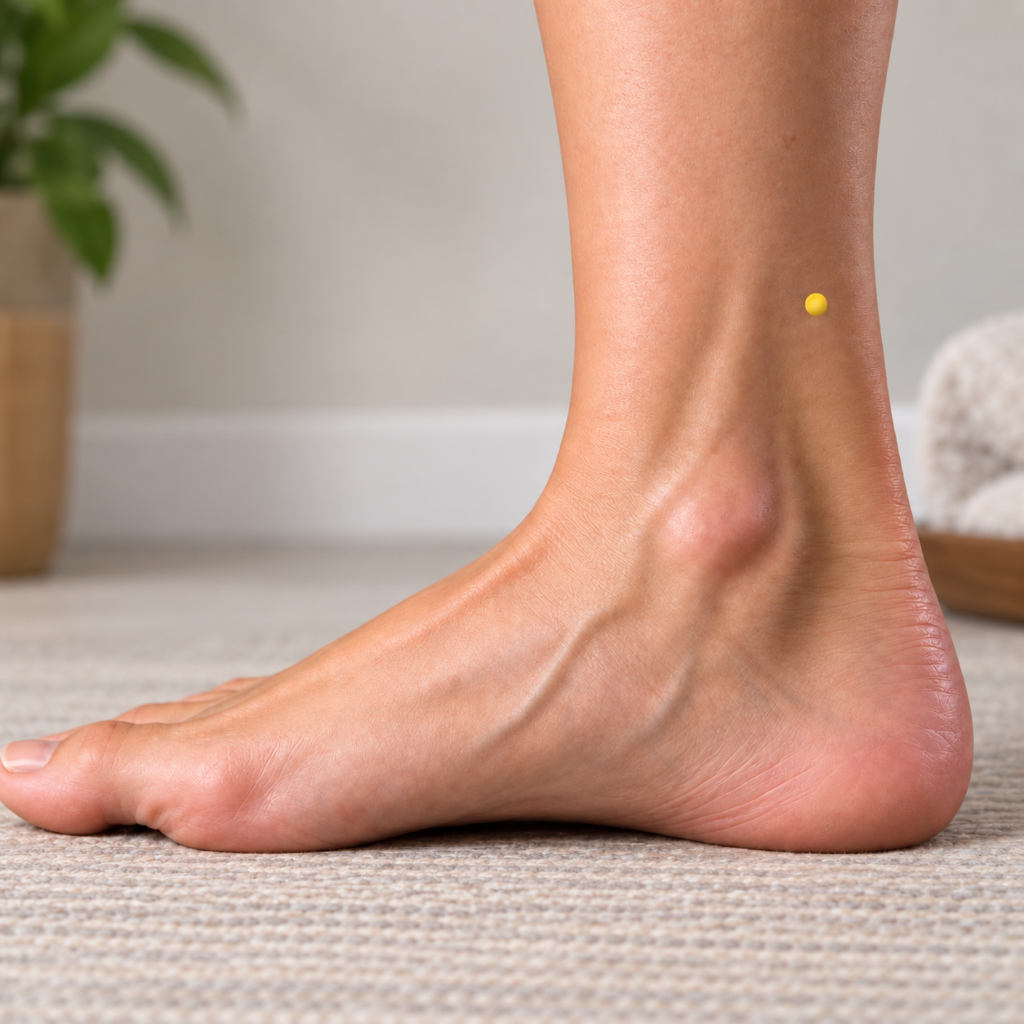
7. Press on KI7 above the inner ankle to restore drive. KI7 sits on the inner side of the lower leg, about three finger-widths above the hollow behind the inner ankle bone, along the front edge of the Achilles tendon. Press firmly with your thumb for one to two minutes on each leg. KI7 is called “Fuliu,” the “Returning Current.”
KI7 strengthens Kidney Yang, the warming fire that powers your body and supports your willpower. When it’s low, you may feel cold, tired, and unmotivated, especially in the morning. KI7 helps restore that inner warmth and the drive you need.
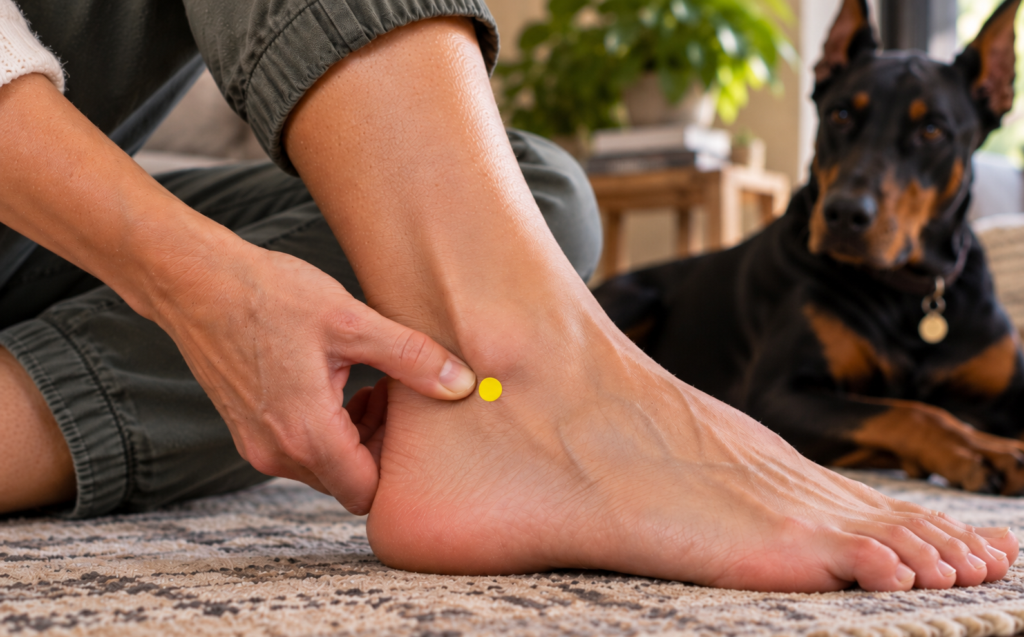
8. Press on BL62 below the outer ankle to support getting up and going. BL62 sits in the hollow directly below the tip of the outer ankle bone. Press firmly with your thumb for one to two minutes on each foot. BL62 is called “Shenmai,” the “Extending Vessel.”
BL62 opens the Yang Heel Vessel, which supports wakefulness, activity, and your ability to get up and move during the day. If this vessel is weak, you may have trouble getting out of bed or feel sluggish into the afternoon. BL62 helps you feel more alert and active throughout the day.
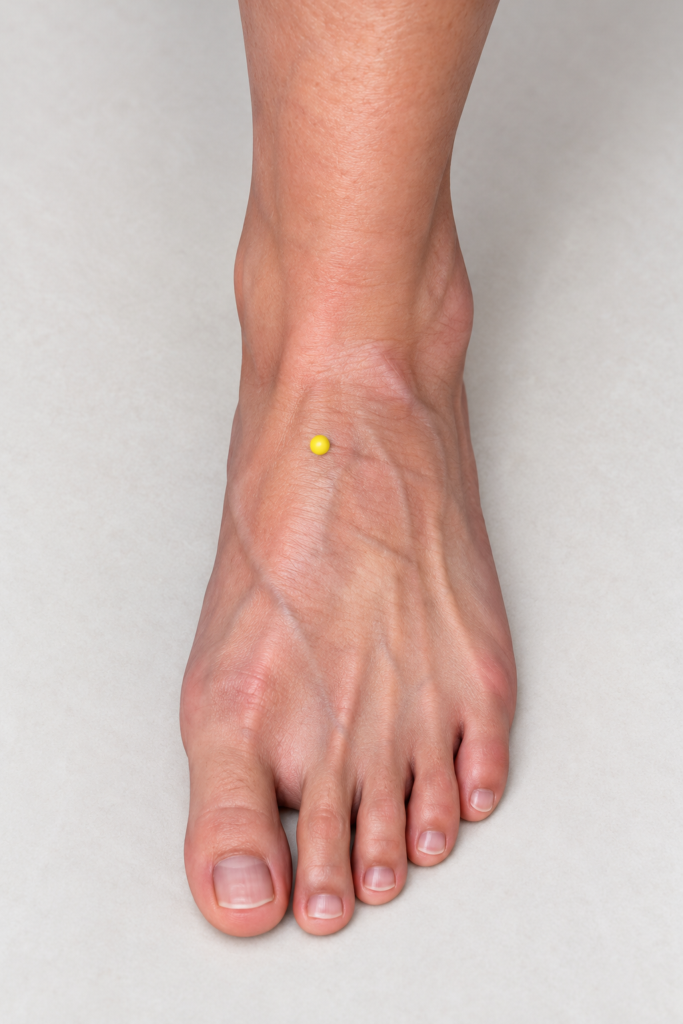
9. Press on ST42 on the top of the foot to fuel your energy. ST42 sits on the top of the foot, at its highest point, where you can feel the pulse. Press gently with your thumb or fingertips for one to two minutes on each foot. ST42 is called “Chongyang,” the “Rushing Yang.”
ST42 is the Stomach’s source point. Working with the Spleen, it helps transform food into Qi, the energy your body uses. Its name, Rushing Yang, reflects the burst of energy it’s meant to support. ST42 also aids digestion and provides the steady fuel that motivation needs.
Why These Acupressure Points Work

In Traditional Chinese Medicine, motivation draws on the Heart’s spark, the Spleen and Stomach’s fuel, the Kidney’s willpower and warmth, and Qi flowing freely without getting stuck in Dampness. When any of these are low, motivation can drop, so this routine helps support them all.
The nine points work collaboratively to restore motivation:
- The stimulating points (GV14, TE4, BL62) wake up the body’s Yang energy and support alertness and activity.
- The spark and will points (BL44, BL52, KI7) rekindle enthusiasm, strengthen the Zhi, and rebuild inner warmth.
- The fuel points (ST42, LR13) strengthen digestion and keep energy moving freely.
- The lifting point (SP9) clears the heavy, sluggish feeling of Dampness.
How to Properly Use These Acupressure Points

For lack of motivation, acupressure is most effective in the morning, helping set the day’s trajectory.
- Complete the full protocol once daily, preferably shortly after waking, holding each point for one to two minutes.
- Before starting a task you’ve been putting off, rub GV14 until it feels warm, then press TE4 on each wrist for 30 seconds.
- Apply firm pressure to most points, and gentle pressure to ST42 on the top of the foot and LR13 on the side of the abdomen.
- Practice regularly for a few weeks, because it takes time to rebuild energy and motivation that have been low for a long time.
Daily habits can help motivation return. Start with a step so small it feels almost too easy, such as working on a task for just two minutes. Starting is often the hardest part, and momentum can build from there. Get outside in the morning light and move your body early, even if it’s just a short walk. Keep your sleep schedule steady, and eat a warm breakfast with protein instead of relying only on caffeine and sugar. Try to limit endless scrolling, since it can dull your brain’s reward system and make everyday tasks feel less satisfying. Connect your tasks to something you care about, reward yourself for small wins, and ask a friend to check in on your progress.
You can also learn more about how chronic inflammation affects mood and motivation.
When to Get Professional Help

See your doctor if low motivation lasts for weeks or occurs alongside persistent fatigue, weight changes, feeling cold, hair loss, heavy periods, or loud snoring. Thyroid problems, anemia, low vitamin D, sleep apnea, and other conditions can drain motivation and may need testing. See a mental health professional if you’ve lost interest in most things you once enjoyed, feel down most of the day, or have changes in sleep or appetite lasting two weeks or longer. These can be signs of depression, which responds well to treatment. Seek an evaluation if difficulty getting started has been a lifelong pattern, as it can be linked to attention deficit hyperactivity disorder. See your doctor promptly if your motivation suddenly drops along with memory problems, confusion, or personality changes.
If you feel hopeless or think about harming yourself, call or text 988 to reach the Suicide and Crisis Lifeline right away.
Acupressure is a natural, supportive practice for low motivation. It complements, but does not replace, diagnosis and medical care.
For related health concerns, acupressure to stop procrastination, acupressure for fatigue, and acupressure for depression are companion articles. If motivation has decreased after months of being overworked, learn about acupressure for burnout.
Above and Beyond Acupuncture offers acupuncture, cupping, and lifestyle coaching at the North Frank Lloyd Wright Boulevard location in Scottsdale.
Schedule an appointment online to start your healing journey.
The points above are only as effective as the technique used to apply them. Where to press, how firmly, and for how long all affect the result. For a full breakdown of how to perform acupressure properly at home, read Performing Acupressure in 3 Easy Steps.

About the Publisher
Paul Kerzner, L.Ac., is a licensed acupuncturist and board-certified herbalist, as well as the founder of Above and Beyond Acupuncture in Scottsdale. His own journey from chronic patient to practicing acupuncturist shapes his commitment to providing honest, clinically grounded information about acupuncture and Traditional Chinese Medicine. Learn more about Paul and his clinical approach on the About Us page.