
Key Takeaways
- Acupuncture can induce labor by softening the cervix and stimulating uterine contractions, according to modern research.
- Specific points like LI4 and SP6 are used in acupuncture sessions to support labor progression, particularly when approaching the due date.
- Patients often combine acupuncture with other modalities, such as cupping and lifestyle advice, for comprehensive support.
- Acupuncture has shown benefits like shorter active labor, reduced need for medical induction, and lower cesarean rates.
- It’s important to integrate acupuncture with obstetric care and stay in communication with your healthcare provider for best results.

If you are approaching your due date, you have probably been thinking a lot about labor. When it will start. Whether it will start on its own. What happens if it does not. The pressure of the medical induction timeline that starts around 41 weeks. The desire to give your body every chance to start labor naturally before intervention becomes the conversation. Acupuncture is one of the tools with real research support for helping labor start on its own, and it has been used across cultures for centuries for this purpose.
Modern research supports what midwives and practitioners of Chinese medicine have known for generations. Acupuncture can help the cervix soften and ripen, stimulate uterine contractions, shorten the duration of active labor once it begins, and reduce the need for medical induction and the interventions that often follow. The World Health Organization recognizes acupuncture as a legitimate option for late-term labor support, and the research base continues to grow.
Here is what acupuncture for labor induction actually involves, how it works, and how to think about coordinating it with your obstetric care.
What to Expect During Acupuncture for Labor Induction
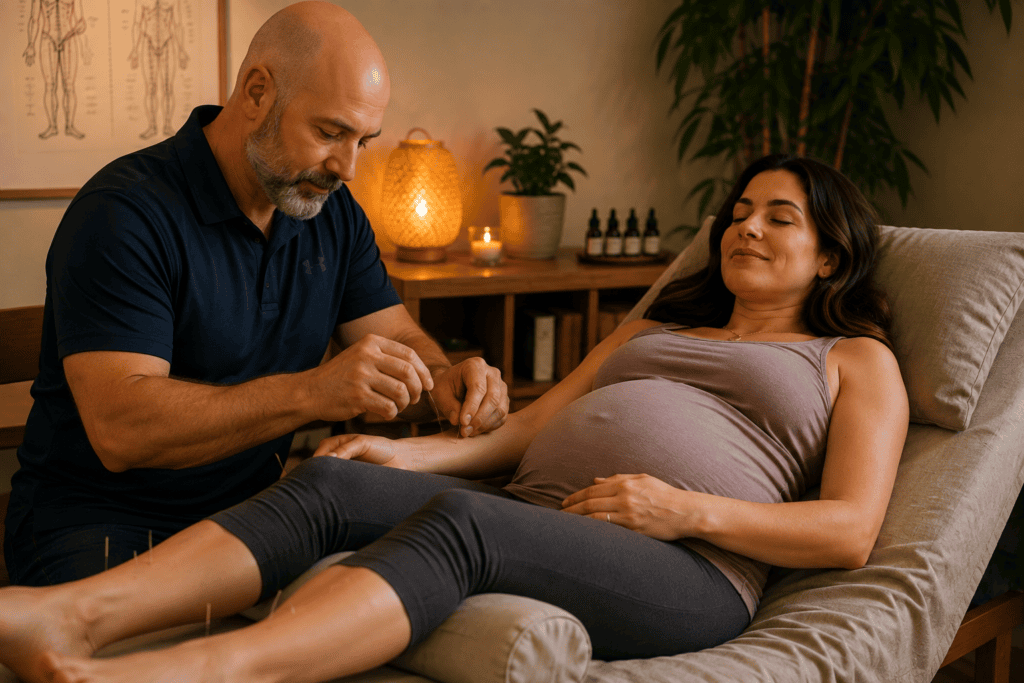
Acupuncture for labor induction is typically performed in the days leading up to or after your due date. The treatment uses specific points that have been used for centuries across midwifery and Chinese medicine traditions to support labor progression. These same points are strictly avoided during early pregnancy because they can stimulate contractions.
- The point selection. LI4, SP6, BL60, BL67, GB21, and other classical labor points form the core of most protocols. These points work together to stimulate uterine contractions, support cervical ripening, and encourage the descending energy that labor requires.
- Electroacupuncture is often used. Adding gentle electrical stimulation to the needles at specific labor points produces stronger effects than manual needling alone. This is particularly useful for patients who are past their due date and want to give the treatment its best shot at helping labor start.
- Session length and timing. Sessions typically run 30 to 45 minutes. Starting around 37 to 39 weeks with weekly sessions builds the responsiveness of the points. If the patient reaches 40 weeks without labor starting, sessions can move to every two to three days for more active induction support.
- Combined with other modalities. Cupping on the low back and sacrum supports the pelvic circulation and can help release tension that stalls labor. The integrated approach at Above and Beyond Acupuncture combines acupuncture with cupping and lifestyle guidance to give patients the most comprehensive support.
What Acupuncture Does for the Body During Labor Induction

Modern research has documented several effects of acupuncture during labor:
- Cervical ripening. Multiple studies have shown that acupuncture in the weeks before the due date supports cervical softening and thinning. A ripe cervix is the foundation for effective labor. Acupuncture supports this natural process in the days leading up to labor.
- Uterine contraction stimulation. Specific points including LI4 and SP6 have documented effects on uterine contractions. This is the effect that makes these points classical labor induction points across traditions.
- Shortened active labor. Research has shown that patients who received acupuncture during pregnancy often have shorter active labor once it starts. This effect appears to be dose-dependent, with more sessions during pregnancy producing better outcomes.
- Reduced need for medical induction. Patients who receive acupuncture in late pregnancy are less likely to need medical induction with pitocin or other interventions. When medical induction does become necessary, patients who have received acupuncture often respond better to the induction.
- Reduced cesarean rates. Some research has documented reduced cesarean rates in patients who received acupuncture during late pregnancy, though the picture on this is still being clarified.
- Nervous system regulation. The parasympathetic activation that acupuncture produces supports the state that facilitates labor. Anxiety and stress can stall labor. Lowering ongoing stress-related cortisol levels helps maintain the calm needed for labor.
- Pain modulation. For patients who plan to give birth without pain medication, the endorphin release from acupuncture in the weeks before labor may help with pain management during labor itself.
How Traditional Chinese Medicine Views Labor
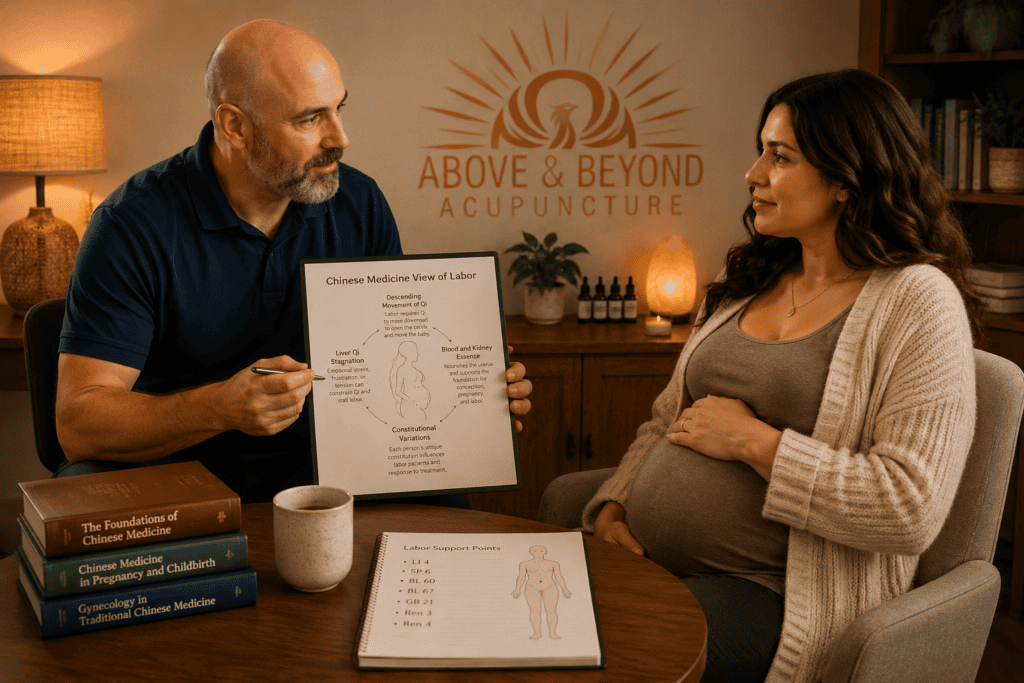
Traditional Chinese Medicine has understood labor and pregnancy for thousands of years, and its view offers something Western obstetric categories do not.
- The descending movement of Qi. Labor requires the Qi to move downward through the body. When this descending movement is smooth, labor progresses well. When something disturbs the descending movement (stress, anxiety, muscular tension), labor can stall.
- Blood and Kidney essence. The Blood in Chinese medicine nourishes the uterus and supports the baby. The Kidney essence provides the deep constitutional foundation that labor requires. Both are supported through acupuncture and integrated care in the weeks before labor.
- Liver Qi patterns. Liver Qi Stagnation from stress or emotional patterns can stall labor. This is one of the patterns most commonly seen in patients whose labor is slow to start or slow to progress. The treatment addresses this pattern directly.
- Constitutional variations. Patients with different constitutional patterns respond differently to labor. A skilled acupuncturist adjusts the treatment based on the individual constitution rather than using a one-size-fits-all protocol.
When It Makes Sense to Use Acupuncture for Labor Induction

Acupuncture for labor induction is more appropriate for certain situations than others:
- Approaching or past your due date. The natural application. Most patients seek acupuncture support starting around 37 to 39 weeks when they want to help labor start naturally before medical induction becomes necessary.
- Wanting to reduce the chance of medical induction. Patients who want to avoid the pitocin, epidural, cesarean cascade that sometimes follows medical induction often turn to acupuncture as a way to give labor the best chance to start on its own.
- History of long labor or difficult labor. Patients who experienced long or difficult labor in previous pregnancies may benefit from acupuncture preparation to support a smoother experience the second time around.
- Preparing for VBAC. Patients planning a vaginal birth after cesarean often use acupuncture to support the specific conditions that support successful VBAC.
- When more time before medical induction is needed. Sometimes patients want to give labor a few more days to start naturally before medical induction. Acupuncture can help make those days more productive rather than just waiting.
For patients wanting the general picture on acupuncture support throughout pregnancy, Benefits of Acupuncture While Pregnant covers the range of applications from the first trimester through delivery.
The Holistic Integrated Approach for Labor Induction

Labor induction responds best to a coordinated approach that combines acupuncture with your obstetric care and general late pregnancy support.
- Working with your midwife or OB. Your primary care provider stays informed and involved. Acupuncture supports what they are doing rather than replacing it. Good communication between your acupuncturist and your midwife or OB benefits everyone.
- Regular movement. Walking supports the baby’s descent into the pelvis. Squatting exercises open the pelvis for delivery. Both are recommended alongside acupuncture care.
- Rest. Late pregnancy fatigue is real. Rest when you need it. Acupuncture supports the sleep patterns that late pregnancy often disrupts.
- Nutrition. Adequate protein, healthy fats, and hydration support the constitutional strength that labor requires. Reducing processed foods supports the general recovery patterns.
- Direct nervous system practices. Prenatal yoga, meditation, breath work, and hypnobirthing all support the calm state that facilitates labor. Acupuncture pairs well with these practices.
- Home acupressure practice. Between acupuncture sessions, patients can use acupressure at home to continue supporting the labor patterns. The point selection is similar to what the acupuncturist uses in session, applied at lower intensity without needles.
- Community support. Doulas, birth partners, family support, and community connection all reduce the anxiety that can stall labor. Coordinated support beats isolated preparation.
When to Seek Immediate Medical Attention

Certain signs or symptoms require immediate medical evaluation regardless of acupuncture care.
- Vaginal bleeding beyond typical bloody show.
- Water breaking with meconium (green or brown coloring).
- Decreased fetal movement or concerns about the baby’s activity.
- Severe abdominal pain unrelated to contractions.
- Contractions before 37 weeks.
- Signs of preeclampsia including severe headache, visual changes, or upper abdominal pain.
- Any concerning symptoms that your instincts tell you need immediate attention.
Your obstetric care provider should always be involved in labor decisions. Acupuncture supports natural labor as part of coordinated care, not as a substitute for medical management.
Many patients preparing for labor also experience anxiety, stress, and depression patterns that overlap with the intensity of late pregnancy.
Above and Beyond Acupuncture offers acupuncture, cupping, and lifestyle coaching at the North Frank Lloyd Wright Boulevard location in Scottsdale.
Schedule an appointment online or call us today to start your healing journey.

About the Publisher
Paul Kerzner, L.Ac., is a licensed acupuncturist and board-certified herbalist, as well as the founder of Above and Beyond Acupuncture in Scottsdale. His own journey from chronic patient to practicing acupuncturist shapes his commitment to providing honest, clinically grounded information about acupuncture and Traditional Chinese Medicine. Learn more about Paul and his clinical approach on the About Us page.