Key Takeaways
- Degenerative disc disease (DDD) is common in adults over 50 and may cause pain, stiffness, and functional limitations.
- Standard Western treatments include medications, physical therapy, and surgery, but many patients still suffer from pain.
- Acupuncture offers a primary treatment option for DDD, providing relief without needing surgery and can be used alongside Western therapies.
- Traditional Chinese Medicine views DDD through the lens of kidney health, Qi and blood flow, and stress management.
- Research supports acupuncture as an effective option for chronic back pain, including pain related to DDD.
Most adults over 50 have some form of disc degeneration visible on imaging, and many experience symptoms including chronic pain, stiffness, limited range of motion, and progressive functional limitation over years. Some patients have significant DDD on imaging without any symptoms. Others experience severe pain that affects nearly every part of daily life.
Standard Western care involves anti-inflammatory medications, physical therapy, epidural steroid injections, and in specific cases surgical intervention including fusion or artificial disc replacement. These approaches work for some patients but leave many others still struggling with pain and limitation despite comprehensive care.
What is often missing from the standard clinical conversation is that acupuncture and Traditional Chinese Medicine offer a genuine primary treatment path for degenerative disc disease. Many patients find substantial and lasting relief through acupuncture without needing surgery. Others use acupuncture alongside Western treatment. Both are valid approaches, and the appropriate path depends on the individual situation, symptoms, and preferences.
Here is what degenerative disc disease actually is, what your treatment options genuinely include, and how acupuncture treats the condition.
What Is Degenerative Disc Disease?
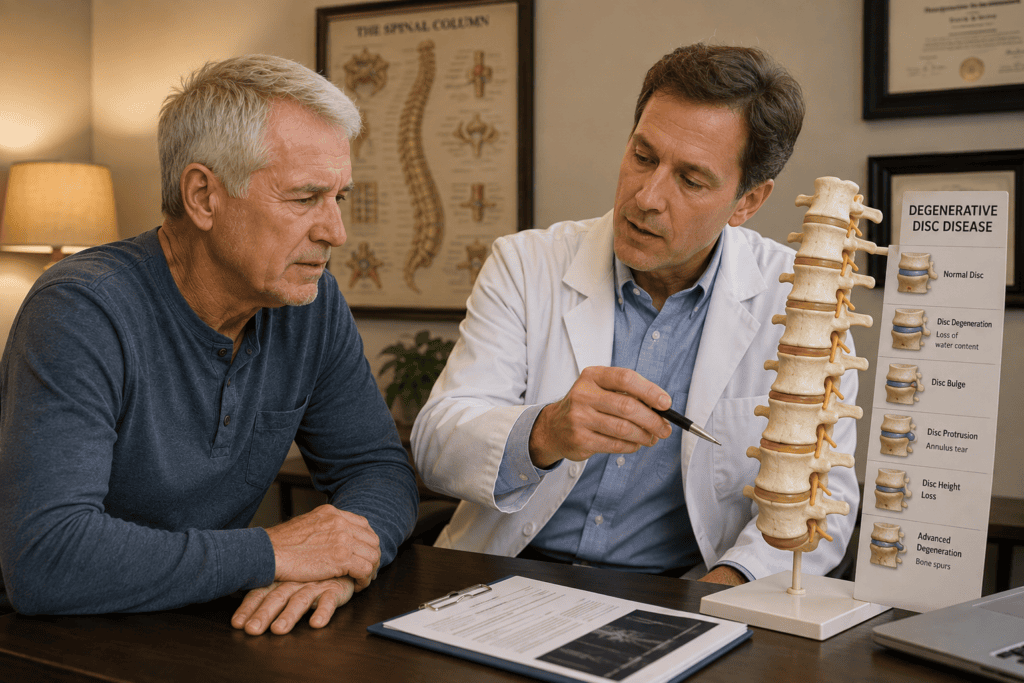
Degenerative disc disease is not really a disease. The term describes the age-related and cumulative changes that occur in the intervertebral discs over time. Between each pair of vertebrae sits a disc that functions as a shock absorber. Each disc has a tough outer ring called the annulus fibrosus and a soft inner core called the nucleus pulposus. Over time, these discs undergo several changes.
The disc nucleus loses water content and becomes less able to absorb shock. The disc height decreases, which affects the spacing between vertebrae. Small tears develop in the outer annulus. Bone spurs (osteophytes) form as the body attempts to stabilize the changing joint. Secondary changes occur in the surrounding facet joints, ligaments, and muscles.
DDD can occur anywhere in the spine but is most common in the lumbar (low back) and cervical (neck) regions. Symptoms vary widely.
- Chronic pain that worsens with certain positions, particularly prolonged sitting, standing, or bending. Pain that improves with movement and worsens with prolonged static positions is a common pattern.
- Stiffness particularly in the morning or after prolonged positions. The stiffness often improves with movement.
- Radiating pain occurs when the degenerated discs contribute to nerve compression. This can produce sciatica from lumbar DDD or arm symptoms from cervical DDD.
- Progressive limitation over years as the degenerative process continues.
Many people have significant DDD on imaging without symptoms. The imaging findings and the clinical picture do not always match, which is why the clinical presentation matters alongside the imaging.
The Mayo Clinic overview of degenerative disc disease and the Cleveland Clinic summary provide the medical framework for properly understanding this condition.
What Causes Degenerative Disc Disease?
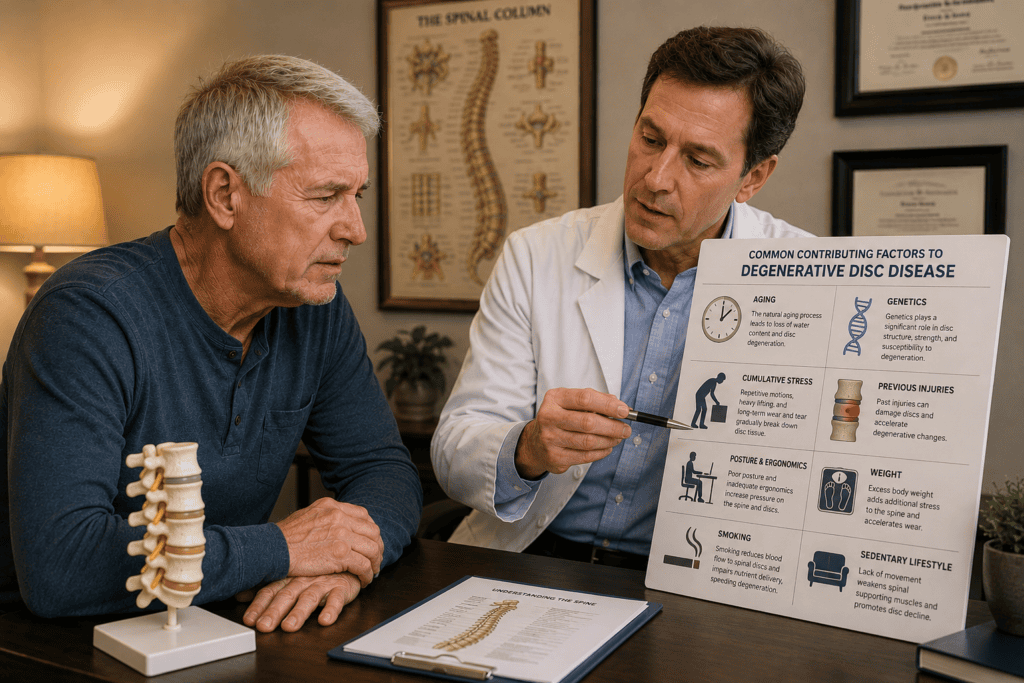
The causes of DDD involve several contributing factors.
- Aging is the primary factor. All spines undergo some degree of degenerative change over time. This is a normal part of aging.
- Genetics contributes substantially. Some families have a genetic predisposition to earlier or more severe DDD.
- Cumulative stress from work, athletics, and daily activities contributes over years.
- Previous injuries to the spine accelerate the degenerative process in the affected areas.
- Posture and ergonomics particularly prolonged sitting with poor posture accelerate DDD in the low back and neck.
- Weight and body composition affects the mechanical load on the spine.
- Smoking significantly worsens DDD by affecting disc nutrition and healing.
- Sedentary lifestyle contributes to the muscular imbalances and disc dehydration that accelerate degeneration.
The chronic inflammation involved in disc degeneration and secondary changes contributes to the pain and progression. The chronic inflammation patterns underlying joint and disc degeneration affect DDD outcomes.
What Are My Treatment Options?

Patients with DDD have several legitimate paths.
- Conservative Western care. Anti-inflammatory medications, physical therapy, activity modification, and postural work. Works for many patients over months to years.
- Epidural steroid injections. Provide temporary relief for some patients when specific inflammatory patterns are present.
- Acupuncture as primary treatment. Regular acupuncture treatment addressing the underlying muscular, structural, and constitutional patterns. Works well for many patients with DDD who prefer to avoid or delay Western interventions or who have not responded to standard care.
- Integrated care. Combining acupuncture with elements of Western care based on the individual situation.
- Surgical intervention. Genuinely necessary for specific indications including progressive neurological deficit, cauda equina syndrome (a medical emergency), instability requiring stabilization, and severe intractable pain not responding to any conservative approach over adequate time. Surgical options include spinal fusion, artificial disc replacement, and decompression procedures depending on the specific presentation. Surgery is not the automatic endpoint for most DDD patients.
Choosing among these paths depends on your specific situation, symptoms, and preferences.
How Does Traditional Chinese Medicine View Degenerative Disc Disease?
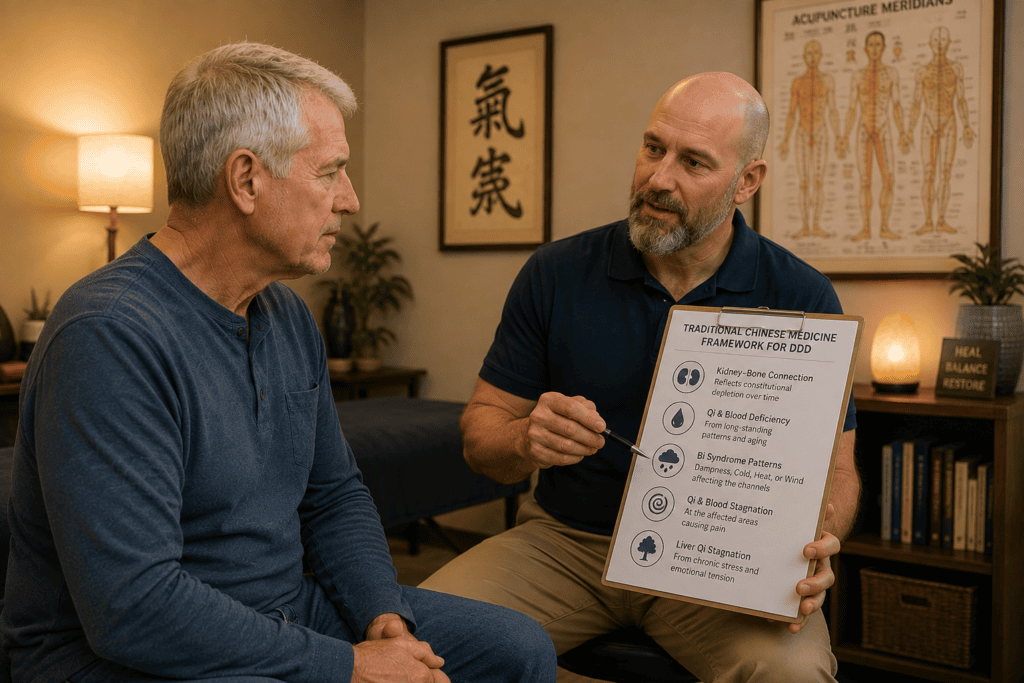
Traditional Chinese Medicine has a rich framework for understanding chronic spine conditions that maps onto but differs from Western clinical categories.
- The Kidney-Bone connection. The Kidneys in Chinese medicine govern the bones and the lower back. DDD reflects Kidney depletion from aging, chronic stress, overwork, or constitutional weakness. Kidney tonification is central to the treatment approach.
- Qi and Blood deficiency. Long-standing DDD depletes Qi and Blood, which reduces the body’s ability to nourish and heal the affected spine tissues.
- Bi syndrome patterns. Bi syndrome refers to painful obstruction. Wind-Cold-Damp Bi produces pain that worsens with cold and damp conditions. Damp-Heat Bi produces pain with warmth and inflammation. Blood Stasis Bi produces sharp fixed pain worse at night that often accompanies chronic DDD.
- Qi and Blood stagnation. The muscular tension, inflammation, and pain around degenerated discs reflect Qi and Blood stagnation in the affected area.
- Liver Qi Stagnation. Chronic stress produces Liver Qi Stagnation, which affects the muscular tension patterns around the spine and can worsen DDD-related pain.
A licensed acupuncturist identifies which patterns are dominant and treats accordingly.
How Does Acupuncture Treat Degenerative Disc Disease?
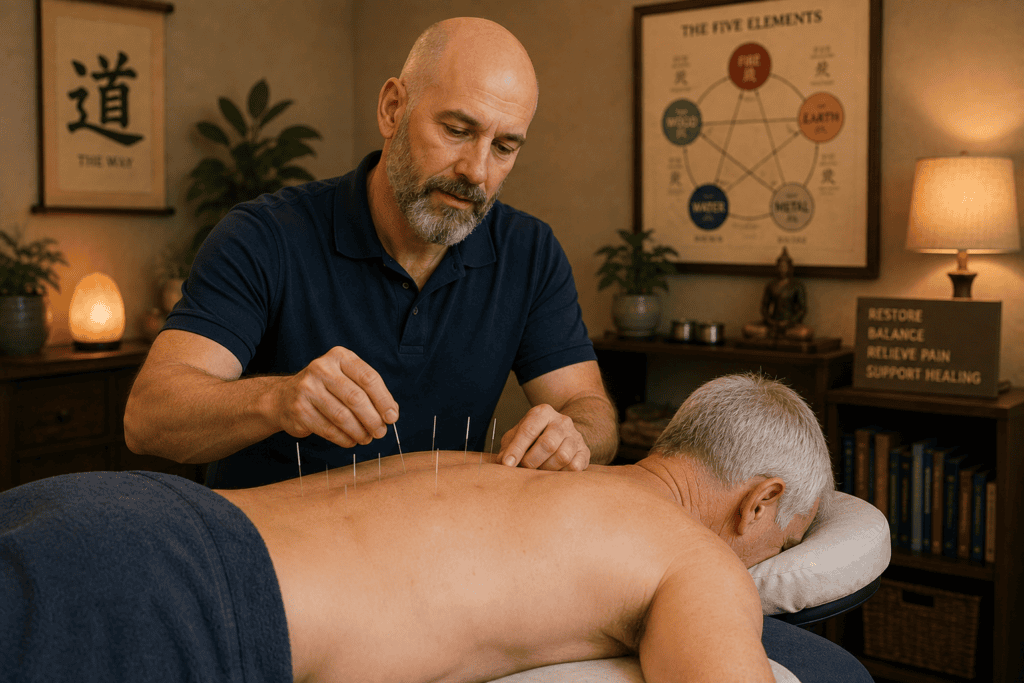
Acupuncture addresses DDD through several mechanisms that produce substantial relief for many patients.
- Endogenous pain relief. Acupuncture stimulates the release of endorphins, enkephalins, and other natural pain-relieving chemicals. This produces both immediate pain relief and reduces the pain sensitivity that chronic pain patients develop.
- Anti-inflammatory effects. DDD often involves inflammation around the affected discs and surrounding tissues. Acupuncture has documented anti-inflammatory effects through several mechanisms.
- Muscular release. Chronic muscular tension in the paraspinal muscles, hips, and abdomen either causes or worsens most DDD presentations. Acupuncture releases this tension directly, which reduces the mechanical stress on the affected discs.
- Improved circulation. Local blood flow to the affected area supports healing and reduces pain. Acupuncture improves circulation both locally and systemically.
- Nervous system regulation. Chronic pain involves changes in the central nervous system that make pain more difficult to resolve. Acupuncture affects the descending pain modulation system, which reduces the central sensitization that develops with chronic DDD.
- Kidney tonification. The constitutional patterns underlying chronic DDD respond to acupuncture points that tonify Kidney essence and support the deep constitutional reserves.
- Stress and cortisol regulation. Chronic stress worsens musculoskeletal pain through effects on muscular tension, inflammation, and pain sensitivity. The chronic cortisol elevation from ongoing stress contributes to the pattern that maintains DDD-related pain.
- Pattern differentiation. The individualized Chinese medicine approach treats the specific patterns present in each patient. Kidney tonification for constitutional depletion. Blood-moving techniques for stagnation. Wind-Cold-Damp expelling for weather-related patterns. Liver Qi regulation for stress-driven tension. Qi and Blood nourishment for the deficiency patterns of chronic disease.
Acupuncture does not reverse the structural changes of DDD. What it does is address the pain, inflammation, muscular patterns, nervous system responses, and constitutional patterns that produce the symptoms, while supporting the body’s natural healing over time. Many patients find that consistent acupuncture treatment over weeks to months produces substantial and lasting relief. The mechanisms of acupuncture in the body explain how these effects are produced.
The Research Base

Research on acupuncture for chronic back pain including DDD-related pain has been generally positive. Multiple systematic reviews have found acupuncture effective for reducing pain and improving function in patients with chronic low back pain, which includes many patients whose pain originates from DDD.
The 2017 American College of Physicians guidelines specifically recommend acupuncture as a first-line non-pharmacologic treatment for acute low back pain and as one of several non-pharmacologic options for chronic low back pain. This positioning is unusual for a complementary approach and reflects the strength of the research base.
Research specific to cervical DDD is smaller but generally positive as well.
The Holistic Integrated Approach

Whether acupuncture is your primary treatment or part of a broader plan, several supporting practices amplify results.
- Regular acupuncture treatment. Weekly acupuncture during the initial course produces the best results. Most patients need six to twelve sessions to see substantial sustained improvement. Chronic cases sometimes benefit from longer courses.
- Appropriate movement. Movement is essential for spine health with DDD. Complete rest often worsens the condition. Walking, swimming, and modified activity based on individual tolerance support recovery. Some activities may need permanent modification.
- Core and postural strength. Deep core and postural muscles support the spine and reduce the mechanical stress on the degenerated discs. Working with a physical therapist familiar with DDD can identify appropriate strengthening.
- Postural work. For patients whose DDD relates to prolonged sitting or poor ergonomics, addressing these patterns matters for slowing progression and reducing recurrent pain.
- Weight management when relevant. Elevated weight increases mechanical load on the spine.
- Sleep support. Poor sleep worsens pain sensitivity and slows tissue healing. Sleeping positions that reduce spine stress (side-sleeping with appropriate pillow support, back-sleeping with pillow under knees) support recovery.
- Stress management. Chronic stress worsens muscular tension and pain sensitivity. Direct nervous system practices support the healing process.
- Anti-inflammatory nutrition. Reducing dietary triggers that contribute to inflammation supports the overall healing environment.
- Smoking cessation. Smoking significantly worsens DDD progression and impairs healing. Quitting supports the underlying condition.
- Coordination with medical care. If you have chosen an integrated approach, coordination between providers supports the best outcomes.
When Is Medical Intervention Essential?

Certain symptoms require urgent medical evaluation regardless of which treatment path you have chosen.
Loss of bowel or bladder control (potential cauda equina syndrome, a medical emergency). Progressive weakness in the affected limb. Numbness in the saddle region (buttocks, groin, inner thighs). Severe worsening pain not responding to any approach. Fever with back or neck pain. Unexplained weight loss with spine pain. Spine pain in patients with a history of cancer.
These symptoms warrant immediate medical evaluation, not because complementary approaches are wrong, but because they may indicate conditions requiring urgent intervention.
Where Should I Start?
If you have been diagnosed with degenerative disc disease and are trying to decide how to approach it, you have real options. Acupuncture is a legitimate primary treatment path for many patients with DDD. Patients whose Western care has not worked or does not appeal have a real alternative through acupuncture and integrated care.
The nervous system patterns underlying chronic pain often connect to anxiety, stress, and depression patterns that affect many chronic pain patients.
Above and Beyond Acupuncture offers acupuncture, cupping, and lifestyle coaching at the North Frank Lloyd Wright Boulevard location in Scottsdale.
Schedule an appointment online or call us today to start your healing journey.
About the Publisher
Paul Kerzner, L.Ac., is a licensed acupuncturist and board-certified herbalist, as well as the founder of Above and Beyond Acupuncture in Scottsdale. His own journey from chronic patient to practicing acupuncturist shapes his commitment to providing honest, clinically grounded information about acupuncture and Traditional Chinese Medicine. Learn more about Paul and his clinical approach on the About Us page.