Key Takeaways
- Pregnancy loss, including miscarriage and stillbirth, involves both emotional and physical recovery that is often complex and isolating.
- Acupuncture can support recovery by addressing hormonal shifts, physical healing, sleep disruption, and grief management after miscarriage or stillbirth.
- The integrated approach to healing includes mental health support, medical follow-up, acupuncture treatment, and community connection for those affected by pregnancy loss.
- Many families feel alone in their grief due to the invisibility of pregnancy loss, highlighting the need for open discussions and support resources.
- Persistent grief may require professional help, particularly for signs of depression, anxiety about future pregnancies, or complicated grief patterns.

Pregnancy loss is one of the most difficult experiences a family can go through and one of the most under-discussed. Miscarriage affects roughly 10 to 15 percent of known pregnancies. Stillbirth affects roughly 1 in 175 pregnancies. Despite how common these experiences are, many women feel isolated in their grief because pregnancy loss is rarely discussed openly and is often not fully recognized by others as a genuine loss.
The recovery from pregnancy loss involves both physical and emotional dimensions that continue long after the loss itself. Hormonal shifts. Physical healing. Sleep disruption. Grief that arrives in waves. Anxiety about future pregnancies. The experience of watching family and friends move forward while you are still processing the loss.
Standard medical care and mental health support are essential for recovery after pregnancy loss. Follow-up with your obstetric provider, grief counseling or therapy, and connection with others who have experienced pregnancy loss all support the healing process. Acupuncture and Traditional Chinese Medicine offer meaningful complementary support that works alongside this care.
Here is what pregnancy loss involves, how acupuncture supports recovery, and where to find the additional support that this experience requires.
What Is The Difference Between Miscarriage and Stillbirth?
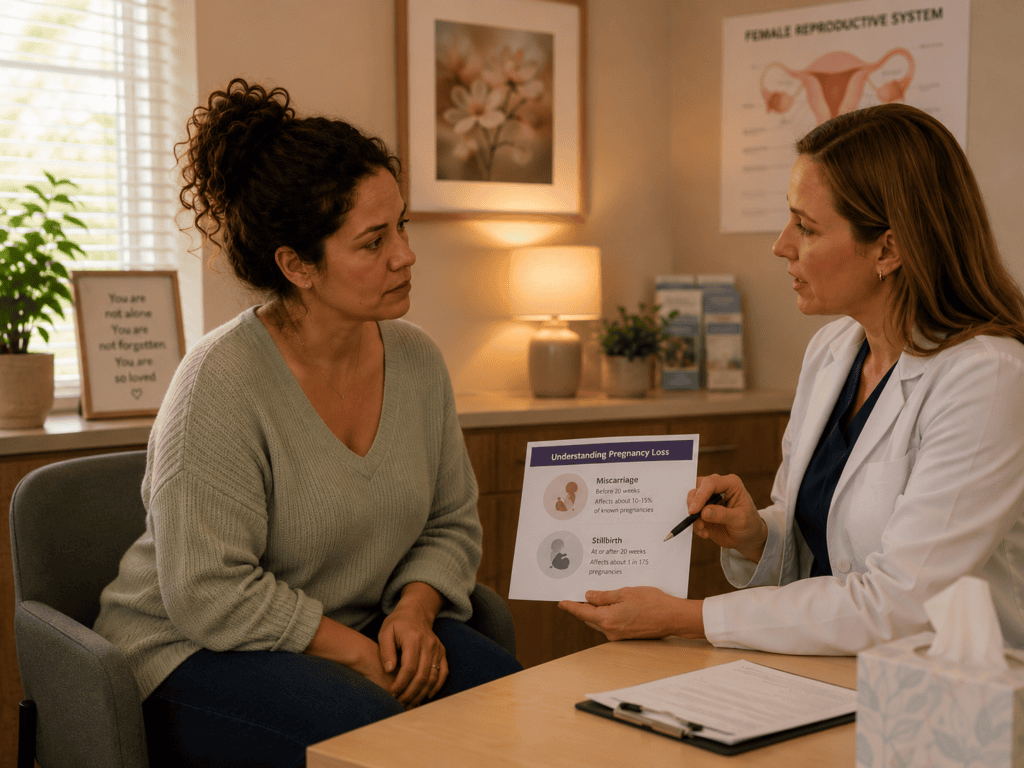
Miscarriage and stillbirth are both forms of pregnancy loss but are distinguished clinically by when the loss occurs.
- Miscarriage refers to pregnancy loss before 20 weeks of pregnancy. Most miscarriages occur in the first trimester before 12 weeks. Some occur between 13 and 20 weeks, which is sometimes called late miscarriage. Miscarriage is most often caused by chromosomal abnormalities that were incompatible with continued pregnancy, though other causes exist.
- Stillbirth refers to pregnancy loss at or after 20 weeks of pregnancy. This includes second trimester losses after 20 weeks, third trimester losses, and losses that occur during delivery. Stillbirth is often unexpected and can occur without warning even in previously healthy pregnancies. Causes include placental problems, birth defects, infection, umbilical cord issues, and other conditions, though in some cases the cause is never identified.
Both experiences involve grief that is real and significant. The physical experience can differ, with early miscarriage often occurring at home while stillbirth typically involves labor and delivery of a baby who has already passed. The recovery from both involves hormonal, physical, and emotional dimensions that unfold over time.
The Mayo Clinic overview of miscarriage and the Postpartum Support International resources provide the medical framework and support information.
The Grief That Follows Pregnancy Loss
Grief after pregnancy loss is often complicated by factors specific to this experience.
- The loss is invisible to others in a way that other losses are not. Friends and family who did not meet the baby or who did not know about the pregnancy may not fully recognize the significance of the loss. This can leave grieving parents feeling isolated in their experience.
- The loss of a future is central to pregnancy grief. Parents grieve not only the baby but the specific future they had imagined with that baby, the birthdays, the milestones, the person their child would have become.
- Well-meaning but hurtful comments are common. Statements like “at least it happened early” or “you can try again” or “everything happens for a reason” often deepen the pain even when the intent is comfort. Grieving parents often need to protect themselves from these conversations.
- The physical recovery happens alongside the emotional processing. The body continues the process of pregnancy recovery even after the loss, which can extend the sense that the grief has physical dimensions that will not resolve.
- Anniversary reactions are common. The due date. The date of the loss. The date of a subsequent pregnancy milestone. These dates can produce waves of grief long after the initial loss.
Grief after pregnancy loss follows waves rather than a linear path. Better days and harder days follow each other in ways that do not follow the tidy stages that popular models suggest. This is normal.
The Physical Recovery

The physical recovery after pregnancy loss involves several dimensions.
- Hormonal shifts. The hormones of pregnancy drop after loss, sometimes rapidly. This can produce mood changes, sleep disruption, and physical symptoms similar to the early postpartum period.
- Physical healing. Miscarriage may involve bleeding, cramping, and in some cases surgical procedures (D&C or D&E). Stillbirth typically involves labor and delivery. Both require physical healing time.
- Milk supply. After loss at any gestational age past about 16 to 20 weeks, milk supply often comes in even though there is no baby to feed. This is an additional grief for many mothers and requires specific management.
- Return of menstrual cycles. Menstrual cycles typically return within a few weeks to a few months after loss depending on the gestational age at loss. The first period after loss can be emotionally difficult.
- Sleep and appetite disruption. Physical exhaustion combined with grief affects sleep and appetite in ways that can persist for months.
How Traditional Chinese Medicine Views Pregnancy Loss
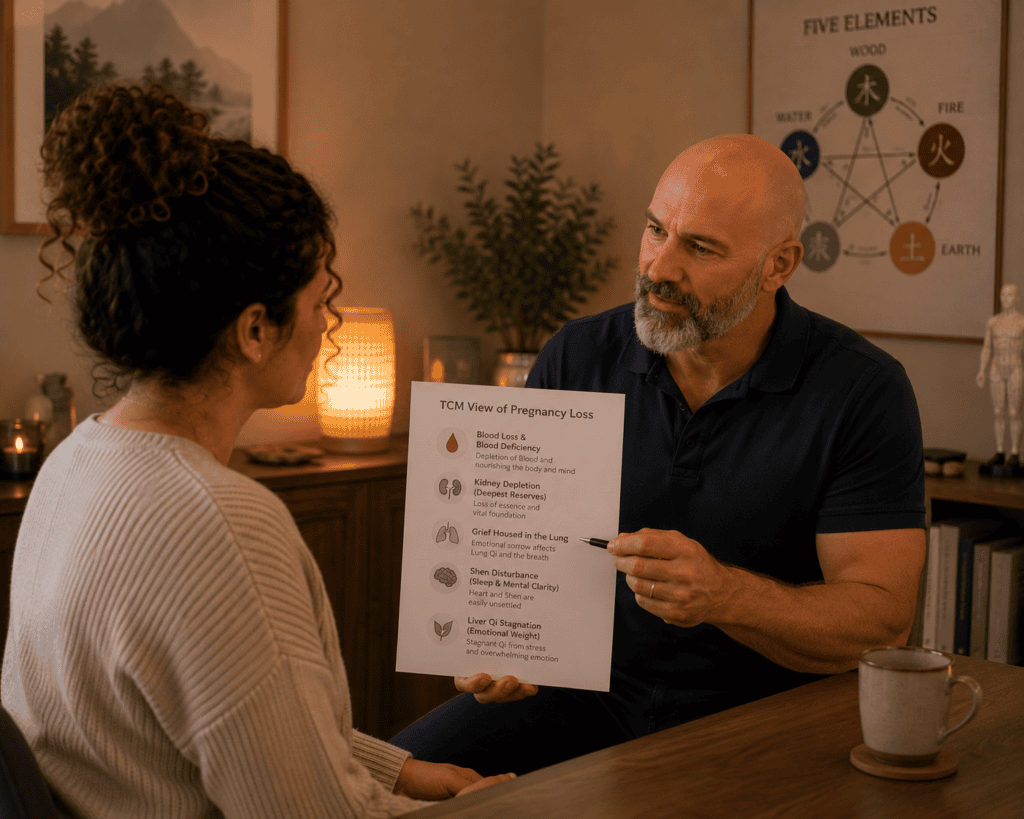
Traditional Chinese Medicine understands pregnancy loss as producing significant depletion that requires focused recovery support. Several patterns commonly emerge.
- Blood loss and Blood deficiency. Pregnancy loss involves Blood loss in both the literal and Chinese medicine senses. Blood in Chinese medicine nourishes the tissues and calms the mind. Blood deficiency after pregnancy loss produces fatigue, poor sleep, anxiety, and emotional volatility.
- Kidney depletion. Pregnancy draws substantially on Kidney reserves in Chinese medicine. Loss compounds this depletion because the Kidney reserves that would have restored gradually through the postpartum period are instead depleted alongside the grief.
- Grief housed in the Lung. Grief is primarily housed in the Lung in Chinese medicine. Deep grief depletes Lung Qi, producing the chest tightness, shallow breathing, and physical exhaustion that grief creates.
- Shen disturbance. The Shen, which is the spirit housed in the Heart, becomes deeply disturbed by pregnancy loss. This produces the sleep disruption, emotional pain, mental fog, and difficulty concentrating that many grieving parents experience.
- Liver Qi Stagnation. The overwhelming emotional weight of pregnancy loss often produces Liver Qi Stagnation, which affects mood, digestion, sleep, and physical tension.
A licensed acupuncturist identifies which patterns are dominant and treats accordingly.
How Does Acupuncture Support Recovery?

Acupuncture addresses several dimensions of recovery after pregnancy loss.
- Hormonal recalibration. The hormonal shifts after pregnancy loss are significant. Acupuncture supports the endocrine recalibration that recovery requires.
- Physical healing. The physical recovery from miscarriage or stillbirth benefits from the circulation, tissue repair, and healing support that acupuncture provides.
- Sleep support. Grief severely disrupts sleep. Acupuncture supports the sleep patterns that healing requires.
- Grief support. The Lung Qi depletion and Shen disturbance that grief produces respond to acupuncture points specifically indicated for these patterns.
- Milk supply management. Acupuncture and moxibustion have traditional uses for managing unwanted milk supply, which can be a distressing physical reminder of the loss.
- Anxiety about future pregnancies. Many parents who experience pregnancy loss carry significant anxiety into any subsequent pregnancy attempt. Acupuncture addresses this anxiety and supports the nervous system regulation that future pregnancy would benefit from.
- Preparing for trying again. For parents who choose to try for another pregnancy, acupuncture supports the physical restoration and emotional readiness that another pregnancy attempt requires. The Chinese medicine framework provides substantial support for the fertility and pregnancy preparation process.
- Stress and cortisol regulation. Elevated cortisol worsens grief symptoms and interferes with recovery. Acupuncture reduces cortisol and supports the stress hormone regulation that healing requires. What Is Cortisol and Why Do I Have So Much of It? covers how chronic stress and inflammation contribute to physical and emotional imbalances.
- Pattern-based treatment. A licensed acupuncturist identifies the specific patterns present and treats accordingly. Blood nourishment for the deficiency pattern. Kidney tonification for the deep depletion. Lung Qi support for the grief pattern. Shen calming for the emotional and sleep components. This individualized approach is what makes Traditional Chinese Medicine complementary support different from a protocol-only approach.
The Integrated Approach to Healing

Recovery from pregnancy loss responds best to a coordinated approach that addresses all the dimensions.
- Mental health support. Grief counseling with a therapist experienced in perinatal loss, support groups specifically for pregnancy and infant loss, and mental health treatment for depression or anxiety when appropriate are all valuable.
- Medical follow-up. Postpartum-style visits with obstetric care support monitoring of physical recovery and provide the opportunity to discuss what happened and what future pregnancies might involve.
- Acupuncture treatment. Regular acupuncture supports the physical recovery, hormonal recalibration, sleep, and grief dimensions.
- Community support. Connection with others who have experienced pregnancy loss reduces the isolation that grief often produces. Both in-person and online communities exist for this specific experience.
- Patience with the process. Grief after pregnancy loss does not follow a schedule. Well-meaning pressure to move forward can complicate healing. The process takes as long as it takes.
- Ritual and remembrance. Many parents find that creating rituals to honor the baby (a memorial, a piece of jewelry, planting a tree, a specific day of remembrance) supports the ongoing acknowledgment of the loss that healing requires.
- Time with people who understand. Not everyone will understand. Focusing energy on people who can hold space for the grief without trying to fix it or minimize it protects the healing process.
When to Get Additional Help

Certain patterns after pregnancy loss warrant additional professional support.
- Persistent depression. Grief and depression can overlap after pregnancy loss. If low mood, hopelessness, or inability to function persist beyond several weeks or worsen over time, professional mental health support is important.
- Thoughts of self-harm. If you are having thoughts of harming yourself, reach out to the 988 Suicide and Crisis Lifeline by calling or texting 988. The service is available 24 hours a day and provides confidential support.
- Postpartum depression. Postpartum depression can develop after pregnancy loss, particularly after stillbirth. If symptoms of depression that persist beyond a few weeks include changes in sleep, appetite, energy, and concentration, professional evaluation is warranted.
- Complicated grief. Grief that becomes stuck, that includes intense preoccupation with the loss beyond several months, or that prevents functioning warrants professional support from a therapist experienced in perinatal loss.
- Anxiety about future pregnancy. Significant anxiety about future pregnancy is common and responds well to specialized therapy that addresses this specific concern.
Resources For Pregnancy and Infant Loss Support

- Postpartum Support International (1-800-944-4773) provides comprehensive support for pregnancy loss and postpartum mental health.
- Share Pregnancy and Infant Loss Support (nationalshare.org) is the leading national resource specifically for pregnancy and infant loss.
For patients looking for complementary support alongside their care, acupuncture treatment offers meaningful help with the physical, hormonal, sleep, and emotional dimensions of recovery.
Anxiety, Stress, and Depression covers the nervous system component that contributes to the complications following pregnancy loss.
To learn more about what services this clinic offers please click: Acupuncture, Cupping & Lifestyle Coaching.
Reach out to Above and Beyond Acupuncture on North Frank Lloyd Wright Boulevard in Scottsdale to schedule a consultation.
Schedule an appointment online or call us today to start your healing journey.
About the Publisher
Paul Kerzner, L.Ac., is a licensed acupuncturist and board-certified herbalist, as well as the founder of Above and Beyond Acupuncture in Scottsdale. His own journey from chronic patient to practicing acupuncturist shapes his commitment to providing honest, clinically grounded information about acupuncture and Traditional Chinese Medicine. Learn more about Paul and his clinical approach on the About Us page.