
Key Takeaways
- Dairy consumption may be linked to various health issues like digestive problems, chronic congestion, and inflammation.
- Research shows that marketing has misrepresented the benefits of dairy, particularly its effects on bone health.
- Many adults lack the enzyme to digest lactose, leading to symptoms that are often ignored or misattributed.
- Traditional Chinese Medicine views dairy as a damp-producing food, which can cause a range of physical and mental health problems.
- Reducing dairy helps patients experience improvements in skin clarity, joint discomfort, digestion, and overall inflammation.

At Above and Beyond Acupuncture, we often discuss food before we get to needles. It’s not a formal lesson but a warm, honest talk about what people are actually eating. We all know what we put into our bodies every day matters, but many overlook how some common modern foods can quietly cause problems rarely connected to diet.
Dairy stands out as a major offender and is often misunderstood. In our Scottsdale acupuncture clinic, where patients frequently report digestive issues, chronic congestion, skin problems, joint pain, and low-grade inflammation, dairy is mentioned more often than almost any other food group.
The Marketing That Shaped a Generation

Most adults are accustomed to hearing that milk promotes strong bones. This message appeared on posters in school cafeterias, in commercials, and in the food pyramid. Doctors and parents consistently repeated it without question because they had been told the same thing. It seemed to be accepted as established science.
It was not.
When researchers examined the evidence, they discovered that the “milk does a body good” claim was driven more by aggressive industry lobbying and decades of targeted marketing than by genuine nutritional science. This isn’t a conspiracy theory; it’s a well-documented history of how the dairy industry shaped public health messaging throughout most of the twentieth century to its advantage.
Understanding this context is essential for assessing dairy based on its real clinical benefits rather than on widely held assumptions that haven’t been critically examined.
The Science of What Dairy Actually Does

Cow’s milk is not naturally suited for humans. It is meant to quickly transform a calf into a full-grown cow, containing high calories, hormones, and proteins that many people find difficult to digest.
Lactose intolerance is common among adults. The enzyme lactase needed to digest lactose decreases sharply after childhood in most people. Studies indicate that most adults globally do not produce enough lactase to comfortably digest typical dairy products.
The symptoms vary from clear gastrointestinal distress to more subtle, ongoing issues like bloating, mucus production, and slow digestion. Many individuals ignore these signs or attribute them to stress or other factors, never realizing they may be linked to dairy consumption.
Beyond lactose, casein in cow’s milk also has clinical significance. Most commercial dairy products in the United States contain A1 beta-casein, which releases a peptide called beta-casomorphin-7 during digestion.
Researchers have studied this compound for its role in inflammation and digestive health, especially in people prone to digestive sensitivities. A2 dairy, containing solely the A2 beta-casein variant, is broken down differently and generates less of this inflammatory peptide. As a result, some patients who react to regular milk find A2 milk more tolerable.
Dairy products contain a substantial hormonal load, including natural growth factors like insulin-like growth factor 1 (IGF-1). Although these compounds are suitable for a growing calf, research has linked them to enhanced cellular growth signaling in human adults, which could cause problems in certain medical situations.
Research on how dietary IGF-1 affects human physiology is ongoing, and current evidence raises concerns for those who consume large amounts of conventional dairy.
The Bone Density Myth
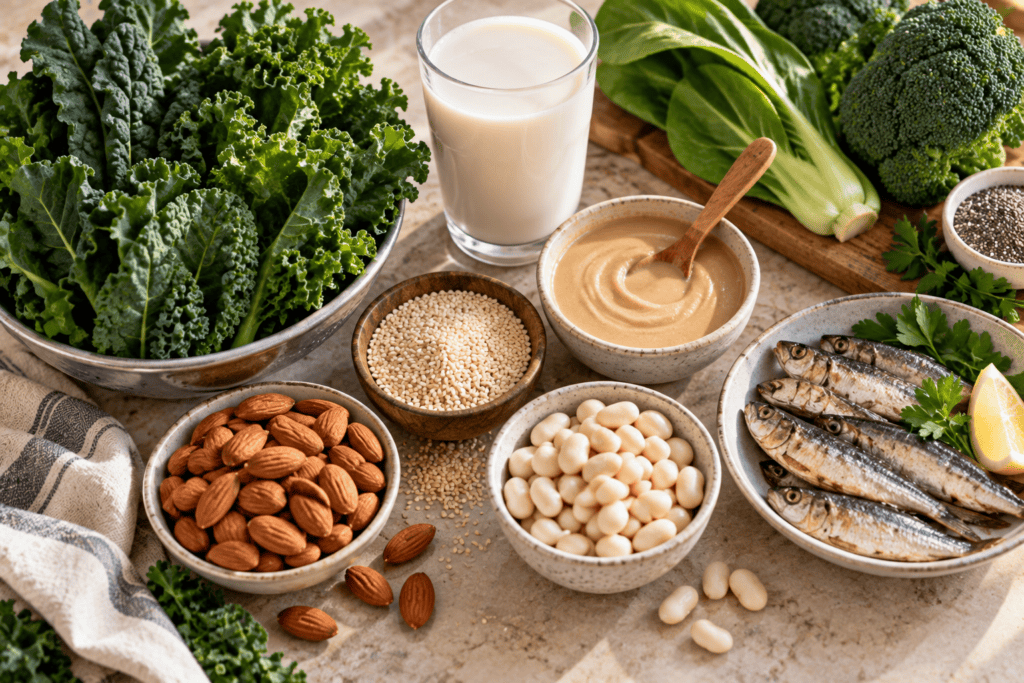
The notion that dairy prevents osteoporosis is so often repeated it seems like common sense, yet the data has never clearly supported it. Interestingly, many countries with the highest dairy consumption also experience some of the highest rates of hip fractures and osteoporosis diagnoses, a correlation that contradicts the marketing claims.
Calcium is essential for healthy bones. However, it is often overlooked that many foods like leafy greens, sesame seeds, tahini, sardines, almonds, white beans, and fortified plant-based milks provide calcium without the hormonal and inflammatory issues associated with conventional dairy.
Bone density is greatly affected by vitamin D levels, magnesium intake, weight-bearing exercise, and overall protein quality, all of which can be optimized without dairy consumption.
For patients who want to go deeper on the dairy research, Mark Hyman, MD has written extensively on the subject. His overview of the evidence is thorough and worth the time.
The TCM Perspective: Dairy as a Damp-Producing Food

Traditional Chinese Medicine has long held views on dairy, predating modern research that points to its inflammatory and digestive impacts when consumed in excess.
In traditional Chinese medicine (TCM), dairy is considered a food that produces Damp and generates Phlegm. Damp, according to TCM, is an internal state marked by heaviness, sluggishness, stagnation, and accumulation.
When the Spleen, which transforms and transports nutrients, is overburdened by hard-to-digest foods, it produces Damp as a metabolic byproduct. This Damp then accumulates in tissues and channels, leading to symptoms commonly reported by dairy-sensitive individuals: chronic congestion, sinus pressure, post-nasal drip, mental fog, bloating, soft or loose stools, fatigue after eating, and a heavy, sluggish feeling in both body and mind.
When Damp interacts with Heat, it creates Damp-Heat, which can cause skin issues like acne, rosacea, eczema flare-ups, and resistant cystic inflammation. If Damp persists and becomes more condensed over time, it turns into Phlegm in TCM, leading to joint stiffness, fibrocystic conditions, and persistent weight gain that doesn’t improve with typical diet changes.
The link between dairy and these patterns is a highly reliable clinical observation in TCM nutritional theory. Patients who cut back on or stop dairy often notice improvements in the very symptom categories that the TCM framework anticipates, often before they truly understand the reasons behind these changes.
What Patients Begin to Notice

Reducing or eliminating dairy is a common dietary change advised by our licensed acupuncturist in Scottsdale. This recommendation isn’t just a trend; it’s based on consistent, clinically significant results.
Patients report clearer skin, less sinus congestion, decreased joint discomfort, easier digestion, improved sleep quality, and a notable reduction in low-grade inflammation linked to symptoms discussed in the chronic inflammation and ultra-processed food posts. Many see changes in two to four weeks after making significant reductions, while some notice improvements within just days.
Adjusting to the transition can be challenging, as habits from childhood are difficult to change. However, the options available today are significantly improved over those from just ten years ago. Now, there are high-quality plant-based products like oat milk, almond milk, cashew cheeses, coconut yogurt, and an expanding variety of alternative foods that are truly good, not just poor substitutes.
A Worthwhile Holistic Experiment

For patients with chronic digestive problems, ongoing congestion, recurring skin conditions, or systemic inflammation that haven’t improved with other treatments, a structured dairy elimination for three to four weeks is a highly informative dietary test. The body’s response offers clinical insights that laboratory tests cannot provide.
Above and Beyond Acupuncture offers acupuncture, cupping, and lifestyle coaching at the North Frank Lloyd Wright Boulevard location in Scottsdale.
Schedule an appointment online to start your journey to relief.

About the Publisher
Paul Kerzner, L.Ac., is a licensed acupuncturist and board-certified herbalist, as well as the founder of Above and Beyond Acupuncture in Scottsdale. His own journey from chronic patient to practicing acupuncturist shapes his commitment to providing honest, clinically grounded information about acupuncture and Traditional Chinese Medicine. Learn more about Paul and his clinical approach on the About Us page.