
Key Takeaways
- A sore throat commonly signals a Lung imbalance caused by heat or dryness. Acupressure offers a natural, drug-free way to relieve this discomfort.
- Nine key acupressure points can relieve sore throat symptoms by clearing heat, soothing irritation, and addressing related cold symptoms.
- To use acupressure effectively, press specific points based on your symptoms and apply gentle yet firm pressure for one to two minutes.
- Home remedies like hydration and warm salt gargles support throat recovery, while severe symptoms may require medical attention.
- For personalized assistance, consider professional services like acupuncture and lifestyle coaching to enhance healing.

A sore throat makes itself known with every swallow.
The rough, burning sensation, pain when speaking or eating, and the tightness on both sides of your neck can be quite exhausting, especially if the cold lasts for several days. While most sore throats are caused by viruses and tend to resolve themselves, they remain uncomfortable. A basic acupressure technique without medication can help alleviate pain and irritation, reduce inflammation, and make swallowing easier as your body heals.
In Traditional Chinese Medicine, sore throats are generally attributed to heat rising to the throat. When cold or flu symptoms develop, they can generate heat that travels up the Lung channel and its paired pathway, leading to redness, swelling, and soreness in the throat. Because the Lung is believed to regulate the throat and immune defenses, a cold-related sore throat is considered a Lung imbalance, and the primary aim is to clear this heat. If the sore throat feels dry and scratchy and persists, it may result from dryness or a weakened Lung rather than heat. The following points help clear heat from the Lung and throat, dispel cold behind the illness, and relieve pain and swelling; most lie along the Lung and Large Intestine channels, which connect to the throat.
Since a sore throat often accompanies a cough, “How to Use Acupressure for a Cough” serves as a helpful companion article for addressing both symptoms.
Here are nine acupressure points that can help:
What Acupressure Points to Press and Why
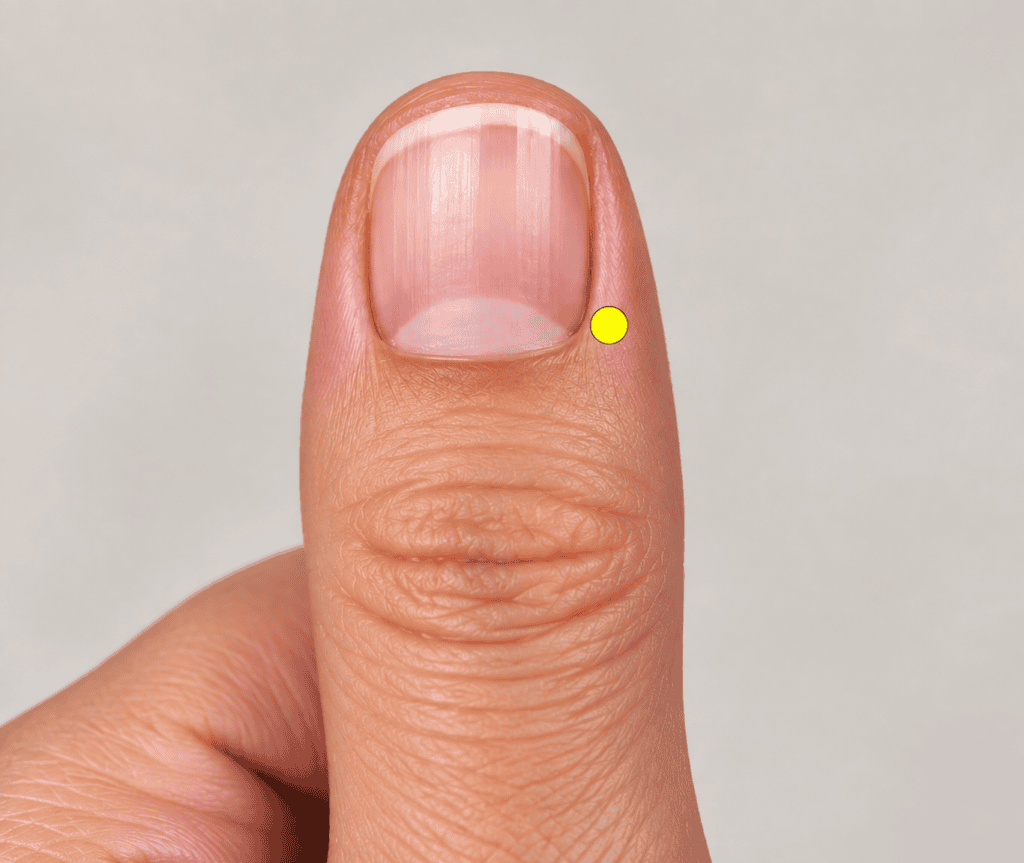
1. Press on LU11 at the thumbnail to clear heat and relieve throat pain. LU11 sits at the outer corner of the thumbnail, on the side nearest the thumb’s edge, at the base of the nail. Press firmly with the thumbnail or fingertip of your other hand for about a minute on each thumb, using strong, sharp pressure. LU11 is called “Shaoshang,” the classic point for an acute sore throat.
LU11 is a traditional point for treating sore throats, used for centuries to clear heat from the Lung and throat and relieve pain and swelling. Located at the very end of the Lung channel, it effectively reduces inflammation and heat in the throat, making it the first point chosen for hot, painful, swollen throats. The technique involves applying firm, sometimes sharp, brief pressure rather than gentle holding. Traditionally, press or pinch it firmly for about a minute with each thumb. For a raw, burning, acute sore throat from a cold, this point is the ideal place to start.
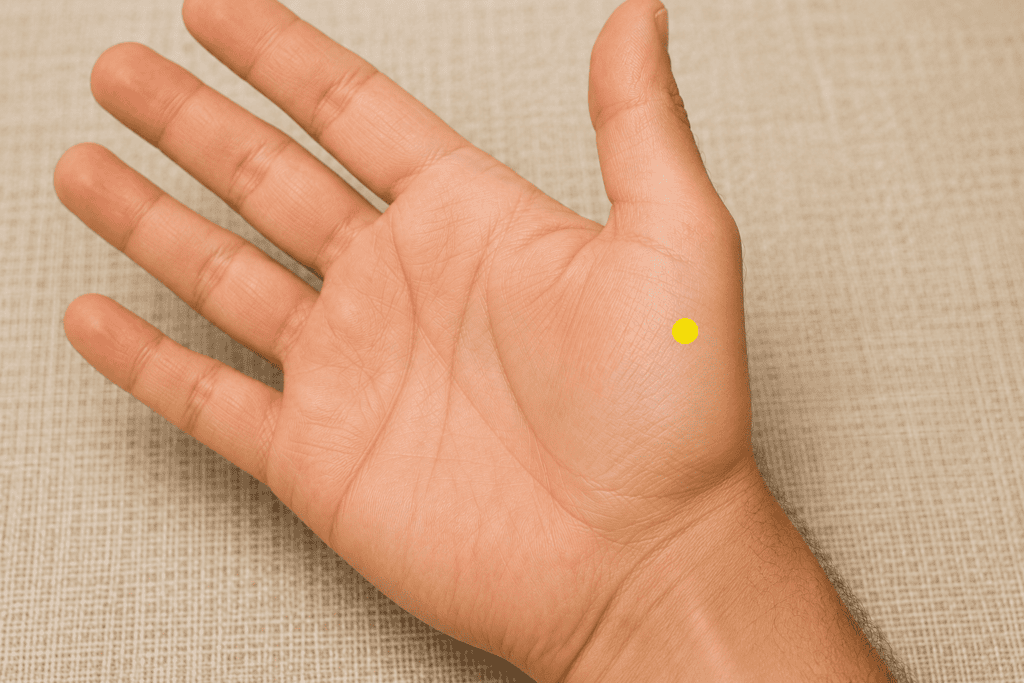
2. Press on LU10 on the thumb pad to soothe a hot, sore throat. LU10 sits on the palm side of the hand, in the middle of the fleshy mound at the base of the thumb, where the red and white skin of the palm’s edge meet. Press firmly with the thumb of your other hand for one to two minutes on each hand. LU10 is called “Yuji,” the “Fish Border,” and it clears heat from the Lung and throat.
LU10 is a key point for alleviating sore throats, especially for clearing heat from the Lung, which often causes hot, painful throat sensations. It helps reduce burning and inflammation and is effective for throats that feel hot, dry, and raw. Like LU11, it targets Lung heat, but it requires steady pressure with the thumb pad. If your sore throat is hot and scratchy, applying pressure to this point can cool and soothe it. You can press it several times daily whenever your symptoms worsen.
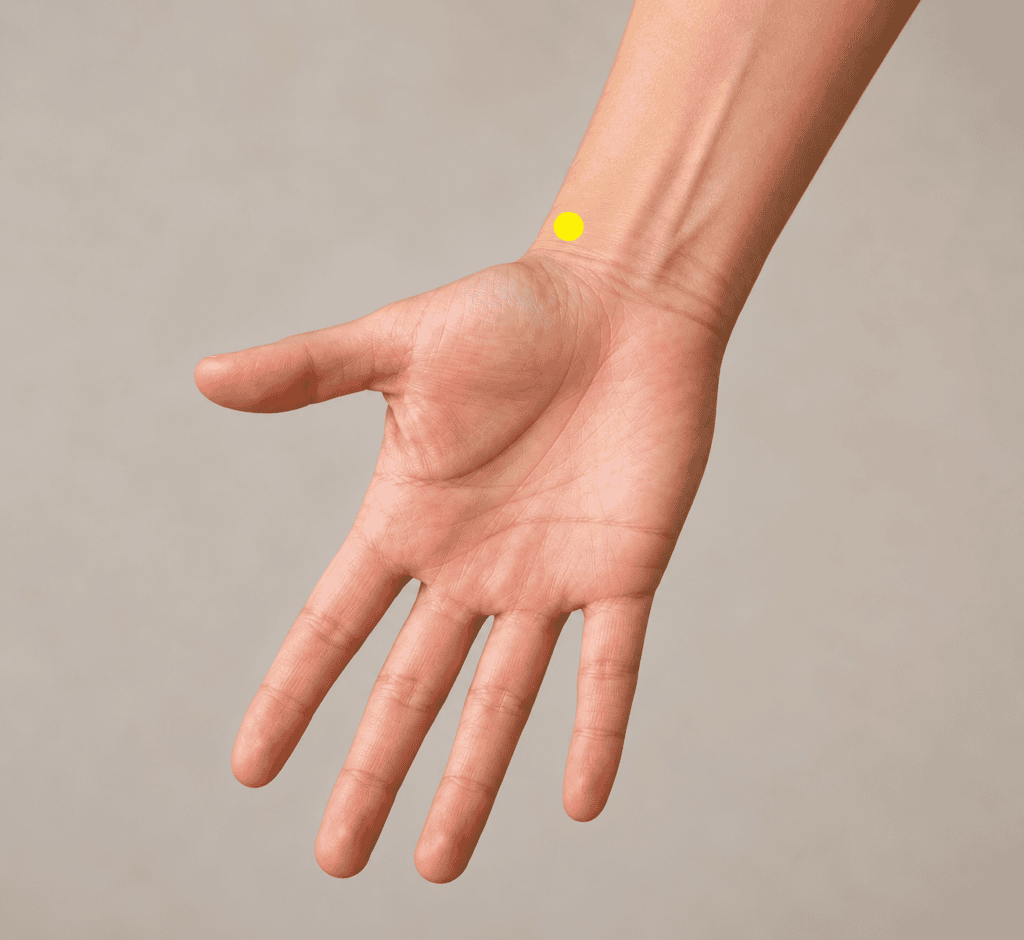
3. Press on LU7 above the wrist for the throat and the cold behind it. LU7 sits on the thumb side of the inner forearm, about two finger-widths above the wrist crease, just above the bony bump of the wrist in a small hollow. Press firmly with your thumb for one to two minutes on each arm. LU7 is called “Lieque,” and it is one of the most important points for the Lung and the throat.
LU7 is a key Lung point that benefits the throat and helps relieve cold or flu symptoms that often lead to a sore throat. As the primary point for the head and neck, it supports these regions and helps strengthen the Lung and overall immunity. If a sore throat comes with a cold, congestion, and exhaustion, this point addresses the broader condition and supports your body’s recovery.
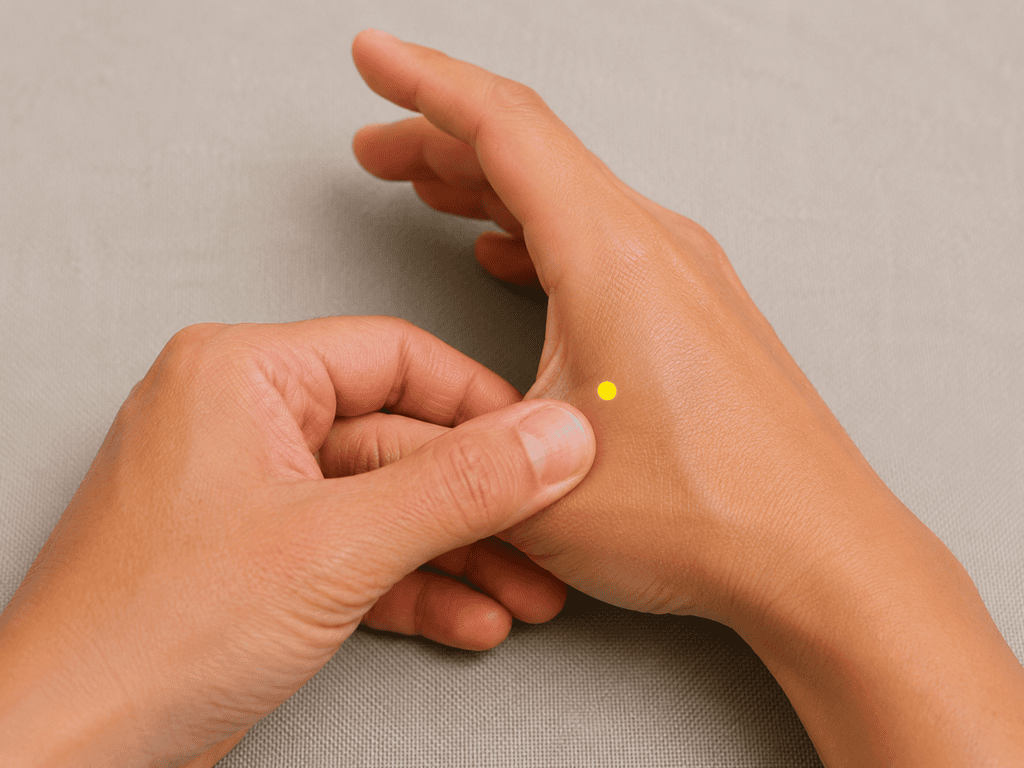
4. Press on LI4 in the hand to relieve pain and clear the throat. LI4 sits in the webbing between the thumb and index finger, at the highest point of the muscle when you bring the thumb and finger together. Press firmly with the thumb of your other hand for one to two minutes on each hand. LI4 is called “Hegu,” the command point for the face and one of the great pain-relieving points. LI4 is avoided during pregnancy.
LI4 is a key point for issues involving the head, face, and throat. It helps move stuck Qi, relieves pain and inflammation, and is often used for sore throats. Located on the Large Intestine channel, which connects to the Lung and runs to the throat and face, it clears heat and eases throat pain, even from a distance. LI4 is also one of the body’s best points for pain relief, and since it’s on the hand, you can press it easily and discreetly anywhere.
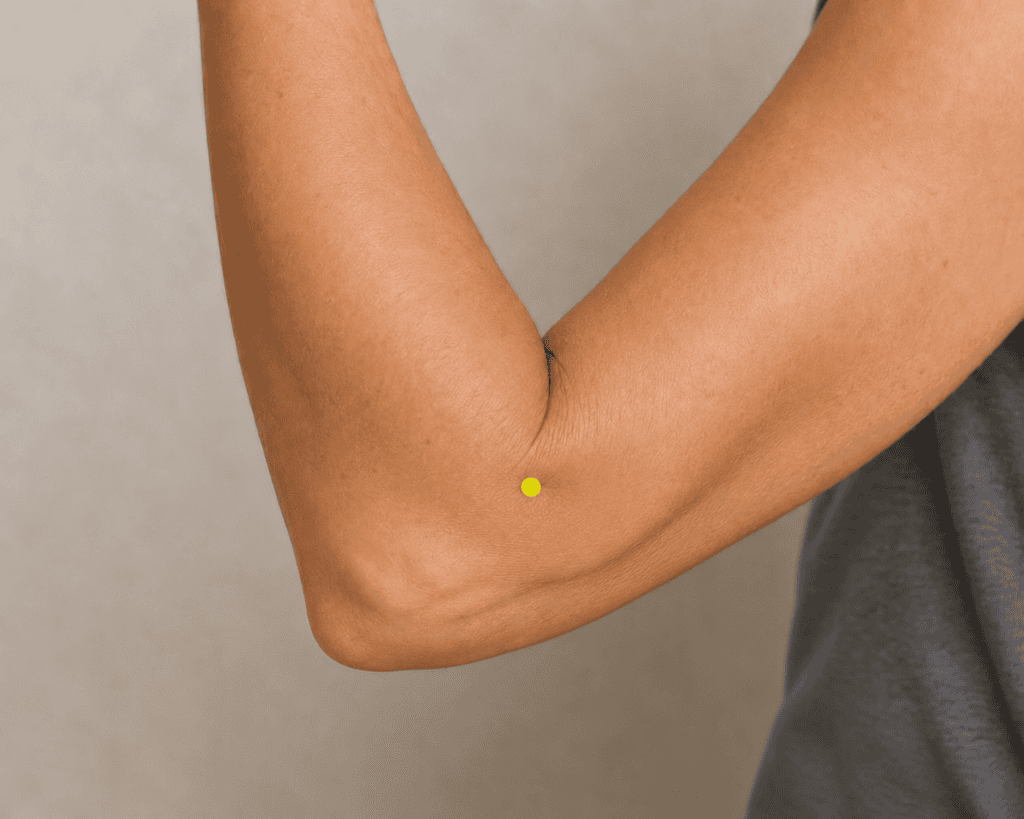
5. Press on LI11 at the elbow to clear heat from the body. LI11 sits at the outer end of the elbow crease, in the hollow that forms when the elbow is bent, at the top of the forearm. Press firmly with your thumb for one to two minutes on each arm. LI11 is called “Quchi,” and it is one of the strongest general heat-clearing points in the body.
LI11 alleviates internal heat throughout the body, making it effective for sore throats associated with infection, fever, or a hot, inflamed sensation. Located on the Large Intestine channel near the throat, it helps reduce the overall heat that contributes to inflammation. If a sore throat involves fever and a feeling of heat elsewhere, this point helps cool the body and complements LU11 and LU10 in clearing heat from multiple perspectives.
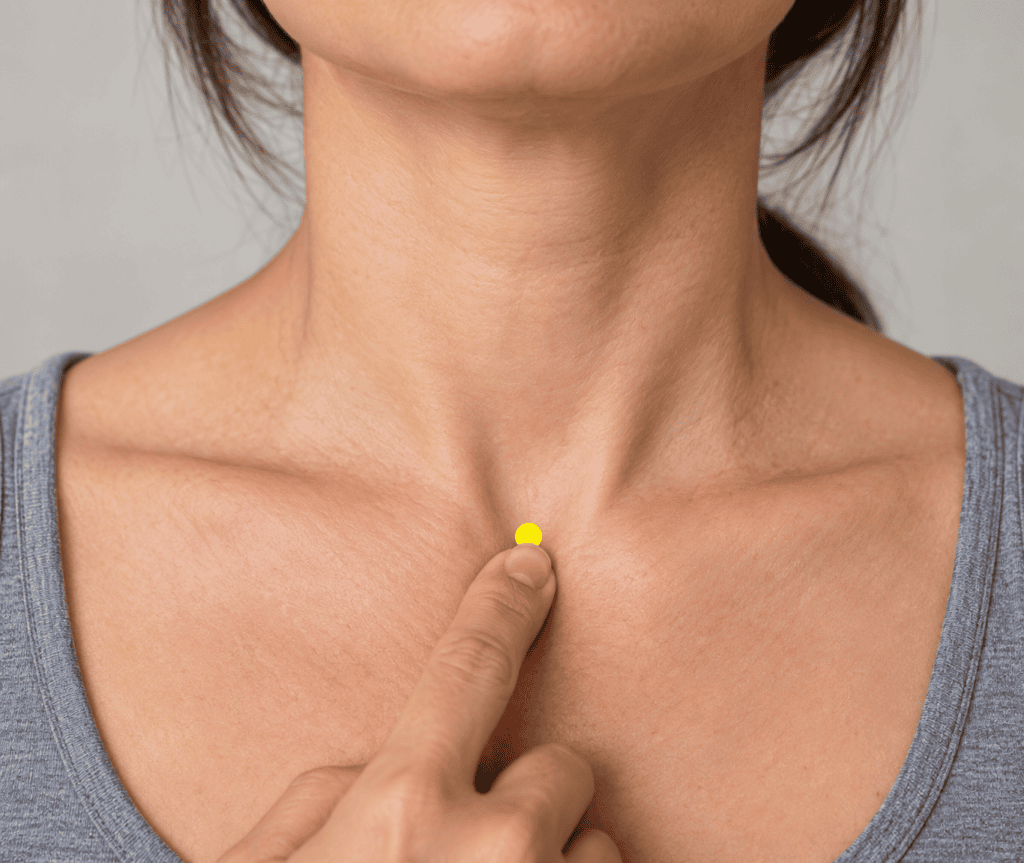
6. Press on LI18 on the side of the neck for the local throat. LI18 sits on the side of the neck, level with the Adam’s apple, on the muscle you feel there, about three finger-widths out from the midline. Press gently with your fingertips on both sides for about a minute, using light, careful pressure. LI18 is called “Futu,” a local point for the throat.
LI18 sits on the side of the neck near the throat and is a key point for throat pain, swelling, and hoarseness. It helps reduce inflammation and the tight, swollen sensation on the sides of the neck. Because the area is sensitive and contains vital structures, apply gentle, careful pressure and avoid pressing hard on the front of the neck. For localized pain and swelling, this point targets the problem directly and works well alongside points on the hands and arms.
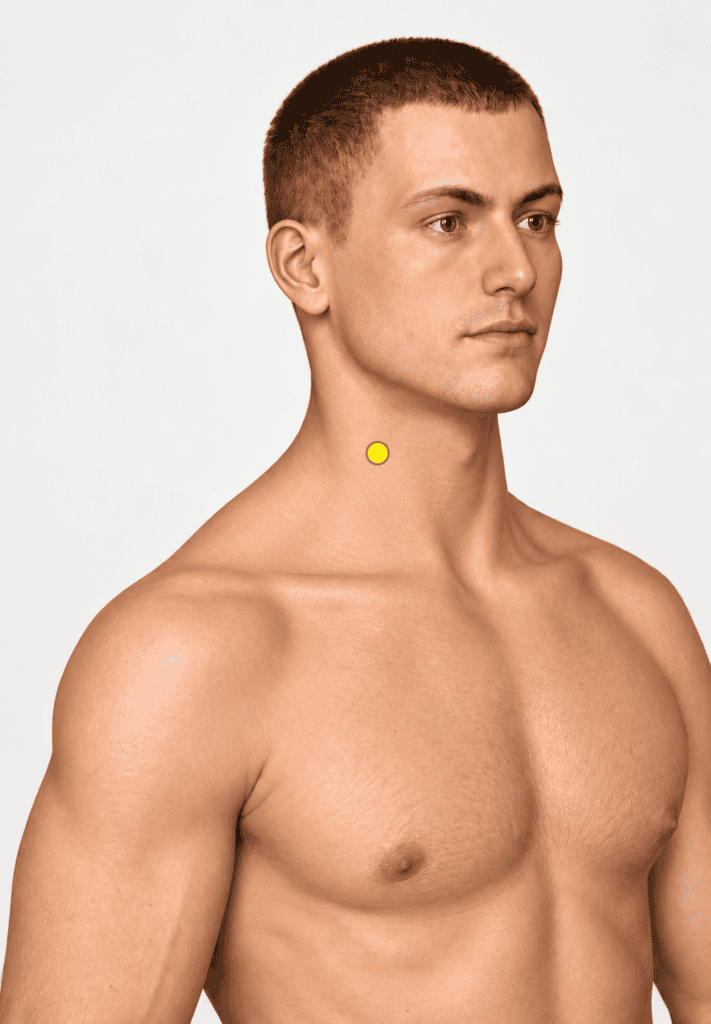
7. Press on CV22 at the base of the throat to ease swallowing and irritation. CV22 sits in the hollow at the base of the front of the neck, in the soft notch just above the top of the breastbone where a necklace would rest. Press gently downward, behind the bone rather than into the throat, with your fingertip for about a minute. CV22 is called “Tiantu,” the “Heavenly Chimney,” and it is a local point for the throat.
CV22 is located at the base of the throat and helps ease irritation, tickling, rawness, and the tight feeling when you swallow. It calms the throat and helps with hoarseness and the sensation of a lump in the throat. A small study found that stimulating this point can improve throat discomfort. Like LI18, this area is sensitive, so press gently and angle your pressure down toward the chest behind the breastbone, never directly into the windpipe. For a raw, hard-to-swallow sore throat, this point soothes right at the source.
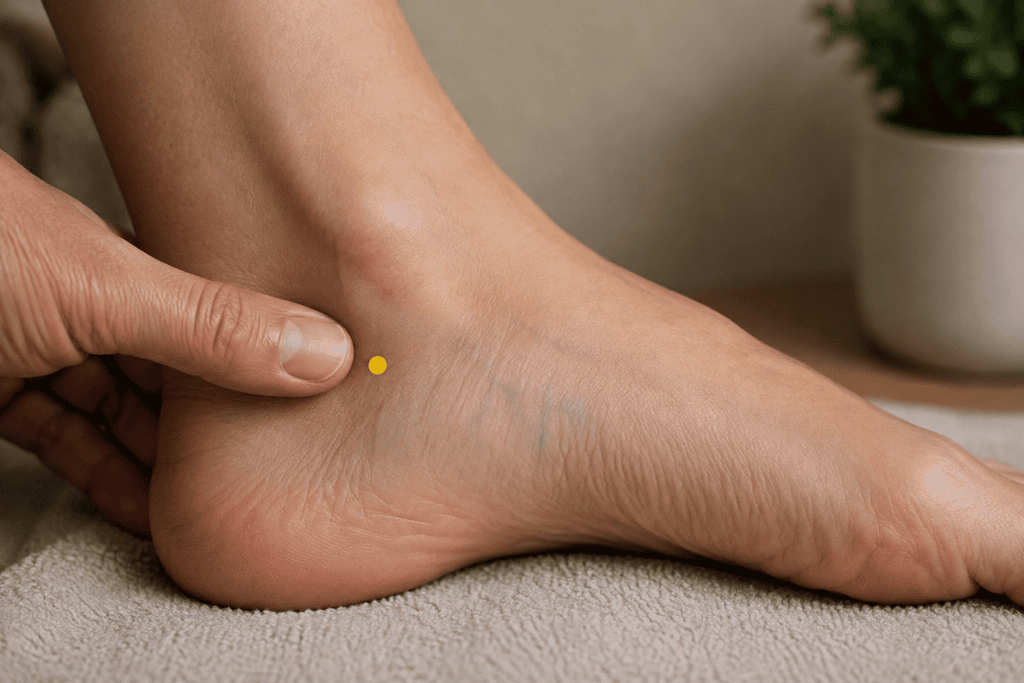
8. Press on KI6 below the inner ankle for a dry, chronic sore throat. KI6 sits in the hollow just below the tip of the inner ankle bone. Press firmly with your thumb for one to two minutes on each ankle. KI6 is called “Zhaohai,” a point traditionally paired with the throat.
Most points here target sore throats caused by heat, but KI6 is specifically for the dry, scratchy, lingering type resulting from dryness or a weakened system, not infection. KI6 supports the body’s moisture and is traditionally linked to soothing the throat, focusing on dryness rather than heat. If you have a persistent dry throat or frequently experience dryness, especially in dry air or after illness, this point addresses the dryness at its root and can help beyond common colds.
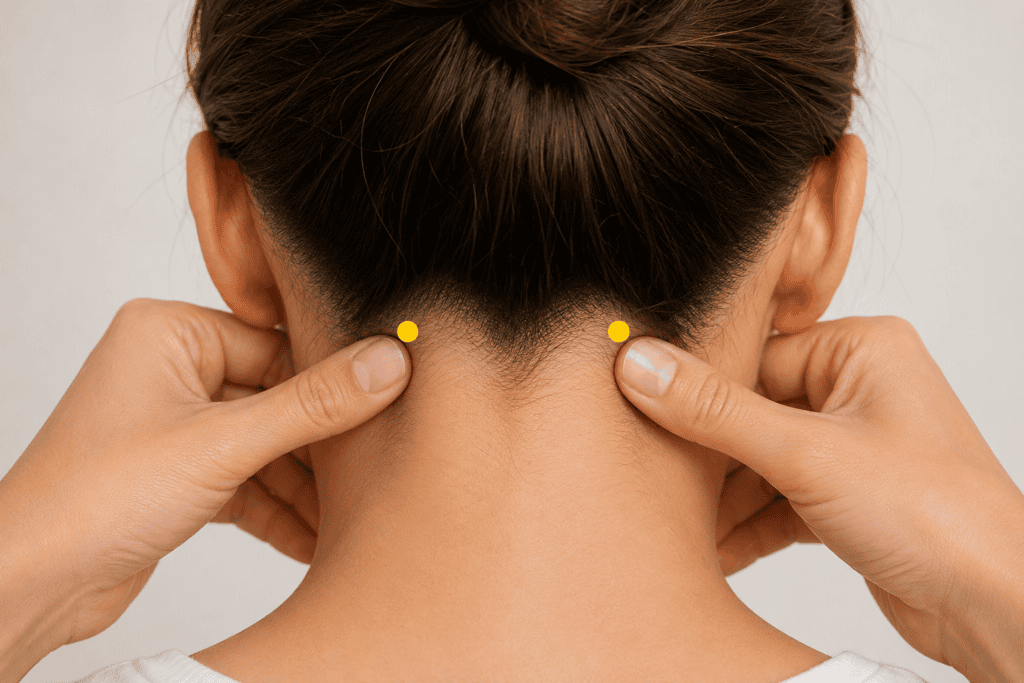
9. Press on GB20 at the base of the skull for cold and congestion. GB20 sits in the two hollows at the base of the skull, between the two large vertical neck muscles and the outer edge, roughly level with the tops of the ears. Tip your head back slightly and press firmly up and inward with your thumbs for one to two minutes. GB20 is called “Fengchi,” the “Wind Pool,” and it clears wind and eases the head and neck.
Since a sore throat often accompanies a cold, which includes symptoms like a stuffy head, neck tension, and feeling run-down, GB20 is beneficial for these broader issues. In Chinese medicine, this point is recognized for releasing the ‘wind’ associated with colds. It helps clear the head, reduce neck tension, and ease congestion and headaches that often accompany a sore throat. When a sore throat is part of a full head cold, this point addresses the overall symptoms, while other points target the throat specifically.
Why These Acupressure Points Work
In Traditional Chinese Medicine, most sore throats result from heat rising to the throat along the Lung and Large Intestine channels, typically from a cold that has transformed into heat. A dry, persistent sore throat, however, suggests dryness or Lung depletion. The nine points address this entire spectrum.
- The Lung heat points (LU11, LU10, LU7) clear the heat from the Lung and throat behind an acute, hot, painful sore throat, with LU7 also releasing the cold behind it.
- The Large Intestine points (LI4, LI11) relieve throat pain and clear infection-related heat from a distance.
- The local throat points (LI18, CV22) ease the pain, swelling, and difficulty swallowing right where you feel them.
- The moistening point (KI6) soothes a dry, scratchy, lingering sore throat.
- The cold-clearing point (GB20) eases the head cold and congestion that so often come with a sore throat.
The main goal is to reduce heat and soothe the throat, supporting your body’s recovery from the cold that caused it.
How to Properly Use These Acupressure Points
Choose the points that match your sore throat, and remember to press them gently.
- For an acute, hot, painful sore throat, start with LU11 and LU10 to clear Lung heat; add LI4 and LI11 for pain and systemic heat; and use CV22 and LI18 to soothe the throat locally.
- For a sore throat that is part of a cold, add LU7 and GB20 to address the illness and congestion behind it.
- For a dry, scratchy, lingering sore throat, work KI6 and LU10 to moisten and soothe.
- Press LU11 firmly, but only briefly. For the neck points, LI18 and CV22, use gentle, careful pressure, angling CV22 downward behind the breastbone, and never press hard into the front of your throat. Press the hand and arm points firmly.
- Hold each point for a minute or two, and repeat several times throughout the day while the throat is sore.
Acupressure may reduce your symptoms, and home remedies can support your throat’s recovery. Stay well hydrated by drinking plenty of fluids, and warm beverages can offer extra comfort. For those over one year old, honey can soothe your throat, and gargling with warm salt water can reduce pain and swelling. Rest your voice and body, consider using a humidifier in dry environments, and avoid anything that irritates your throat. Most cold-induced sore throats improve within a few days to a week with these measures.
When to Get Professional Help
Most sore throats are caused by viruses and tend to improve on their own with rest and soothing care. Acupressure can assist in these common cases. Nonetheless, some sore throats require a doctor’s diagnosis. Seek medical attention if your sore throat is extremely severe, lasts over a week, recurs frequently, or is accompanied by high fever, white patches or pus on the tonsils, swollen, tender neck glands, or a rash, as these may indicate strep throat or other infections that require antibiotics. Consult a doctor if hoarseness persists for more than a couple of weeks. Seek emergency care immediately if you have difficulty breathing, can’t swallow saliva, have severe mouth-opening issues, or drool, as these could signal a serious throat infection.
Acupressure and home remedies can help with everyday sore throats, but they should not replace necessary medical treatment.
Above and Beyond Acupuncture offers acupuncture, cupping, and lifestyle coaching at the North Frank Lloyd Wright Boulevard location in Scottsdale.
Schedule an appointment online to start your healing journey.
The points above are only as effective as the technique used to apply them. Where to press, how firmly, and for how long all affect the result. For a full breakdown of how to perform acupressure properly at home, read Performing Acupressure in 3 Easy Steps.

About the Publisher
Paul Kerzner, L.Ac., is a licensed acupuncturist and board-certified herbalist, as well as the founder of Above and Beyond Acupuncture in Scottsdale. His own journey from chronic patient to practicing acupuncturist shapes his commitment to providing honest, clinically grounded information about acupuncture and Traditional Chinese Medicine. Learn more about Paul and his clinical approach on the About Us page.