
Key Takeaways
- Feeling hopeless is a temporary feeling that can get better with support, so don’t hesitate to contact someone you trust.
- Acupressure provides comfort but isn’t a substitute for real support; it can assist in calming during difficult moments.
- Nine specific acupressure points can help alleviate feelings of hopelessness and help regain emotional balance.
- Combine acupressure with professional assistance and self-care strategies for optimal results, as it serves as a complementary tool.
- If feelings of hopelessness become too intense, contact a mental health professional or crisis hotline right away.

Feeling hopeless can be incredibly challenging to endure; it may seem like nothing will improve, the burden will never lift, and there’s no way forward. This state can drain life of its color and meaning.
When you’re feeling hopeless, remember this is an emotion, not a fact, and it can improve with support, even if it doesn’t feel like it. Be kind to yourself and reach out to someone – a doctor, therapist, or trusted person – because feeling hopeless indicates you deserve help. You don’t need to face this alone. If your feelings become overwhelming or you think about harming yourself, please contact the 988 Suicide and Crisis Lifeline, available anytime.
Acupressure alone cannot remove feelings of hopelessness or replace genuine support. However, it can offer some comfort during tough times. By using your own hands, you can soothe and stabilize yourself, boosting your mood as you pursue the help you need. The listed points serve as a gentle, caring way to care for yourself while also seeking assistance.
In Traditional Chinese Medicine, hopefulness is seen as the upward movement of the Shen, or spirit, which dwells in the Heart. When the spirit is stable, you feel secure and happy; when it sinks, it leads to a heavy, oppressive feeling of despair. Both the Lung, linked to grief and the act of releasing emotions, and the Kidney, which holds your essential reserves and willpower, can weaken, making it hard to move forward or stay hopeful. That’s why hopelessness often feels weighty and stuck. The acupressure points listed below are designed to gently lift your spirit, soothe and nourish your Heart and Shen, ease the heaviness in your chest, and support your deep reserves, offering comfort and a little encouragement.
Because hopelessness is so often part of depression, acupressure for depression is a close companion article to this piece, and the anxiety, stress, and depression that hopelessness accompanies respond well to additional care.
Here are nine acupressure points that can help:
What Acupressure Points to Press and Why
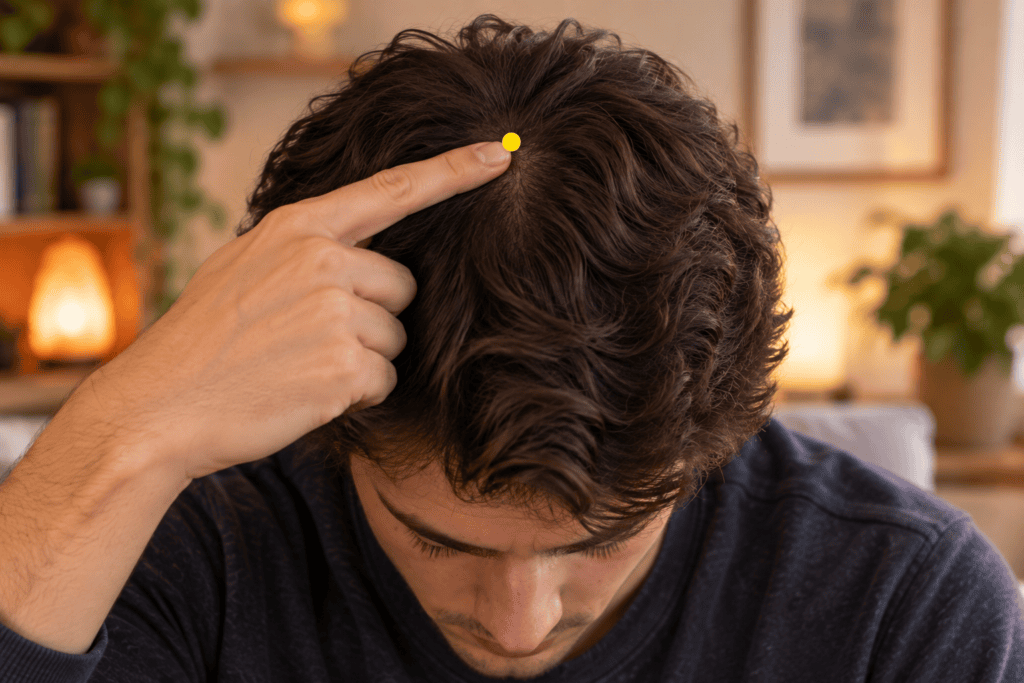
1. Press on GV20 at the top of the head to gently lift the sunken spirit. GV20 sits at the very top of the head, on the midline, on a line drawn up from the tops of both ears. Press straight down, or make small circles, with your fingertip for one to two minutes. GV20 is called “Baihui,” the “Hundred Meetings,” where many channels converge at the crown.
GV20 is the main point for lifting the mind, body, and spirit. When feelings of hopelessness arise, it helps counteract sinking and collapsing by raising the Qi and spirit that have dropped downward, gently lifting what feels heavy and pulled down. This point relieves the foggy, dense mental state caused by despair. Located at the crown where many meridians meet, GV20 provides a soft, subtle lift and brightening effect. For the sinking, heavy feeling at the core of hopelessness, apply GV20 slowly and kindly; it offers a gentle, steadying boost – a single step, not a complete cure – and should be combined with calming, grounding points afterward.
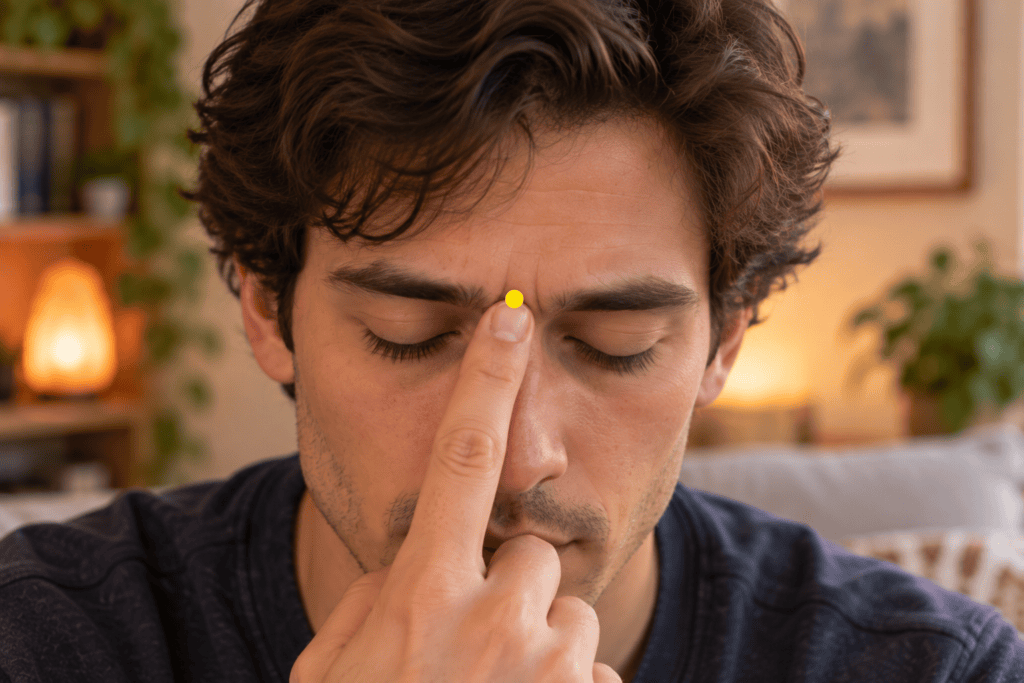
2. Press on Yintang between the eyebrows to ease the heavy mind. Yintang sits in the small hollow directly between the two eyebrows. Press steadily and hold, or make small, slow circles with your fingertip for one to two minutes. Yintang is an extra point and one of the most calming points in the body.
Yintang helps calm the Shen and relieve persistent, dark thoughts that create a sense of endless change. It soothes the nervous system and eases facial tension, fostering calm and stability in a despairing mind. Offering moments of peace, it provides gentle relief from heavy thoughts and can be a grounding comfort when pressed softly during slow breathing.
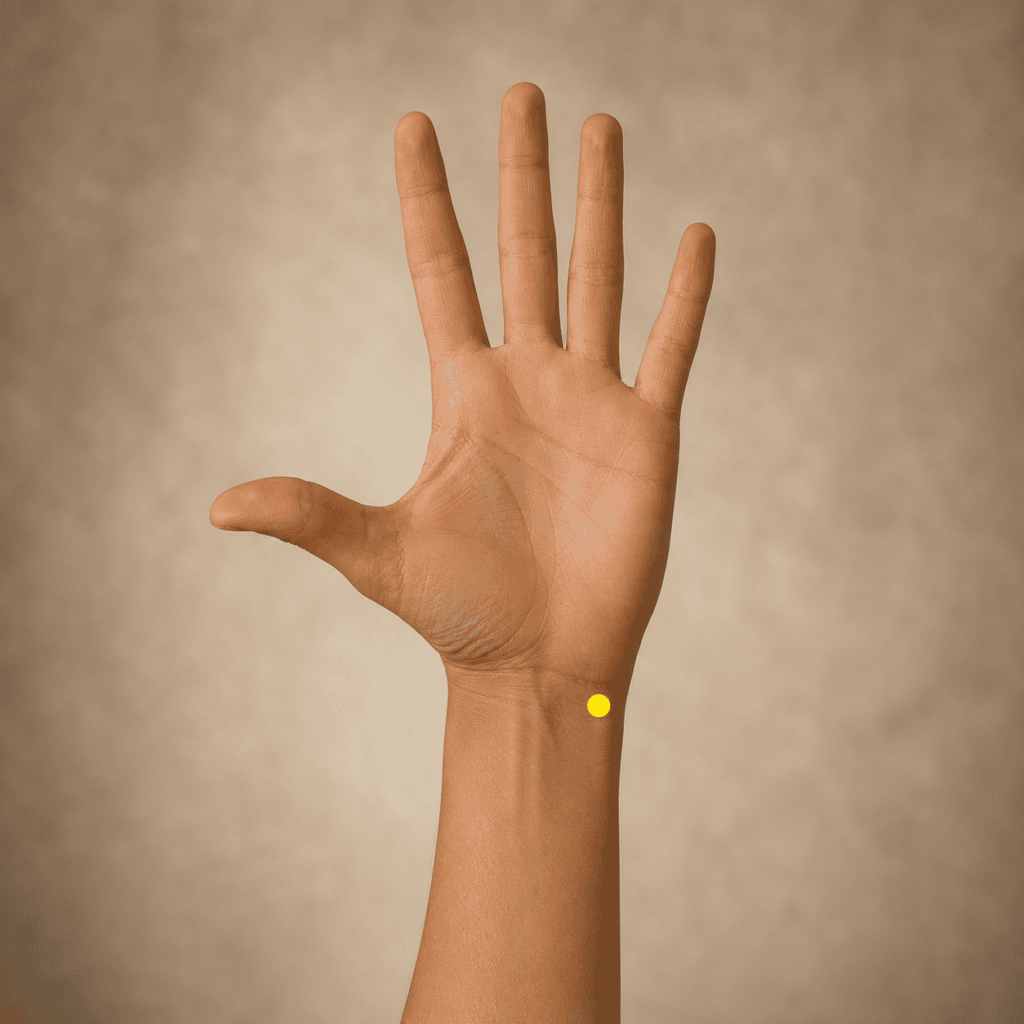
3. Press on HT7 at the wrist to calm and comfort the heart. HT7 sits on the inner wrist crease, on the pinky side, in the small hollow just inside the tendon. Press firmly but gently with your thumb for one to two minutes on each wrist. HT7 is called “Shenmen,” the “Spirit Gate,” and it is the source point of the Heart and the most important point for the Shen.
HT7 has a calming and nourishing effect on the Heart by addressing the wounded, sunken spirit. It is one of the most comforting acupoints to use during feelings of despair. Known as the Spirit Gate, it eases sorrow and alleviates the heavy, aching heart connected to hopelessness, helping to restore mental balance. It also relieves sleep issues often linked to low, hopeless states. For heartache and a sunken spirit, this acupoint offers gentle comfort, being soft, quiet, and easily accessible whenever you need to regain stability.
4. Press on CV17 at the center of the chest to ease the heavy weight. CV17 sits on the midline of the breastbone, level with the space between the nipples, in the center of the chest. Press gently and steadily with your fingertip for one to two minutes, breathing slowly. CV17 is called “Shanzhong,” the gathering point of Qi in the chest and the body’s emotional center.
Hopelessness often feels like a heavy, sinking sensation in the chest, like a crushing weight. CV17 helps ease this feeling by opening the chest and releasing emotional Qi that has become stagnant from grief and despair. This process lifts the physical weight, relieving those who feel their hopelessness as a heavy, pressed-down chest. Gently press this point while taking slow, deep breaths for comfort, but keep the pressure soft and gentle.

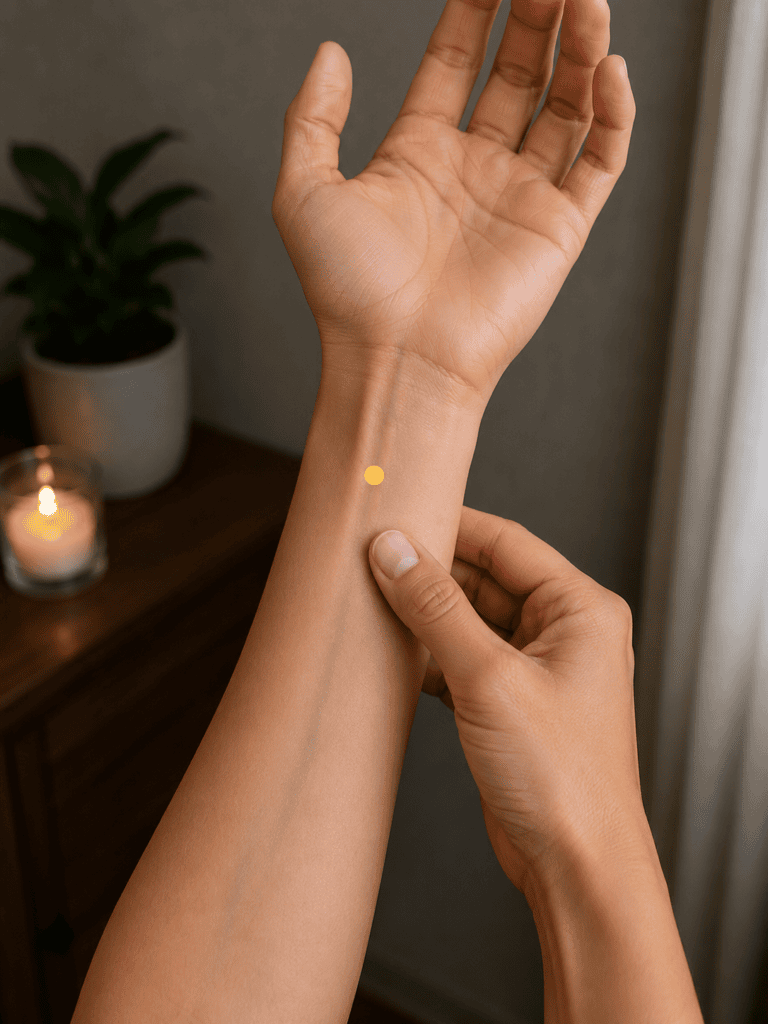
5. Press on PC6 on the inner forearm to open the chest and settle the spirit. PC6 sits three finger-widths above the inner wrist crease, in the center of the forearm between the two tendons. Press firmly with your thumb for one to two minutes on each arm. PC6 is called “Neiguan,” the “Inner Pass,” and it opens the chest and calms the spirit.
Stimulating PC6 opens the chest and alleviates the tight, oppressed, and heavy sensations caused by despair, thereby calming the mind. As a main acupoint for the chest and emotional regulation, it helps relieve the constriction of a heavy heart and promotes mental stability. For those experiencing hopelessness with a tight, heavy chest and strong feelings of oppression, this acupoint can ease these symptoms, allowing the breath to flow more freely. It works synergistically with HT7 and CV17 to comfort the heart and open the chest.
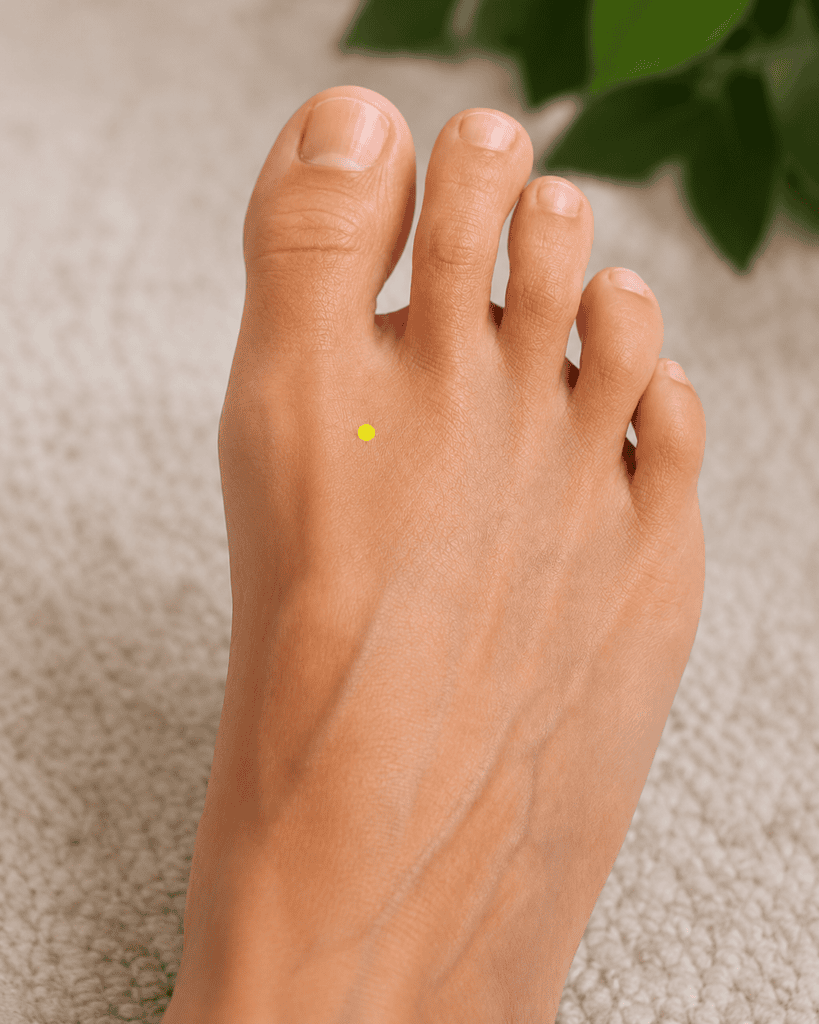
6. Press on LR3 on the top of the foot to move the stuck heaviness. LR3 sits on the top of the foot, in the webbing between the big toe and second toe, about two finger-widths back where the bones meet in a small hollow. Press firmly with the thumb for one to two minutes on each foot. LR3 is called “Taichong,” the primary point for moving stuck Liver Qi.
Hopelessness feels heavy, stagnant, and immobile, representing a sense of being unable to move or see any way forward. In Chinese medicine, much of this stagnation is linked to the Liver. The point LR3 helps to move the stagnant Qi, transforming that heavy, blocked sensation instead of letting it persist. This alleviates the low and immobilizing mood caused by despair. Additionally, it stabilizes the body by directing energy downward to the feet, which can help someone who feels adrift. For the kind of persistent and burdensome heaviness tied to hopelessness, this point can stimulate movement and is one of the most effective for addressing low, stagnant moods.
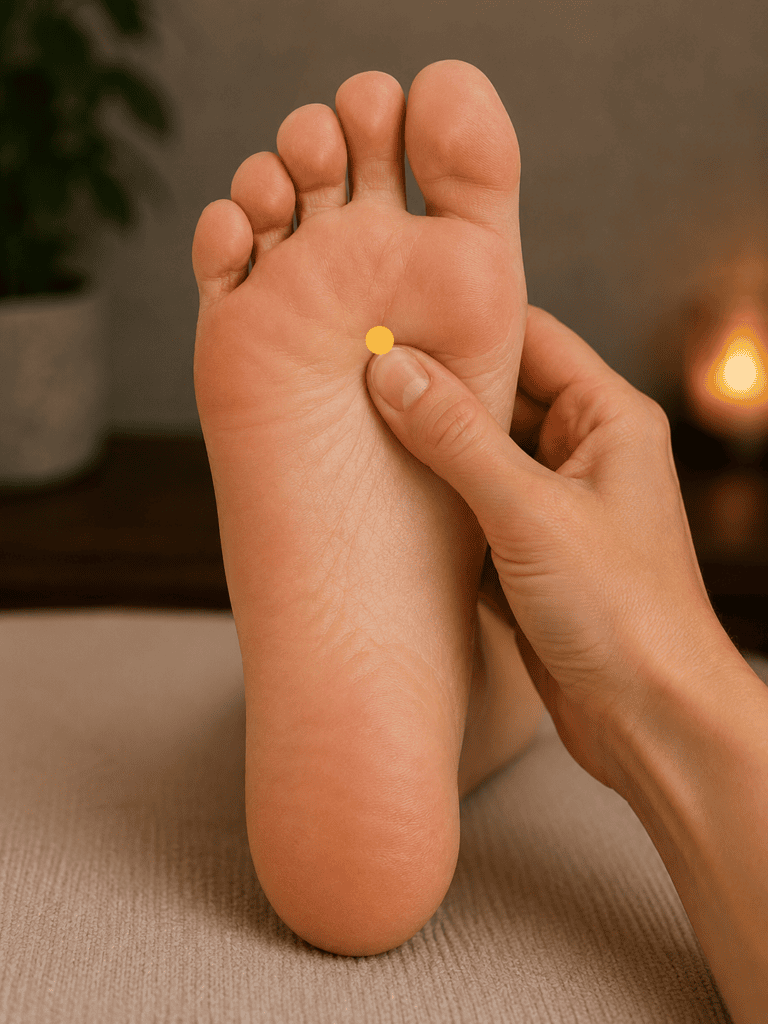
7. Press on KI1 on the sole of the foot to ground and steady. KI1 sits on the sole of the foot, in the hollow that forms in the center of the ball of the foot when you curl the toes, about a third of the way down from the toes to the heel. Press firmly with your thumb for one to two minutes on each foot. KI1 is called “Yongquan,” the “Bubbling Spring,” and it is the lowest point on the body.
KI1 provides a strong grounding effect by drawing in scattered, aimless energy associated with despair and anchoring it to the earth. This creates stability, especially when everything feels like it’s falling apart. As the lowest point on the body and the first point of the Kidney meridian, it connects to the body’s deep reserves and the will weakened by hopelessness, creating a calming, grounding sensation. For feelings of being adrift and unanchored linked to hopelessness, KI1 helps restore a sense of solid ground. Pressing on it enhances the feeling of support from the earth and the stability of your feet on the floor.
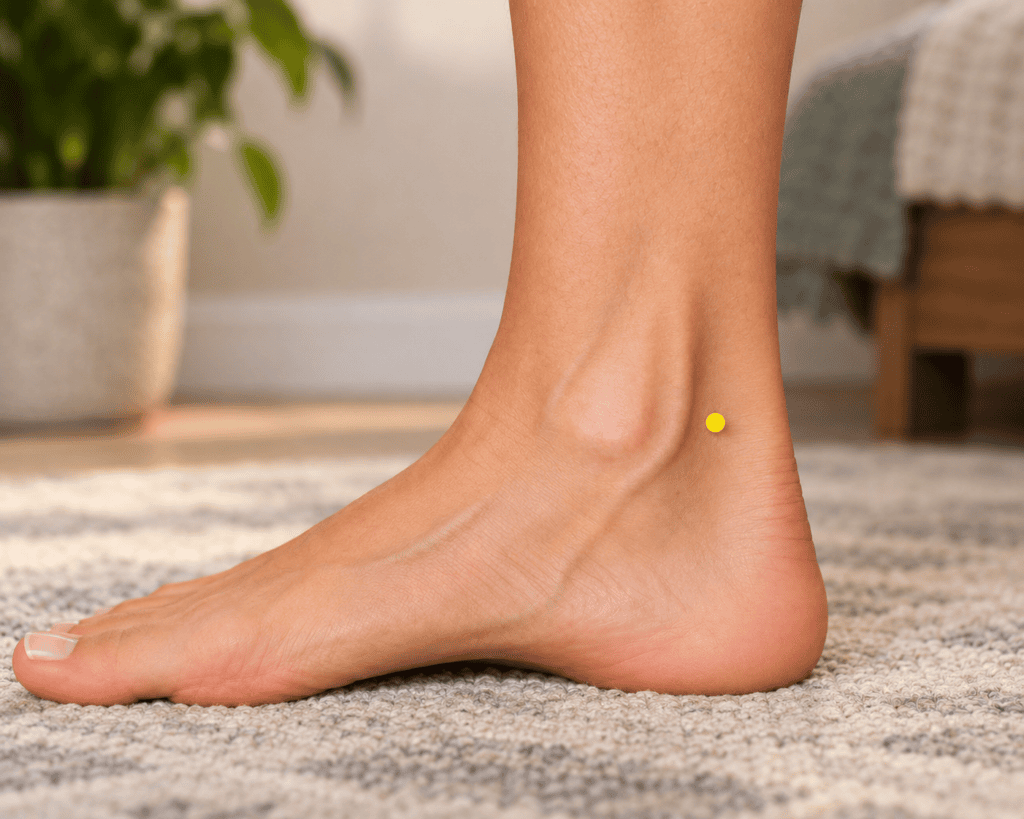
8. Press on KI3 above the inner ankle to support the deep reserves. KI3 sits in the hollow between the inner ankle bone and the Achilles tendon, level with the tip of the ankle bone. Press firmly with your thumb for one to two minutes on each ankle. KI3 is called “Taixi,” the Kidney’s source point.
In Chinese medicine, the Kidney governs the body’s deep reserves and the concept of Zhi, which is the quiet inner drive that enables a person to move forward. Hopelessness directly depletes this energy. The KI3 point, the source point of the Kidney, gently replenishes these depleted reserves and supports the will and inner stability that despair compromises. It nourishes the foundation of a depressed spirit and combats the fear and exhaustion common during hopelessness. For the underlying drained and depleted feeling associated with hopelessness, this point provides significant support. When used together with KI1, it helps stabilize and rebuild the Kidney.
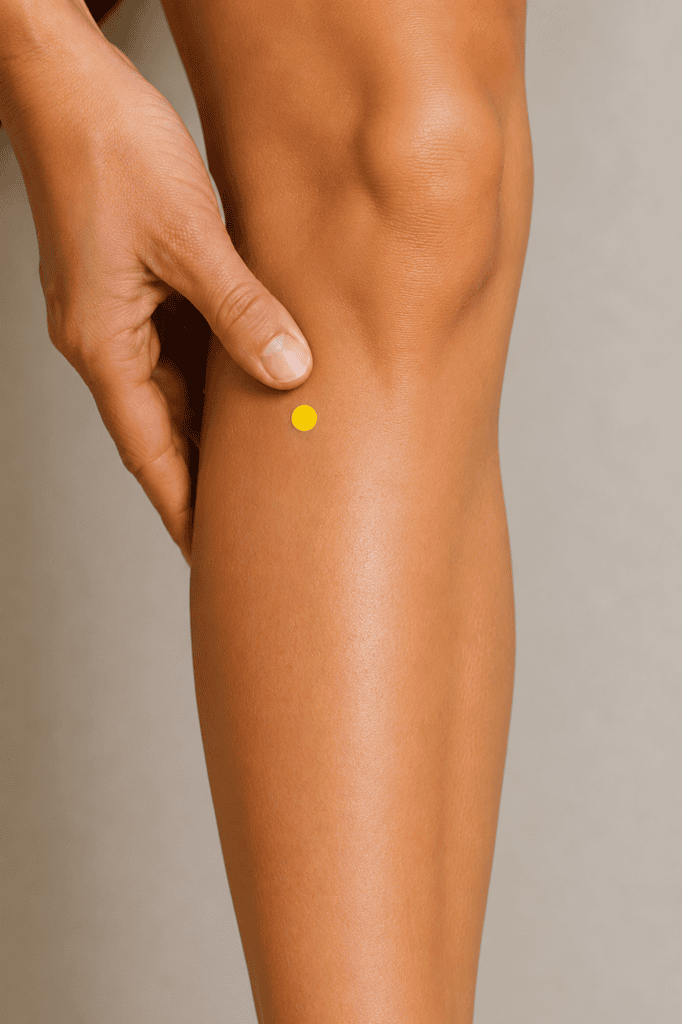
9. Press on ST36 below the knee to rebuild energy and lift the heaviness. ST36 sits four finger-widths below the lower edge of the kneecap and one finger-width to the outside of the shinbone, on the muscle that rises when you flex your foot. Press firmly with your thumb for one to two minutes on each leg. ST36 is called “Zusanli,” the “Leg Three Miles,” and it is the master point for energy in the body.
Hopelessness often comes with a profound, heavy fatigue, making even small tasks seem unmanageable. ST36 gently restores the Qi and energy lost to despair, boosting the Spleen and Stomach, which are responsible for generating vitality. This alleviates some of the heavy, worn-out feeling and helps recover lost energy. Its grounding and strengthening qualities provide a stabilizing effect on the whole system. In cases of deep exhaustion from hopelessness, this point offers a gentle rebuilding, and regular use supports the body’s slow recovery by replenishing energy.
Why These Acupressure Points Work
In Traditional Chinese Medicine, hopelessness is seen as the Shen descending, with the spirit becoming dulled and sunk. This is often linked to weakened Lung and Kidney systems, which deplete the body’s deep reserves and the will to persevere. The nine points offer gentle support for this condition.
- The points GV20 and LR3 gently lift a sinking spirit and help the heavy, stuck sensation move.
- The Yintang, HT7, and PC6 points soothe a disturbed spirit and ease a heavy mind.
- The chest point (CV17) lifts the heavy weight of despair held over the heart.
- The points for grounding and rebuilding (KI1, KI3, ST36) stabilize a disoriented system and restore the deep reserves, the will, and the energy which hopelessness saps.
These points offer comfort and a gentle boost, not a solution; hope disappears when you have real support, and acupressure is one thoughtful thing you can do for yourself in the meantime while you look for it.
How to Properly Use These Acupressure Points
Use these points for comfort, not as something you must do perfectly or that will fix everything on its own.
- When the heaviness is hard, reach for GV20 to lift, HT7 and CV17 to comfort the heart, and KI1 to ground, pressing them slowly with a few breaths.
- Add Yintang and PC6 to ease the mind and chest, LR3 to move the stuck heaviness, and KI3 and ST36 to support the depleted reserves and energy, which you can work regularly.
- Hold each point for one to two minutes with gentle, steady pressure, breathing slowly, and let this be a moment of caring for yourself rather than a task.
- Most importantly, pair it with what genuinely helps: reaching out to people, getting professional support, gentle movement, time outdoors, and small, kind steps throughout the day. Acupressure is a companion to those, not a replacement.
Hopelessness can make it feel pointless to try anything or reach out to anyone, but that feeling is the hopelessness talking, not the truth. It lifts with help. Be as gentle with yourself as you would be with someone you love, take the next small step, and let someone in.
When to Reach Out for Support
Hopelessness is a serious emotion that can often indicate depression – a common, real, and highly treatable condition. Seek support rather than face it alone. Talk to a doctor or mental health professional, and share your feelings with people you trust. Proper care, including therapy and other suitable treatments, can significantly improve your situation. If your hopelessness is severe or persists over time, if you’ve lost all interest in everything, if you see no way out, or if you’re having thoughts of harming yourself or believing life isn’t worth living, you must seek help immediately.
Call or text the 988 Suicide and Crisis Lifeline anytime, or reach emergency services if you’re in urgent danger.
You are important. This feeling is temporary, even if it feels permanent, and you don’t have to face it alone. Comfort during difficult times, along with the genuine support hopelessness requires, is always more helpful than ignoring the struggle.
Above and Beyond Acupuncture offers acupuncture, cupping, and lifestyle coaching at the North Frank Lloyd Wright Boulevard location in Scottsdale.
Schedule an appointment online to start your healing journey.
The points above are only as effective as the technique used to apply them. Where to press, how firmly, and for how long all affect the result. For a full breakdown of how to perform acupressure properly at home, read Performing Acupressure in 3 Easy Steps.

About the Publisher
Paul Kerzner, L.Ac., is a licensed acupuncturist and board-certified herbalist, as well as the founder of Above and Beyond Acupuncture in Scottsdale. His own journey from chronic patient to practicing acupuncturist shapes his commitment to providing honest, clinically grounded information about acupuncture and Traditional Chinese Medicine. Learn more about Paul and his clinical approach on the About Us page.