Key Takeaways
- Acupressure offers a natural way to help manage labor pain by applying pressure to specific points like LI4 and SP6 during contractions.
- These acupressure points enhance Qi and Blood circulation, aiding in pain relief and facilitating labor progress.
- Partners can easily apply pressure to key points, providing comfort and relief during labor while avoiding use before established labor.
- Use these acupressure techniques alongside other comfort measures for effective pain management during labor.
- Always consult with your healthcare provider about incorporating acupressure into your birth plan and monitor for any concerning symptoms.

Labor is challenging, and every woman handles pain in her own way. Along with medical options, breathing exercises, moving around, and additional support can help. Acupressure is a natural way to ease contraction pain, support labor progress, and involve partners. Gently pressing certain acupressure points during contractions can reduce pain, and it is simple to learn and use.
The acupressure points that help during labor are the same ones you should avoid earlier in pregnancy because they can cause contractions. Use these points only once labor has started, and never before full-term labor. Talk to your midwife or doctor before trying them, and remember that acupressure is meant to support, not replace, the care and pain relief your birth team provides. When used properly, these points offer a safe, drug-free way to help manage labor.
In Traditional Chinese Medicine, labor is seen as a vigorous downward flow of Qi and Blood, with pain caused by blocks in this flow. Acupressure points used during labor help move Qi and Blood, encourage contractions, open the cervix, and ease discomfort. Some points also calm the mind, which matters because fear and stress can exacerbate pain. Most of these points are located on the hands, legs, and lower back, where a partner can gently apply pressure. The goal is to alleviate pain, support labor progress, and keep the woman calm and focused.
Since these acupressure points overlap with those used to stimulate labor, acupressure for inducing labor is intended for that purpose, while acupuncture during pregnancy highlights the numerous benefits Traditional Chinese Medicine can provide throughout pregnancy.
Here are nine acupressure points that can help:
What Acupressure Points to Press and Why
1. Press on LI4 in the hand, the most studied point for labor pain. LI4 sits in the webbing between the thumb and index finger, at the highest point of the muscle when you bring the thumb and index finger together. Press firmly with a thumb for one to two minutes, especially during a contraction, on each hand. LI4 is called “Hegu,” and it is the most studied and widely used point for labor pain. Use LI4 only in labor, never during pregnancy.
This point has been the focus of the most research on labor pain, with numerous studies consistently showing that applying firm pressure to LI4 during contractions significantly reduces pain. It helps move Qi throughout the body, provides powerful pain relief at one of the main pain points, and supports the downward, progressive nature of labor. A partner can easily apply and hold pressure during each contraction, and evidence indicates it is most effective when maintained continuously throughout the contraction at various stages of labor. This is the primary and most crucial method for managing labor pain. Because it effectively moves Qi and stimulates contractions, it is used only during labor, not earlier in pregnancy.

2. Press on SP6 above the inner ankle to ease pain and support progress. SP6 sits four finger-widths up from the tip of the inner ankle bone, just behind the back edge of the shinbone. Press firmly for one to two minutes during contractions on each leg. SP6 is called “Sanyinjiao,” the “Three Yin Intersection,” and it is a key labor point. Use SP6 only in labor, never during pregnancy.
SP6 is a crucial, well-studied point in labor because it is believed to reduce pain and shorten the active phase. It supports effective contractions, helps the cervix dilate, and relieves pain by stimulating the three main channels associated with the reproductive system that meet at this point. During labor, a partner can apply firm pressure to SP6 with each contraction. It is often used together with LI4 to both reduce pain and promote progress. Like LI4, SP6 is a major reproductive point and is used only during labor, never before full-term pregnancy.

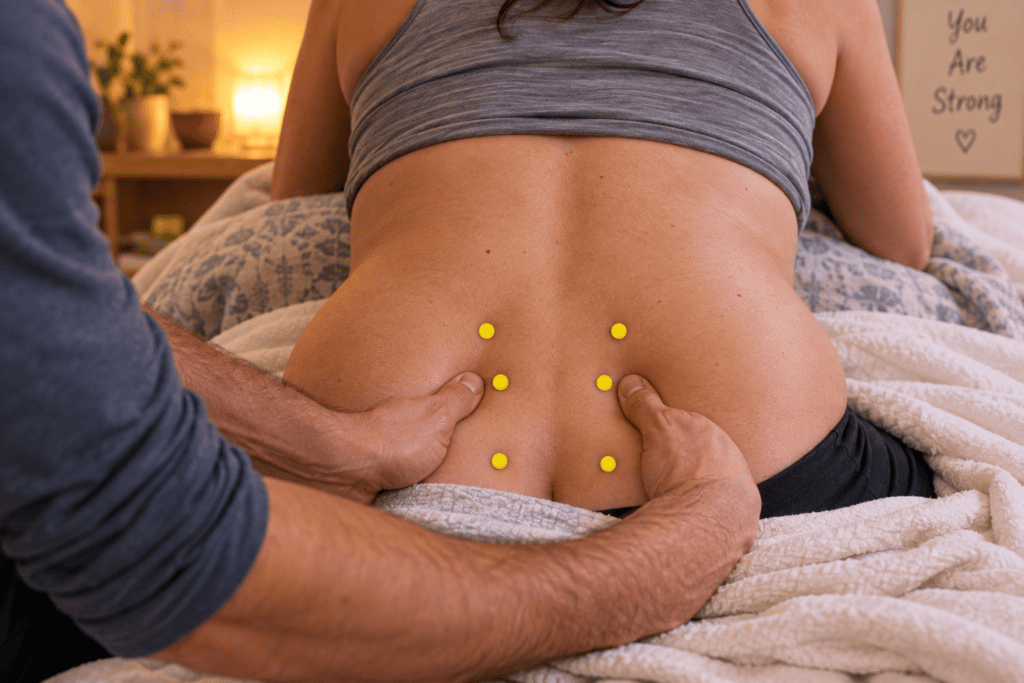
3. Press on BL32 on the sacrum, especially powerful for labor pain. BL32 sits on the lower back, on the sacrum, in the second small dimple down from the top of the buttock crease, about a thumb-width out from the midline on each side. A partner presses firmly with thumbs during contractions for one to two minutes. BL32 is called “Ciliao,” and it is one of the most effective points for labor pain.
BL32 is highly effective at easing labor pain and often surpasses LI4 in pain reduction. It’s especially helpful for relieving intense lower back and sacral pain associated with labor, including back labor. Pressing this point typically causes tingling or numbness, and firm pressure applied by a partner during contractions can provide significant relief, making it one of the best acupressure options. Located on the sacrum, it is considered a partner point and also serves as counterpressure for back labor. For deep, lower pain during labor, this point is particularly powerful and is used exclusively during labor.

4. Press on the sacral and low-back points for back labor. The whole sacrum and lower back hold key points for labor, including the row of sacral points and the tender spots the laboring person feels most. A partner can use the heels of their hands, thumbs, or firm counterpressure across the sacrum and lower back during contractions, for as long as it helps. These sit along the Bladder channel over the sacrum, the region most connected to the uterus and labor.
Much of the intense pain during labor is felt in the lower back and sacrum. A natural, effective relief method is to apply firm pressure across the entire area, not just the BL32 point. When a partner applies steady pressure on the sacrum or provides consistent counterpressure to the lower back during contractions, it helps ease the deep, grinding pain, especially when the baby’s position presses against the spine. This technique closely resembles the hip squeeze and counterpressure recommended by doulas and midwives, and it works very well when combined with stimulation of specific points. Overall, in cases of back labor, partner-provided counterpressure on the sacrum and lower back is extremely beneficial.
5. Press on GB21 on the top of the shoulder to encourage descent. GB21 sits at the highest point of the shoulder, midway between the base of the neck and the tip of the shoulder, on the trapezius ridge. A partner presses down firmly, or squeezes the muscle, for about a minute during contractions. GB21 is called “Jianjing,” a classic point for encouraging the downward movement of labor. Use GB21 only during labor, never during pregnancy.
GB21 exerts a strong downward energy influence, making it a classic point for stimulating and supporting labor by guiding the baby downward. It also alleviates shoulder and neck tension often held during labor, providing comfort between and during contractions. Partners can simply press or squeeze it from behind. Due to its potent effect on promoting descent, GB21 is reserved exclusively for use during labor and should not be used during pregnancy.

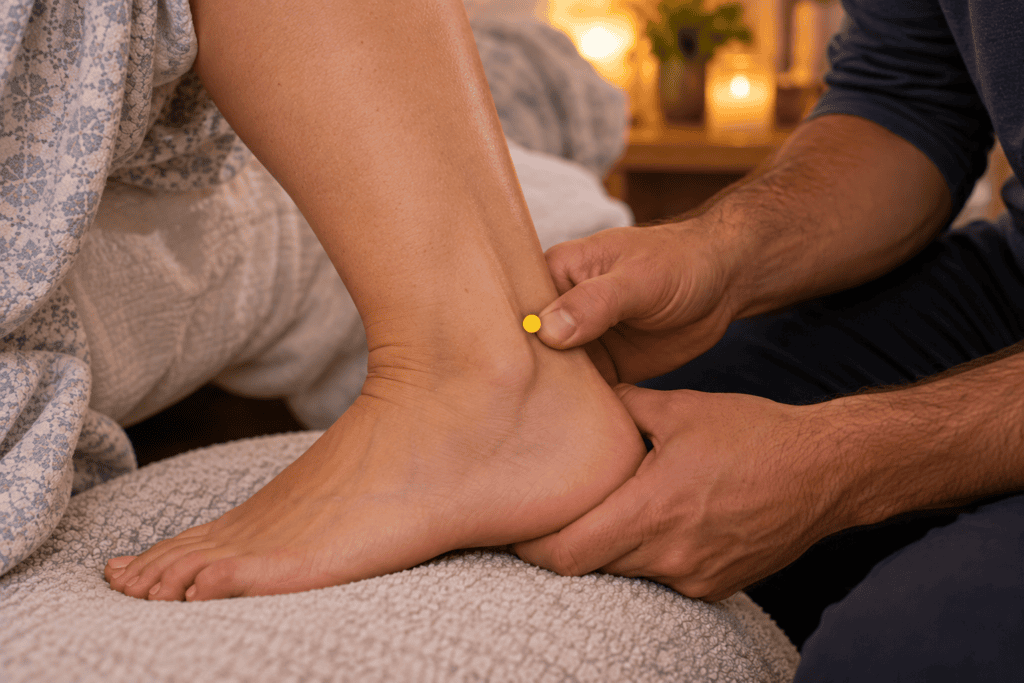
6. Press on BL60 at the ankle to ease pain and support labor. BL60 sits in the hollow between the outer ankle bone and the Achilles tendon, level with the tip of the ankle bone. A partner or the laboring person presses firmly for about a minute during contractions on each ankle. BL60 is called “Kunlun” and is used to ease labor pain and support labor progress. Use BL60 only during labor, never during pregnancy.
BL60 is typically used to stimulate labor and alleviate associated pain, particularly in the first stage. Located on the Bladder channel running down the back and across the sacrum, it corresponds to the area where much labor pain occurs. It helps labor progress and eases discomfort, and its accessibility at the ankle makes it convenient to use. As with other labor-related points, its labor-promoting function limits its use to labor, and it should not be pressed before the due date.
7. Press on BL67 at the little toe, the classic point for labor. BL67 sits at the outer corner of the little toenail, at the base of the nail on the side away from the other toes. A partner presses firmly with a thumbnail or fingertip for about a minute on each foot. BL67 is called “Zhiyin,” a classic point associated with labor and the baby’s position. Use BL67 only in labor, never during pregnancy.
BL67, located at the end of the Bladder channel, has a long tradition of being linked to labor and helping to position the baby optimally. It supports and advances labor. This potent point, situated on the little toe, requires firm pressure. As a classical point connected to labor, particularly for influencing the baby’s position and triggering labor, it is only applied during labor and should be avoided entirely throughout pregnancy.

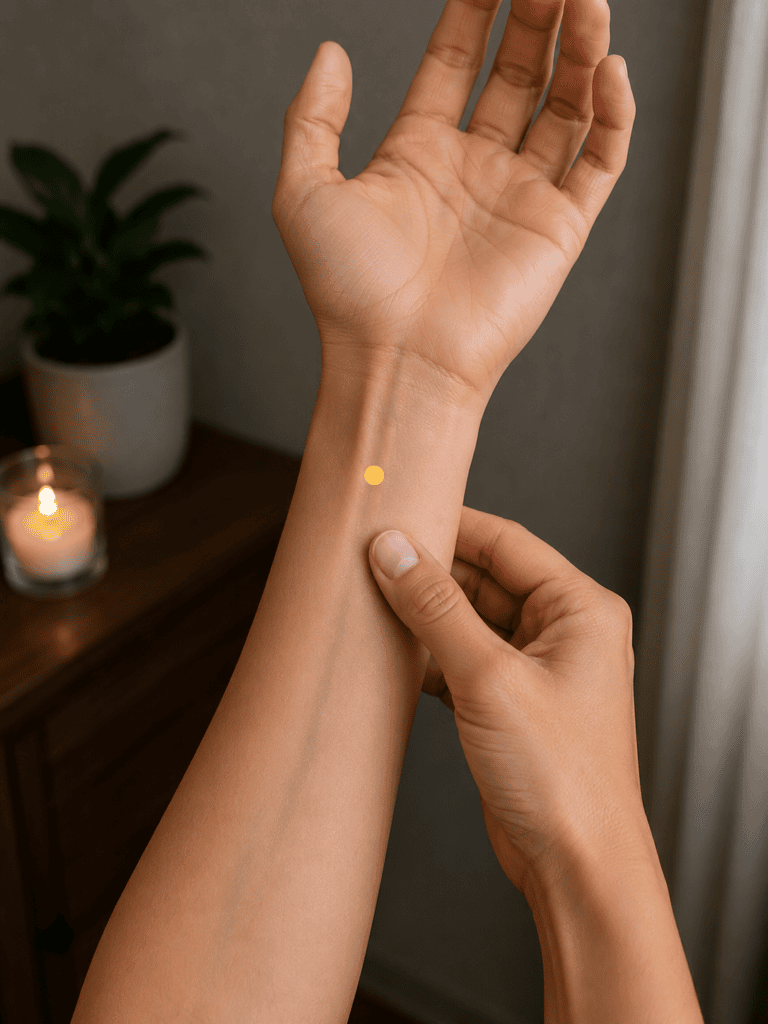
8. Press on PC6 on the inner forearm for nausea and calm. PC6 sits three finger-widths above the inner wrist crease, in the center of the forearm between the two tendons. Press firmly for about a minute, as needed, on each arm. PC6 is called “Neiguan,” the “Inner Pass,” and it is the point for nausea and for calming the spirit.
Nausea and sometimes vomiting are common during labor, especially in the intense transition phase. PC6 is the ideal acupoint for soothing a queasy stomach, similar to its use for other types of nausea. It also helps open the chest and calms the mind, helping the birthing person stay steady during contractions. Unlike acupoints that strongly induce labor, PC6 provides support and comfort by addressing nausea and nervousness instead of promoting labor. A partner or the laboring person can use it whenever nausea worsens or panic arises. It is especially helpful for managing queasiness and moments of overwhelm.
9. Press on Yintang between the eyebrows to calm and steady. Yintang sits in the small hollow directly between the two eyebrows. A partner presses gently or holds and makes slow circles for about a minute, especially between contractions. Yintang is an extra point and one of the most calming points in the body.
Fear and tension can worsen labor pain, but staying calm and relaxed can significantly reduce it, which makes Yintang particularly useful. This point calms the mind and relaxes the nervous system, helping the birthing person stay centered and focused between contractions and during rest periods. When a partner gently stimulates this point, especially during breaks between contractions, it can feel deeply calming and reassuring. This point is gentle and soothing rather than labor-inducing, making it a helpful tool for partners to use throughout the process, especially given labor’s emotional intensity.

Why These Acupressure Points Work
In Traditional Chinese Medicine, labor is a powerful downward movement of Qi and Blood, and the labor points move that flow, encourage effective contractions and the baby’s descent, help the cervix open, and relieve the pain, while the calming points ease the fear and tension that amplify it. The nine points work across that whole picture, and the research supports the pain relief.
- The two main points (LI4, SP6) are those most studied in labor pain and help alleviate it while facilitating labor progress.
- The BL32 points, which are located in the sacral area and in the lower back, provide some of the greatest relief from the severe, deep pain associated with labor and back labor when they are pressed by a partner.
- The acupressure points GB21, BL60, and BL67 support labor, promote its descent and progression, and relieve pain.
- The comfort points (PC6, Yintang) reduce nausea and calm the mind because a less excited person experiences less pain.
The common thread in all of this is alleviating pain while allowing labor to proceed naturally, with one important caution: only use these points during labor, not in pregnancy.
How to Properly Use These Acupressure Points
Practice these points with your partner before labor and include them in your birth plan for use during the process.
- Use firm, steady pressure, as labor requires more strength than regular acupressure. Press the points throughout each contraction, as research shows this is the most effective approach.
- Ensure your partner is familiar with the key points beforehand, especially LI4 on the hands, SP6 on the legs, BL32 and sacral pressure on the lower back, and GB21 on the shoulders, so they can assist confidently when labor begins.
- Rely on sacral and low-back pressure for back labor, and use PC6 and Yintang to help with nausea, nerves, and relaxation between contractions.
- Feel free to use these points along with other comfort measures, like changing positions, breathing, warmth, a birth ball, and support from your birth team. Acupressure works well with all of these.
Use these acupressure points only after you’ve entered established, full-term labor, and include them in your birth plan when discussing it with your midwife or doctor. They provide a genuine, drug-free relief method and work best when combined with the full spectrum of support and pain relief options available to you as your labor advances.
When to Get Professional Help
Since the birth process is medically supervised, this article highlights acupressure as a comforting, supportive measure integrated into your care, not something you must manage alone. Follow your birth plan and follow your healthcare provider’s guidance on when to contact your midwife or doctor, when to go to the hospital or birth center, and how to monitor your labor progress. Seek immediate medical assistance if, during labor, you experience warning signs like heavy bleeding, sudden or severe abdominal pain, water breaking with green or brown fluid, a noticeable decrease in the baby’s movements, severe headache or visual changes, or a strong urge to push before full dilation or your provider’s instructions. Also, report any other concerning symptoms.
These points apply only during established, full-term labor, not during pregnancy.
Acupressure is a safe, drug-free method to help manage labor pain, especially when combined with professional care that safeguards both you and your baby’s well-being.
Above and Beyond Acupuncture offers acupuncture, cupping, and lifestyle coaching at the North Frank Lloyd Wright Boulevard location in Scottsdale.
Schedule an appointment online to start your healing journey.
The points above are only as effective as the technique used to apply them. Where to press, how firmly, and for how long all affect the result. For a full breakdown of how to perform acupressure properly at home, read Performing Acupressure in 3 Easy Steps.

About the Publisher
Paul Kerzner, L.Ac., is a licensed acupuncturist and board-certified herbalist, as well as the founder of Above and Beyond Acupuncture in Scottsdale. His own journey from chronic patient to practicing acupuncturist shapes his commitment to providing honest, clinically grounded information about acupuncture and Traditional Chinese Medicine. Learn more about Paul and his clinical approach on the About Us page.