Key Takeaways
- Neuropathy in the feet leads to burning sensations, tingling, and numbness, which interfere with daily activities.
- Acupressure can help boost circulation and promote nerve health, working alongside standard treatments.
- The article highlights nine important acupressure points on the feet and legs that focus on enhancing Qi and Blood circulation.
- Safe application requires careful pressure, especially for those with reduced sensation.
- Professional evaluation is essential to identify the underlying causes of neuropathy and to address serious symptoms.

Neuropathy in the feet is among the most common and disruptive forms of nerve dysfunction.
Symptoms like burning pain at night, tingling, pins-and-needles sensations across the soles and toes, numbness that affects balance, and decreased sensation that raises the risk of unnoticed injuries can greatly impact everyday life. Foot neuropathy can result from various causes, most commonly diabetes, followed by chemotherapy, nerve compression, and other factors. Typical nerve-pain medications often relieve symptoms but do not improve the underlying nerve function. Acupressure offers a supportive, at-home practice to improve circulation, support nerve health, and help control symptoms in the feet. Although acupressure is not a substitute for treating the root cause of neuropathy, it can complement conventional care.
Before starting acupressure, exercise caution, especially if you have significant foot sensation loss. Use lighter pressure and watch the application carefully, since reduced sensation may make it hard to assess pressure accurately. Check the skin regularly for redness or irritation, and follow foot care precautions if sensation is decreased. When done carefully, these acupressure points are a safe daily practice.
In Traditional Chinese Medicine, foot neuropathy is seen as resulting from multiple overlapping patterns affecting the feet. A lack of Qi and Blood flow fails to nourish the nerves, and Blood stagnation in the feet causes burning pain and abnormal sensations. In chronic cases, there is often a depletion of the Kidney’s deep reserves, which support the bones and lower body. Factors like wind are believed to shift and cause unpredictable tingling sensations. Since the Spleen, Liver, and Kidney channels all end in the feet, specific acupressure points are chosen to promote Qi and Blood movement, resolve stagnation, support the body’s reserves, and reduce nerve symptoms, focusing on the feet and legs.
Here are nine acupressure points that can help, focused specifically on the feet.
What Acupressure Points to Press and Why
1. Press on ST36 below the knee to move Qi and Blood into the legs and feet. ST36 sits four finger-widths below the lower edge of the kneecap and one finger-width to the outside of the shinbone, on the muscle that rises when you flex your foot. Press firmly with your thumb for one to two minutes on each leg. ST36 is called “Zusanli,” the “Leg Three Miles,” and it is one of the most important points for the legs and feet.
ST36 is a key acupressure point for foot neuropathy because it enhances Qi and Blood, improving blood flow to the legs and feet. This addresses the deficiency causing numbness and weakness in chronic neuropathy. As the main point to boost overall energy and one of the major leg points, it targets the root of poor nourishment in the feet. Located on the upper leg where sensation remains, it is easy to press firmly. Being the first point used in treatment, regular stimulation helps rebuild the Qi and Blood essential for healthy feet.
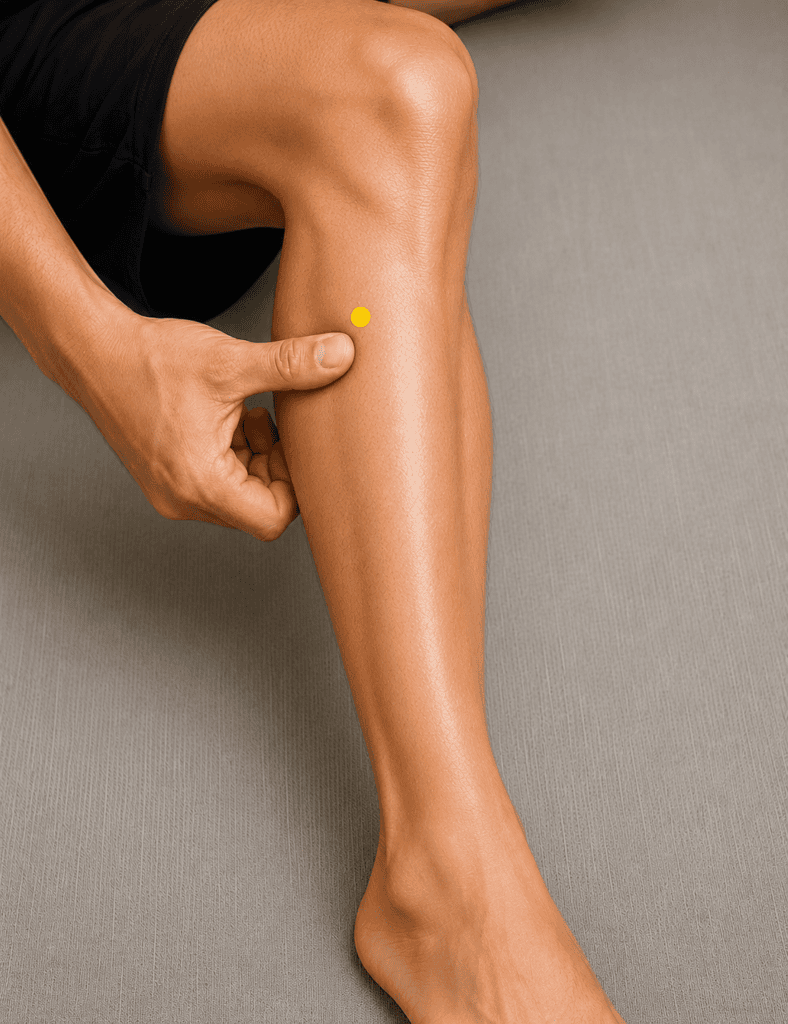
2. Press on GB34 below the outer knee for the legs and circulation. GB34 sits on the outer lower leg, in the hollow just below and in front of the head of the fibula, the bony knob below the outer side of the knee. Press firmly with your thumb for one to two minutes on each leg. GB34 is called “Yanglingquan,” and it is the influential point for the tendons and for circulation through the leg.
GB34 enhances blood flow in the legs and addresses muscular tension and circulatory issues common in foot neuropathy. As a key point for the sinews, it supports the lower leg tissues that contain the nerves and blood vessels that supply the feet. It works particularly well when combined with ST36 to provide comprehensive support for the legs and feet. For those with foot neuropathy, this point helps improve circulation along the leg, and because it’s in an area where sensation is typically maintained, you can press it firmly.
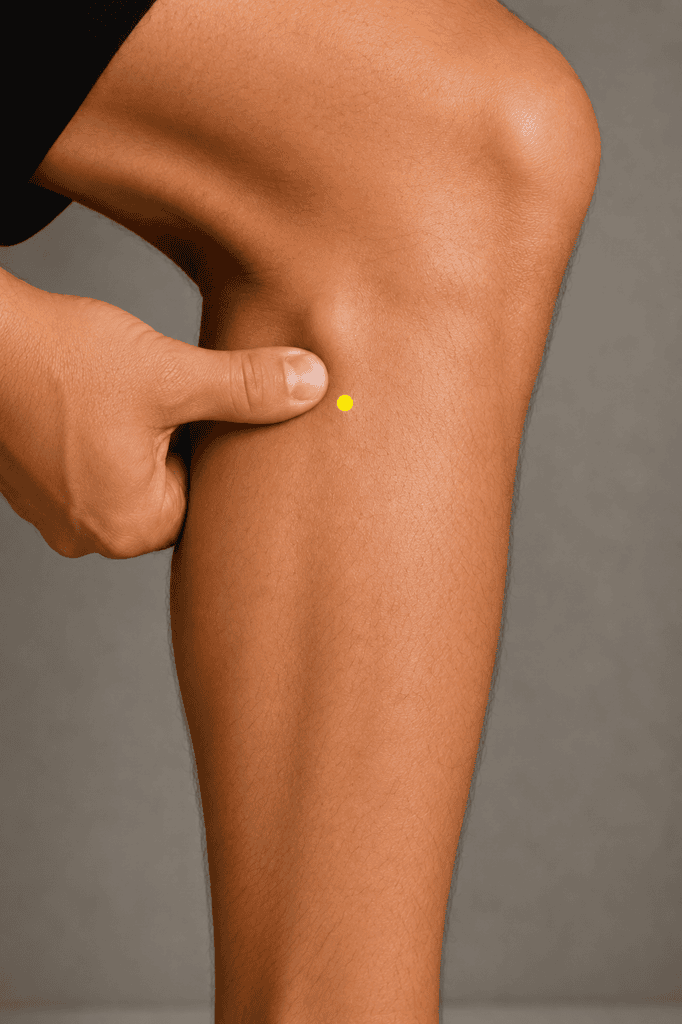
3. Press on SP6 above the inner ankle, the meeting of three channels. SP6 sits four finger-widths up from the tip of the inner ankle bone, just behind the back edge of the shinbone. Press firmly for one to two minutes on each leg. SP6 is called “Sanyinjiao,” the “Three Yin Intersection,” where the Spleen, Liver, and Kidney channels meet. SP6 is avoided during pregnancy.
SP6 is especially beneficial for foot neuropathy because it influences all three meridians that supply the feet. The Spleen produces the Qi and Blood the feet need, the Liver manages the movement and storage of Blood for the feet, and the Kidney provides deep, foundational support that chronic neuropathy can deplete. SP6 supports all these functions. Located just above the ankle, it is a key point for nourishing the feet. Since foot neuropathy often involves numbness, lack of nourishment, and depletion, SP6 addresses the entire lower-body foundation. The same pregnancy warning applies.
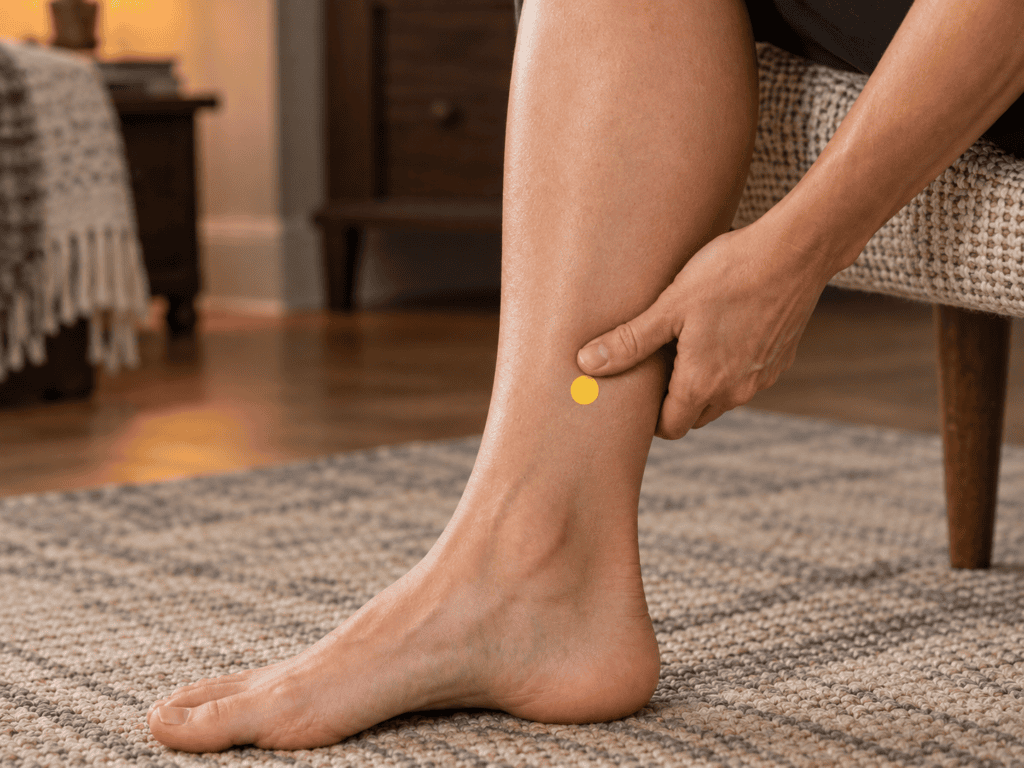
4. Press on KI3 behind the inner ankle for the Kidney and the deep reserves. KI3 sits in the hollow between the inner ankle bone and the Achilles tendon, level with the tip of the ankle bone. Press firmly with your thumb for one to two minutes on each ankle. KI3 is called “Taixi,” the Kidney’s source point.
Persistent foot neuropathy depletes the Kidney’s deep reserves, which support the function of the lower body and feet. KI3, the Kidney’s source point, restores that fundamental constitutional basis. It addresses the deep deficiency that distinguishes chronic neuropathy lasting years from cases that developed more recently, helping replenish the reserves the condition gradually wears away. Because it lies directly above the ankle at the level of the foot, it also helps direct Qi and Blood to the foot. For chronic foot neuropathy, especially when there is an overall state of depletion or aging, this point acts at the most fundamental level and is used with SP6 to support the lower body.
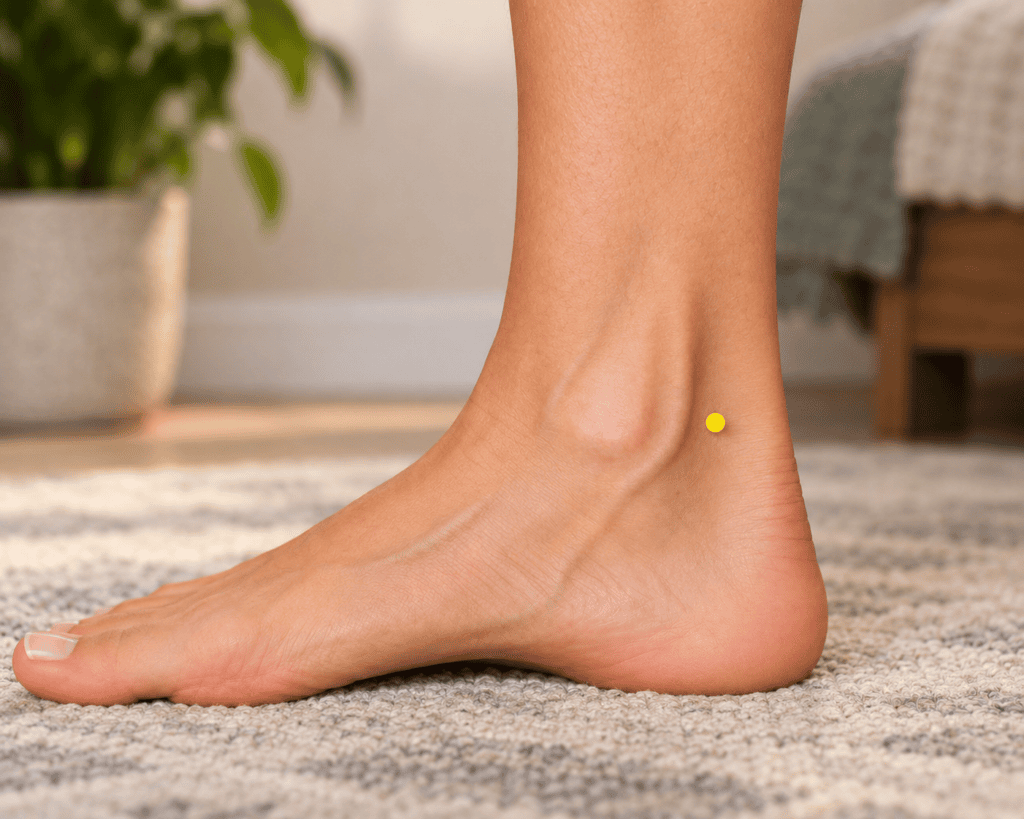
5. Press on BL60 behind the outer ankle to open the path to the foot. BL60 sits in the hollow between the outer ankle bone and the Achilles tendon, level with the tip of the ankle bone, opposite KI3. Press firmly with your thumb for one to two minutes on each ankle. BL60 is called “Kunlun,” a major point on the Bladder channel that runs down to the foot.
The BL60 point is located on the Bladder channel, which runs along the back of the body to the foot, promoting the flow of Qi and Blood from the ankle to the foot. It is opposite KI3 on the inner side. Pressure applied to both points, one on each side of the Achilles tendon, effectively opens the pathway into the foot from both sides. This point is commonly used to relieve pain and improve circulation in the back leg and foot. In cases of foot neuropathy, it helps open the ankle gateway that circulation must pass through to reach the foot, working together with KI3 by encircling the area above the ankle.
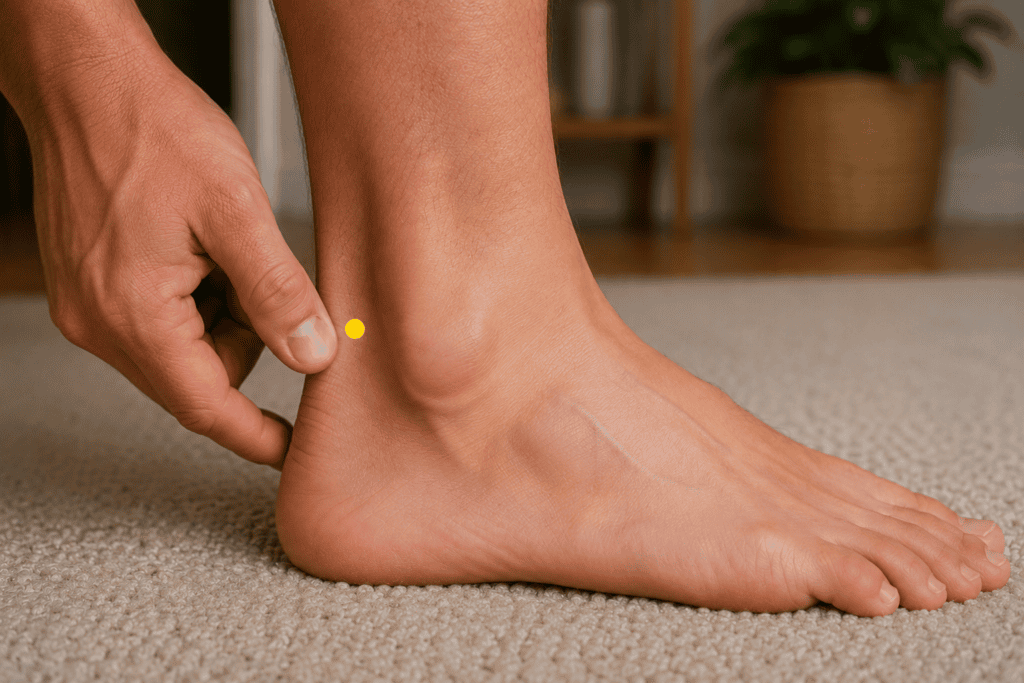
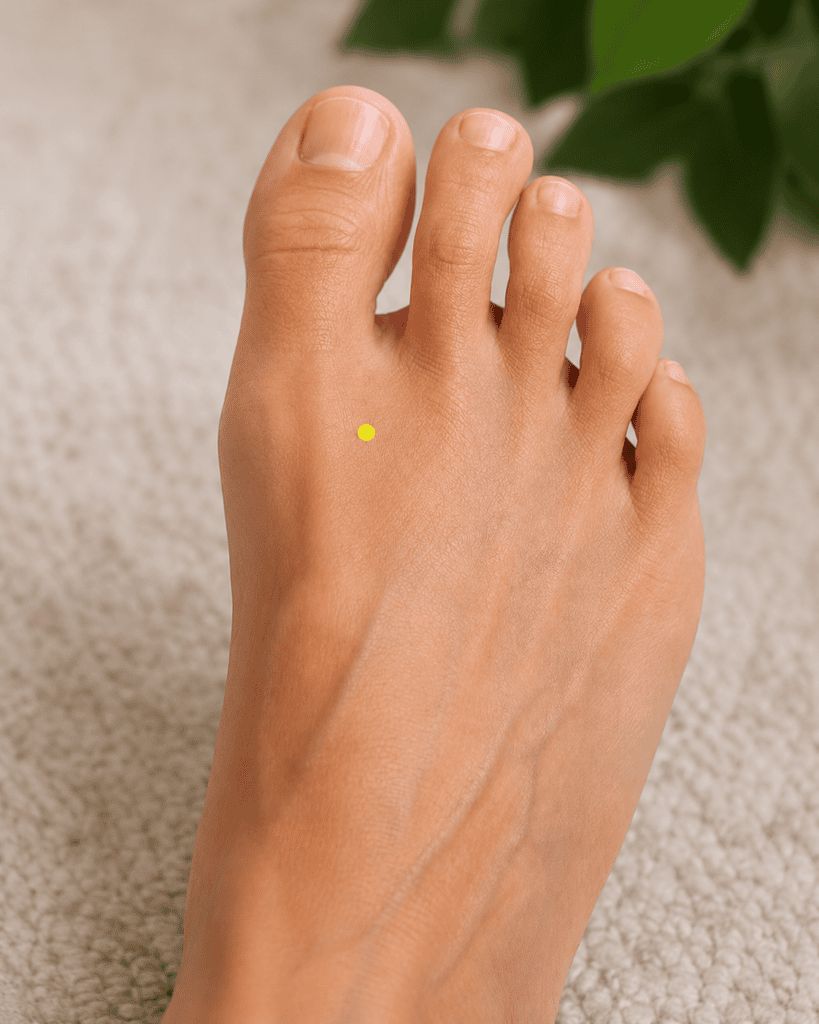
6. Press on LR3 on the top of the foot to move the stagnant Blood. LR3 sits on the top of the foot, in the webbing between the big toe and second toe, about two finger-widths back where the bones meet in a small hollow. Press firmly with the thumb for one to two minutes on each foot. LR3 is called “Taichong,” and it moves the Liver Qi and Blood.
LR3 is located on the sole of the foot and targets Blood stagnation, which causes burning pain and abnormal sensations in foot neuropathy. It helps move Liver Qi and Blood through the foot, clearing stagnation and easing symptoms like burning and tingling. Because sensation may be reduced in this area, apply gentle pressure and monitor how much force you use. For foot neuropathy symptoms like burning and abnormal sensations, this point works by dislodging stagnant Blood and is one of the most important acupressure points for this condition.
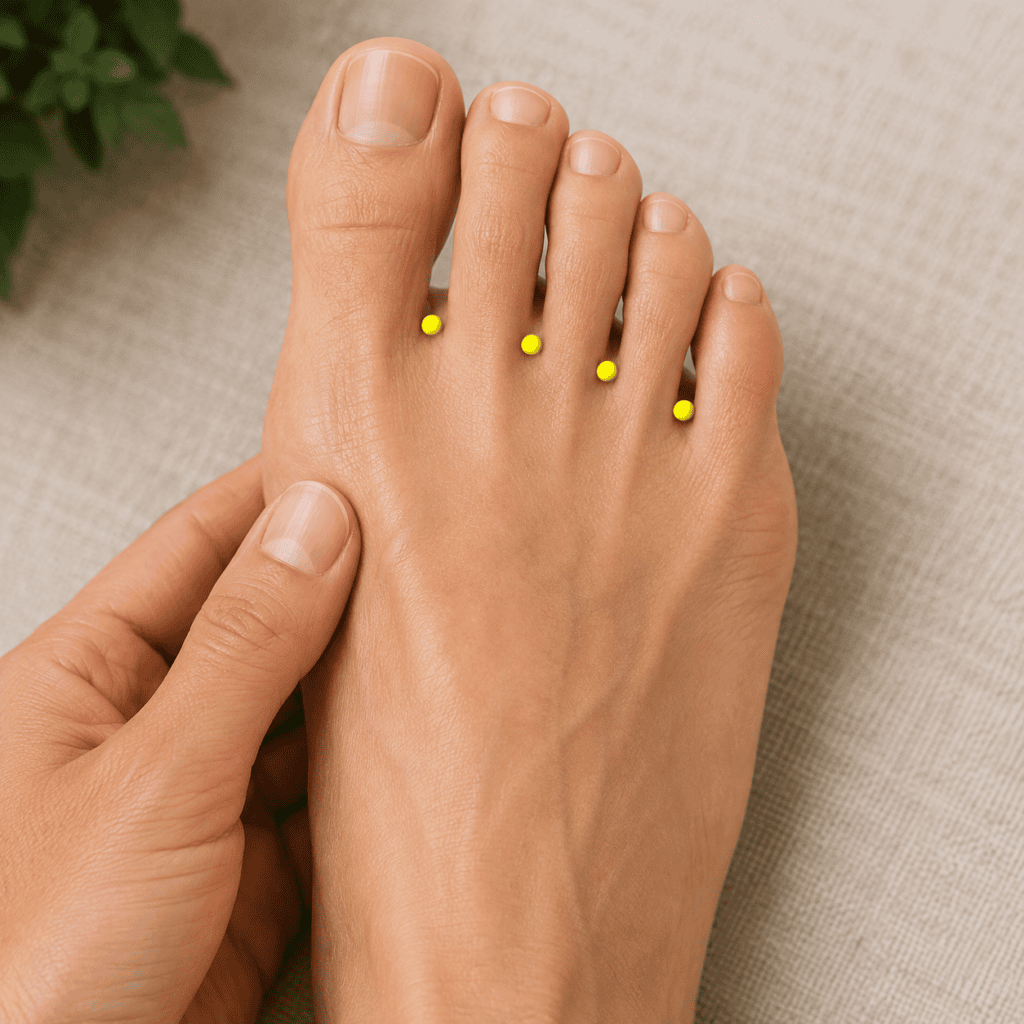
7. Press on Ba Feng in the webbing between the toes, specific to foot neuropathy. Ba Feng are extra points on the top of the foot in the webbing between the toes, at the junctions where the toes meet the foot, four on each foot, between the first and second toes, second and third, third and fourth, and fourth and fifth. Press each webbing with your thumb for 30 seconds to a minute per point, paying attention to your pressure. Ba Feng translates to “Eight Winds” and is the classical point group for foot neuropathy.
Ba Feng is a key acupressure point linked to peripheral neuropathy in the feet, with centuries of use for these symptoms. It effectively alleviates numbness, tingling, burning pain, and pins-and-needles common in diabetic and chemotherapy-related foot neuropathy. The name, Eight Winds, reflects the traditional understanding that wind influences extremities and causes the symptoms’ fluctuating, unpredictable nature. Located between the toes where nerve damage often occurs, Ba Feng directly affects the feet. Especially for foot neuropathy, it is vital to press this point carefully in areas with reduced sensation.
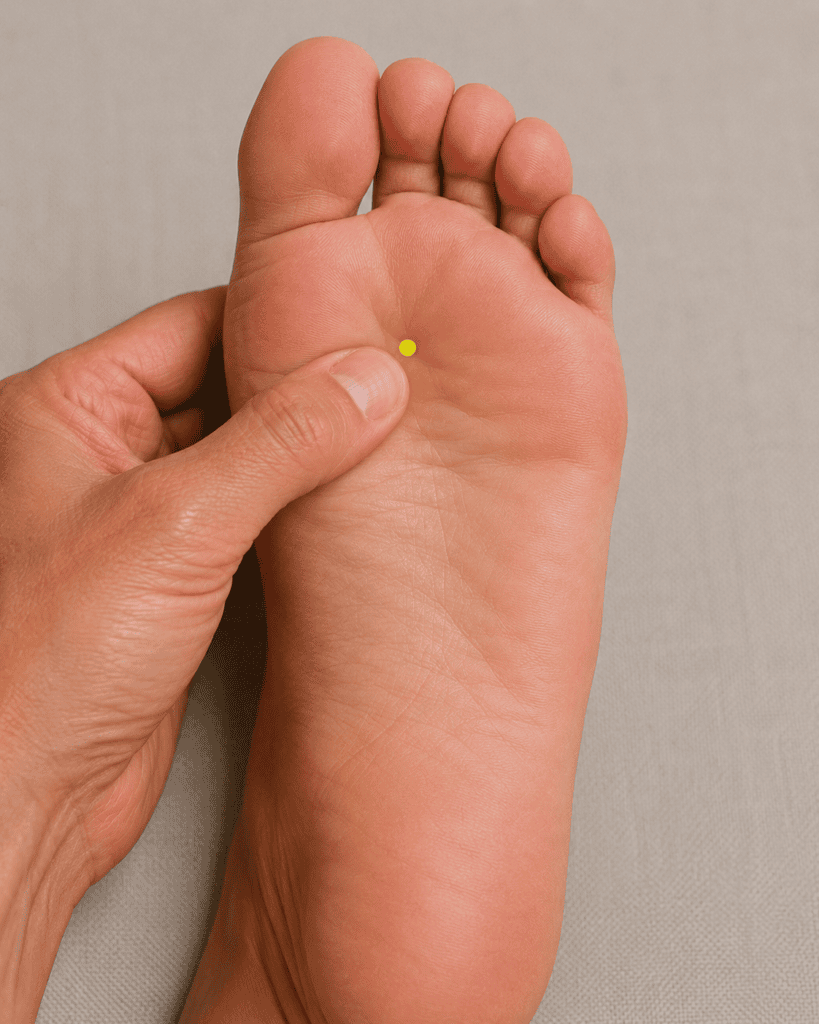
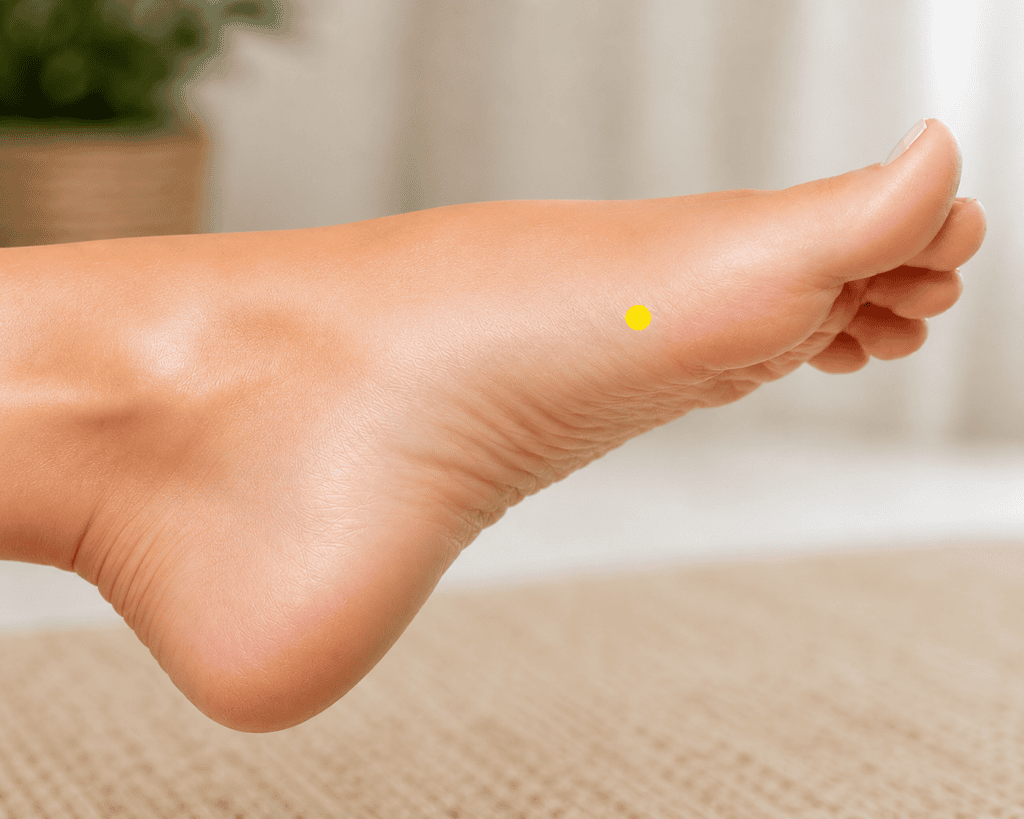
8. Press on KI1 on the sole of the foot to draw Qi and Blood into the foot. KI1 sits on the sole of the foot, in the hollow that forms in the center of the ball of the foot when you curl the toes, about a third of the way down from the toes to the heel. Press firmly with your thumb for one to two minutes on each foot. KI1 is called “Yongquan,” the “Bubbling Spring,” and it is the first point of the Kidney channel on the sole.
The first point of the Kidney channel, also the lowest on the body, lies in the affected area of the sole. It draws Qi and Blood down into the foot and connects with the Kidney’s constitutional strength, which chronic neuropathy may weaken. Located on the sole, where numbness and altered sensation are most prominent, it helps ground and stabilize the treatment. Because sensation here is diminished, apply pressure carefully. For foot neuropathy, this point nourishes the sole and supports the entire treatment, making it a suitable final focus.
9. Press on SP3 on the inner edge of the foot to strengthen the Spleen at the foot. SP3 sits on the inner edge of the foot, in the hollow just behind and below the ball of the big toe, where the skin changes color along the side of the foot. Press firmly with your thumb for one to two minutes on each foot. SP3 is called “Taibai,” the source point of the Spleen.
SP3, the Spleen’s primary point on the foot, strengthens the Spleen’s role in generating the Qi and Blood the feet need, directly addressing deficiencies at the foot level. Because weak Spleen Qi reduces nourishment to the feet, this point supports the nourishment the feet need and is located directly on the affected foot. It complements ST36 and SP6, which are higher on the leg, by focusing on the Spleen’s function at the foot. For symptoms like numbness and poor nourishment related to foot neuropathy, SP3 reinforces the source point at the foot, completing the set of foot-level points.
Why These Acupressure Points Work
In Traditional Chinese Medicine, foot neuropathy involves several interconnected patterns: insufficient Qi and Blood flow to the feet, Blood stagnation in the feet, progressive exhaustion of the deep Kidney stores in chronic cases, and wind leading to shifting numbness and tingling sensations. The nine points, situated in the feet and legs, address all these aspects.
- The leg points (ST36, GB34) tonify the Qi and Blood and drive circulation down into the legs and feet.
- The three-channel and Kidney points (SP6, KI3) support the Spleen, Liver, and Kidney, which all reach the feet, and rebuild the deep reserves that long-standing neuropathy depletes.
- The ankle gateway point (BL60) opens the path into the foot, with KI3 opposite it.
- The foot points (LR3, Ba Feng, KI1, SP3) move stagnant Blood, directly address foot neuropathy through the classical Eight Winds points, and draw Qi and Blood into the sole and foot.
Chronic inflammation in neuropathy responds well to consistent, supportive work.
How to Properly Use These Acupressure Points
Apply firm pressure to the leg points and be gentle with the foot points, and maintain the routine consistently, as foot neuropathy improves with regular practice.
- Work through the full set once or twice a day for daily support, and press the foot-specific points, LR3, Ba Feng, KI1, and SP3, together for the strongest direct effect on the feet.
- For burning pain that flares at night, work LR3, KI3, and Ba Feng before bed to move the Blood and support the reserves behind the nighttime symptoms.
- For numbness and pins-and-needles, work ST36, SP6, KI1, and Ba Feng together to build and drive the Qi and Blood into the feet.
- Press the leg points ST36, GB34, SP6, KI3, and BL60 firmly, and press the foot points lightly with visual attention if foot sensation is reduced, then check the skin.
- Hold each point for one to two minutes, give it two to four weeks of consistent daily practice to gauge the benefit, and combine it with gentle massage of the whole foot.
Acupressure benefits foot health and, when combined with standard neuropathy management, improves overall outcomes. Gentle, routine activities like walking, swimming, or tai chi improve blood flow to the feet. Applying warmth to cold, poorly circulated feet helps draw blood, aligning with Chinese medicine’s preference for warmth to alleviate stagnation. An anti-inflammatory diet, B vitamins, particularly B12 for nerve function, and good hydration support nerve health. For diabetic neuropathy, blood sugar control is crucial. When sensation diminishes, careful daily foot care is vital: regularly inspect for cuts, blisters, or sores that may go unnoticed; keep feet clean and moisturized; and wear well-fitting shoes, as unnoticed injuries pose a significant risk in neuropathy.
When to Get Professional Help
The acupressure points above describe daily symptoms of foot neuropathy but don’t replace attention to the underlying cause or address serious warning signs. Proper diagnosis and treatment of the cause are essential. If you haven’t seen a doctor yet, do so, especially since managing conditions like diabetes is key to protecting your feet. Seek medical evaluation if your neuropathy appears suddenly, worsens significantly, or if you experience weakness affecting walking or balance. Additionally, watch for signs of autonomic issues, such as severe dizziness when standing. Most importantly, promptly treat any signs of infection in a foot with reduced sensation, such as a cut, blister, sore, or ulcer that is red, swollen, warm, draining, or not healing. Foot infections can escalate quickly in neuropathy and cause serious complications. Because balance problems and fall risk are common, tell your doctor if you feel unsteady.
Acupressure can be a valuable complementary method for managing daily foot neuropathy symptoms and should complement medical treatment for the underlying condition and foot health.
Above and Beyond Acupuncture offers acupuncture, cupping, and lifestyle coaching at the North Frank Lloyd Wright Boulevard location in Scottsdale.
Schedule an appointment online to start your healing journey.
The points above are only as effective as the technique used to apply them. Where to press, how firmly, and for how long all affect the result. For a full breakdown of how to perform acupressure properly at home, read Performing Acupressure in 3 Easy Steps.
For a more complete picture, including hand neuropathy, acupressure for neuropathy covers both hands and feet, and, for the clinical side, can acupuncture treat neuropathy covers how it is approached in the treatment room.

About the Publisher
Paul Kerzner, L.Ac., is a licensed acupuncturist and board-certified herbalist, as well as the founder of Above and Beyond Acupuncture in Scottsdale. His own journey from chronic patient to practicing acupuncturist shapes his commitment to providing honest, clinically grounded information about acupuncture and Traditional Chinese Medicine. Learn more about Paul and his clinical approach on the About Us page.