Key Takeaways
- IT band syndrome causes outer knee pain in runners and cyclists due to overuse and muscle imbalances.
- Acupressure for IT band syndrome involves applying pressure to nine key points, mostly along the Gallbladder channel, for relief.
- Traditional Chinese Medicine views the condition as Qi and Blood stagnation requiring tension release and sinew nourishment.
- Daily practice of these acupressure points supports recovery and helps prevent future flare-ups, especially after running or cycling.
- Seek professional help if knee pain persists despite self-care, or if swelling, numbness, or difficulty bearing weight occurs.
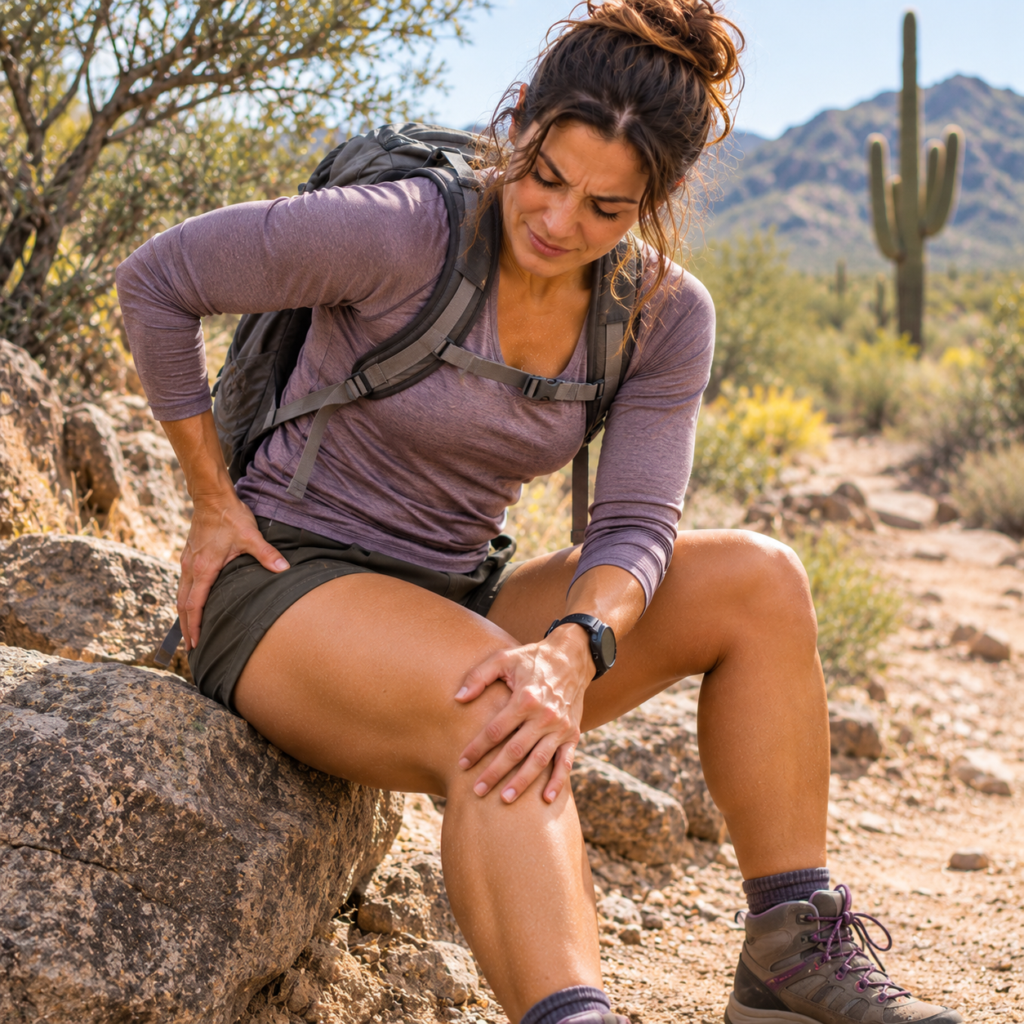
The pain usually starts in the same spot on every run. The first mile feels fine, but by the second or third mile, a sharp ache develops on the outside of the knee. After a few more minutes, each step sends pain along the joint’s outer edge, and running downhill or taking the stairs makes it worse. Stopping helps, but the pain returns at nearly the same distance on the next run.
The Hospital for Special Surgery explains that the IT band is a long, flexible band of fascia running from the hip to just below the outside of the knee. IT band syndrome is a common overuse injury that causes pain on the outside of the knee, which gets worse with repeated bending and straightening, like during running or cycling. Some people also notice clicking, popping, or snapping in that area. This injury is common in runners and cyclists, but also affects rowers, skiers, and players of sports like soccer, basketball, and field hockey. Risk factors include hip and knee alignment, inward-rolling feet, reduced flexibility, muscle imbalances, running on tilted surfaces or downhill, sudden increases in training, and worn-out running shoes. The main treatment is to rest from the activity that causes pain and do physical therapy.
The IT band doesn’t stretch much, so most tension comes from the muscles attached to it at the hip and from weak muscles that stabilize the pelvis. When the hip muscles tire, the knee moves inward with each step, pulling the band tighter across the outside of the knee. Rolling or stretching the band may feel good, but lasting relief usually comes from relaxing the muscles above it and strengthening the hip.
Traditional Chinese Medicine describes the IT band as following the Gallbladder channel, which runs along the outside of the hip, thigh, knee, and lower leg. The Liver nourishes the sinews, but repetitive strain, inadequate recovery, and insufficient rest can deplete that nourishment and cause Qi and Blood to stagnate along the channel. This can lead to tightness, aching, and sharp pain around the outer knee. Cold and Damp conditions, such as running in cold weather or sitting in air conditioning after a workout, can make the area stiffer and slow healing.
These nine points release tension in the outer hip and thigh, ease pain on the outside of the knee, and support the sinews as they heal.
What Acupressure Points to Press and Why
1. Press on GB29 on the side of the hip to release the top of the band. GB29 sits on the side of the hip, midway between the bony point at the front of the hip and the large bony bump on the outside of the hip. Press firmly with your thumb or knuckle for one to two minutes on each side. GB29 is called “Juliao,” the “Stationary Crevice.”
GB29 is over the muscle at the front of the hip that pulls on the top of the IT band. Releasing it often reduces tension along the entire band, making it a good place to start.
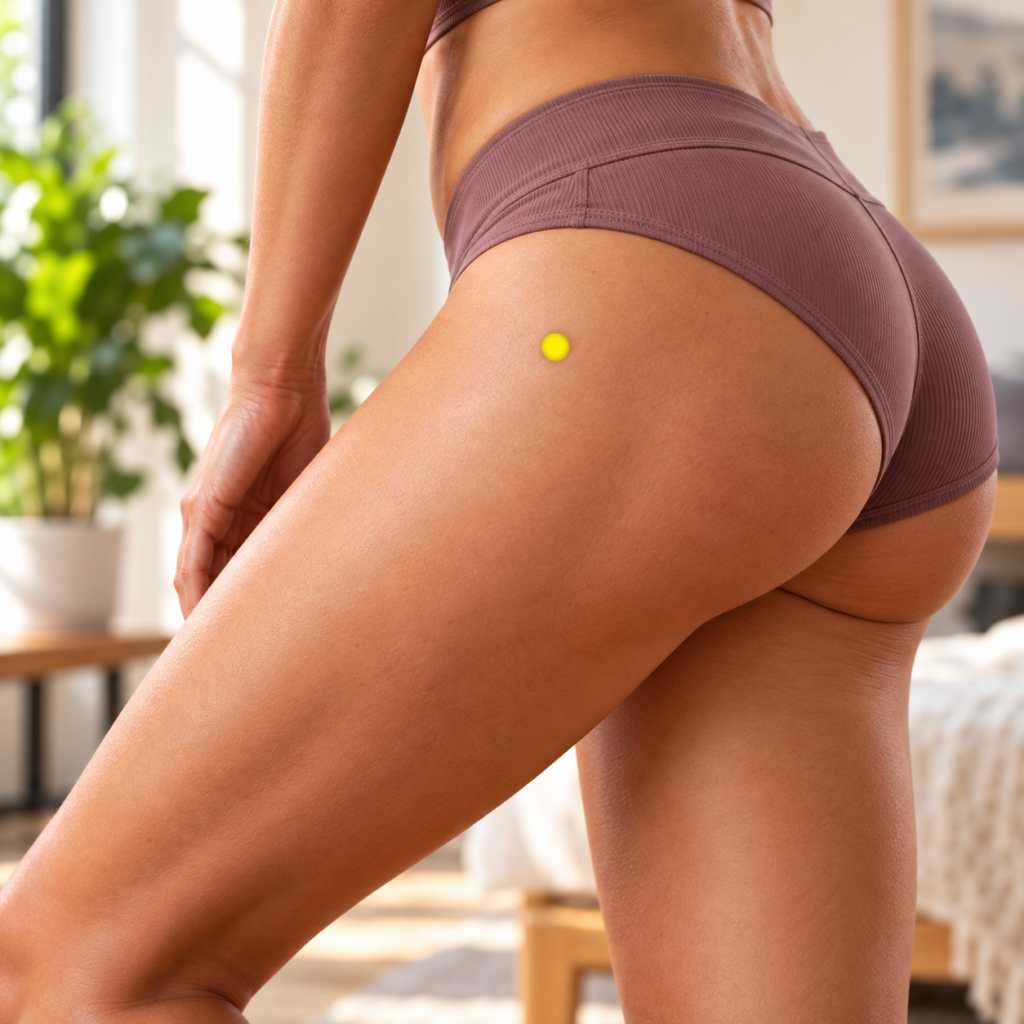
2. Press on GB30 on the side of the buttock to ease the hip muscles that pull on the band. To find GB30, locate the large bony bump on the outside of the hip, then move about one-third of the way from that bump toward the base of the tailbone. Lie on your side and press firmly with your thumb or knuckle, or lean against a tennis ball on a wall, for one to two minutes on each side. GB30 is called “Huantiao,” the “Jumping Circle.”
GB30 is one of the most important Traditional Chinese Medicine points for pain in the hip, buttock, and leg. It lies over the deep hip muscles that stabilize the pelvis; releasing these muscles eases pressure on the IT band from above.
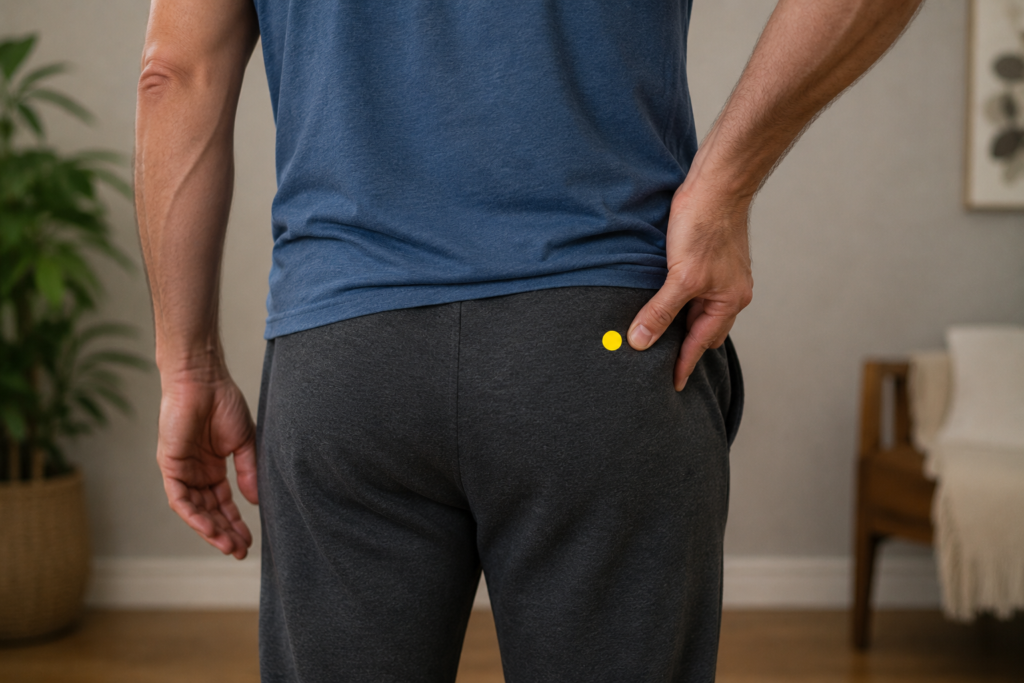
3. Press on GB31 on the outer thigh to release the middle of the band. To find GB31, stand with your arms relaxed at your sides; GB31 is where the tip of the middle finger touches the outside of the thigh. Press firmly with your thumb or knuckle for one to two minutes on each leg. GB31 is called “Fengshi,” the “Wind Market.”
GB31 is the classic point for pain, tightness, and numbness along the outside of the thigh. It sits directly over the IT band and is one of the most useful points for easing the tight, ropy feeling runners often get there.
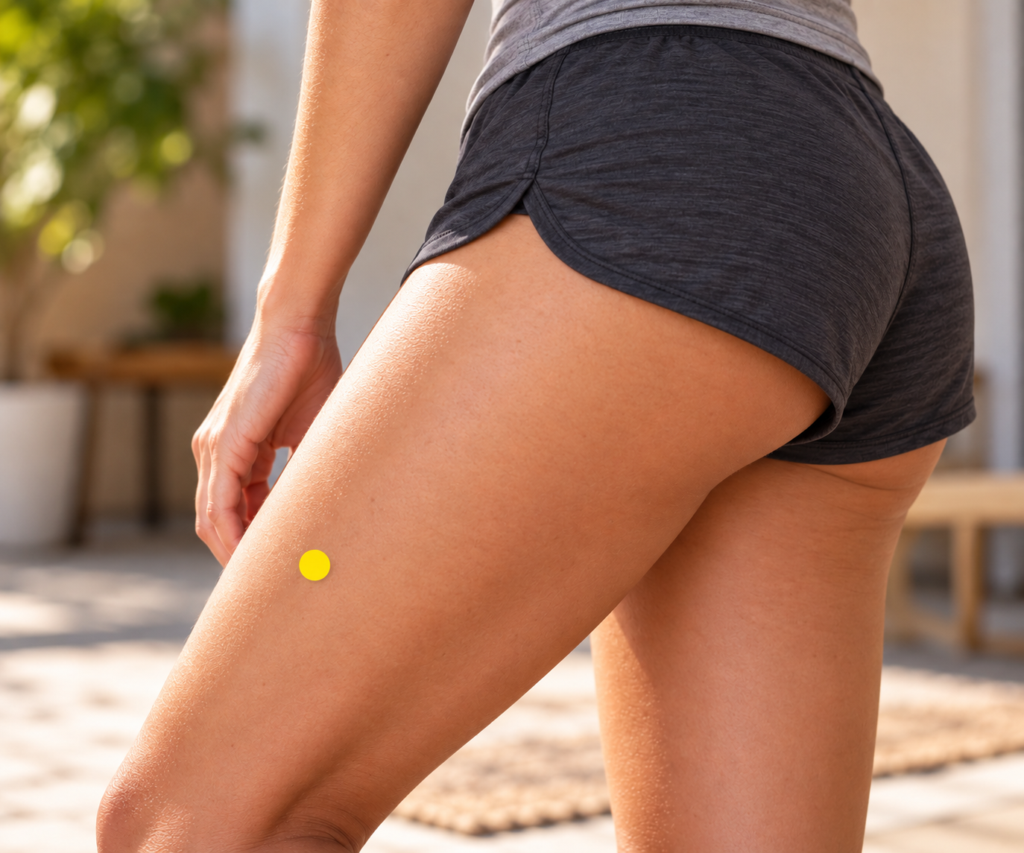
4. Press on GB32 on the lower outer thigh to ease tightness above the knee. GB32 sits on the outside of the thigh, about three finger-widths below GB31. Press firmly with your thumb for one to two minutes on each leg. GB32 is called “Zhongdu,” the “Middle Ditch.”
GB32 continues to release the band down toward the knee. It is traditionally used to relieve pain and stiffness along the outer thigh and loosen the lower part of the band before it crosses the knee.
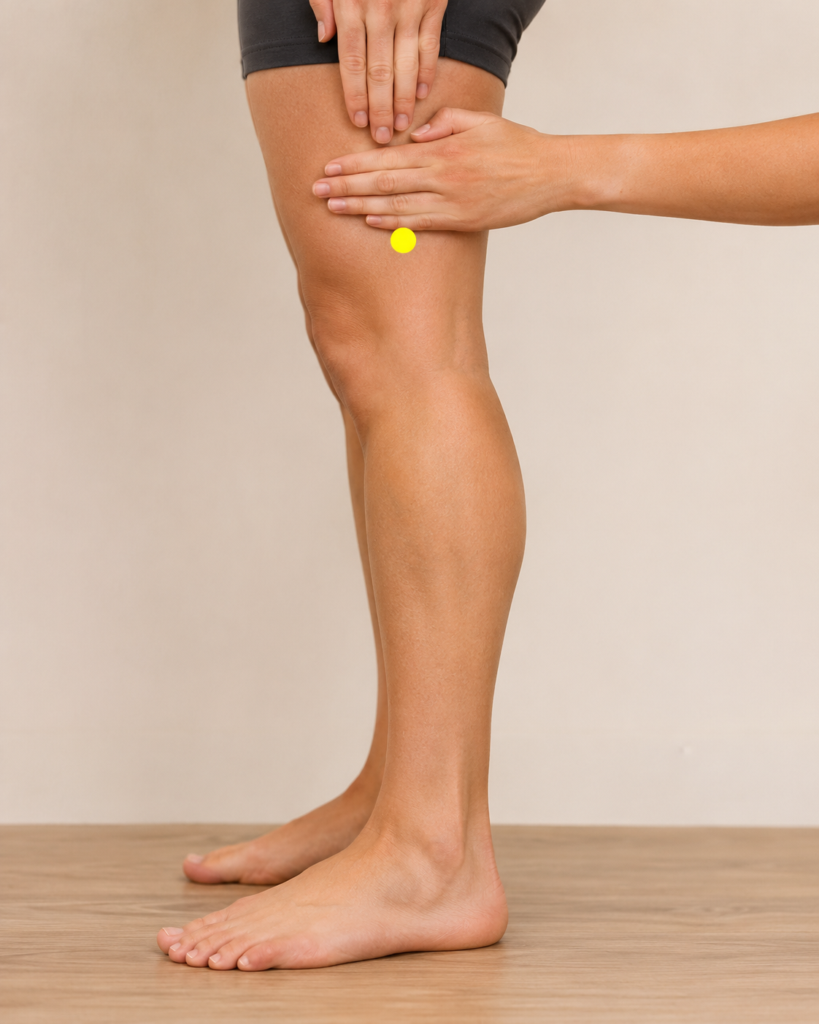
5. Press on GB33 on the outside of the knee to relieve outer knee pain. GB33 sits on the outside of the knee, in the hollow just above the bony bump on the outer side of the knee, between the bone and the tendon behind it. Press gently with your fingertip for one to two minutes on each knee, easing off if the area feels sharp or tender. GB33 is called “Xiyangguan,” the “Knee Yang Gate.”
GB33 is located where IT band pain is typically felt. It’s traditionally used to relieve pain, stiffness, and swelling on the outside of the knee. Applying gentle pressure here may help the joint move more easily.
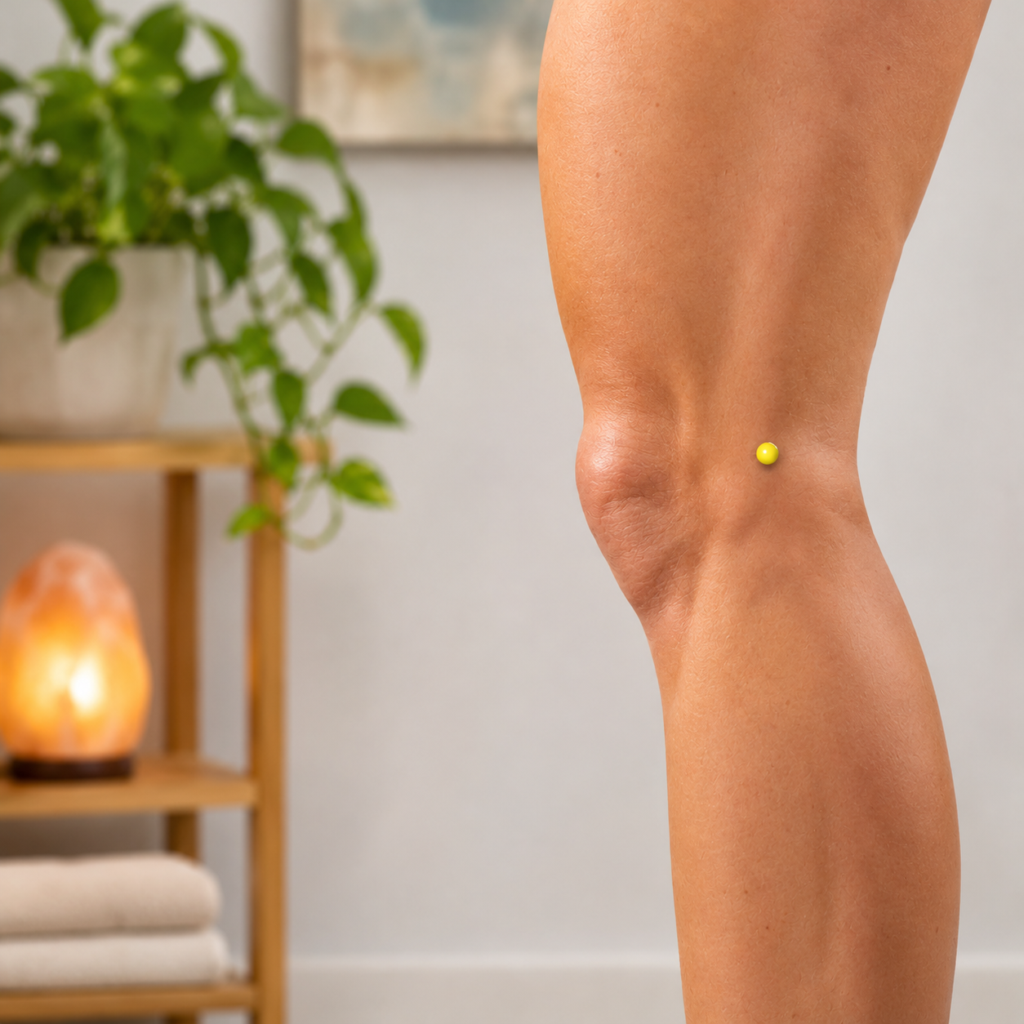
6. Press on GB34 below the knee to support the sinews. GB34 sits on the outside of the lower leg, in the hollow just in front of and below the small round bony bump below the knee. Press firmly with your thumb for one to two minutes on each leg. GB34 is called “Yanglingquan,” the “Yang Mound Spring.”
GB34 is the influential point of the sinews, making it one of the most important points for tendon, ligament, and fascia injuries. Located just below the IT band attachment, it supports healing in overworked tissues.
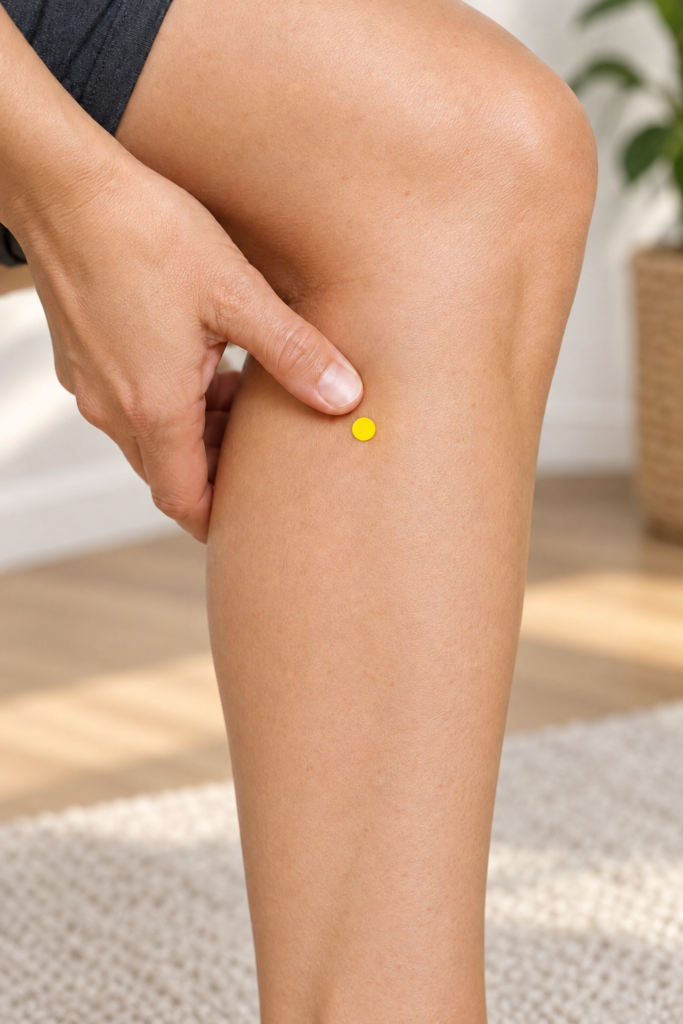
7. Press on GB39 on the outer lower leg to move Qi along the channel. GB39 sits on the outer lower leg, four finger-widths above the tip of the outer ankle bone, just in front of the outer leg bone. Press firmly with your thumb for one to two minutes on each leg. GB39 is called “Xuanzhong,” the “Suspended Bell.”
GB39 is a distal point on the Gallbladder channel used to treat leg pain and weakness. It helps move stuck Qi along the outer leg from below, making it useful when the outer knee is too tender for direct pressure.
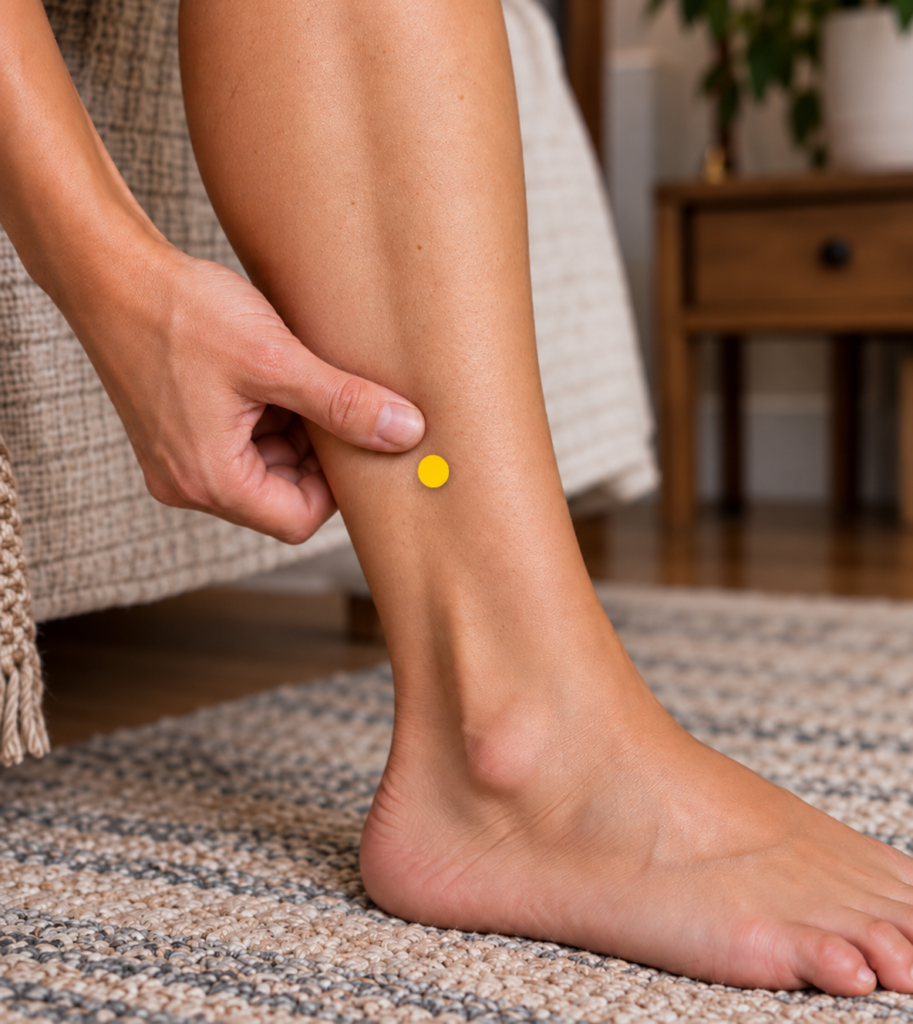
8. Press on GB41 on the top of the foot to release the whole channel. GB41 sits on the top of the foot, in the hollow just in front of where the bones of the fourth and fifth toes meet. Press firmly with your thumb for one to two minutes on each foot. GB41 is called “Zulinqi,” the “Foot Overlooking Tears.”
GB41 is a key distal point on the Gallbladder channel, traditionally used to treat pain along the outer body from the hip to the foot. Along with the points above, it helps release tension throughout the channel.
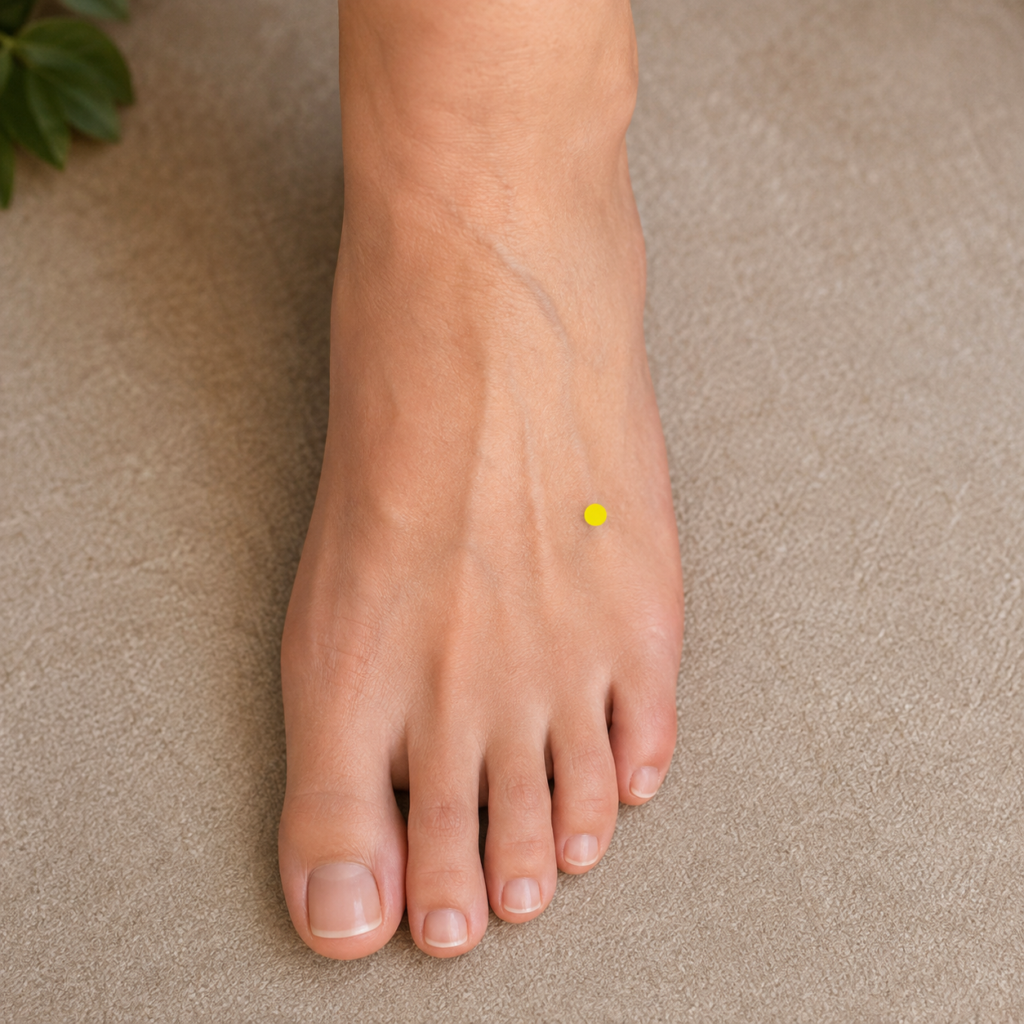
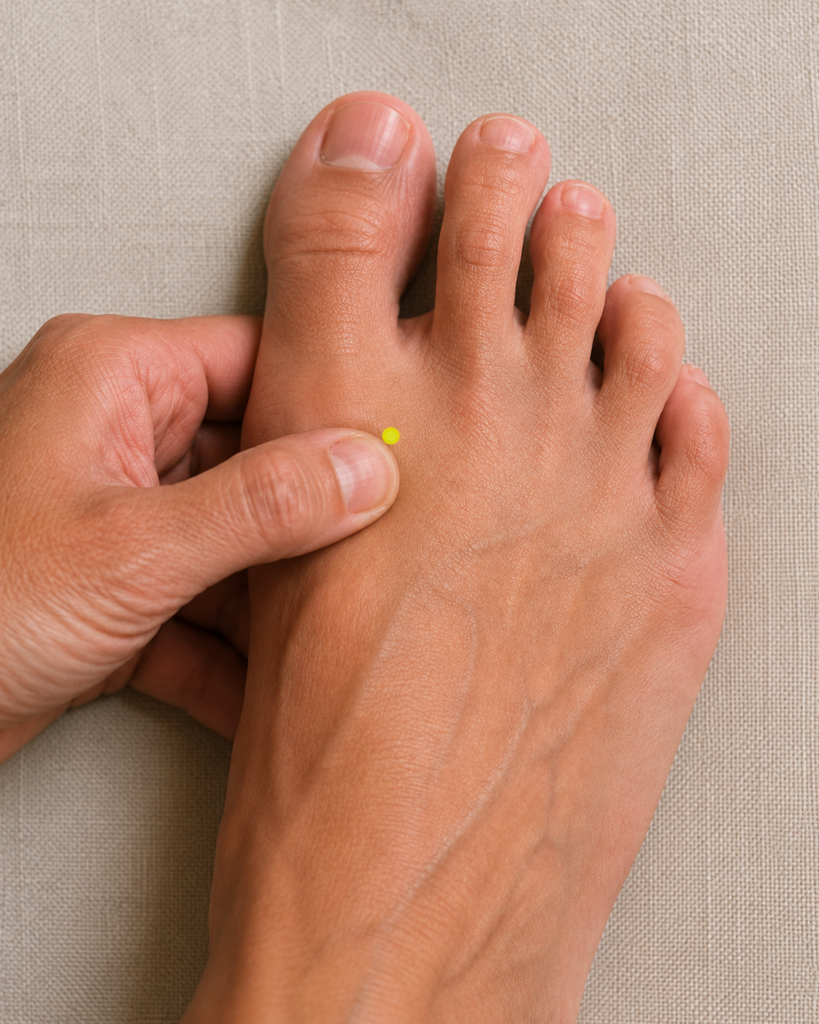
9. Press on LR3 on the top of the foot to nourish the sinews. LR3 sits on the top of the foot, in the hollow where the bones of the big toe and second toe meet, about two finger-widths above the web between the toes. Press firmly with your thumb for one to two minutes on each foot. LR3 is called “Taichong,” the “Great Surge.”
LR3 is the Liver’s source point. In Traditional Chinese Medicine, the Liver “nourishes the sinews.” Because the Liver and Gallbladder channels are paired, LR3 can support deeper healing in tendons and fascia strained by repetitive training.
Why These Acupressure Points Work
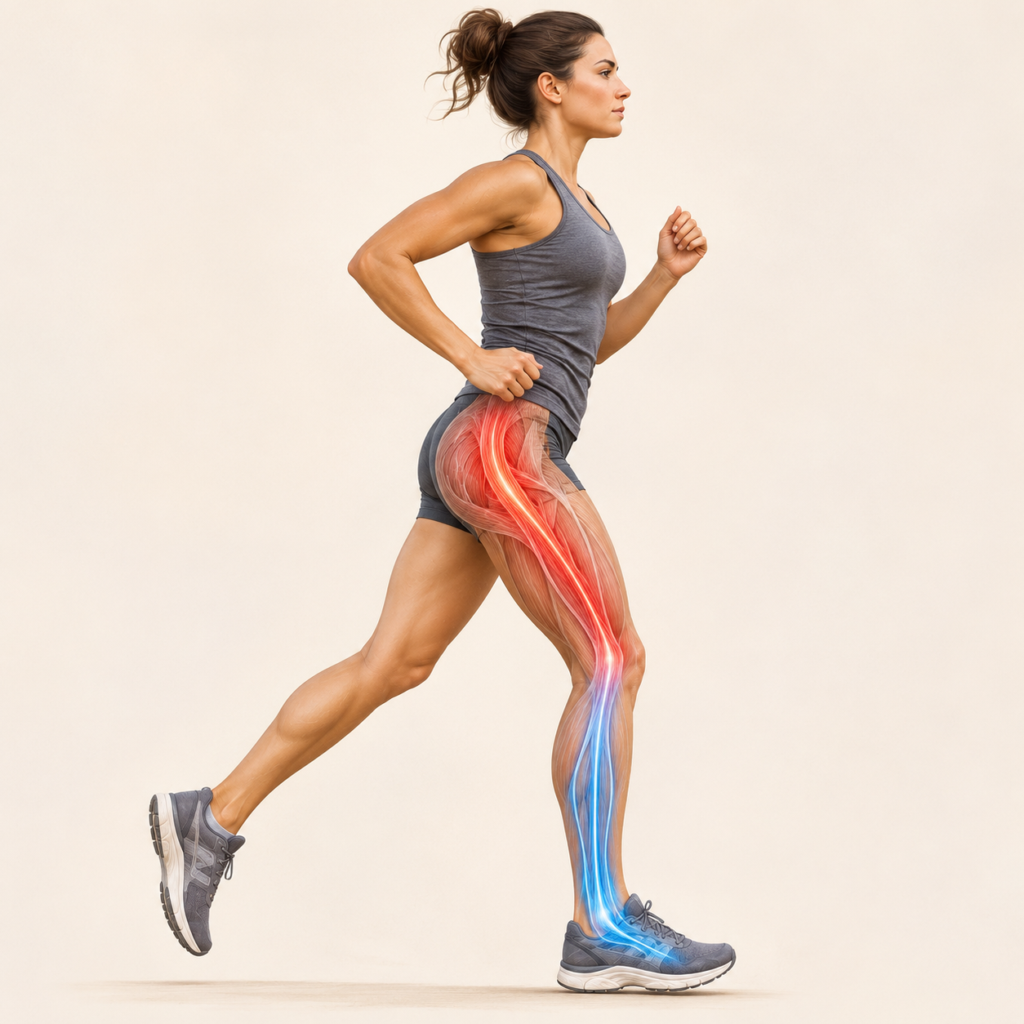
In Traditional Chinese Medicine, IT band syndrome is viewed as Qi and Blood stagnating along the Gallbladder channel, leaving the sinews overworked and undernourished. Treatment aims to release tension along the channel from the hip to the foot, ease pain on the outer knee, and nourish the sinews so they can recover and support a return to training.
The nine points work together to release the band and support the sinews:
- The hip points (GB29, GB30) release the muscles that pull on the top of the band.
- The thigh and knee points (GB31, GB32, GB33) ease tightness along the band and pain at the outer knee.
- The sinew point (GB34) supports healing in the overworked tendons and fascia.
- The distal points (GB39, GB41, LR3) move Qi along the channel and nourish the sinews from below.
How to Properly Use These Acupressure Points
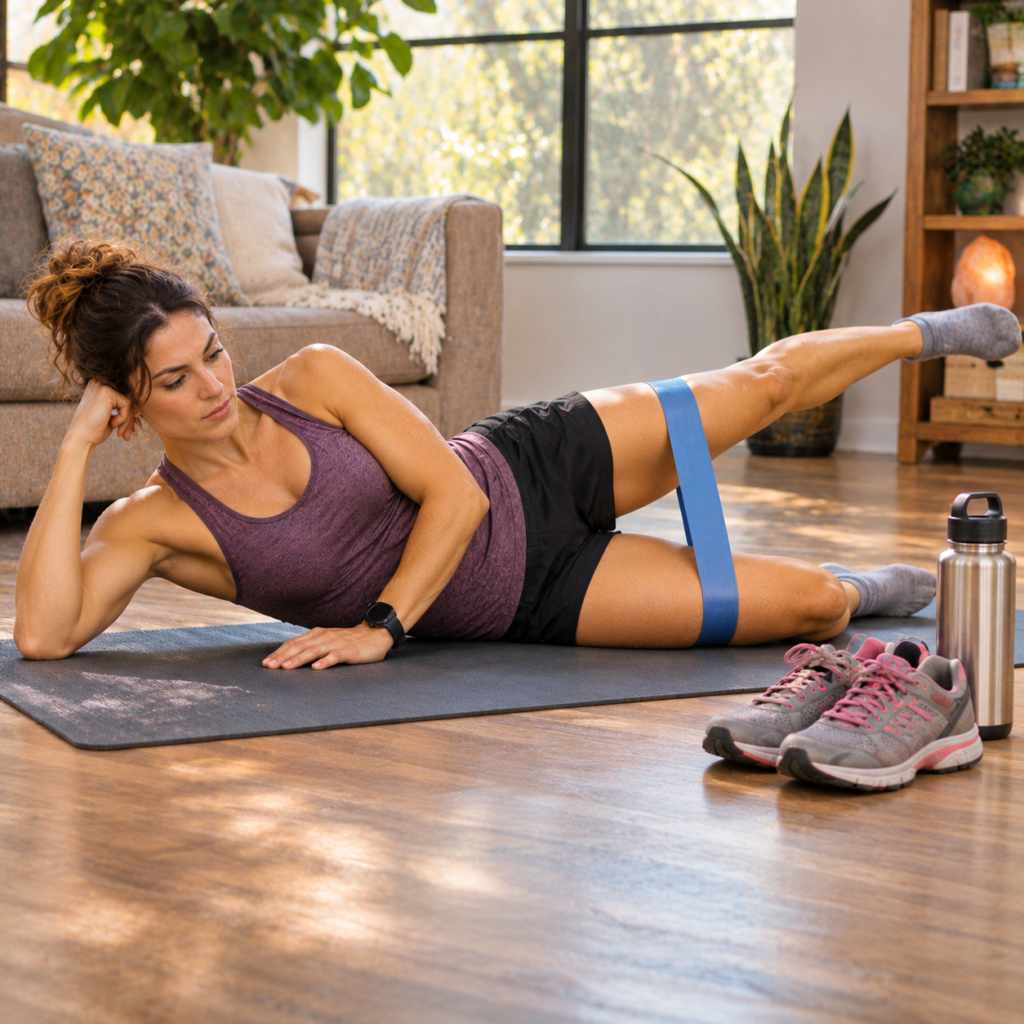
For IT band syndrome, acupressure works best as part of a daily routine, particularly after activity and on rest days.
- Work through all nine points once daily, holding each for one to two minutes, beginning at the hip and proceeding down the leg to the foot.
- Apply firm pressure to the points on the hip, thigh, and lower leg, and gentle pressure to GB33 on the outside of the knee.
- Apply pressure to GB29, GB30, and GB31 after running or cycling, when the hip muscles are prone to tightening.
- Continue for at least three to four weeks, then continue a few times a week after returning to training to help prevent flare-ups.
Daily habits can support IT band recovery and help prevent future flare-ups. Take a break from running or cycling, or reduce your distance, until walking and climbing stairs are pain-free. Try swimming or other cross-training activities that don’t bother your knee. Build up your training gradually rather than making big increases in distance or intensity. Strengthening your hip and glute muscles can stabilize your pelvis and often helps more than stretching the band itself. Replace worn-out shoes, vary your running routes, avoid running on the same tilted side of the road, and limit steep downhills while your knee heals. Check your bike fit, especially your saddle height. Keep your legs warm after workouts, as Traditional Chinese Medicine says cold can slow healing.
You can also learn more about running cupping for fascia release.
When to Get Professional Help
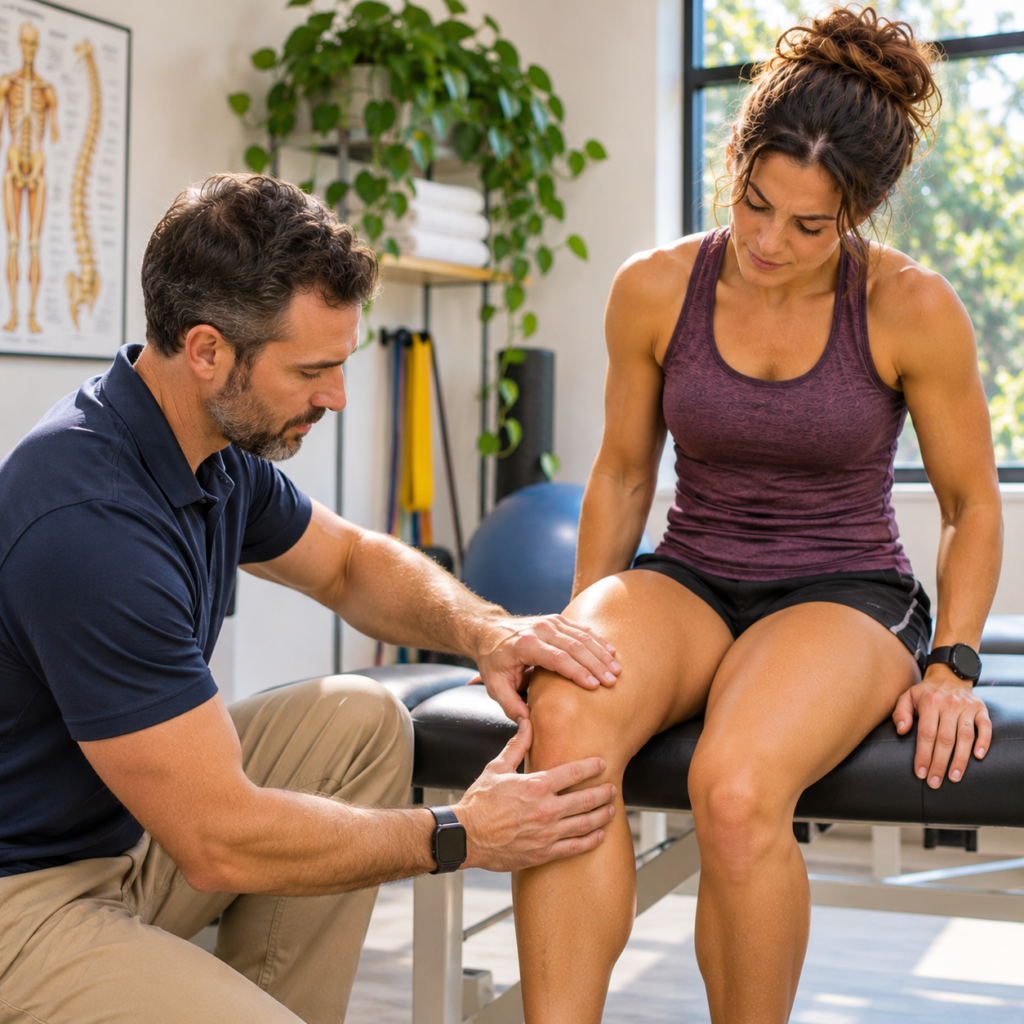
If outer knee pain lasts more than two to three weeks despite rest, keeps returning when you resume training, or makes walking or climbing stairs difficult, see a doctor or physical therapist. A physical therapist can assess your running form, strength, and alignment. Seek medical help promptly if your knee is swollen, locks, catches, gives way, hurts after a fall or twist, makes it difficult to bear weight, or if you feel numbness or tingling down your leg. See a doctor right away if your knee is red, hot, or swollen and you have a fever, or if you have calf pain and swelling, especially after a long trip or surgery.
Acupressure can be a gentle and helpful practice for IT band syndrome, but it should be used along with, not instead of, diagnosis and medical care.
For related health concerns, acupressure for knee pain, acupressure for hip bursitis, and acupressure to recover after a workout are companion articles.
Above and Beyond Acupuncture offers acupuncture, cupping, and lifestyle coaching at the North Frank Lloyd Wright Boulevard location in Scottsdale.
Schedule an appointment online to start your healing journey.
The points above are only as effective as the technique used to apply them. Where to press, how firmly, and for how long all affect the result. For a full breakdown of how to perform acupressure properly at home, read Performing Acupressure in 3 Easy Steps.
About the Publisher
Paul Kerzner, L.Ac., is a licensed acupuncturist and board-certified herbalist, as well as the founder of Above and Beyond Acupuncture in Scottsdale. His own journey from chronic patient to practicing acupuncturist shapes his commitment to providing honest, clinically grounded information about acupuncture and Traditional Chinese Medicine. Learn more about Paul and his clinical approach on the About Us page.