
Key Takeaways
- Brain fog is a frustrating condition that hinders mental clarity and can stem from various causes like stress, lack of sleep, and poor diet.
- Acupressure can help alleviate brain fog by stimulating specific points to clear dampness, strengthen the Spleen, and lift mental energy.
- Nine key acupressure points, such as ST40 and GV20, can clear fog, enhance clarity, and support overall brain function.
- Make sure to apply steady pressure for one to two minutes on each point while focusing on your breathing for better effects.
- Consult a doctor if brain fog persists or worsens, as it may indicate underlying health issues that need professional attention.

Brain fog is a common, frustrating feeling that can make it hard to think clearly and get through the day.
Brain fog can feel like a dull or heavy head, sluggish thinking, trouble concentrating, or difficulty finding the right words. Although it is not a medical diagnosis, brain fog may result from lack of sleep, stress, illness, hormonal changes, diet, or simple fatigue. Acupressure may help lift this mental haze, ease the heaviness, and improve mental sharpness.
In Traditional Chinese Medicine, brain fog is described as phlegm and dampness clouding the head, much like fog obscures vision. This is commonly linked to a sluggish Spleen that cannot properly regulate fluids. From this perspective, clear Qi, or clear Yang, should rise to the head to support mental clarity. However, when a weak Spleen, fatigue, or excess dampness prevents this, the mind may feel dull and heavy. Since the Spleen is believed to support clear thinking, Spleen weakness can leave the mind muddled. The acupressure points below are intended to dispel dampness, clear the head, strengthen the Spleen, and calm the mind.
Here are nine acupressure points that may relieve brain fog.
What Acupressure Points to Press and Why
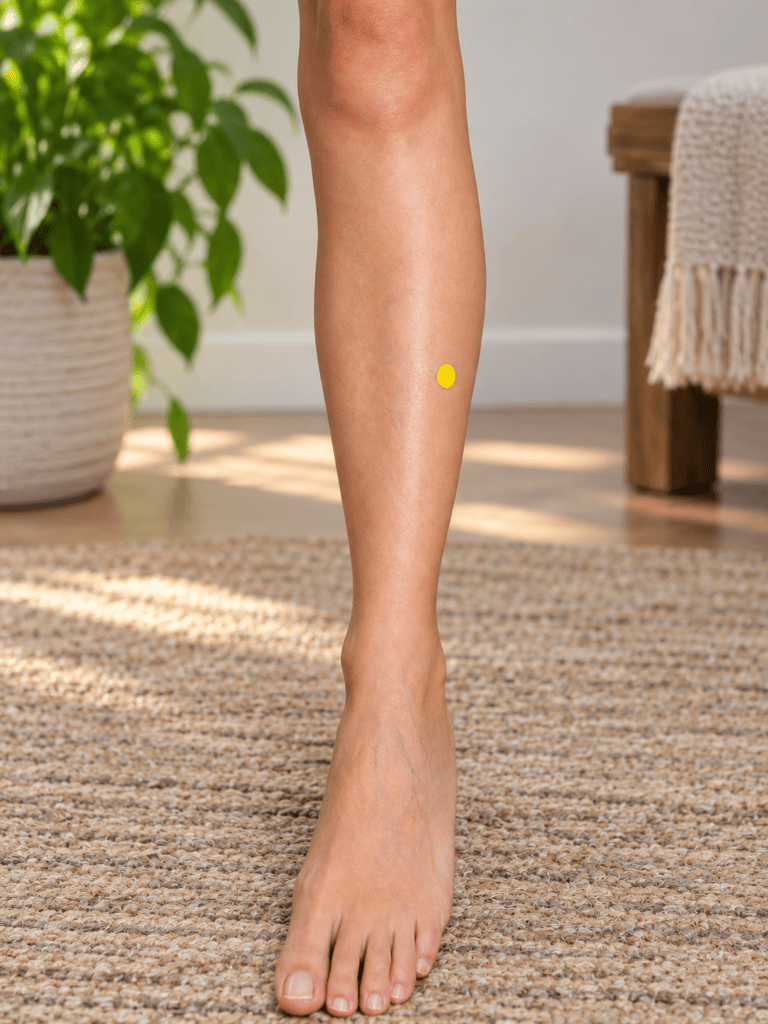
1. Press on ST40 on the lower leg, the key point for clearing the fog. ST40 sits on the outer lower leg, midway between the knee and the outer ankle bone, about two finger-widths outside the shinbone, on the muscle. Press firmly with your thumb for one to two minutes on each leg. ST40 is called “Fenglong,” the body’s main point for clearing phlegm and dampness.
This is particularly relevant to brain fog. In Chinese medicine, brain fog is usually attributed to phlegm and dampness in the head, and ST40 is the main point for eliminating them. It helps lift heaviness and cloudiness, clear the mind, and, with regular use, address the dampness that causes persistent brain fog.
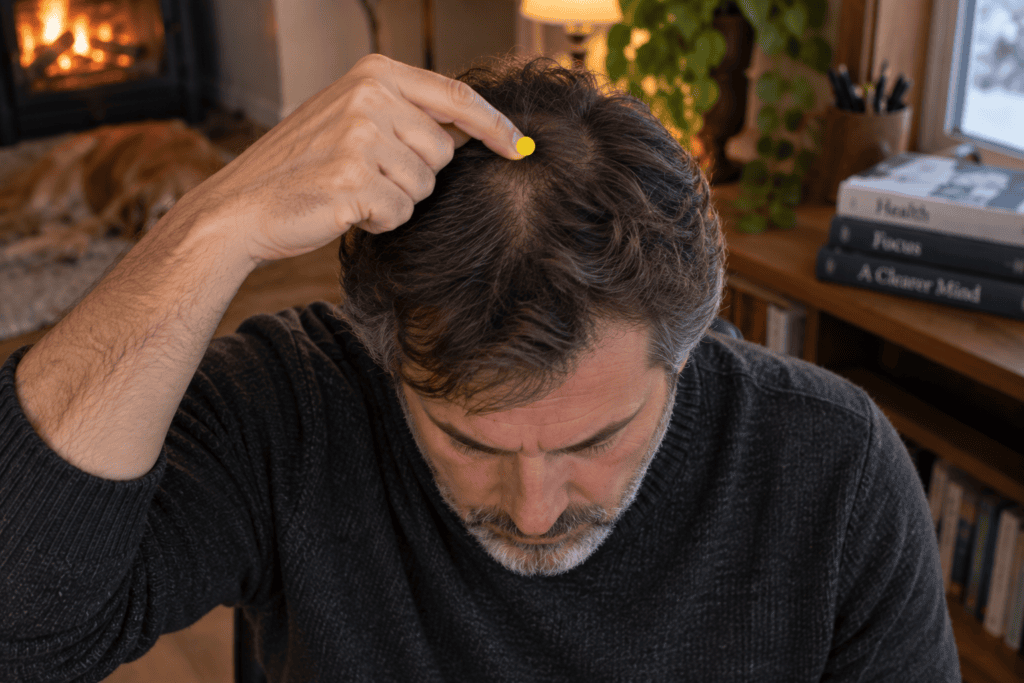
2. Press on GV20 at the top of the head to lift the clear Yang. GV20 sits at the very top of the head, on the midline, on a line drawn up from the tops of both ears. Press straight down, or make small circles, with your fingertip for one to two minutes. GV20 is called “Baihui,” the “Hundred Meetings,” where many channels converge at the crown.
GV20 helps raise clear energy to the head, which is often necessary in cases of brain fog. It can clear and brighten the mind, removing that dull or heavy sensation and increasing mental energy. Located at the crown, where many channels converge, it directly affects the head. GV20 works well with ST40: one clears the fog, while the other brings clarity to the head.
3. Press on Yintang between the eyebrows to clear and settle the mind. Yintang sits in the small hollow directly between the two eyebrows. Press steadily and hold, or make small, slow circles with your fingertip for one to two minutes. Yintang is an extra point, and it is one of the most calming and clearing points in the body.
Yintang helps clear your mind and calm your nerves, easing the foggy, cluttered, or unfocused state that often accompanies brain fog. It relaxes the nervous system and may relieve pressure in the front of your head. Pressing this point slowly while taking deep breaths can help you clear your mind.

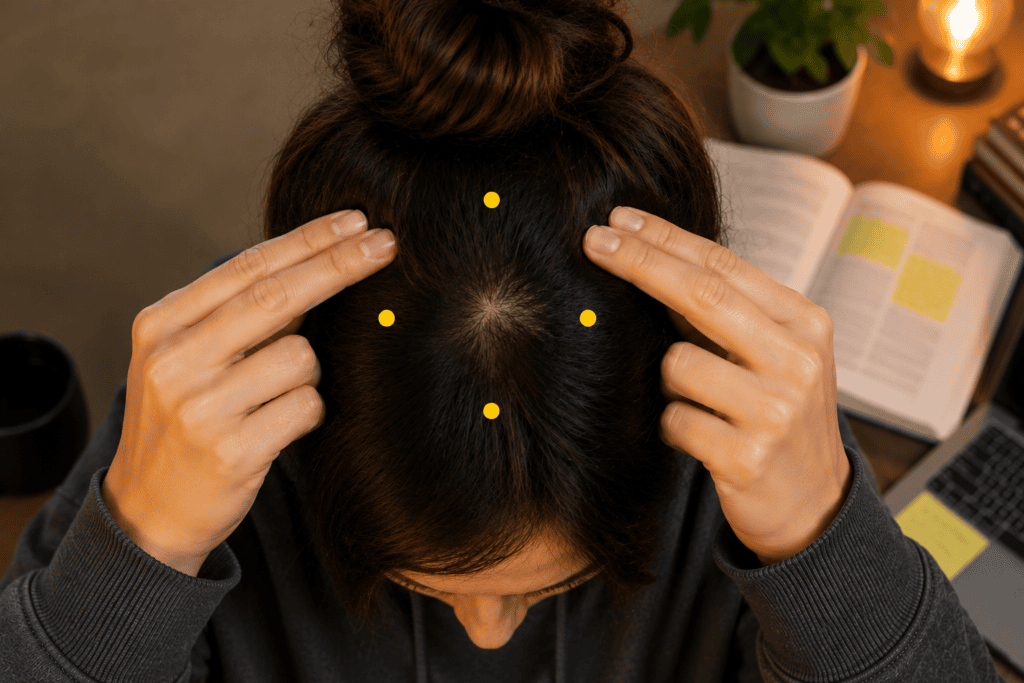
4. Press Si Shen Cong at the crown to sharpen the clouded mind. Si Shen Cong is a group of four points surrounding the very top of the head, each about one thumb-width in front of, behind, and to either side of GV20, the point at the crown on a line drawn up from the tops of the ears. Press each of the four in turn, or hold two at a time with your fingertips, for one to two minutes. The name means “four spirit intelligence,” and this group is the classic point set for the mind and mental clarity.
Si Shen Cong is a traditional set of points used to improve mental clarity, especially when thinking feels foggy or unfocused. Located around the crown of the head, they help clear and sharpen the mind. Used together with GV20, they create a brightening effect at the top of the head. If your mind feels dull or cloudy, stimulating these points may help you think more clearly.
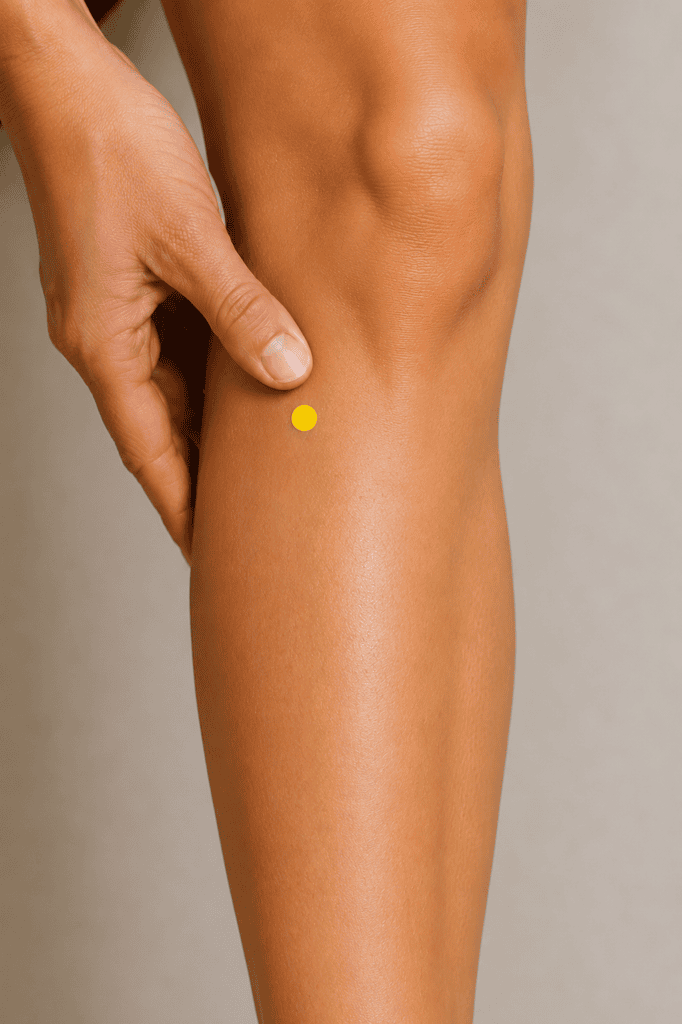
5. Press on ST36 below the knee to strengthen the Spleen and support clear thinking. ST36 sits four finger-widths below the lower edge of the kneecap and one finger-width to the outside of the shinbone, on the muscle that rises when you flex your foot. Press firmly with your thumb for one to two minutes on each leg. ST36 is called “Zusanli,” the “Leg Three Miles,” and it is the master point for the Spleen and for building Qi.
A weak Spleen may cause dampness in the head and prevent clear energy from reaching the mind. ST36 helps strengthen the Spleen and Stomach, restore energy, and promote clear thinking. When brain fog comes with tiredness or a general feeling of being run down, this acupressure point can help support your basic strength. Used together with ST40, it strengthens the Spleen while also removing dampness.
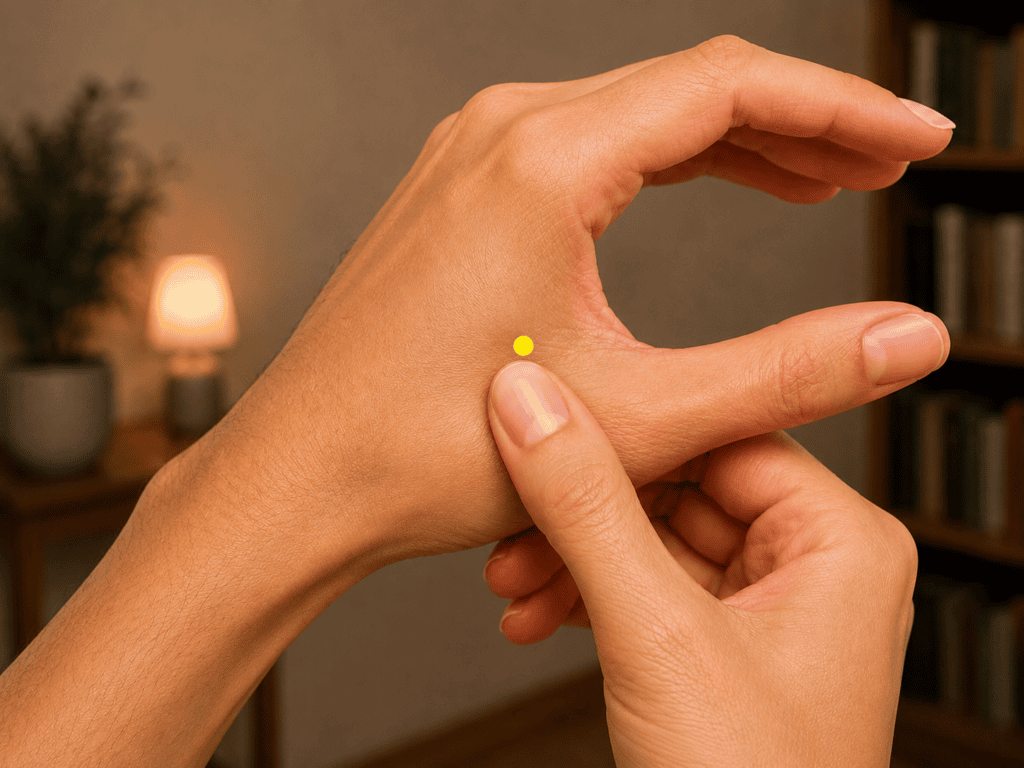
6. Press on LI4 in the hand to clear the head. LI4 sits in the webbing between the thumb and index finger, at the highest point of the muscle when you bring the thumb and finger together. Press firmly with the thumb of your other hand for one to two minutes on each hand. LI4 is called “Hegu,” the command point for the head and face. LI4 is avoided during pregnancy.
LI4 is the primary point for the head because it helps circulate energy and relieve heaviness or brain fog. It may ease headaches or pressure associated with brain fog. Since it is located on the hand, it is easy and discreet to press while sitting at your desk. LI4 is especially effective when combined with other head points to help clear and refresh the mind.
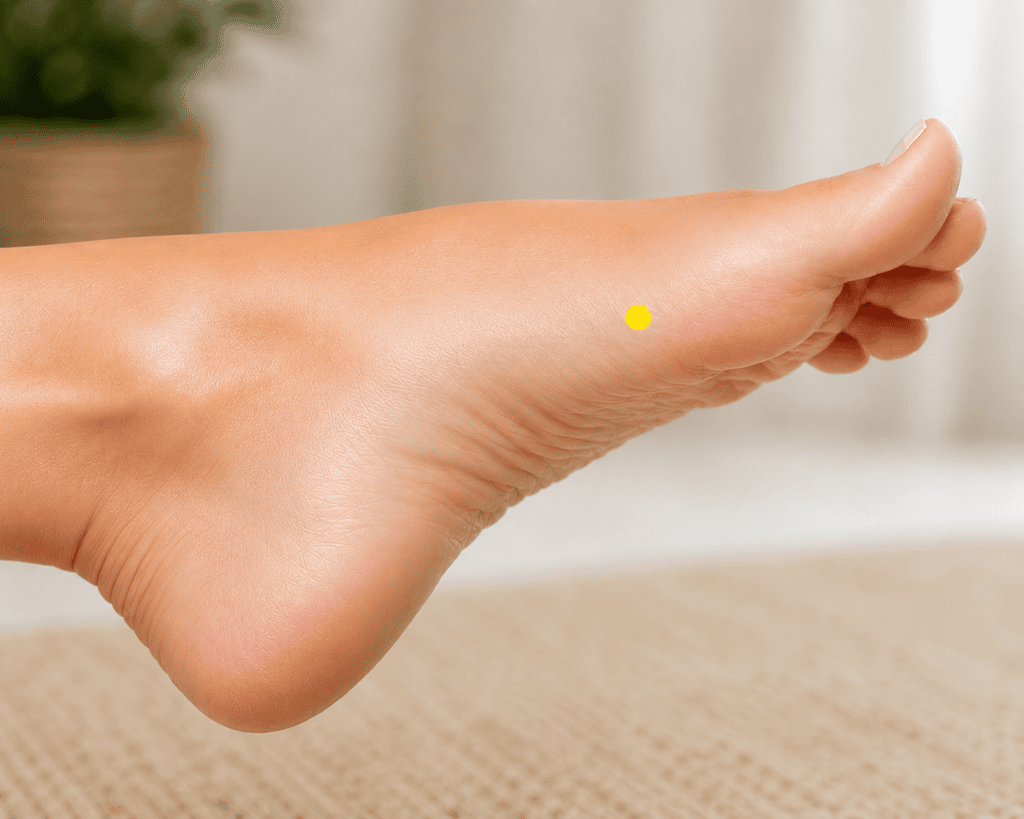
7. Press on SP3 on the foot to strengthen the Spleen at its source. SP3 sits on the inner edge of the foot, in the hollow just behind and below the ball of the big toe, where the skin changes color along the side of the foot. Press firmly with your thumb for one to two minutes on each foot. SP3 is called “Taibai,” the source point of the Spleen.
SP3 helps strengthen the Spleen, which is essential for removing dampness and promoting clear thinking. If your brain fog comes with slow digestion, heaviness, or general weakness, this point may help restore your basic strength. It is especially effective when combined with ST36 to support the Spleen and eliminate dampness.
8. Press on GB20 at the base of the skull to clear the head and neck. GB20 sits in the two hollows at the base of the skull, between the two large vertical neck muscles and the outer edge, roughly level with the tops of the ears. Tip your head back slightly and press firmly up and inward with your thumbs for one to two minutes. GB20 is called “Fengchi,” and it is a major point for clearing the head.
GB20 helps clear the head and ease the heavy, dull sensation of brain fog. It acts at the base of the skull, where tension and poor circulation can worsen the fog. This point also relieves neck tension and may improve clarity, especially after long hours in front of a screen. GB20 works well with GV20 and Si Shen Cong to clear the head from the base to the crown.

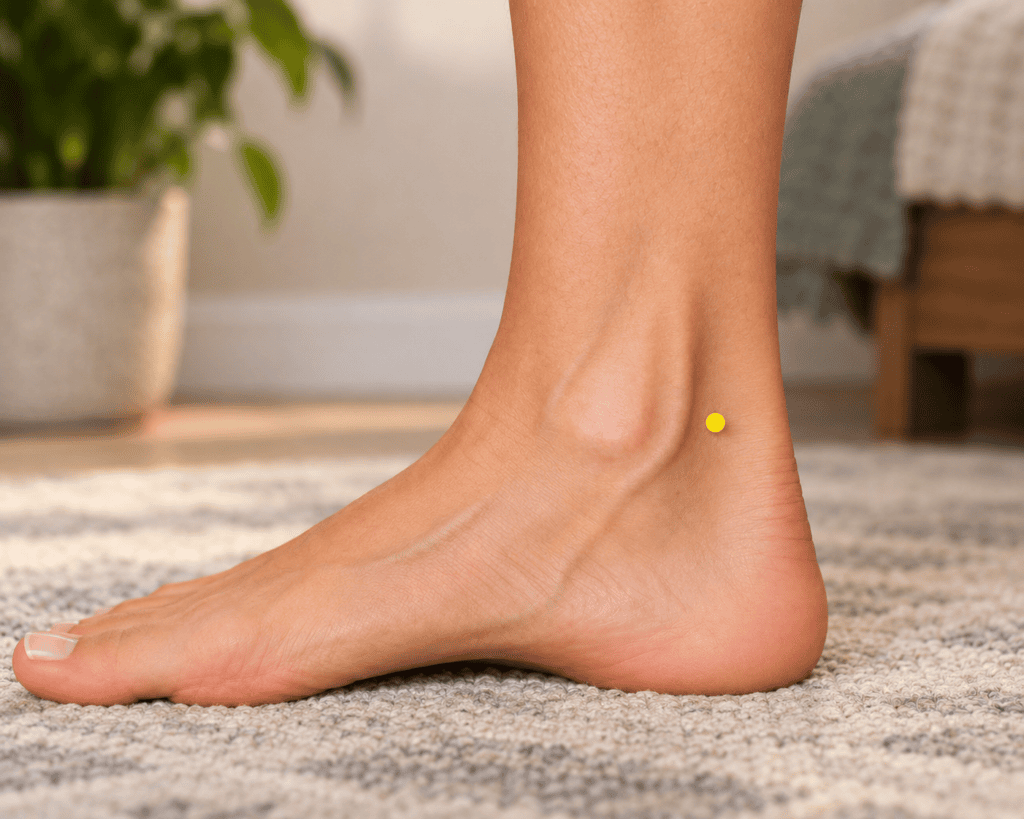
9. Press on KI3 above the inner ankle to nourish the brain when it is depleted. KI3 sits in the hollow between the inner ankle bone and the Achilles tendon, level with the tip of the ankle bone. Press firmly with your thumb for one to two minutes on each ankle. KI3 is called “Taixi,” the Kidney’s source point.
When brain fog comes with exhaustion, it may indicate depleted Kidney reserves. KI3 can help restore these reserves and support the brain’s foundation. This point is particularly useful when brain fog stems from a sense of depletion rather than heaviness or dampness, and it supports your entire system as well as the other points.
Why These Acupressure Points Work
In Traditional Chinese Medicine, brain fog generally results from phlegm and dampness clouding the head, along with a deficiency of clear energy rising to the mind. This usually stems from a sluggish Spleen or, on occasion, a depleted Kidney; the nine points mentioned above address all these causes.
- The acupressure points for dispelling fog (ST40, GB20) remove phlegm and dampness and relieve the heaviness that affects the head.
- The lifting and sharpening points, GV20, Si Shen Cong, and Yintang, raise clear Yang, sharpen a foggy mind, and calm a troubled head.
- The acupressure points ST36 and SP3 strengthen the Spleen, supporting both the resolution of dampness and clear thinking.
- The LI4 point clears and invigorates a heavy head, while the KI3 point nourishes the brain when fogginess results from depletion.
The goal is to clear the fog and bring clarity to the mind; that is why this method centers on points that dispel phlegm and raise energy.
How to Properly Use These Acupressure Points
Connect these points to the underlying factors contributing to your fog. Refer to them whenever the fog arises and regularly afterward to address the recurring pattern.
- When fog occurs, use ST40 with GV20 and Si Shen Cong to raise and sharpen the mind, and LI4 and GB20 to clear and refresh the head.
- If the fog results from slow, poor digestion, regularly tonify the Spleen with ST36 and SP3. If it stems from burnout and exhaustion, also use KI3.
- Use Yintang to calm and clear a cluttered, stressed mind that so often creates confusion.
- Hold each point with steady pressure for one to two minutes while breathing slowly. Continue using the points, since clearing a constant fog takes time.
Acupressure may help clear brain fog, but you should also address its common causes. Make sure you get enough sleep, since poor sleep is a major contributor to brain fog. Stay hydrated, move your body, and spend time outdoors for fresh air and natural light. In Traditional Chinese Medicine, avoiding heavy, greasy, sugary, and processed foods may help, so try eating lighter, cleaner meals. Manage stress, take meaningful breaks, and give your mind time to rest.
When to Get Professional Help
Brain fog is common with stress, poor sleep, and overall exhaustion, and helpful techniques and habits may improve it. In some cases, you should see a doctor. Consult a physician if the brain fog is severe, persistent, or worsening; does not improve with rest and healthier habits; or interferes with your daily life. It may signal a treatable condition, such as thyroid problems, vitamin deficiencies like B12, anemia, depression or anxiety, sleep disorders, hormonal changes, or a medication side effect. You should also mention it to a doctor if it begins after an illness or occurs alongside other symptoms. Seek immediate medical attention for sudden confusion, significant memory loss, or brain fog accompanied by neurological symptoms such as weakness, numbness, or difficulty speaking.
Acupressure may help with ordinary brain fog, but persistent or unexplained brain fog still requires identifying its cause.
Above and Beyond Acupuncture offers acupuncture, cupping, and lifestyle coaching at the North Frank Lloyd Wright Boulevard location in Scottsdale.
Schedule an appointment online to start your healing journey.
The points above are only as effective as the technique used to apply them. Where to press, how firmly, and for how long all affect the result. For a full breakdown of how to perform acupressure properly at home, read Performing Acupressure in 3 Easy Steps.
For maintaining focus rather than addressing the fog itself, “Acupressure to Improve Concentration” is the companion post. For a deeper look at the causes of brain fog, “Why Do I Have Brain Fog” covers that topic in greater detail.

About the Publisher
Paul Kerzner, L.Ac., is a licensed acupuncturist and board-certified herbalist, as well as the founder of Above and Beyond Acupuncture in Scottsdale. His own journey from chronic patient to practicing acupuncturist shapes his commitment to providing honest, clinically grounded information about acupuncture and Traditional Chinese Medicine. Learn more about Paul and his clinical approach on the About Us page.