Key Takeaways
- Shortness of breath can result from various causes, including anxiety and physical conditions.
- Acupressure for shortness of breath targets specific points to ease breathing, reduce anxiety, and clear phlegm.
- Nine key acupressure points address different causes of breathlessness, from easing tightness to improving lung function.
- Acupressure should complement medical treatment, particularly for chronic conditions, and using the proper technique is essential for it to be effective.
- Seek professional medical help for sudden or severe breathlessness, as it may signal a serious underlying condition.

Do you find it more difficult to catch your breath than you used to?
Feeling short of breath can be unsettling, whether you feel you can’t get enough air, experience chest tightness, or get winded on stairs that never bothered you before. It can happen for many reasons, including anxiety, being out of shape, conditions such as asthma or COPD, recovery from a respiratory illness, or tension in your chest and shoulders. For everyday breathlessness, acupressure may help open your chest, calm your breathing, and support your lungs using only your hands.
In Traditional Chinese Medicine, breathing is viewed as a partnership between two organs. The Lung takes in air and manages the body’s Qi, while the Kidney receives the breath and draws it deeper, a process called the Kidney grasping the Qi. When the Lung is weak, breathing becomes shallow and tiring, and you may notice a soft voice and quick fatigue. When the Kidney cannot grasp the Qi, the breath remains high in the chest, inhaling feels harder than exhaling, and you become winded easily. Other common issues include phlegm accumulating in the Lung, causing wheezing, chest congestion, and a heavy feeling, as well as anxiety or stress, which can tighten the chest and make it difficult to take a full breath. The points below can help address all of these concerns by opening and strengthening the Lung, helping the Kidney draw the breath downward, clearing phlegm, and calming both the chest and mind.
Here are nine acupressure points that can help you breathe more easily.
What Acupressure Points to Press and Why
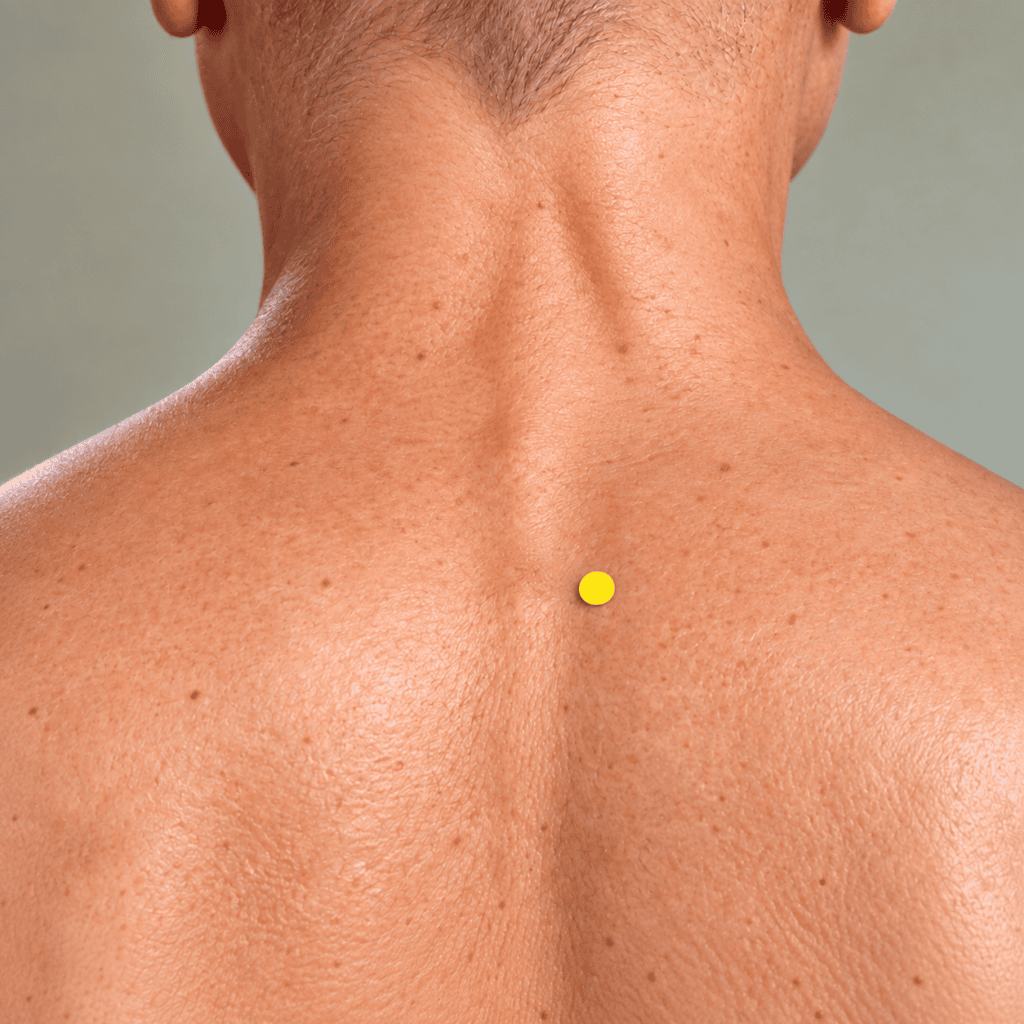
1. Press on Dingchuan at the base of the neck to calm the breath. Dingchuan sits on the upper back, about half a thumb-width out to each side of the prominent bone at the base of the neck, the one that sticks out most when you bow your head. Reach back with your fingertips and press both sides at once for one to two minutes, breathing slowly. Dingchuan is an extra point whose name means “Calm the Wheezing.”
Dingchuan is a classic point for easing labored breathing, wheezing, and the tight feeling of shortness of breath. It helps relax the airways and settle your breathing, and it is often used for asthma and all types of breathlessness. Try this point first when your breathing feels tight. Press it while sitting upright and breathing out slowly for the most relief.
2. Press on LU1 below the collarbone to open the chest. LU1 sits on the upper chest, below the outer end of the collarbone, in the hollow about a thumb-width below it, roughly in line with the front of the armpit. Cross your arms so each hand rests on the opposite side, and press with your fingertips for one to two minutes. LU1 is called “Zhongfu,” the front-mu point of the Lung, where the Lung’s energy gathers at the front of the body.
LU1 is located on the upper chest and serves as the Lung’s main gathering point. This makes it one of the best points for opening the chest and easing difficult breathing. It can help relieve chest tightness, congestion, and the sensation of a blocked chest while helping the Lung take in air more fully. Crossing your arms to press both sides at once is a comfortable way to use this point while breathing slowly and deeply.
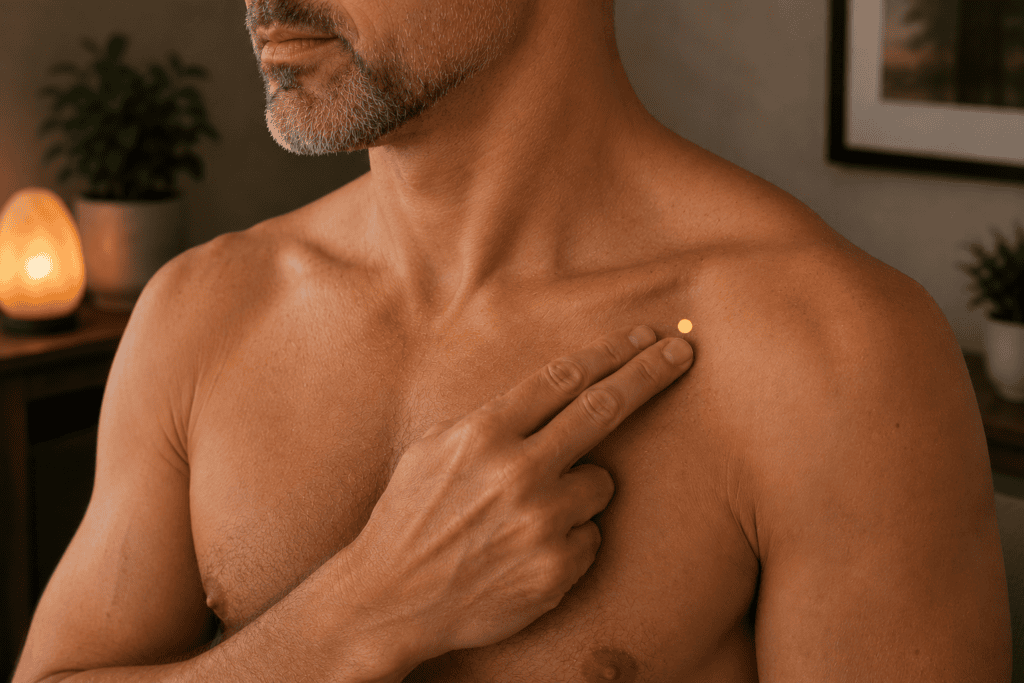
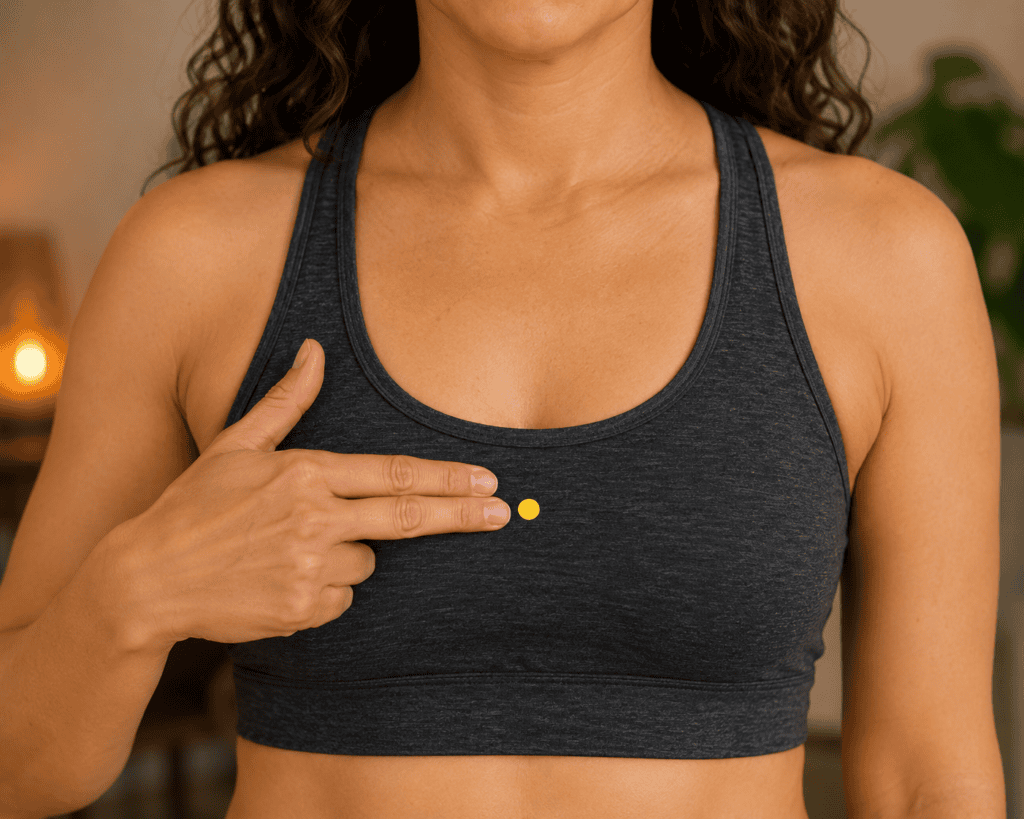
3. Press on CV17 at the center of the chest to release tightness. CV17 sits on the midline of the breastbone, at the level of the space between the nipples. Press gently and steadily with your fingertip for one to two minutes, breathing slowly. CV17 is called “Shanzhong,” the gathering point of Qi in the chest.
CV17 is the main point for the Qi of the chest. It helps open and relax a chest that feels tight or pressured. This point can ease breathlessness, help your breath flow more freely, and release tension caused by anxiety or stress. Gently pressing it while breathing out slowly is one of the most calming things you can do when you feel unable to take a full breath.
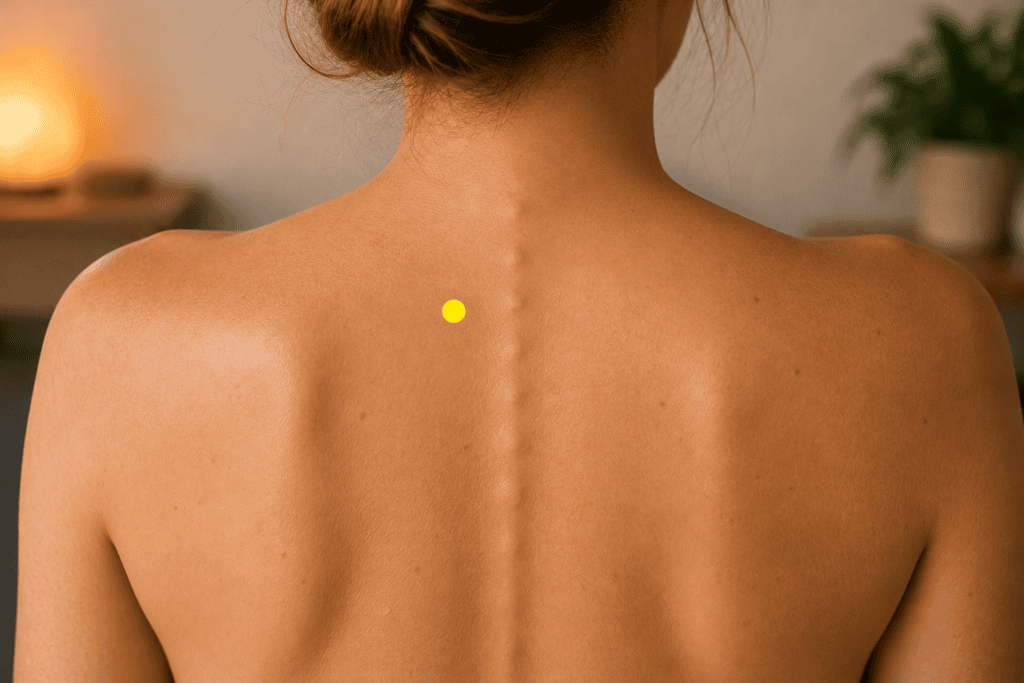
4. Press on BL13 on the upper back to support the Lung. BL13 sits on the upper back, about two finger-widths out to each side of the spine, roughly level with the top of the shoulder blades. Because it is hard to reach, lie on your back with a tennis ball under each point, or lean against a wall with the balls in place, and let your weight press for one to two minutes while breathing slowly. BL13 is called “Feishu,” the back-shu point of the Lung.
BL13 is the point where you can access the Lung’s energy directly from the back. It is one of the most important points for strengthening the Lung and easing breathlessness, wheezing, and chest tightness. The upper back and shoulders often become tense when breathing is difficult, and using tennis balls here can help release that tension while supporting the Lung. Using LU1 on the front and BL13 on the back treats the Lung from both sides.
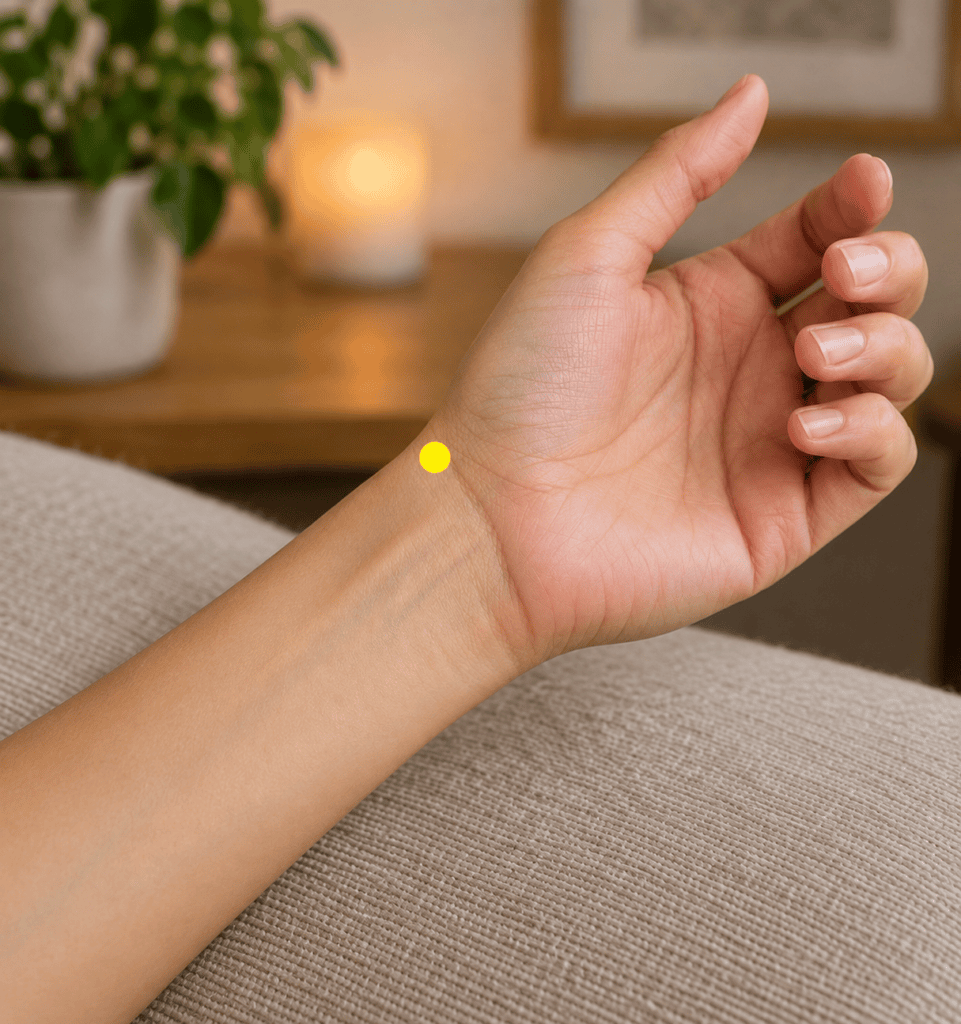
5. Press on LU9 at the wrist to strengthen the Lung. LU9 sits on the inner wrist crease, on the thumb side, in the hollow where you can feel the pulse. Press firmly with your thumb for one to two minutes on each wrist. LU9 is called “Taiyuan,” the “Great Abyss,” and it is the Lung’s source point.
If you experience breathlessness with a weak voice, quick fatigue, and shallow breathing that leaves you tired, your Lung Qi may be depleted. LU9, the Lung’s source point, helps strengthen it directly. This point restores the Lung’s ability to take in air and supports your stamina, making it useful for lingering breathlessness after illness or chronic breathlessness accompanied by low energy. Located on your wrist, it is easy to press whenever needed.
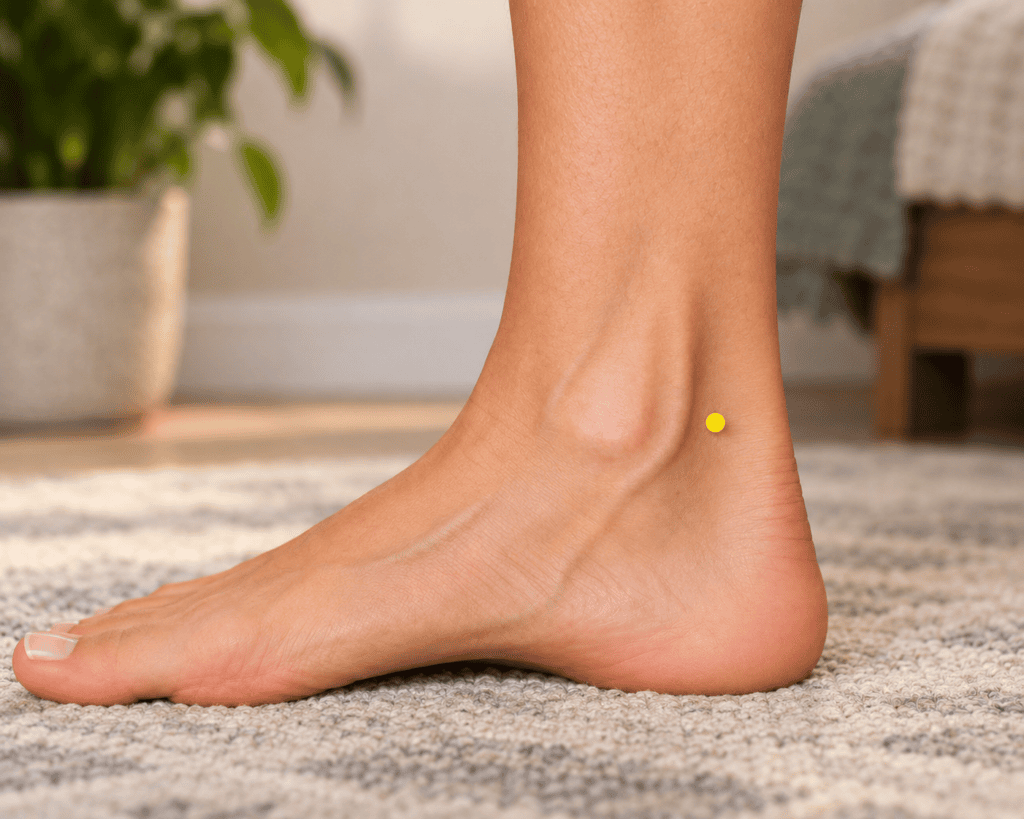
6. Press on KI3 above the inner ankle to help the breath go deep. KI3 sits in the hollow between the inner ankle bone and the Achilles tendon, level with the tip of the ankle bone. Press firmly with your thumb for one to two minutes on each ankle. KI3 is called “Taixi,” the Kidney’s source point.
If your breath remains high and shallow, inhaling feels harder than exhaling, and you tire easily, Chinese medicine views this as the Kidney failing to draw the breath downward. KI3 helps strengthen this function. It supports the deep reserves that anchor your breath, which is why it is often used for chronic breathlessness, especially with age or long-term lung conditions. This point works best with daily use.
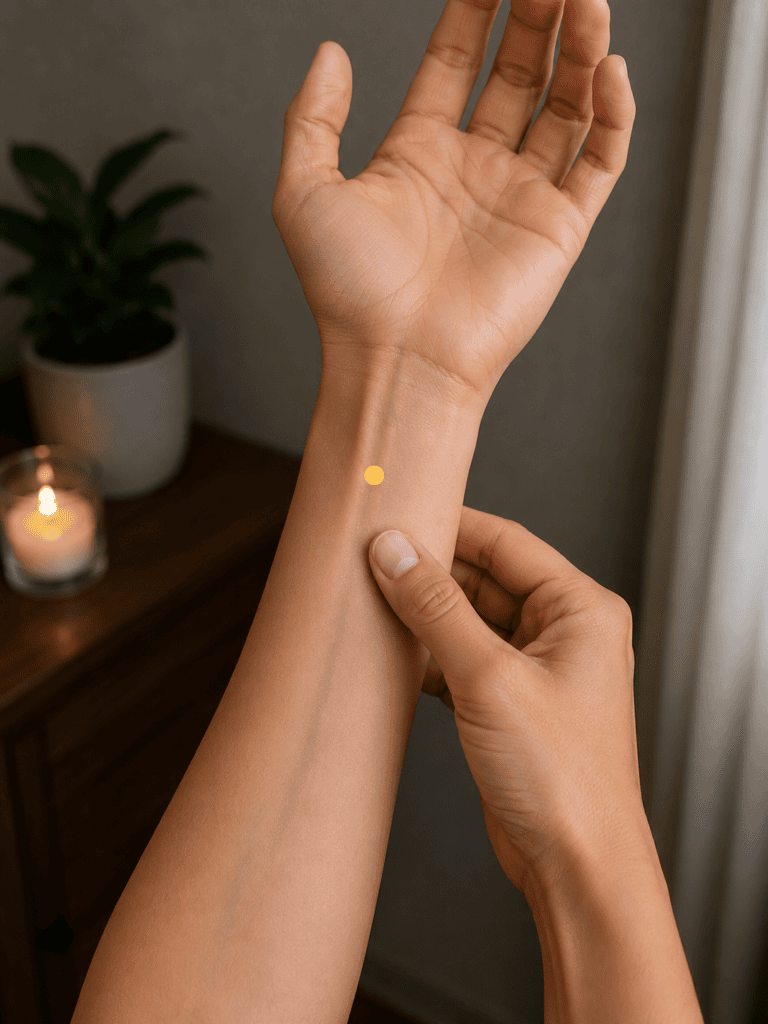
7. Press on PC6 on the inner forearm to calm anxious breathlessness. PC6 sits three finger-widths above the inner wrist crease, in the center of the forearm between the two tendons. Press firmly with your thumb for one to two minutes on each arm. PC6 is called “Neiguan,” the “Inner Pass,” and it opens the chest and calms the mind.
Many cases of everyday breathlessness are linked to anxiety: the shallow, tight feeling of not getting enough air that comes with worry and can create even more worry. PC6 helps break this cycle by opening the chest while calming the nervous system. If your breathlessness comes with a racing mind, tight chest, or fluttering heart, this point can help ease both your breathing and your nerves. It is also easy to press discreetly wherever you are.
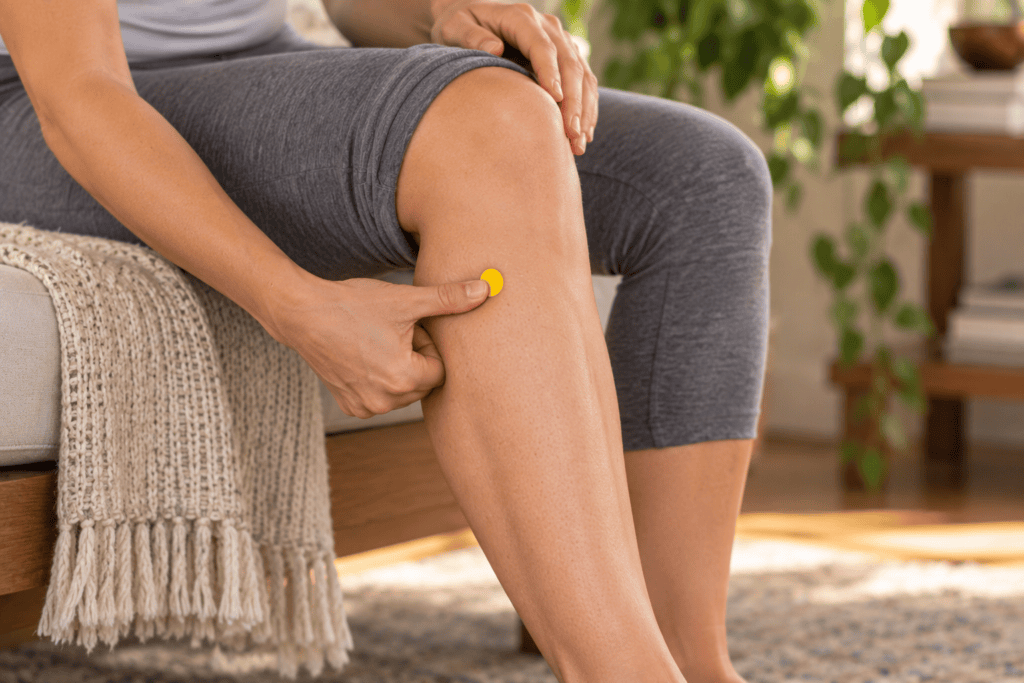
8. Press on ST36 below the knee to build energy and stamina. ST36 sits four finger-widths below the lower edge of the kneecap and one finger-width to the outside of the shinbone, on the muscle that rises when you flex your foot. Press firmly with your thumb for one to two minutes on each leg. ST36 is called “Zusanli,” the “Leg Three Miles,” and it is the master point for building Qi.
The Lung relies on the Qi that the Spleen and Stomach produce from food, so when the body is depleted, the breath is depleted too. ST36 rebuilds that Qi, supports stamina, and helps the whole system manage exertion with less breathlessness. For someone who gets winded easily and tires quickly, or is recovering from an illness, this point strengthens the foundation that supports the breath.
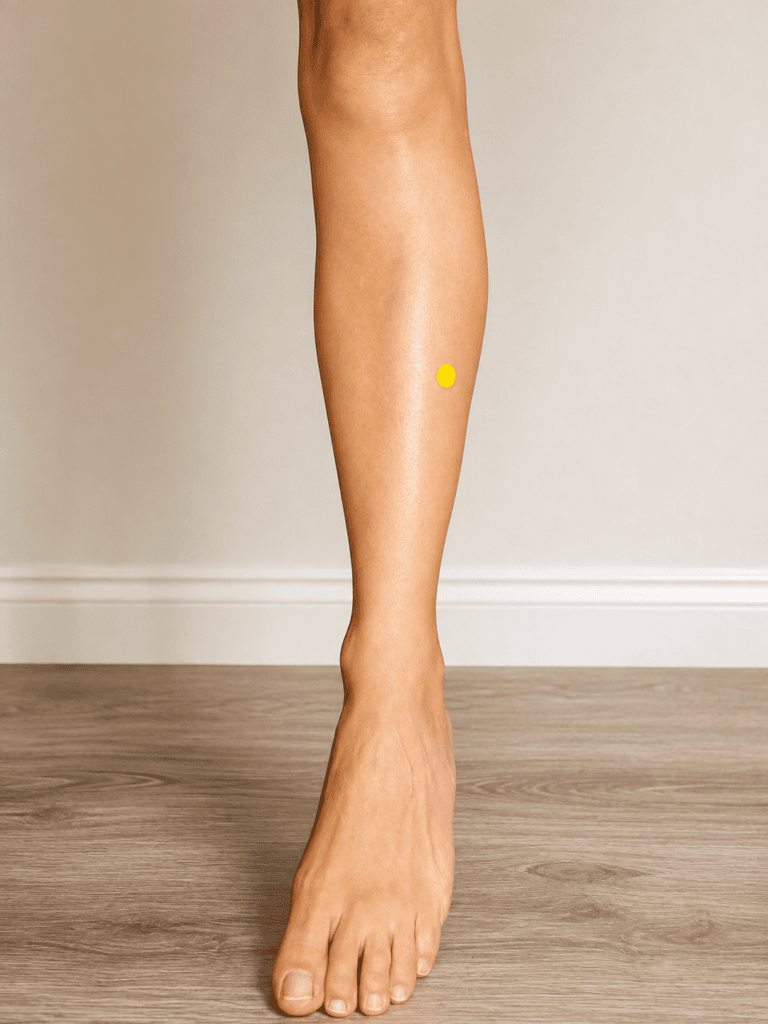
9. Press on ST40 on the lower leg to clear phlegm from the chest. ST40 sits on the outer lower leg, midway between the knee and the outer ankle bone, about two finger-widths outside the shinbone. Press firmly with your thumb for one to two minutes on each leg. ST40 is called “Fenglong,” the body’s main point for clearing phlegm.
If your breathlessness comes with a heavy, congested chest, wheezing, and phlegm that makes breathing feel thick and blocked, ST40 helps clear it. This point helps resolve the phlegm clogging your airways and weighing down your chest, making it easier to breathe. For the congested, rattly kind of breathlessness, this point addresses the problem at its source.
Why These Acupressure Points Work
In Traditional Chinese Medicine, shortness of breath may occur when the Lung cannot draw in enough air, the Kidney cannot pull it downward, phlegm obstructs the chest, or anxiety and stress cause tightness. These nine points help address all of these causes.
- The chest-opening points (Dingchuan, LU1, CV17, BL13) calm the breath, open the chest from the front and back, and release tightness.
- The Lung and Kidney points (LU9, KI3) strengthen the Lung and help the Kidney draw the breath down deep.
- The calming point (PC6) settles the anxiety that tightens the chest and shortens the breath.
- The strengthening and phlegm-clearing points (ST36, ST40) build stamina and clear the congestion that obstructs breathing.
Some small studies involving people with chronic lung disease have found that regular acupressure may reduce breathlessness. However, research remains limited, so acupressure should complement, not replace, your prescribed treatment.
How to Properly Use These Acupressure Points
Combine these points with effective breathing techniques, as your breathing plays an important role in the process.
- When breathing feels tight, sit upright or lean forward with your forearms on your thighs. Press Dingchuan (CV17) and PC6, then exhale slowly through pursed lips as if blowing out a candle, making the exhale longer than the inhale. This slows breathing, empties the lungs, and eases breathlessness.
- For regular support, work LU1, BL13, LU9, KI3, and ST36 daily to strengthen the Lung and deepen breathing over time, and add ST40 when phlegm and congestion are part of the picture.
- Practice slow belly breathing while you press: rest a hand on your belly, breathe in gently through your nose so your belly rises, and breathe out slowly to help the breath sink deeper instead of staying high in your chest.
- Hold each point for one to two minutes with steady pressure, and press the chest points gently.
- If you have asthma or another diagnosed lung condition, use your prescribed inhaler or medication first during a flare, and use acupressure alongside it, not in place of it.
Several other ways can support your breathing over time. Regular gentle movement, such as walking, can build stamina and lung capacity. If you have a chronic lung condition, a pulmonary rehabilitation program can be very effective. Avoid smoke and other irritants, keep your airways clear during colds, and manage stress, since tension in your chest and shoulders can make breathing more difficult. Good posture helps as well, because a slumped chest has less room to expand.
When to Seek Professional Help
Call emergency services immediately if you experience:
- Sudden or severe shortness of breath
- Breathlessness with chest pain or pressure
- Blue or gray lips or fingertips
- Difficulty speaking in complete sentences
- Confusion or extreme drowsiness
- Breathlessness with swelling of the face, lips, or throat after exposure to an allergen
- A rescue inhaler that is ineffective
- Sudden breathlessness with swelling or pain in one leg, which may indicate a blood clot in the lungs
Consult a physician promptly if your shortness of breath is new, unexplained, worsening, wakes you at night, makes lying flat difficult, or occurs with ankle swelling, a persistent cough, fever, or unexplained weight loss. Breathlessness always warrants appropriate medical evaluation because its causes can range from anxiety to heart and lung conditions requiring specific treatment.
Acupressure may offer beneficial, low-risk support for occasional breathlessness; however, it should be used alongside appropriate medical care.
Above and Beyond Acupuncture offers acupuncture, cupping, and lifestyle coaching at the North Frank Lloyd Wright Boulevard location in Scottsdale.
Schedule an appointment online to start your healing journey.
The points above are only as effective as the technique used to apply them. Where to press, how firmly, and for how long all affect the result. For a full breakdown of how to perform acupressure properly at home, read Performing Acupressure in 3 Easy Steps.
Because breathlessness often comes with a cough, acupressure for a cough is a close companion to this post; if your breathlessness comes mostly from anxiety, acupressure for anxiety goes further into detail on that condition.

About the Publisher
Paul Kerzner, L.Ac., is a licensed acupuncturist and board-certified herbalist, as well as the founder of Above and Beyond Acupuncture in Scottsdale. His own journey from chronic patient to practicing acupuncturist shapes his commitment to providing honest, clinically grounded information about acupuncture and Traditional Chinese Medicine. Learn more about Paul and his clinical approach on the About Us page.