Key Takeaways
- Chronic fatigue syndrome (ME/CFS) results in intense fatigue that persists despite rest and affects everyday functioning.
- Recent studies indicate that acupressure may help alleviate fatigue, boost mood, and improve quality of life for individuals with chronic fatigue syndrome.
- Nine specific acupressure points are suggested to help manage symptoms and increase overall energy.
- Traditional Chinese Medicine associates ME/CFS with energy depletion and offers insights into using acupressure to restore balance.
- Acupressure as a self-care method offers a gentle way to support traditional treatments for chronic fatigue syndrome.

Does your exhaustion never seem to go away, no matter how much you rest?
Chronic fatigue syndrome, also called myalgic encephalomyelitis or ME/CFS, is more than just feeling tired. It is characterized by persistent, severe fatigue lasting at least six months that does not improve with rest and hampers daily functioning. A hallmark symptom is post-exertional malaise, where energy drops and symptoms worsen after physical activity; this can happen with a delay of one or two days and may last for days or weeks. Other common signs include unrefreshing sleep, cognitive issues known as brain fog, muscle and joint pain, headaches, sore throat, and dizziness when standing. ME/CFS often starts after infection or stress, and there is no single test for diagnosis. For gentle self-care to conserve energy, acupressure may help, and a recent trial explored its potential benefits. The points below are based on that study.
What the Research Shows
A randomized controlled trial published in 2025 in the journal EXPLORE tested acupressure for people with chronic fatigue syndrome. The study included 39 participants, mostly women around age 30. They received ten acupressure sessions over four weeks, focusing on nine specific points, while a control group did not receive any treatment. The researchers found that acupressure reduced fatigue, improved mood, and boosted several aspects of quality of life. They suggested it could be a helpful addition to other treatments for chronic fatigue syndrome. The study was small and did not include a placebo group, so the results are promising but not final. Still, it offers something rare for this condition: a simple, affordable routine that people can learn and use on their own. The nine acupressure points in this article are the exact same ones used in the study.
How Traditional Chinese Medicine Views Chronic Fatigue Syndrome
In Traditional Chinese Medicine, chronic fatigue syndrome is seen as a significant energy depletion and system imbalance. The Spleen, which generates Qi and Blood from food, and the Kidney, which stores the body’s main reserves, are often compromised after illness, stress, or overexertion. This depletion limits energy for daily tasks, so even minor activities can cause crashes. At the same time, the Heart and its Shen (mind and spirit) become unsettled, leading to poor sleep, anxiety, low mood, and feelings of mental fog and agitation. The Lung, which protects the body, is also often weakened, which can explain symptoms like sore throats and frequent infections. The nine acupuncture points identified support this view by calming the mind, improving sleep, clearing mental fog, and strengthening the Lung and overall energy reserves.
Here are the nine acupressure points used in the chronic fatigue research study:
What Acupressure Points to Press and Why
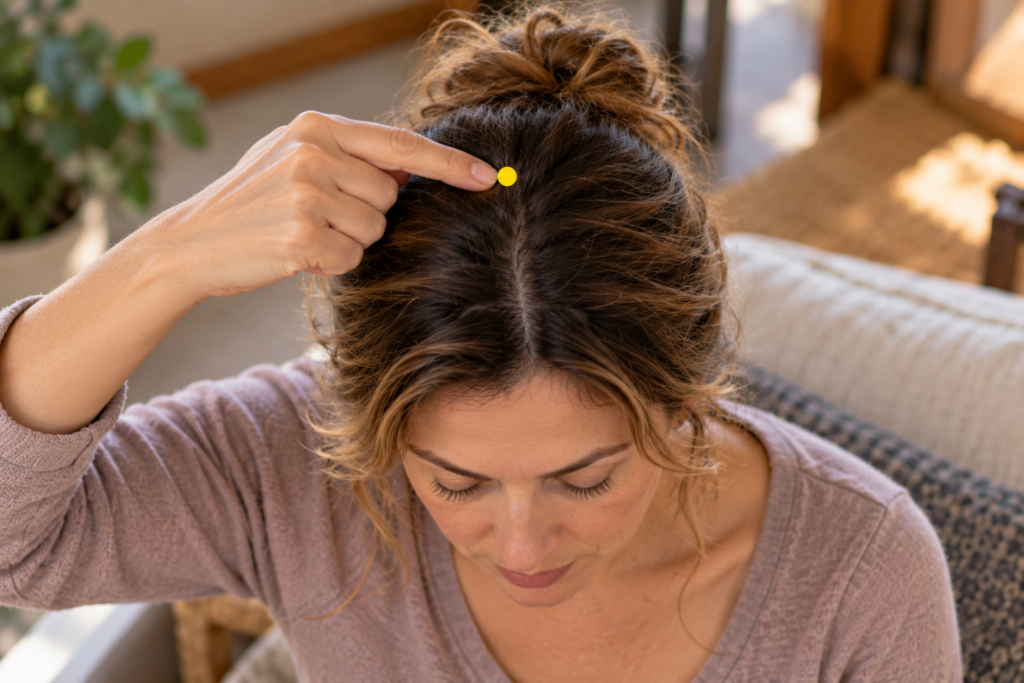
1. Press on GV20 at the top of the head to lift the energy and clear the mind. GV20 sits at the very top of the head, on the midline, on a line drawn up from the tops of both ears. Press straight down, or make small circles, with your fingertip for thirty to ninety seconds. GV20 is called “Baihui,” the “Hundred Meetings.”
GV20 elevates the Qi and clears the mind, helping to overcome feelings of heaviness, sunken exhaustion, and mental fog related to chronic fatigue syndrome. It brightens mental clarity and gently energizes the whole system, making it especially useful on low-energy days when lying down.
2. Press on Yintang between the eyebrows to calm and clear the mind. Yintang sits in the small hollow directly between the two eyebrows. Press steadily, or make small, slow circles with your fingertip for thirty to ninety seconds. Yintang is an extra point.
Yintang calms the Shen and soothes the mind, which is often both tired and overstimulated in chronic fatigue syndrome. It reduces anxiety, eases forehead pressure and fog, and supports the nervous system in reaching a restful state. This point works well with GV20 to jointly calm and clear the head.

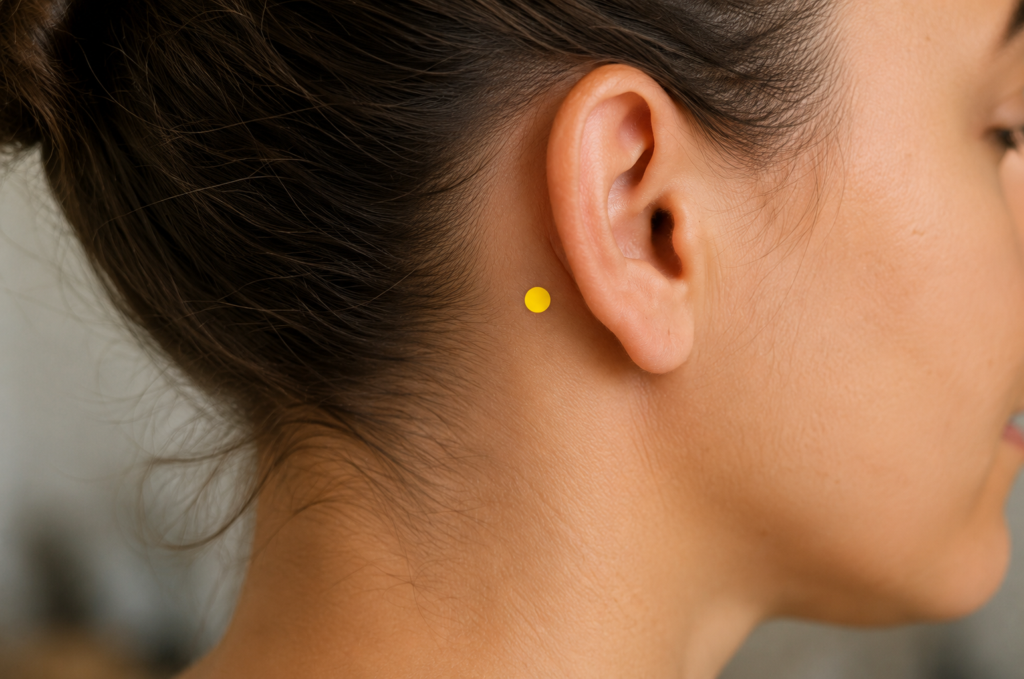
3. Press on Anmian behind the ear to restore restful sleep. Anmian sits behind the ear, in the hollow between the bony bump behind the earlobe and the base of the skull, a little above the jaw. Press with your fingertip for thirty to ninety seconds on each side. Anmian is an extra point whose name means “Peaceful Sleep.”
A key feature of chronic fatigue syndrome is unrefreshing sleep, which prevents the body from recovering. Anmian is one of the most commonly targeted points for insomnia and works particularly well when used as part of an evening routine.
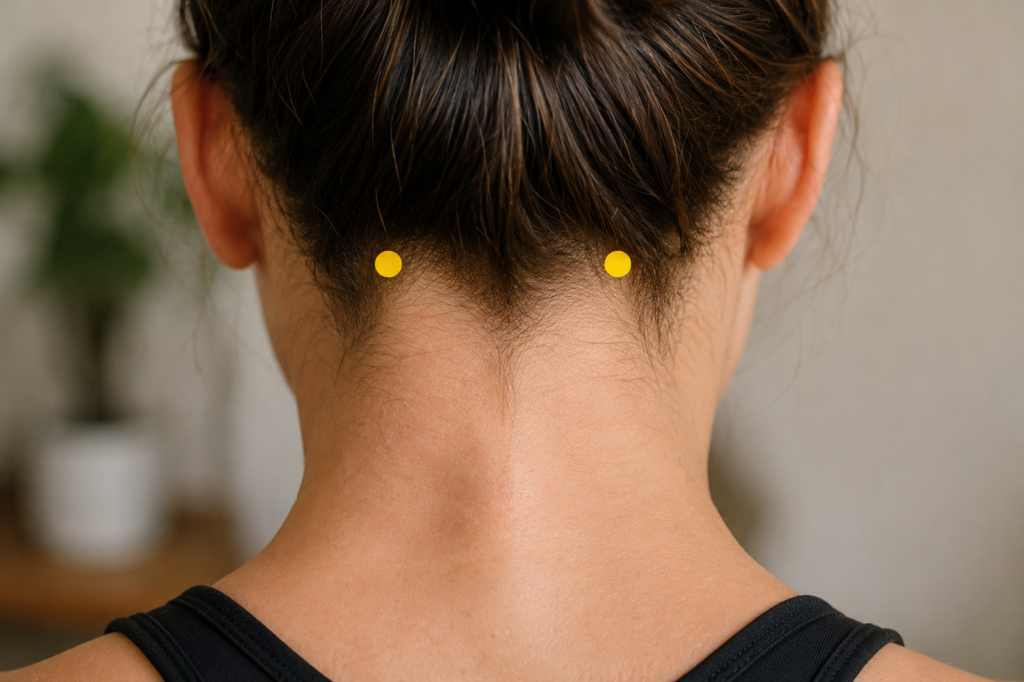
4. Press on GB20 at the base of the skull to clear the head and ease headaches. GB20 sits in the two hollows at the base of the skull, between the two large vertical neck muscles and the outer edge, roughly level with the tops of the ears. Tip your head back slightly and press up and inward with your thumbs for thirty to ninety seconds. GB20 is called “Fengchi,” the “Wind Pool.”
GB20 helps clear the mind, ease headaches and neck tension often associated with chronic fatigue syndrome, and lift mental fog. It also improves circulation to the head, which can help with lightheadedness. The pressure applied should be comfortable and not too deep.
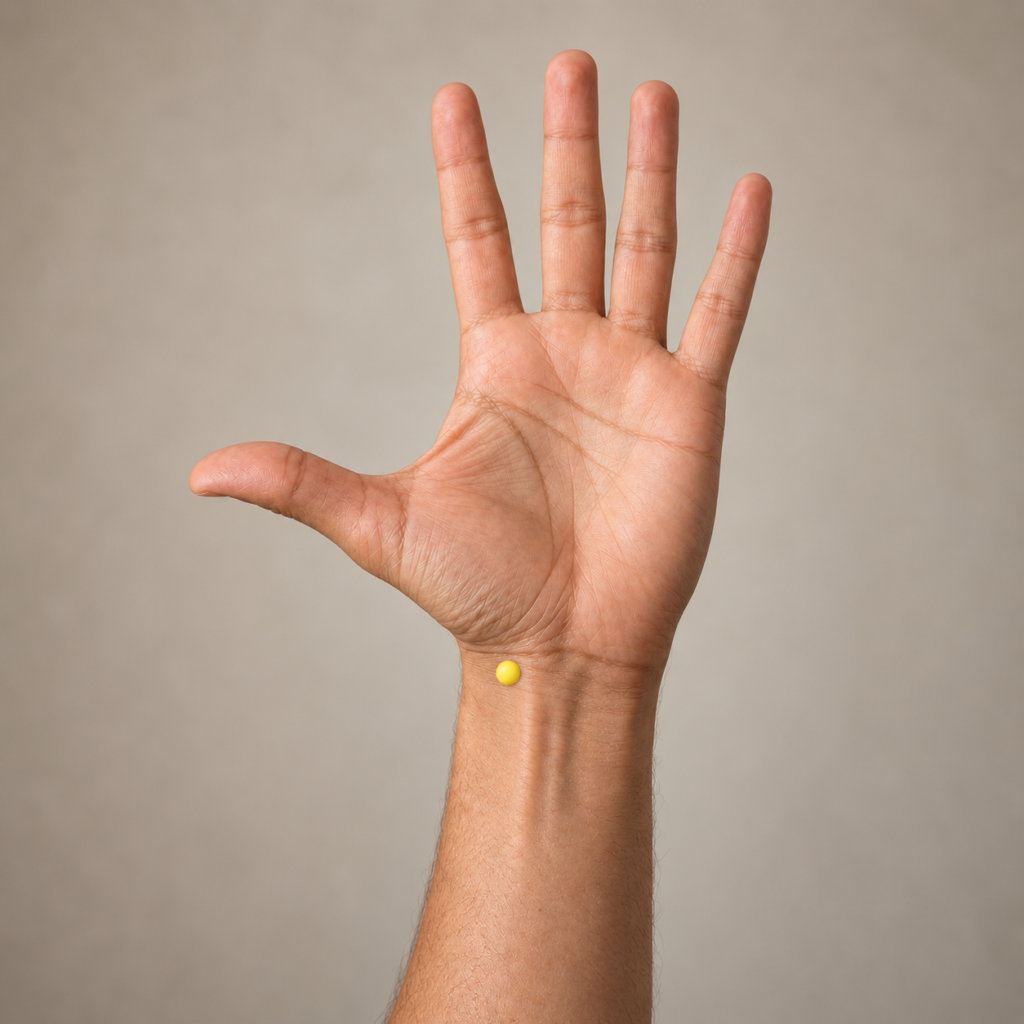
5. Press on HT7 at the wrist to settle the Shen. HT7 sits on the inner wrist crease, on the pinky side, in the small hollow just inside the tendon. Press firmly with your thumb for thirty to ninety seconds on each wrist. HT7 is called “Shenmen,” the “Spirit Gate.”
HT7 is a crucial point for calming the Heart and stabilizing the Shen. It helps reduce anxiety, restlessness, low mood, and poor sleep associated with chronic fatigue syndrome. Studies also note improvements in depressive symptoms. The point is easy and gentle to press, so you can use it anytime.
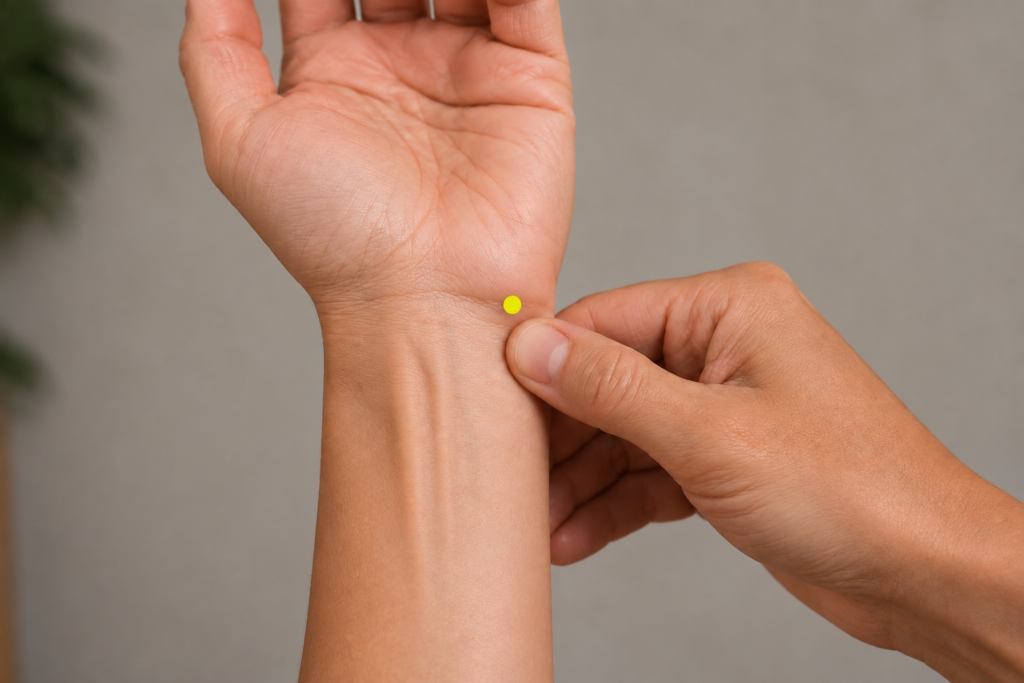
6. Press on PC6 on the inner forearm to calm the mind and settle the body. PC6 sits three finger-widths above the inner wrist crease, in the center of the forearm between the two tendons. Press firmly with your thumb for thirty to ninety seconds on each arm. PC6 is called “Neiguan,” the “Inner Pass.”
PC6 soothes the mind, opens the chest, and calms the Stomach, reducing anxiety, palpitations, nausea, and restlessness often linked to chronic fatigue syndrome. Located just above HT7, these points are convenient to use consecutively.
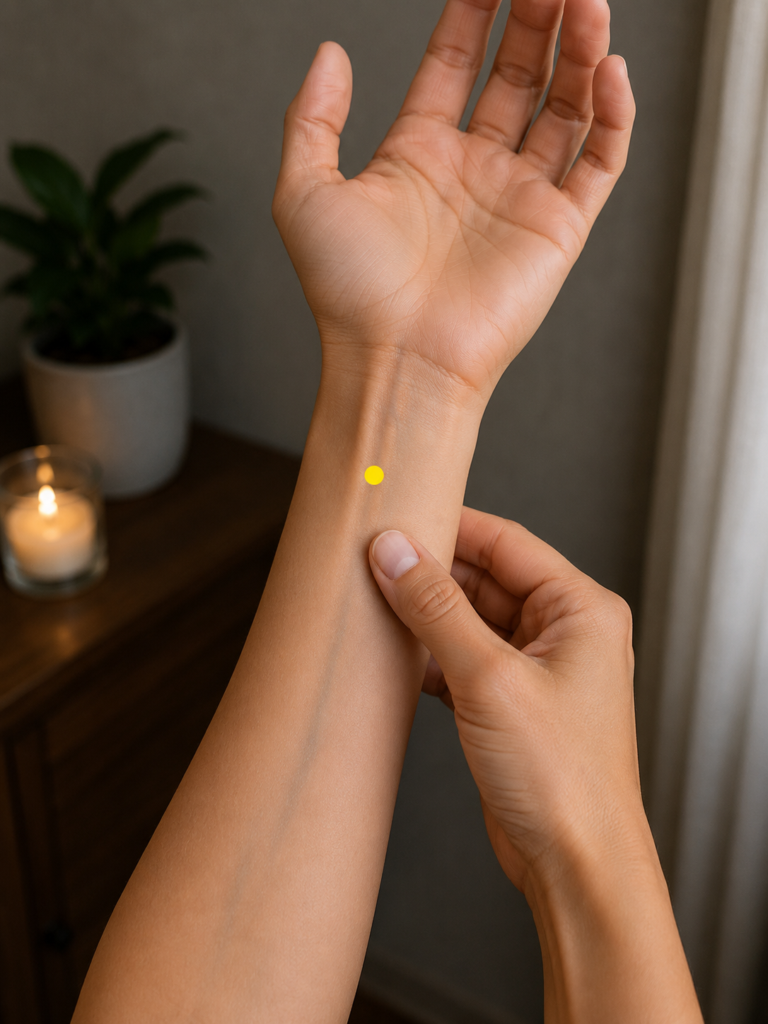
7. Press on LU9 at the wrist to strengthen the Lung and defensive Qi. LU9 sits on the inner wrist crease, on the thumb side, in the hollow where you can feel the pulse. Press firmly with your thumb for thirty to ninety seconds on each wrist. LU9 is called “Taiyuan,” the Lung’s source point.
LU9 enhances Lung function, which governs the body’s Qi and defensive energy. It directly boosts Lung Qi to address issues like shallow breathing, a weak voice, a sore throat, and sensitivity to infection, which are common in chronic fatigue syndrome. Located opposite HT7 at the wrist crease, both points can be pressed together in one motion.
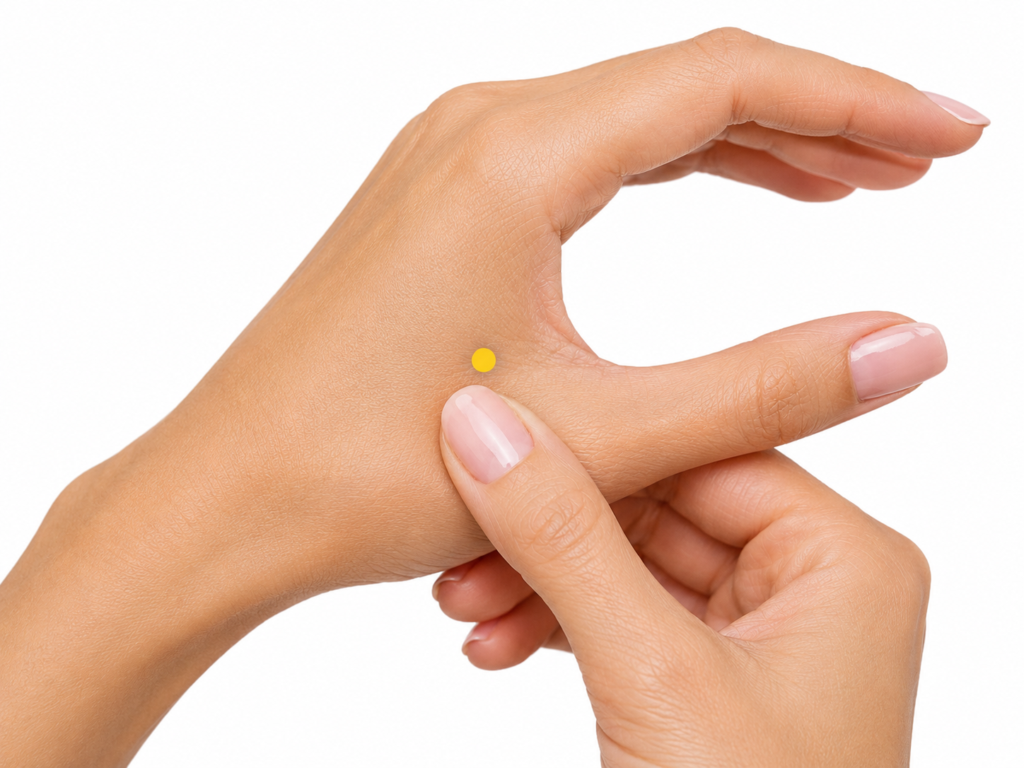
8. Press on LI4 in the hand to move the Qi and ease aches. LI4 sits in the webbing between the thumb and index finger, at the highest point of the muscle when you bring them together. Press firmly with the thumb of your other hand for thirty to ninety seconds on each hand. LI4 is called “Hegu.” LI4 is contraindicated during pregnancy.
LI4 enhances Qi circulation in the body and is crucial for alleviating pain in sore muscles, joints, and headaches linked to chronic fatigue syndrome. It also helps to clear the mind and strengthen the body’s defenses against infections that may trigger flares.
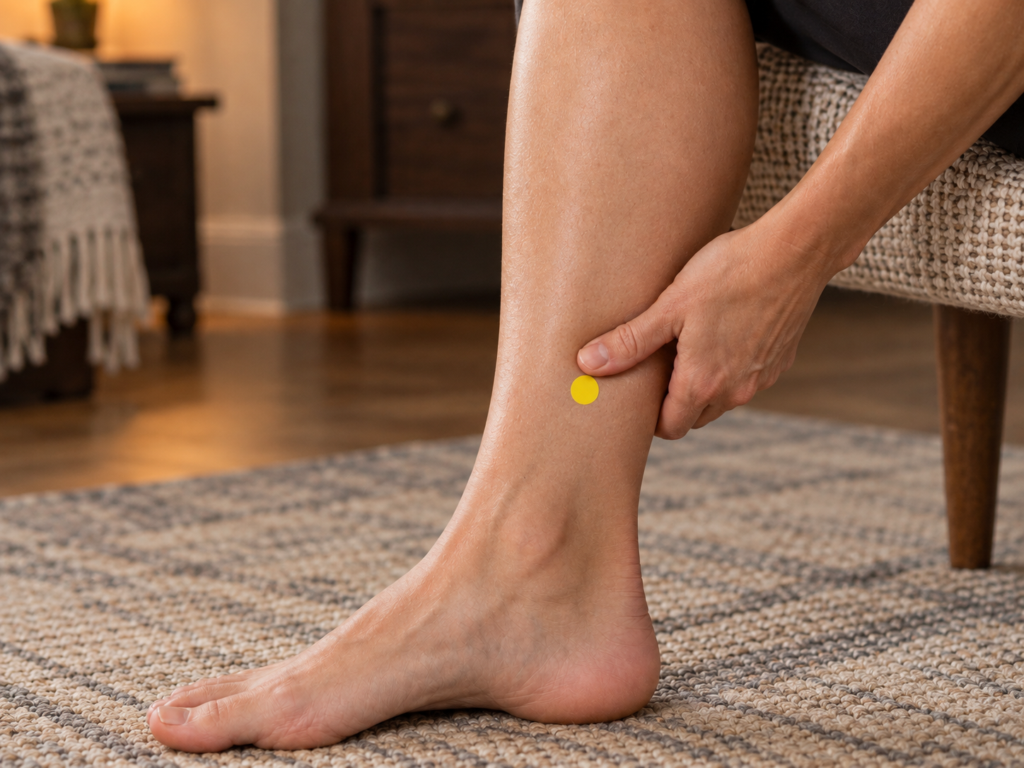
9. Press on SP6 above the inner ankle to nourish the Blood and reserves. SP6 sits four finger-widths up from the tip of the inner ankle bone, just behind the back edge of the shinbone. Press firmly for thirty to ninety seconds on each leg. SP6 is called “Sanyinjiao,” the “Three Yin Intersection.” SP6 is contraindicated during pregnancy.
SP6 supports the Spleen, Liver, and Kidneys simultaneously, replenishing Blood and deep reserves drained by chronic fatigue syndrome. It also calms the mind and promotes sleep, tackling both depletion and disturbance central to the condition.
Why These Acupressure Points Work
In Traditional Chinese Medicine, chronic fatigue syndrome is characterized by a significant deficiency of Qi and Blood, along with an unsettled Shen, sleep disturbances, and weakened defensive Qi; the nine points from the study align with this framework.
- The head points (GV20, Yintang, GB20) boost energy, clear brain fog, and relieve headaches.
- The Shen and sleep points (Anmian, HT7, PC6) help calm the mind, improve sleep quality, and reduce anxiety and low mood.
- The strengthening points (LU9 and SP6) support the Lung, Blood, and deep reserves.
- The moving point (LI4) relieves pain and boosts the body’s immune response.
How to Properly Use These Acupressure Points
Follow the methodology employed in the research and adapt it to your energy.
- Press each point for 30 to 90 seconds, or until you feel mild numbness, heaviness, or a spreading sensation, as the study timed each point. The entire routine lasts about thirty minutes.
- The study involved ten sessions over four weeks, typically two to three times per week. You can follow a similar schedule or do it daily if it feels beneficial.
- Do your routine while lying down or reclining when needed. You can access all points without rising, and saving energy is important.
- On a crash day, shorten the routine to its gentlest points, including HT7, PC6, Yintang, and Anmian, without skipping or forcing through the entire set.
- Apply steady, gentle pressure, reducing it if it becomes too strong.
Pacing is crucial for managing chronic fatigue syndrome, and acupressure can help.
Learn to identify your energy limits, often called your energy envelope, and stay within them rather than pushing beyond, as overexertion may lead to setbacks. Break tasks into smaller, manageable steps with rest in between, schedule your most demanding activities during your optimal times, and incorporate regular rest periods. Experts advise against gradually increasing exercise intensity; instead, keep activities gentle and manageable. Protect your sleep by maintaining a consistent routine, eat nutritious meals, stay well hydrated, and consult your doctor if you feel lightheaded when standing, as it may relate to fluids and salt intake.
When to Get Professional Help
Chronic fatigue syndrome is diagnosed only after ruling out other potential causes of fatigue.
If you haven’t visited a doctor yet, schedule an appointment, as conditions like thyroid problems, anemia, sleep apnea, depression, diabetes, and other treatable issues can cause similar tiredness. Seek medical attention promptly if you develop new or worsening symptoms, unexplained weight loss, fevers, night sweats, persistent swollen glands, fainting, or a racing heart when you stand. If you feel lightheaded, discuss orthostatic intolerance with your doctor.
Managing a chronic illness can be emotionally challenging, so inform your healthcare provider if you’re struggling. If you’re having thoughts of self-harm, contact or text the 988 Suicide and Crisis Lifeline.
Acupressure is a natural, holistic, gentle, and evidence-based therapy for chronic fatigue syndrome that can complement your ongoing care.
Above and Beyond Acupuncture offers acupuncture, cupping, and lifestyle coaching at the North Frank Lloyd Wright Boulevard location in Scottsdale.
Schedule an appointment online to start your healing journey.
The points above are only as effective as the technique used to apply them. Where to press, how firmly, and for how long all affect the result. For a full breakdown of how to perform acupressure properly at home, read Performing Acupressure in 3 Easy Steps.
For fatigue that is not diagnosed as chronic fatigue syndrome, acupressure for fatigue covers the broader picture, and fighting fatigue with acupuncture explains how Traditional Chinese Medicine treats fatigue clinically.

About the Publisher
Paul Kerzner, L.Ac., is a licensed acupuncturist and board-certified herbalist, as well as the founder of Above and Beyond Acupuncture in Scottsdale. His own journey from chronic patient to practicing acupuncturist shapes his commitment to providing honest, clinically grounded information about acupuncture and Traditional Chinese Medicine. Learn more about Paul and his clinical approach on the About Us page.