
Key Takeaways
- Feeling anxious before surgery is common and can impair recovery; acupressure can help reduce preoperative anxiety.
- Research indicates that acupressure effectively reduces pre-surgery anxiety, offering notable advantages compared to both placebo and standard care.
- Nine key acupressure points can calm the mind, relieve chest tightness, and ground energy before surgery.
- To use acupressure points effectively, practice them the night before and the morning of surgery while breathing slowly.
- Always notify your surgical team if you’re experiencing intense anxiety and keep taking your prescribed medications as instructed.

Feeling anxious before a procedure is completely normal. Concerns about surgery, anesthesia, pain, results, and recovery can build up over days, often peaking just before the operation. This anxiety can lead to a racing heart, tight chest, quick shallow breaths, upset stomach, restless sleep, and a busy mind. Not only is anxiety uncomfortable, but it can also hinder recovery, increase post-surgery pain, and affect your overall quality of life. Acupressure is a well-researched natural technique that can help in these moments. It’s simple to use at home the night before or while waiting on the day of surgery.
What the Research Shows
Strong evidence supports using acupressure before surgery.
A 2023 review in the International Journal of Nursing Studies analyzed 24 studies involving 2,537 patients undergoing various elective surgeries. It showed that acupressure significantly lowered pre-surgery anxiety compared to placebo or standard care. Another review highlighted that acupressure, especially techniques like finger massage described here, is particularly beneficial for hospitalized patients and those preparing for surgery. Studies on ear acupressure indicate similar benefits: a review found no serious side effects and suggested potential advantages, though additional research is required. For those seeking a safe, medication-free alternative, acupressure is well-supported by scientific evidence.
In Traditional Chinese Medicine, pre-surgery anxiety is seen as an unsettled Shen, reflecting a restless mind and spirit. Fear and uncertainty can disturb the Shen, causing symptoms such as a racing heart, restless thoughts, and sleep difficulties. Worry might also result in tightness in the chest, throat, and stomach by disrupting Qi flow. Additionally, fear can drive this energy upward, leading to light-headedness or jitters.
Here are nine acupressure points to soothe the mind, relax the chest, and help you feel more grounded and centered.
What Acupressure Points to Press and Why
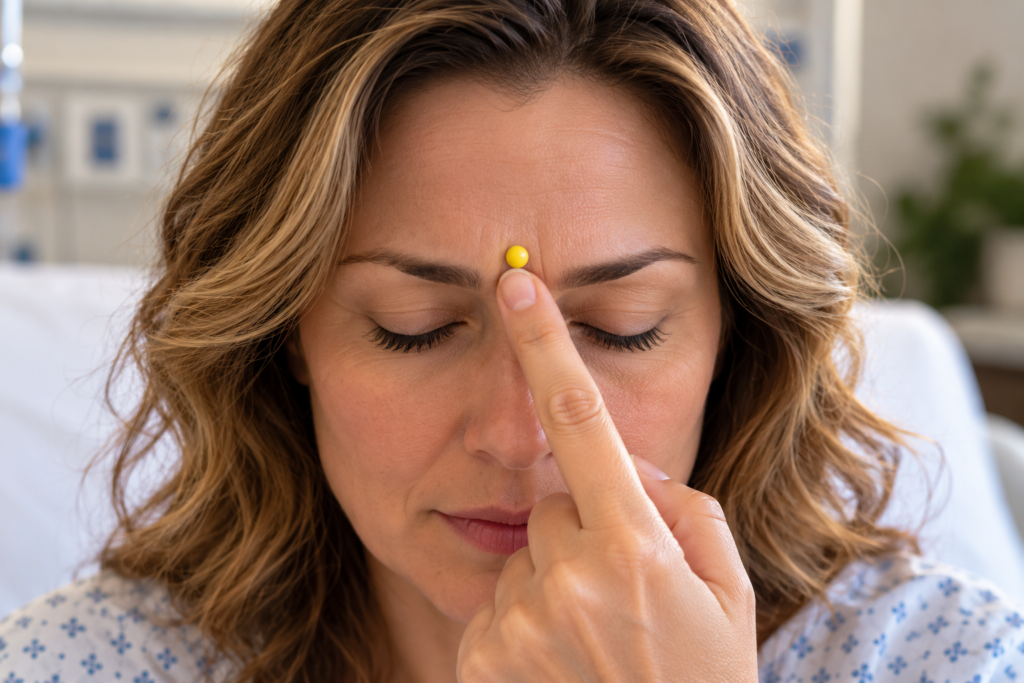
1. Press on Yintang between the eyebrows to quiet the racing mind. Yintang sits in the small hollow directly between the two eyebrows. Press steadily, or make small, slow circles with your fingertip for one to three minutes while breathing slowly. Yintang is an extra point.
Yintang is one of the most researched points for managing anxiety, including pre-surgery, and is recognized for its calming benefits. It helps soothe racing thoughts, relax forehead tension, and calm the nervous system. This point is a good first choice if you begin to feel anxious about your procedure.
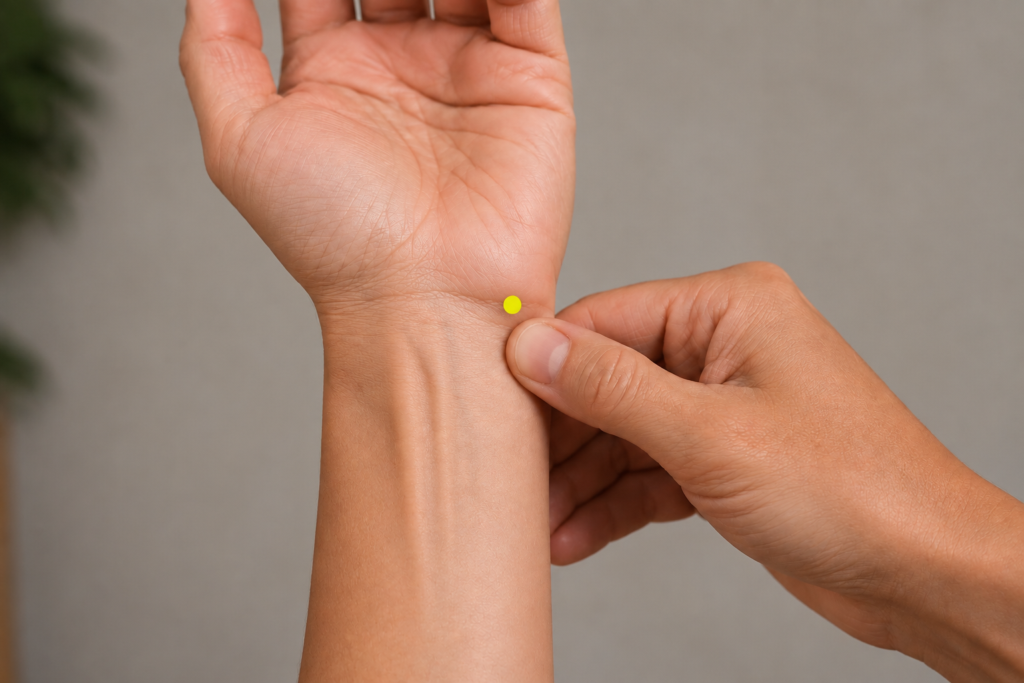
2. Press on HT7 at the wrist to settle the Heart. HT7 sits on the inner wrist crease, on the pinky side, in the small hollow just inside the tendon. Press firmly with your thumb for one to three minutes on each wrist. HT7 is called “Shenmen,” the “Spirit Gate.”
HT7 is essential for calming the Heart and settling the mind, aiding with a racing heart, restlessness, and pre-surgery fear. It is particularly helpful the night before, when anxiety may disrupt sleep, and can be comfortably used quietly while waiting.
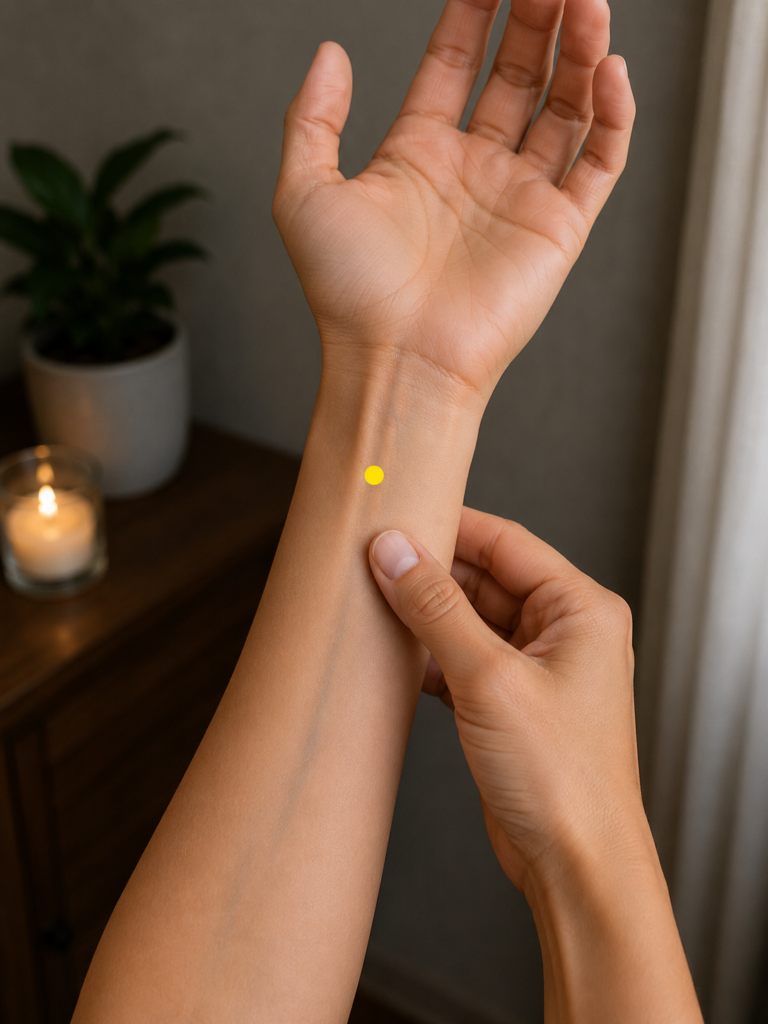
3. Press on PC6 on the inner forearm to calm the nerves and the stomach. PC6 sits three finger-widths above the inner wrist crease, in the center of the forearm between the two tendons. Press firmly with your thumb for one to three minutes on each arm. PC6 is called “Neiguan,” the “Inner Pass.”
PC6 helps open the chest, calm the mind, and settle the stomach, reducing nervousness and queasiness often experienced before surgery. It is also the most studied point for post-surgery nausea, making it beneficial to stimulate before and after the procedure. Many people wear anti-nausea wristbands that apply pressure to this point, and they often find them reassuring on surgery day.
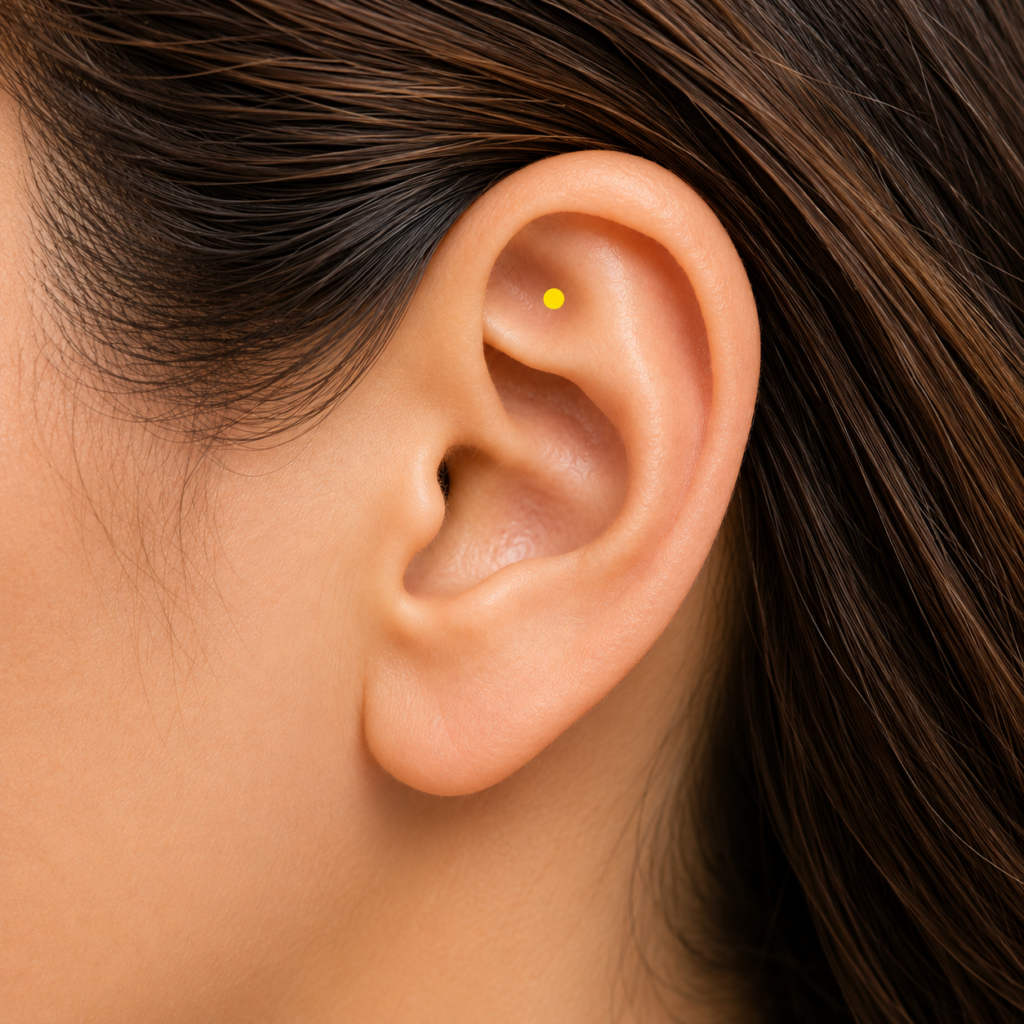
4. Press Ear Shenmen for fast, discreet calm. Ear Shenmen sits in the upper part of the ear, in the triangular hollow near the top, at its apex. Press gently with your fingertip or squeeze between your finger and thumb for one to two minutes on each ear.
Ear points are extensively researched for alleviating pre-surgery anxiety, with Ear Shenmen being the primary calming point. It acts swiftly and can be pressed while lying down, making it convenient if you have an IV.
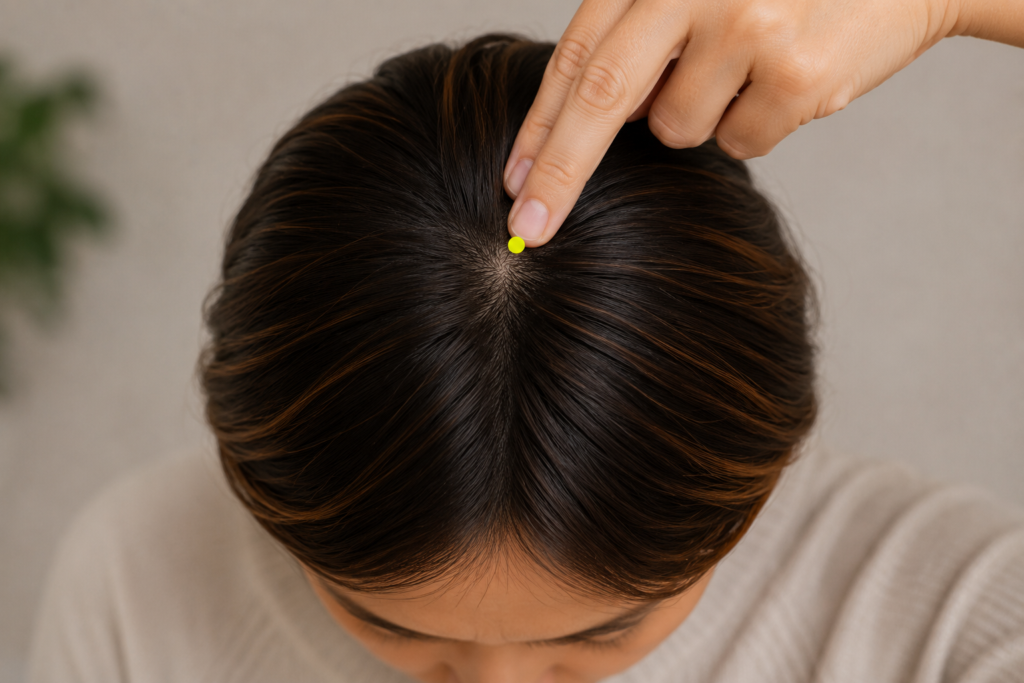
5. Press on GV20 at the top of the head to steady the spirit. GV20 sits at the very top of the head, on the midline, on a line drawn up from the tops of both ears. Press gently and hold, or make slow circles, for one to two minutes. GV20 is called “Baihui,” the “Hundred Meetings.”
Holding GV20 gently and slowly can promote calmness and stability in your mind, reducing feelings of light-headedness or distraction often associated with anxiety. Combine this with Yintang by pressing both points at once, with one hand on each, to enhance the soothing effect.
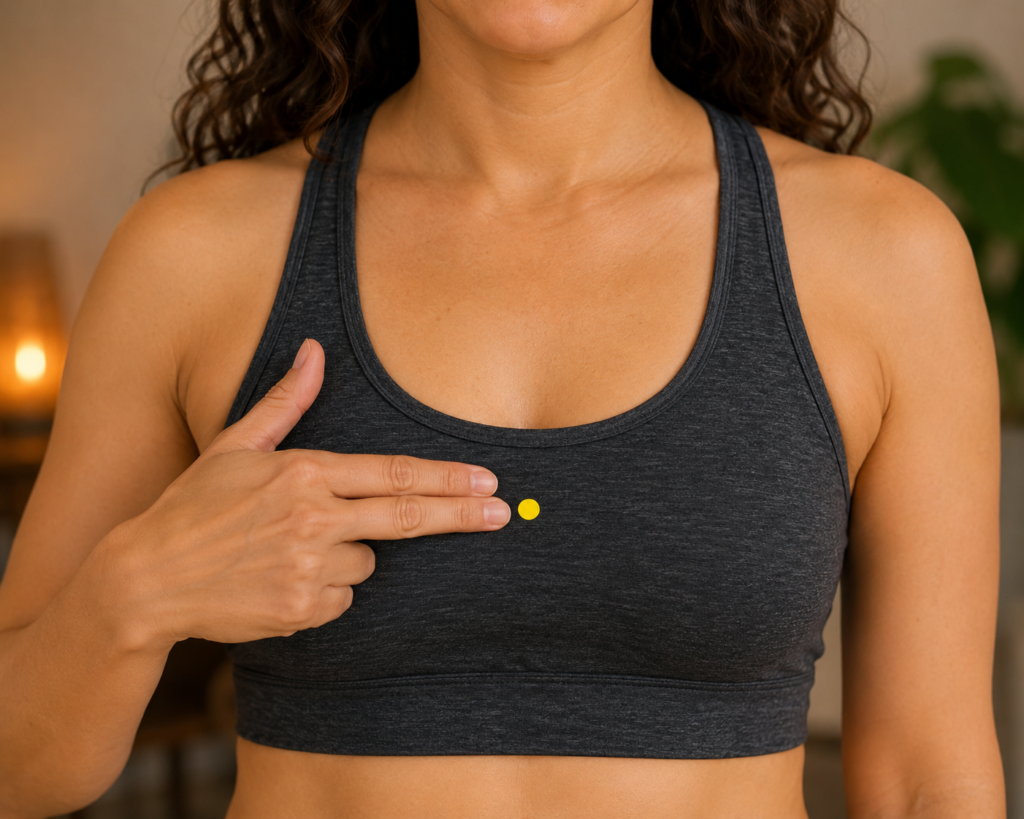
6. Press on CV17 at the center of the chest to ease tightness. CV17 sits on the midline of the breastbone, level with the space between the nipples. Press gently with your fingertip for one to two minutes while breathing slowly. CV17 is called “Shanzhong,” the gathering point of Qi in the chest.
Anxiety can make your chest feel tight and your breathing shallow. CV17 helps open and relax the chest, letting you breathe more deeply and calm your nervous system. Placing a hand over this point and taking slow breaths is one of the most calming things you can do while waiting.
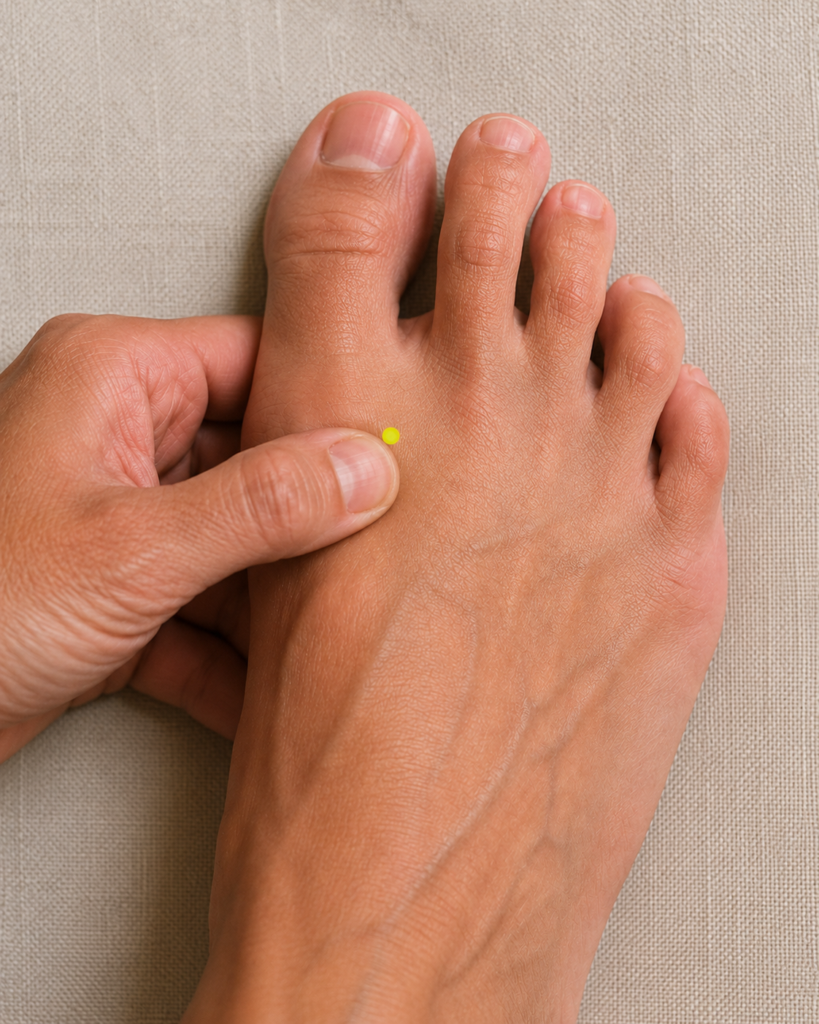
7. Press on LR3 on the top of the foot to release worry. LR3 sits on the top of the foot, in the webbing between the big toe and second toe, about two finger-widths back where the bones meet in a small hollow. Press firmly with your thumb for one to two minutes on each foot. LR3 is called “Taichong.”
LR3 relieves worry-induced tension, easing knots in the stomach and tightness in the jaw and shoulders. It also helps ground you by directing energy downward toward your feet. A family member can press this point for you while you rest.
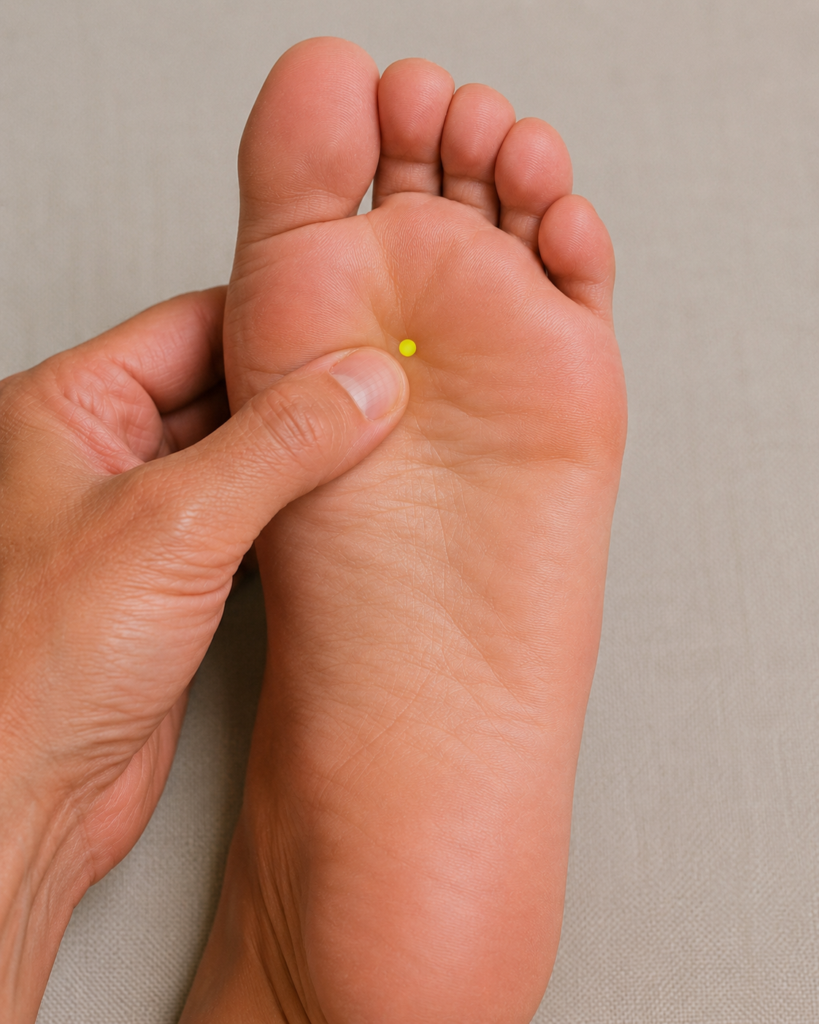
8. Press on KI1 on the sole of the foot to ground yourself. KI1 sits on the sole of the foot, in the hollow that forms in the center of the ball of the foot when you curl the toes. Press firmly with your thumb for one to two minutes on each foot. KI1 is called “Yongquan,” the “Bubbling Spring.”
Fear can cause you to feel jittery and light-headed. KI1, located on the sole of the foot, can help reduce your energy and make you feel more grounded. Applying pressure to this point while noticing your body’s weight on the bed or chair is an easy way to feel more centered before surgery.
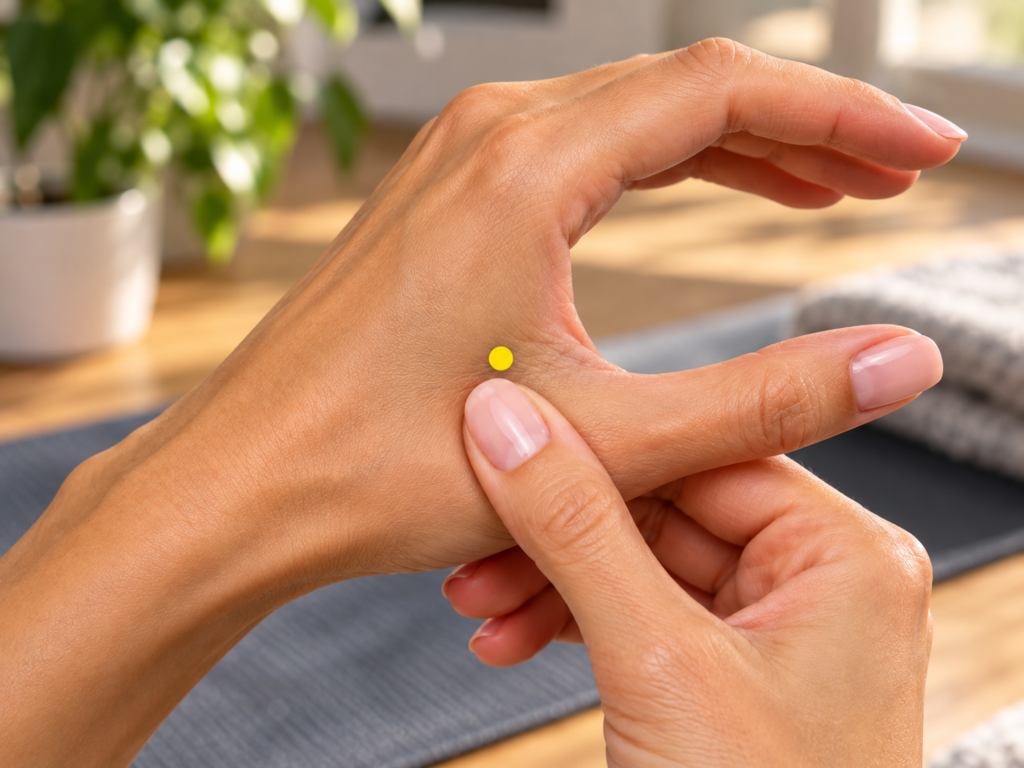
9. Press on LI4 in the hand to release tension. LI4 sits in the webbing between the thumb and index finger, at the highest point of the muscle when you bring them together. Press firmly with the thumb of your other hand for one to two minutes on each hand. LI4 is called “Hegu.” LI4 is contraindicated during pregnancy.
LI4 promotes energy flow and releases tension in your body. When combined with LR3, it forms the well-known Four Gates, praised for calming the entire system. You can press this point anytime, but if you have an IV, use your other hand.
Why These Acupressure Points Work
In Traditional Chinese Medicine, pre-surgery anxiety is considered an unsettled mind, with worry causing chest tightness and fear directing energy upward. These nine points are designed to help alleviate these emotions.
- The mind points (Yintang, HT7, GV20, Ear Shenmen) help calm the Heart and calm the Shen.
- The chest and stomach points (CV17, PC6) relieve tightness, facilitate breathing, and alleviate anxiety.
- The grounding points (LR3, KI1, LI4) help release worry and draw scattered energy downward.
Randomized trials have found that acupressure significantly reduces anxiety before surgery compared with both sham acupressure and usual care.
How to Properly Use These Acupressure Points
- The evening before surgery, press Yintang, HT7, and PC6 for two to three minutes each while breathing slowly. At bedtime, add Ear Shenmen and KI1 to help you sleep.
- On the morning of surgery, while waiting, repeat Yintang, HT7, PC6, and Ear Shenmen. These points are easy to use quietly, even while lying down.
- While pressing these points, breathe in slowly through your nose for a count of four, then out through your mouth for a count of six. Longer exhales help calm your nervous system.
- Once your IV is inserted, use the points on your free hand and arm, the ear points, and Yintang. You can also have a family member press the points on your feet.
- If you use adhesive ear seeds or beads between visits, take them off before surgery unless your surgical team says it’s okay. Also, let your team know if you are wearing anti-nausea wristbands.
- If you are pregnant, including before a cesarean delivery, skip LI4.
Along with these tips, try simple steps to calm your nerves before surgery. Ask your surgeon and anesthesiologist any questions—clear answers can ease anxiety. Prepare your recovery area in advance to avoid last-minute worries. Follow fasting instructions precisely. If possible, bring a trusted person and, if allowed, calming music and headphones. Tell the staff if you feel anxious; they support nervous patients daily and can provide valuable help.
When to Get Professional Help
Inform your surgical team if your anxiety is intense, preventing you from sleeping or eating, or if you’re considering postponing due to fear. They can assist with solutions. If you fear needles, anesthesia, or medical environments, or have experienced panic attacks, notify your anesthesiologist in advance. Report any chest pain, severe shortness of breath, or faintness immediately. Continue taking prescribed anxiety or other medications as directed.
Acupressure is a safe, evidence-based technique that helps lower pre-surgery anxiety and works best when used alongside support from your surgical team.
Above and Beyond Acupuncture offers acupuncture, cupping, and lifestyle coaching at the North Frank Lloyd Wright Boulevard location in Scottsdale.
Schedule an appointment online to start your healing journey.
The points above are only as effective as the technique used to apply them. Where to press, how firmly, and for how long all affect the result. For a full breakdown of how to perform acupressure properly at home, read Performing Acupressure in 3 Easy Steps.

About the Publisher
Paul Kerzner, L.Ac., is a licensed acupuncturist and board-certified herbalist, as well as the founder of Above and Beyond Acupuncture in Scottsdale. His own journey from chronic patient to practicing acupuncturist shapes his commitment to providing honest, clinically grounded information about acupuncture and Traditional Chinese Medicine. Learn more about Paul and his clinical approach on the About Us page.